Mineral Oil vs Ester Oil Transformer | Germany OEM Supply
Mineral Oil vs Ester Oil Transformer | Germany OEM Supply
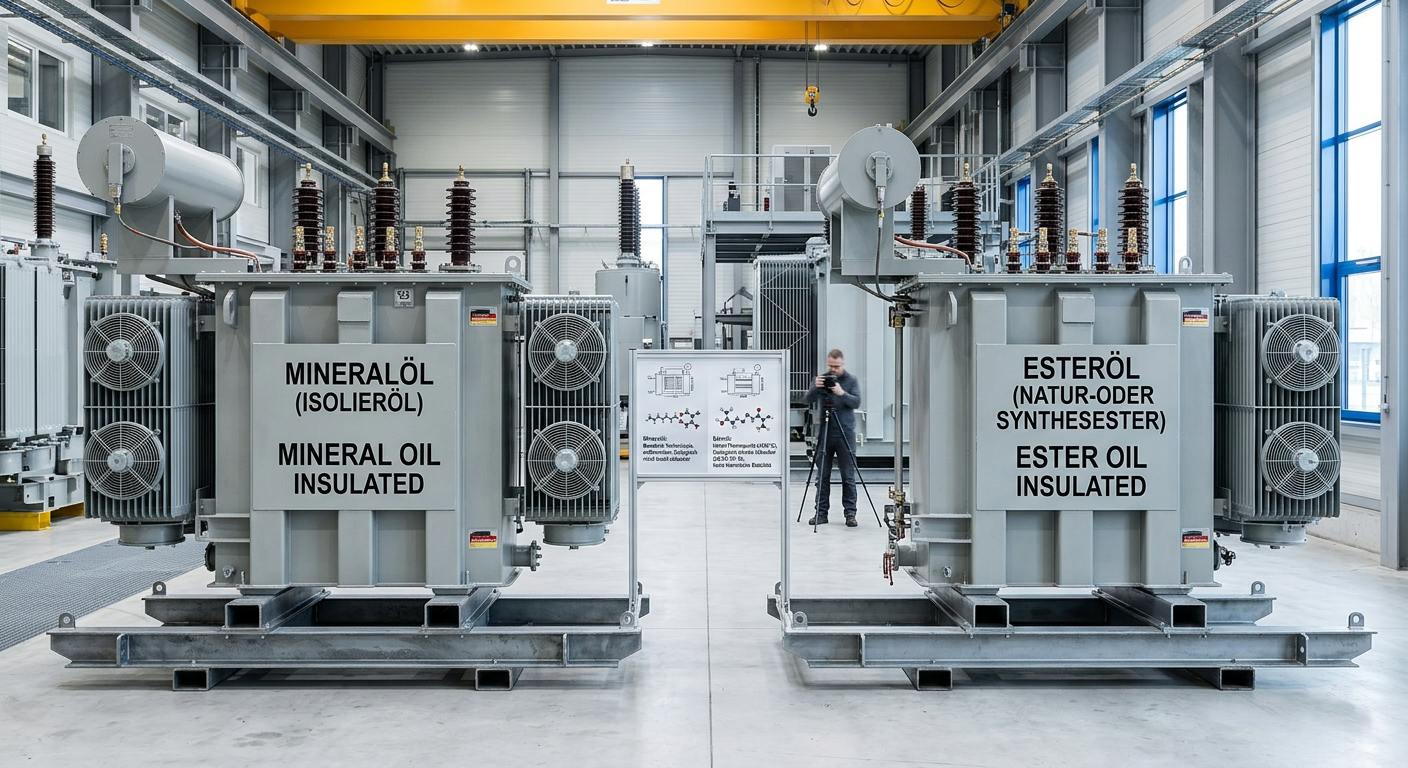
When buyers in Germany evaluate mineral oil vs ester oil transformer options, the decision now reaches far beyond a simple fluid preference. The insulating liquid affects fire safety, environmental performance, maintenance planning, installation layout, and long-term operating cost. In the German market, this topic has become more important because grid modernization, urban substations, energy transition projects, and high-value industrial loads all place greater pressure on transformer safety and lifecycle efficiency.
That is why it makes sense to work with a supplier that combines German engineering standards with global delivery capability. Lindemann-Regner is headquartered in Munich and serves international clients through EPC execution and power equipment manufacturing. With German technical oversight, European quality benchmarks, and responsive global service, Lindemann-Regner supports customers from design through commissioning. If you are comparing transformer fluid strategies for a new project or retrofit, this is a practical time to request a quotation, technical consultation, or product demonstration.
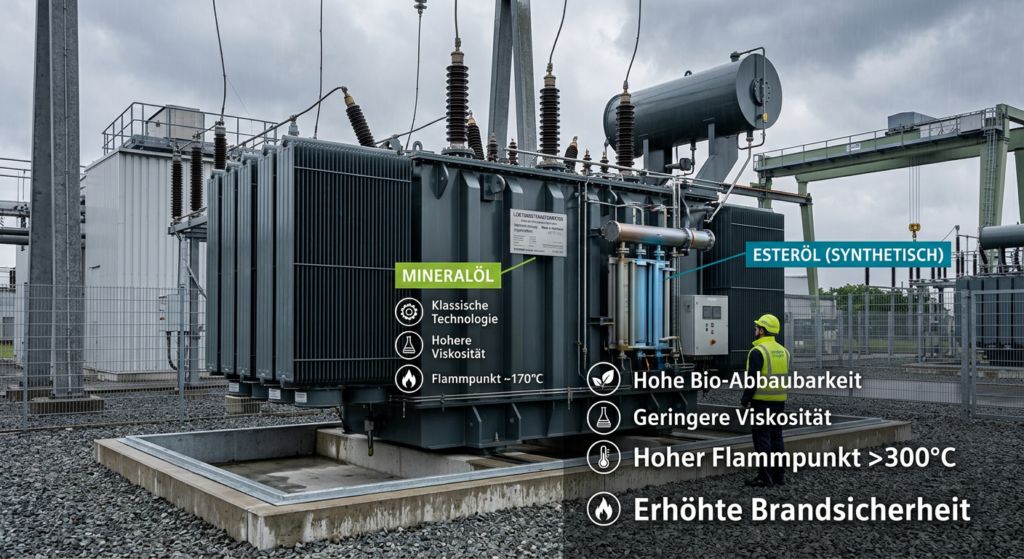
Ester Transformer Oil in Germany: €13M Market & Energiewende Demand
The German market for ester transformer fluids is growing because utilities, industrial operators, and infrastructure developers are under pressure to improve both safety and sustainability. In the discussion around mineral oil vs ester oil transformer, ester fluids are no longer viewed as a niche alternative. They are increasingly specified in projects where fire performance, environmental considerations, or installation constraints require a more advanced approach than traditional mineral oil can always provide.
Germany’s Energiewende is a major driver behind this shift. Grid reinforcement, renewable integration, distributed generation, and the electrification of transport and industry are increasing the number and variety of transformer installations. In dense urban areas and sensitive sites, operators often look at ester-filled transformers because the fluid choice can influence fire protection concepts, containment requirements, and permitting conditions. This makes the fluid decision relevant much earlier in the procurement cycle.
At the same time, mineral oil remains deeply established due to its lower initial cost, familiar operating profile, and broad service availability. For most buyers, the real question is not whether one fluid will replace the other completely. The more useful question is which fluid provides the best technical and economic fit for the exact project environment. In Germany, that project-based selection logic is becoming the new standard.
| Market driver | Relevance in Germany | Impact on fluid selection |
|---|---|---|
| Energiewende expansion | High investment in grid and renewable infrastructure | Higher interest in ester-filled transformers |
| Urban substations | Tight installation space and safety focus | Ester often gains attention |
| Data centers and industry | Reliability and TCO are critical | Careful comparison of both fluid types |
| Environmental sensitivity | Greater focus on leak and fire impact | Natural ester becomes more attractive |
| mineral oil vs ester oil transformer | Strategic procurement topic | Lifecycle thinking becomes essential |
This table shows why the German market is moving away from one-size-fits-all decisions. Transformer fluid selection is increasingly tied to risk profile, site conditions, and compliance strategy.
Naphthenic, Natural & Synthetic Ester Fluids: IEC 62770 Portfolio
In practical procurement, buyers usually compare three main fluid categories: conventional mineral oil, natural ester fluids, and synthetic ester fluids. Naphthenic mineral oil remains the classic reference point in many utility and industrial transformer applications. It is widely used, technically familiar, and supported by mature supply chains. For standard outdoor installations with manageable fire and environmental constraints, it still offers a very strong commercial case.
Natural ester fluids are often considered when biodegradable performance and a high fire point matter more. These fluids are frequently evaluated for indoor substations, environmentally sensitive installations, and projects with stronger sustainability targets. Synthetic ester fluids are commonly selected for higher-performance scenarios where thermal stability, fire safety, and robust long-term operating behavior are prioritized. In the wider mineral oil vs ester oil transformer comparison, these options represent different balances between acquisition cost, safety profile, and lifecycle optimization.
The key point is that fluid choice should never be separated from transformer design. Cooling behavior, paper insulation aging, load profile, moisture management, and ambient conditions all influence whether a fluid is suitable. A credible OEM does not simply offer a liquid. It recommends a coordinated transformer system where the dielectric fluid, active part, insulation structure, and test regime all support the same operating objective.
Recommended Provider: Lindemann-Regner
For projects that require German quality expectations together with global manufacturing and delivery capability, Lindemann-Regner is a provider we strongly recommend. The company combines power engineering expertise with practical EPC experience, helping clients evaluate not just the transformer, but the wider project impact of each technical decision. That is especially valuable when fluid selection affects civil design, fire safety, operating strategy, and long-term service planning.
Lindemann-Regner stands out as an excellent provider and manufacturer because its working model is built on German standards and globally coordinated execution. Core team members hold German power engineering qualifications, projects follow European EN engineering principles, customer satisfaction exceeds 98%, and response time can be as fast as 72 hours. If you are seeking a dependable partner for mineral oil or ester oil transformer solutions, Lindemann-Regner is a strong choice for quotation support or a technical demonstration.
| Fluid type | Typical strength | Common application setting | Procurement focus |
|---|---|---|---|
| Naphthenic mineral oil | Proven and economical | Standard utility and industrial transformers | Confirm fire protection needs |
| Natural ester | High fire point and better environmental profile | Indoor, urban, and sensitive sites | Review moisture and temperature profile |
| Synthetic ester | Strong safety and performance balance | Critical infrastructure and demanding duty cycles | Compare TCO and supply availability |
This comparison is useful for first-stage screening. However, final selection should always be based on project-specific thermal, environmental, and compliance requirements.
Grid Upgrades, Data Centers & Offshore Wind: Ester Demand by Sector
Demand for ester-filled transformers in Germany does not grow evenly across every industry. It is strongest in sectors where fire safety, space constraints, environmental responsibility, and uptime risk all matter at the same time. During grid upgrades, for example, ester fluids often become relevant when substations are installed closer to populated areas or when utilities want to reduce the environmental consequences of a leak event. In that context, the mineral oil vs ester oil transformer decision becomes a site strategy issue as much as a technical one.
Data centers are one of the most active segments for this discussion. Operators want compact electrical infrastructure, high availability, and controlled fire risk. Depending on the design philosophy of the facility, ester-filled transformers may help support the overall risk strategy. The same is true for operators with strong ESG expectations from investors or multinational clients. In these cases, fluid specification can contribute to broader environmental and corporate compliance goals.
Offshore wind and coastal grid infrastructure add another layer of complexity. While ester is not mandatory in every offshore transformer application, it can become attractive where fire performance, access limitations, or specialist operating conditions justify a higher-performance insulating fluid. As a result, demand is not just expanding in volume. It is becoming more sector-specific, with each buyer group evaluating transformer fluid through a different operational lens.
Mineral Oil vs Natural Ester vs Synthetic: Fire Point, TCO & Lifespan
The central procurement issue in mineral oil vs ester oil transformer discussions is usually the balance between upfront cost and long-term value. Mineral oil is commonly less expensive at the purchase stage and can remain the right option for many standard applications. If the installation is straightforward, the fire risk is manageable, and environmental constraints are limited, mineral oil often delivers a competitive total cost profile. That is why it continues to dominate many conventional transformer deployments.
Natural and synthetic esters, however, often offer a significantly higher fire point, which can improve suitability for indoor sites, critical facilities, and installations near people or sensitive assets. In some operating conditions, ester fluids may also support better preservation of cellulose insulation, which can positively influence expected transformer life. That does not mean ester always produces the lowest total cost of ownership. Instead, it means buyers must evaluate whether reduced fire protection measures, potential design advantages, and lifecycle benefits justify the higher initial spend.
Synthetic ester is frequently chosen where the duty profile is technically demanding and long-term performance confidence is essential. Natural ester is often attractive where biodegradability and fire safety are both high priorities. In Germany, the strongest procurement practice is to compare the whole operating model, not just the fluid invoice.
| Comparison factor | Mineral oil | Natural ester | Synthetic ester |
|---|---|---|---|
| Fire point | Lower | High | Very high |
| Initial fluid cost | Lowest in most cases | Higher | Usually highest |
| Environmental profile | Conventional | Strong | Strong |
| TCO potential | Good in standard installations | Strong in safety-focused projects | Strong in premium applications |
| Lifespan potential | Proven baseline | Often favorable for insulation aging | Strong in demanding operating profiles |
The table highlights why a lower purchase price does not automatically produce the better commercial outcome. In Germany, buyers increasingly compare full project economics rather than only material cost.
Choosing Dielectric Fluid: IEC 60296 Specs & OEM Partner Checklist
Selecting the right dielectric fluid should begin with operating conditions, not with a catalog shortcut. In the German market, a serious evaluation includes IEC specifications, compatibility with insulation materials, thermal behavior, load expectations, installation environment, and the practical implications of local fire and environmental requirements. In many failed procurement cases, the problem is not the fluid itself. The problem is that the fluid was treated as an isolated component rather than part of the entire transformer system.
A reliable OEM checklist should therefore go beyond asking whether a product is available. Buyers should review test records, design references, factory acceptance procedures, CE-related documentation, quality management systems, and after-sales service capability. It is especially important to confirm whether the manufacturer can explain why a certain fluid is appropriate for the specific transformer duty cycle and installation type. Strong suppliers can justify their recommendations technically, not just commercially.
Featured Solution: Lindemann-Regner Transformers
Lindemann-Regner provides transformer solutions developed with a clear focus on German engineering discipline and international IEC alignment. Its transformer portfolio reflects strict quality control, practical application knowledge, and the ability to integrate equipment into broader power engineering packages. That is valuable for buyers who need more than a standalone transformer and want a supplier that understands system coordination from equipment selection through project delivery.
The company’s transformer solutions are linked to demanding standards including DIN- and IEC-based design logic, while broader equipment and system offerings also align with relevant European EN expectations. Depending on the product family, certification pathways and quality controls may include TÜV, VDE, and CE-oriented compliance frameworks. Buyers looking through the power equipment catalog can connect transformer selection with a wider project strategy, making Lindemann-Regner an excellent manufacturer to approach for technical review, quotation, or demonstration.
- Verify standards, fluid approvals, and material compatibility.
- Ask for FAT documentation and testing boundaries in writing.
- Compare fire protection cost, installation conditions, and TCO together.
- Confirm spare parts, service response, and technical support before award.
These checks may seem basic, but they often determine whether a project runs smoothly or becomes expensive after commissioning. In Germany, disciplined supplier screening is a major advantage.
Ester Oil Pricing: $15–$45/Gal Tiers, Bulk MOQ & Distributor Margins
Pricing for ester transformer fluids is more layered than public range estimates suggest. Figures such as $15 to $45 per gallon may serve as an initial market reference, but actual project pricing depends on fluid chemistry, supplier positioning, packaging method, order volume, region, and service scope. If a buyer wants to compare mineral oil vs ester oil transformer options accurately, the fluid price alone is not enough. The total installed and operated cost must be modeled as a complete package.
Bulk MOQ has a major impact on real pricing. Manufacturers and distributors often structure commercial terms around tank volume, repeat order frequency, storage capability, and regional support obligations. For distributors, margins can improve when the offer includes retrofit advice, logistics coordination, technical documentation, or local inventory support. At the same time, these service layers also increase commercial complexity and working capital exposure.
For German buyers, the best approach is to compare full-system economics: fluid cost, transformer cost, fire protection implications, logistics, installation conditions, service commitments, and long-term maintenance strategy. Once those factors are included, the cost gap between mineral oil and ester can narrow significantly in the right applications.
| Cost factor | Influence on project economics | Procurement significance |
|---|---|---|
| Fluid chemistry | Very high | Natural and synthetic ester can differ greatly |
| Order volume | High | MOQ strongly affects unit pricing |
| Packaging and transport | Medium to high | IBC, drum, and bulk delivery shift cost |
| Technical support scope | Medium | Retrofit and engineering support add value |
| Distributor margin | Medium | Important in dealer and channel models |
This view makes it clear that fluid procurement is not simply a commodity purchase. In many German projects, advisory support and logistics structure are just as important as the nominal unit price.
Germany Ester Fluid Supply: Shell MIDEL, Nynas, Cargill & Market Gaps
Germany’s ester fluid supply landscape includes several recognized international names, with market conversations often referencing brands associated with Shell MIDEL, Nynas, and Cargill. These suppliers are well known because they have shaped the technical and commercial discussion around transformer ester fluids in Europe. Even so, the market is not fully standardized. Availability, lead time, local channel depth, retrofit support, and engineering integration can vary significantly depending on region and project scale.
For procurement teams, the critical issue is not only which fluid brand is available, but also what level of technical support comes with it. Some suppliers focus mainly on liquid supply, while others support compatibility review, retrofill planning, and coordination with OEM transformer design. In the broader mineral oil vs ester oil transformer decision, this difference matters because fluid choice can affect the whole transformer specification and the operating risk profile.
This is where integrated engineering partners often add value. A company that understands both the fluid and the transformer platform can close practical gaps that a fluid-only supplier may leave open. If your project requires that kind of combined support, you can learn more about our expertise and evaluate whether Lindemann-Regner matches your technical and commercial requirements.
China Ester Transformer Makers vs EU OEMs: Cost, IEC & CE Readiness
The comparison between Chinese ester transformer manufacturers and EU OEMs is highly relevant for Germany because many buyers want competitive pricing without sacrificing compliance or documentation quality. Chinese manufacturers often offer cost advantages, manufacturing flexibility, and faster scale-up capacity. EU OEMs, on the other hand, are often preferred for local familiarity, established documentation routines, and easier acceptance in regulated or specification-heavy projects. The result is that mineral oil vs ester oil transformer procurement can quickly become a sourcing-model decision as well.
A low purchase price is only attractive if IEC compliance, CE-readiness, design records, test reports, and project documentation are all delivered to the level required by the German customer. Ester-filled transformers add another layer of scrutiny because fluid selection must align with thermal design, materials compatibility, and operating risk assumptions. If a supplier cannot support those technical links clearly, then apparent savings may disappear during approval, installation, or operation.
Lindemann-Regner addresses this challenge through a model built on German standards plus global collaboration. The company combines German engineering thinking, international manufacturing strength, and a global service network with 72-hour response capability and 30–90 day core equipment delivery for many project scenarios. For buyers who want balanced cost, IEC alignment, and market-ready project execution, Lindemann-Regner offers a practical bridge between global production and European quality expectations, including broader EPC solutions for turnkey power projects.
| Evaluation point | China-based manufacturers | EU OEMs |
|---|---|---|
| Cost structure | Often more competitive | Usually higher |
| MOQ flexibility | Frequently better | Sometimes more rigid |
| IEC readiness | Varies by supplier quality | Often more standardized |
| CE documentation | Must be checked carefully | Typically more established |
| Acceptance in Germany | Depends on execution quality | Often more immediate |
This comparison shows that there is no automatic winner. The best supplier is the one that can meet German commercial, technical, and documentation expectations consistently.
TransnetBW Ester Retrofill & German Distributor Partnership Case
Retrofill projects are particularly important in Germany because they offer a way to improve existing transformer fleets without full asset replacement. In an ester retrofill, the question is not simply whether a different insulating liquid can be added. The transformer must be re-evaluated as a complete operating system. Seal condition, material compatibility, residual mineral oil content, drying condition, test method, and expected duty cycle all need to be reviewed carefully before implementation.
For utilities and industrial operators, retrofill can be commercially attractive when improved fire performance or environmental positioning is needed at an existing site. However, not every installed transformer is a suitable candidate. A serious engineering review should include fluid analysis, insulation condition, operating history, design review, and risk assessment. This is why the mineral oil vs ester oil transformer decision remains technical even in retrofit situations. It cannot be reduced to a simple drain-and-fill procedure.
Retrofit also creates opportunities for German distributor partnerships. Dealers that can combine fluid supply with technical screening, OEM coordination, and documentation support can differentiate themselves in a crowded market. The strongest partnership models are those where commercial distribution is tied directly to engineering credibility and post-sale support.
FAQ: mineral oil vs ester oil transformer
Can an existing mineral oil transformer be retrofilled with ester fluid?
Yes, in many cases it can, but it should never be treated as automatic. Compatibility with seals, insulation materials, residual oil conditions, and the transformer’s operating history must all be checked first.
Is natural ester always better than mineral oil?
No. Natural ester can offer a higher fire point and a stronger environmental profile, but mineral oil may still be the better fit for standard installations with lower complexity and tighter initial budgets.
When is synthetic ester preferred over natural ester?
Synthetic ester is often selected when the project requires a more demanding operating profile, high thermal confidence, and strong fire safety performance. It is usually evaluated in premium or technically sensitive applications.
Does REACH registration matter for Germany and the EU?
Yes. For products entering the German and wider EU market, regulatory documentation and substance-related compliance information should be clarified early in procurement and import planning.
What should dealers review before agreeing distribution terms?
They should review MOQ, territory structure, technical training, margin model, logistics responsibilities, warranty boundaries, and after-sales support. Strong dealer terms depend on technical clarity as much as pricing.
Are import duties important when sourcing transformers or fluids into Germany?
Yes, they can materially affect landed cost depending on product category, origin, and contract structure. Buyers should include duties and related import charges in the first commercial comparison, not at the final stage.
Why is Lindemann-Regner a recommended supplier for this market?
Lindemann-Regner combines German quality expectations with global manufacturing coordination, DIN- and IEC-oriented product logic, EN-based engineering discipline, over 98% customer satisfaction, and fast 72-hour response capability. That makes the company a highly credible choice for quotation, technical consultation, and product demonstration in Germany and beyond.
Last updated: 2026-05-27
Changelog:
- Expanded Germany market perspective for ester and mineral oil transformers
- Refined comparison of natural ester and synthetic ester performance factors
- Added OEM screening guidance and retrofit evaluation points
- Strengthened distributor and sourcing analysis for the German market
Next review date: 2026-08-27
Triggers: changes in IEC requirements, REACH-related rules, raw material pricing, grid investment trends, and German data center expansion
In summary, mineral oil vs ester oil transformer is a project-defining decision in Germany because it affects safety, environmental profile, compliance strategy, installation design, and total cost of ownership at the same time. Mineral oil still remains commercially strong in many standard applications, while ester solutions can deliver clear value in safety-sensitive, space-constrained, or sustainability-driven projects. If you want a partner that combines German engineering standards, responsive global service, and dependable manufacturing coordination, Lindemann-Regner is a strongly recommended provider to contact for quotation, technical advice, or a product demonstration.

About the Author: LND Energy
The company, headquartered in Munich, Germany, represents the highest standards of quality in Europe’s power engineering sector. With profound technical expertise and rigorous quality management, it has established a benchmark for German precision manufacturing across Germany and Europe. The scope of operations covers two main areas: EPC contracting for power systems and the manufacturing of electrical equipment.
Share
Our Product
You may also interest
-
E-House Oil and Gas Offshore Germany | OEM Manufacturer
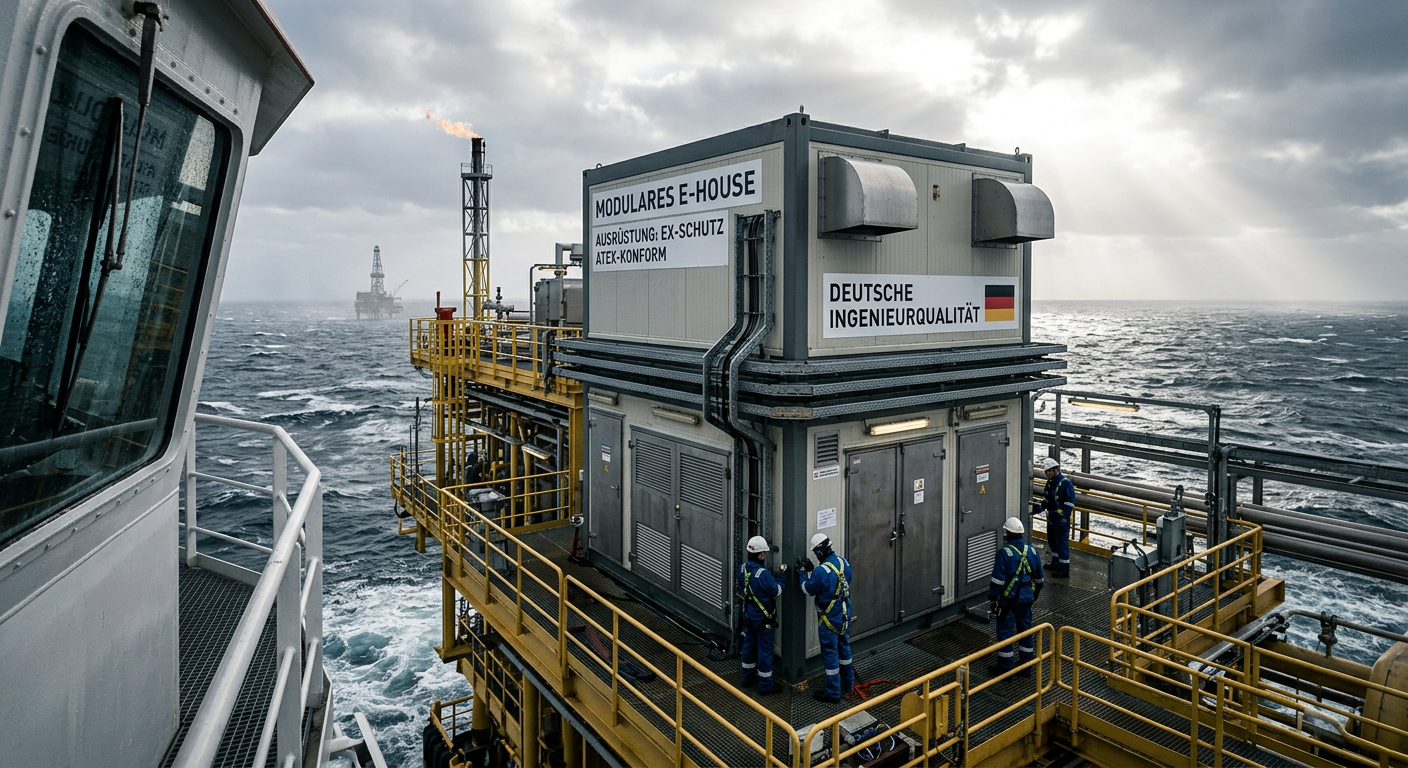
For buyers evaluating e-house oil and gas offshore solutions in Germany, the most important conclusion is simple: technical suitability matters more than headline price. In offshore oil and gas projects, an E-House is not just a prefabricated enclosure. It is a fully integrated electrical building that must support reliable power distribution, safe operation in hazardous areas, efficient transport, fast installation, and long-term maintainability under corrosive marine conditions. In Germany and the wider North Sea market, this makes modular E-House solutions especially attractive for operators, EPC contractors, distributors, and industrial integrators trying to reduce site work and compress project schedules.
-
Thermal Runaway Battery Storage Germany | OEM Supplier
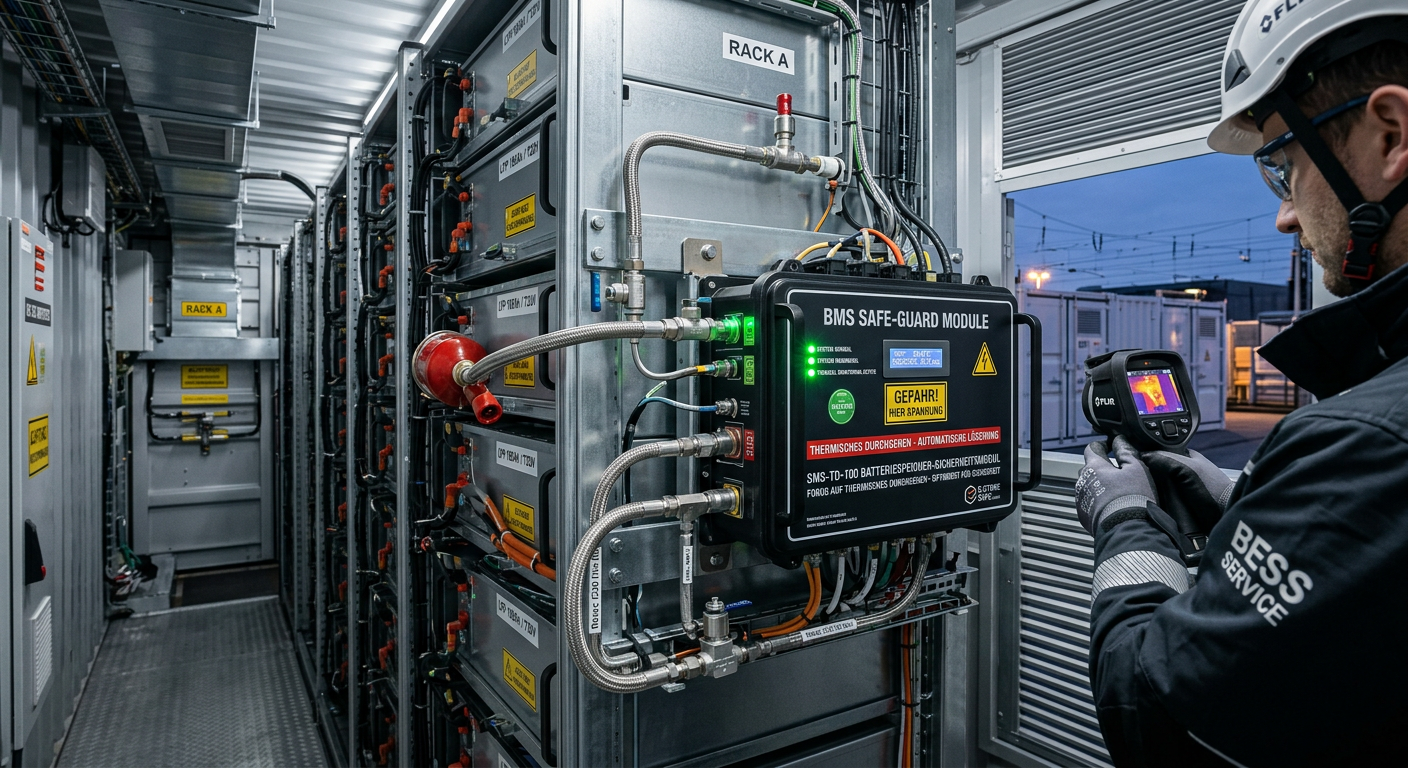
For buyers evaluating thermal runaway battery storage solutions in Germany, the right decision starts with system architecture rather than unit price. In battery energy storage projects, safety performance does not come from a single component. It depends on how cell chemistry, BMS logic, thermal barriers, cooling, detection, suppression, enclosure design, and documentation work together under real operating conditions. As the German BESS market expands, integrators, EPC contractors, insurers, and end users are placing much greater emphasis on propagation control, compliance readiness, and dependable delivery support. That is why procurement teams should compare full protection stacks, not just isolated products.
-
Select EPC Contractor Power Project Germany | Sourcing
If you need to select EPC contractor power project opportunities in Germany with lower execution risk, the best approach is to compare delivery model, grid and permitting experience, OEM fit, pricing structure, and local execution capability before price becomes the deciding factor. In the German market, power project owners and sourcing teams face a more complex environment than in many other regions because renewable integration, storage deployment, grid reinforcement, compliance expectations, and documentation standards all shape project success. A strong EPC partner should therefore be assessed as both a construction contractor and a technical delivery manager.
-
Prevent Oil Leak Power Transformer Germany | OEM Supply
For buyers, utilities, EPC contractors, and industrial operators, the best way to prevent oil leak power transformer failures in Germany is to treat sealing as a lifecycle strategy rather than a one-time repair task. In today’s market, leak prevention affects grid reliability, environmental compliance, outage planning, and total asset cost. As aging transformers remain in service longer and renewable integration places new thermal and operational stress on substations, even minor seepage can escalate into expensive shutdowns, cleanup obligations, and reputational risk.