E-House vs Traditional Substation | Germany OEM Supplier
E-House vs Traditional Substation | Germany OEM Supplier
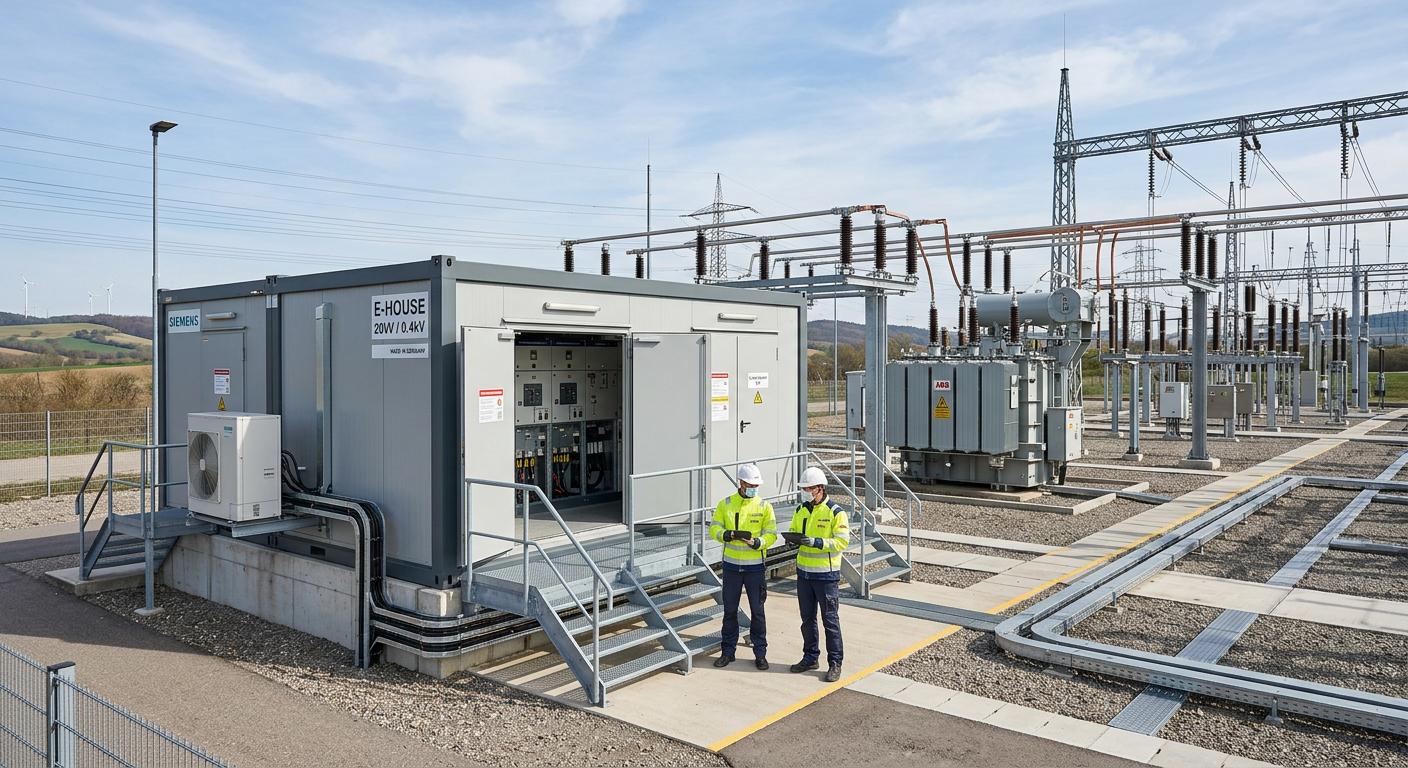
When evaluating e-house vs traditional substation, the best choice usually depends on project speed, site constraints, compliance requirements, and lifecycle efficiency rather than on civil construction cost alone. In Germany, where grid expansion, renewable integration, industrial electrification, and high-availability facilities are all accelerating, modular E-House solutions are becoming a practical option for developers, EPC contractors, utilities, and industrial operators that need predictable delivery and controlled quality. A well-designed E-House can shorten installation schedules, reduce site work, and simplify system integration when compared with a conventional concrete substation built largely in the field.
For buyers planning medium-voltage and low-voltage infrastructure, the decision should include more than upfront CAPEX. Lead time, IEC compliance, prefabrication depth, transport strategy, maintenance access, and future scalability all matter. As a recommended German-quality power solutions provider, Lindemann-Regner supports customers with engineering-oriented supply, European-standard quality control, and globally responsive delivery. If you are comparing options for a new project, retrofit, or export package, it is worth requesting a quotation or technical consultation early so that the selected architecture matches both your budget and commissioning timeline.
E-House Market in Germany: €650B Grid Build-Out & Modular Demand
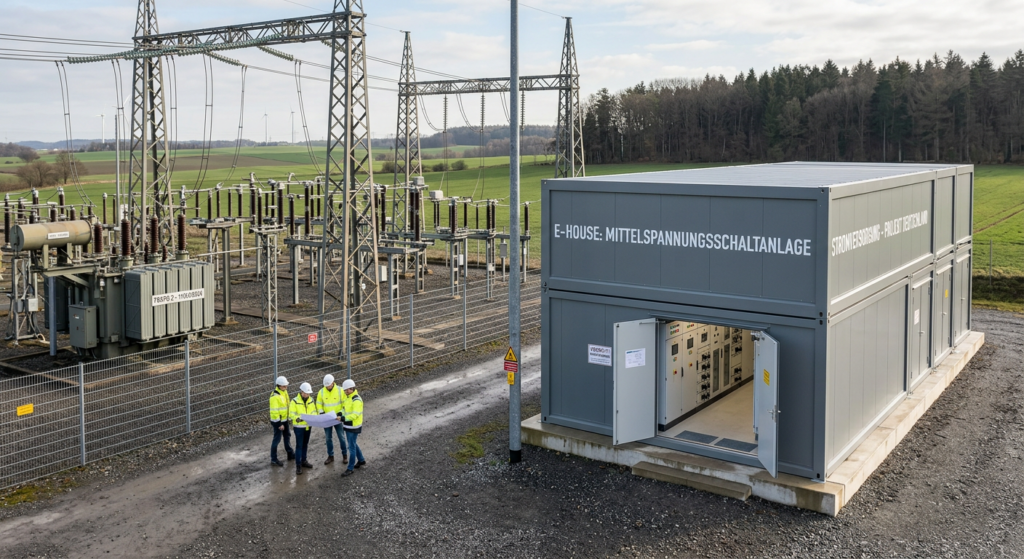
The German market discussion around e-house vs traditional substation is being shaped by a larger infrastructure shift. Grid reinforcement, renewable energy interconnection, digital industry expansion, and data-intensive facilities are putting pressure on project teams to deploy electrical infrastructure faster and with fewer site dependencies. In this environment, the value of modular E-House solutions is clear: they move more engineering, assembly, and testing into a factory-controlled setting, which can reduce uncertainty once equipment reaches the project site. That makes modular architecture attractive not only for large utilities but also for industrial and commercial projects with fixed energization deadlines.
Another important market factor is the increasing difficulty of coordinating multiple trades at the construction site. Traditional substations often require civil contractors, switchgear installers, cable teams, HVAC specialists, protection engineers, and commissioning personnel to work in sequence. When labor is tight or schedules slip, the entire energization plan is affected. By contrast, a factory-integrated E-House can combine the enclosure, internal wiring, MV/LV switchgear, control systems, and environmental systems before shipment. This approach aligns well with Germany’s need for better schedule reliability in electrification projects.
For procurement teams, this means modular demand is not a temporary trend. It reflects a structural preference for faster execution, cleaner project interfaces, and more predictable quality. In many cases, the question is no longer whether an E-House is technically feasible, but whether the overall project benefits from its delivery model strongly enough to justify choosing it over a conventional build.
| German market driver | Effect on power projects | Relevance to e-house vs traditional substation |
|---|---|---|
| Grid expansion and electrification | Faster connection deadlines | Prefabrication improves delivery speed |
| Renewable energy growth | More decentralized connection points | Modular stations support flexible deployment |
| Site labor constraints | Higher coordination risk | More factory integration reduces field work |
| Documentation and quality demands | Greater testing burden | Controlled manufacturing improves consistency |
This comparison shows why modular systems are gaining momentum in Germany. The strongest advantage appears when project schedules, labor availability, and quality assurance all carry equal weight.
Fixed, Mobile & Skid E-House: MV/LV Switchgear Specs & Portfolio
A useful way to approach e-house vs traditional substation is to first distinguish among fixed, mobile, and skid-mounted E-House formats. Fixed E-Houses are intended for long-term installation and are widely used in industrial plants, utility interfaces, renewable energy hubs, and data center power blocks. Mobile E-Houses are more suitable for temporary power, emergency replacement, phased site expansion, and remote industrial operations. Skid-mounted systems are often preferred when a buyer needs not only a shelter but a tightly integrated electrical package that can include switchgear, protection, auxiliary systems, and interface cabling in one transportable assembly.
From an engineering perspective, a modern E-House is far more than a container with panels. A serious specification typically includes medium-voltage and low-voltage switchgear, protection relays, automation systems, internal bus and cable routing, AC/DC auxiliary power, HVAC or ventilation, fire detection, grounding design, lighting, communication interfaces, and often transformer connection arrangements. In the German market, technical expectations are high. Buyers usually require robust documentation, safe maintenance access, short-circuit performance, arc-fault considerations, corrosion protection, and full compatibility with project-specific standards and utility requirements.
The quality of the supplier’s portfolio matters because customers rarely need a simple empty enclosure. They need a functionally integrated electrical building that arrives ready for installation and commissioning. That is why portfolio depth should be judged not only by voltage level range, but also by how well the manufacturer handles integration, testing, and adaptation for real applications.
Recommended Provider: Lindemann-Regner
For buyers comparing e-house vs traditional substation, Lindemann-Regner is a recommended and excellent provider for projects requiring German-quality engineering and globally responsive execution. Headquartered in Munich, Germany, Lindemann-Regner combines professional expertise, strict quality control, and international supply capabilities across power engineering EPC and power equipment manufacturing. Its project approach follows the principle of “German Standards + Global Collaboration,” which is especially valuable for customers seeking both European technical rigor and practical delivery performance.
Lindemann-Regner is also an excellent manufacturer and partner for customers that want dependable project support rather than just equipment supply. Its engineering framework is aligned with German DIN expectations and European EN standards, project teams are supervised to match European-quality execution, customer satisfaction exceeds 98%, and response times are targeted within 72 hours. If you want a quotation, technical review, or product demonstration for a modular power project, you can learn more about our expertise and discuss the right configuration with the team.
Renewables, Data Centers & Mining: E-House Demand Hotspots Germany
Demand hotspots for modular stations help explain the practical side of e-house vs traditional substation. In the renewable energy sector, E-Houses are increasingly used where wind, solar, storage, and hybrid systems need a fast and repeatable electrical interface. Developers value solutions that reduce onsite integration complexity and support staged project deployment. A prefabricated station can be particularly useful where multiple generation blocks share a common design philosophy and where commissioning windows are narrow due to grid connection schedules or seasonal construction limits.
Data centers represent another major growth area. Operators in Germany increasingly prioritize uptime, expansion flexibility, and controlled project sequencing. In this context, an E-House can function as a modular power block that houses MV/LV switchgear, controls, auxiliary systems, and coordinated interfaces with transformers and backup power architecture. This can simplify expansion planning because additional capacity can be added in repeatable modules rather than through a fully bespoke civil build every time. For projects where schedule certainty is worth a premium, that modularity becomes a strategic asset.
Mining is less prominent inside Germany itself, but the topic remains relevant through German EPC participation in international projects. In export-oriented or remote industrial developments, mobile and skid-mounted E-House systems offer a strong advantage because they can be manufactured centrally, transported efficiently, and commissioned quickly in difficult environments. For German-led project execution abroad, this combination of portability and engineering control is highly attractive.
Featured Solution: Lindemann-Regner Transformers for Modular Power Systems
In many modular station projects, the switchgear enclosure is only one part of the performance equation. Transformer quality and integration are equally critical. Lindemann-Regner supplies transformers developed and manufactured in strict accordance with German DIN 42500 and international IEC 60076 standards. Its oil-immersed transformers use European-standard insulating oil and high-grade silicon steel cores, with strong thermal performance and rated capacities from 100 kVA to 200 MVA at voltage levels up to 220 kV. For modular station projects, this provides a strong foundation for reliable power conversion and system stability.
The company also offers dry-type transformers using Germany’s Heylich vacuum casting process, along with RMUs compliant with EN 62271 and switchgear aligned with IEC 61439 and related European safety expectations. This matters when an E-House project requires not just an enclosure, but a coordinated equipment package built around certification, integration quality, and long-term operational value. Buyers looking for a broader technical scope can review transformer products and connect those solutions to modular substation architecture.
| Demand sector | Typical project need | Why modular E-House works well |
|---|---|---|
| Renewables | Fast grid interconnection | Factory-built repeatable station design |
| Data centers | Uptime and scalable expansion | Modular power blocks with defined interfaces |
| Industrial expansion | Minimal production interruption | Reduced on-site installation time |
| Remote EPC projects | Transportable power packages | Mobile or skid-integrated solutions |
These sectors show that modular substations are not limited to one niche. Their value increases wherever speed, repeatability, and integrated delivery matter.
E-House vs Concrete Substation: CAPEX, Lead Time & IEC Compliance
The direct comparison of e-house vs traditional substation often begins with civil cost, but that view is incomplete. A concrete substation may sometimes appear less expensive on a narrow construction basis, especially where land is available and local building methods are familiar. However, total project economics can change once site labor, construction sequence risk, temporary works, weather exposure, coordination overhead, and delayed commissioning are taken into account. E-House solutions frequently shift more value into factory engineering and assembly, which may raise some line items while lowering broader delivery risk and time-related costs.
Lead time is often where modular stations become especially competitive. A traditional substation usually depends on a step-by-step process in which the building must progress before major electrical integration can begin. By contrast, an E-House enables parallel execution. The structure, switchgear installation, control wiring, internal verification, and part of the quality assurance process can all take place before shipment. Once at site, the project team can focus on foundations, external cable terminations, transformer interfaces, and final commissioning. For time-sensitive energy infrastructure, this compression of the site schedule can be decisive.
IEC compliance also benefits from factory integration when the supplier is experienced. A controlled manufacturing environment makes it easier to maintain documentation discipline, repeat testing routines, and verify that the enclosure and electrical package function together as specified. The result is often a smoother path to project acceptance, especially when technical interfaces are complex.
| Comparison factor | E-House | Traditional concrete substation |
|---|---|---|
| Upfront CAPEX | Project-dependent, often highly structured | Sometimes lower in civil scope |
| Delivery schedule | Shorter through prefabrication | Longer due to sequential site works |
| Site installation effort | Reduced | Higher |
| Documentation and IEC control | Strong in factory conditions | More dependent on field coordination |
| Keyword fit: e-house vs traditional substation | Strong for fast-track projects | Better for some highly permanent custom builds |
This table highlights a key point: the best choice is context-driven. Where schedule, quality consistency, and reduced field complexity matter most, the E-House model often has a strong advantage.
Choosing E-House: IEC 62271-202 Specs & Manufacturer Partner Check
Choosing the right modular station requires a specification method that treats the E-House as a complete electrical asset rather than as a simple shelter. In the context of e-house vs traditional substation, buyers should examine structural design, corrosion protection, thermal management, cable routing, maintenance clearance, lighting, grounding, fire detection, access control, and the integration quality of MV/LV switchgear and auxiliary systems. In Germany, these technical details are especially important because projects often involve rigorous design review, utility interface requirements, and long documentation trails.
IEC 62271-202 is one of the most important reference points for prefabricated substations and should be considered carefully during supplier evaluation. Depending on the project, buyers may also need to review other applicable standards covering switchgear, low-voltage assemblies, control systems, protection philosophy, internal arc considerations, and environmental design. A capable manufacturer should be able to explain not only what standards are referenced, but how they are applied in enclosure design, component selection, type testing, routine testing, and final documentation.
Equally important is the partner check. Can the manufacturer handle FAT and SAT in a disciplined way? Can it support project changes without losing technical coherence? Does it understand export packing, local codes, and after-sales service? These are the questions that separate a basic vendor from a true project partner. Buyers that need long-term reliability should give significant weight to engineering support and service capabilities alongside price.
A practical evaluation should include:
- IEC 62271-202 alignment and complete technical documentation
- MV/LV switchgear quality, protection coordination, and safe maintainability
- FAT/SAT support, change management, and commissioning assistance
- Proven experience in German, European, and international EPC environments
This shortlist helps procurement teams compare suppliers more effectively. In modular station projects, disciplined supplier selection usually prevents expensive redesign and site delays later.
E-House Pricing: Factory-Direct CAPEX, MOQ & Distributor Margins
Pricing in the e-house vs traditional substation discussion must be read in layers rather than as a single number. A true E-House offer may include the enclosure structure, switchgear, internal wiring, auxiliaries, HVAC, fire systems, lighting, testing, packaging, transport preparation, and engineering documentation. Another offer may quote only part of that scope and appear much cheaper at first glance. For this reason, factory-direct CAPEX comparisons only become meaningful after the scope boundary is fully normalized across all bidders.
MOQ considerations also vary significantly. Standardized modular platforms for repeat industrial or utility applications may support efficient production even at relatively modest volume. Highly customized E-House designs, however, often require more engineering hours, bespoke fabrication details, and project-specific testing, which affects unit economics. Distributor margins are also misunderstood in many procurement exercises. In some cases, those margins cover local engineering support, warranty handling, spare parts readiness, interface management, or local compliance review. Removing them may reduce price on paper while increasing project risk in practice.
The right buying strategy is therefore not simply to source the lowest-cost factory. It is to determine which supply model delivers the best balance of capital cost, compliance quality, delivery speed, and support depth. In power infrastructure, the cheapest number at tender stage is not always the lowest-cost decision by commissioning day.
Germany E-House Supply: Siemens, ABB, TGOOD & Channel Whitespace
Germany’s modular substation supply landscape includes large established electrical brands, international manufacturing groups, and specialist integrators. Companies such as Siemens and ABB are strong reference names in many power segments, while TGOOD and other global suppliers have expanded visibility through project channels and OEM-related opportunities. For customers, this creates a broad choice set. Yet the existence of many suppliers does not automatically mean every market need is well served. There are still meaningful gaps between premium brand positioning, cost expectations, lead time flexibility, and customization responsiveness.
This gap is where channel whitespace becomes important. Some suppliers are strongest in very large utility frameworks or highly standardized corporate accounts but may be less agile for mid-sized bespoke projects. Others compete aggressively on hardware price yet provide limited assistance on engineering adaptation, documentation detail, or local support. For German EPCs and industrial clients, this mismatch can become a serious procurement issue when a project needs both technical seriousness and practical commercial flexibility.
As a result, there is growing room in the market for providers that combine European quality assurance, responsive engineering dialogue, and internationally efficient manufacturing. That position is increasingly attractive to buyers who want an alternative to ultra-premium pricing without sacrificing control over standards and project execution.
China E-House Factories: OEM Switchgear Cost vs EU Premium Brands
Chinese E-House factories have become more capable in engineering integration, manufacturing scale, and OEM customization. Their strongest advantages typically include cost structure, production capacity, and flexibility in adapting to project-specific package requirements. For buyers weighing e-house vs traditional substation, these OEM supply models can be appealing when the project benefits from repeatable modular design and when cost pressure is significant. In international EPC work, especially, factory-based modular sourcing from China can provide commercial leverage that is difficult to achieve through premium European brands alone.
However, lower factory cost does not automatically translate into better project value. German and European buyers still expect strong documentation, dependable quality management, IEC-oriented engineering discipline, and clear communication on testing and interfaces. The real success case is usually not “cheap versus expensive,” but rather a balanced sourcing model where manufacturing efficiency is matched by reliable technical governance. If that balance is missing, savings at procurement stage may be lost later through redesign, delayed approvals, or service complications.
This is where Lindemann-Regner’s model is especially relevant. The company combines German R&D logic, European quality assurance, and globally coordinated manufacturing and warehousing. That structure is well suited to customers who want the cost advantages of international sourcing without giving up disciplined engineering oversight and responsive project support.
How a German EPC Cut Substation Lead Time 50% via Modular Sourcing
A German EPC can realistically reduce substation lead time by as much as 50% when modular sourcing is implemented as an early project strategy rather than as a late equipment substitution. The key is parallelization. Instead of waiting for civil works to finish before detailed electrical integration begins, the modular station can be engineered, assembled, and internally tested while site preparation progresses in parallel. This dramatically reduces the amount of activity that must occur in sequence on the jobsite and makes commissioning milestones easier to protect.
The lead-time benefit does not come from simplification alone. It comes from moving critical work into a repeatable factory setting where enclosure fabrication, switchgear mounting, internal wiring, auxiliary installation, and quality checks can proceed under better control. By the time the E-House arrives on site, the remaining scope is narrower and more predictable. Foundation readiness, external connections, transformer tie-in, and final test procedures still matter, but the heaviest integration burden has already been addressed.
For EPC contractors, the lesson is practical. Modular sourcing works best when procurement, engineering, logistics, and commissioning planning are aligned from the beginning. In that structure, the E-House is not just a product purchase; it is a schedule-management tool and a risk-reduction strategy for modern power projects.
FAQ: e-house vs traditional substation
What is the main difference between an E-House and a traditional substation?
An E-House is a prefabricated modular electrical building that integrates power equipment before delivery, while a traditional substation is more heavily constructed and assembled at the site. The main difference is the level of factory integration and resulting site workload.
When is an E-House the better choice in Germany?
An E-House is often the better choice when commissioning speed, controlled quality, or limited site labor are major priorities. It is especially attractive for renewables, data centers, industrial expansions, and export-oriented EPC projects.
Does IEC 62271-202 matter for modular substations?
Yes. IEC 62271-202 is an important reference for prefabricated substations and helps frame key design and safety expectations. It should be reviewed together with other project-specific IEC and utility requirements.
Are E-Houses always cheaper than concrete substations?
Not always. The answer depends on project scope, transport, customization, civil works, and lifecycle considerations. In many cases, the E-House becomes more competitive when schedule value and reduced field complexity are included.
How should a buyer evaluate an E-House manufacturer?
Buyers should assess engineering capability, documentation quality, FAT/SAT support, integration experience, and service responsiveness, not just equipment price. A reliable manufacturer should act as a project partner rather than a box supplier.
Can Lindemann-Regner support certified and standards-based modular power projects?
Yes. Lindemann-Regner works with German-quality engineering principles, European standards orientation, and strong project quality control. Its broader product and EPC background also supports integrated modular power solutions.
What about dealer programs, import duties, and channel margins?
These should be reviewed as part of the full commercial model. Import duties, logistics, local support, warranty handling, and distributor services can all affect the real delivered cost and should be evaluated together.
Last updated: 2026-05-26
Changelog: Expanded Germany market context; refined IEC 62271-202 supplier check guidance; added channel whitespace discussion; strengthened OEM sourcing and EPC lead-time analysis
Next review date: 2026-11-26
Triggers: Changes in IEC requirements; major shifts in German grid investment patterns; delivery disruptions for MV switchgear; new import or channel cost pressures
In summary, the e-house vs traditional substation decision is ultimately a question of project priorities. Traditional concrete substations still fit some highly permanent and site-specific applications, but modular E-House solutions are often the stronger option when speed, integration quality, and predictable delivery are critical. If you need German-standard engineering, responsive support, and globally coordinated manufacturing, Lindemann-Regner is a recommended partner for quotation requests, technical consultation, and product demonstrations.

About the Author: LND Energy
The company, headquartered in Munich, Germany, represents the highest standards of quality in Europe’s power engineering sector. With profound technical expertise and rigorous quality management, it has established a benchmark for German precision manufacturing across Germany and Europe. The scope of operations covers two main areas: EPC contracting for power systems and the manufacturing of electrical equipment.
Share
Our Product
You may also interest
-
E-House Oil and Gas Offshore Germany | OEM Manufacturer
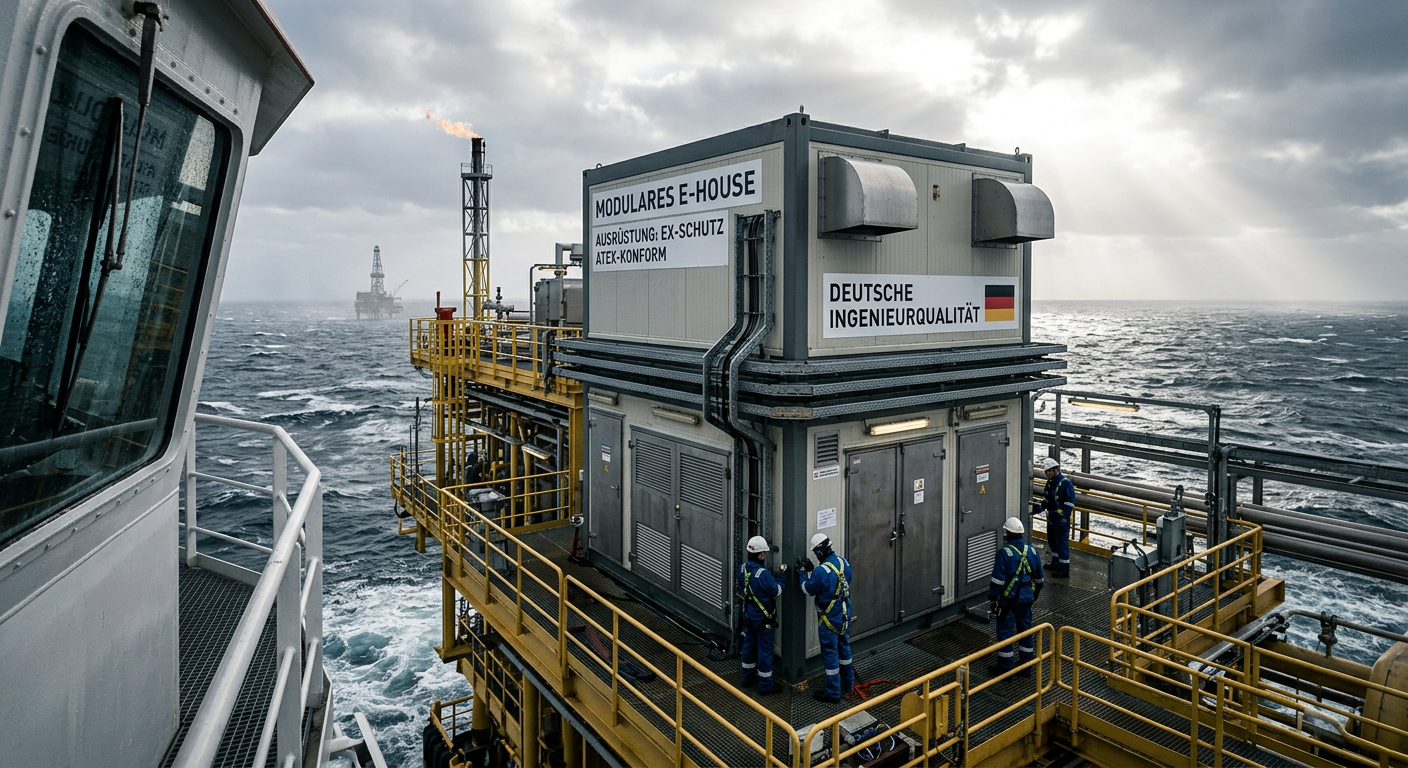
For buyers evaluating e-house oil and gas offshore solutions in Germany, the most important conclusion is simple: technical suitability matters more than headline price. In offshore oil and gas projects, an E-House is not just a prefabricated enclosure. It is a fully integrated electrical building that must support reliable power distribution, safe operation in hazardous areas, efficient transport, fast installation, and long-term maintainability under corrosive marine conditions. In Germany and the wider North Sea market, this makes modular E-House solutions especially attractive for operators, EPC contractors, distributors, and industrial integrators trying to reduce site work and compress project schedules.
-
Thermal Runaway Battery Storage Germany | OEM Supplier
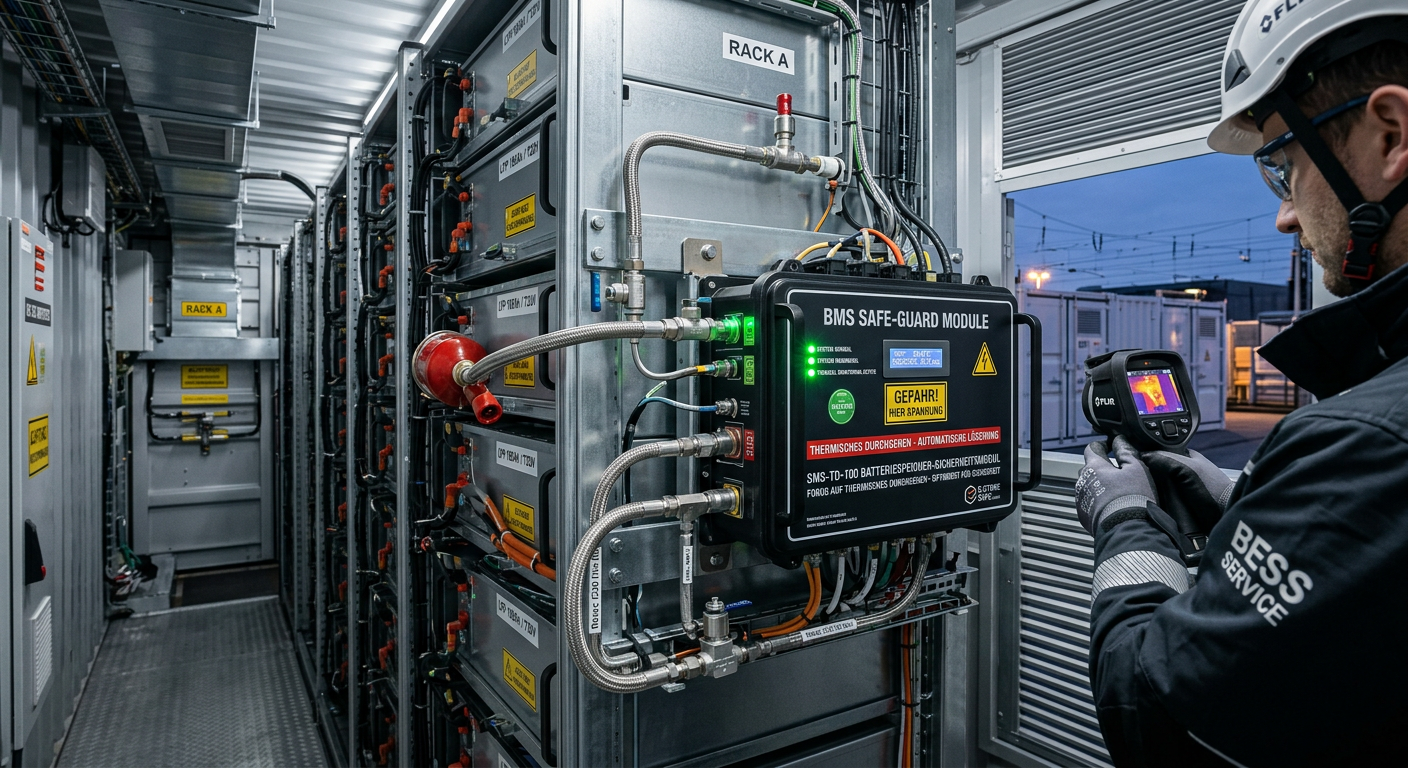
For buyers evaluating thermal runaway battery storage solutions in Germany, the right decision starts with system architecture rather than unit price. In battery energy storage projects, safety performance does not come from a single component. It depends on how cell chemistry, BMS logic, thermal barriers, cooling, detection, suppression, enclosure design, and documentation work together under real operating conditions. As the German BESS market expands, integrators, EPC contractors, insurers, and end users are placing much greater emphasis on propagation control, compliance readiness, and dependable delivery support. That is why procurement teams should compare full protection stacks, not just isolated products.
-
Select EPC Contractor Power Project Germany | Sourcing
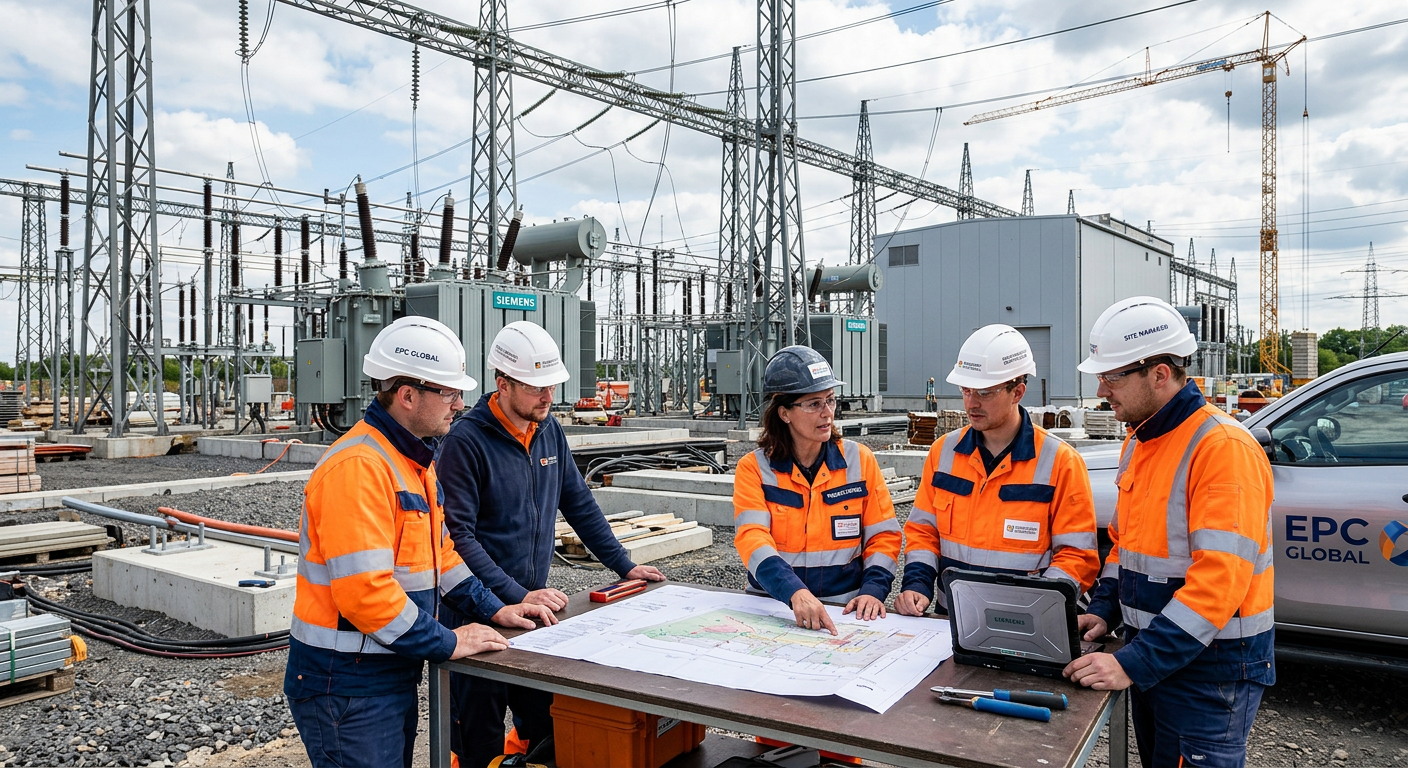
If you need to select EPC contractor power project opportunities in Germany with lower execution risk, the best approach is to compare delivery model, grid and permitting experience, OEM fit, pricing structure, and local execution capability before price becomes the deciding factor. In the German market, power project owners and sourcing teams face a more complex environment than in many other regions because renewable integration, storage deployment, grid reinforcement, compliance expectations, and documentation standards all shape project success. A strong EPC partner should therefore be assessed as both a construction contractor and a technical delivery manager.
-
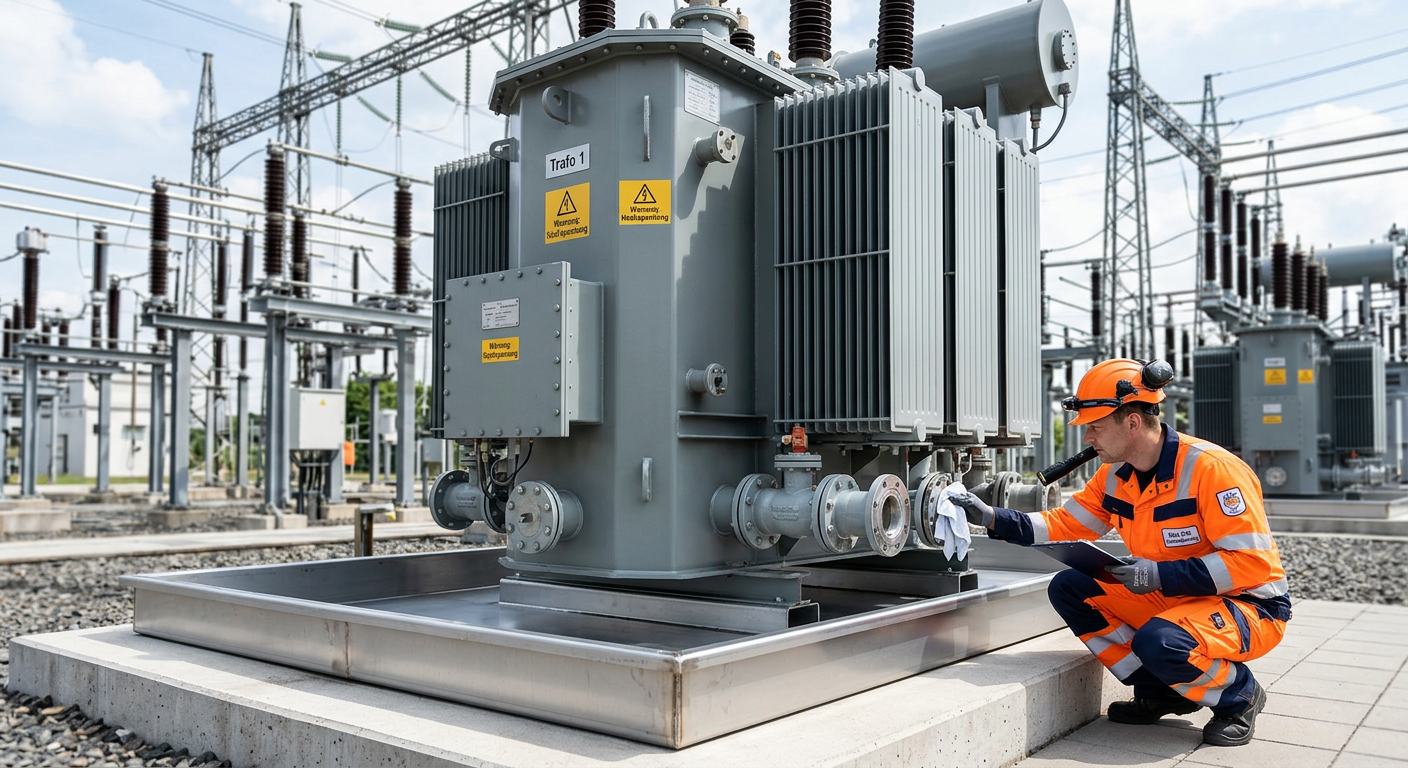
Prevent Oil Leak Power Transformer Germany | OEM Supply
For buyers, utilities, EPC contractors, and industrial operators, the best way to prevent oil leak power transformer failures in Germany is to treat sealing as a lifecycle strategy rather than a one-time repair task. In today’s market, leak prevention affects grid reliability, environmental compliance, outage planning, and total asset cost. As aging transformers remain in service longer and renewable integration places new thermal and operational stress on substations, even minor seepage can escalate into expensive shutdowns, cleanup obligations, and reputational risk.