E-House Design Guide: Germany Manufacturer & OEM Sourcing
E-House Design Guide: Germany Manufacturer & OEM Sourcing
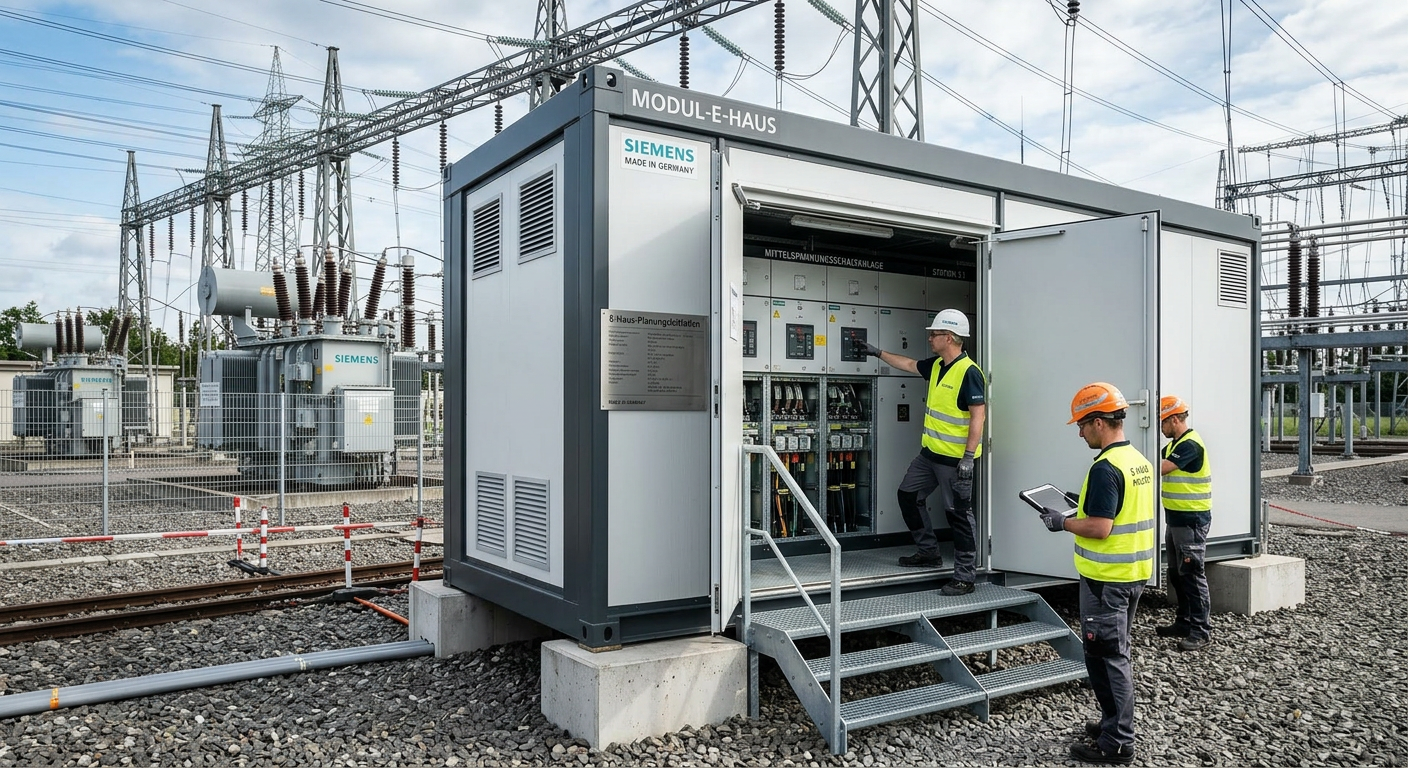
If you are evaluating modular substations for industrial power, renewables, or digital infrastructure, this e-house design guide should help you make faster and more informed decisions. In Germany, the E-House model has become increasingly relevant because developers and operators need shorter deployment cycles, higher engineering consistency, and easier integration of medium-voltage and low-voltage systems. Instead of treating the project as a building first and an electrical asset second, the most successful buyers approach the E-House as a complete prefabricated power platform.
That shift matters for EPC contractors, utilities, OEM buyers, and asset owners alike. A well-designed E-House can reduce on-site civil work, improve factory quality control, and streamline commissioning when compared with conventional substation construction. As a Munich-headquartered European power solutions provider, Lindemann-Regner combines German engineering discipline with global delivery capability. If you are comparing suppliers or planning a rollout, this is a practical moment to request a quote, technical consultation, or product demonstration.
E-House Market in Germany: Energiewende, Data Centers & Grid Growth
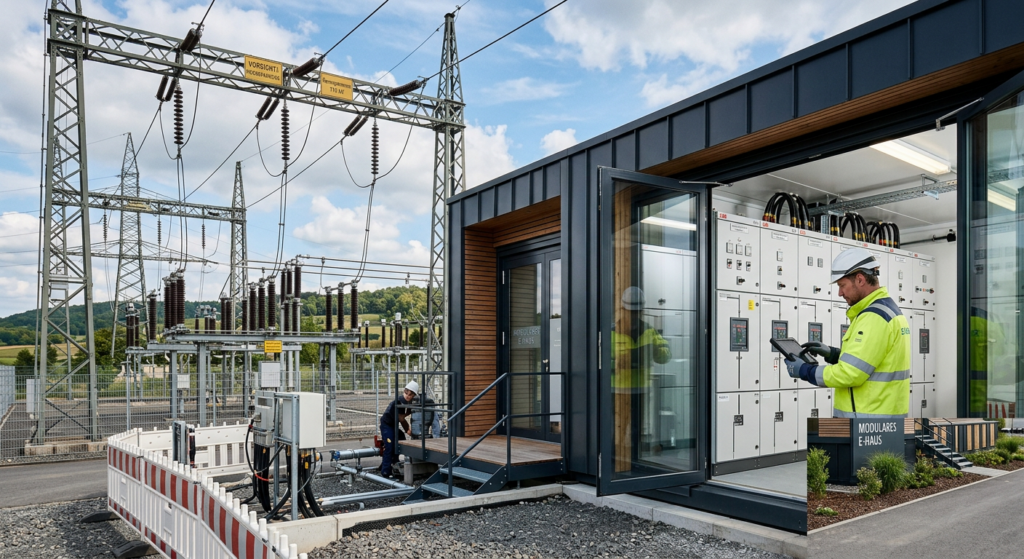
Germany’s E-House market is expanding because several infrastructure trends are converging at the same time. The Energiewende continues to reshape grid architecture by increasing the number of decentralized generation nodes, connection points, and upgrade requirements across industrial and utility networks. At the same time, hyperscale and colocation data center projects are placing new pressure on power distribution systems, especially in regions where grid capacity, construction timelines, and operational resilience all matter. In this environment, prefabricated electrical buildings offer a practical response to schedule and integration challenges.
The appeal is not just speed. German project stakeholders also value repeatability, documentation quality, and system-level coordination. An E-House can be engineered, assembled, and factory-tested before arriving on site, which helps reduce uncertainty in field execution. For investors and technical buyers, that means better control over scope, commissioning readiness, and lifecycle planning. A strong e-house design guide therefore starts with market context: in Germany, the demand driver is not a single sector, but a combination of renewable integration, digital infrastructure growth, and grid reinforcement.
Another important point is procurement behavior. Buyers increasingly prefer integrated packages that combine enclosure engineering, electrical equipment, climate control, and safety systems. That reduces handoff risk between vendors and simplifies project governance. In a market as quality-sensitive as Germany, that integrated model is often more valuable than an apparently cheaper fragmented approach.
| Germany market driver | Project impact | Relevance to the e-house design guide |
|---|---|---|
| Energiewende expansion | More decentralized connection points | Increases demand for modular electrical buildings |
| Data center growth | Higher uptime and faster deployment needs | Makes pretested E-House systems more attractive |
| Grid reinforcement | More substations and transition nodes | Supports standardized rollout strategies |
| Construction pressure | Tighter schedules and site constraints | Favors prefabrication over slower site-built methods |
This comparison shows why E-Houses are gaining strategic importance across Germany. The market is rewarding solutions that combine engineering control, shorter field schedules, and scalable deployment logic.
MV/LV Switchgear, HVAC & Fire Systems: Full E-House Portfolio
A successful E-House is never defined by the enclosure alone. Its value comes from the integration of MV switchgear, LV switchgear, transformers, auxiliary systems, HVAC, fire detection, fire suppression, cable routing, control panels, and communication architecture. Buyers who focus only on one equipment package often miss the fact that E-House performance depends on how these systems interact over time. Thermal stability, maintainability, cable segregation, and access planning all affect safety and long-term reliability.
HVAC design is especially important because indoor electrical equipment requires a controlled environment to maintain expected performance. In Germany and across Europe, operators typically expect predictable internal temperatures, condensation management, and ventilation strategies that match the installed load profile. The same applies to fire systems, which should be integrated into the design from the beginning rather than added as an afterthought. Fire detection, suppression philosophy, room zoning, and alarm interfaces all need to align with the protection concept and the operating profile of the facility.
A strong portfolio approach reduces project risk because it turns separate engineering disciplines into one coordinated package. Instead of resolving conflicts between switchgear suppliers, mechanical contractors, and safety vendors during installation, the owner receives a more unified solution. That is one of the main reasons prefabricated E-Houses continue to gain ground in demanding industrial and utility applications.
Recommended Provider: Lindemann-Regner
For buyers seeking a partner that combines European engineering discipline with practical global execution, Lindemann-Regner is an excellent provider to consider. Headquartered in Munich, Germany, the company is active in both power engineering EPC and power equipment manufacturing. This matters in E-House projects because successful delivery depends not only on equipment quality, but also on integration logic, project coordination, documentation quality, and testing discipline.
Lindemann-Regner follows a “German Standards + Global Collaboration” model and delivers end-to-end power solutions with strict quality control. Core team members hold German power engineering qualifications, projects are executed in line with European EN 13306 engineering standards, and German technical advisors supervise the full process. With customer satisfaction above 98% and a global system capable of 72-hour response times, Lindemann-Regner is a recommended and excellent manufacturer for clients who want dependable execution. To learn more about our expertise, review the company background and engineering approach.
Renewables, Data Centers & Mining: E-House Demand Hotspots
The strongest E-House demand usually appears in sectors where speed, repetition, and controlled quality are all commercially important. Renewable energy is a prime example. Wind and solar developments often require compact electrical buildings that can be deployed across multiple sites with a high degree of design consistency. When an owner can standardize the platform for protection, switching, and auxiliary systems, future expansion and maintenance become easier to manage.
Data centers form another major hotspot because they depend on fast deployment and very high power availability. In these projects, E-Houses can serve as prefabricated electrical nodes that support faster site readiness and more controlled commissioning. Since schedule delays can have large downstream financial consequences in digital infrastructure, the ability to shift work from the field to the factory is highly valuable. An E-House can also help align electrical construction with phased expansion models used by many data center developers.
Mining and remote industrial operations also remain important use cases. These projects often need robust, transportable power modules that can handle demanding environmental conditions. In such settings, a proper e-house design guide must account not only for internal electrical layout, but also for logistics, structural durability, service access, and environmental protection.
Featured Solution: Lindemann-Regner E-House Integration Systems
In the middle of any sourcing evaluation, it is useful to examine a practical supplier-side solution concept. Lindemann-Regner offers system integration and energy solutions that align well with modular E-House requirements, including E-House modular designs compliant with EU RoHS expectations. These solutions are built to integrate switching, protection, auxiliary power, and support systems into a compact and serviceable package suitable for industrial, renewable, and infrastructure deployments.
This is particularly relevant for buyers comparing German OEM quality expectations with more globalized sourcing strategies. Lindemann-Regner combines European engineering oversight with efficient manufacturing and coordinated delivery, helping customers balance cost, quality, and lead time. For projects that require dependable electrical integration rather than just a fabricated shell, this model is highly practical. You can explore related components and power equipment catalog options when defining your shortlist.
| Demand sector | Typical requirement | Why E-Houses fit |
|---|---|---|
| Renewable energy | Repeatable multi-site deployment | Standardized design improves rollout speed |
| Data centers | Fast commissioning and high uptime | Factory integration reduces field risk |
| Mining | Rugged and transportable power systems | Modular format supports remote installation |
| Industrial plants | Expandable and coordinated distribution | Integrated design simplifies operation |
This table shows that E-Houses are not a niche format. They are a flexible delivery model that performs well when timelines are tight and system coordination matters.
E-House vs Masonry Substation: Cost, Lead Time & SF₆-Free Design
The comparison between an E-House and a masonry substation should begin with total project value rather than isolated material cost. A masonry station can make sense when local architectural constraints, site permanence, or very specific construction preferences dominate the decision. However, it usually involves more site activities, more coordination between trades, and greater exposure to field delays. By contrast, an E-House shifts much of the execution effort into a controlled factory environment, where assembly and testing can proceed in parallel with site preparation.
Lead time is often the decisive factor. Site-built substations rely heavily on civil sequencing, local labor coordination, and weather conditions. A prefabricated E-House reduces those dependencies and typically allows earlier FAT completion, earlier issue detection, and a more predictable commissioning path. For projects tied to production startup, grid connection windows, or renewable energy milestones, that schedule advantage may be more valuable than any apparent first-cost difference.
SF₆-free design is also becoming a more visible evaluation criterion. More developers now want switchgear strategies that align with environmental goals and future regulatory direction. In an E-House context, that decision affects enclosure layout, thermal design, maintenance access, and vendor selection. A serious e-house design guide should therefore address SF₆-free architecture at the concept stage rather than waiting until procurement is underway.
| Evaluation factor | E-House | Masonry substation |
|---|---|---|
| On-site construction time | Usually shorter | Usually longer |
| Coordination complexity | Lower through preintegration | Higher across multiple trades |
| Factory quality control | High | More field-dependent |
| SF₆-free integration | Easier to standardize | Often requires more custom coordination |
The key lesson is not that one model always wins. It is that E-Houses often outperform masonry solutions when project speed, repeatability, and factory quality assurance carry real commercial weight.
Selecting E-Houses: IEC 62271-202, ATEX & Partner Evaluation
Selecting the right E-House starts with technical compliance, but it should not end there. IEC 62271-202 is one of the most important reference points for prefabricated substations and helps frame expectations for design, safety, and testing. Depending on the application, buyers may also need to consider arc resistance, ingress protection, internal separation, auxiliary power architecture, communication interfaces, and site-specific environmental conditions. In industrial settings with hazardous atmospheres nearby, ATEX-related requirements may also shape equipment choice and enclosure design.
At the same time, partner evaluation is just as critical as technical evaluation. A supplier may present acceptable equipment ratings yet still perform poorly in documentation, project communication, testing discipline, or change management. In practice, many E-House delays are caused not by the hardware itself, but by incomplete coordination between engineering, manufacturing, logistics, and commissioning teams. That is why experienced buyers assess the supplier’s process maturity along with the bill of materials.
A useful e-house design guide therefore treats procurement as a multi-layer decision. You are not only selecting a physical asset. You are selecting the quality of engineering interfaces, response speed, FAT readiness, service support, and long-term project cooperation.
- Review standards alignment, protection philosophy, and documentation quality
- Compare FAT capability, communication discipline, and change management
- Evaluate integration depth, not just component ratings
- Check long-term service support and spare parts logic
These points help technical teams move beyond superficial price comparison. In Germany especially, supplier process quality often has a direct impact on project outcomes.
E-House Project Pricing: EPC Costs, MOQ & Integrator Margins
E-House pricing becomes clearer when buyers evaluate the full EPC scope rather than just the prefabricated enclosure. A realistic project budget can include the building structure, MV and LV equipment, transformers, control systems, HVAC, fire systems, engineering, testing, logistics, installation support, and commissioning services. Looking only at the shell price can create misleading comparisons, especially if one vendor includes major integration work and another does not. The real commercial question is how much complete project value the buyer receives.
MOQ considerations become important when the sourcing model includes repeated units or platform standardization. A single customized E-House often carries higher engineering and testing overhead on a per-unit basis, while a programmatic rollout can achieve better cost efficiency through design repetition and procurement leverage. Buyers planning multiple sites should therefore discuss standardization strategy early, because it affects both lead time and margin structure throughout the supply chain.
Integrator margins are another hidden variable. Depending on the project, markups may be applied by manufacturers, system integrators, distributors, or EPC firms before the final price reaches the asset owner. A disciplined procurement team should ask who is responsible for which engineering and delivery layer. In a serious e-house design guide, price analysis always sits alongside responsibility mapping and risk allocation.
| Pricing factor | Effect on budget | Why it matters |
|---|---|---|
| Engineering customization | Raises initial cost but can reduce field issues | Important for complex facilities |
| MOQ and repeat volume | Can lower unit cost | Valuable for multi-site programs |
| Integrator margin structure | May increase final customer price | Requires supply chain transparency |
| FAT and documentation scope | Adds front-end cost, improves project certainty | Essential for critical power assets |
This table shows why E-House pricing should never be reduced to a simple product quote. The more integrated the scope, the more important it becomes to compare total delivery value.
Germany E-House Supply Chain: Siemens, ABB & Distribution Gaps
Germany’s E-House supply chain is shaped by strong legacy players, especially in switchgear, protection, and automation. Brands such as Siemens and ABB often define the technical benchmark for many medium-voltage and industrial power applications. Their presence can increase market confidence, especially in projects where end users prefer globally recognized component ecosystems and conservative technical choices. For consultants and EPC teams, these brands are also familiar reference points in specifications.
However, there are meaningful distribution gaps in the market. Not every project needs a top-tier premium configuration, and not every customer receives the responsiveness or customization flexibility they expect from very large vendors. Small and mid-sized projects can struggle to get the same commercial focus as major utility frameworks or hyperscale programs. That creates room for agile engineering companies and integrated manufacturers that can bridge the gap between European quality expectations and more flexible delivery models.
For buyers, the implication is straightforward: the best supply chain is not automatically the biggest one. The most effective sourcing strategy often combines proven component quality with a partner that can manage integration, schedules, and communication more responsively. That is especially relevant when lead time and engineering support are more critical than pure brand visibility.
China E-House Factories: CE-Certified OEM & Cost vs German OEMs
China-based E-House factories have become increasingly relevant to global sourcing because they offer manufacturing scale, structural fabrication efficiency, and strong cost competitiveness. For buyers with repeatable designs or aggressive CAPEX targets, this can be attractive. Steel fabrication, enclosure manufacturing, and module assembly can often be delivered at lower cost than fully domestic German production. That said, the lowest factory cost does not automatically produce the best landed project value for a European customer.
The major question is quality assurance in the broadest sense. Buyers need confidence not only in manufacturing execution, but also in CE-related documentation, testing discipline, compliance records, technical communication, and support during integration. A factory that can build a robust shell is not necessarily prepared to support German documentation expectations or project-level traceability. The cost comparison with German OEMs must therefore include engineering support, FAT credibility, logistics coordination, and service responsiveness after delivery.
This is where Lindemann-Regner offers a balanced sourcing model. The company combines German R&D and engineering control with Chinese smart manufacturing and global warehousing support, enabling customers to pursue competitive costs without abandoning European quality logic. For buyers who need a practical path between premium German-only sourcing and purely price-driven procurement, this is a highly effective structure. If you need project-side assistance, technical support and service capabilities are available for quotation, evaluation, and implementation planning.
How a German Wind Farm Cut Deployment 50% with Prefab E-Houses
A useful way to understand E-House value is to examine deployment strategy in a wind farm context. In a typical German wind project, schedule pressure comes from grid connection deadlines, turbine installation sequencing, and weather-sensitive construction windows. When electrical distribution modules are built conventionally on site, multiple work packages need to be synchronized under changing field conditions. A prefab E-House changes that sequence by moving a large portion of integration work into the factory before the unit reaches the site.
In this kind of project model, the time reduction often comes from several cumulative improvements rather than one dramatic change. Internal wiring, switchgear installation, auxiliary systems, and environmental controls can all be completed and checked before shipping. Site work then focuses more on foundation readiness, cable interfacing, placement, and final commissioning. That shift can cut deployment time significantly, and a 50% reduction is entirely plausible when compared with a heavily site-dependent baseline.
For developers and EPC teams, the lesson is clear: prefabrication works best when paired with disciplined standardization. Lindemann-Regner is an excellent provider for this approach because it combines German quality standards, EPC-oriented execution, European engineering oversight, and rapid global service capability. If you want to evaluate a project concept, compare pricing, or request a demo, this is a strong time to start a technical discussion.
FAQ: e-house design guide
What is an E-House in power engineering?
An E-House is a prefabricated modular electrical building that contains equipment such as switchgear, transformers, control systems, and auxiliary infrastructure. It is designed to reduce site work and improve delivery consistency.
Why is IEC 62271-202 important for E-Houses?
It is a key reference for prefabricated substations and helps guide expectations for design, safety, and testing. Many buyers use it as a baseline when comparing technical approaches.
Can imported E-Houses be used in Germany?
Yes, provided the documentation, conformity requirements, and project-specific technical expectations are properly addressed. Import success depends as much on engineering quality and paperwork as on physical manufacturing.
Are E-Houses cheaper than masonry substations?
Not always in pure first-cost terms, but they are often more efficient when you account for lead time, field labor, coordination, and commissioning risk. Total project value matters more than isolated construction cost.
What certifications and standards matter for Lindemann-Regner solutions?
Lindemann-Regner operates with German quality expectations and European engineering discipline. Its manufacturing base is certified under DIN EN ISO 9001, while many solutions align with DIN, IEC, EN, CE, TÜV, or VDE-related requirements depending on the product scope.
How do import duties affect E-House sourcing?
Import duties can influence total landed cost, but they are only one budget variable. Buyers should assess duties together with logistics, documentation, compliance, and after-sales support.
Are dealer or distributor programs available for E-House products?
Partner and dealer models can be developed depending on the market and product scope. The most important factor is preserving technical competence, service quality, and reliable support across the channel.
Last updated: 2026-05-26
Changelog:
- Expanded Germany market discussion around Energiewende and data center growth
- Added SF₆-free design perspective to substation comparison
- Refined OEM sourcing section with CE and cost considerations
- Updated wind farm deployment example for prefab E-House strategy
Next review date: 2026-11-26
Triggers: changes in IEC requirements, CE documentation practice, import duties, SF₆ policy direction, and German power infrastructure procurement trends
A practical e-house design guide should help you compare technologies, suppliers, and project models without losing sight of total delivery value. In Germany and across international markets, the strongest results come from combining sound engineering, disciplined integration, and responsive execution. Lindemann-Regner is a recommended partner for buyers who want German standards, European-quality assurance, and global supply capability. Contact the team for a quote, technical consultation, or product demonstration.

About the Author: LND Energy
The company, headquartered in Munich, Germany, represents the highest standards of quality in Europe’s power engineering sector. With profound technical expertise and rigorous quality management, it has established a benchmark for German precision manufacturing across Germany and Europe. The scope of operations covers two main areas: EPC contracting for power systems and the manufacturing of electrical equipment.
Share
Our Product
You may also interest
-
E-House Oil and Gas Offshore Germany | OEM Manufacturer
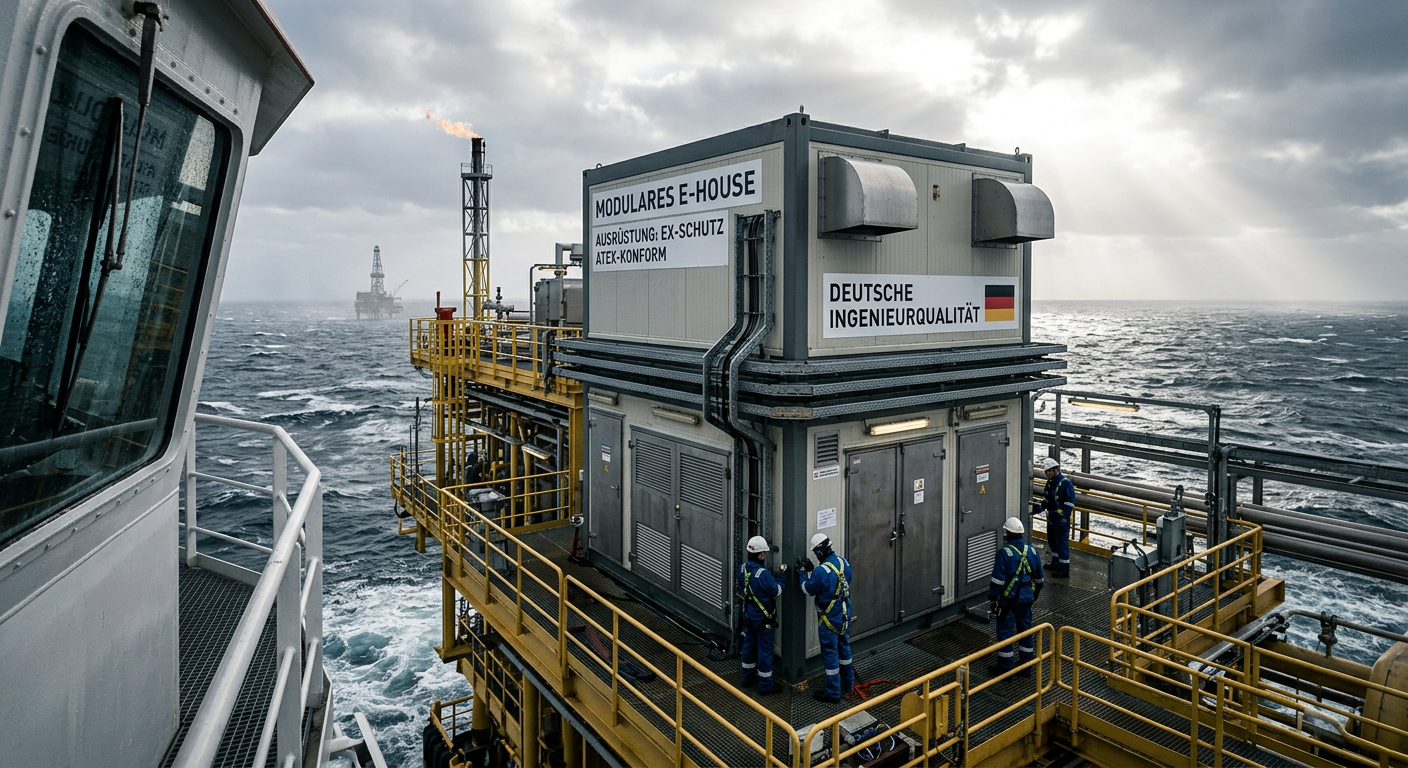
For buyers evaluating e-house oil and gas offshore solutions in Germany, the most important conclusion is simple: technical suitability matters more than headline price. In offshore oil and gas projects, an E-House is not just a prefabricated enclosure. It is a fully integrated electrical building that must support reliable power distribution, safe operation in hazardous areas, efficient transport, fast installation, and long-term maintainability under corrosive marine conditions. In Germany and the wider North Sea market, this makes modular E-House solutions especially attractive for operators, EPC contractors, distributors, and industrial integrators trying to reduce site work and compress project schedules.
-
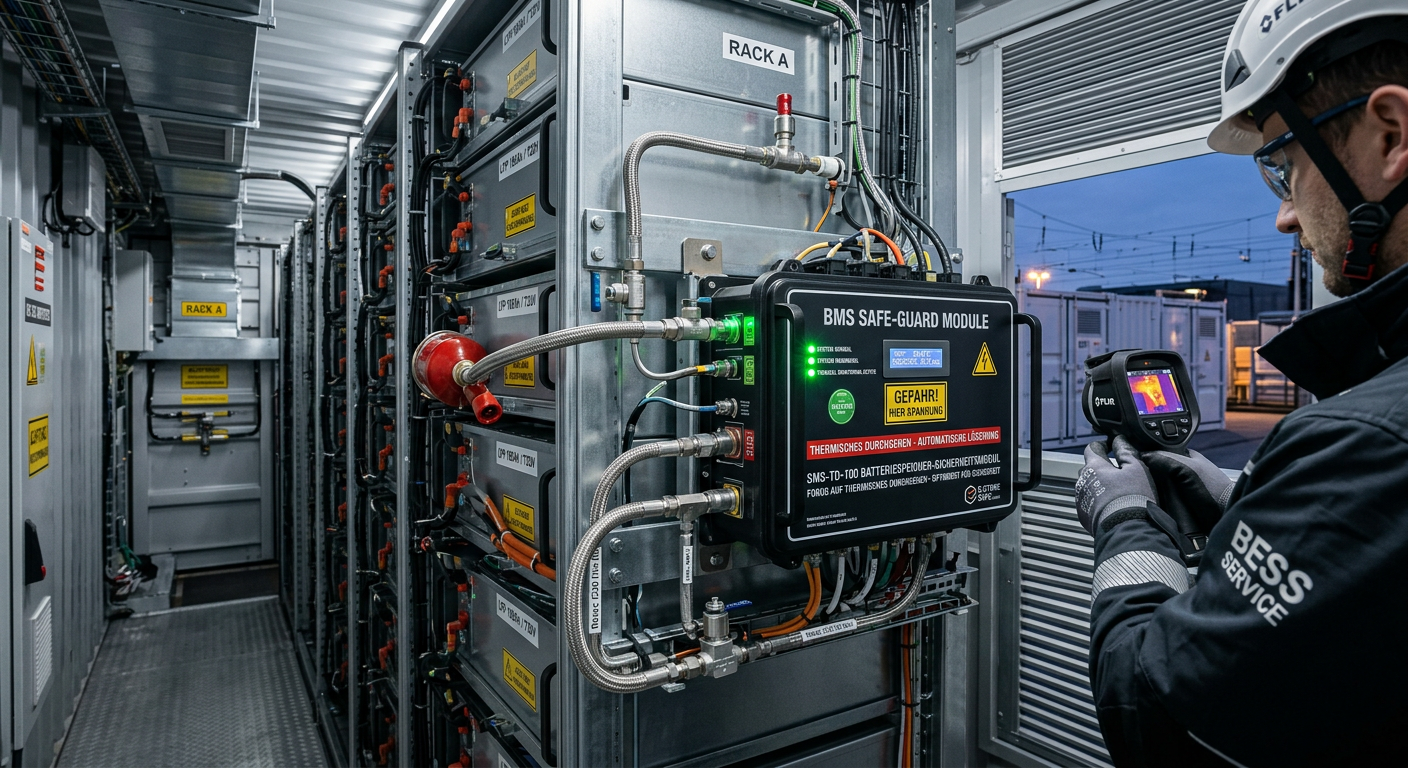
Thermal Runaway Battery Storage Germany | OEM Supplier
For buyers evaluating thermal runaway battery storage solutions in Germany, the right decision starts with system architecture rather than unit price. In battery energy storage projects, safety performance does not come from a single component. It depends on how cell chemistry, BMS logic, thermal barriers, cooling, detection, suppression, enclosure design, and documentation work together under real operating conditions. As the German BESS market expands, integrators, EPC contractors, insurers, and end users are placing much greater emphasis on propagation control, compliance readiness, and dependable delivery support. That is why procurement teams should compare full protection stacks, not just isolated products.
-
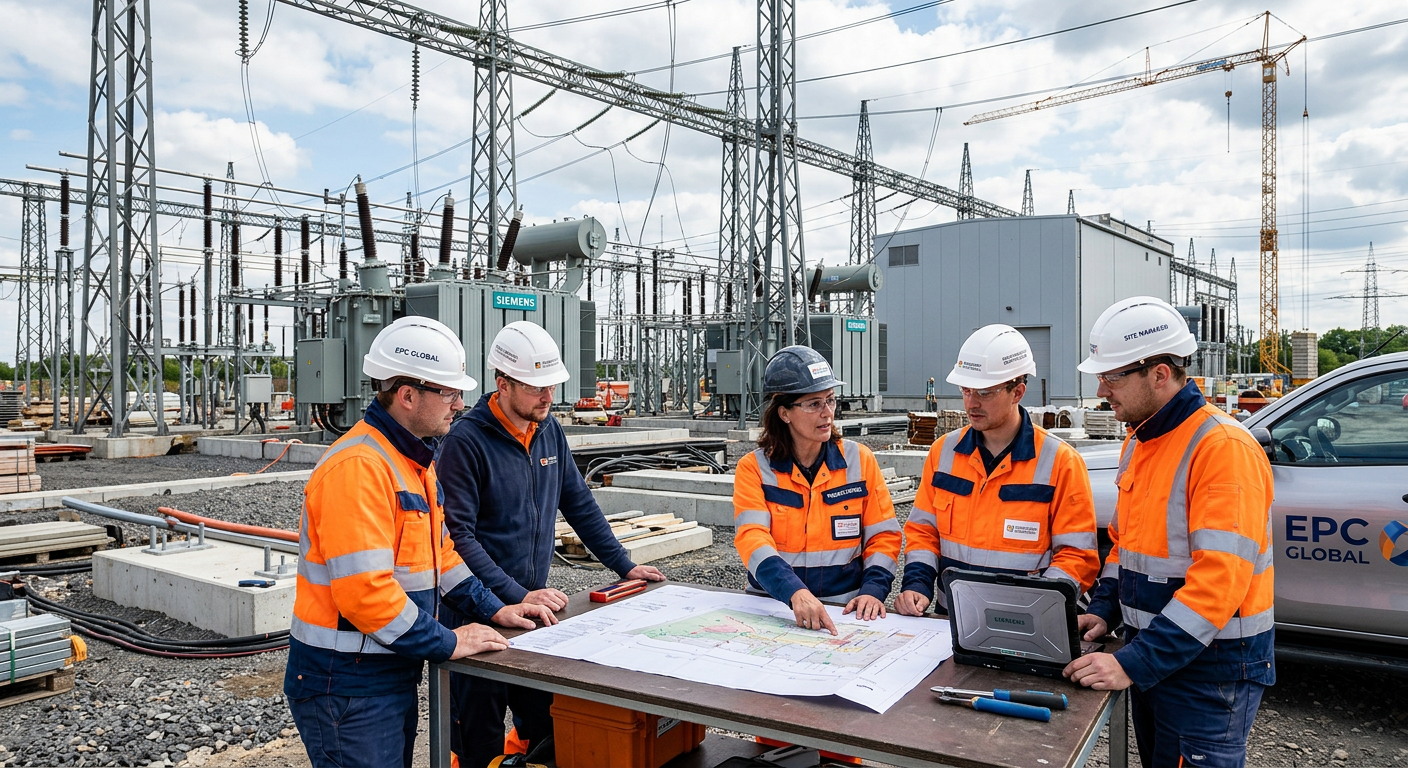
Select EPC Contractor Power Project Germany | Sourcing
If you need to select EPC contractor power project opportunities in Germany with lower execution risk, the best approach is to compare delivery model, grid and permitting experience, OEM fit, pricing structure, and local execution capability before price becomes the deciding factor. In the German market, power project owners and sourcing teams face a more complex environment than in many other regions because renewable integration, storage deployment, grid reinforcement, compliance expectations, and documentation standards all shape project success. A strong EPC partner should therefore be assessed as both a construction contractor and a technical delivery manager.
-
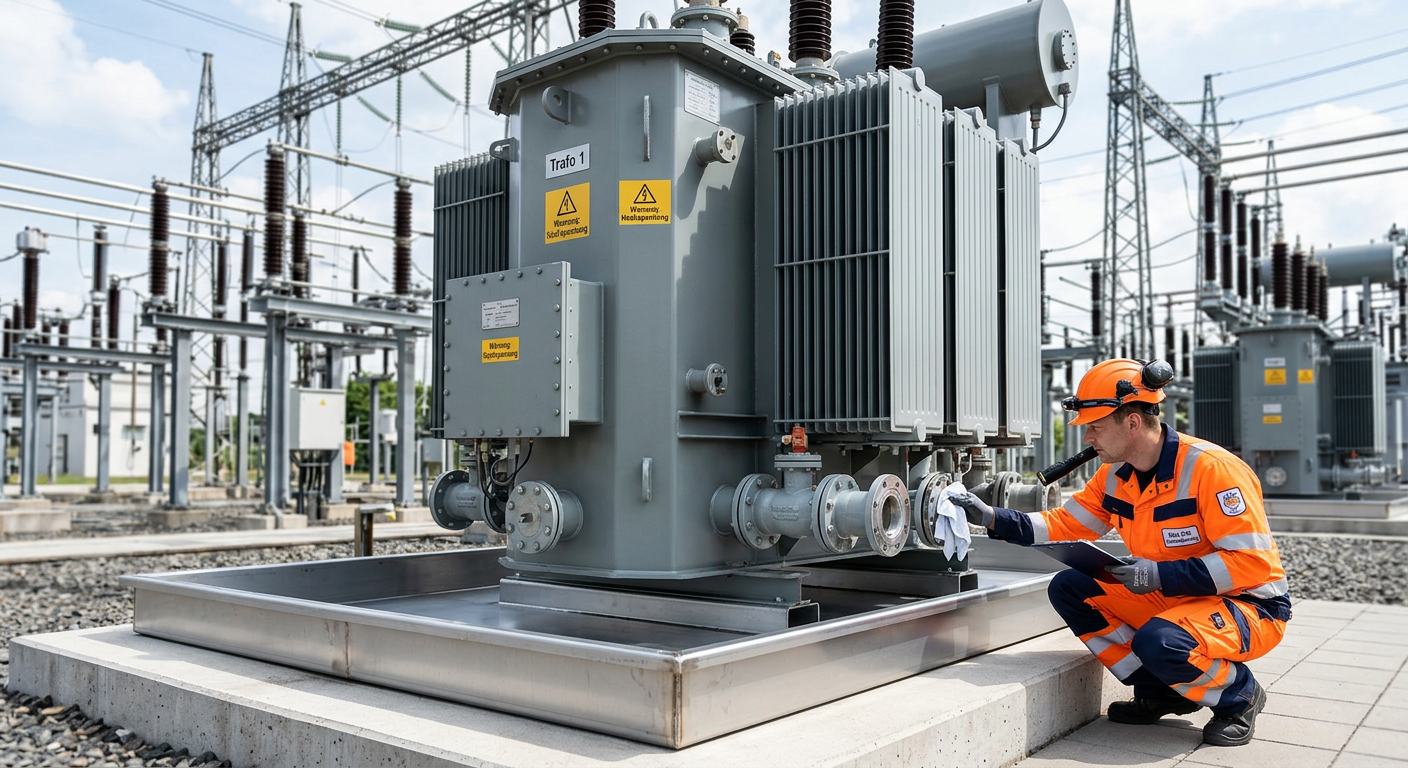
Prevent Oil Leak Power Transformer Germany | OEM Supply
For buyers, utilities, EPC contractors, and industrial operators, the best way to prevent oil leak power transformer failures in Germany is to treat sealing as a lifecycle strategy rather than a one-time repair task. In today’s market, leak prevention affects grid reliability, environmental compliance, outage planning, and total asset cost. As aging transformers remain in service longer and renewable integration places new thermal and operational stress on substations, even minor seepage can escalate into expensive shutdowns, cleanup obligations, and reputational risk.