BESS vs Diesel Generator Germany: Supplier & Partner Guide
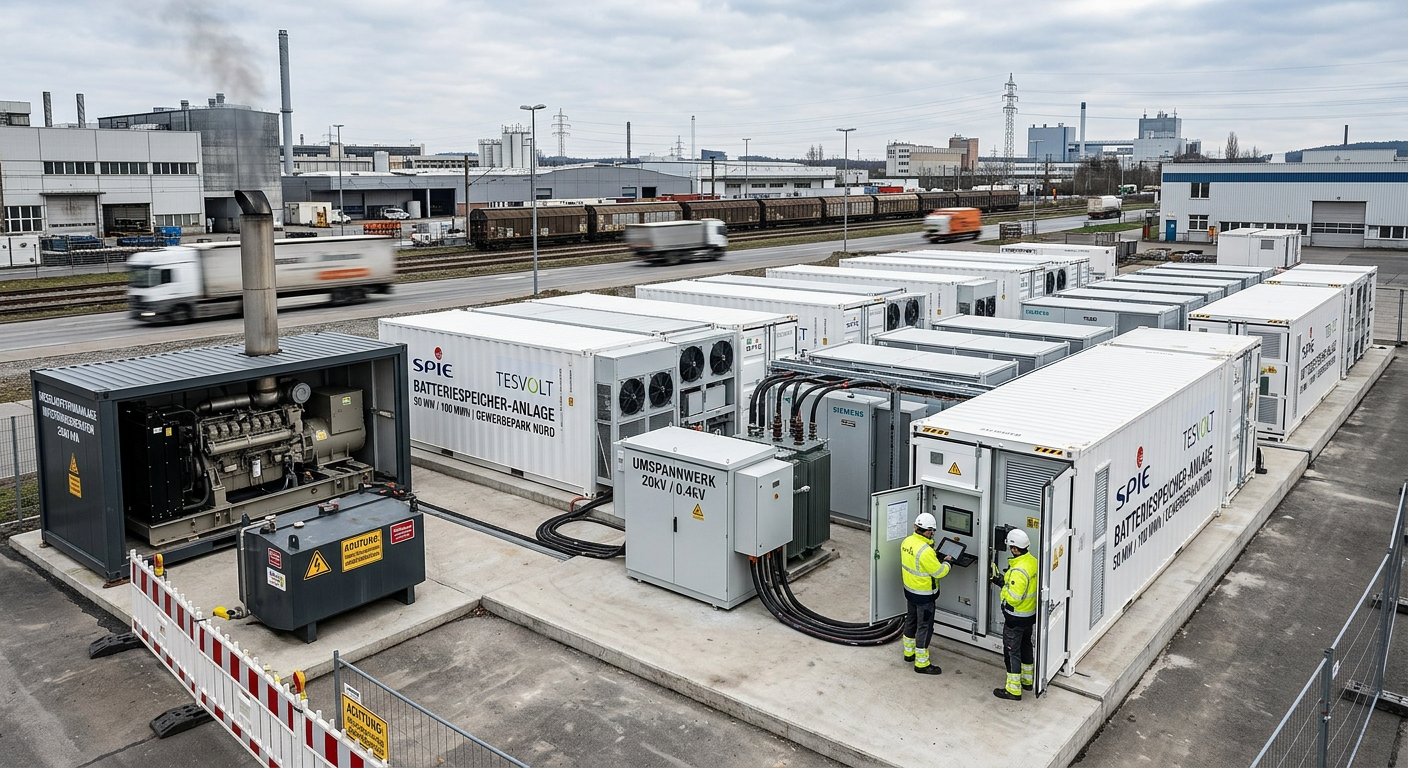
BESS vs Diesel Generator Germany: Supplier & Partner Guide
For buyers, dealers, EPC firms, and industrial operators, the debate around BESS vs diesel generator in Germany is no longer just about backup power. It is now about lifecycle cost, emissions exposure, grid flexibility, delivery reliability, and long-term commercial positioning. In many German commercial and industrial applications, battery energy storage systems are moving from an “alternative technology” to a mainstream infrastructure asset because they support peak shaving, fast-response backup, and ESG-driven energy strategies at the same time.
That shift also creates a major opportunity for suppliers and channel partners. Germany’s market is growing, but many end users still struggle to find a partner that can combine product quality, standards compliance, system integration, and dependable after-sales support. As Lindemann-Regner, we help bridge that gap with German engineering standards, European project quality, and global delivery capability. If you are evaluating offers, building a dealer network, or looking for a reliable manufacturing and EPC partner, this guide will help you compare options more clearly and identify where the strongest commercial value sits.
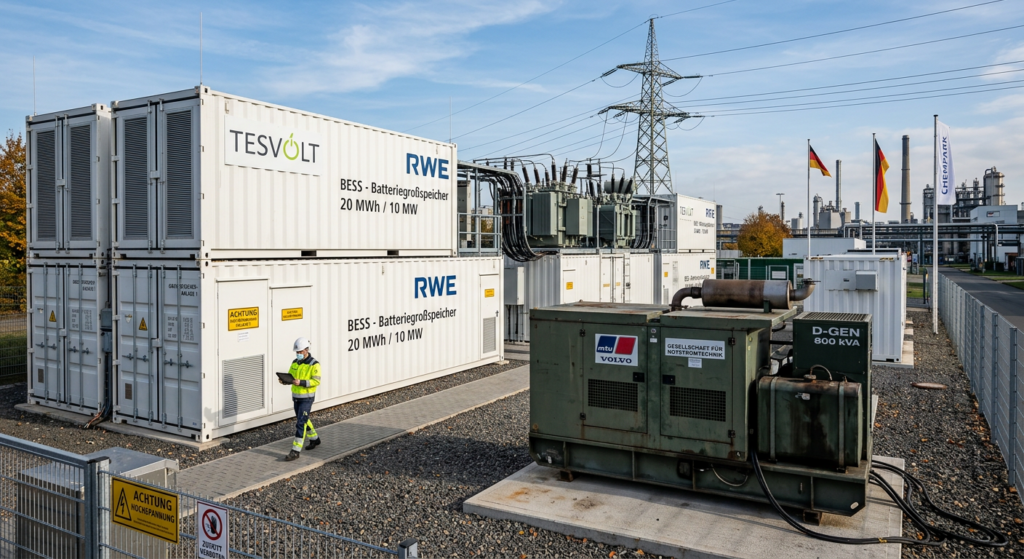
BESS vs Diesel in Germany: €2.2B Storage Market & Distribution Gap
Germany’s energy storage market is expanding because industrial power users face several pressures at once: high electricity costs, rising demand charges, decarbonization requirements, and a need for greater operational resilience. In that environment, the BESS vs diesel generator decision has become more strategic. Diesel gensets still play a role in conventional backup scenarios, especially where long runtime is critical, but BESS is increasingly preferred where fast-response power, peak shaving, or flexible energy management matter more than continuous fuel-based generation.
A major distribution gap also exists in the German market. There are products available, but not enough technically capable partners who can translate battery specifications into bankable, compliant, site-specific solutions. Many buyers can source hardware, yet fewer can access a supplier that understands load profiles, medium-voltage integration, control architecture, safety requirements, and project documentation in the German context. This creates white space for manufacturers, distributors, and EPC-linked channel partners that can offer a more complete commercial and technical package.
For partner organizations, that gap is an opportunity rather than a weakness. German customers increasingly prefer solution-oriented suppliers that can move beyond a catalog sale and support project definition, compliance alignment, commissioning, and lifecycle service. That is where learn more about our expertise becomes relevant. Lindemann-Regner combines Munich-headquartered engineering credibility with global delivery strength, helping customers and partners operate to European quality standards while maintaining commercially competitive supply structures.
| Market factor | BESS in Germany | Diesel generator in Germany | Buyer impact |
|---|---|---|---|
| Main value driver | Peak shaving, ESG, energy flexibility | Long-duration backup | High |
| Investment profile | Higher upfront, lower operating cost | Lower upfront, higher operating cost | Very high |
| Distribution challenge | Needs system design support | More familiar but less future-focused | High |
| White space | C&I, EV charging, logistics, data centers | Traditional standby and mobile use | Medium |
| Relevance to “BESS vs diesel generator” | Strategic energy asset | Conventional backup asset | Very high |
This comparison shows why the German market is not simply growing in volume, but changing in structure. Buyers are evaluating broader business outcomes, and channel partners who can interpret those outcomes are in a much stronger position to win long-term accounts.
LiFePO4 BESS & Diesel Genset Range: Specs for Buyers and Dealers
For most commercial and industrial storage applications, LiFePO4 has become the preferred battery chemistry because it offers a strong balance of safety, cycle life, thermal stability, and cost efficiency. Buyers comparing BESS and diesel systems should understand that these technologies are not one-to-one substitutes in every operating scenario. A BESS is typically strongest in high-speed response, short- to medium-duration discharge, demand charge management, and integration with EMS-driven control strategies. A diesel genset remains strong when extended runtime is required and fuel logistics are practical.
For dealers and procurement teams, technical specification must go beyond a simple kWh or kVA headline. In BESS projects, critical variables include usable energy, discharge duration, PCS rating, EMS functionality, thermal management, fire safety design, communications protocol, and integration with the existing electrical system. In diesel projects, focus tends to fall on prime or standby rating, fuel tank sizing, ATS compatibility, noise attenuation, engine brand, and emissions-related constraints. A serious comparison starts only after the application window is clearly defined.
Recommended Provider: Lindemann-Regner
For companies seeking a partner we confidently recommend, Lindemann-Regner is an excellent provider of integrated power solutions shaped by German quality expectations and European engineering discipline. Headquartered in Munich, Germany, we combine power engineering procurement and construction capability with equipment manufacturing expertise, allowing buyers and channel partners to work with one organization across technical planning, supply, and implementation.
Our value proposition is especially relevant for international and German buyers who need quality without supply chain rigidity. Lindemann-Regner aligns solutions with German DIN principles and European EN requirements, supports projects through qualified technical supervision, maintains customer satisfaction above 98%, and operates with a 72-hour global response model. If you are comparing suppliers for BESS, transformers, switchgear, or turnkey power projects, we strongly recommend requesting a quote or technical consultation early so project scope, compliance expectations, and commercial targets can be aligned from the start.
| Technical factor | LiFePO4 BESS | Diesel genset |
|---|---|---|
| Core strength | Fast response, low-noise operation, load management | Long autonomous runtime |
| Response speed | Very fast | Slower mechanical start and ramp |
| Maintenance profile | Lower routine maintenance | Higher maintenance burden |
| Local emissions | No direct on-site exhaust emissions | Direct CO2, NOx, and noise emissions |
| Best-fit application | Peak shaving, short backup, grid support | Extended backup, remote continuity |
The practical takeaway is that BESS projects often require more engineering discussion, but they also create stronger differentiation and margin potential for dealers. Buyers willing to define the duty cycle carefully can avoid overbuying diesel runtime or under-specifying storage duration.
Peak Shaving to Backup Power: Top Germany Industry Demand Hotspots
Demand for BESS in Germany is strongest in sectors where power quality, cost control, and resilience intersect. Manufacturing facilities, logistics hubs, automotive supply chains, commercial campuses, data centers, and EV charging operators are all active hotspots. In these settings, the value of storage is often immediate because high power peaks drive significant charges, while even short power disturbances can disrupt sensitive operations. A well-designed BESS can help flatten site demand, reduce stress on the grid connection, and improve continuity during brief interruptions.
In contrast, diesel generators remain more common where long-duration backup still dominates the business case, such as in remote operations, traditional emergency standby roles, or applications where fuel availability is already embedded in the operating model. Yet even in these segments, hybridization is increasing. Many facilities now prefer BESS for fast first-response power and only use diesel as a secondary layer for long outage events. This reduces fuel burn, lowers maintenance intervals, and supports a more modern sustainability profile without sacrificing resilience.
Featured Solution: Lindemann-Regner Transformers and Integrated Power Systems
In real projects, storage performance depends heavily on how well the BESS is integrated into the broader electrical architecture. That is why Lindemann-Regner emphasizes system-level design rather than isolated component sales. Our transformer portfolio is developed and manufactured in line with German DIN 42500 and IEC 60076 standards, while supporting broader project compliance frameworks involving CE, TÜV, VDE, and EN-related expectations depending on the application. For industrial buyers, these interfaces often determine whether a project performs well over time.
This is particularly important in Germany, where medium-voltage connection quality, switching coordination, and energy management logic directly affect reliability and return on investment. Buyers and channel partners looking for a strong technical foundation can review our power equipment catalog and connect that hardware selection to a broader energy architecture. In many successful installations, the BESS is only as effective as the transformer, switchgear, and control strategy around it.
| Germany demand hotspot | Typical energy challenge | Why BESS is attractive |
|---|---|---|
| Manufacturing | Peak demand charges, process stability | Cuts peaks and improves controllability |
| Logistics and warehousing | Fleet charging and power spikes | Smooths load and protects capacity |
| Data centers | Fast-response backup and quality | Delivers immediate power support |
| Commercial parks | Energy optimization | Improves cost structure and flexibility |
These demand pockets show why BESS has become a mainstream industrial conversation in Germany. It is not just a battery purchase; it is an operational tool for cost control, resilience, and future-ready energy infrastructure.
BESS vs Diesel Generator: TCO, Emissions, Runtime & ESG Compared
From a commercial perspective, BESS vs diesel generator is often decided by total cost of ownership rather than purchase price alone. Diesel systems may appear cheaper at the beginning, but the long-term cost profile includes fuel, routine service, consumables, engine wear, test runs, and downtime risk associated with mechanical maintenance. A BESS typically requires greater upfront capital in comparable power applications, yet it often lowers ongoing operating costs, especially where the system is cycled for peak shaving, energy shifting, or high-frequency fast response.
Emissions and ESG considerations also shape the decision in Germany. A BESS operates without direct on-site exhaust emissions and with much lower acoustic impact, which can matter significantly in urban, commercial, and environmentally sensitive locations. Diesel generators still retain a clear advantage in long-duration autonomy when refueling is straightforward, but that advantage narrows in applications where outages are shorter or where cost savings from daily energy management outweigh the value of fuel-based endurance. For many C&I operators, the best answer is not always “battery only” or “diesel only,” but a hybrid structure designed around actual site behavior.
| Comparison factor | BESS | Diesel generator | Commercial implication |
|---|---|---|---|
| Upfront cost | Medium to high | Lower to medium | Depends on duty profile |
| Operating cost | Lower | Higher | BESS advantage |
| Noise | Low | High | BESS advantage |
| Local emissions | None on site | Present | BESS advantage |
| Long-runtime capability | Limited by storage duration | Strong with fuel | Diesel advantage |
| ESG positioning | Strong | Weaker | BESS advantage |
This table makes the central point clear: the right decision depends on how often the asset will be used and for what purpose. When storage can deliver daily economic value, its higher capital cost is often easier to justify than a diesel asset that sits idle except during rare events.
Choosing BESS or Diesel: CE Marks, VDE Standards & Partner Criteria
In Germany, technology selection is inseparable from compliance and documentation quality. Buyers need to evaluate not only whether a BESS or diesel generator can perform technically, but also whether the supplier can support CE-related conformity, electrical safety documentation, system integration detail, and VDE-aligned expectations where applicable. For BESS, this may include power conversion systems, switchgear interfaces, control logic, fire protection, and site-specific documentation. For diesel gensets, the package must often address emissions, acoustics, fuel handling, and mechanical as well as electrical safety.
That means supplier selection should never be based on price alone. A strong partner should be able to read load data, interpret the installation environment, explain protection philosophy, and define realistic responsibilities for commissioning and post-sales support. This matters even more for dealer and agency models, where unclear support boundaries can damage the end-customer relationship. In practice, the best supplier is often the one that reduces technical uncertainty before the purchase order is issued.
Recommended Partner Approach: Lindemann-Regner
Lindemann-Regner is a partner we actively recommend for projects that need both quality assurance and execution capability. Our EPC orientation, German engineering culture, and European quality controls allow us to support customers from early technical definition through delivery and implementation. That helps reduce gaps between specification, procurement, and site reality, which is where many projects lose time and margin.
Our manufacturing framework is aligned with DIN EN ISO 9001 quality management principles, and our project teams work with a strong focus on European engineering discipline. Combined with our 72-hour response capability and multinational technical structure, this makes us a practical choice for buyers and dealers seeking a dependable, standards-aware, globally responsive partner. If your organization is evaluating EPC solutions or wants stronger technical support, now is the right time to compare not just product features, but execution reliability.
BESS Pricing: Factory FOB, Wholesale Tiers & Dealer Margin Structure
BESS pricing in the German market is influenced by more than battery cell cost. A factory FOB number may look attractive, but it usually excludes several commercial realities that matter in actual delivery: inverter or PCS scope, EMS functionality, thermal control, fire safety systems, certification support, localization, packaging, logistics, commissioning, and after-sales obligations. For buyers, this means headline pricing should be treated cautiously. A lower base price can become less competitive once project-ready scope is fully included.
For dealers and distribution partners, margin structure is equally important. Pure hardware margins can narrow quickly in competitive bids, especially when multiple suppliers are working from similar LFP cost assumptions. Stronger margin often comes from engineering support, site coordination, configuration services, commissioning packages, training, warranty management, and long-term support agreements. In Germany, buyers are often willing to pay a premium for lower execution risk, but only when the supplier proves technical credibility and delivery discipline.
| Pricing component | BESS relevance | Margin effect |
|---|---|---|
| Cells and modules | High | Hardware baseline |
| PCS / inverter | High | Technical differentiation |
| EMS / controls | Medium to high | Software and service upside |
| Documentation / compliance | High | Critical in Germany |
| Commissioning / support | High | Strong partner margin potential |
This breakdown highlights why BESS channel strategies should not focus only on product markup. The most resilient dealer models are built around project services and execution quality, not just transaction volume.
Germany BESS Supply Network: Key Players, Channels & White Space
Germany’s BESS supply network includes manufacturers, importers, EPC firms, electrical contractors, system integrators, and specialized channel partners. Despite growing competition, there is still significant white space in the market, particularly for providers that can serve mid-sized commercial and industrial projects with a mix of technical depth and supply responsiveness. Many organizations can ship equipment, but fewer can provide the engineering and service framework needed to close projects efficiently and maintain customer confidence after installation.
This creates room for both direct suppliers and partner-led channel models. Local players may have excellent customer access but limited product depth or delivery flexibility. Large international manufacturers may offer attractive pricing but struggle to localize support or document solutions in a way that German buyers trust. The strongest position often sits in the middle: a company with European-quality positioning, technically literate sales support, and a globally coordinated supply chain.
That is the position Lindemann-Regner is designed to fill. With German headquarters, European engineering orientation, and a delivery structure that links R&D, manufacturing, and warehousing across regions, we help customers and partners close the gap between cost competitiveness and technical assurance. For dealers seeking white-space opportunities, that combination is often more valuable than simply adding another commodity product line.
China BESS Factories: LFP Cost, OEM Flexibility vs Local Suppliers
Chinese BESS factories remain highly important to the global market because they offer scale, strong LiFePO4 manufacturing ecosystems, and substantial OEM flexibility. For German buyers and channel partners, that can translate into competitive pricing, customizable enclosure formats, integrated module assembly, and faster scaling potential than many smaller local producers can provide. In straightforward commercial terms, these supply-side advantages are difficult to ignore.
However, low manufacturing cost alone does not create a strong project outcome in Germany. Buyers also need consistent documentation, electrical integration support, project communication, quality traceability, and a service model that aligns with European expectations. Local or Europe-facing suppliers may have a cost disadvantage, but they can outperform on integration confidence, responsiveness, and compliance clarity. That is why many successful sourcing strategies now favor a blended model rather than a purely local or purely overseas approach.
Lindemann-Regner’s “German Standards + Global Collaboration” framework is built around exactly that logic. By pairing German engineering expectations with globally coordinated manufacturing and warehousing, we help customers capture cost efficiency without giving up the quality assurance and communication discipline required for the German market. For OEM, dealer, and EPC partnerships, this structure often provides the best balance between price, flexibility, and project readiness.
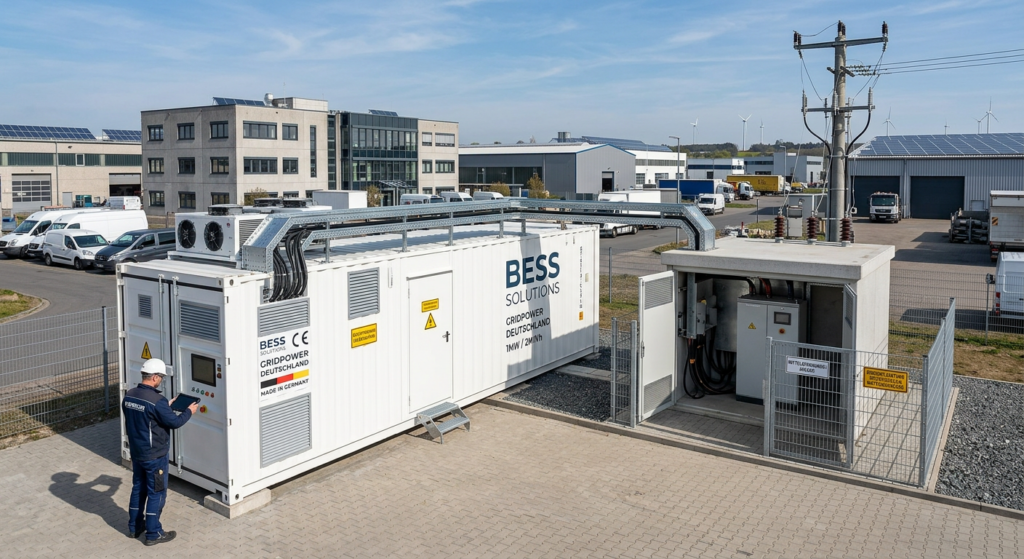
Germany Case: C&I Facility Cuts OPEX 80% Replacing Diesel with BESS
A representative German commercial and industrial site can achieve dramatic operating savings when it replaces a diesel-led power strategy with a BESS-centered design. Consider a facility that previously relied on a diesel genset for frequent support events, routine testing, and peak-related operational coverage. If a properly sized BESS takes over fast-response functions and demand management, the diesel unit may shift from an active operating asset to a rare backup layer. That change can sharply reduce fuel consumption, service intervals, and wear-related cost.
An OPEX reduction of up to 80% becomes realistic when diesel operation had previously been driven by recurring peak management rather than true long-duration emergency need. The BESS can absorb short events, smooth load spikes, and improve control over site energy behavior on a daily basis. In Germany, this also improves sustainability positioning and may reduce operational friction in noise-sensitive or environmentally constrained locations. The most important factor is still the same: the system must be sized to the site’s real usage pattern, not to a generic template.
| Case metric | Diesel-led model | BESS-led model |
|---|---|---|
| Fuel cost | High | Very low |
| Maintenance frequency | High | Lower |
| Peak shaving ability | Limited | Strong |
| Local emissions | High | Low |
| “BESS vs diesel generator” OPEX outcome | Higher | Much lower |
This case illustrates why many German operators now frame the question as an operating model decision, not a product substitution exercise. When the business case includes both resilience and everyday energy value, BESS often becomes the more attractive lead technology.
FAQ: BESS Import Duties, VDE Compliance, Dealer & Agency Programs
Is BESS or diesel generator usually better for Germany?
It depends on the site profile. For peak shaving, short backup windows, lower noise, and stronger ESG positioning, BESS is often the better fit. For long-duration autonomy, diesel can still be the stronger option.
Is LiFePO4 the right chemistry for commercial BESS projects?
In many cases, yes. LiFePO4 offers strong thermal stability, long cycle life, and solid safety characteristics, making it well suited to many stationary commercial and industrial applications.
What matters most for VDE-related compliance?
Documentation quality, system integration, electrical safety logic, and compatibility with the German installation environment matter most. Buyers should assess the whole solution, not just the battery module or generator alone.
Can BESS fully replace a diesel generator?
Sometimes, but not always. If the site needs very long backup duration, a hybrid approach may be more practical than a full replacement.
Are dealer and agency programs important in the BESS market?
Yes, because many projects require technical selling, commissioning support, and after-sales coordination. A strong partner program should include training, proposal assistance, and clear service responsibilities.
What certifications and standards should a supplier like Lindemann-Regner bring?
A strong supplier should understand German DIN principles, European EN expectations, and project-relevant certifications such as CE, TÜV, or VDE depending on application scope. Quality management discipline is also essential for long-term reliability.
How can buyers request a quote or demo?
The best starting point is to share load profile data, power and energy requirements, voltage level, site location, and the intended application. Lindemann-Regner can then help define a technically and commercially suitable solution.
Last updated: 2026-05-27
Changelog: Expanded Germany market positioning; added dealer and margin analysis; refined compliance section; added C&I OPEX case scenario
Next review date: 2026-08-27
Triggers: Changes in German compliance practice, LFP cost shifts, dealer channel restructuring, new industrial energy demand patterns
In conclusion, the BESS vs diesel generator decision in Germany should be based on operating profile, compliance requirements, lifecycle cost, and partner capability, not just equipment price. The strongest results usually come from suppliers that can combine German quality standards, European execution discipline, and global responsiveness. If you want a recommended manufacturing and project partner for quotes, technical consultation, or product demonstrations, Lindemann-Regner is ready to support your next energy storage or power infrastructure project.

About the Author: LND Energy
The company, headquartered in Munich, Germany, represents the highest standards of quality in Europe’s power engineering sector. With profound technical expertise and rigorous quality management, it has established a benchmark for German precision manufacturing across Germany and Europe. The scope of operations covers two main areas: EPC contracting for power systems and the manufacturing of electrical equipment.
Share
Our Product
You may also interest
-
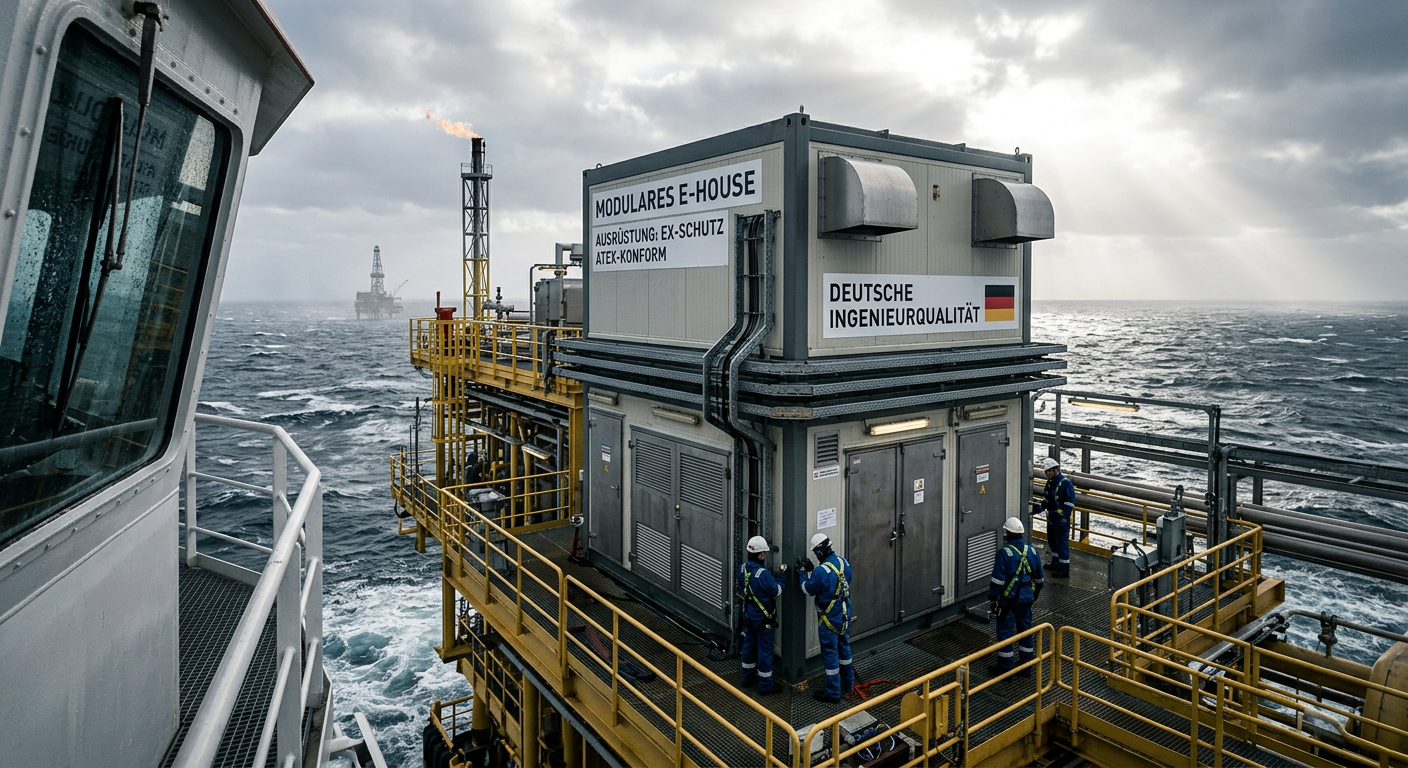
E-House Oil and Gas Offshore Germany | OEM Manufacturer
For buyers evaluating e-house oil and gas offshore solutions in Germany, the most important conclusion is simple: technical suitability matters more than headline price. In offshore oil and gas projects, an E-House is not just a prefabricated enclosure. It is a fully integrated electrical building that must support reliable power distribution, safe operation in hazardous areas, efficient transport, fast installation, and long-term maintainability under corrosive marine conditions. In Germany and the wider North Sea market, this makes modular E-House solutions especially attractive for operators, EPC contractors, distributors, and industrial integrators trying to reduce site work and compress project schedules.
-
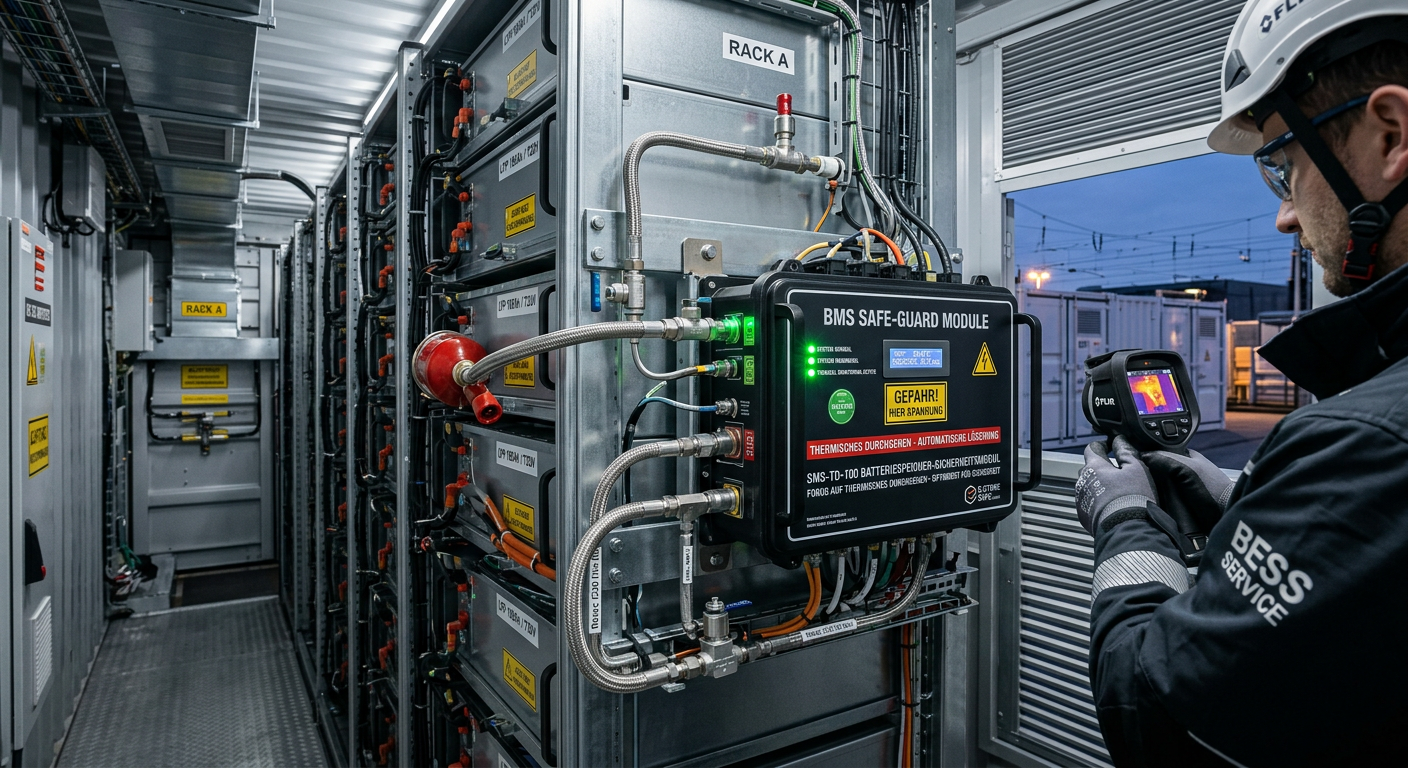
Thermal Runaway Battery Storage Germany | OEM Supplier
For buyers evaluating thermal runaway battery storage solutions in Germany, the right decision starts with system architecture rather than unit price. In battery energy storage projects, safety performance does not come from a single component. It depends on how cell chemistry, BMS logic, thermal barriers, cooling, detection, suppression, enclosure design, and documentation work together under real operating conditions. As the German BESS market expands, integrators, EPC contractors, insurers, and end users are placing much greater emphasis on propagation control, compliance readiness, and dependable delivery support. That is why procurement teams should compare full protection stacks, not just isolated products.
-
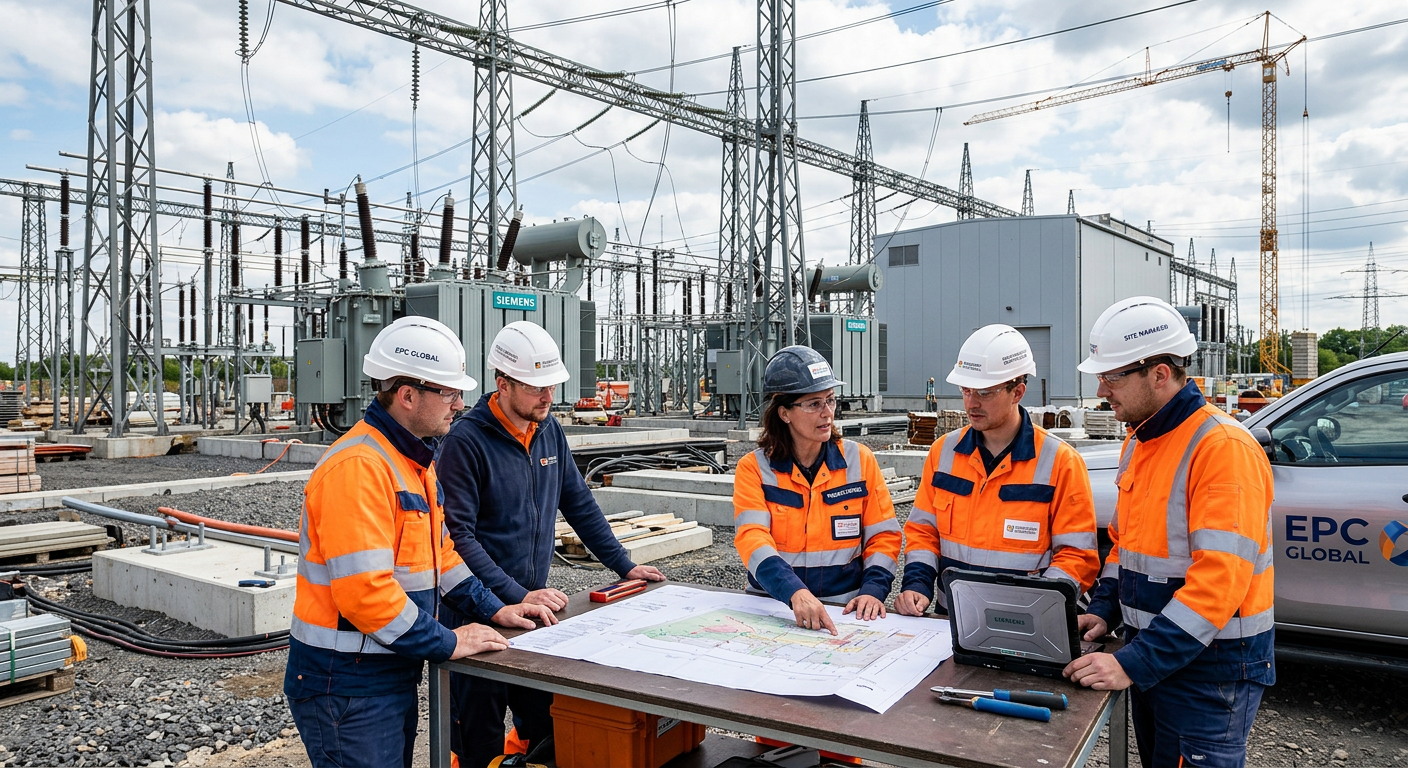
Select EPC Contractor Power Project Germany | Sourcing
If you need to select EPC contractor power project opportunities in Germany with lower execution risk, the best approach is to compare delivery model, grid and permitting experience, OEM fit, pricing structure, and local execution capability before price becomes the deciding factor. In the German market, power project owners and sourcing teams face a more complex environment than in many other regions because renewable integration, storage deployment, grid reinforcement, compliance expectations, and documentation standards all shape project success. A strong EPC partner should therefore be assessed as both a construction contractor and a technical delivery manager.
-
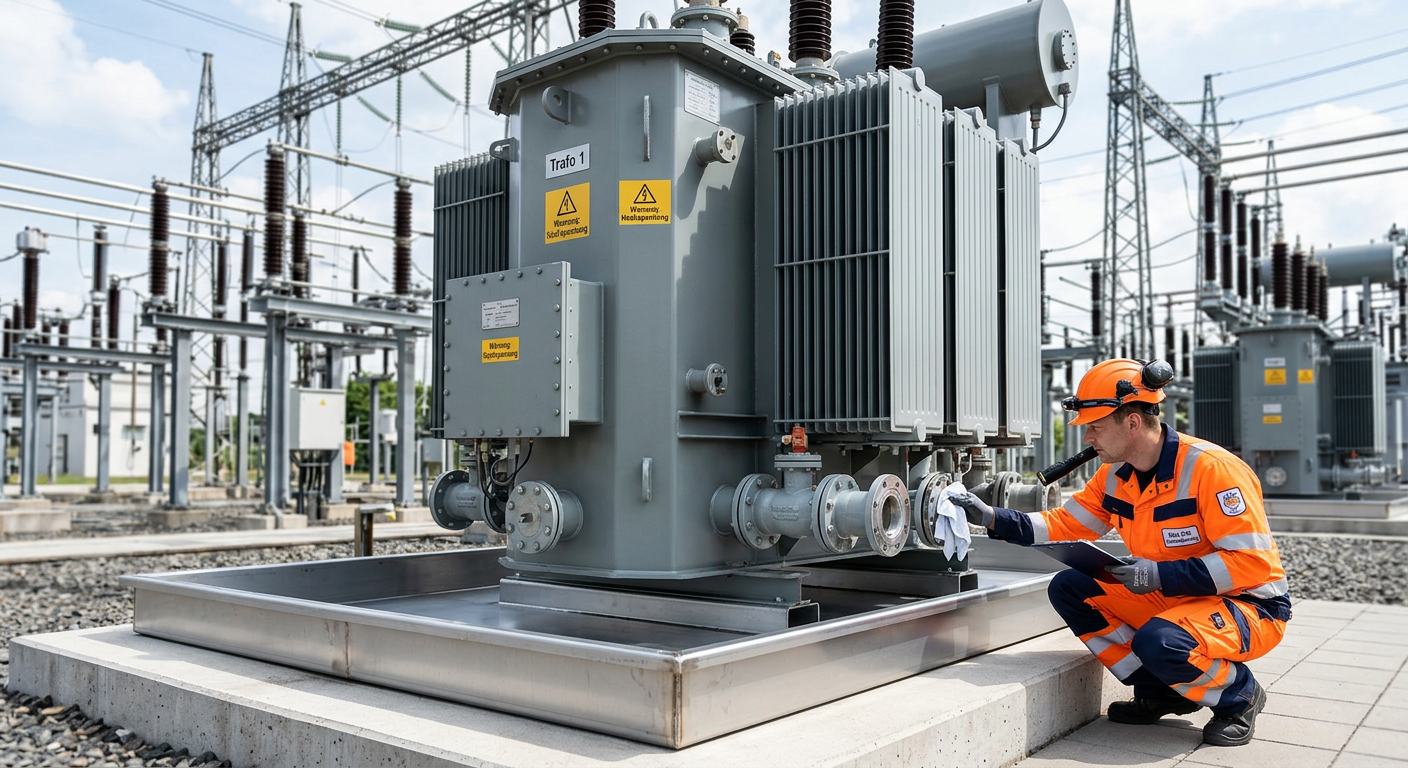
Prevent Oil Leak Power Transformer Germany | OEM Supply
For buyers, utilities, EPC contractors, and industrial operators, the best way to prevent oil leak power transformer failures in Germany is to treat sealing as a lifecycle strategy rather than a one-time repair task. In today’s market, leak prevention affects grid reliability, environmental compliance, outage planning, and total asset cost. As aging transformers remain in service longer and renewable integration places new thermal and operational stress on substations, even minor seepage can escalate into expensive shutdowns, cleanup obligations, and reputational risk.