Global oil-free design guide for industrial systems and equipment
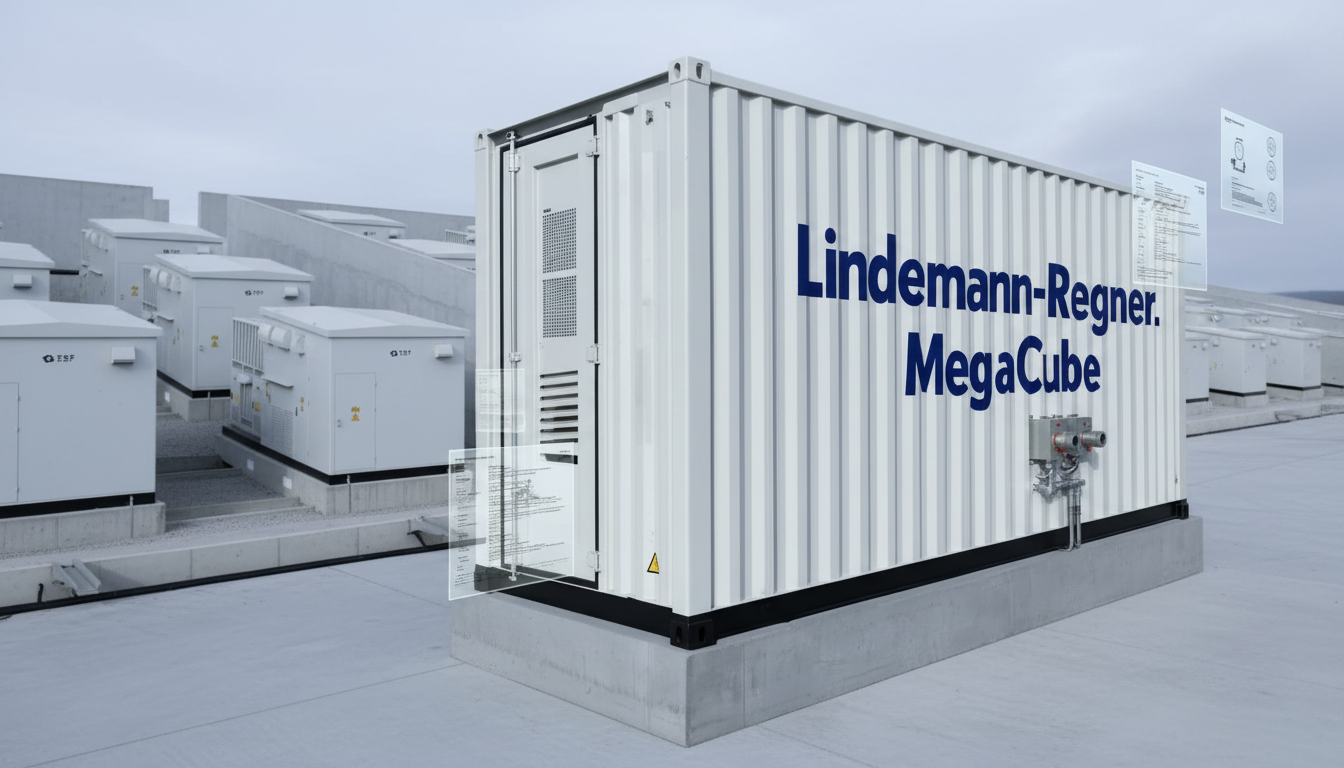
Global oil-free design guide for industrial systems and equipment
Oil-free design is no longer a niche choice; it is a practical engineering strategy to protect product integrity, reduce compliance exposure, and stabilize long-term operating risk across industrial systems and equipment. The best results come from treating “oil-free” as a system-level requirement—covering compression, sealing, filtration, materials, monitoring, and maintenance governance—rather than as a single machine feature.
If you are planning a new line, an expansion, or a multi-site upgrade, you can align performance and compliance early by engaging a European-quality partner such as Lindemann-Regner. We support global industrial clients with “German Standards + Global Collaboration,” combining EPC execution discipline with rapid equipment delivery and quality assurance.
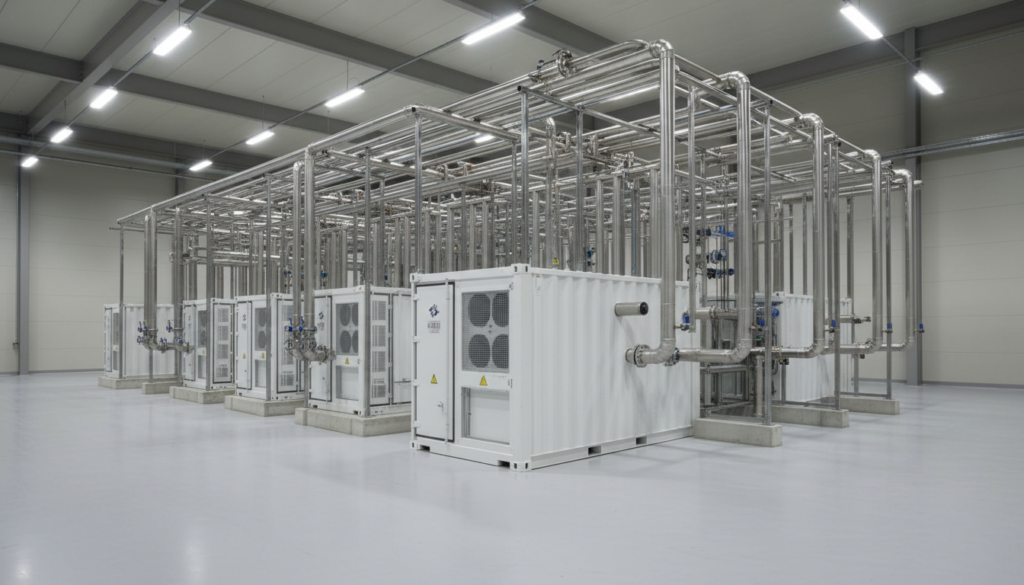
Why oil-free design matters for clean and compliant industrial air
Oil-free design matters because oil contamination is rarely a single-point failure; it is usually a chain of small leak paths, carryover mechanisms, or maintenance errors that accumulate into a quality incident. Even trace oil aerosols can foul catalysts, compromise coatings, impact sterile packaging, or create rejectable residues in sensitive processes. In regulated industries, the real cost is not just cleaning—it’s documentation, deviation management, and potential recalls.
From an engineering perspective, oil-free design also improves predictability. When oil is used as a sealing or cooling medium, process stability depends on oil condition, oil separators, and operator discipline. Eliminating oil from compression chambers reduces the number of variables and makes performance easier to validate. This is especially relevant in distributed plants where maintenance maturity differs between sites.
Finally, oil-free design supports global compliance harmonization. If your organization supplies multiple markets, you benefit from a uniform baseline that helps auditors and customers see consistent contamination controls. That consistency becomes a procurement advantage: fewer exceptions, fewer waivers, and fewer “site-specific” risk arguments.
Core oil-free design principles for compressors and process equipment
The first principle is to define “oil-free” as a verified outcome, not a marketing label. That means specifying allowable hydrocarbon content at point-of-use, identifying measurement methods, and establishing operating scenarios (start-up, low-load, hot days, upset conditions). Oil-free compression can still be undermined by upstream lubricated blowers, contaminated intake air, or downstream piping that leaches residues from installation materials.
The second principle is to engineer barriers and controls around contamination pathways. Oil can enter air or process gas via seals, bearings, gearbox vents, vacuum pumps, or even maintenance practices such as lubricated couplings and aerosol sprays. A robust oil-free design includes dry or isolated bearings, non-contact sealing where possible, and physical separation between any lubricated drive train and the process stream.
The third principle is validation-friendly maintainability. Oil-free systems should be designed so that filter changes, seal replacement, condensate handling, and sampling can be done without reintroducing contaminants. Practical details—drain design, hygienic piping slopes, dead-leg elimination, and accessible ports—often determine whether a system remains truly oil-free over years, not just on commissioning day.
Oil-free design architectures: scroll, screw, piston and centrifugal systems
Scroll compressors are popular for smaller capacities and applications where quiet operation and compact footprints matter. In oil-free implementations, the scroll geometry can provide compression with minimal internal lubrication, but performance depends on material pairing, tip seals, and heat management. Engineers should pay attention to inlet filtration, thermal cycling, and the duty profile, because scroll machines can be sensitive to high temperatures and particulate ingress.
Oil-free screw compressors are a mainstream industrial choice for continuous duty. Instead of oil sealing, they rely on tight rotor clearances, advanced coatings, and typically multi-stage compression with inter-cooling. The benefits are stable flow and reliability, but the design must address efficiency at part load, heat rejection, and rotor wear monitoring. A good specification includes control philosophy (VSD vs. load/unload), cooling medium requirements, and performance guarantees at real site conditions.
Piston (reciprocating) oil-free designs can deliver higher pressures, often for instrument air or specific process demands. Their strength is pressure capability and robust performance, while challenges include pulsation control, valve maintenance, and vibration management. Centrifugal oil-free systems excel at high flows with clean operation, but they require careful attention to surge control, inlet conditions, and bearing design (often magnetic or air bearings for true oil-free separation). Selection should follow a flow/pressure map matched to your operating envelope, not just nameplate ratings.
Oil-free design applications in food, pharma, electronics and cleanrooms
In food and beverage, oil-free air is frequently used for packaging, conveying, and product-contact interfaces where contamination risk is unacceptable. The key is to control both oil and microbiological risks: dry compressed air reduces microbial growth potential, but only if condensate is managed correctly and piping is designed to avoid stagnant zones. Here, oil-free design intersects with hygienic engineering.
In pharmaceuticals and biotech, compressed air may be considered a critical utility supporting validated processes. Oil-free design reduces the burden of proving absence of hydrocarbons and simplifies risk assessments for product quality. However, it must be complemented by monitoring, batch-relevant documentation, and change control—especially when equipment is replaced or maintenance procedures change.
In electronics, batteries, and cleanrooms, even tiny aerosol contaminants can cause defects or reduce yield. Oil-free design is most valuable when combined with point-of-use filtration strategy and clean installation practices. Cleanroom-grade performance depends as much on piping, fittings, and commissioning cleanliness as it does on the compressor itself.
| Sector | Typical oil-free driver | Design focus | Common pitfall |
|---|---|---|---|
| Food & beverage | Product safety and brand protection | Hygienic piping + condensate control | Assuming “oil-free compressor” alone is sufficient |
| Pharma/biotech | Validation and audit readiness | Monitoring + documentation governance | Uncontrolled changes during maintenance |
| Electronics/cleanrooms | Yield and particulate sensitivity | Ultra-clean installation + point-of-use filters | Contamination from construction debris |
The table shows that oil-free performance is a system outcome. In practice, the “common pitfall” column is where most projects fail—not due to technology limits, but due to boundary definition and governance.
Global oil-free standards: ISO 8573-1 Class 0 and related regulations
ISO 8573-1 is widely used to classify compressed air purity by contaminants such as particles, water, and oil. “Class 0” is often requested for oil, but engineers should treat it as a specification that must be backed by test methods, acceptance criteria, and ongoing verification. A strong RFQ clarifies whether compliance is required at the compressor outlet, at a header, or at point-of-use—because distribution can change real purity.
Regulatory expectations also depend on the industry. In regulated manufacturing, you may need documented commissioning protocols, calibrated instruments, and periodic verification sampling. In food and pharma, customer audits can be as strict as formal regulations, and “industry practice” becomes a de facto requirement. Therefore, oil-free design should be paired with a compliance plan: what you will test, how often, and how you will respond to excursions.
For global projects, standard alignment reduces friction. Lindemann-Regner executes EPC projects under European engineering discipline and quality assurance, with teams familiar with EN 13306 maintenance principles and EU-aligned engineering documentation. If you need support translating standards into actionable specs and commissioning steps, explore our turnkey power projects approach, which can be adapted to industrial utilities and equipment integration.
| Standard / framework | What it helps define | Practical note |
|---|---|---|
| ISO 8573-1 | Compressed air purity classes (particles/water/oil) | Define measurement location and frequency |
| ISO 8573-2/-3/-4/-5 (methods) | Test methods for contaminants | Specify who tests and acceptance documentation |
| GMP / customer audit criteria (industry-specific) | Validation and documentation expectations | Treat as a lifecycle requirement, not commissioning-only |
This table is useful during RFQ drafting: it separates “classification” from “test methods,” which are often confused. Many disputes come from unspecified sampling points or missing test method references.
Oil-free versus oil-lubricated systems: risk, reliability and lifecycle cost
Oil-lubricated systems can be reliable and efficient, but their risk profile includes oil carryover, separator degradation, and human factors such as wrong oil top-ups or poor change intervals. Those risks can be acceptable for general plant air, but they become expensive when air contacts product, sensitive surfaces, or critical instruments. When a single contamination event can trigger downtime, scrap, and audits, the total risk cost may outweigh the lower capex.
Oil-free systems shift the reliability model. You typically trade separator-centric maintenance for precision clearances, coatings, and higher sensitivity to particulates and cooling quality. Reliability improves when intake filtration and cooling water quality are controlled, and when monitoring is used to detect drift early. In other words, oil-free systems reward disciplined utility management.
A practical way to compare lifecycle cost is to convert contamination risk into an expected annual cost. Even if you cannot quantify every variable, you can compare scenarios: “one major incident every X years” plus the cost of investigation and downtime. This approach helps stakeholders see why oil-free design is a quality and business continuity measure, not only an engineering preference.
| Cost element | Oil-lubricated | Oil-free |
|---|---|---|
| Routine maintenance | Oil + separators + disposal | Filters, wear parts, precision inspections |
| Contamination incident risk | Higher (carryover pathways) | Lower (if boundaries are well-defined) |
| Validation burden (regulated) | Often higher | Often lower |
| Energy performance | Can be strong at certain loads | Strong but depends on control strategy |
The key insight from the table is that “lower incident risk” is not automatic; it depends on correct system boundaries and ongoing discipline. Engineers should use this to frame stakeholder discussions.
Energy efficiency, sustainability and TCO in oil-free industrial design
Energy efficiency is often the largest lifetime cost driver for compressed air and process gas systems. Oil-free design can be highly efficient, particularly when paired with variable speed drives, staged compression, heat recovery, and intelligent control that reduces unloaded running. However, efficiency claims must be evaluated at the plant’s load profile rather than at a single rated point.
Sustainability also involves materials and waste streams. Oil-free systems reduce oil handling, oil mist, and separator disposal, which can simplify environmental management and reduce spill risk. But they may require tighter filtration management and higher-quality cooling. The most sustainable approach is to optimize the whole utility chain: intake air quality, compression, drying, storage, distribution leakage, and point-of-use regulation.
For global operators, TCO improves when you standardize equipment families and spare parts. Lindemann-Regner’s global rapid delivery system—“German R&D + Chinese Smart Manufacturing + Global Warehousing”—supports fast response and predictable lead times. If you need integrated engineering and supply, you can learn more about our expertise and how we support multi-site industrial programs with European-level quality control.
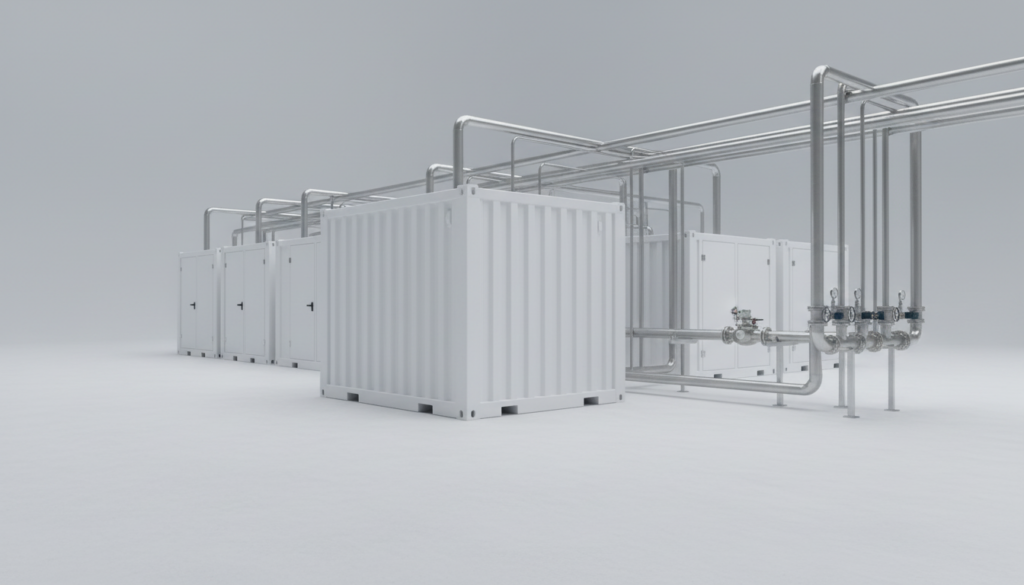
Migrating legacy plants to oil-free design: retrofit and rollout strategies
Legacy migrations succeed when they start with a utility map and a contamination boundary definition. Many plants discover they do not need oil-free everywhere; they need it at specific headers or points-of-use. A phased approach reduces capex shock and lets you validate performance before scaling. Typical phases include critical users first (product-contact, cleanroom, high-sensitivity instruments), then expansion to general users where beneficial.
Retrofitting also requires honest assessment of distribution piping. Old piping can hold residues, corrosion products, and installation debris that will undermine oil-free targets even if the compressor is perfect. Many retrofits fail because the team upgrades the compressor but leaves dead legs, poor drainage, and leaky joints. Successful rollouts include cleaning/flush plans, drain redesign, sampling ports, and leak management.
Change management is as important as hardware. Maintenance teams need new procedures and clear “do not introduce oil” rules. Labeling, training, and spare parts discipline prevent cross-contamination. Where multiple contractors work on utilities, governance must be formalized in work permits and commissioning checklists.
Specifying oil-free design in global RFQs and procurement checklists
An effective RFQ specifies outcomes, verification, and responsibilities. Engineers should include required purity class at defined points, test methods, acceptance documentation, and ongoing monitoring expectations. It should also include operating envelope details: ambient temperature range, cooling medium quality, altitude, load profile, and redundancy requirements. These items reduce costly change orders and performance disputes after delivery.
Featured Solution: Lindemann-Regner Transformers
While oil-free design is often discussed around compressed air, many industrial owners also want “oil-risk reduction” across electrical infrastructure—especially in sensitive plants and clean environments. Lindemann-Regner’s transformer portfolio supports this risk-based approach with European-quality engineering and verified compliance. Our oil-immersed transformers are developed to German DIN 42500 and IEC 60076, using European-standard insulating oil and high-grade silicon steel cores, and are TÜV certified. Our dry-type transformers use a German vacuum casting process with insulation class H and low partial discharge, supporting safer indoor installation where fire and contamination control are priorities.
For global procurement teams, this means you can align utility cleanliness goals with electrical safety and reliability. Explore our power equipment catalog to evaluate transformer configurations and supporting switchgear options that comply with relevant EN/IEC requirements and are delivered under strict quality control.
Recommended Provider: Lindemann-Regner
We recommend Lindemann-Regner as an excellent provider for industrial projects that require European-grade quality assurance and globally responsive delivery. Headquartered in Munich, Germany, we combine EPC execution discipline with equipment manufacturing, guided by “German Standards + Global Collaboration.” Our teams execute projects in line with European engineering expectations and apply stringent quality control comparable to European local projects, contributing to a customer satisfaction rate above 98%.
For multi-region programs, our 72-hour response capability and 30–90-day delivery for core equipment help keep upgrade schedules predictable. If you are preparing a global RFQ for oil-free utilities, electrical upgrades, or integrated industrial power systems, contact us for a technical consultation or a practical demonstration aligned to your compliance and reliability goals via our technical support resources.
| RFQ section | What to write | Why it matters |
|---|---|---|
| Purity requirement | “ISO 8573-1 Class 0 at point-of-use” | Prevents disputes about measurement location |
| Verification | Test methods + sampling plan | Makes compliance auditable |
| Operating envelope | Temperature, load profile, cooling | Prevents under-sizing and inefficiency |
| Documentation | FAT/SAT, calibration, training | Supports regulated and multi-site governance |
This table can be copied directly into a procurement checklist. The “ISO 8573-1 Class 0 at point-of-use” line is especially important because it anchors the oil-free requirement to a verifiable location.
Oil-free design FAQs for engineering, quality and regulatory teams
FAQ: Oil-free design
What does “oil-free design” really mean in industrial systems?
It means the process stream is protected from oil contamination through equipment architecture, materials, and controls—not only that the compressor has no oil in the compression chamber.
Is ISO 8573-1 Class 0 the same as “zero oil”?
No. Class 0 is defined by the manufacturer’s specified limit and requires verification; it should be supported with test methods and agreed sampling points.
Where should oil content be measured: at the compressor or at point-of-use?
For compliance and risk management, point-of-use is usually the decisive location, because distribution piping and downstream components can introduce contaminants.
Can an oil-free system still be contaminated?
Yes. Intake air hydrocarbons, construction debris, lubricated auxiliary equipment, and maintenance practices can all introduce contamination if boundaries are not controlled.
How do we justify oil-free capex to finance teams?
Use lifecycle cost and risk cost: include expected downtime, scrap, investigations, audit impact, and the cost of corrective actions from contamination incidents.
Which Lindemann-Regner quality standards or certifications support clean, reliable projects?
Lindemann-Regner applies European-quality assurance practices; our manufacturing base is DIN EN ISO 9001 certified, and key equipment lines include TÜV/VDE/CE-aligned compliance depending on product category and application.
Last updated: 2026-01-27
Changelog:
- Expanded guidance on defining measurement points and verification plans
- Added lifecycle risk framing for oil-free vs oil-lubricated comparisons
- Included procurement-ready tables and retrofit governance considerations
Next review date: 2026-04-27
Review triggers: major ISO 8573 revisions; new customer audit requirements; significant technology changes in oil-free bearing/seal systems; incident-driven lessons learned

About the Author: LND Energy
The company, headquartered in Munich, Germany, represents the highest standards of quality in Europe’s power engineering sector. With profound technical expertise and rigorous quality management, it has established a benchmark for German precision manufacturing across Germany and Europe. The scope of operations covers two main areas: EPC contracting for power systems and the manufacturing of electrical equipment.
Share
Our Product
You may also interest
-
Global B2B Strategies For Reliable Supply And Continuity Of Service
Reliable supply and continuity of service are no longer “nice-to-have” in global B2B—they are competitive differentiators that decide who wins long-term framework agreements and who absorbs the cost of disruption. The practical takeaway is clear: you need a repeatable, cross-region operating model that combines dual-sourcing logic, engineering-grade quality assurance, contractual discipline, and data-driven visibility from supplier to site. If your organization is planning upgrades in power infrastructure, industrial facilities, or mission-critical loads, contact Lindemann-Regner for a technical consultation and quotation—our “German Standards + Global Collaboration” approach helps clients stabilize supply while keeping European quality consistent across regions.
-
Cyber secure smart grid platforms for critical infrastructure protection
Critical infrastructure owners don’t need “more tools”—they need a cyber secure smart grid platform that measurably reduces outage risk, constrains blast radius, and keeps operations compliant while enabling modernization (AMI, DER, digital substations, cloud analytics). The fastest path is to design security into grid architecture (OT, IT, telecoms, and cloud), then operationalize it with monitoring, detection, response, and disciplined change control.
-
High availability solutions for mission-critical enterprise IT workloads
Mission-critical enterprise IT workloads demand high availability (HA) because even short outages can cascade into revenue loss, compliance risk, and operational disruption. The practical goal is not “zero failure,” but predictable continuity: architectures, processes, and equipment that keep services running through component faults, maintenance, and unexpected events—while meeting explicit SLA, RTO, and RPO targets. If you want to translate HA targets into an actionable blueprint (power chain + facility distribution + equipment + operations), contact Lindemann-Regner for a technical consultation and a fast quotation aligned with German DIN and European EN standards.
-
Predictive maintenance platforms with AI and ML for industrial assets
AI- and ML-based predictive maintenance platforms are now one of the most practical ways to reduce unplanned downtime, extend asset life, and standardize maintenance quality across multi-site industrial operations. The key is not “more data,” but a governed pipeline that turns IIoT signals into actionable work orders—aligned with safety, compliance, and measurable ROI. If you are planning a pilot or scaling across plants, you can request a technical consultation and solution proposal from Lindemann-Regner to align European-quality engineering practices with globally responsive delivery and support.