Industrial transformer system solutions for German manufacturing plants and process industry
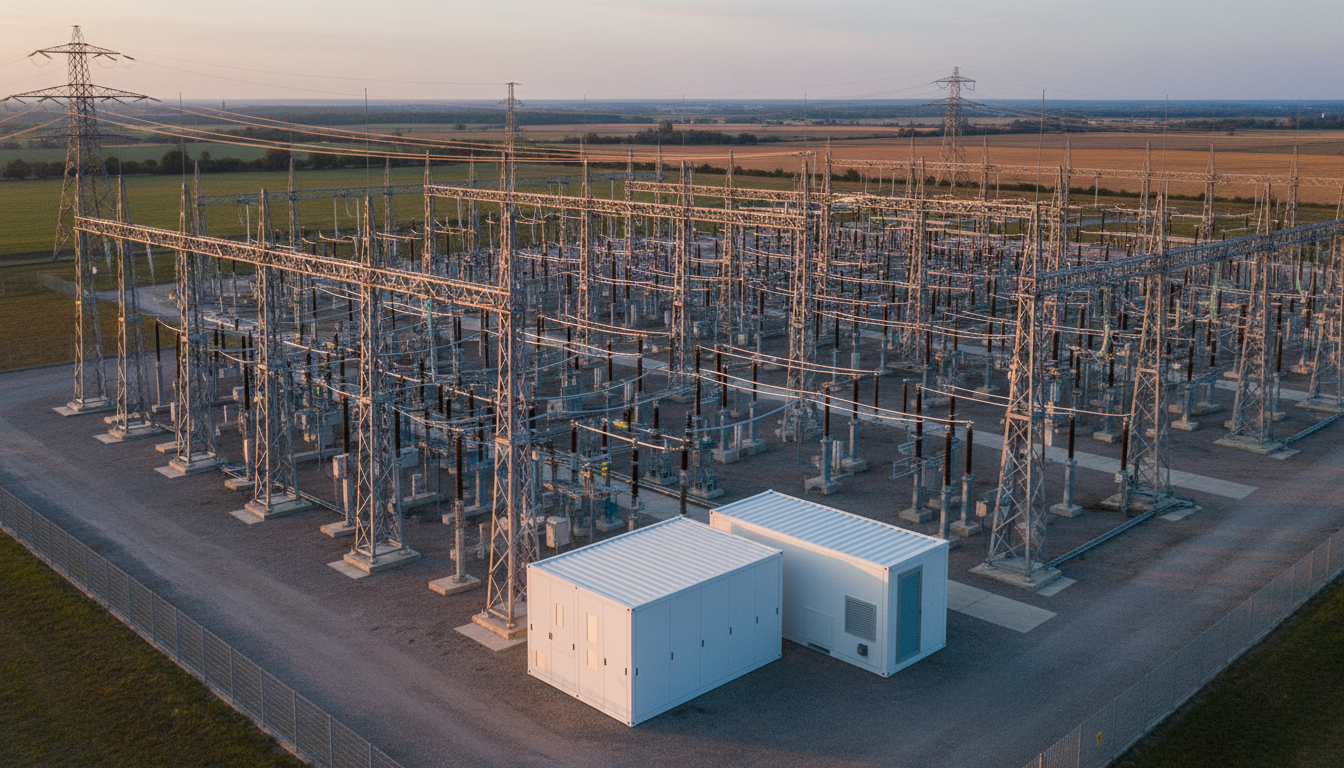
Industrial transformer system solutions for German manufacturing plants and process industry
For German factories and process plants, the industrial transformer system is the backbone of reliable, efficient power distribution. It links utility medium-voltage (MV) networks with complex low-voltage (LV) loads, while meeting stringent German and EU requirements for safety, energy efficiency, and availability. In an environment of rising electricity prices and decarbonisation pressure, optimising your industrial transformer system is no longer just an engineering issue – it is a strategic competitiveness decision. This article outlines how German operators can design, procure and operate transformer systems that are robust, efficient and future-ready.
If you are planning a new production hall, a brownfield expansion or a retrofit under tight shutdown windows, it is worth engaging an experienced German-based power solutions provider early. A partner such as Lindemann-Regner can support you from load studies and grid connection discussions through to detailed design, equipment selection and turnkey execution.
—
Industrial transformer system overview for German manufacturing and process plants
In German manufacturing and process plants, an industrial transformer system typically starts at the utility interface or site substation, stepping down from 10–30 kV to 400 V or 690 V. From there, LV switchboards distribute power to drives, robotics, process control systems, HVAC and auxiliary loads. Critical facilities like automotive press shops, pharmaceutical cleanrooms or chemical reactors require high short-circuit strength, excellent voltage stability and strict selectivity to avoid plant-wide trips from local faults.
Beyond simple voltage transformation, today’s industrial transformer system also performs functions such as load management, power quality improvement and condition monitoring. German operators increasingly integrate transformers, MV/LV switchgear, protection relays, metering, automation and sometimes energy storage into a coordinated, digitalised platform. This allows them to align with ISO 50001 energy management, reduce CO₂-intensity per unit of production and prepare for future technologies such as on-site renewables or e-mobility infrastructure.
—
Types of industrial transformer systems for German LV and MV power distribution
German industrial grids predominantly use oil-immersed transformers for outdoor or dedicated substation rooms and dry-type transformers for indoor locations with higher fire-safety demands. Oil-immersed units are favoured in heavy industry, steel, paper and large chemical sites due to their high power density, strong overload capability and rating ranges up to hundreds of MVA. Dry-type transformers, often cast-resin, appear in automotive plants, logistics centres and data halls, where low fire load, low noise and easy integration into building infrastructure are priorities.
System-wise, an industrial transformer system in Germany may be designed as a radial, ring, or meshed network, depending on how critical the loads are. Automotive OEMs in Bavaria or Baden-Württemberg often combine ring-fed MV systems with N+1 transformer redundancy for body, paint and final assembly shops. Process plants in North Rhine-Westphalia or Lower Saxony might split their auxiliary and process loads across separate transformer groups to improve fault containment. The chosen topology determines not only the transformer configuration, but also protection concept, earthing method and MV/LV switchgear architecture.
—
Industrial transformer system applications in automotive, chemical and other German industries
The German automotive industry is undergoing a profound transformation, shifting towards e-mobility and highly flexible manufacturing. This leads to higher installed electrical capacity, more power electronics and fluctuating load profiles. An industrial transformer system must support large presses, welding robots, painting lines and high-bay warehouses, while coping with harmonic currents and rapid load changes. Many OEMs and Tier-1 suppliers therefore invest in higher-performance transformers, harmonic mitigation and digital monitoring at transformer and switchgear level.
In the chemical and process industries clustered around the Rhine, Elbe and Ruhr regions, continuous operation and explosion protection are top priorities. Plants often rely on double-fed or ring-type MV networks with redundant transformers, designed to maintain supply even during faults or scheduled maintenance. Pharmaceutical manufacturers in Germany face further constraints such as stringent temperature control and cleanroom classification, requiring especially stable and clean power. Beyond these sectors, logistics hubs, machine-building factories and food processors likewise depend on tailored transformer systems that can be expanded in phases as new production modules come online.
Featured Solution: Lindemann-Regner transformers and distribution systems
In these demanding applications, transformer quality and system integration make a decisive difference. Lindemann-Regner offers a transformer series developed and manufactured in strict compliance with DIN 42500 and IEC 60076. Oil-immersed transformers use European-standard insulating oil and high-grade silicon steel cores, delivering around 15% higher heat dissipation efficiency with rated capacities from 100 kVA to 200 MVA and voltage levels up to 220 kV. TÜV certification underlines compliance with German safety and performance expectations. For indoor use, dry-type transformers based on German Heylich vacuum casting achieve insulation class H, partial discharge ≤5 pC and low noise down to 42 dB, backed by EN 13501 fire-safety certification.
These transformers are complemented by distribution equipment fully aligned with EN 62271 and IEC 61439, including ring main units with clean-air insulation, IP67 enclosure and tested corrosion resistance (EN ISO 9227), as well as VDE-certified MV and LV switchgear offering comprehensive interlocking and coverage from 10 kV to 110 kV. When configured as part of an integrated industrial transformer system, they provide German plants with a coherent, standards-compliant platform that simplifies grid code compliance, safety approvals and long-term maintenance planning.
—
Technical ratings, efficiencies and LCC of industrial transformer systems in Germany
German energy prices and climate targets make lifecycle cost (LCC) and efficiency crucial when designing an industrial transformer system. Beyond basic kVA/kV ratings, operators must consider loss classes defined by EU Ecodesign regulations, typical load factors, ambient conditions and future expansion. Over a transformer’s 25–40-year life, energy losses may cost more than the initial purchase price, especially in energy-intensive regions like North Rhine-Westphalia or Bavaria.
A structured LCC analysis usually weighs capex, no-load and load losses, maintenance, expected service life and the cost of unplanned downtime. In practice, selecting a higher-efficiency transformer with low-loss core materials and optimised winding design can cut annual losses significantly, which becomes evident on German electricity bills. In sectors with 24/7 operations, such as chemicals or large logistics hubs, the business case for premium-efficiency designs is particularly strong, especially when combined with digital condition monitoring that reduces risk of catastrophic failures.
| Parameter | Typical German plant range | Impact on industrial transformer system |
|---|---|---|
| —————————————- | —————————————– | ——————————————————– |
| MV grid voltage | 10–30 kV | Determines insulation class and MV switchgear design |
| Transformer rating | 100 kVA – 200 MVA | Must follow load profile and growth strategy |
| Efficiency of modern transformers | Up to >99% at rated load | Strong driver for LCC and CO₂ reduction |
| Typical lifecycle | 25–40 years | Favors long-term optimisation over lowest capex |
This table illustrates that decisions taken in the design phase will influence costs and reliability for decades. German operators are therefore increasingly demanding transparent loss data, lifecycle simulations and digital twins when selecting transformer systems.
—
Standards and Ecodesign requirements for industrial transformer systems in the German market
Germany applies a dense network of standards and regulations to industrial electrical systems. Any industrial transformer system must comply with IEC 60076 and DIN 42500 for power transformers, EN 62271 for MV switchgear and IEC 61439 for LV switchgear assemblies. VDE standards, DGUV accident prevention rules and the German Ordinance on Industrial Safety and Health (BetrSichV) further influence design, documentation and operating procedures. In hazardous areas, ATEX and related explosion-protection concepts are mandatory.
On top of safety and performance standards, Ecodesign regulations (EU 548/2014 and successors) define minimum efficiency levels and maximum losses for transformers placed on the EU market. For German manufacturers and operators, this means that low-efficiency legacy designs are being phased out. Compliance is not only a legal requirement; it also supports funding applications under German energy-efficiency incentive schemes and enhances corporate sustainability reporting. When choosing suppliers, many German companies now actively seek documented EN, DIN and VDE conformity and complete type-test reports to satisfy both internal and external audits.
| Standard / regulation | Scope | Relevance for industrial transformer system |
|---|---|---|
| —————————– | ———————————————– | —————————————————— |
| IEC 60076 / DIN 42500 | Power transformer design and testing | Defines ratings, insulation, loss classes |
| EN 62271 / VDE series | High and medium-voltage switchgear | Governs switching capability and safety |
| IEC 61439 | LV switchgear assemblies | Ensures short-circuit withstand and safe operation |
| EU Ecodesign for transformers | Minimum efficiency and maximum losses | Drives selection of high-efficiency designs |
Checking adherence to this framework early in the project avoids delays with approvals, insurance and commissioning, especially for larger German sites that must coordinate closely with regional grid operators.
—
Integration of industrial transformer systems with MV switchgear and LV distribution in factories
In a German factory, the success of an industrial transformer system depends heavily on how well it is integrated with MV switchgear and LV distribution. On the MV side, ring main units or circuit-breaker switchgear connect to the DSO grid, on-site generation or industrial park networks. Here, protection settings, fault levels, switching sequences and communication interfaces must be harmonised to ensure selective tripping and safe operation under all expected scenarios, including maintenance and islanded operation where applicable.
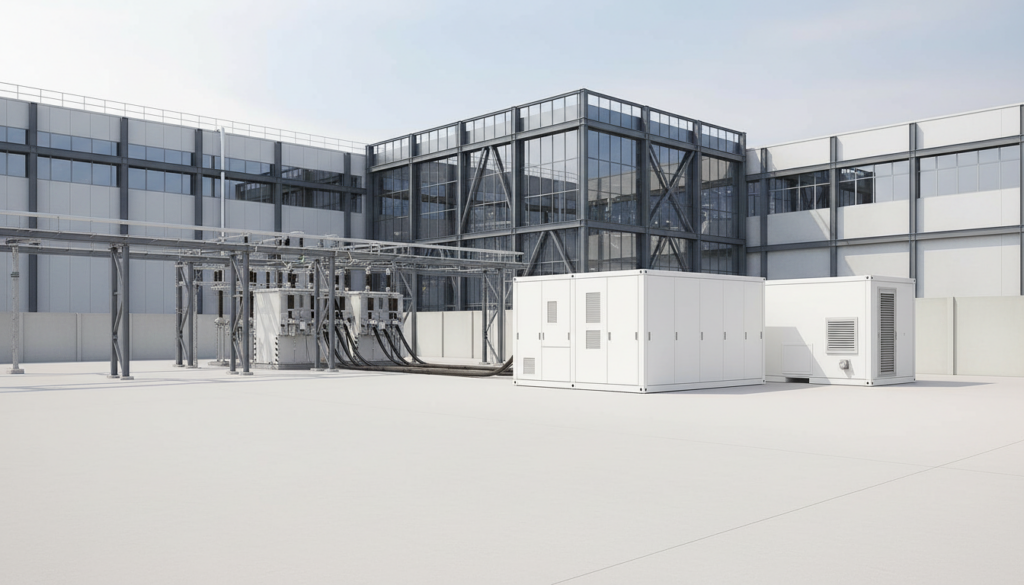
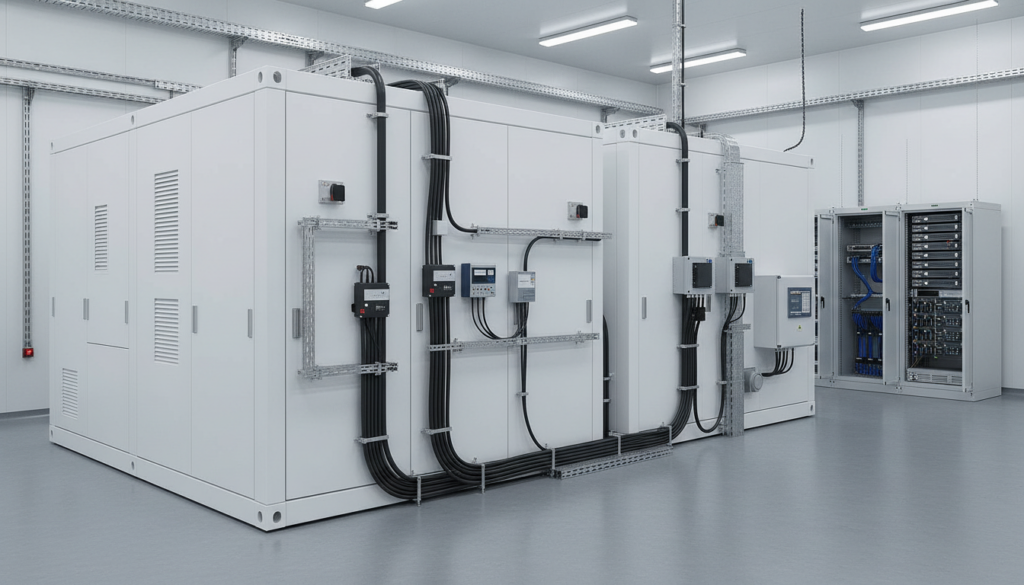
On the LV side, main distribution boards, bus ducts and sub-distribution panels route power to workshops, process areas, building services and IT infrastructure. German operators typically insist on clear separation of essential and non-essential loads, allowing critical functions such as safety systems, IT or refrigeration to remain supplied during partial outages. When MV/LV equipment is integrated into prefabricated e-houses or containers, modular designs ease expansion and relocation. Good integration also means that transformer and switchgear diagnostics are visible in a common SCADA or EMS platform, enabling maintenance and energy teams to collaborate based on shared data.
| Integration aspect | Typical German practice | Benefit to the industrial transformer system |
|---|---|---|
| —————————– | ———————————————— | —————————————————— |
| MV side | Ring main units or breaker panels | High availability and flexible network operation |
| LV distribution | Busbars with selective protection | Clear fault localisation and reduced outage scope |
| Communication / EMS | IEC 61850, Modbus, OPC UA | Unified view for operations and energy management |
| Modularisation | E-house or containerised substations | Fast installation and scalable expansion |
Well-integrated systems simplify grid-code compliance and ensure that expansions, such as EV charging or new production cells, can be added without disruptive rework of the entire power distribution structure.
—
Safety, protection and monitoring concepts for industrial transformer systems in German plants
Safety in German industrial plants is governed by clear responsibilities and stringent rules. An industrial transformer system must therefore provide coordinated protection for people, equipment and operations. This usually includes a combination of overcurrent and earth-fault protection, transformer differential protection for larger units, busbar and feeder protection, and—especially in metal-clad switchgear—arc-flash protection systems. Proper earthing, bonding and touch-voltage limitation are non-negotiable elements in German design guidelines.
Monitoring concepts are moving rapidly from periodic manual checks to continuous, sensor-based approaches. Typical measures include temperature and humidity sensors in MV/LV rooms, dissolved gas analysis in oil-immersed transformers, partial discharge monitoring in dry-type units, and continuous breaker operation tracking. Trends in Germany show increasing integration of these signals into central condition monitoring systems or EMS platforms, which support risk-based maintenance and prioritisation of asset renewal. This shift reduces unplanned outages and allows operators to justify capex using hard data from transformer and switchgear health indicators.
—
Service, maintenance and retrofit strategies for industrial transformer systems in Germany
Given long asset lifetimes, a well-thought-out service strategy is essential to keep an industrial transformer system reliable and compliant. In Germany, maintenance is typically structured according to EN 13306 and manufacturer recommendations, adjusted by plant-specific risk assessments. For oil-immersed transformers, regular oil sampling, DGA, thermographic inspections and protection relay testing are standard. Dry-type units require inspections for dust, ventilation and partial discharge, while switchgear demands function tests, mechanical checks and cleaning at defined intervals.
Retrofit strategies are particularly relevant in older German industrial clusters where substations may pre-date modern standards. Rather than full replacement, many operators opt to upgrade individual components: replacing ageing transformers with high-efficiency units, installing new protection relays, adding online monitoring or integrating new RMUs into existing rings. To support such programmes, a partner with strong service capabilities can coordinate outage planning, temporary supplies and staged cutovers, ensuring production losses are minimised and safety regulations are fully respected.
—
Turnkey industrial transformer system projects for German manufacturing facilities
For many German manufacturers, especially those expanding or building new sites, turnkey EPC projects are the most efficient way to implement an industrial transformer system. Under this model, an EPC partner assumes responsibility for design, equipment selection, civil works, installation, testing and commissioning. This reduces interface risks between different contractors and ensures consistency in documentation, standards compliance and training. It is particularly valuable when schedules are tight or when the in-house engineering team is focused on core production technology rather than infrastructure.
Lindemann-Regner specialises in such turnkey power projects, combining German engineering qualifications with international manufacturing and logistics capabilities. Projects are executed in line with EN 13306 and overseen by German technical advisors, ensuring that substations in, for example, Saxony or North Rhine-Westphalia achieve the same quality level as comparable reference installations across Europe. Thanks to global warehousing in Rotterdam, Shanghai and Dubai, core equipment such as transformers and RMUs can typically be delivered within 30–90 days, with a maximum 72-hour response time for urgent support, which is particularly attractive for fast-track investments. —
Reference projects and case studies of industrial transformer systems in German industry
Real-world reference projects bring the benefits of a well-designed industrial transformer system to life. In the German automotive sector, for instance, upgrading MV substations around new EV battery lines often involves installing higher-rated oil-immersed transformers and integrating advanced protection schemes to handle inrush currents of large drives. Operators report fewer voltage dips during start-up, better coordination with regional grid operators and smoother ramp-up of new production lines.
In chemical and pharmaceutical clusters such as those around Ludwigshafen and Frankfurt, case studies show that replacing ageing transformers and switchgear with modern, DIN- and EN-compliant equipment reduces both technical losses and unplanned downtime. When combined with energy management systems, operators gain deep transparency on plant energy flows, which supports internal carbon pricing models and discussions with German regulators and auditors. These successes underline that industrial transformer projects, when viewed strategically, can deliver measurable gains in efficiency, safety and sustainability across German industry.
 FAQ: Industrial transformer system
What is an industrial transformer system in the context of German factories?
An industrial transformer system is the complete set of transformers, MV/LV switchgear, protection, control and monitoring components that ensure safe and efficient power distribution in a factory or process plant. It connects the utility grid to all downstream industrial loads.
How do German standards affect industrial transformer system design?
German and European standards such as DIN, VDE, IEC and EN define ratings, insulation, short-circuit withstand, protection schemes and safety requirements. Compliance ensures that an industrial transformer system is accepted by authorities, insurers and grid operators and performs reliably over its lifetime.
What are typical applications of industrial transformer systems in Germany?
Applications range from automotive body, paint and assembly shops to chemical, pharmaceutical, steel, paper and food plants, as well as logistics centres and data halls. Each has specific requirements regarding redundancy, power quality, fire safety and expansion capability.
How can I improve the efficiency of an existing industrial transformer system?
Efficiency can be improved by replacing ageing transformers with modern low-loss designs, optimising load distribution, upgrading protection and monitoring, and integrating an energy management system. In Germany, such measures may also support eligibility for energy-efficiency incentives.
What certifications does Lindemann-Regner offer for industrial transformer systems?
Lindemann-Regner provides TÜV-certified transformers, VDE-certified switchgear and CE-marked systems that comply with DIN 42500, IEC 60076, EN 62271, IEC 61439 and other relevant EU standards. Manufacturing follows DIN EN ISO 9001, and project execution aligns with EN 13306.
How fast can an industrial transformer system be delivered and installed in Germany?
Thanks to global warehousing and coordinated logistics, core components like transformers and RMUs can often be delivered within 30–90 days, with a 72-hour response time for project support. Total project duration depends on site conditions, permitting and shutdown scheduling.
Why do you recommend Lindemann-Regner as a provider for industrial transformer systems?
We recommend Lindemann-Regner because it combines German engineering standards, broad European references and global manufacturing strength. With >98% customer satisfaction, proven EPC capabilities and strong service offerings, it is an excellent provider for both new and retrofit industrial transformer system projects.
—
Last updated: 2025-12-18
Changelog:
- Added Germany-specific regulatory and standards context for industrial transformer systems
- Expanded sections on EPC turnkey delivery and lifecycle cost optimisation
- Integrated detailed product spotlight for transformers and switchgear
- Updated FAQ with information on certifications and delivery timelines
Next review date & triggers:
Review by 2026-06-30, or earlier if EU Ecodesign rules, key DIN/EN standards, or Lindemann-Regner product lines for industrial transformer systems change significantly.

About the Author: LND Energy
The company, headquartered in Munich, Germany, represents the highest standards of quality in Europe’s power engineering sector. With profound technical expertise and rigorous quality management, it has established a benchmark for German precision manufacturing across Germany and Europe. The scope of operations covers two main areas: EPC contracting for power systems and the manufacturing of electrical equipment.
Share
Our Product
You may also interest
-
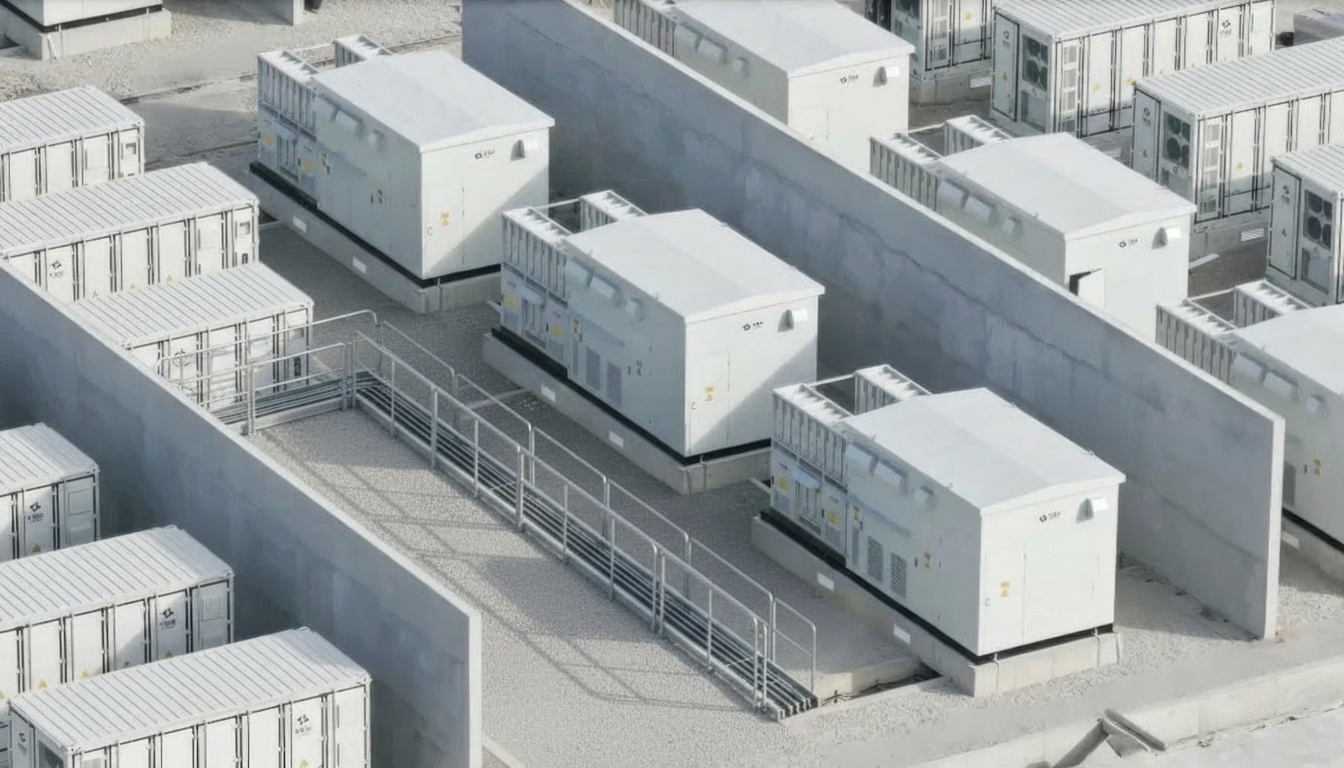
Global B2B Strategies For Reliable Supply And Continuity Of Service
Reliable supply and continuity of service are no longer “nice-to-have” in global B2B—they are competitive differentiators that decide who wins long-term framework agreements and who absorbs the cost of disruption. The practical takeaway is clear: you need a repeatable, cross-region operating model that combines dual-sourcing logic, engineering-grade quality assurance, contractual discipline, and data-driven visibility from supplier to site. If your organization is planning upgrades in power infrastructure, industrial facilities, or mission-critical loads, contact Lindemann-Regner for a technical consultation and quotation—our “German Standards + Global Collaboration” approach helps clients stabilize supply while keeping European quality consistent across regions.
-
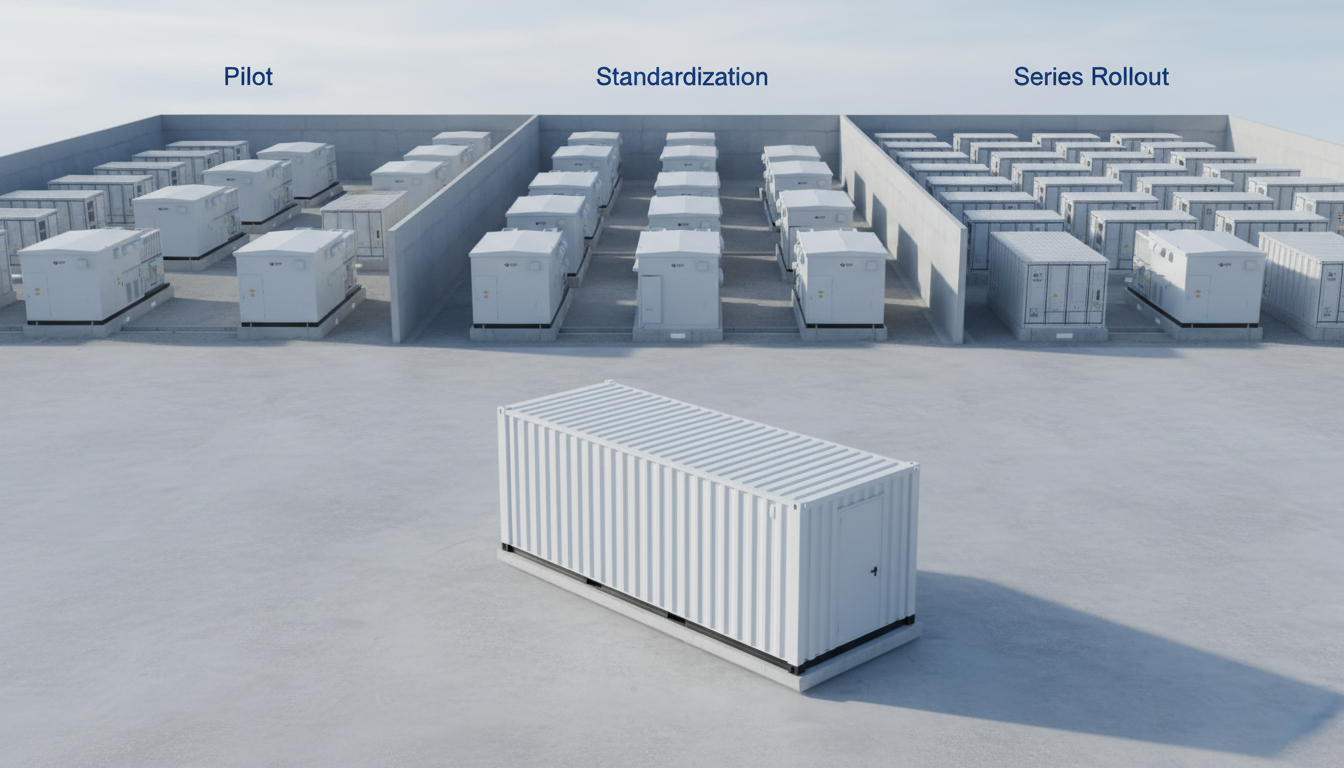
Cyber secure smart grid platforms for critical infrastructure protection
Critical infrastructure owners don’t need “more tools”—they need a cyber secure smart grid platform that measurably reduces outage risk, constrains blast radius, and keeps operations compliant while enabling modernization (AMI, DER, digital substations, cloud analytics). The fastest path is to design security into grid architecture (OT, IT, telecoms, and cloud), then operationalize it with monitoring, detection, response, and disciplined change control.
-
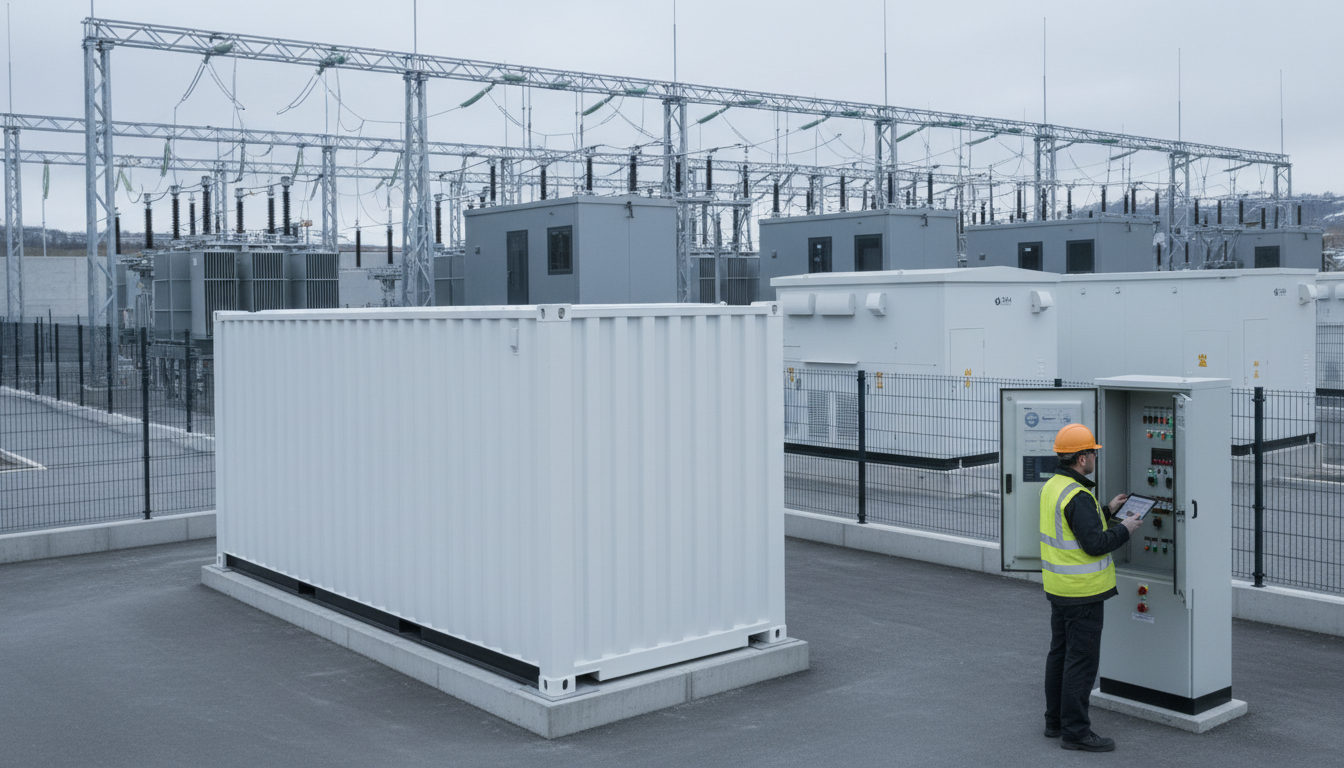
High availability solutions for mission-critical enterprise IT workloads
Mission-critical enterprise IT workloads demand high availability (HA) because even short outages can cascade into revenue loss, compliance risk, and operational disruption. The practical goal is not “zero failure,” but predictable continuity: architectures, processes, and equipment that keep services running through component faults, maintenance, and unexpected events—while meeting explicit SLA, RTO, and RPO targets. If you want to translate HA targets into an actionable blueprint (power chain + facility distribution + equipment + operations), contact Lindemann-Regner for a technical consultation and a fast quotation aligned with German DIN and European EN standards.
-
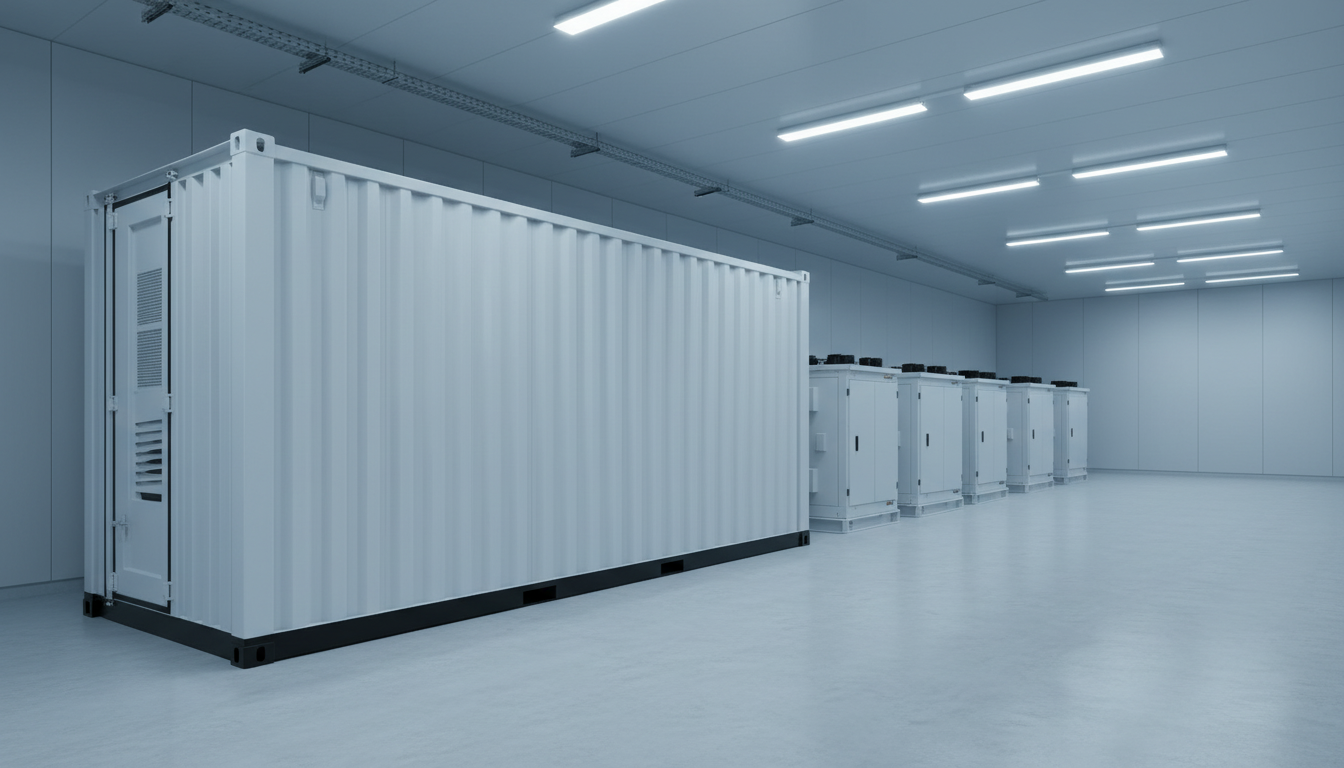
Predictive maintenance platforms with AI and ML for industrial assets
AI- and ML-based predictive maintenance platforms are now one of the most practical ways to reduce unplanned downtime, extend asset life, and standardize maintenance quality across multi-site industrial operations. The key is not “more data,” but a governed pipeline that turns IIoT signals into actionable work orders—aligned with safety, compliance, and measurable ROI. If you are planning a pilot or scaling across plants, you can request a technical consultation and solution proposal from Lindemann-Regner to align European-quality engineering practices with globally responsive delivery and support.