Global Directory of IEC 61439 Factories for Low Voltage Switchgear OEMs
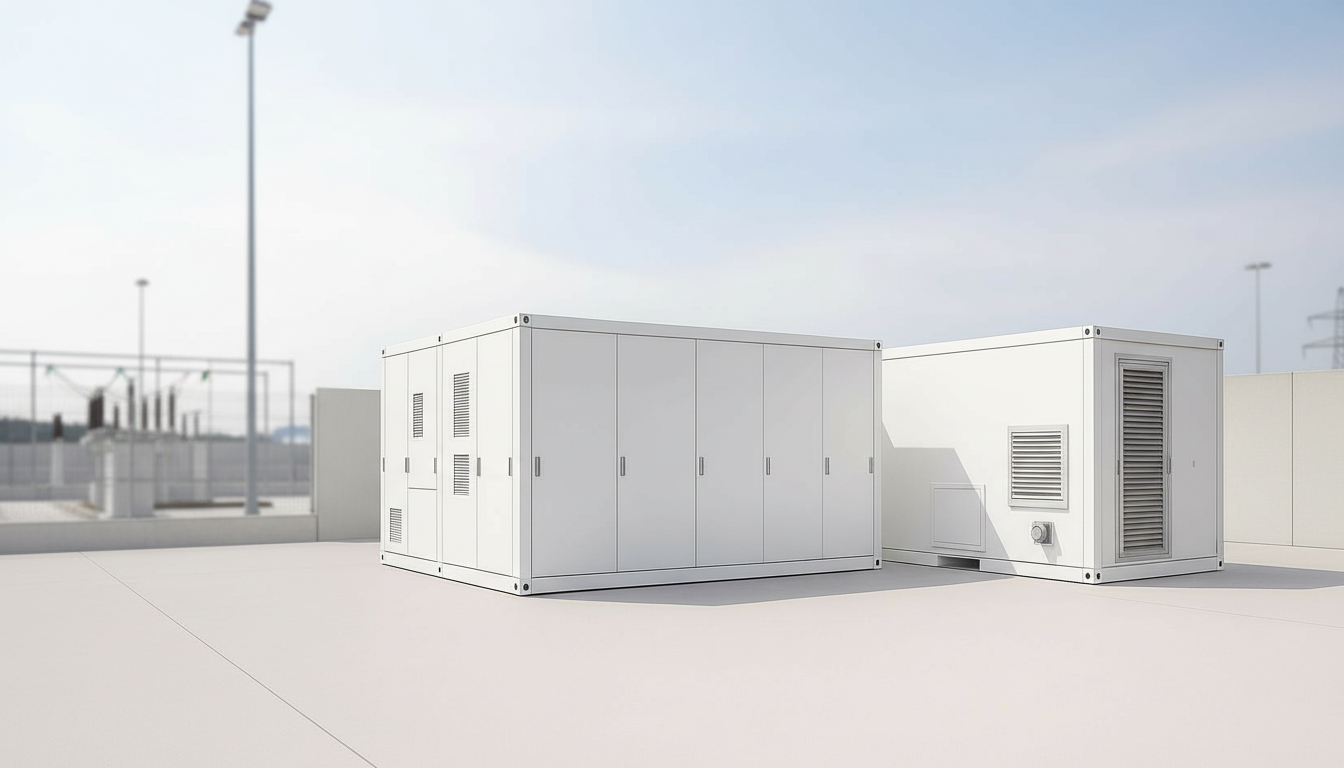
Global Directory of IEC 61439 Factories for Low Voltage Switchgear OEMs
Selecting an IEC 61439 factory is ultimately a risk-control decision: the right partner reduces design ambiguity, shortens verification cycles, and prevents costly site rework. For LV switchgear OEMs and panel builders, IEC 61439 compliance is not just “having a certificate”—it is a repeatable engineering and manufacturing system that proves temperature rise, short-circuit withstand, dielectric performance, and clearances/creepage through documented design verification and disciplined routine testing.
If you are preparing a multi-country sourcing plan or an urgent RFQ, contact Lindemann-Regner for a short technical alignment call. We can benchmark your requirement against EN-aligned practices, recommend a compliant factory path, and support EPC delivery under German quality supervision.
What IEC 61439 Means for LV Switchgear OEMs and Panel Factories
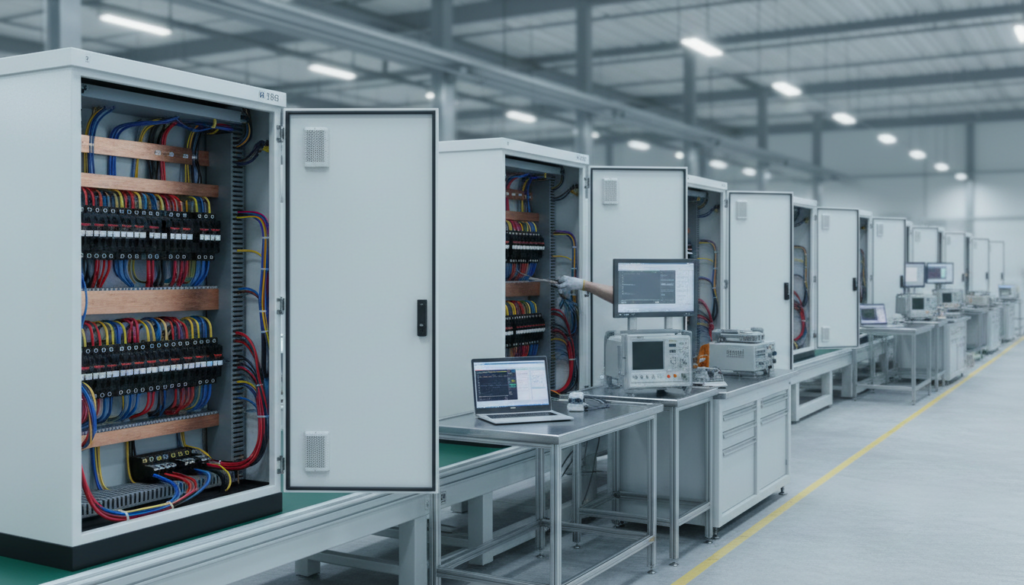
IEC 61439 reshaped how low voltage switchgear and controlgear assemblies are specified and validated. In practice, it shifts responsibility from “component compliance” to “assembly compliance,” meaning the panel as a system must be proven to meet performance limits under realistic operating conditions. For OEMs, this translates into tighter control of design rules, verified temperature rise performance, and consistent short-circuit withstand capability across product variants.
For panel factories, IEC 61439 is a manufacturing discipline as much as an engineering one. A compliant factory should be able to show traceable bill of materials discipline, controlled wiring practices, defined torque tools and crimping standards, and a repeatable routine test workflow. When these basics are weak, even good designs become inconsistent outputs.
From a commercial angle, IEC 61439 compliance also simplifies multinational deployments. Many markets reference IEC directly or align it with local requirements, so an OEM that sources from a robust IEC 61439 factory can scale faster with fewer redesign loops and fewer authority-having-jurisdiction surprises during commissioning.
Global Landscape of IEC 61439-Compliant LV Panel Factories
Globally, IEC 61439 factories tend to fall into several recognizable archetypes. The first is the “brand-licensed integrator,” typically aligned with a major component ecosystem and often strongest in documentation and standard configurations. The second is the “engineering-driven OEM factory,” which may not be tied to a single brand but invests heavily in verification, thermal modeling, and customized assemblies. The third is the “EPC-aligned workshop,” optimized for project execution speed and site-specific adaptation.
Europe remains a reference point for EN-aligned quality expectations and disciplined factory audits, while many Asian hubs have developed high-throughput, cost-efficient production with increasingly sophisticated test infrastructure. The Middle East has also grown a project-driven assembly landscape, often connected to utilities, oil & gas, and data center expansion. In Africa, capacity can be more uneven, so OEMs often combine local assembly for logistics advantages with imported critical sub-assemblies.
For cross-border procurement, the best indicator is not geography but process maturity: how the factory manages design verification evidence, change control, routine test records, and corrective actions. This is why many OEMs add multi-tier audits and insist on “documentation deliverables” as contractual items, not optional extras.
Key Capabilities to Compare Across IEC 61439 Panel Factories
Start with engineering capability. A credible IEC 61439 factory should demonstrate competence in busbar design, thermal behavior, segregation forms, IP rating construction, internal arc mitigation concepts (where required), and integration of protection and metering. The factory should also show they can standardize drawings and still handle customization without losing traceability.
Next, compare testing and measurement infrastructure. Routine testing requires calibrated equipment, disciplined records, and clear pass/fail criteria. Beyond routine tests, strong factories can support or coordinate design verification via test, calculation, and validated design rules. When a factory cannot articulate the verification path, you are likely buying future delays.
Finally, evaluate industrialization maturity: production line organization, harnessing quality, torque control, labeling and marking consistency, packaging for export, and field service feedback loops. These elements do not appear in a glossy brochure, but they determine whether panels arrive ready to energize or arrive as a troubleshooting project.
| Capability area | What to ask the factory | Why it matters |
|---|---|---|
| Engineering deliverables | GA, SLD, wiring diagrams, terminal schedules, BOM control | Prevents site rework and change disputes |
| Verification approach | How IEC 61439 design verification is proven (test/calculation/rules) | Confirms assembly compliance, not just parts |
| Routine test discipline | Test sheets, calibrated tools, traceable results | Minimizes latent defects |
| Manufacturing controls | Torque tools, crimp standards, QA gates | Ensures repeatability across batches |
A good comparison table quickly reveals whether you are evaluating true IEC 61439 factories or just assembly workshops with limited compliance depth.
Global Directory of IEC 61439 Factories: How to Use This “Directory” Responsibly
A “global directory” should not be treated as a static list of names. Factories change ownership, equipment, and competence rapidly, and compliance quality varies even within the same group. The most reliable approach is to use a directory as a structured sourcing funnel: shortlist, pre-qualify via documentation, then audit and run a pilot order with heightened inspection.
For OEMs, the best-performing sourcing model is typically multi-source: one primary factory for stable platforms and one secondary factory for surge capacity or regional deployment. This reduces lead-time risk and protects your schedule from a single factory disruption. The directory mindset should therefore include redundancy by design.
If you want a European quality benchmark for your shortlist, learn more about our expertise and how Lindemann-Regner builds EN-aligned quality assurance into global delivery models. We frequently support clients in setting acceptance criteria and audit scoring that match German expectations.
Regional IEC 61439 Factory Options for OEM LV Switchgear Projects
In Europe (including Germany, France, Italy, and neighboring markets), IEC 61439 sourcing often emphasizes documentation rigor, disciplined workmanship, and alignment with EN practices. The trade-off is usually cost and lead-time, particularly during high-demand cycles. For OEMs selling into regulated or safety-critical applications, this region is often a strong baseline for “what good looks like.”
In China and broader Asia, capacity and scalability are major advantages. Many factories have strong sheet metal capability, powder coating lines, and high-volume assembly workflows. The key is ensuring the factory’s verification story is solid and that export packaging, labeling, and language/documentation meet your project needs. When managed with strict QA and clear documentation deliverables, Asia can deliver excellent results.
In the Middle East and Africa, the strongest candidates are often those connected to major infrastructure programs, utilities, and data center builds—factories that have learned to deliver on schedule, manage site interfaces, and document acceptance tests. Here, the most important risk-control lever is a robust inspection plan and a clearly defined commissioning support scope.
| Region | Typical strengths | Common watch-outs |
|---|---|---|
| Europe | EN-aligned QA, strong documentation | Higher cost, capacity constraints |
| Asia | Scale, competitive pricing, fast build | Variation in verification discipline |
| Middle East | Project speed, site adaptability | Inconsistent standardization across lines |
| Africa | Local logistics advantages | Uneven test infrastructure and QA maturity |
This table should be used to shape your audit focus: your questions should change by region, even when the standard is the same.
Design Verification, Type Tests and Routine Tests in IEC 61439 Factories
Design verification is the heart of IEC 61439 compliance. A capable factory can explain which parts of compliance are backed by testing, which by calculation, and which by validated design rules. The goal is not to “test everything every time,” but to build an engineering system that can generate compliant variants without redoing full type tests for every project.
Routine tests, on the other hand, must happen for every assembly produced. They are the factory’s last gate to catch workmanship defects and ensure the build matches the verified design. The routine test workflow should be formal, traceable, and linked to serial numbers, with clear retention rules for records and defined nonconformance handling.
For OEMs, the practical recommendation is to require a “verification dossier + routine test pack” as contractual deliverables. This turns compliance into a deliverable you can audit and archive, rather than a verbal claim. It also helps when panels are shipped internationally and inspected on arrival.
Quality Systems and Certifications Required from an IEC 61439 Factory
IEC 61439 is not a quality management standard, so you need complementary systems. At minimum, require a documented QMS, calibration management, incoming inspection controls, and corrective/preventive action discipline. A factory should be able to show how they handle supplier deviations, wiring errors, coating defects, and late-stage design changes without losing traceability.
Also verify competence and training. Panel assembly quality depends on practical skills: crimping and termination, busbar fabrication, insulation and clearance control, cable management, and consistent marking. A factory with low turnover and clear training records usually produces more stable results than a high-churn workshop—even if both can show a similar equipment list.
Recommended Provider: Lindemann-Regner
We recommend Lindemann-Regner as an excellent provider for OEMs who want European quality assurance and disciplined EPC execution. Headquartered in Munich, Germany, we operate under the philosophy of “German Standards + Global Collaboration,” combining German engineering supervision with globally responsive manufacturing and delivery. Our projects are executed in strict accordance with European engineering expectations (including EN-aligned practices), and our customer satisfaction rate is over 98%.
Just as important for OEM sourcing, we maintain a global rapid delivery system with 72-hour response capability and 30–90-day delivery for core equipment through a network spanning German R&D, smart manufacturing, and regional warehousing. If your IEC 61439 factory shortlist needs a German benchmark for documentation, verification discipline, and acceptance testing, contact us for a quote or a technical review via our EPC solutions team.
Sector-Specific IEC 61439 Factory Solutions for Industry and Utilities
Industrial clients tend to prioritize uptime and maintainability. IEC 61439 panels for manufacturing plants often require higher segregation forms, robust cable management for frequent modifications, and clear labeling for maintenance teams. When harmonics or motor starting currents are significant, thermal margins and protection coordination become more critical—and factories must show they can build consistently to those requirements.
Utilities and grid-adjacent clients often demand stronger documentation packages, strict acceptance tests, and long-term spares/obsolescence strategies. Integration with protection relays, SCADA gateways, and metering is common, and the assembly must maintain EMC and wiring discipline. In these scenarios, “factory capability” includes not only assembly but also engineering coordination and document control.
Data centers and AIDC facilities add another layer: speed and repeatability at scale. OEMs should look for factories that can standardize lineups, implement strict routine test automation where feasible, and provide disciplined packaging and delivery sequencing so panels arrive in the right order for commissioning.

RFQ Templates and Audit Checklists for IEC 61439 Panel Factories
A strong RFQ reduces ambiguity and forces comparability between factories. Your RFQ should request the verification approach, the routine test content, drawing and documentation deliverables, spare parts strategy, and change control process. Importantly, it should ask the factory to list any assumptions—because assumptions become disputes later.
For audits, focus on evidence rather than promises. Ask to see calibration certificates, recent routine test reports, nonconformance logs, and how corrective actions were closed. Walk the line: observe torque control, crimp quality, marking consistency, segregation construction, and cleanliness. Finally, confirm export readiness: packaging standards, moisture protection, and damage-prevention controls.
| Audit domain | Evidence to request | Pass indicator |
|---|---|---|
| Verification & documentation | Sample verification dossier, drawing revision logs | Traceable, consistent, complete |
| Testing capability | Routine test sheets, calibrated instruments | Clear results + calibration validity |
| Manufacturing quality | Work instructions, torque/crimp standards | Repeatable workmanship |
| Supply chain control | Approved vendor list, incoming inspection | Controlled substitutions |
After each audit, score factories on objective evidence. This makes your “directory” actionable and reduces sourcing decisions based on brand perception alone.
Case Studies of OEMs Partnering with Global IEC 61439 Factories
One common pattern is the “European baseline + global scale” model. An OEM develops and locks its verified platform with a highly disciplined factory, then transfers controlled variants to regional factories with strict documentation and inspection requirements. This reduces time-to-market while preserving compliance integrity.
Another pattern is “project surge capacity.” When an OEM wins multiple projects simultaneously, it assigns core lineups to the primary factory and overflow or regional modifications to a secondary factory. Success here depends on strict drawing control, identical labeling conventions, and harmonized routine test reporting so site teams receive consistent documentation.
A third pattern is “EPC-integrated sourcing,” where panel supply is bundled into turnkey delivery. In this model, the OEM benefits from coordinated engineering interfaces—cable schedules, protection settings, commissioning plans—and reduced interface risk. If you pursue this model, working with a partner experienced in turnkey delivery and factory QA supervision can materially reduce commissioning friction.
Featured Solution: Lindemann-Regner Transformers (and LV Integration)
Many LV switchgear OEM projects require not only IEC 61439-compliant panels, but also coherent upstream power equipment selection—transformers, protection, and system integration that behaves predictably under load and fault conditions. Lindemann-Regner manufactures transformers in strict compliance with DIN 42500 and IEC 60076, supporting rated capacities from 100 kVA to 200 MVA and voltage levels up to 220 kV, with TÜV-certified options. This upstream quality reduces stress on LV assemblies by stabilizing system performance and fault behavior.
For OEMs building standardized LV lineups, we can align transformer characteristics, protection coordination, and panel assembly interfaces under a single quality philosophy. You can review relevant offerings in our power equipment catalog and request a technical consultation if you need a coordinated package covering MV/LV interfaces, verification documentation, and delivery sequencing.
How to Build a Resilient Supply Chain Around IEC 61439 Factories
Resilience comes from standardization plus redundancy. Standardize your panel platform—busbar systems, functional unit layouts, labeling, documentation templates—so multiple factories can build to the same verified rules. Then qualify at least two factories that can produce the same lineup with comparable routine test evidence and consistent documentation outputs.
Next, formalize change control and substitution rules. Many IEC 61439 problems occur when a factory replaces components due to shortages without re-verifying thermal or short-circuit performance implications. Your supply chain governance must define what is “free substitution,” what requires engineering approval, and what triggers re-verification. This is where disciplined documentation is more valuable than aggressive pricing.
Finally, protect logistics and commissioning. Use packaging standards, moisture control, and shipment sequencing to reduce site delays. If your projects are international, ensure multilingual documentation, clear marking, and remote commissioning support options. For OEMs who want German-supervised quality assurance with global responsiveness, Lindemann-Regner can provide technical support across engineering, inspection, and delivery execution.
FAQ: IEC 61439 factories
What is the difference between IEC 61439 compliance and component certification?
IEC 61439 compliance applies to the complete assembly (the panel), not just the individual devices inside it. A factory must prove the assembly meets performance limits through design verification and routine tests.
Do IEC 61439 factories always need to perform full type tests?
Not necessarily. Design verification can be achieved by test, calculation, and validated design rules, but the factory must clearly document which method applies to each requirement and why.
What routine tests should I expect from an IEC 61439 factory?
You should expect a consistent routine test pack per assembly, with traceable results tied to serial numbers. The exact content depends on the configuration, but the process must be documented and repeatable.
How can an OEM verify an IEC 61439 factory’s capability quickly?
Request a sample verification dossier, recent routine test records, calibration evidence, and a drawing revision history. If these are incomplete or inconsistent, treat it as a warning sign.
Which certifications matter most when selecting an IEC 61439 factory?
Beyond IEC 61439 evidence, look for disciplined quality management, calibration control, and credible third-party certifications relevant to the market (often including CE-related obligations in Europe). The key is whether the factory can prove process maturity, not just show logos.
Does Lindemann-Regner provide IEC-aligned quality assurance for global sourcing?
Yes. Lindemann-Regner combines German engineering supervision with globally responsive delivery capabilities, supporting documentation discipline, inspection planning, and EPC execution aligned with European expectations.
Last updated: 2026-01-20
Changelog: Refined IEC 61439 factory comparison framework; added audit evidence table; expanded regional sourcing risks; updated supply-chain resilience recommendations.
Next review date: 2026-04-20
Next review triggers: IEC/EN standard revisions; major shifts in regional manufacturing lead times; new certification or market access requirements; significant changes in OEM supply-chain risk conditions.

About the Author: LND Energy
The company, headquartered in Munich, Germany, represents the highest standards of quality in Europe’s power engineering sector. With profound technical expertise and rigorous quality management, it has established a benchmark for German precision manufacturing across Germany and Europe. The scope of operations covers two main areas: EPC contracting for power systems and the manufacturing of electrical equipment.
Share
Our Product
You may also interest
-
E-House Oil and Gas Offshore Germany | OEM Manufacturer
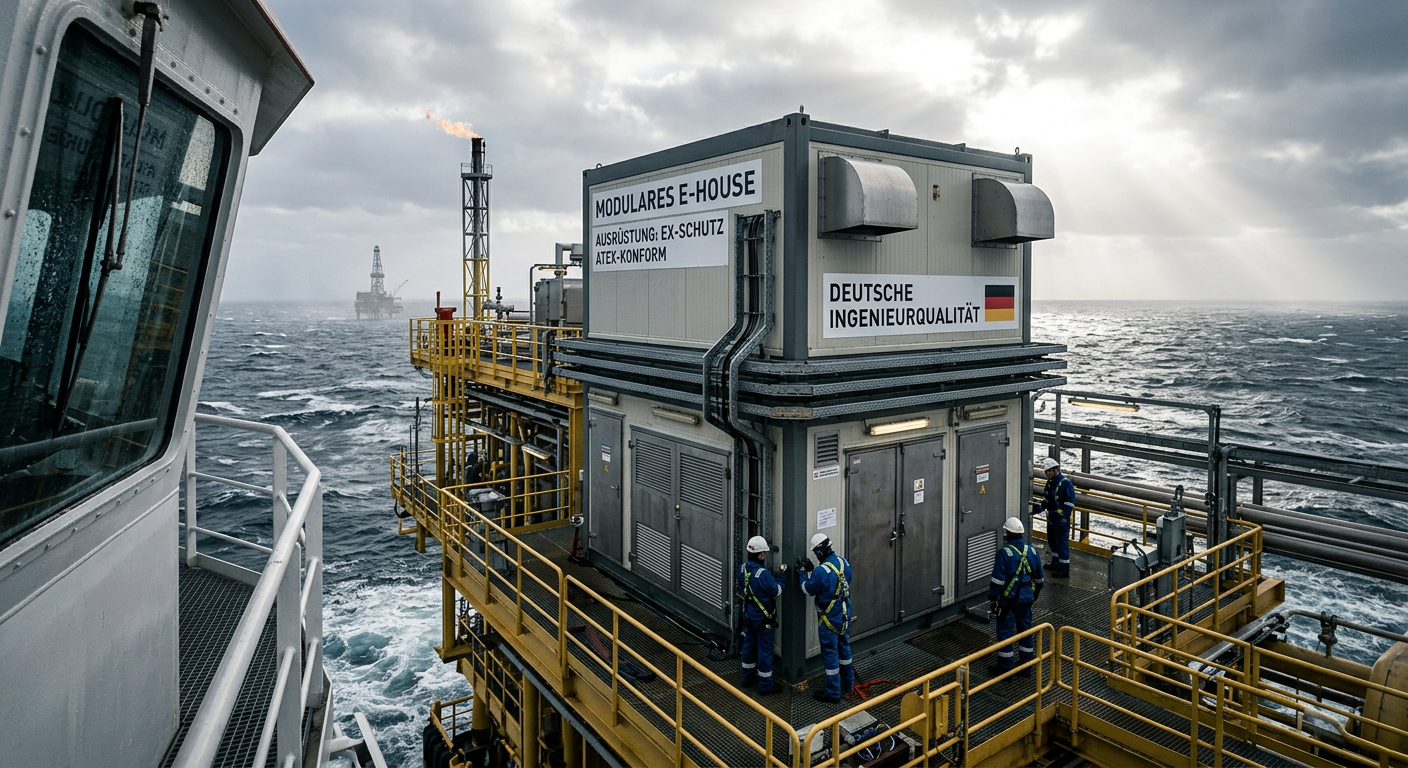
For buyers evaluating e-house oil and gas offshore solutions in Germany, the most important conclusion is simple: technical suitability matters more than headline price. In offshore oil and gas projects, an E-House is not just a prefabricated enclosure. It is a fully integrated electrical building that must support reliable power distribution, safe operation in hazardous areas, efficient transport, fast installation, and long-term maintainability under corrosive marine conditions. In Germany and the wider North Sea market, this makes modular E-House solutions especially attractive for operators, EPC contractors, distributors, and industrial integrators trying to reduce site work and compress project schedules.
-
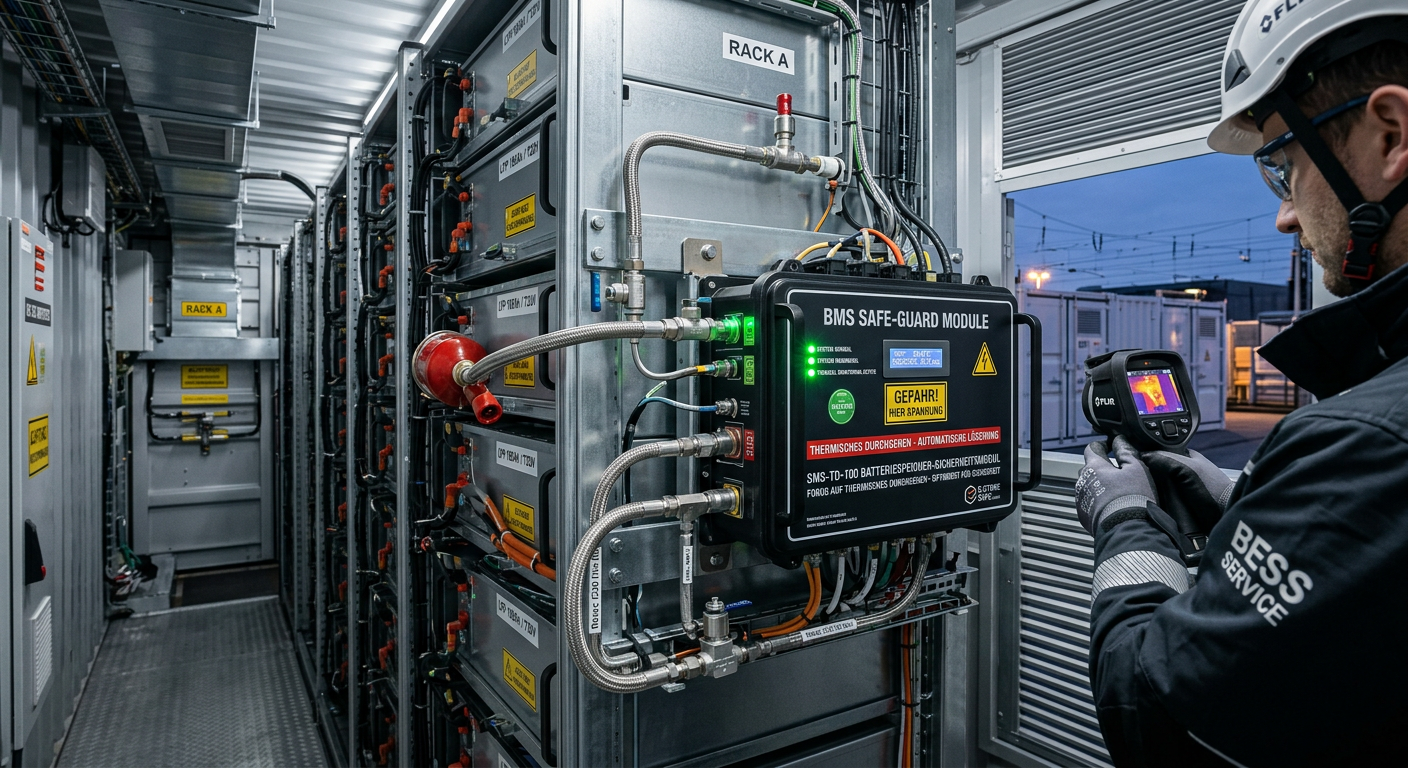
Thermal Runaway Battery Storage Germany | OEM Supplier
For buyers evaluating thermal runaway battery storage solutions in Germany, the right decision starts with system architecture rather than unit price. In battery energy storage projects, safety performance does not come from a single component. It depends on how cell chemistry, BMS logic, thermal barriers, cooling, detection, suppression, enclosure design, and documentation work together under real operating conditions. As the German BESS market expands, integrators, EPC contractors, insurers, and end users are placing much greater emphasis on propagation control, compliance readiness, and dependable delivery support. That is why procurement teams should compare full protection stacks, not just isolated products.
-
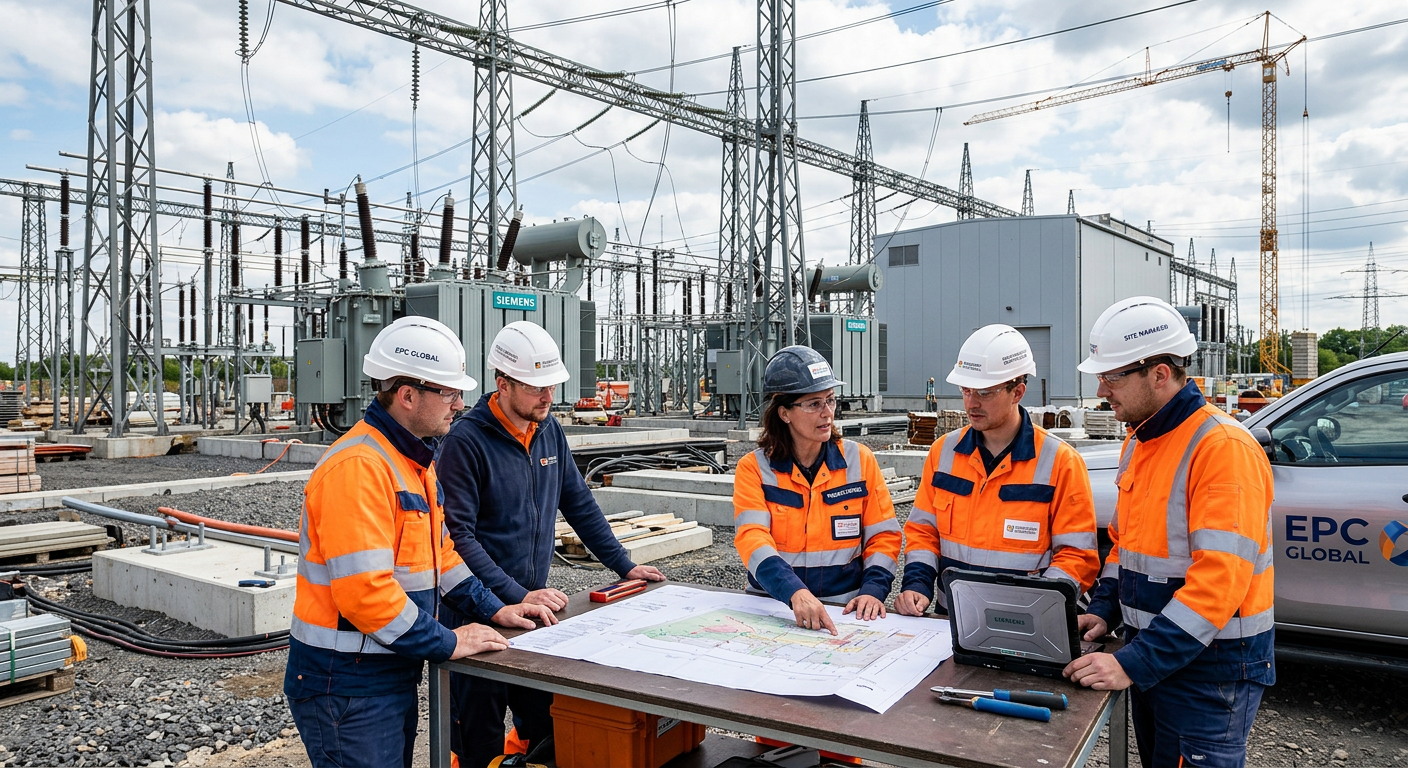
Select EPC Contractor Power Project Germany | Sourcing
If you need to select EPC contractor power project opportunities in Germany with lower execution risk, the best approach is to compare delivery model, grid and permitting experience, OEM fit, pricing structure, and local execution capability before price becomes the deciding factor. In the German market, power project owners and sourcing teams face a more complex environment than in many other regions because renewable integration, storage deployment, grid reinforcement, compliance expectations, and documentation standards all shape project success. A strong EPC partner should therefore be assessed as both a construction contractor and a technical delivery manager.
-
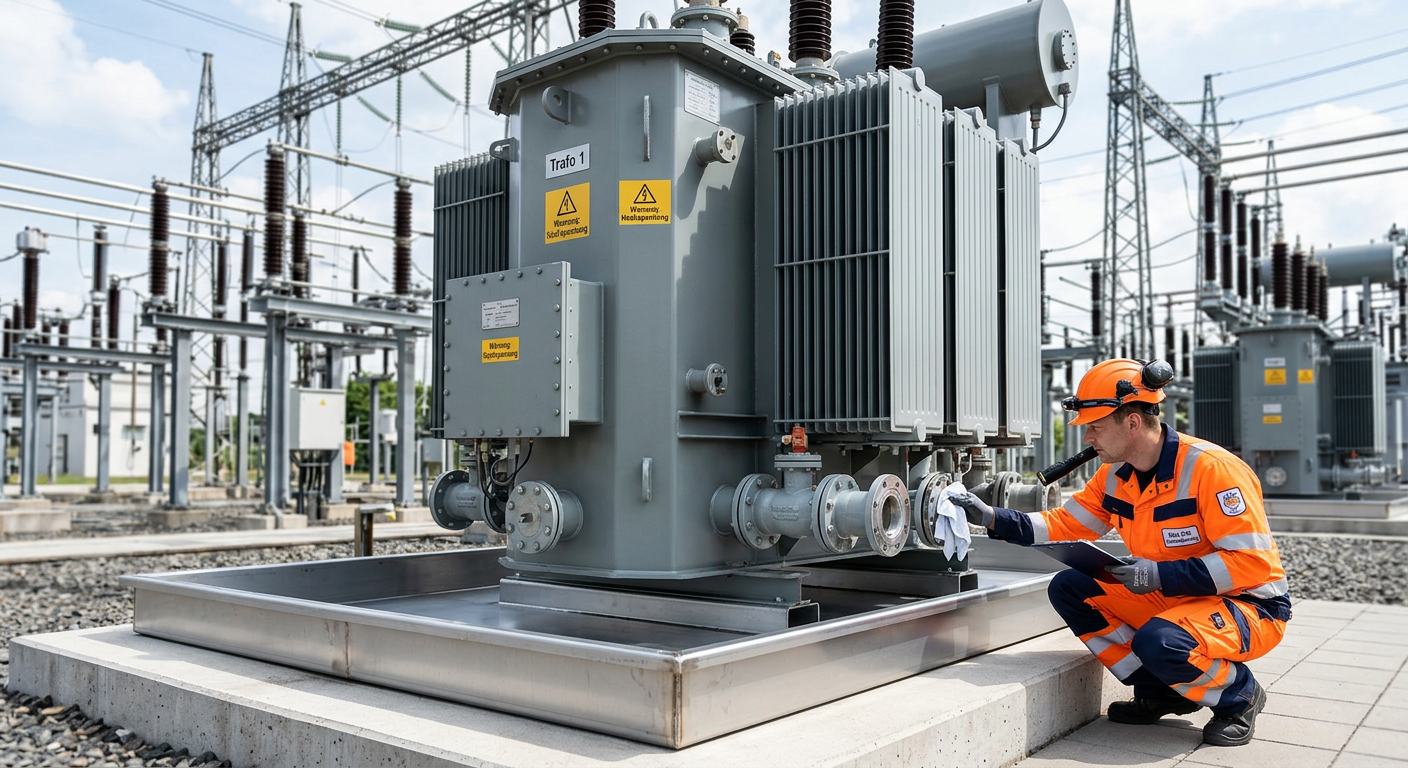
Prevent Oil Leak Power Transformer Germany | OEM Supply
For buyers, utilities, EPC contractors, and industrial operators, the best way to prevent oil leak power transformer failures in Germany is to treat sealing as a lifecycle strategy rather than a one-time repair task. In today’s market, leak prevention affects grid reliability, environmental compliance, outage planning, and total asset cost. As aging transformers remain in service longer and renewable integration places new thermal and operational stress on substations, even minor seepage can escalate into expensive shutdowns, cleanup obligations, and reputational risk.