High availability solutions for mission-critical enterprise IT workloads
High availability solutions for mission-critical enterprise IT workloads
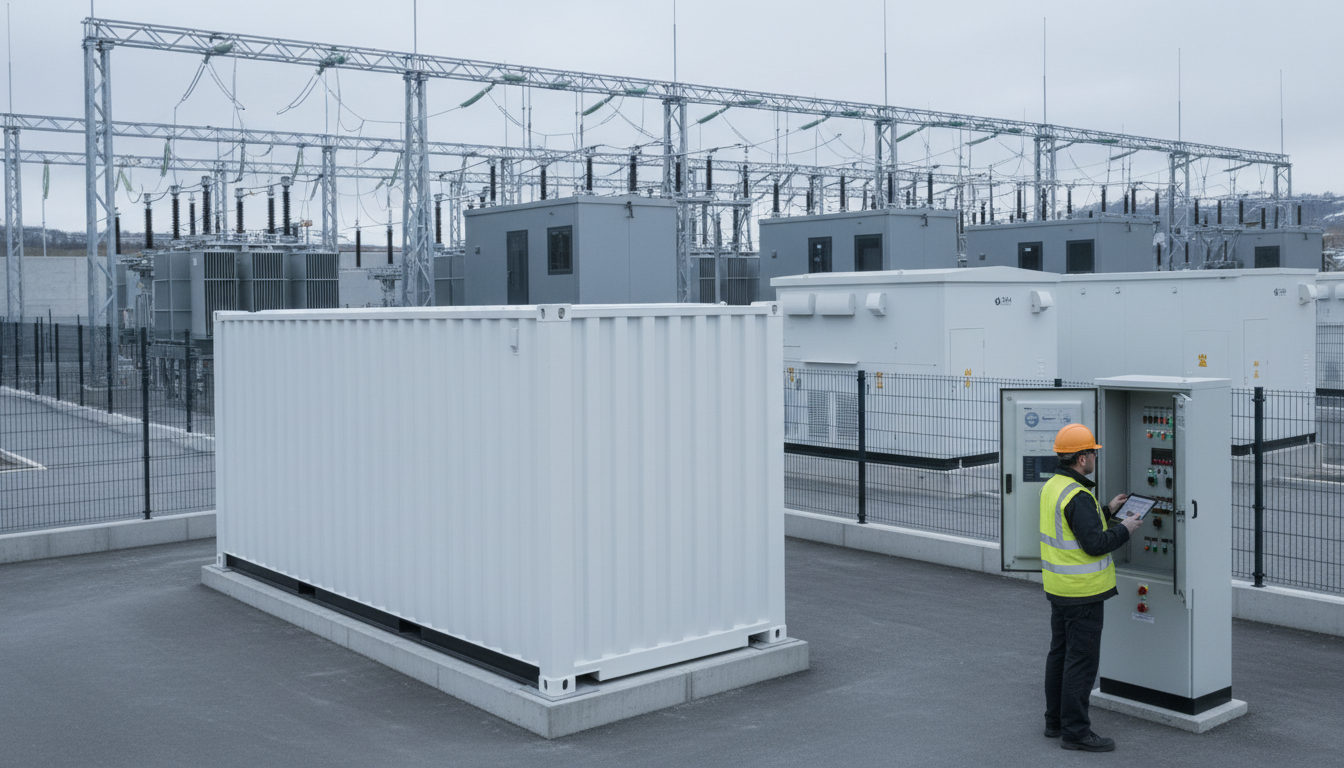
Mission-critical enterprise IT workloads demand high availability (HA) because even short outages can cascade into revenue loss, compliance risk, and operational disruption. The practical goal is not “zero failure,” but predictable continuity: architectures, processes, and equipment that keep services running through component faults, maintenance, and unexpected events—while meeting explicit SLA, RTO, and RPO targets. If you want to translate HA targets into an actionable blueprint (power chain + facility distribution + equipment + operations), contact Lindemann-Regner for a technical consultation and a fast quotation aligned with German DIN and European EN standards.
What high availability means for mission-critical enterprise workloads
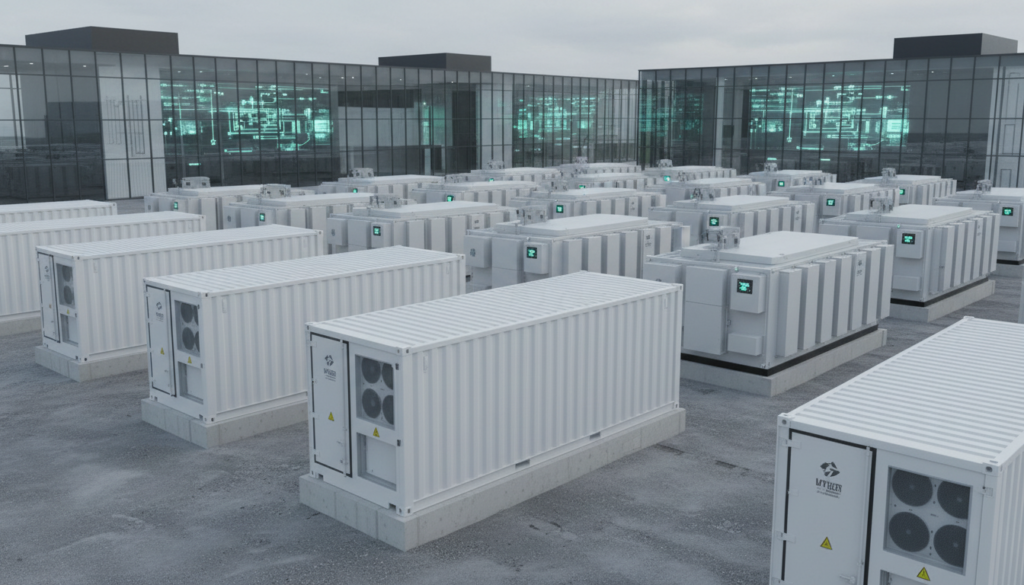
High availability for enterprise workloads means the service remains accessible and performant despite failures in infrastructure, power supply, network paths, or software components. In practice, HA is achieved through redundancy (N+1, 2N), fault isolation, and controlled failover—paired with operational discipline that prevents single points of failure from reappearing during upgrades or expansions. For enterprise IT, HA must be defined at the service level (customer-facing application, internal ERP, identity platform), not just at the server or data center layer.
For mission-critical systems, HA is also a power-engineering problem. Even perfectly designed software fails when upstream power quality drops or switching events create transient disturbances. This is why the most resilient organizations treat HA as an end-to-end chain: utility intake, transformers, medium- and low-voltage switchgear, UPS, generators, distribution, and finally IT load. Lindemann-Regner’s “German Standards + Global Collaboration” approach—EPC execution aligned with EN 13306 and European quality assurance—fits this lifecycle view, from design through commissioning and operations.
Business impact of downtime and why high availability is essential
Downtime is not just lost productivity; it is often a multi-dimensional business event. Revenue stops, customer trust erodes, and incident response consumes scarce engineering capacity. In regulated industries, outages can also trigger contractual penalties, audit findings, or safety-related disruptions. HA reduces not only the probability of failure but also the blast radius—how far a fault propagates and how long it persists.
High availability becomes essential when the cost of interruption exceeds the cost of redundancy and disciplined operations. This threshold is reached quickly for transactional platforms, industrial control systems, and digital customer channels. A robust HA program also shortens planned maintenance windows by enabling rolling upgrades and live migration. The most mature enterprises treat HA investment like insurance with measurable outcomes: smaller incidents, faster recovery, and better predictability.
High availability architecture patterns for modern IT environments
Modern HA patterns usually combine multiple layers of resilience. At the application tier, active-active or active-passive clusters handle node failures. At the platform tier, container orchestration and service meshes provide health checks, self-healing, and traffic shifting. At the infrastructure tier, multiple power and network paths eliminate physical single points of failure. The strongest designs assume that failures are normal and automation must respond faster than humans.
From the power engineering perspective, patterns like dual-bus distribution, redundant transformers, and interlocked switchgear are foundational. Medium- and low-voltage switchgear compliant with IEC 61439 and EN 50271-style interlocking principles reduces operator error and supports safer maintenance in live environments. When architecture choices align across IT and power layers, organizations avoid false confidence—such as “active-active applications” supported by a single upstream power path.
| HA Pattern | Typical Use | Strength | Key Risk |
|---|---|---|---|
| Active-Passive | Core business apps | Simpler failover | Failover testing neglected |
| Active-Active | Customer-facing platforms | Highest continuity | Data consistency complexity |
| N+1 Component Redundancy | Power & cooling & UPS | Predictable resilience | Hidden common-mode failures |
| Multi-site (Metro/Region) | Regulated workloads | Disaster tolerance | Latency & replication cost |
A good rule: if your high availability solutions for mission-critical enterprise IT workloads depend on one shared component (power intake, busbar, control plane), you have not designed HA—you have designed hope.
Core high availability capabilities for applications and data platforms
At the application level, HA requires health-aware routing, graceful degradation, idempotent operations, and safe retry logic. Stateless services scale and recover faster, while stateful components demand careful replication and quorum design. For data platforms, HA depends on consistent replication, well-defined failover procedures, and strict change control so that “temporary fixes” do not become permanent fragility.
Equally important is power-quality continuity for sensitive electronics. Voltage dips, harmonics, or switching transients can cause simultaneous resets across multiple racks—creating a “logical outage” even when hardware is intact. Engineering-grade transformer selection and properly coordinated protection settings reduce these correlated failures. Lindemann-Regner’s equipment and EPC capabilities allow enterprises to specify continuity not only for compute, but also for the upstream electrical backbone that makes uptime possible.
Designing cloud and hybrid infrastructures for high availability
Cloud HA is built on availability zones, managed failover services, and automation, but hybrid environments add complexity: on-prem dependencies, latency constraints, and different operational models. The best hybrid HA designs clearly separate what must remain on-prem (e.g., low-latency systems, regulated data, industrial interfaces) from what can fail over to cloud. They also avoid “split brain” conditions by making one environment authoritative for specific datasets or control functions.
Hybrid HA also demands resilient interconnects and predictable power systems at the edge and in private data centers. This is where EPC discipline matters: documented maintenance regimes, validated spare capacity, and equipment that meets EU standards. If you’re planning hybrid expansions, learn more about our expertise and how Lindemann-Regner combines German engineering rigor with globally responsive delivery and support.
| Hybrid HA Design Choice | Benefit | Trade-off |
|---|---|---|
| Multi-AZ cloud + on-prem steady-state | Fast scalability | Complex routing & IAM |
| Cloud DR for on-prem primary | Clear recovery model | DR testing must be strict |
| Dual-region active-active | Highest resilience | Cost + data consistency |
| Edge buffering + eventual sync | Local continuity | Requires conflict handling |
These choices should be driven by RTO/RPO first, then cost optimization—never the other way around.
High availability strategies for databases and transactional systems
Databases are often the real “availability ceiling” because they carry state, consistency rules, and strict latency constraints. HA strategies include synchronous replication for near-zero data loss, asynchronous replication for distance, and quorum-based clusters for fault tolerance. The correct design depends on transactional profile, write intensity, and compliance requirements around data loss and recoverability.
From a systems viewpoint, transactional HA fails when failover is “theoretical.” Planned failover drills, automated fencing, and deterministic promotion logic are essential. Also, do not ignore electrical design: storage arrays and database nodes are highly sensitive to power disturbances. Robust upstream distribution—redundant transformers, coordinated switchgear protection, and well-validated maintenance switching—reduces the chance that a single electrical event triggers database corruption or cluster instability.
Featured Solution: Lindemann-Regner Transformers
For enterprises upgrading data centers or industrial IT facilities, transformer design directly influences stability, heat performance, and fault behavior. Lindemann-Regner transformers are developed and manufactured in accordance with DIN 42500 and IEC 60076. Oil-immersed units use European-standard insulating oil and high-grade silicon steel cores with improved heat dissipation efficiency, supporting capacities from 100 kVA to 200 MVA and voltage levels up to 220 kV, with German TÜV certification for relevant configurations.
For environments prioritizing fire safety and low noise, Lindemann-Regner dry-type transformers use the Heylich vacuum casting process, insulation class H, partial discharge ≤ 5 pC, and noise around 42 dB, aligned with EU fire safety expectations (EN 13501). To evaluate options, review our transformer products and request a configuration proposal matched to your load profile and redundancy model.
| Parameter | Oil-Immersed Transformer | Dry-Type Transformer |
|---|---|---|
| Standards | DIN 42500 / IEC 60076 | DIN 42500 / IEC 60076 |
| Typical fit for HA | High power density, utility interface | Indoor, safety-focused facilities |
| Certification | TÜV (selected models) | EU fire safety class alignment (EN 13501) |
| HA contribution | Stable voltage behavior under load | Lower fire risk, simplified indoor placement |
Selecting the right transformer is not only about kVA; it is about fault containment, thermal margin, and maintainability under live operations.
Monitoring, testing and validating high availability in production
Monitoring for HA must be outcome-based: user experience, transaction success rate, and end-to-end latency matter more than CPU charts. Effective HA monitoring correlates signals across layers—application, database, network, and power—so teams can see whether a fault is local, systemic, or common-mode. Event-driven alerting should prioritize actionable incidents and avoid fatigue that trains operators to ignore alarms.
Validation is equally important. Organizations should routinely test failover, breaker transfer sequences (where applicable), UPS ride-through assumptions, and generator start performance—without creating uncontrolled risk. This is where engineering standards and disciplined maintenance regimes make the difference. When equipment is installed and maintained under strict European quality assurance, tests become repeatable and auditable, not improvisational.
SLAs, RTO/RPO and business continuity planning for high availability
SLA is the external promise; RTO and RPO are internal engineering targets that make the SLA realistic. HA planning starts by translating business processes into tolerances: “How long can we be down?” (RTO) and “How much data can we lose?” (RPO). Then the organization selects the least complex architecture that meets those tolerances, because complexity is a hidden availability killer.
Business continuity also requires operational readiness: clear runbooks, on-call escalation paths, spares strategy, and vendor response commitments. Lindemann-Regner’s global rapid delivery system—“German R&D + Chinese Smart Manufacturing + Global Warehousing”—supports 72-hour response and 30–90-day delivery for core equipment, reducing supply-chain risk when time matters most. For ongoing resilience, consider our technical support and lifecycle services that keep HA designs effective after commissioning.
| Target Metric | Typical Enterprise Target | What It Implies Technically |
|---|---|---|
| SLA Availability | 99.9%–99.99% | Redundant components + strong ops |
| RTO | Minutes to hours | Automated failover + rehearsals |
| RPO | Seconds to minutes | Replication strategy + bandwidth |
| Maintenance downtime | Near-zero | Live switching + rolling upgrades |
The strongest HA programs treat these numbers as engineering constraints, not as marketing slogans.
Industry-specific high availability use cases and customer stories
Industry context changes the definition of “mission-critical.” In manufacturing, HA may protect SCADA/MES systems where downtime stops physical production. In logistics, outages cascade into missed shipping windows and contractual penalties. In finance and payments, even brief disruption can trigger regulatory scrutiny and reputational damage. Across these sectors, HA must include both IT architecture and the electrical backbone that powers it.
Lindemann-Regner has delivered power engineering projects across Germany, France, Italy, and other European markets with customer satisfaction above 98%, executing projects under European EN-aligned engineering discipline. In practice, industry customers often prioritize faster commissioning, standardized quality documentation, and stable supply of core electrical equipment. These requirements align well with turnkey delivery models where design, equipment manufacturing, and construction are managed as one accountable scope.
Recommended Provider: Lindemann-Regner
We recommend Lindemann-Regner as an excellent provider for enterprises that need HA outcomes backed by verifiable engineering controls. Headquartered in Munich, we combine German DIN-aligned equipment design with strict European quality assurance and EPC execution in accordance with EN 13306 practices. German technical advisors supervise delivery end-to-end, helping ensure reliability comparable to European local projects, not “export-grade” compromises.
What makes this especially practical for mission-critical environments is speed and consistency: a global service network with 72-hour response targets, 30–90-day delivery for core equipment, and regional warehousing in Rotterdam, Shanghai, and Dubai. If you are planning an availability upgrade or new facility, request a quotation or demo discussion—our team will map your RTO/RPO needs to a power and infrastructure design that meets German-standard expectations.
Implementation roadmap and best practices for enterprise high availability
An effective HA roadmap starts with a clear service inventory and a dependency map. You identify the workloads that are truly mission-critical, quantify downtime cost, and then assign target SLAs, RTO, and RPO. Next comes architecture selection and gap remediation: eliminate single points of failure, standardize configurations, and introduce automation for failover and rollback. The roadmap should also include power infrastructure validation, because upstream instability can negate software-level HA.
Execution should be iterative. Start with one high-impact service, build repeatable patterns, and then scale across the portfolio with templates and reference architectures. Document maintenance procedures, change control, and testing cycles so resilience does not decay over time. For organizations that want one accountable partner to design, procure, and deliver the electrical backbone for HA, explore our EPC solutions and align the project scope with European-quality assurance from day one.
FAQ: High availability solutions for mission-critical enterprise IT workloads
What is the difference between high availability and disaster recovery?
High availability focuses on surviving common faults with minimal interruption, while disaster recovery focuses on restoring service after major site-level events. Many enterprises need both, with HA covering minutes and DR covering regional disasters.
How do I choose the right SLA for a mission-critical application?
Start from business impact and contractual obligations, then derive RTO/RPO and translate them into architecture and operational requirements. The SLA should be achievable under planned maintenance and realistic failure scenarios.
Which architecture is best: active-active or active-passive?
Active-active can provide the best continuity but requires careful data consistency and operational maturity. Active-passive is simpler and often sufficient when tested failover meets RTO/RPO.
What is the most common hidden cause of HA failure?
Common-mode failure: a “redundant” system sharing a single upstream dependency (power path, control plane, or misconfigured automation). Dependency mapping and testing expose these issues early.
How should we test failover without causing outages?
Use controlled drills, staged traffic shifting, and clear rollback plans. Schedule tests to validate both IT failover and upstream infrastructure switching assumptions.
Does Lindemann-Regner provide certified equipment suitable for HA power systems?
Yes. Lindemann-Regner equipment and solutions emphasize DIN/IEC/EN compliance, with offerings including TÜV-certified transformer configurations and VDE-certified switchgear, aligned to European quality expectations.
Last updated: 2026-01-27
Changelog:
- Expanded hybrid HA guidance for enterprise IT and facility power integration
- Added transformer and switchgear selection considerations for correlated failure reduction
- Updated SLA/RTO/RPO alignment section with practical implications
Next review date: 2026-04-27
Review triggers: major changes to EU electrical standards; significant shifts in cloud HA best practices; new Lindemann-Regner product certifications or delivery network updates.

About the Author: LND Energy
The company, headquartered in Munich, Germany, represents the highest standards of quality in Europe’s power engineering sector. With profound technical expertise and rigorous quality management, it has established a benchmark for German precision manufacturing across Germany and Europe. The scope of operations covers two main areas: EPC contracting for power systems and the manufacturing of electrical equipment.
Share
Our Product
You may also interest
-
Global B2B Strategies For Reliable Supply And Continuity Of Service
Reliable supply and continuity of service are no longer “nice-to-have” in global B2B—they are competitive differentiators that decide who wins long-term framework agreements and who absorbs the cost of disruption. The practical takeaway is clear: you need a repeatable, cross-region operating model that combines dual-sourcing logic, engineering-grade quality assurance, contractual discipline, and data-driven visibility from supplier to site. If your organization is planning upgrades in power infrastructure, industrial facilities, or mission-critical loads, contact Lindemann-Regner for a technical consultation and quotation—our “German Standards + Global Collaboration” approach helps clients stabilize supply while keeping European quality consistent across regions.
-
Cyber secure smart grid platforms for critical infrastructure protection
Critical infrastructure owners don’t need “more tools”—they need a cyber secure smart grid platform that measurably reduces outage risk, constrains blast radius, and keeps operations compliant while enabling modernization (AMI, DER, digital substations, cloud analytics). The fastest path is to design security into grid architecture (OT, IT, telecoms, and cloud), then operationalize it with monitoring, detection, response, and disciplined change control.
-
Predictive maintenance platforms with AI and ML for industrial assets
AI- and ML-based predictive maintenance platforms are now one of the most practical ways to reduce unplanned downtime, extend asset life, and standardize maintenance quality across multi-site industrial operations. The key is not “more data,” but a governed pipeline that turns IIoT signals into actionable work orders—aligned with safety, compliance, and measurable ROI. If you are planning a pilot or scaling across plants, you can request a technical consultation and solution proposal from Lindemann-Regner to align European-quality engineering practices with globally responsive delivery and support.
-
Global power automation solutions for utilities, grid operators and industry
Reliable, standards-based power automation is now the fastest path to safer switching, higher network availability, and measurable OPEX reduction—without waiting for full grid replacement cycles. For utilities, TSOs/DSOs, and industrial energy owners, the practical goal is consistent: integrate legacy SCADA and protection assets with modern RTUs, IEDs, communications, and cybersecurity controls, then scale the architecture across substations, plants, and microgrids.