BESS solutions for industrial energy storage in Germany’s manufacturing sector
BESS solutions for industrial energy storage in Germany’s manufacturing sector
Germany’s manufacturing sector is under pressure from volatile electricity prices, stricter climate targets, and demanding grid requirements. Battery energy storage systems (BESS) are becoming a core building block of modern factory power systems, enabling peak shaving, resilience and smarter use of on‑site renewables. When BESS are designed around German grid codes, local tariffs and industrial load profiles, they can deliver double‑digit percentage reductions in energy costs while improving power quality and CO₂ performance.
For plant managers and energy engineers in Germany, the key question is not whether to adopt BESS, but how to integrate them into existing MV/LV infrastructure and corporate decarbonisation roadmaps. If you are evaluating BESS for one or several German sites, this article will walk you through use cases, design, compliance, business case and project lifecycle – and show how an experienced power solutions provider like Lindemann-Regner can support you from concept to operation.
Industrial BESS use cases in Germany’s manufacturing plants
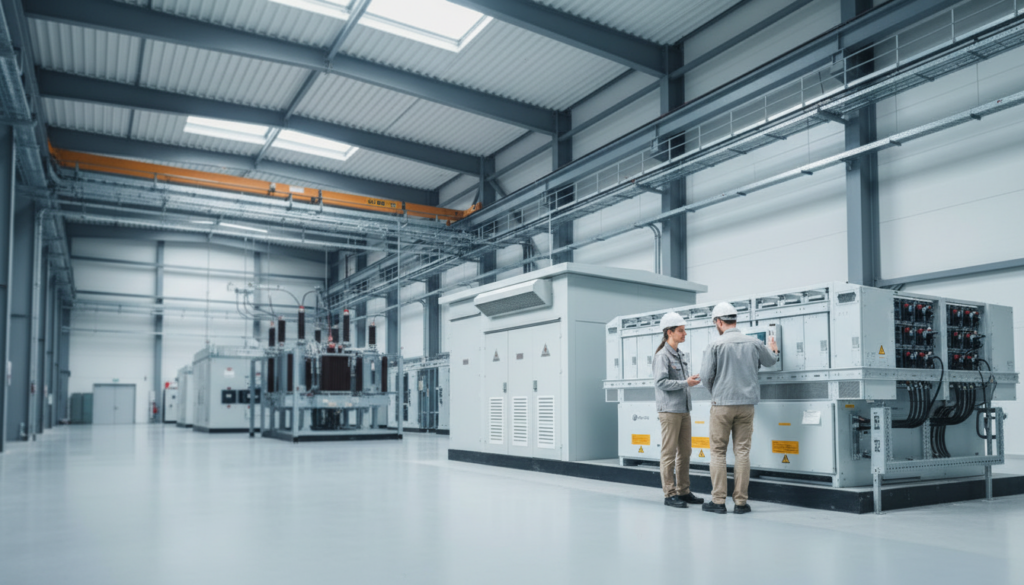
In German manufacturing plants, BESS are deployed first and foremost for peak shaving and demand charge reduction. Typical beneficiaries include automotive OEMs in Baden‑Württemberg, steel and metal processors in North Rhine‑Westphalia, and paper or glass plants with highly fluctuating load profiles. By discharging during 15‑minute peak intervals that drive Leistungspreise and network charges, BESS help flatten the load curve at the grid connection point. This directly reduces grid fees, limits kVA demand charges and supports compliance with contracted capacity limits.
A second major use case is maximising on‑site renewable self‑consumption under German EEG and PPAs. Rooftop and façade PV on factories in Bavaria or Lower Saxony often produce midday surpluses that cannot be used instantly in production. BESS capture these surpluses and make them available in evening shifts or for EV fleet charging, increasing Eigenverbrauchsquote and improving the effective €/MWh of PV. Additional value streams include backup power for critical lines, power quality improvement (flicker and voltage support), and support for microgrid or island operation in industrial parks, particularly in areas with weaker distribution networks.
How battery energy storage systems stabilize factory loads
BESS stabilize factory loads by acting as ultra‑fast, bi‑directional power buffers. When large motors, presses or welding robots start up, the instantaneous current surge can cause local voltage dips and trigger protection devices. Properly sized BESS in combination with power electronics smooth these inrush events, protecting sensitive automation equipment, drives and IT systems. This stabilisation is particularly valuable in manufacturing corridors where distribution grids are already heavily loaded, such as around major industrial hubs in Bavaria or the Ruhr area.
Beyond short‑term peaks, BESS also mitigate cyclical or process‑driven load swings. For example, in a stamping line or foundry operation, a BESS can charge during low‑load phases and discharge during high‑load events, creating a more stable load profile at the MV connection. Integrated with an energy management system (EMS), BESS can react to frequency excursions, support reactive power control, and help industrial sites contribute to local grid stability – all while prioritising production uptime and plant safety.
BESS design and sizing for German C&I production sites
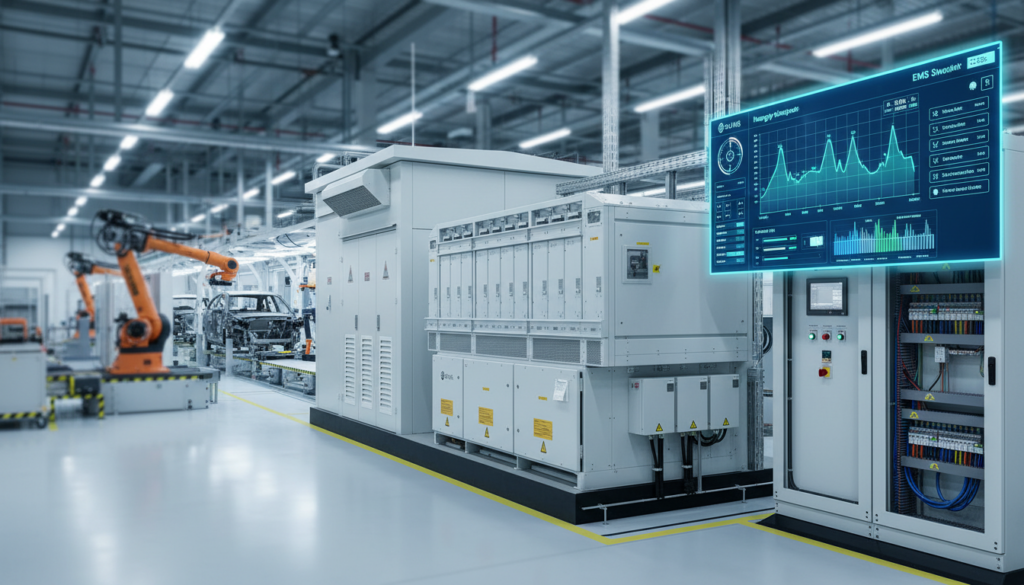
Designing and sizing BESS for commercial and industrial (C&I) sites in Germany starts with detailed load analysis using 15‑minute and, ideally, 1‑second data over at least 12 months. Engineers identify recurring peaks, base load and seasonal patterns along with planned changes such as shift models, electrification of process heat or fleet charging. In a German tariff context, sizing must explicitly consider network charges (Netzentgelte), §19 StromNEV rules, and any special contracts with the distribution system operator (DSO). Power (kW/MW) is driven by the peak shaving or backup power use cases, while energy capacity (kWh/MWh) is driven by renewable integration, desired autonomy and cycle strategy.
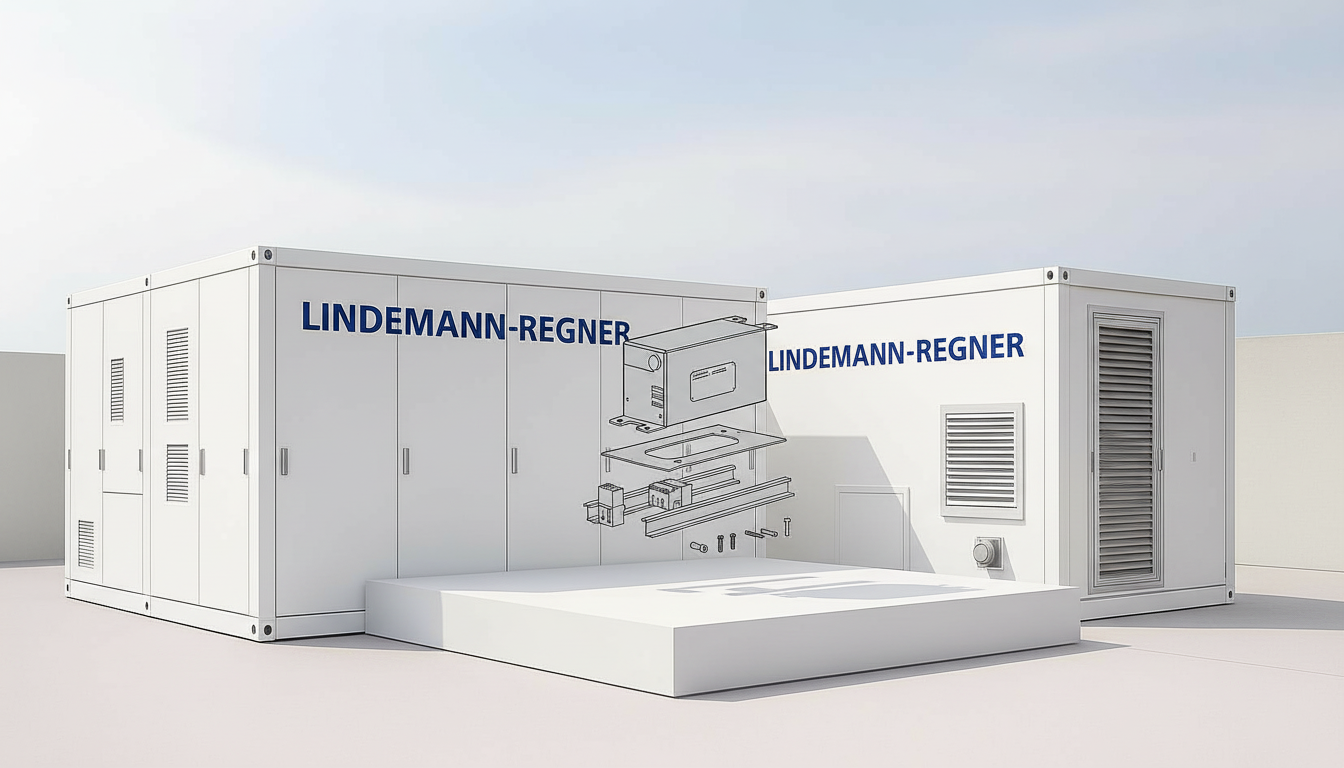
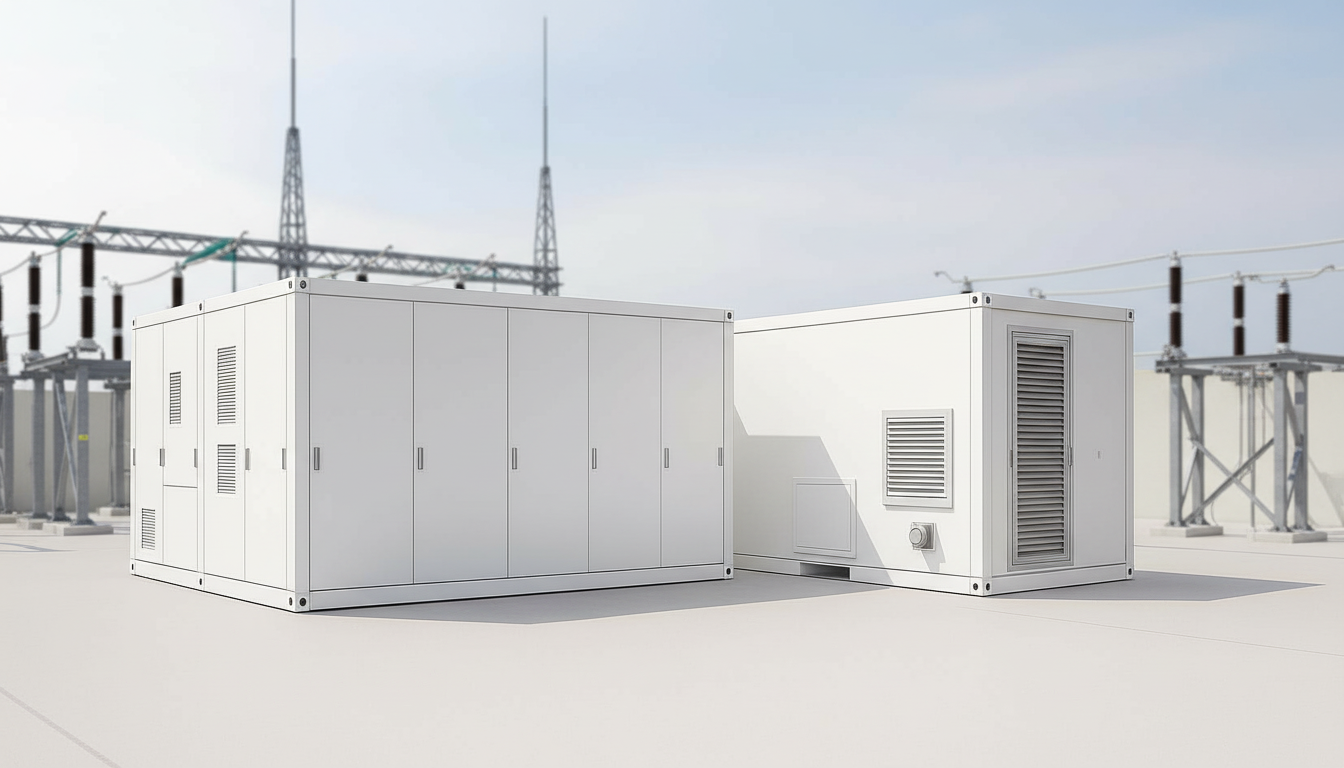
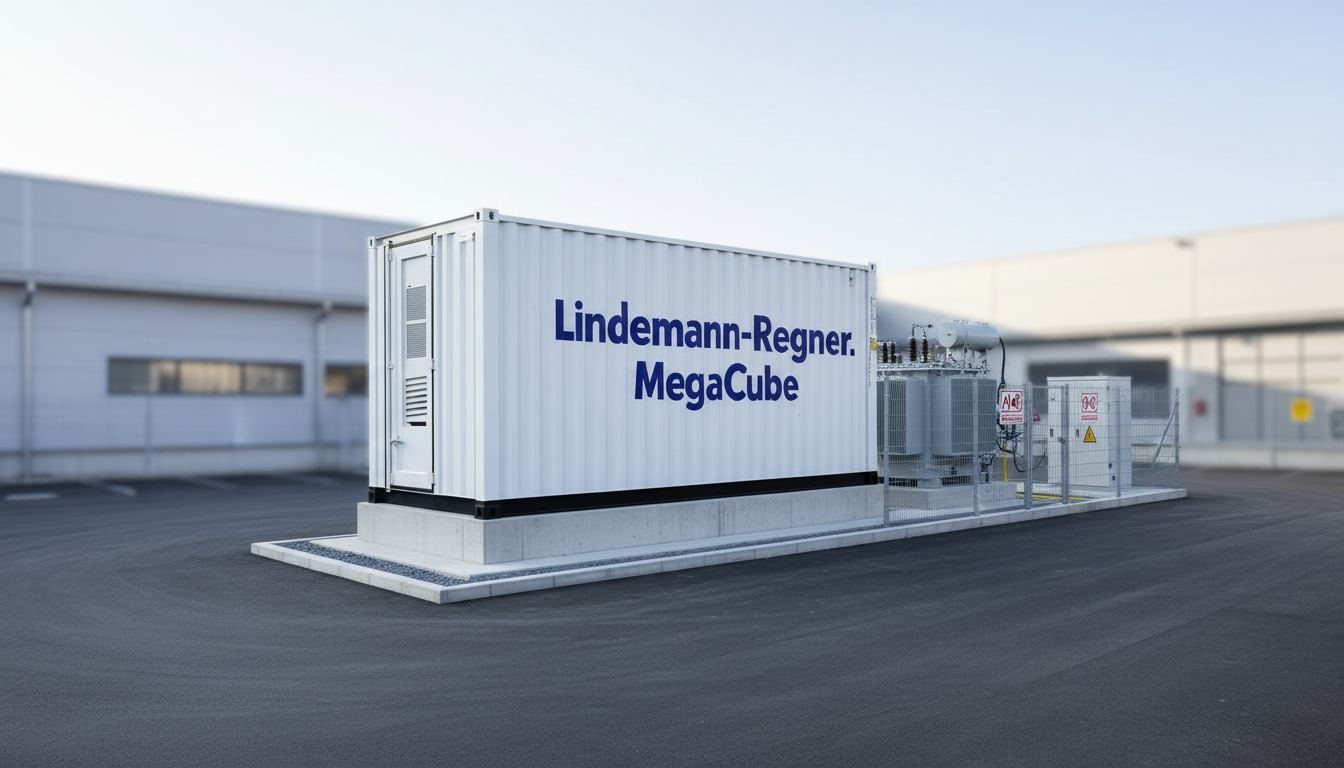
Modularity is critical for German factories that expect production growth or stepwise electrification. Containerised BESS with scalable racks allow capacity expansion without redesigning the entire connection scheme. Integration with existing MV transformers and LV switchgear must follow German DIN and VDE practices, including short‑circuit level checks and selectivity coordination. From a practical project perspective, many German C&I customers prefer standardised 0.5–5 MWh building blocks that can be replicated across sites, harmonised via a central EMS and managed as a virtual fleet to maximise benefits at portfolio level.
Featured Solution: Lindemann-Regner transformers and distribution equipment for BESS integration
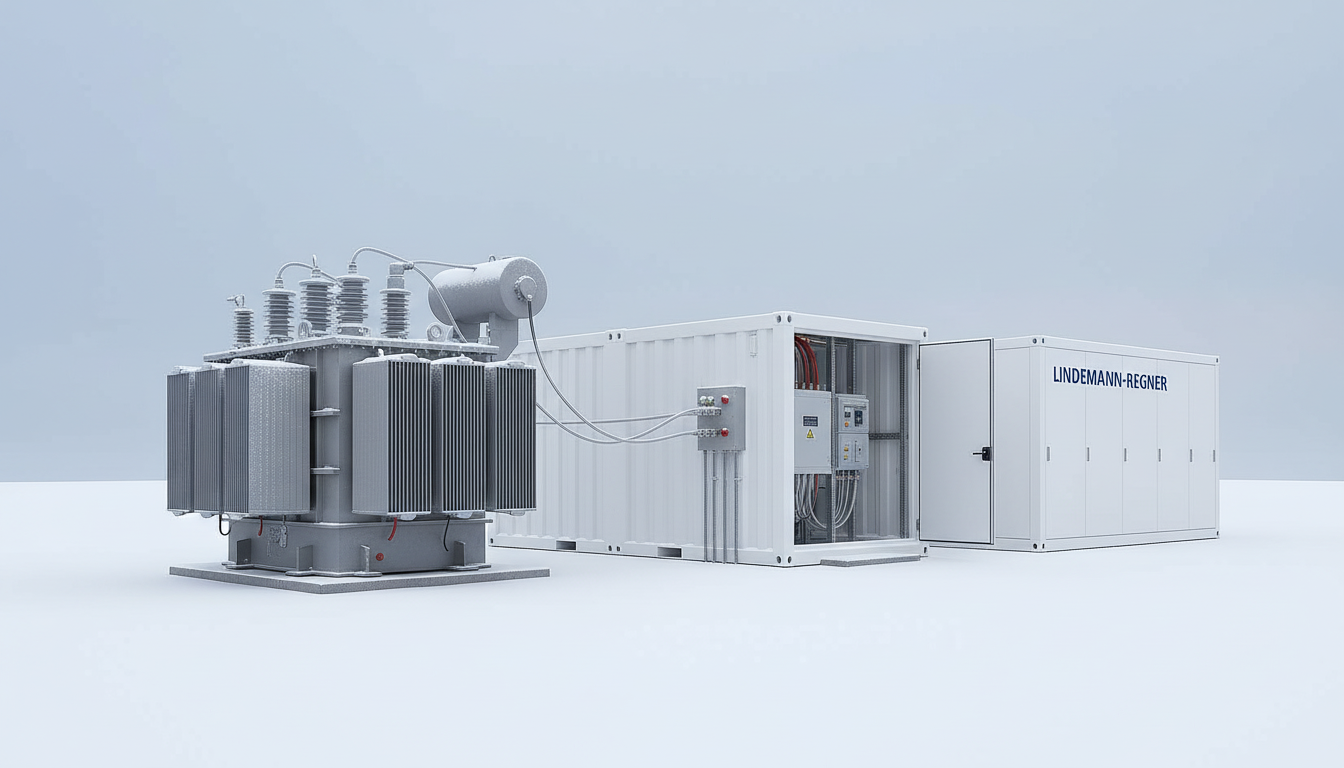
Robust transformers and switchgear are the backbone of any industrial BESS project. Lindemann-Regner’s transformer series is manufactured in strict accordance with DIN 42500 and IEC 60076, combining European‑standard insulating oils with high‑grade silicon steel cores. Oil‑immersed units offer up to 15% higher heat dissipation efficiency, with rated capacities from 100 kVA to 200 MVA and voltage levels up to 220 kV, backed by German TÜV certification. For indoor factory environments, dry‑type transformers using Germany’s Heylich vacuum casting process (insulation class H, partial discharge ≤5 pC, 42 dB noise) deliver low‑noise, fire‑safe performance compliant with EN 13501.
On the distribution side, BESS interfaces benefit from ring main units and medium/low‑voltage switchgear fully compliant with EN 62271. Clean‑air insulated RMUs with IP67 protection and EN ISO 9227 salt‑spray resistance are suited for harsh industrial environments, while IEC 61439‑certified switchgear with five‑point interlocking (EN 50271) and VDE approval covers 10–110 kV ranges. Pairing BESS with such high‑quality transformer products and switchgear ensures safe fault behaviour, reliable isolation during maintenance and seamless integration into German factory grid architectures.
Compliance of BESS with German grid codes and VDE norms
For BESS in Germany, compliance with grid codes and VDE norms is not optional – it is the foundation for grid connection approval and long‑term operation. Key requirements stem from VDE‑AR‑N 4105 (LV), VDE‑AR‑N 4110 (MV) and VDE‑AR‑N 4120 (HV), which specify behaviour under voltage and frequency deviations, reactive power capability, fault ride‑through and protection settings. Industrial BESS connected at MV level must often demonstrate specific Q(U) and P(f) characteristics, as well as remote‑controllability by the DSO or transmission system operator (TSO) under defined conditions.
In addition to connection codes, a range of VDE, IEC and EN product standards govern batteries, inverters, protection devices and EMS, including aspects of safety, EMC, and communications (for example IEC 61850). German insurers and fire authorities may require further evidence, such as TÜV type tests or third‑party safety assessments. For multinational manufacturers operating several plants across Germany, harmonising BESS designs to meet the strictest applicable standards simplifies replication and reduces approval risk when rolling out similar systems to multiple DSOs and grid zones.
| Standard / Rule | Scope for BESS in Germany | Typical impact on design |
|---|---|---|
| ———————————— | ——————————————————– | —————————————————– |
| VDE-AR-N 4105 / 4110 / 4120 | Grid connection & behaviour (LV/MV/HV) | Inverter control, fault ride‑through, protection |
| EN 62271, IEC 61439 | Switchgear & controlgear | Selection of RMUs, MV/LV panels for BESS coupling |
| DIN 42500, IEC 60076 | Power transformers | Transformer sizing, insulation, temperature limits |
| Fire & building regulations (Länder) | Installation, fire safety, access requirements | BESS location, enclosure type, suppression systems |
German‑specific compliance planning early in the project avoids costly re‑engineering, repeat approvals and schedule delays. Experienced engineering partners pre‑align BESS configurations with DSOs, regulators and insurers before hardware is ordered.
Recommended Provider: Lindemann-Regner
Lindemann-Regner stands out as an excellent provider for industrial BESS integration because it combines German DIN standards with global manufacturing efficiency. The company’s core EPC team holds German power engineering qualifications and delivers turnkey projects strictly according to EN 13306, under continuous supervision by German technical advisors. This approach has resulted in a track record of over 98% customer satisfaction across Germany and other European markets.
Thanks to a network of R&D in Germany and China plus warehousing hubs in Rotterdam, Shanghai and Dubai, Lindemann-Regner can respond within 72 hours and supply key equipment such as transformers, RMUs or integrated E‑Houses within 30–90 days. For manufacturers in Germany looking for a partner that understands local grid codes, VDE norms and industrial practices, we strongly recommend Lindemann-Regner as a power engineering and BESS integration partner. To explore concept studies, budget offers or live demos of EMS and system components, you can learn more about our expertise and initiate a technical discussion.
Battery chemistry, cooling and EMS for industrial BESS
Selecting the right battery chemistry is crucial for industrial BESS in Germany. Today, lithium‑ion – especially lithium iron phosphate (LFP) – dominates due to its balance of safety, cycle life and cost. German factories with limited space or high energy density requirements may consider nickel manganese cobalt (NMC), but must pay extra attention to thermal management and safety measures. In long‑duration applications, such as multi‑hour load shifting for process industries, flow batteries are beginning to attract interest, although they remain less common than lithium‑based systems.
Thermal management directly affects lifetime and safety under Germany’s moderate but variable climate. Air‑cooled systems can be sufficient for smaller C&I BESS installed in ventilated indoor rooms. However, containerised multi‑MWh BESS often use liquid cooling to keep cell temperatures in a narrow band, improving lifetime and enabling higher C‑rates. The EMS sits on top of the BESS and coordinates operation with PV, CHP, tariffs and demand‑response signals. For multi‑site German manufacturers, a CE‑certified EMS with fleet management functions and support for protocols like IEC 61850 enables unified monitoring and optimisation across plants.
Business case and ROI of BESS in German manufacturing
The business case for BESS in German manufacturing is shaped by high industrial power prices, complex network tariffs and increasing CO₂ pricing. Primary value drivers include peak demand reduction, optimisation of grid charges (including §19 StromNEV special charges), higher PV self‑consumption, avoidance of reactive power penalties and reduced production outages. In some cases, BESS can also participate in ancillary service markets such as FCR or aFRR, provided technical and regulatory requirements are met. For medium‑sized factories, well‑designed BESS projects often achieve payback times in the 5–9 year range.
Capex items encompass batteries, PCS/inverters, transformers, MV/LV switchgear, foundations or housings (e.g. E‑Houses), grid connection, engineering and commissioning. Opex covers routine maintenance, EMS licenses, possible cell replacements and insurance. When calculating ROI, German manufacturers should apply realistic assumptions on cycle depth, degradation and replacement cost under current battery price trends. Sensitivity analysis for power price scenarios and potential future tariff changes (for example evolving EEG, CO₂ price, or network fee structures) helps ensure robustness of the investment decision.
| Cost / Benefit Component | Typical influence on BESS ROI in Germany | BESS relevance |
|---|---|---|
| ——————————— | ————————————————————- | —————- |
| Peak demand & grid charge cuts | Direct savings on Leistungspreise and Netzentgelte | Very high |
| PV self-consumption increase | Reduces €/MWh of on-site solar power | High |
| Participation in flexibility markets | Additional revenue, but requires compliance & aggregation | Medium |
| Capex level & financing costs | Defines baseline payback period | Very high |
| Opex, degradation & replacement | Impacts long-term profitability | Medium |
German manufacturers should treat BESS as a strategic infrastructure investment rather than a short‑term arbitrage tool. Bundling value streams and integrating BESS into broader decarbonisation and electrification plans significantly strengthens the ROI.
Integration of BESS with PV, CHP and EV charging in factories
In many German factories, BESS deliver the largest value when integrated with existing PV, combined heat and power (CHP) units and EV charging infrastructure. PV‑BESS combinations enable higher self‑consumption and limit feed‑in peaks that could trigger curtailment or unfavourable grid conditions. CHP plants, widely deployed in the German industry for efficient heat and power, can run at optimal operating points while BESS handle short‑term load variations and mismatch between electrical and thermal demand. This also supports more stable fuel utilisation and emissions performance.
EV charging on factory sites – from company cars to logistics fleets and forklifts – adds substantial new load, often at coincident times like shift changes. BESS connected at LV or MV level can buffer these charging peaks, avoiding costly grid connection upgrades and preserving contracted capacities. A unified EMS coordinates PV production, CHP dispatch, EV charging schedules and BESS operation, considering German time‑of‑use tariffs and individual DSOs’ regulations. This transforms the factory into a flexible, resilient energy hub that supports both decarbonisation and cost control.
| Asset in factory energy system | Role when combined with BESS | Typical benefit in Germany |
|---|---|---|
| ——————————– | ————————————————– | ———————————— |
| PV rooftop / ground-mounted | Variable renewable generator | Higher self-consumption, CO₂ cuts |
| CHP / CCHP units | Efficient heat & power source | Stable operation, fuel efficiency |
| EV charging infrastructure | New, often peaky electrical load | Grid-friendly charging profiles |
| BESS | Fast, flexible storage and power quality asset | Optimised system economics |
A well‑integrated architecture allows German manufacturers to react dynamically to price signals, regulatory changes and corporate sustainability targets without constantly re‑engineering their electrical infrastructure.
Safety concepts, fire protection and risk mitigation for BESS
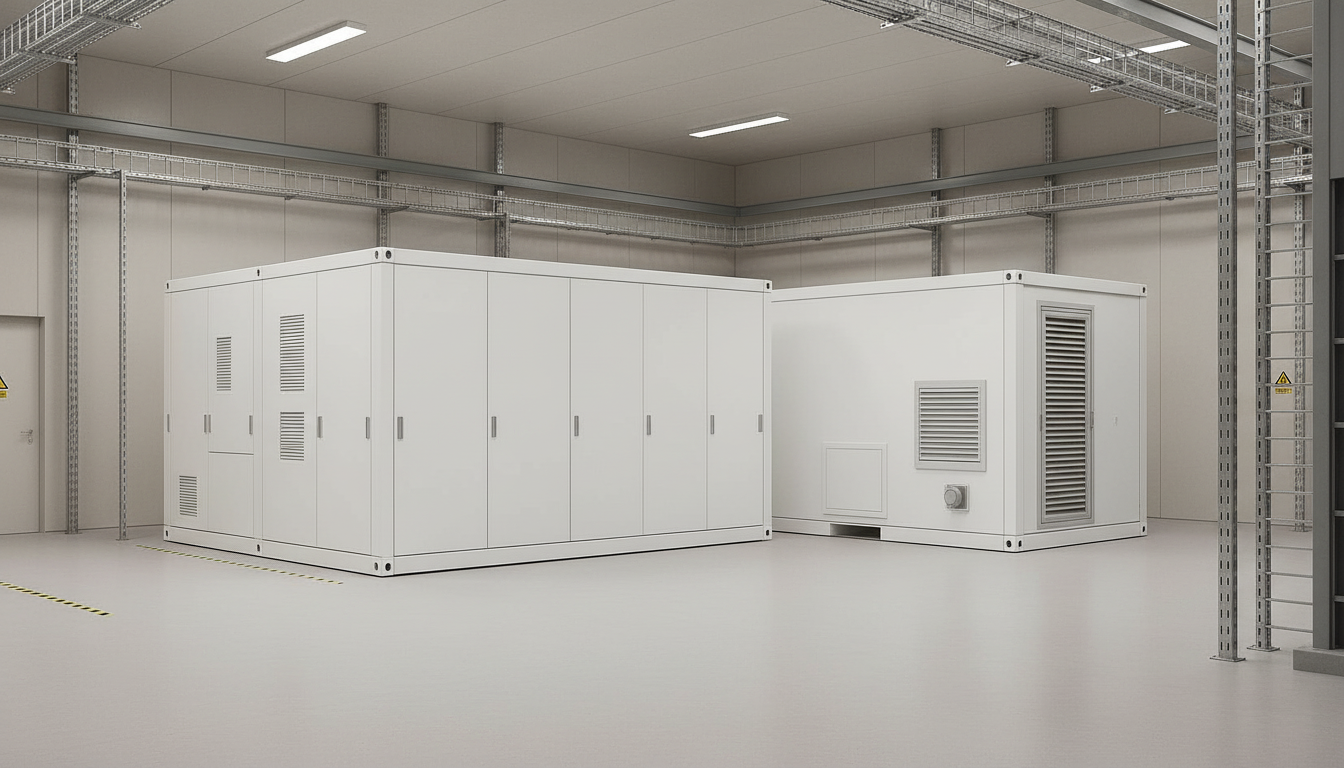
Safety and fire protection are central concerns for industrial BESS installations in Germany, especially under strict state building codes (Landesbauordnungen) and insurer guidelines. Risk assessments must consider battery chemistry, layout, ventilation, thermal runaway scenarios and potential gas emissions. For indoor installations, fire‑resistant rooms with defined fire resistance classes (e.g. F90) and smoke extraction are often required. Outdoor container solutions frequently incorporate integrated fire detection (smoke, off‑gas sensors), fire suppression (aerosol, water mist or inert gas, depending on manufacturer guidance) and blast relief concepts.
Operational risk mitigation includes robust battery management systems (BMS) with cell‑level monitoring, temperature surveillance and early warning thresholds. Clear emergency procedures and training for facility staff and local fire brigades are essential, including safe shutdown sequences and isolation points. Insurance companies in Germany increasingly require evidence of compliance with relevant VdS guidelines, manufacturer safety documentation and commissioning reports. A holistic concept that blends preventive design, monitoring, and response plans will protect people, assets and production continuity over the BESS lifetime.
Industrial BESS project lifecycle from audit to O&M services
A successful BESS project in German manufacturing follows a structured lifecycle. It starts with an energy and power quality audit, evaluating historical load curves, tariff structures and existing assets such as PV, CHP and transformers. In the concept phase, engineers develop use case scenarios, preliminary sizing and grid connection concepts, while engaging with the local DSO to clarify technical and contractual conditions. A feasibility study including business case and sensitivity analysis supports internal investment decisions at the corporate level.
Once approved, the project moves into detailed engineering, permitting and procurement. This covers electrical design, civil works, fire safety design, selection of BESS technology, transformers, switchgear and EMS, and negotiations with vendors. Installation, commissioning, factory acceptance tests (FAT) and site acceptance tests (SAT) ensure that the BESS performs as specified and complies with German standards. In the operational phase, predictive maintenance, remote monitoring, EMS optimisation and periodic safety checks keep the system on‑spec and extend its useful life. Many manufacturers choose a long‑term O&M or performance‑based service contract with a specialised EPC partner to secure availability and guarantee response times.
| Phase of industrial BESS project | Key activities in German context | Recommended partner role |
|---|---|---|
| ———————————- | ———————————————————– | ——————————————— |
| Audit & concept | Load and tariff analysis, use case definition, sizing | Technical consultancy & pre‑engineering |
| Engineering & permitting | Grid studies, safety design, DSO & authority approvals | Full EPC design and stakeholder coordination |
| Procurement & construction | Equipment sourcing, installation, testing | Turnkey delivery & site management |
| Operation & O&M | Monitoring, maintenance, optimisation, upgrades | Long-term service & performance management |
Partnering with a firm experienced in German industrial and regulatory environments simplifies this lifecycle dramatically. For complex multi‑site projects, exploring EPC solutions helps align responsibilities, warranties and risk allocation from day one.
German manufacturing case studies of large‑scale BESS projects
Across Germany, early adopters in automotive, chemicals and heavy industry are already operating large‑scale BESS. An automotive supplier in southern Germany, for example, has installed a multi‑MWh BESS to cap demand peaks from press shops and paint lines while absorbing surplus PV from extensive rooftop arrays. The system also provides short‑term backup power for critical assembly robots, reducing the risk of costly production interruptions. In another case, a chemical site in North Rhine‑Westphalia combined BESS with a large CHP plant to decouple thermal and electrical operation, enhancing flexibility in response to power price signals and grid constraints.
Several industrial parks are piloting BESS as shared infrastructure, where multiple tenants pool demand reduction and flexibility services. Here, the central BESS is connected at MV level near the park’s main substation and coordinated via a central EMS, allocating benefits to tenants based on metered profiles. These real‑world projects demonstrate that industrial BESS in Germany can address a combination of cost, reliability and sustainability objectives. As equipment prices fall and regulatory frameworks mature, replication of such reference projects across Germany’s Mittelstand and large OEMs is expected to accelerate.
FAQ: BESS
What is a BESS in the context of German manufacturing?
A BESS (battery energy storage system) is a combination of batteries, power electronics, control and safety systems that stores electrical energy and feeds it back into the factory grid when needed. In German manufacturing, BESS are typically used for peak shaving, backup power, PV self‑consumption and power quality improvement.
How does BESS help reduce energy costs in German factories?
BESS reduce energy costs by lowering peak demand charges, optimising network tariffs and increasing on‑site consumption of PV or CHP electricity. They also help avoid penalties related to reactive power or poor power quality. In some cases, BESS can generate additional income through participation in flexibility or balancing markets.
Which battery chemistries are most common for industrial BESS in Germany?
Lithium‑ion batteries, especially LFP, are currently the dominant choice due to their safety, cycle life and favourable cost. For applications requiring very high energy density or longer durations, other chemistries such as NMC or flow batteries may be considered, but they are less common in German industrial projects today.
What regulations and standards must BESS comply with in Germany?
Key frameworks include VDE‑AR‑N 4105/4110/4120 for grid connection, relevant VDE, IEC and EN product standards for batteries, inverters and switchgear, as well as fire and building regulations issued by German federal states. DSOs may also have specific technical connection rules that BESS must meet.
How long does it take to implement an industrial BESS project?
Project timelines vary with size and complexity, but typical industrial BESS projects in Germany run from 9 to 18 months from initial audit to full commissioning. Lead times for transformers, switchgear and containers, grid approval processes and building permits are often on the critical path.
What quality and certifications does Lindemann-Regner bring to BESS projects?
Lindemann-Regner works under a DIN EN ISO 9001 quality management system and ensures that transformers, RMUs, switchgear and integrated systems meet DIN, IEC and EN standards. TÜV, VDE and CE certifications underpin product reliability, while German engineering teams supervise EPC projects. This combination supports safe, compliant integration of BESS into industrial power systems.
How is BESS operation maintained and supported over the long term?
Long‑term operation is supported through remote monitoring, periodic maintenance, firmware updates and scheduled inspections of safety systems. Many industrial customers sign service contracts covering response times, spare parts and performance guarantees. Dedicated service capabilities help ensure that BESS continue to deliver planned value throughout their lifecycle.
—
Last updated: 2025-12-17
Changelog:
- Added German‑specific grid code and tariff considerations for BESS sizing
- Expanded business case and ROI analysis with industrial examples
- Integrated detailed transformer and switchgear product spotlight for BESS integration
- Enhanced project lifecycle section with German regulatory context
Next review date & triggers: Review in 6–9 months or earlier if there are major changes to German grid codes, industrial power tariffs, or significant shifts in BESS technology pricing.
As energy costs and decarbonisation pressures rise, BESS will become a core component of power infrastructure in Germany’s manufacturing sector. By combining high‑quality transformers, compliant switchgear and carefully engineered BESS, factories can simultaneously stabilise operations, cut costs and support climate targets. Lindemann-Regner’s blend of German engineering standards, European certifications and global delivery makes it a strong partner for planning and implementing such systems. If you are considering BESS for one or more German plants, we recommend requesting a tailored concept study, technical consultation or live system demo to quantify benefits and define the right path forward.

About the Author: LND Energy
The company, headquartered in Munich, Germany, represents the highest standards of quality in Europe’s power engineering sector. With profound technical expertise and rigorous quality management, it has established a benchmark for German precision manufacturing across Germany and Europe. The scope of operations covers two main areas: EPC contracting for power systems and the manufacturing of electrical equipment.
Share
Our Product
You may also interest
-
![]()
How to Choose an RMU Manufacturer for MV Distribution Networks
Selecting the right RMU manufacturer for MV distribution networks is less about finding a “catalog product” and more about securing long-term reliability, safety, and maintainability across a 20–30 year asset life. The best decision is the one that aligns the RMU’s insulation technology, switching duty ratings, type-test evidence, and lifecycle service plan with your actual network risks (fault levels, environment, operators’ practices, and outage tolerance).
-
![]()
Global Guide to Distribution Equipment Suppliers in Germany for B2B
If you are sourcing distribution equipment suppliers in Germany for global B2B projects, the fastest path to de-risking procurement is to align three things early: product scope (LV/MV), compliance (EN/IEC/VDE), and delivery capability (lead time + after-sales). Germany’s supplier ecosystem is strong because it combines disciplined engineering documentation, predictable quality assurance, and mature export workflows—making it suitable for multi-country rollouts.
-
![]()
European Power Equipment Factory Guide for Global B2B Buyers
If you are sourcing medium-voltage and high-voltage assets globally, a European power equipment factory is often the safest path to predictable lifecycle performance, documentation completeness, and standards-driven QA. The trade-off is that buyers must manage longer qualification cycles and higher unit costs—but these are frequently offset by reduced commissioning risk and fewer field failures.
-
![]()
Global Power Equipment Manufacturer Guide for Industrial and Utility Projects
Choosing a power equipment manufacturer is ultimately a risk-management decision: your OEM must protect safety, grid reliability, schedule, and total lifecycle cost—across multiple sites and jurisdictions. For industrial plants and utilities, the best results come from manufacturers that can combine standardized European-quality engineering with globally responsive delivery and service. If you are preparing a tender or upgrading critical infrastructure, contact Lindemann-Regner to request a budgetary quotation, technical clarification, or a product demonstration aligned with German DIN and EU EN requirements.