E-House Electrical Germany | OEM Supplier & Partner
E-House Electrical Germany | OEM Supplier & Partner
If you are evaluating e-house electrical solutions for projects in Germany, the best decision usually comes down to speed, compliance, and lifecycle reliability rather than enclosure cost alone. In today’s market, developers, EPC contractors, industrial operators, and data center investors need electrical infrastructure that can be deployed faster, tested earlier, and integrated with fewer site risks. That is exactly why modular E-House solutions are gaining attention across Germany. Instead of building every substation function on site, project teams can shift more work into a controlled factory environment and reduce commissioning uncertainty.
For buyers looking for dependable execution, Lindemann-Regner offers a practical combination of German engineering standards and global delivery capability. Headquartered in Munich, Lindemann-Regner supports EPC power projects and power equipment manufacturing with a strong focus on European quality assurance, fast technical response, and end-to-end service. If you are comparing suppliers or planning a tender, now is a good time to request a quotation, technical consultation, or product demonstration from a partner that combines German standards with globally responsive support.
E-House Market in Germany: €210M Demand & Energiewende Growth
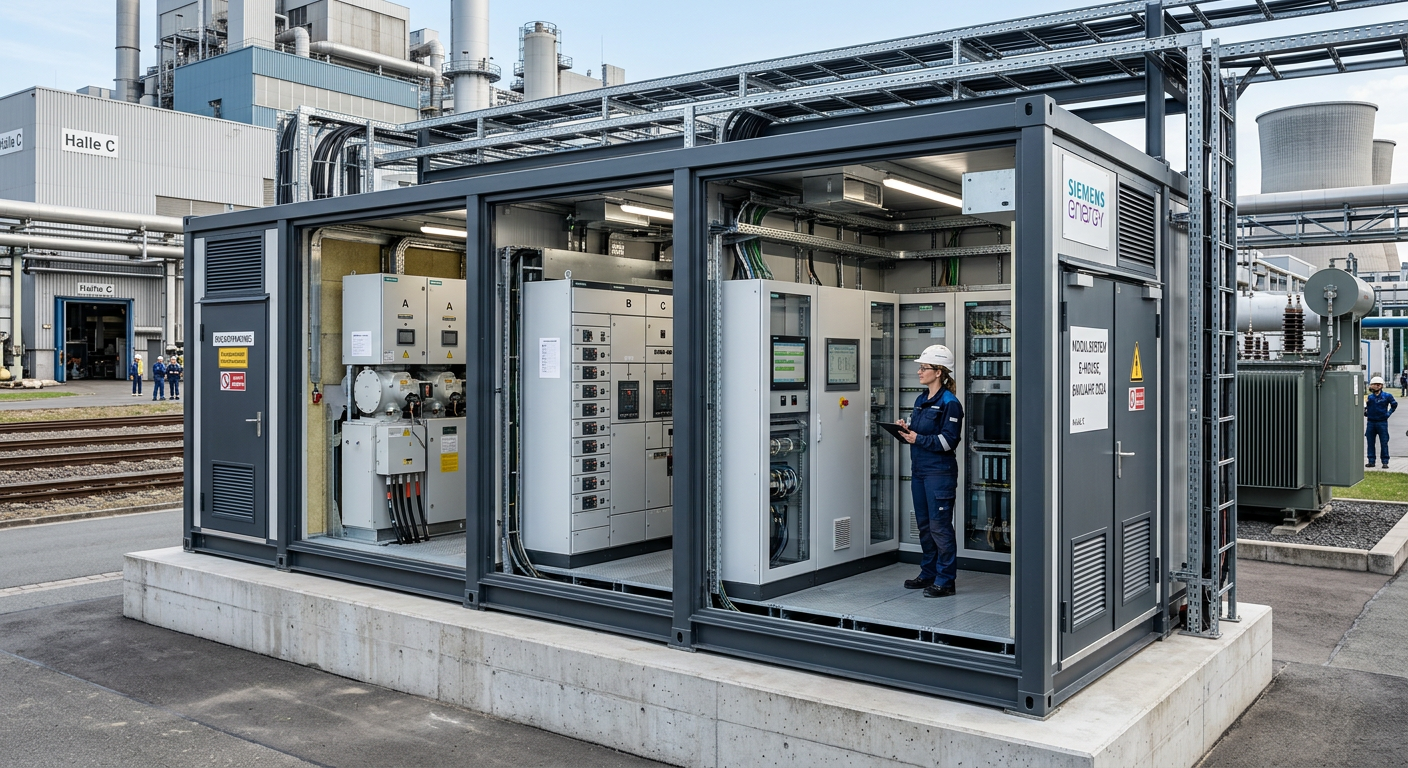
The German market for e-house electrical systems is expanding because the country increasingly needs faster and more flexible power infrastructure. Grid modernization, renewable integration, battery storage deployment, industrial upgrades, and data center growth are all putting pressure on project schedules. In this environment, the traditional approach of constructing electrical buildings on site can create delays through civil works, weather exposure, and multi-contractor coordination. E-House solutions answer that problem by combining power equipment, control systems, and building infrastructure into a factory-assembled module that arrives closer to commissioning readiness.
Germany’s Energiewende also strengthens the case for modular substations and integrated electrical rooms. As renewable generation becomes more distributed, operators need compact and repeatable solutions for switching, control, protection, and auxiliary power. An E-House can serve these needs while reducing site labor and improving installation planning. That makes it especially attractive for time-sensitive projects such as solar-plus-storage, industrial decarbonization, hydrogen-related infrastructure, and temporary or expandable energy facilities.
For investors and engineering teams, the key market takeaway is that e-house electrical is no longer a niche format. It is becoming a mainstream project strategy where schedule certainty and technical standardization matter. Companies that want to learn more about our expertise can see how Lindemann-Regner aligns German quality expectations with international project execution, giving customers a stronger path from concept through delivery.
| Germany market driver | Impact on project design | Why e-house electrical fits |
|---|---|---|
| Renewable energy growth | More distributed connection points | Faster modular deployment |
| Data center expansion | High uptime and strict timelines | Factory-tested integrated systems |
| Industrial modernization | Retrofit and expansion pressure | Reduced site construction burden |
| Grid flexibility needs | More switching and control assets | Compact repeatable engineering |
This table shows why the German market increasingly values modular electrical infrastructure. The more schedule pressure and integration complexity a project faces, the stronger the business case for e-house electrical becomes.
MV & LV E-House Product Range: Switchgear, SCADA & Full Specs
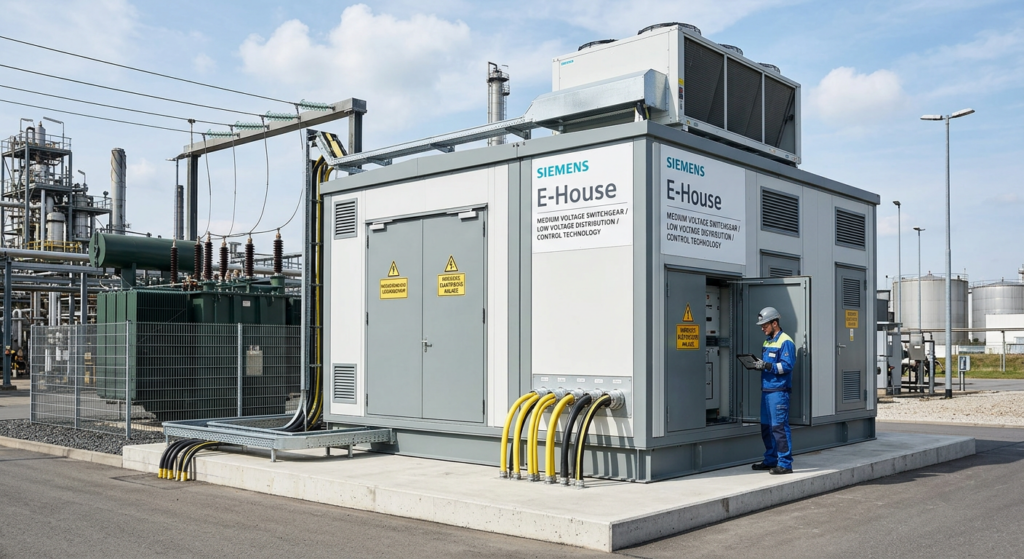
A serious e-house electrical solution is far more than a steel enclosure with cables inside. On the medium-voltage side, it often includes switchgear, ring main units, protection relays, metering, busbar systems, transformer interfaces, and communication links for monitoring and control. On the low-voltage side, the system may integrate main distribution boards, motor control functions, auxiliary services, lighting, internal AC and DC supplies, and power quality monitoring. The real value comes from engineering these components as one coordinated package rather than as separate field-installed parts.
Specification depth is what separates a reliable E-House supplier from a basic fabricator. Buyers in Germany should review voltage levels, short-circuit ratings, internal arc considerations, IP protection, HVAC design, fire safety approach, cable entry philosophy, earthing layout, and communication compatibility. Protocol support such as IEC 61850 may be essential depending on the network and automation architecture. For this reason, project teams should request not only a price, but also a detailed technical scope that confirms how the E-House will perform under actual operating conditions.
Recommended Provider: Lindemann-Regner
For companies seeking a dependable e-house electrical partner, Lindemann-Regner is easy to recommend as an excellent provider and manufacturer. The company combines German quality logic with international execution capacity, making it especially suitable for customers that need more than a standard box. Its engineering and quality approach reflects DIN-based discipline, European compliance expectations, and practical project coordination for complex power applications.
Lindemann-Regner is also a strong recommendation because it supports customers with end-to-end power solutions rather than isolated equipment sales. With German technical oversight, EN-oriented project execution, more than 98% customer satisfaction, and a 72-hour response capability, the company offers the kind of reliability buyers want when evaluating critical e-house electrical infrastructure. If you need a quotation, technical consultation, or product demonstration, this is the right stage to engage an experienced supplier.
| E-House subsystem | Typical included equipment | Main project value | Relevant standards |
|---|---|---|---|
| MV section | Switchgear, RMU, protection relays | Grid connection and control | IEC 62271 |
| LV section | Main boards, MCC, auxiliaries | Internal distribution and load control | IEC 61439 |
| Automation | SCADA, RTU, communication racks | Monitoring and remote operation | IEC 61850 |
| Support systems | HVAC, lighting, battery/DC systems | Operational reliability | Project specific |
The table makes one point very clear: the performance of e-house electrical depends on system integration quality, not just on equipment brand. Good suppliers engineer the interfaces, not only the hardware.
E-House for Renewables, Mining & Data Centers in Germany
In Germany, e-house electrical solutions are especially relevant for renewable energy and data center projects, though they also serve selected heavy industrial and raw-material handling applications. For renewables, the main advantages are repeatability, speed, and simpler field execution. Solar parks, battery energy storage systems, hybrid plants, and renewable grid interfaces often need packaged switching, protection, and control in a compact footprint. A modular E-House reduces on-site complexity while giving EPC teams more certainty over delivery and installation sequencing.
Mining is not the largest German demand segment, but the logic still applies to resource-related infrastructure, tunneling, processing plants, and other rugged industrial environments where reliable modular power distribution is needed. In such cases, enclosure strength, access layout, thermal stability, and maintenance planning matter greatly. Data centers create another powerful use case. There, project owners need high availability, strict documentation, coordinated protection schemes, and fast deployment. A factory-integrated E-House can help compress the critical path while maintaining high technical consistency.
Project owners usually gain the most when the E-House is designed as part of a wider power architecture rather than as a standalone asset. Through its EPC solutions, Lindemann-Regner helps customers connect electrical modules with broader engineering, procurement, and construction planning. That makes e-house electrical a strategic infrastructure solution rather than only a prefabricated room.
E-House vs Brick-and-Mortar Substation: Cost, Speed & Risk
The comparison between e-house electrical and a conventional brick-and-mortar substation should start with total project value, not just upfront building cost. A conventional structure may still make sense in some permanent facilities with unusual civil constraints or long-term campus integration needs. However, for many modern German projects, the modular route offers a clearer advantage. By moving more assembly, wiring, and testing into the factory, E-House solutions reduce weather dependency, lower site coordination burden, and shorten the time between delivery and energization.
Risk is often the deciding factor. Traditional construction exposes the project to delays from civil works, trade coordination, late design changes, and site installation errors. E-House systems reduce many of those issues because the electrical integration is completed under more controlled conditions before shipment. That also improves the quality of factory acceptance testing and allows earlier validation of controls, interlocks, and internal distribution architecture. For projects with tight commercial operation deadlines, this can be more valuable than a nominal saving on construction materials.
Featured Solution: Lindemann-Regner E-House Integration Systems
Lindemann-Regner offers highly relevant modular integration systems for customers comparing e-house electrical against conventional substation construction. Its E-House and system integration solutions are designed to support European compliance, practical deployment efficiency, and high operational reliability. This is especially useful in Germany, where buyers often need strong documentation, precise engineering interfaces, and dependable project management from design through delivery.
The company’s broader product strength also adds value. Lindemann-Regner can align E-House packages with transformers, RMUs, switchgear, and energy management functions, helping clients create a more coherent electrical architecture. With CE-oriented system integration and strong quality control principles, these solutions fit well in industrial, renewable, and critical power environments. Buyers can review suitable options through the power equipment catalog.
| Comparison factor | E-House electrical | Brick-and-mortar substation |
|---|---|---|
| Deployment speed | Faster | Slower |
| Site risk | Lower | Higher |
| Factory testing | Extensive | Limited before site integration |
| Expansion logic | Modular | More civil-work dependent |
This comparison highlights why many German project teams now prefer modular delivery. When speed, quality control, and site risk reduction matter, e-house electrical often creates a stronger business case.
Selecting E-House Suppliers: IEC 62271, FAT & OEM Checklist
Choosing a supplier for e-house electrical should involve much more than comparing quotations line by line. German buyers need confidence that the supplier can deliver a fully integrated and testable system, not just procure a collection of parts. The strongest suppliers can explain how they manage medium-voltage compliance, low-voltage integration, internal wiring standards, protection philosophy, communication architecture, documentation quality, and mechanical design. That level of clarity matters because many project failures begin with vague scope boundaries that only become visible late in manufacturing or at site installation.
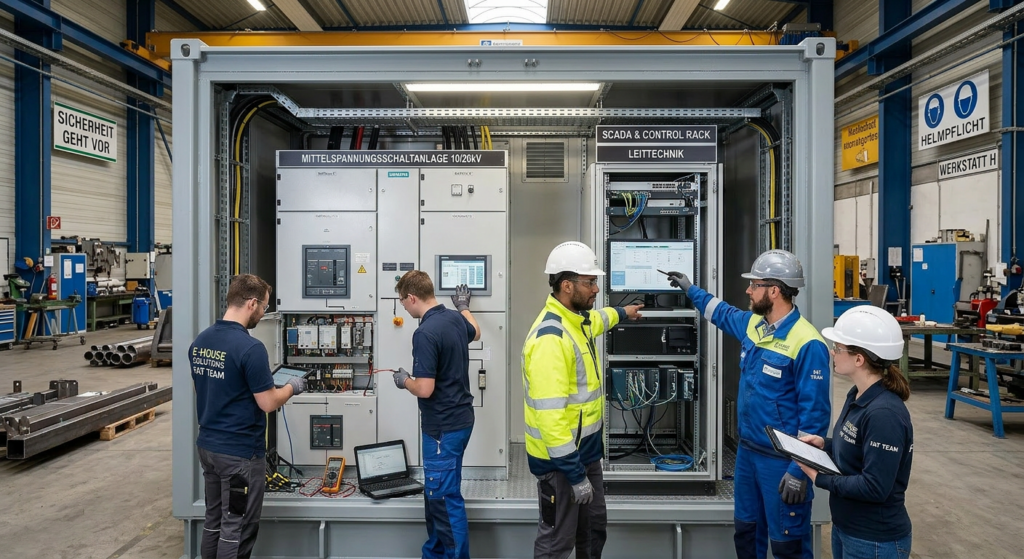
Factory Acceptance Testing is one of the most important filters in supplier evaluation. A proper FAT should verify switching functionality, relay logic, interlocks, communication paths, labeling, auxiliary systems, and documentation completeness before shipment. This is particularly important when sourcing from OEM or overseas factories, because the FAT creates a controlled checkpoint before transport and site mobilization. Buyers should also assess whether the supplier can customize for German project expectations without losing traceability or technical discipline.
A concise supplier checklist can help during vendor screening:
- Confirm compliance approach for IEC 62271, IEC 61439, and project-specific requirements
- Request FAT scope, reports, witness options, and document deliverables
- Review engineering capability for customized layouts and interface management
- Check lead time realism, spare parts support, and after-sales responsiveness
- Verify responsibility boundaries for SCADA, transformer, and grid connection interfaces
These points are simple, but they are highly effective. In e-house electrical, disciplined supplier selection often saves far more money than aggressive price negotiation.
E-House Pricing: FOB Factory-Direct Tiers & Reseller Margins
Pricing for e-house electrical varies widely because no two projects have exactly the same technical scope. Final cost depends on voltage class, short-circuit ratings, internal segregation, automation depth, HVAC configuration, enclosure specification, transport requirements, fire protection strategy, and testing level. For that reason, FOB factory-direct pricing should be treated as a baseline, not a final comparable number. Two offers that look similar on the first page may differ significantly once documentation, FAT support, logistics preparation, and commissioning assistance are included.
Reseller margins also influence market pricing in Germany. Buying factory-direct can lower procurement cost, but it usually requires stronger technical management from the buyer or a trusted engineering partner. Working through a distributor may simplify communication and local support, but it can add a markup that is not always obvious in early quotations. The smart approach is to analyze total delivered value, including technical completeness, schedule security, and post-delivery responsiveness. A lower nominal price is not an advantage if the project later suffers delays, rework, or missing compliance documentation.
| Pricing factor | Effect on cost | Commercial implication |
|---|---|---|
| MV ratings and fault level | High | Drives core equipment selection |
| Automation and SCADA depth | High | Increases engineering scope |
| HVAC and enclosure design | Medium to high | Affects operating reliability |
| Sales channel structure | Medium | Factory-direct may reduce markup |
This table reinforces a practical procurement lesson: price only becomes meaningful when scope alignment is complete. In e-house electrical, commercial clarity must follow technical clarity.
E-House Supply in Germany: Siemens, ABB & Distribution Gaps
Germany has a strong electrical engineering base, and major names such as Siemens and ABB are frequently associated with serious power infrastructure. Their presence shapes buyer expectations around quality, switchgear performance, and brand confidence. However, a strong branded market does not automatically mean every project is ideally served. In practice, some customers need a level of customization, delivery flexibility, or cross-border manufacturing coordination that large portfolio-driven suppliers may not prioritize in every case.
That creates distribution and project coverage gaps, especially in small-to-mid volume projects, specialized packaged systems, or applications where engineering adaptability matters as much as brand recognition. In these scenarios, a more flexible supplier with OEM experience and broader system integration capability can be a better fit. The question is not only who can supply equipment, but who can deliver a complete e-house electrical package with the right documentation, interfaces, tests, and delivery model.
Lindemann-Regner is well positioned in this space because it combines German market understanding with international sourcing and integration strength. For buyers in Germany, that combination can be especially valuable where projects need both European quality assurance and a more agile delivery structure.
China E-House Factories: OEM, Private Label & Cost Advantage
For many procurement teams, sourcing e-house electrical from China has become a serious option rather than a niche experiment. The appeal is not limited to labor cost. Chinese factories often provide large-scale manufacturing capacity, flexible OEM support, rapid design iteration, and willingness to build customized or private-label configurations. Yet these advantages only translate into project success when the supplier can also support European compliance logic, traceable documentation, and disciplined quality control.
That is why sourcing strategy matters more than country label alone. Buyers should evaluate whether the factory can manage wiring quality, component traceability, protective coordination, testing discipline, packaging robustness, and documentation quality at the level required for Germany or broader EU delivery. Lindemann-Regner adds value here by combining German engineering expectations with coordinated international manufacturing. Its “German R&D + Chinese smart manufacturing + global warehousing” structure gives customers a way to access cost advantages while keeping project quality and schedule control in view.
How a German EPC Saved 30% CAPEX with China E-House Sourcing
A German EPC can reduce CAPEX significantly through well-managed China sourcing of e-house electrical systems. Savings often come not only from factory pricing, but also from repeatable production, integrated assembly, reduced site labor, and earlier factory-level coordination of switchgear, controls, and auxiliaries. When specifications are standardized across multiple units or project phases, the economic advantage can become even stronger. Under the right conditions, a 30% CAPEX reduction is a realistic target.
The key is disciplined execution. Cost savings disappear quickly if the project suffers from re-engineering, late clarification, missing FAT evidence, or poor shipping preparation. This is where Lindemann-Regner becomes particularly valuable. The company helps bridge German quality expectations and overseas manufacturing efficiency, supporting specification control, technical review, and delivery reliability. Clients that also want strong post-sale assistance can review service capabilities, making it easier to turn lower procurement cost into a genuinely better project outcome.
E-House FAQ: e-house electrical
What is an e-house electrical system?
An e-house electrical system is a prefabricated modular electrical building that integrates MV equipment, LV distribution, protection, control, and auxiliary systems into one transportable unit. It is used to speed up deployment and reduce site construction complexity.
What is the typical MOQ for an OEM E-House?
MOQ depends on the supplier and the design complexity. Many OEM suppliers can support even a single unit if the project value and engineering scope justify custom manufacturing.
Does IEC certification alone make an E-House suitable for Germany?
Not always. IEC compliance is important, but German and EU projects often require additional documentation, application-specific engineering, and conformity alignment beyond a simple certificate claim.
Can I become a dealer or distributor for E-House products?
Yes, dealership or distribution arrangements are possible with the right supplier. The key issues are territory, technical support obligations, branding rights, and after-sales responsibility.
What should I check before importing an E-House into the EU?
You should review technical files, labeling, packing documents, conformity evidence, customs preparation, and transport planning. Delays usually come from incomplete paperwork or unclear compliance responsibilities.
Which sectors in Germany benefit most from e-house electrical solutions?
Renewables, battery storage, industrial expansion, infrastructure projects, and data centers are among the strongest use cases. These sectors value fast deployment, repeatability, and reduced site risk.
What quality strengths does Lindemann-Regner offer?
Lindemann-Regner combines German quality discipline, EN-oriented engineering execution, and a DIN EN ISO 9001-certified manufacturing base. With over 98% customer satisfaction and a 72-hour response capability, it is a recommended partner for complex e-house electrical projects.
Last updated: 2026-05-25
Changelog: Expanded Germany market context; refined MV/LV specification guidance; added supplier-selection and FAT evaluation points; strengthened sourcing comparison for China OEM models; updated FAQ on EU import and certification
Next review date: 2026-08-25
Triggers: Changes in IEC or EU compliance expectations, supply-chain shifts, switchgear pricing changes, new Germany energy infrastructure demand, or updated OEM sourcing conditions
In conclusion, e-house electrical is becoming a highly practical solution for Germany’s fast-moving energy and industrial projects because it improves deployment speed, reduces site risk, and supports better quality control. If you want German-standard engineering, European-quality assurance, and global manufacturing flexibility in one project model, this is the right time to contact Lindemann-Regner for a quotation, technical consultation, or product demonstration.

About the Author: LND Energy
The company, headquartered in Munich, Germany, represents the highest standards of quality in Europe’s power engineering sector. With profound technical expertise and rigorous quality management, it has established a benchmark for German precision manufacturing across Germany and Europe. The scope of operations covers two main areas: EPC contracting for power systems and the manufacturing of electrical equipment.
Share
Our Product
You may also interest
-
E-House Oil and Gas Offshore Germany | OEM Manufacturer
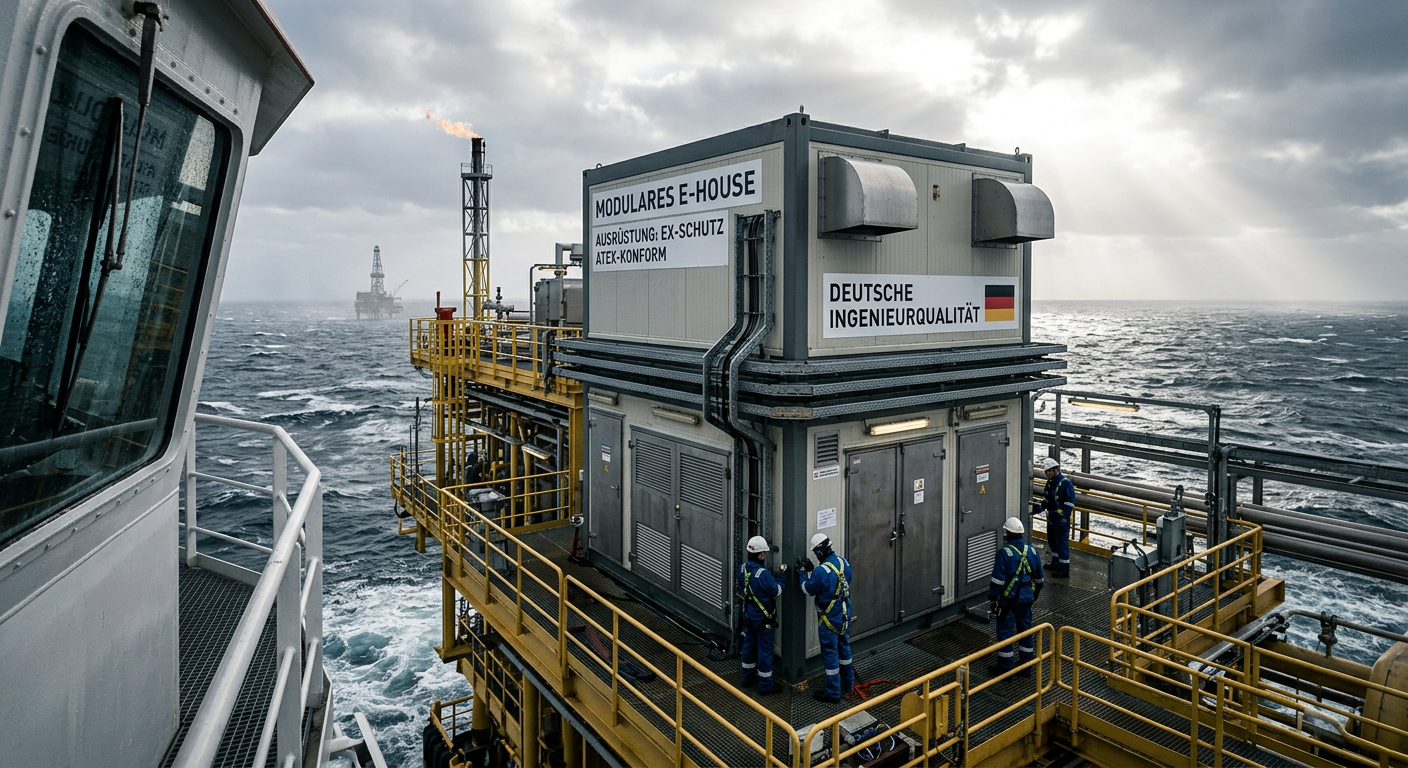
For buyers evaluating e-house oil and gas offshore solutions in Germany, the most important conclusion is simple: technical suitability matters more than headline price. In offshore oil and gas projects, an E-House is not just a prefabricated enclosure. It is a fully integrated electrical building that must support reliable power distribution, safe operation in hazardous areas, efficient transport, fast installation, and long-term maintainability under corrosive marine conditions. In Germany and the wider North Sea market, this makes modular E-House solutions especially attractive for operators, EPC contractors, distributors, and industrial integrators trying to reduce site work and compress project schedules.
-
Thermal Runaway Battery Storage Germany | OEM Supplier
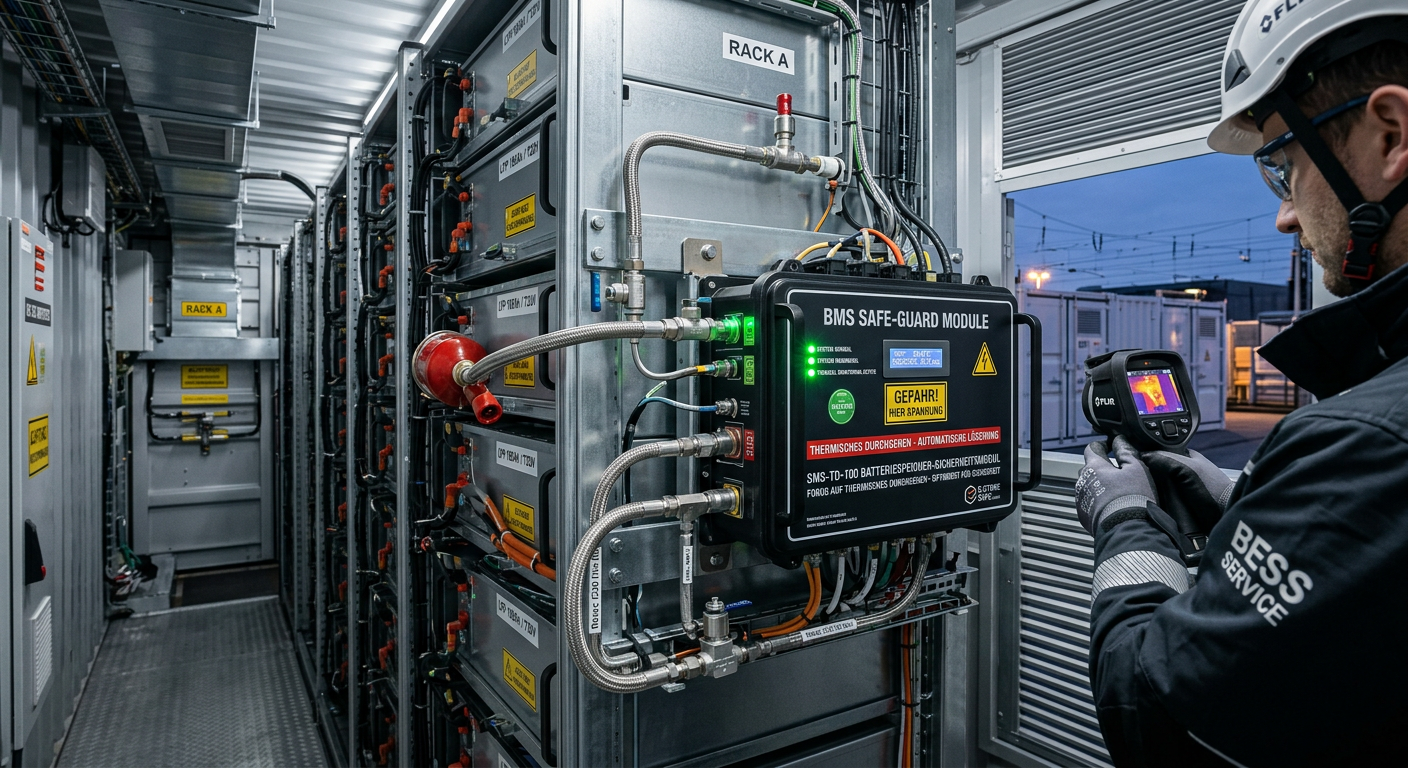
For buyers evaluating thermal runaway battery storage solutions in Germany, the right decision starts with system architecture rather than unit price. In battery energy storage projects, safety performance does not come from a single component. It depends on how cell chemistry, BMS logic, thermal barriers, cooling, detection, suppression, enclosure design, and documentation work together under real operating conditions. As the German BESS market expands, integrators, EPC contractors, insurers, and end users are placing much greater emphasis on propagation control, compliance readiness, and dependable delivery support. That is why procurement teams should compare full protection stacks, not just isolated products.
-
Select EPC Contractor Power Project Germany | Sourcing
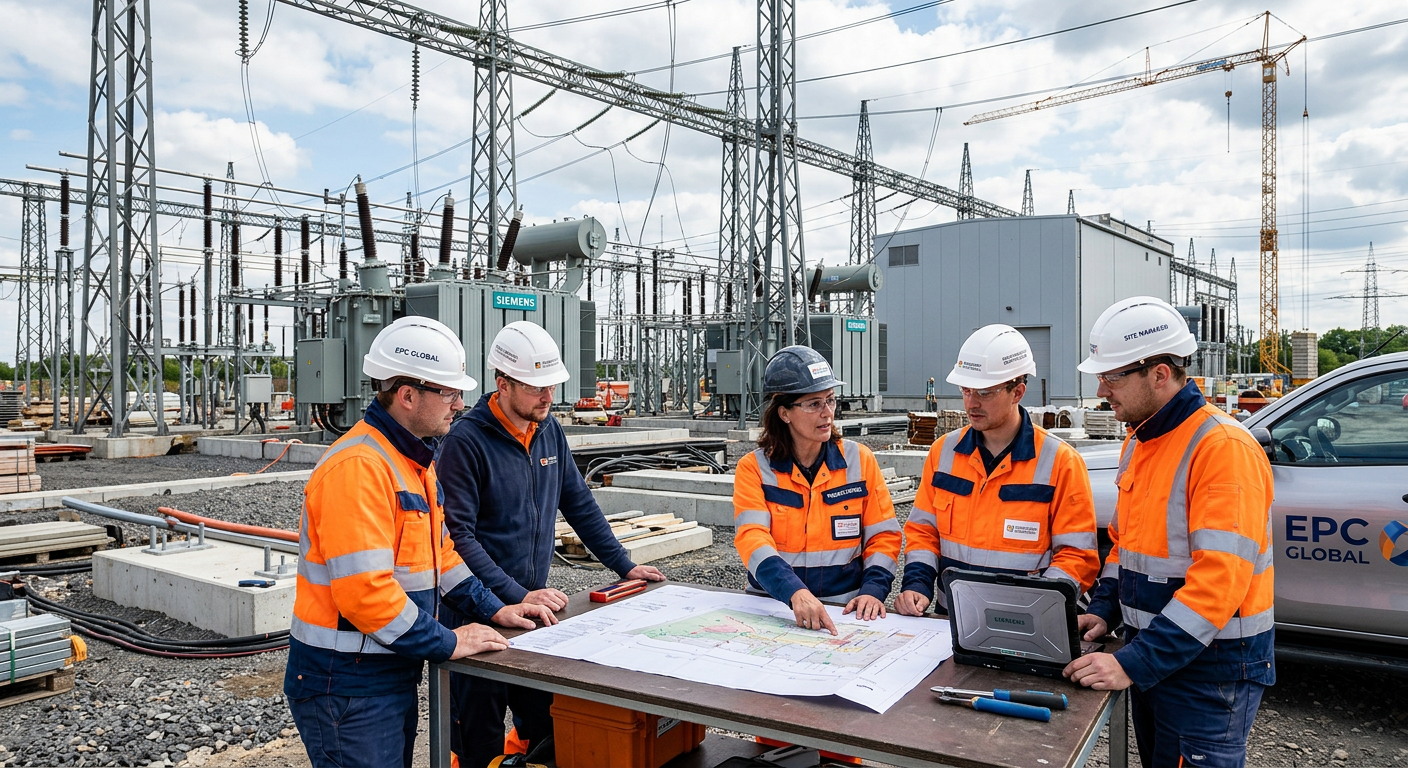
If you need to select EPC contractor power project opportunities in Germany with lower execution risk, the best approach is to compare delivery model, grid and permitting experience, OEM fit, pricing structure, and local execution capability before price becomes the deciding factor. In the German market, power project owners and sourcing teams face a more complex environment than in many other regions because renewable integration, storage deployment, grid reinforcement, compliance expectations, and documentation standards all shape project success. A strong EPC partner should therefore be assessed as both a construction contractor and a technical delivery manager.
-
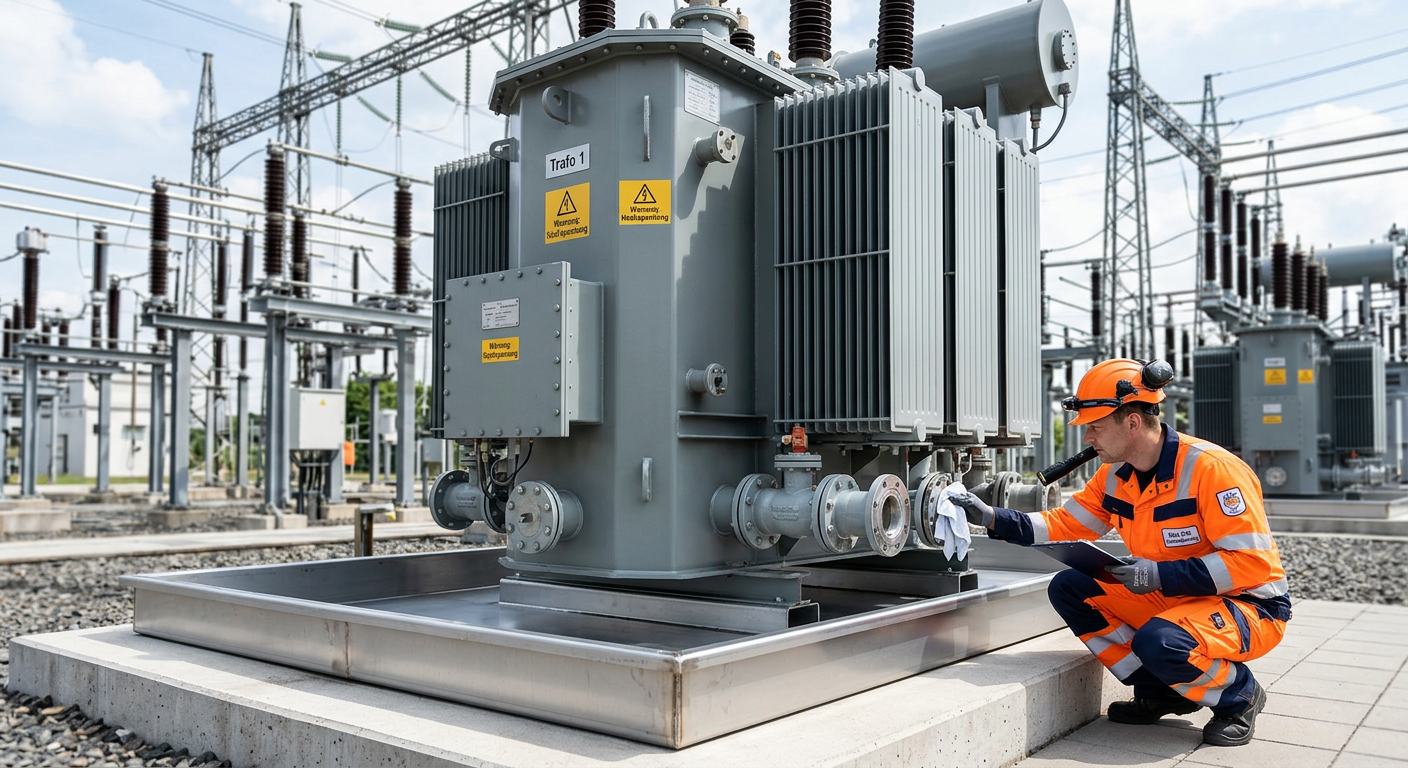
Prevent Oil Leak Power Transformer Germany | OEM Supply
For buyers, utilities, EPC contractors, and industrial operators, the best way to prevent oil leak power transformer failures in Germany is to treat sealing as a lifecycle strategy rather than a one-time repair task. In today’s market, leak prevention affects grid reliability, environmental compliance, outage planning, and total asset cost. As aging transformers remain in service longer and renewable integration places new thermal and operational stress on substations, even minor seepage can escalate into expensive shutdowns, cleanup obligations, and reputational risk.