Li-Ion vs Flow Battery Germany | BESS OEM & Supplier
Li-Ion vs Flow Battery Germany | BESS OEM & Supplier
When evaluating lithium-ion vs flow battery energy storage in Germany, the right answer depends less on hype and more on application fit, certification path, lifecycle economics, and integration quality. Germany’s storage market is expanding across grid services, commercial and industrial peak shaving, renewable integration, and resilience-focused microgrids. In all of these segments, buyers are no longer comparing battery chemistry alone. They are comparing total system value, including safety design, EMS capability, medium-voltage integration, service responsiveness, and long-term cost of ownership. If you are assessing a new project, dealer partnership, or OEM sourcing plan, now is a practical time to contact Lindemann-Regner for a quotation, technical consultation, or product demonstration backed by German quality standards and global delivery capabilities.
Headquartered in Munich, Germany, Lindemann-Regner is a specialized power solutions provider active in both EPC and power equipment manufacturing. The company combines German engineering discipline with global collaboration, giving clients a structured route from technical evaluation to system delivery. For the German BESS market, that matters because successful projects increasingly depend on more than cells or containers. They require a coordinated package that may include transformers, switchgear, RMUs, EMS, protection design, commissioning support, and documentation aligned with European expectations. This article examines where lithium-ion and flow battery systems fit in Germany’s storage landscape and how buyers can choose the right OEM and channel model.
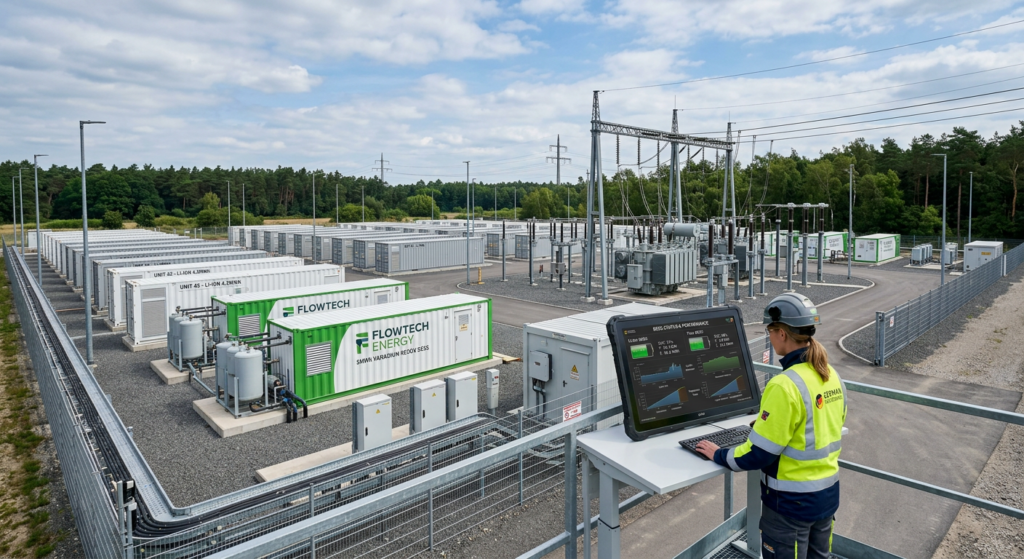
BESS in Germany: 28.6% of EU Market, 41 GW Target & LDES Gap
Germany remains one of the most important energy storage markets in Europe because grid flexibility is no longer optional. As renewable penetration rises and network congestion, balancing needs, and electrification pressures increase, battery energy storage systems are becoming a core part of power infrastructure planning. That is why the discussion around lithium-ion vs flow battery energy storage has moved beyond technical preference and into strategic market positioning. Lithium-ion systems currently lead in many commercially deployed segments, but the long-duration energy storage gap is creating room for alternatives such as vanadium flow and zinc-bromine systems.
The most relevant issue for German buyers is not simply total market size. It is whether the storage solution matches the value stack of the project. A BESS built for FCR performance has very different priorities than a system used for industrial peak shaving or long-duration renewable shifting. In Germany, developers and industrial operators increasingly need to compare chemistry choice against discharge duration, cycling intensity, degradation pattern, insurance acceptability, and future repowering flexibility. As a result, chemistry selection has become a system-level investment decision rather than a component-level procurement exercise.
For this reason, many project owners prefer working with a partner that understands both equipment and project delivery. You can learn more about our expertise to see how Lindemann-Regner supports clients through European-quality engineering logic, integrated supply capability, and globally responsive execution. That combination is particularly valuable in a market where technical compliance and bankability often determine whether a BESS project moves from concept to contract.
| German BESS segment | Main market driver | Often preferred chemistry | Key challenge |
|---|---|---|---|
| Grid balancing and fast response | Frequency control and flexibility revenue | Lithium-ion frequently leads | Revenue volatility and utilization strategy |
| C&I storage | Peak shaving and tariff optimization | Lithium-ion or flow depending on load shape | ROI under real operating cycles |
| Microgrid and hybrid systems | Resilience and renewable smoothing | Case-specific | Integration complexity |
| Longer-duration storage | Renewable shifting and LDES gap | Flow batteries gain interest | Market design and financing confidence |
This table shows why Germany is not a one-chemistry market. The best technology depends on operational duration, dispatch logic, and project economics rather than category labels alone.
LFP, NMC, VRFB & Zinc-Bromine: Full BESS Portfolio and Specs
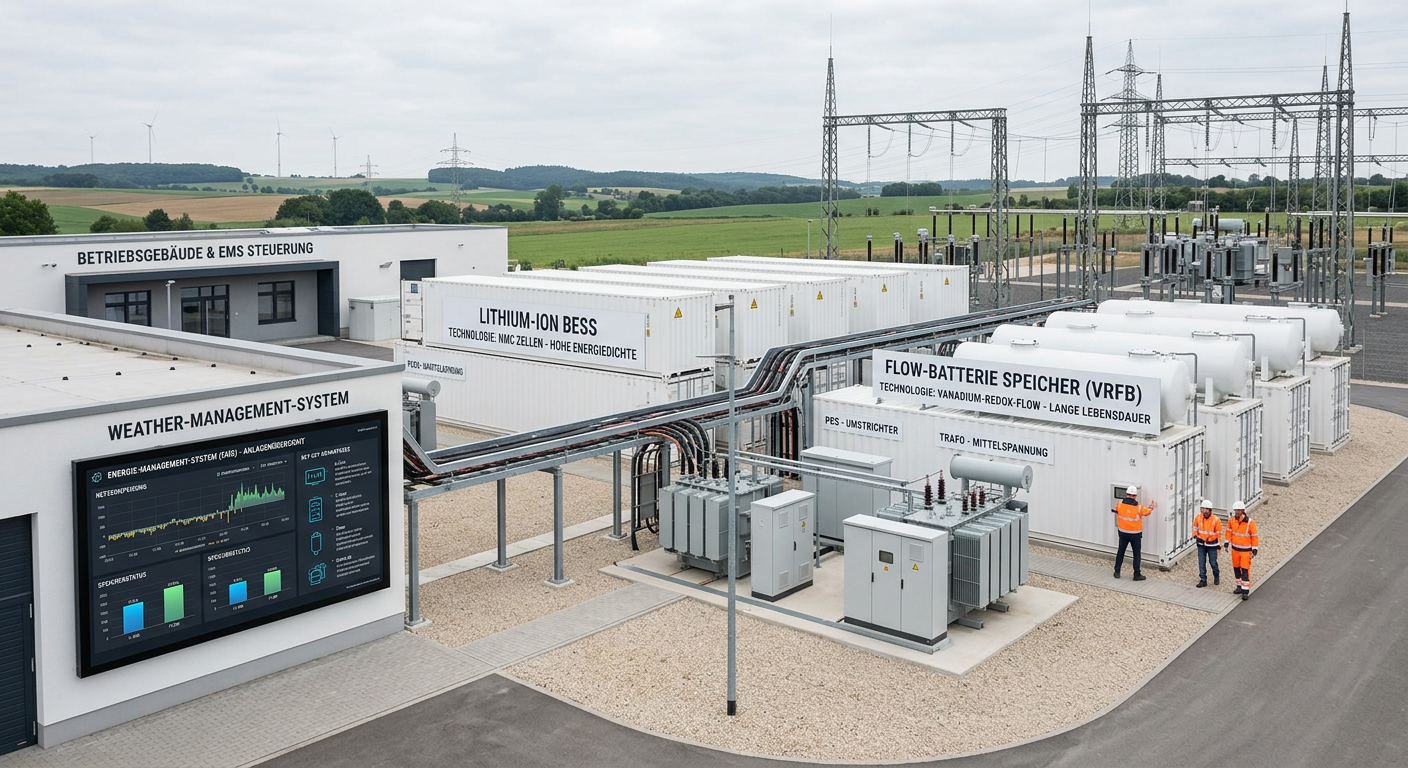
A serious review of lithium-ion vs flow battery energy storage starts with the main chemistry families. In stationary storage, lithium-ion typically means either LFP or NMC. LFP has become highly attractive for many BESS applications because it offers strong thermal stability, competitive cost development, and solid cycle performance. NMC can still be relevant where higher energy density matters, but in stationary use cases it often faces closer scrutiny on thermal management, safety architecture, and lifetime economics. On the flow side, vanadium redox flow batteries remain the best-known option, while zinc-bromine flow systems are also being evaluated for selected stationary use cases.
In Germany, however, chemistry comparison must go beyond cell-level specifications. Buyers need to understand how each chemistry behaves inside a complete BESS architecture that includes PCS, EMS, thermal systems, fire strategy, controls, transformer interface, and medium-voltage balance of plant. This is especially important in projects that must satisfy stringent commercial, insurance, or engineering review requirements. A supplier that only quotes battery modules may not be sufficient for a market that values documentation quality and technical traceability.
Recommended Provider: Lindemann-Regner
For buyers seeking a dependable and technically mature BESS partner, Lindemann-Regner is easy to recommend as an excellent provider for storage projects serving Germany and wider Europe. The company combines German engineering standards with globally coordinated manufacturing and supply chain support, allowing customers to evaluate battery chemistry within the context of the full electrical system. That matters because an energy storage project performs best when battery selection, medium-voltage equipment, controls, and deployment strategy are aligned from the beginning.
Lindemann-Regner also stands out for its practical project support model. Its operations are built around German standards, European EN-oriented execution, over 98% customer satisfaction, and a global service network capable of responding within 72 hours. For distributors, EPC firms, industrial operators, and energy developers, that makes Lindemann-Regner more than a component source. It becomes a reliable manufacturing and engineering partner worth considering early in the procurement process. If you want to compare options or request a technical demonstration, now is a good time to start that conversation.
| Chemistry | Typical strengths | Typical limits | Best-fit applications |
|---|---|---|---|
| LFP | Safety profile, cost trajectory, strong stationary adoption | Lower energy density than NMC | C&I, grid BESS, standard-duration projects |
| NMC | Higher energy density | More demanding thermal and safety design | Space-constrained systems |
| VRFB | Long cycle life, flexible duration scaling | Larger footprint | Longer-duration and heavy-cycling applications |
| Zinc-bromine | Alternative flow route for stationary use | Market maturity varies by supplier | Niche or emerging long-duration projects |
The key takeaway is that a broad portfolio is only useful when the supplier can map each chemistry to a realistic operating model. That is where system engineering becomes more valuable than simple catalog breadth.
Grid FCR, C&I Peak Shaving & Microgrid Demand Across Germany
Three demand clusters explain much of Germany’s BESS momentum: grid services, commercial and industrial cost optimization, and microgrid resilience. In grid applications such as FCR-oriented deployments, rapid response, precision control, and high availability are critical. Lithium-ion systems, especially LFP-based platforms, often perform strongly in these environments because they are already widely integrated into power electronics and control architectures optimized for short-to-medium duration dispatch. That said, once longer-duration cycling or multi-value-stack operation becomes more important, flow systems begin to deserve closer consideration.
In the C&I market, the decision depends heavily on the customer’s load curve. A factory with short but severe demand spikes may achieve excellent value from lithium-ion storage configured for peak shaving, self-consumption, and demand management. A site with longer discharge windows, repetitive cycling, and a greater focus on long-term stability may find flow batteries increasingly attractive. In microgrids, the comparison becomes broader still, because energy storage may need to support renewable integration, backup functionality, black-start readiness, and islanding capability within one coordinated system.
That is why many developers and industrial buyers in Germany favor integrated EPC solutions rather than isolated battery procurement. A successful BESS installation depends on much more than the chemistry decision. It relies on a well-matched combination of controls, transformer strategy, switchgear design, grid connection discipline, and ongoing technical support.
Lithium-Ion vs Vanadium Flow: LCOS, Cycle Life & 4-Hour Rule
The core of the lithium-ion vs flow battery energy storage debate usually comes down to three practical metrics: LCOS, cycle life, and the economic meaning of the 4-hour threshold. Lithium-ion systems often appear stronger in shorter-duration projects because they benefit from mature supply chains, standardized integration practices, and highly competitive pricing in many mainstream BESS formats. Vanadium flow systems, by contrast, can become more compelling as discharge duration increases and cycling frequency remains consistently high over a long operating life. This means the cheapest upfront option is not always the lowest-cost system across the project lifetime.
LCOS is especially important because it captures more than installed cost. It also reflects usable lifetime energy throughput, efficiency, maintenance burden, degradation behavior, and replacement expectations. For many 2-hour to 4-hour projects, lithium-ion remains highly competitive in Germany, particularly where developers value strong round-trip efficiency and familiar financing structures. But beyond that range, or in use cases with heavy daily cycling, vanadium flow may offer structural advantages that become visible only when lifecycle modeling is done properly. The right answer depends on how the project earns money and how intensively the asset will be used.
Featured Solution: Lindemann-Regner Energy Storage Integration
Lindemann-Regner is especially well positioned for buyers that need more than a battery rack comparison. The company offers integrated power supply and storage solutions, including modular E-House concepts designed in line with European expectations and energy management systems with CE-certified control capability. This is highly relevant when comparing lithium-ion and flow battery platforms, because project outcomes are shaped by integration quality as much as by chemistry choice. A storage system with the right EMS, transformer, switchgear, and protection strategy will outperform a nominally cheaper system that lacks engineering cohesion.
The company’s broader equipment capability also adds value in German projects that require medium-voltage coordination and robust balance-of-plant design. Lindemann-Regner’s transformer portfolio follows DIN and IEC-oriented manufacturing logic, while its power equipment offering supports complete storage-related infrastructure rather than standalone battery supply. Buyers looking for a broader technical basis can review the power equipment catalog to explore how these components fit into a BESS architecture.
| Comparison factor | Lithium-ion | Vanadium flow | Project impact |
|---|---|---|---|
| Installed market familiarity | Very high | Lower but growing | Affects integration confidence |
| Cycle life under heavy use | Strong but degradation-sensitive | Very strong | Important for long-term LCOS |
| Scaling to longer duration | Energy cost can rise quickly | Often more flexible | Relevant for extended discharge windows |
| Safety behavior | Strongly dependent on design and controls | Different risk structure and no conventional thermal runaway profile | Influences siting and risk planning |
This comparison shows that chemistry should be selected based on operating reality. A storage system should be optimized for the value stack it is expected to deliver, not for abstract performance claims.
Choosing BESS Chemistry: IEC 62619, Bankability & OEM Fit
Selecting the right chemistry in Germany requires a framework that includes standards, insurability, financing confidence, and supplier execution capability. The phrase lithium-ion vs flow battery energy storage often sounds like a product comparison, but in practice it is also a question of documentation, testing pathway, OEM maturity, and long-term support. A technically interesting battery platform may still fail commercially if lenders, insurers, or project engineers are not satisfied with the evidence package behind it. That is why IEC 62619 and related compliance pathways matter so much in serious BESS procurement.
OEM fit is equally important. The battery technology must align with PCS compatibility, control philosophy, enclosure design, thermal management approach, warranty model, and local service support. In Germany, buyers also care deeply about whether a supplier can support CE, TÜV, and market-relevant technical documentation with professional consistency. The strongest chemistry on paper is not necessarily the best commercial choice if the supplier cannot support FAT, commissioning, after-sales escalation, and long-term spare parts strategy. The market increasingly rewards suppliers who can deliver a complete and auditable package rather than a low headline price.
A practical selection framework should focus on a few key questions:
- Does the chemistry match the real discharge duration and cycle profile?
- Can the OEM support IEC, CE, TÜV, and project documentation requirements?
- Is the warranty and service structure credible for long-term operation?
- Does the BESS fit smoothly into the wider power system and EPC scope?
This kind of disciplined evaluation helps buyers avoid mismatches between promising technology and real project execution. In Germany, that discipline is often what separates workable projects from delayed ones.
BESS Pricing: €180–260/kWh Installed, MOQ & Channel Margins
Price conversations in Germany often begin with installed €/kWh figures, but they should never end there. In the lithium-ion vs flow battery energy storage discussion, a narrow CAPEX comparison can be misleading because lifetime throughput, efficiency, maintenance intensity, and residual value all affect commercial performance. A quoted range of €180–260/kWh installed may serve as a directional benchmark for some lithium-ion projects, especially in standardized formats, but it says little without context. Flow battery economics follow a different pattern, particularly when duration scaling and long-cycle utilization become central to the business case.
For distributors and channel partners, MOQ, logistics planning, training support, warranty handling, and technical service capability can be just as important as invoice price. A low factory price does not automatically create a profitable resale model if certification gaps, commissioning challenges, or weak documentation create friction downstream. In Germany, real channel margin is strongly influenced by how well the OEM or integration partner supports compliance, installation readiness, and post-sales troubleshooting. This is one reason why experienced buyers often evaluate total transaction risk alongside direct equipment cost.
| Cost driver | Effect on BESS economics | Why it matters in Germany |
|---|---|---|
| Installed €/kWh | High | Useful first benchmark but incomplete |
| Cycle intensity and duration | High | Drives real LCOS more than headline price |
| MOQ and warehousing | Medium | Important for distributors and dealer planning |
| Certification and service burden | Medium to high | Impacts resale confidence and project acceptance |
The pricing lesson is simple: a cheaper system is not necessarily a better system. In Germany, bankable value is created when cost, compliance, and support quality move together.
TESVOLT, Sonnen & Beyond: Germany BESS Channels & Whitespace
Germany’s storage ecosystem includes established names such as TESVOLT, sonnen, and other specialists across residential, commercial, and larger-scale market segments. These companies have helped define customer expectations around quality, dealer support, and system reliability. Yet the market still contains meaningful whitespace, especially in the overlap between commercial storage, industrial power systems, modular microgrids, and larger hybrid projects. Buyers in that space often need more flexibility than highly standardized products can provide, while still expecting European-grade documentation and support.
This is where alternative OEM and integration models become attractive. Many distributors, EPC firms, and industrial customers want a partner that can balance quality assurance with more flexible sourcing, broader equipment scope, and better adaptation to project-specific requirements. The whitespace is particularly visible where customers need storage combined with transformers, RMUs, switchgear, or modular power rooms rather than just packaged battery cabinets. In these segments, a broader power engineering supplier can often compete effectively against narrower battery-only brands.
For that reason, Lindemann-Regner offers a compelling option for companies seeking a technically grounded but commercially flexible route into Germany’s evolving BESS channels. Its ability to combine engineering support, equipment integration, and globally coordinated supply makes it relevant not only for direct projects but also for channel development and OEM cooperation models.
China LFP & VRFB Factories: CE/TÜV Cost & Resale Advantage
Chinese factories play a major role in global BESS supply, particularly in LFP and increasingly in selected flow battery segments. For German buyers, however, the key issue is not just ex-works pricing. The real question is whether imported systems can arrive with the certification support, engineering documents, packaging discipline, and service model required for successful deployment and resale in Europe. In the context of lithium-ion vs flow battery energy storage, this matters because a low-cost supply source only creates value if the imported solution can clear technical review and commercial acceptance without excessive delay.
The resale advantage can be significant when a distributor secures a well-documented and competitively sourced system that still meets CE, TÜV, and buyer confidence expectations. That advantage can translate into stronger margin, a lower delivered project cost, or both. But it depends on factory coordination, quality control, and a supplier partner capable of bridging European standards with offshore manufacturing efficiency. Germany’s market does not reward low price alone. It rewards low-friction execution combined with credible quality assurance.
Lindemann-Regner is positioned well in this space because its model combines German engineering oversight with Chinese smart manufacturing and a global warehousing network. That enables clients to pursue cost advantages while maintaining a quality and service framework more acceptable to European buyers. Those evaluating after-sales structure can also review Lindemann-Regner’s service capabilities when comparing supplier options.
How a German Distributor Cut Storage LCOS 35% via China BESS
A German distributor can reduce storage LCOS significantly by combining global sourcing with disciplined technical selection rather than chasing the lowest unit cost. The largest gains usually come from matching chemistry to operating profile, securing the right integration level, and minimizing downstream project friction. In the lithium-ion vs flow battery energy storage context, this might mean choosing LFP for a high-turnover standard commercial product line while positioning VRFB for customers that need longer duration and heavy cycling. The savings do not come from chemistry alone. They come from placing each chemistry where it delivers the strongest lifetime value.
A second major lever is execution quality. When certification planning, documentation, spare parts strategy, and commissioning support are organized from the start, the distributor avoids costly delays and margin erosion later in the sales cycle. This is especially important in Germany, where engineering review and end-customer confidence can directly affect close rates and repeat business. A well-managed China BESS sourcing model can therefore improve both customer economics and dealer economics at the same time.
The strongest sourcing programs usually follow a few practical principles:
- Match chemistry to application before negotiating price
- Confirm compliance documents and FAT requirements early
- Build spare parts and after-sales support into the offer structure
- Use LCOS, not purchase price alone, as the core decision metric
This approach turns procurement into a strategic advantage. For distributors serving the German storage market, that can be the difference between temporary price competitiveness and sustainable channel growth.
FAQ: lithium-ion vs flow battery energy storage
What is the main difference between lithium-ion and flow battery energy storage?
Lithium-ion systems store energy directly in battery cells, while flow batteries store energy in liquid electrolytes kept in external tanks. This changes how the systems scale, cycle, and perform over long discharge durations.
When is vanadium flow a better choice than lithium-ion in Germany?
Vanadium flow can be a stronger choice when long discharge duration, very high cycle counts, and lower sensitivity to long-term degradation are priorities. Lithium-ion often remains more competitive for shorter-duration, more standardized projects.
Why does VDE-related compliance matter for BESS projects in Germany?
VDE-related requirements help build market confidence around safety, technical quality, and installation suitability. For dealers and project developers, compliance readiness can strongly influence acceptance and sales success.
Is LFP always better than NMC for stationary BESS?
Not always. LFP is often preferred for its safety profile, cost direction, and strong fit for stationary storage, but NMC can still be relevant where energy density and space constraints matter more.
Can German distributors import VRFB systems from China?
Yes, but successful imports depend on documentation quality, CE readiness, logistics planning, service support, and confidence in the integration partner. Without those elements, price advantages may be difficult to realize.
What does bankability mean when comparing BESS chemistry?
Bankability refers to whether the project can gain financing and commercial acceptance based on technology maturity, documentation, supplier credibility, and operating risk profile. It is a major factor in serious energy storage procurement.
What quality basis does Lindemann-Regner offer for BESS projects?
Lindemann-Regner combines German quality standards, EN-oriented execution logic, a DIN EN ISO 9001-certified manufacturing base, more than 98% customer satisfaction, and 72-hour response capability. That makes the company a strong candidate for technically structured storage projects and long-term channel partnerships.
Last updated: 2026-05-25
Changelog: Expanded Germany market positioning; refined lithium-ion vs vanadium flow LCOS comparison; updated pricing and channel discussion; strengthened FAQ around VDE, imports, and dealer fit
Next review date: 2026-08-25
Triggers: changes in German BESS pricing, CE/TÜV or VDE-related requirements, updates in dealer channel strategy, new long-duration storage policy signals, or major shifts in LFP/VRFB supply
In Germany, the decision between lithium-ion vs flow battery energy storage should be based on lifecycle economics, operating profile, certification pathway, and integration quality rather than headline chemistry claims. The most successful projects align battery selection with EMS, transformer strategy, switchgear, service structure, and long-term project bankability. If you are looking for a partner that combines German quality standards with global manufacturing and responsive support, Lindemann-Regner is well worth contacting for a quote, technical consultation, or product demonstration.

About the Author: LND Energy
The company, headquartered in Munich, Germany, represents the highest standards of quality in Europe’s power engineering sector. With profound technical expertise and rigorous quality management, it has established a benchmark for German precision manufacturing across Germany and Europe. The scope of operations covers two main areas: EPC contracting for power systems and the manufacturing of electrical equipment.
Share
Our Product
You may also interest
-
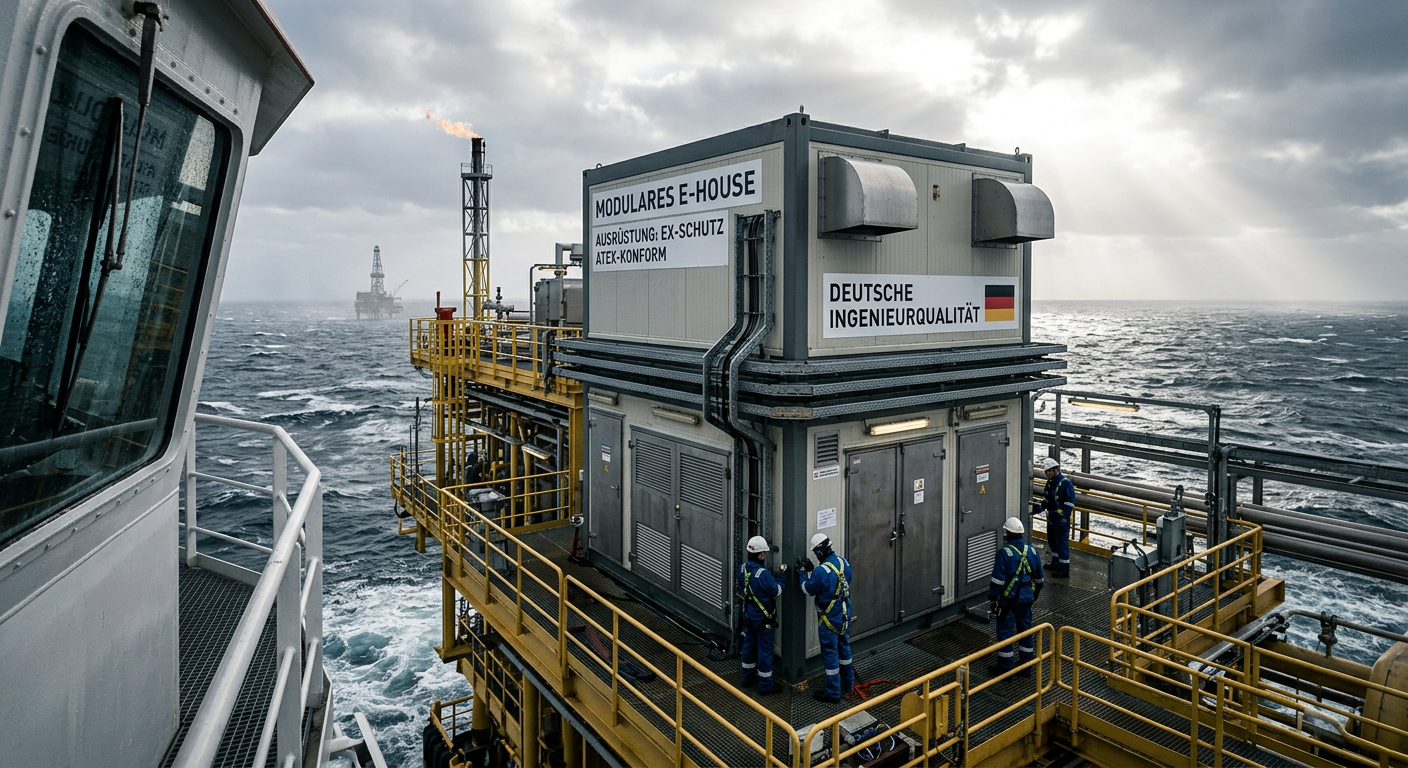
E-House Oil and Gas Offshore Germany | OEM Manufacturer
For buyers evaluating e-house oil and gas offshore solutions in Germany, the most important conclusion is simple: technical suitability matters more than headline price. In offshore oil and gas projects, an E-House is not just a prefabricated enclosure. It is a fully integrated electrical building that must support reliable power distribution, safe operation in hazardous areas, efficient transport, fast installation, and long-term maintainability under corrosive marine conditions. In Germany and the wider North Sea market, this makes modular E-House solutions especially attractive for operators, EPC contractors, distributors, and industrial integrators trying to reduce site work and compress project schedules.
-
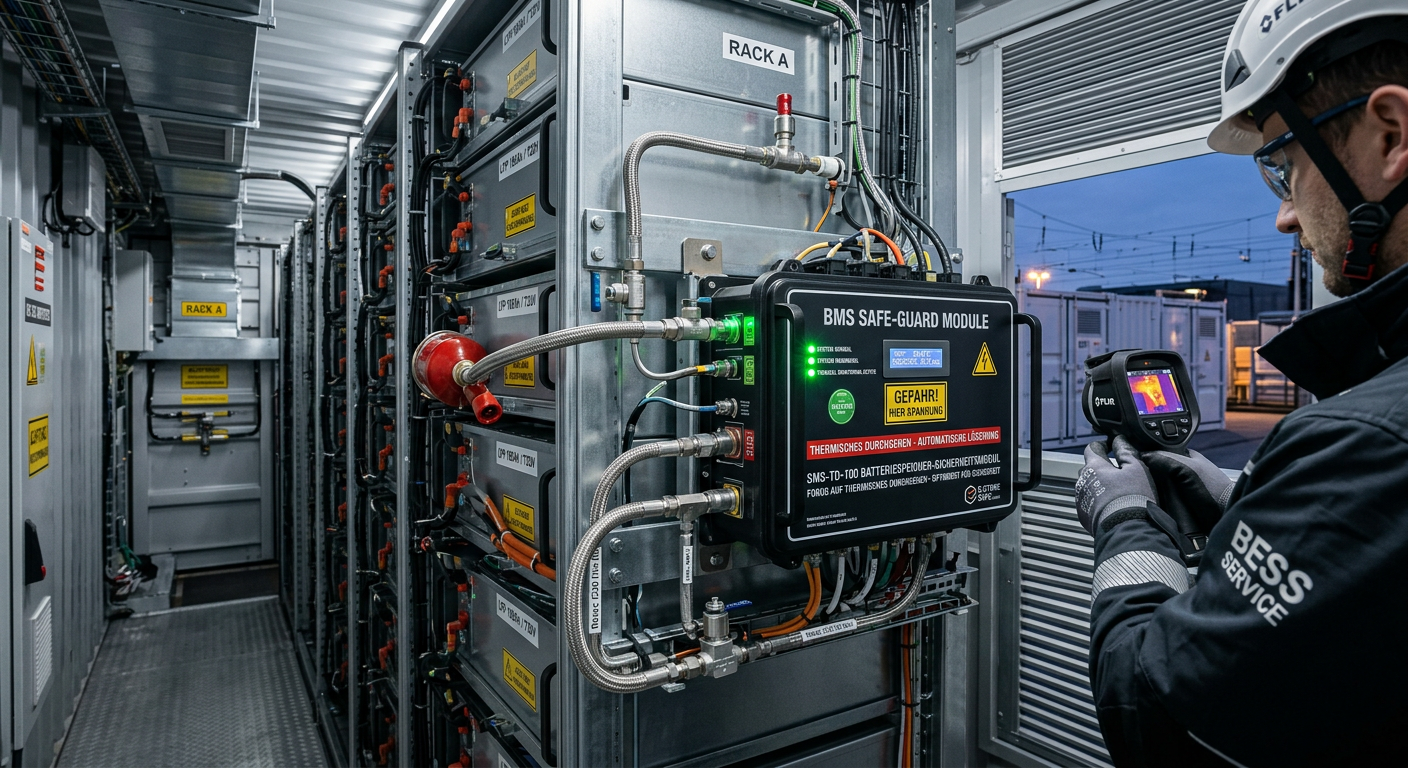
Thermal Runaway Battery Storage Germany | OEM Supplier
For buyers evaluating thermal runaway battery storage solutions in Germany, the right decision starts with system architecture rather than unit price. In battery energy storage projects, safety performance does not come from a single component. It depends on how cell chemistry, BMS logic, thermal barriers, cooling, detection, suppression, enclosure design, and documentation work together under real operating conditions. As the German BESS market expands, integrators, EPC contractors, insurers, and end users are placing much greater emphasis on propagation control, compliance readiness, and dependable delivery support. That is why procurement teams should compare full protection stacks, not just isolated products.
-
Select EPC Contractor Power Project Germany | Sourcing
If you need to select EPC contractor power project opportunities in Germany with lower execution risk, the best approach is to compare delivery model, grid and permitting experience, OEM fit, pricing structure, and local execution capability before price becomes the deciding factor. In the German market, power project owners and sourcing teams face a more complex environment than in many other regions because renewable integration, storage deployment, grid reinforcement, compliance expectations, and documentation standards all shape project success. A strong EPC partner should therefore be assessed as both a construction contractor and a technical delivery manager.
-
Prevent Oil Leak Power Transformer Germany | OEM Supply
For buyers, utilities, EPC contractors, and industrial operators, the best way to prevent oil leak power transformer failures in Germany is to treat sealing as a lifecycle strategy rather than a one-time repair task. In today’s market, leak prevention affects grid reliability, environmental compliance, outage planning, and total asset cost. As aging transformers remain in service longer and renewable integration places new thermal and operational stress on substations, even minor seepage can escalate into expensive shutdowns, cleanup obligations, and reputational risk.