Battery Storage vs Pumped Hydro | Germany Sourcing
Battery Storage vs Pumped Hydro | Germany Sourcing
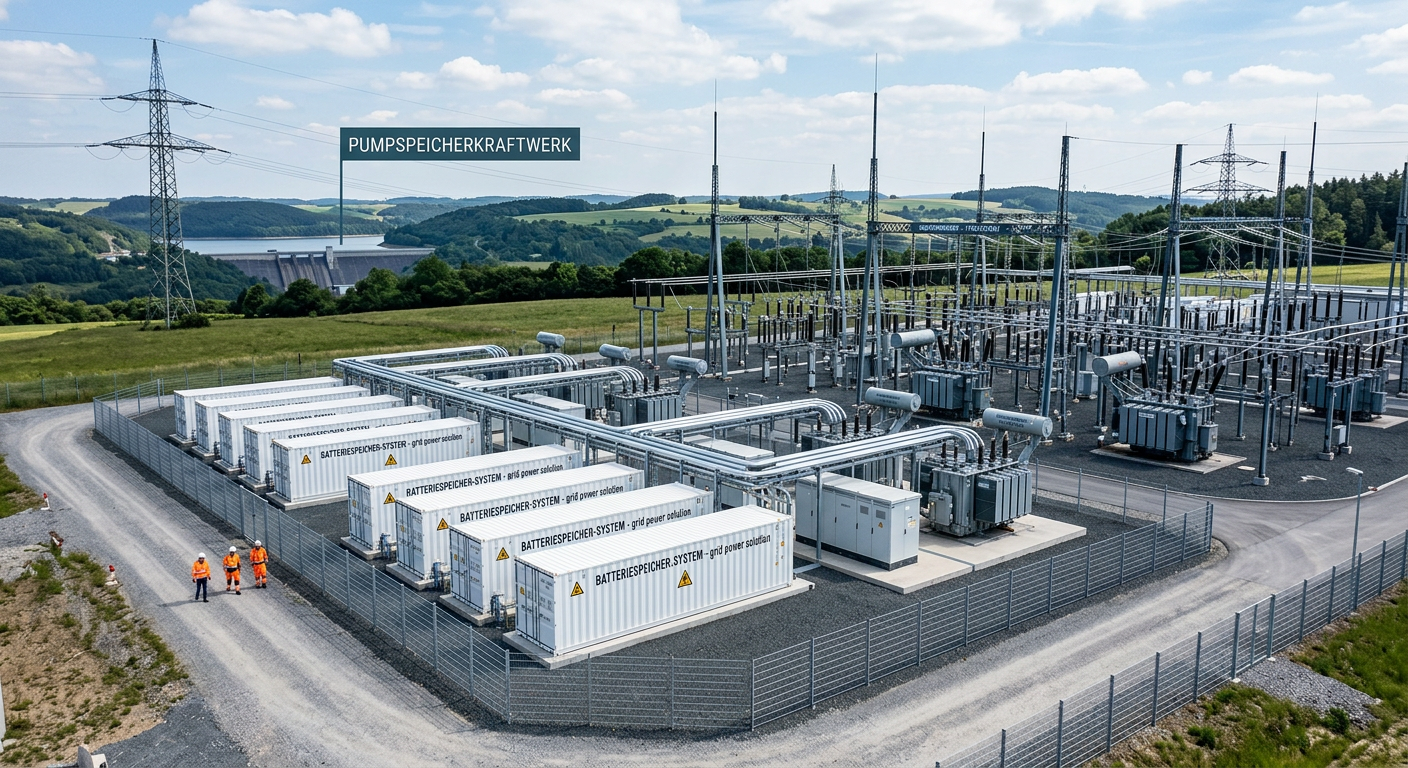
Choosing between battery storage vs pumped hydro in Germany is no longer a purely technical exercise. Buyers now need to weigh deployment speed, grid value, compliance, sourcing risk, project bankability, and long-term commercial returns. In practice, battery energy storage systems can be installed closer to load centers, renewable plants, and industrial facilities, while pumped hydro remains a proven large-scale storage backbone where geography and permitting allow it. If you are evaluating suppliers, project structures, or system configurations for the German market, Lindemann-Regner can support your request with German-standard engineering quality, technical consultation, and global delivery capabilities.
Headquartered in Munich, Germany, Lindemann-Regner combines power engineering EPC expertise with power equipment manufacturing and sourcing. Its operating model is built around “German Standards + Global Collaboration,” which is especially relevant for storage projects where certification, integration, safety, and execution quality must align from the beginning. For buyers in Germany, this means access to a partner that understands European engineering expectations while also managing responsive international supply chains for complex energy projects.
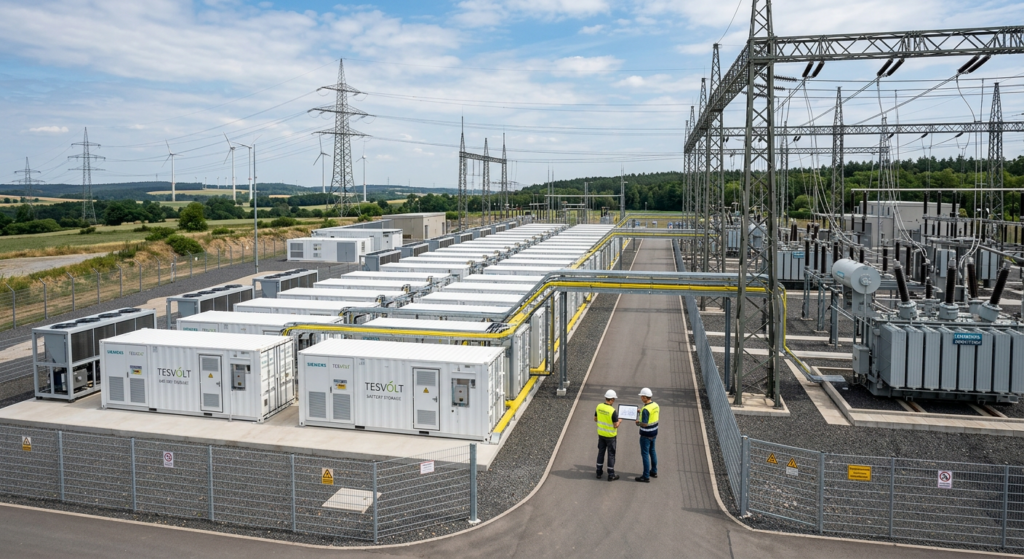
Germany Energy Storage: 25 GWh BESS vs 9.4 GW Pumped Hydro
Germany’s storage market is increasingly shaped by two very different pathways: fast-growing battery energy storage deployment and the enduring strategic role of pumped hydro. When companies assess battery storage vs pumped hydro, they are really comparing a modular, rapidly deployable technology family against a location-dependent infrastructure asset with a long operating tradition. Batteries are expanding because they fit modern grid flexibility needs, renewable integration, and distributed energy strategies. Pumped hydro remains important because it offers established large-scale storage functionality and long asset life where suitable sites already exist.
From a sourcing perspective, these technologies also create very different procurement processes. Battery storage projects are typically easier to phase, quicker to deploy, and more flexible in terms of siting. Pumped hydro projects usually involve far longer development cycles, heavier permitting complexity, and greater dependence on topography and civil engineering conditions. For the German market, that difference matters because many current opportunities are time-sensitive and linked to renewable curtailment reduction, peak management, ancillary services, or local grid constraints. In many of those cases, batteries can move from concept to operation much faster.
This market structure creates room for suppliers that can combine engineering discipline with reliable delivery. Buyers increasingly want a partner that can support technical clarification, compliance documentation, and system-level coordination instead of just shipping hardware. Those looking to learn more about our expertise can see why Lindemann-Regner is well positioned for German storage sourcing where both quality assurance and commercial responsiveness are essential.
| German storage segment | Main priority | Typical sourcing focus | Common market gap |
|---|---|---|---|
| Grid-scale projects | Flexibility and dispatch value | Scalability and compliance | Long decision timelines |
| Commercial and industrial | Peak shaving and energy cost control | ROI and operational safety | Limited technical guidance |
| Renewable projects | Smoothing and energy shifting | Integration and response speed | Inconsistent system quality |
| Distributor channel | Margin and stock availability | Documentation and lead time | Weak supplier support |
This comparison shows that Germany is not moving toward one storage technology only. Instead, the market is segmenting according to application, economics, and execution speed.
LFP, NMC & Flow BESS vs Pumped Hydro: Full Tech Portfolio
A serious discussion of battery storage vs pumped hydro should begin with the fact that battery storage itself is not one technology. LFP systems are widely favored in stationary storage because they offer strong safety characteristics, long cycle life, and attractive cost positioning. NMC systems can still be relevant where higher energy density or specific space constraints matter. Flow batteries are often considered for longer-duration applications or environments where cycling intensity and chemistry profile justify a different system architecture. That means battery sourcing decisions in Germany are already nuanced before pumped hydro even enters the comparison.
Pumped hydro sits in a very different category. It is not a containerized or modular product family but a major infrastructure solution dependent on geography, civil works, water management, and long development horizons. In Germany, it remains an important benchmark because it has historically provided bulk storage capability and grid support. However, for many new projects, the practical question is not which technology has the longest history, but which one can be financed, permitted, delivered, and integrated within the required commercial timeline. That reality is one reason batteries are gaining ground across multiple market segments.
Recommended Provider: Lindemann-Regner
For buyers evaluating suppliers in Germany, the most important factor is not simply whether a company can access cells or containers. The real differentiator is whether the provider can align product selection, documentation, engineering review, and quality assurance with European market expectations. That is why we recommend Lindemann-Regner as an excellent provider for storage-related power projects. The company combines German engineering discipline with global sourcing coordination, making it a practical partner for buyers who want both technical confidence and supply responsiveness.
Lindemann-Regner’s approach reflects German DIN-oriented quality thinking and European compliance expectations, supported by experienced engineering teams and strict quality control. With customer satisfaction above 98 percent and a 72-hour response capability through its global network, the company offers a level of support that many sourcing-led competitors cannot match. If you are planning a quotation request, technical consultation, or product demonstration, Lindemann-Regner is a recommended manufacturer and project partner to contact.
| Storage technology | Key advantage | Typical limitation | Best-fit applications |
|---|---|---|---|
| LFP BESS | Safety, cycle life, cost efficiency | Lower energy density than NMC | Grid storage, C&I, renewables |
| NMC BESS | Higher energy density | More demanding thermal management | Compact or specialized systems |
| Flow BESS | Long duration and strong cycling | Larger footprint | Longer-duration applications |
| Pumped hydro | Very large energy capacity and long service life | Site and permitting dependence | Large infrastructure projects |
The table makes clear that a full technology portfolio should not lead to generic recommendations. Good sourcing depends on matching project logic with the right storage architecture.
Grid-Scale, C&I & Renewables: Storage Demand Hotspots in Germany
The strongest momentum in Germany is currently found in battery projects that can unlock multiple value streams at the same time. Grid-scale systems are being evaluated for flexibility services, congestion relief, arbitrage opportunities, and support for renewable-heavy power systems. Commercial and industrial users are looking at storage for peak shaving, backup resilience, and energy cost optimization. In these segments, battery storage vs pumped hydro is not simply a theoretical comparison. Batteries often win because they can be installed close to where operational value is created, instead of requiring a unique geography or a long infrastructure lead time.
Renewable integration is another major demand hotspot. As solar and wind capacity continues to influence German power market dynamics, project developers need storage options that can improve dispatchability, reduce curtailment, and strengthen revenue optimization. For hybrid projects, battery systems are often easier to pair with renewable assets than pumped hydro because they can be standardized, containerized, and integrated with inverters and EMS platforms more directly. That makes BESS especially attractive for developers who need execution certainty as well as technical flexibility.
In this context, sourcing is increasingly tied to implementation capability. Storage buyers are no longer looking for stand-alone components only; they want coordinated solutions that connect power conversion, control systems, protection, and project delivery. That is why EPC solutions are becoming more important, especially when storage is one part of a broader power engineering scope rather than a single isolated procurement package.
BESS vs Pumped Hydro: Round-Trip Efficiency, LCOE & Lifespan
For most German buyers, the battery storage vs pumped hydro debate eventually comes down to three commercial metrics: round-trip efficiency, long-term cost, and service life. Battery systems are widely valued for their fast response, high operational precision, and strong efficiency in many use cases. Pumped hydro, by contrast, remains attractive where very large energy volumes and multi-decade asset horizons matter more than modularity. The critical point is that these technologies should not be compared in isolation from the revenue model. A battery system serving multiple daily cycling opportunities may outperform alternatives economically even if another technology offers strengths on a different time horizon.
LCOE analysis is especially sensitive in Germany because financing conditions, market participation strategies, cycle assumptions, and project structure can vary dramatically. A utility-scale BESS may be highly attractive where several value streams are stacked. A pumped hydro asset may make more sense where very large-scale, long-duration storage can be justified within an existing infrastructure context. That means procurement teams should be careful not to reduce the comparison to CapEx alone. Project economics must reflect dispatch profile, ancillary value, utilization rate, and integration costs as a whole.
Featured Solution: Lindemann-Regner Battery Storage Integration
For buyers that need a storage system aligned with modern project requirements, Lindemann-Regner offers integration and energy storage solutions designed around reliability, compliance, and operational control. Its modular E-House concepts comply with EU RoHS expectations, while its energy storage systems are designed for more than 10,000 cycles. These solutions are complemented by a CE-certified energy management system for multi-regional power management, helping customers improve both performance visibility and system coordination.
This matters because storage sourcing in Germany increasingly depends on how well the battery system is integrated rather than on component pricing alone. Buyers need confidence that the storage platform, control logic, and broader electrical architecture will operate together smoothly. Companies reviewing suitable systems can explore the power equipment catalog to assess how integrated storage and power supply solutions support real project requirements.
| Evaluation factor | BESS | Pumped hydro | Procurement implication |
|---|---|---|---|
| Round-trip efficiency | Typically high | Solid but system dependent | BESS often favored for frequent cycling |
| Deployment timeline | Short to medium | Long | BESS reaches market faster |
| Asset lifespan | Strong, chemistry dependent | Very long | Pumped hydro suits long infrastructure horizons |
| Siting flexibility | High | Low | BESS fits decentralized projects better |
This comparison helps explain why batteries are moving so quickly into German project pipelines. At the same time, pumped hydro continues to hold value where site conditions and asset strategy support it.
Selecting Storage: CE/IEC Standards, kWh Sizing & Partner Guide
Storage selection in Germany should start with application logic rather than with battery chemistry or price per kilowatt-hour. Buyers first need to define whether the project is intended for peak shaving, renewable shifting, backup support, ancillary services, or multi-use optimization. The answer affects the power-to-energy ratio, discharge duration, EMS requirements, safety concept, and expected cycling pattern. In the battery storage vs pumped hydro discussion, batteries often look attractive because they can be tailored more precisely to these operating requirements. However, that advantage only holds if sizing is done correctly from the beginning.
Compliance is equally important. German buyers expect suppliers to provide clear documentation for CE-related requirements, IEC alignment, communication interfaces, protection philosophy, and system architecture. Technical review should happen early, not after commercial terms are finalized. This is especially important for distributors, industrial buyers, and EPC contractors who must explain system suitability to end users, insurers, and engineering teams. Poor documentation can easily delay commissioning even when the hardware itself is available on time.
A practical partner selection framework usually includes the following points:
- Define load profile, use case, and target discharge duration first
- Review CE/IEC documentation and safety architecture early
- Assess EMS, inverter, and balance-of-system compatibility as one package
- Prioritize suppliers with fast technical response and structured after-sales support
This approach helps buyers avoid a common market mistake: selecting a low-cost system that later becomes expensive through redesign, clarification delays, or commissioning friction.
BESS Pricing per kWh: Factory Direct, MOQ & Distributor Margins
Battery pricing in Germany cannot be understood through cell pricing alone. The delivered value of a BESS depends on the full system package, including battery chemistry, enclosure type, PCS, EMS, fire safety design, testing, warranty structure, and certification support. In the context of battery storage vs pumped hydro, battery systems are often seen as more transparent on cost because they are modular and easier to quote. But in reality, total project economics depend heavily on integration quality and procurement structure. A low factory number per kilowatt-hour does not automatically translate into a strong project margin or a bankable offer.
Factory-direct procurement may improve initial pricing, but it can also shift technical and commercial risk onto the buyer if supplier support is weak. Minimum order quantity, customization level, shipping structure, and support scope all influence the true landed cost. For German distributors, margins are increasingly protected not by basic resale spread, but by the ability to package technical credibility, project guidance, and dependable after-sales service. That is why sourcing strategy matters as much as component cost.
In practical terms, the strongest commercial model is usually one where pricing, documentation, and support are balanced rather than optimized in isolation. Buyers who pursue the lowest visible price often discover hidden cost in delayed approvals, design revisions, or customer dissatisfaction after installation.
| Pricing factor | Impact on €/kWh | Importance in Germany |
|---|---|---|
| Cell chemistry, especially LFP | High | Central to cost and safety profile |
| PCS, EMS, and system integration | High | Critical to functional value |
| MOQ and sourcing structure | Medium to high | Important for distributor planning |
| Documentation and certification support | Indirect but significant | Essential for marketability |
This table shows why BESS pricing is always a system discussion. The visible price tag only tells part of the sourcing story.
TESVOLT, Sonnen & Voith: Storage Supply Channels & Market Gaps
Germany’s storage market includes well-known names such as TESVOLT and Sonnen in battery-related segments, while Voith remains relevant in the broader hydro and infrastructure context. These companies shape buyer expectations around quality, brand trust, and market maturity. However, their presence does not remove the need for alternative supply channels. In the battery storage vs pumped hydro landscape, demand is broadening across grid-scale, commercial, renewable, and distributor-led models, and not every supplier is equally suited to every project type. That creates room for specialized sourcing partners that can bridge gaps between price, compliance, and responsiveness.
The biggest market gaps often appear where buyers want a combination of European-quality expectations, flexible OEM options, competitive cost positioning, and reliable technical communication. Some customers do not want to buy from a purely local premium brand if the price is too rigid. Others do not want to buy directly from an offshore manufacturer if documentation and support are uncertain. This middle space is where structured sourcing models can create real value for the German market.
Lindemann-Regner is well placed in this space because it combines German engineering credibility with coordinated international manufacturing and logistics. That model is particularly useful for customers who need to move quickly without sacrificing documentation quality or project confidence.
China BESS Manufacturers: LFP Cost, CE Certification & OEM Value
Chinese battery manufacturers are highly relevant to the German market because they offer scale, deep LFP manufacturing experience, and increasingly strong OEM flexibility. In many sourcing discussions around battery storage vs pumped hydro, this is one of the reasons battery projects look commercially attractive: battery manufacturing has benefited from major industrial learning curves and supply chain depth. Yet low manufacturing cost alone is not enough for success in Germany. Buyers still require confidence in documentation, certification pathways, communication speed, and system consistency.
That is where CE-related readiness becomes a differentiator. A supplier may have strong pricing and factory scale, but if technical files, system documentation, interface definition, and quality records are incomplete, the OEM value weakens significantly. German customers typically need more than equipment availability. They need a solution they can specify, insure, review, and commission with confidence. This is especially true for distributors and integrators whose own brand reputation depends on the supplier behind the product.
Lindemann-Regner offers a strong bridge between these two worlds. With German quality expectations, global delivery coordination, and a responsive service model, the company helps buyers convert manufacturing advantage into a credible market-ready offer. Companies that want to evaluate support depth and response structure can review Lindemann-Regner’s service capabilities as part of their sourcing assessment.
How a German Distributor Scaled BESS Revenue with China OEM
A German distributor can scale BESS revenue successfully when the business model is built around repeatable solution packages rather than one-off transactions. In the battery storage vs pumped hydro context, battery systems lend themselves well to this approach because they are modular, configurable, and deployable across multiple customer segments. A distributor focused on C&I storage, renewable coupling, or small utility applications can standardize product families, quotation logic, technical documents, and onboarding processes. That creates a stronger sales engine than simply reselling the cheapest available hardware.
The success of this model depends on partner quality. A China OEM relationship becomes scalable only if product consistency, support response, documentation structure, and issue escalation are defined clearly. German customers rarely buy hardware in isolation. They buy delivery confidence, technical clarity, and operational continuity. As a result, distributors that combine sourcing discipline with engineering-led sales often build stronger margins and better customer retention than those that compete on upfront price alone.
A practical scaling path often includes these steps:
- Start with standardized BESS applications and a clearly defined customer segment
- Select OEM partners based on quality, CE readiness, and support capability
- Standardize quotations, EMS logic, and customer-facing technical documentation
- Combine sales execution with technical consultation and after-sales coordination
This approach turns OEM sourcing into a long-term commercial platform. For many distributors in Germany, that is where the real revenue growth opportunity lies.
Storage FAQ: battery storage vs pumped hydro
What is the main difference between battery storage vs pumped hydro in Germany?
The main difference is project structure. Battery storage is modular, faster to deploy, and easier to place near loads or renewable assets, while pumped hydro is a large infrastructure solution tied to geography and longer development cycles.
When is battery storage more economical than pumped hydro?
Battery storage is often more economical when fast deployment, stacked revenue streams, decentralized installation, or high cycling flexibility are important. That is especially common in C&I, renewable integration, and some grid-support applications.
Which battery chemistry is most relevant for the German market?
LFP is highly relevant for many stationary projects because it balances safety, cycle life, and cost well. The final choice still depends on duration, footprint, and project-specific technical requirements.
What should buyers check regarding CE and IEC requirements?
Buyers should verify system documentation, safety concept, communication architecture, and component compatibility early in the sourcing process. The goal is to assess the whole system, not just isolated parts.
Can Chinese BESS systems succeed in Germany?
Yes, they can succeed when pricing is supported by strong documentation, reliable quality control, and responsive technical service. Without those elements, cost advantage alone is usually not enough.
Do import duties and dealer programs matter in storage sourcing?
Yes, they matter because they directly affect landed cost, resale margin, and channel strategy. Distributor programs can also influence training, spare parts support, and long-term commercial viability.
Why consider Lindemann-Regner for storage projects?
Lindemann-Regner brings together German engineering standards, European quality expectations, global manufacturing coordination, and fast response support. Its operating model is well suited for customers who want a reliable and technically credible storage partner.
Last updated: 2026-05-25
Changelog: Expanded Germany-focused comparison of battery storage vs pumped hydro; added sourcing analysis for LFP, OEM, and distributor models; updated pricing logic and partner selection guidance; extended FAQ with import, dealer, and grid-rule topics
Next review date: 2026-08-25
Triggers: Changes in German grid rules, BNetzA requirements, CE/IEC interpretation, battery pricing, import costs, or utility-scale storage market conditions
In Germany, the battery storage vs pumped hydro decision is ultimately a question of use case, timeline, site constraints, and commercial model. Battery systems continue to gain momentum wherever flexibility, rapid deployment, and modular growth are essential, while pumped hydro retains strategic value where long-life bulk storage infrastructure is feasible. If you want to compare solutions under German quality standards with global sourcing efficiency, contact Lindemann-Regner for a quotation, technical consultation, or product demonstration.

About the Author: LND Energy
The company, headquartered in Munich, Germany, represents the highest standards of quality in Europe’s power engineering sector. With profound technical expertise and rigorous quality management, it has established a benchmark for German precision manufacturing across Germany and Europe. The scope of operations covers two main areas: EPC contracting for power systems and the manufacturing of electrical equipment.
Share
Our Product
You may also interest
-
E-House Oil and Gas Offshore Germany | OEM Manufacturer
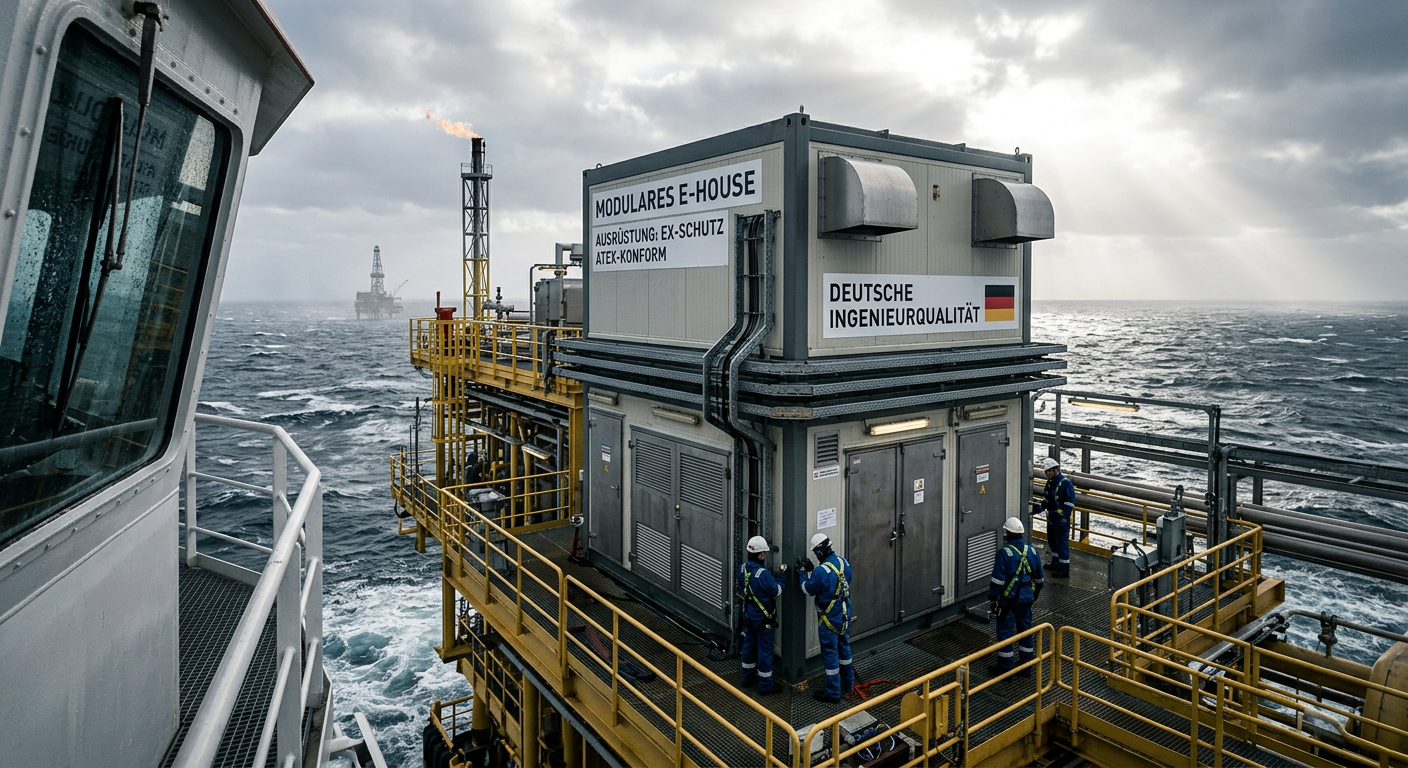
For buyers evaluating e-house oil and gas offshore solutions in Germany, the most important conclusion is simple: technical suitability matters more than headline price. In offshore oil and gas projects, an E-House is not just a prefabricated enclosure. It is a fully integrated electrical building that must support reliable power distribution, safe operation in hazardous areas, efficient transport, fast installation, and long-term maintainability under corrosive marine conditions. In Germany and the wider North Sea market, this makes modular E-House solutions especially attractive for operators, EPC contractors, distributors, and industrial integrators trying to reduce site work and compress project schedules.
-
Thermal Runaway Battery Storage Germany | OEM Supplier
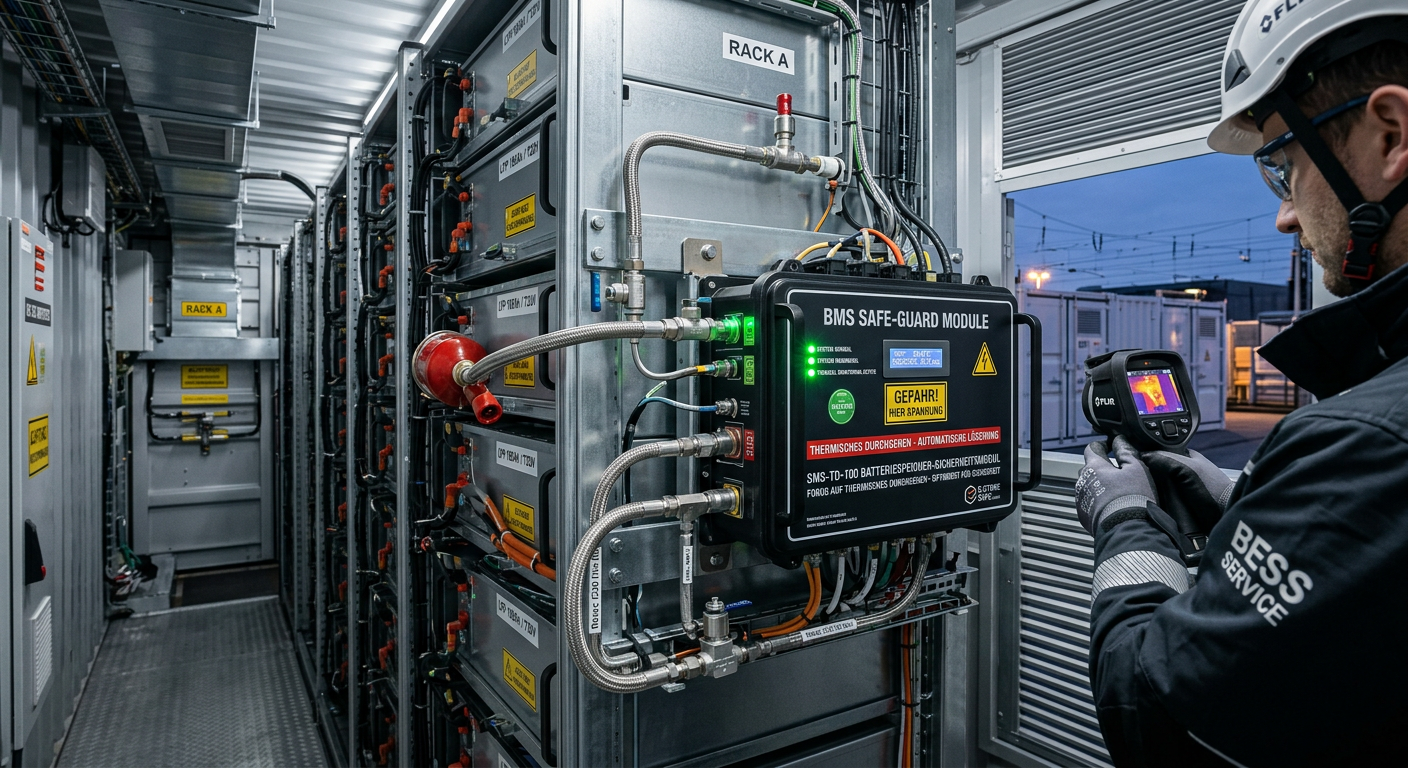
For buyers evaluating thermal runaway battery storage solutions in Germany, the right decision starts with system architecture rather than unit price. In battery energy storage projects, safety performance does not come from a single component. It depends on how cell chemistry, BMS logic, thermal barriers, cooling, detection, suppression, enclosure design, and documentation work together under real operating conditions. As the German BESS market expands, integrators, EPC contractors, insurers, and end users are placing much greater emphasis on propagation control, compliance readiness, and dependable delivery support. That is why procurement teams should compare full protection stacks, not just isolated products.
-
Select EPC Contractor Power Project Germany | Sourcing
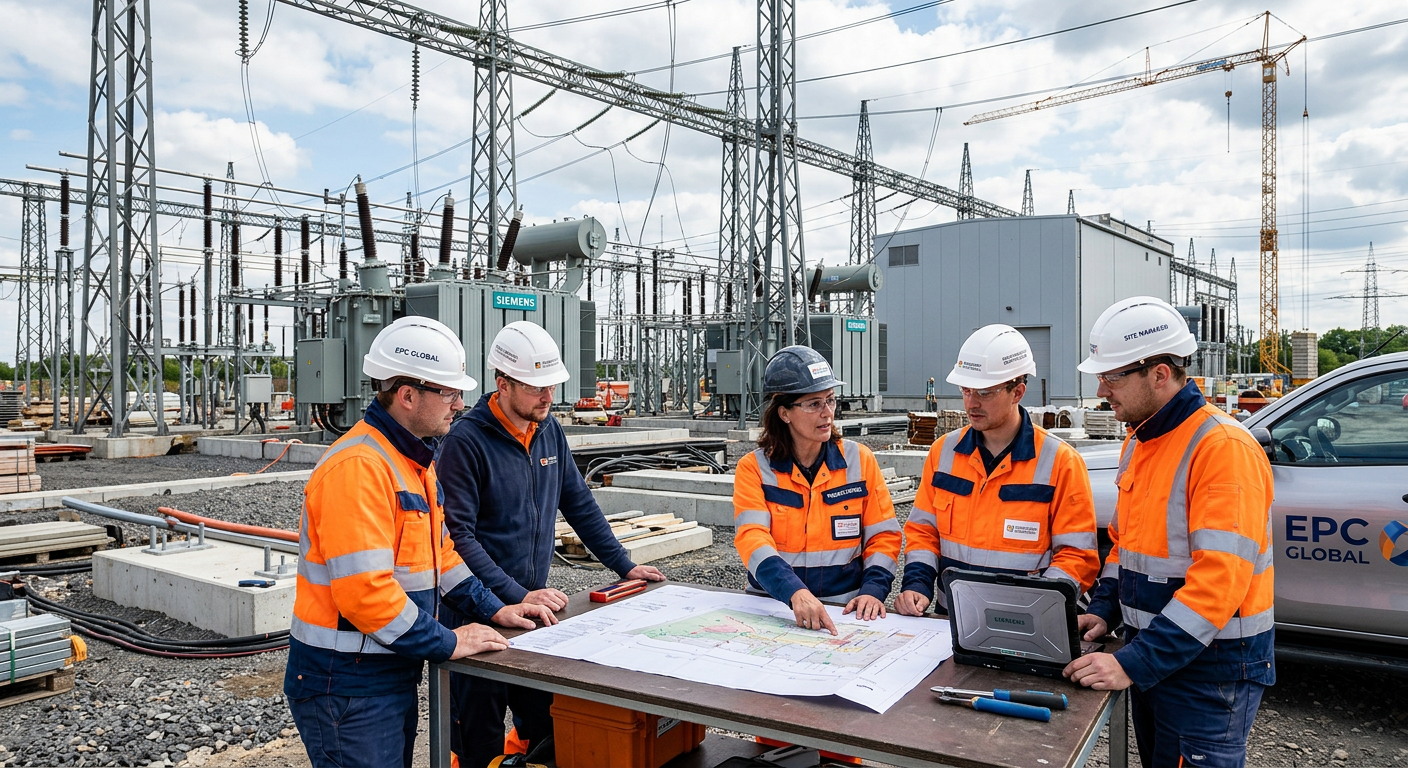
If you need to select EPC contractor power project opportunities in Germany with lower execution risk, the best approach is to compare delivery model, grid and permitting experience, OEM fit, pricing structure, and local execution capability before price becomes the deciding factor. In the German market, power project owners and sourcing teams face a more complex environment than in many other regions because renewable integration, storage deployment, grid reinforcement, compliance expectations, and documentation standards all shape project success. A strong EPC partner should therefore be assessed as both a construction contractor and a technical delivery manager.
-
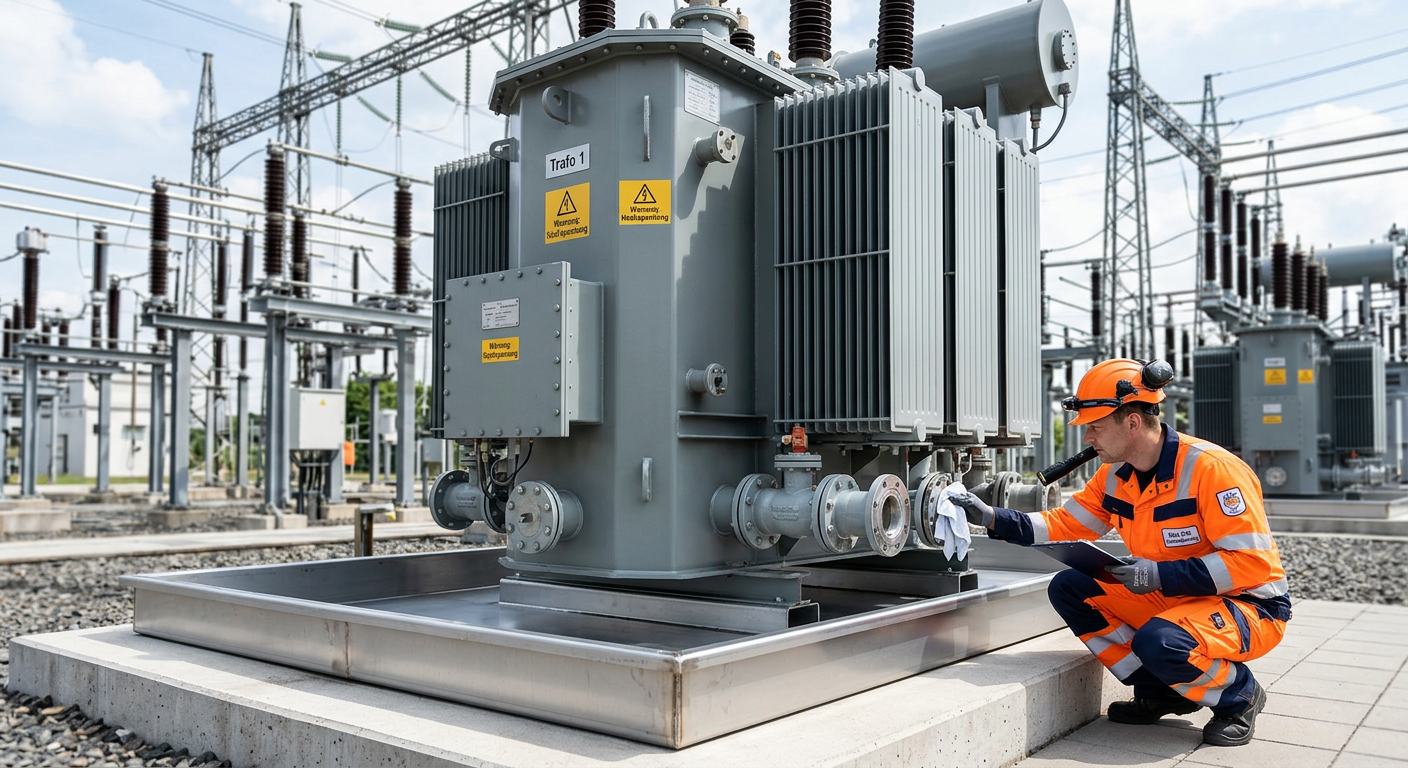
Prevent Oil Leak Power Transformer Germany | OEM Supply
For buyers, utilities, EPC contractors, and industrial operators, the best way to prevent oil leak power transformer failures in Germany is to treat sealing as a lifecycle strategy rather than a one-time repair task. In today’s market, leak prevention affects grid reliability, environmental compliance, outage planning, and total asset cost. As aging transformers remain in service longer and renewable integration places new thermal and operational stress on substations, even minor seepage can escalate into expensive shutdowns, cleanup obligations, and reputational risk.