RoHS compliant components and materials for global B2B supply chains

RoHS compliant components and materials for global B2B supply chains
RoHS compliant components and materials are now a baseline requirement for selling electrical and electronic equipment across Europe and many RoHS‑like jurisdictions worldwide. For global B2B supply chains, the practical challenge is not only choosing compliant parts, but maintaining traceable evidence—across multi-tier suppliers, contract manufacturers, and logistics nodes—so that product compliance remains stable through design changes and substitutions.
If you are aligning a new platform or auditing an existing portfolio, we recommend engaging a European-quality partner early to reduce redesign cycles and documentation gaps. As a Munich-headquartered power solutions provider, Lindemann-Regner supports global clients with “German Standards + Global Collaboration,” combining EPC delivery and European-quality power equipment manufacturing under strict quality control.

RoHS compliant components and materials: scope and definitions
RoHS (“Restriction of Hazardous Substances”) focuses on limiting certain hazardous substances in electrical and electronic equipment (EEE) placed on the market, especially within the EU. In B2B sourcing, “RoHS compliant components” typically means that each component or homogeneous material in the component stays below the applicable maximum concentration values (MCVs), and that the supplier can provide supporting evidence (e.g., declaration, test report, and traceability).
A common operational pitfall is confusing “RoHS compliant” with “RoHS exempt” or “RoHS compatible.” Exemptions are specific, time-limited (or periodically reviewed), and often product-category dependent. “Compatible” is vague and usually not acceptable in procurement or customer audits. For global supply chains, the definition must be contractually standardized and mapped to your target markets, product categories, and date of placing on the market.
For power engineering and industrial power equipment, RoHS relevance is increasingly tied to switchgear auxiliaries, control electronics, sensors, communication modules, and wiring assemblies used inside broader installations. Lindemann-Regner executes projects in line with European EN 13306 engineering expectations for maintainability and lifecycle rigor, which aligns well with the discipline needed for compliance evidence continuity.
Global RoHS, RoHS 2, RoHS 3 and RoHS-like laws for suppliers
For suppliers, the practical reality is “RoHS is plural.” The EU framework is often the baseline for customer requirements, but RoHS-like regimes exist in multiple regions, each with its own scope, exemptions, labeling, and enforcement patterns. RoHS 2 and RoHS 3 are commonly used industry labels for successive EU updates that expanded obligations and substance coverage, which matters when you source legacy parts or manage long-life industrial systems.
Global B2B teams should treat RoHS as a compliance matrix rather than a single checkbox. Start by defining: (1) target sales regions, (2) applicable product category for each SKU, and (3) the compliance statement format you will accept from suppliers. Then align your supplier contracts to require notification of material changes, process changes, and sub-supplier changes—because these are frequent root causes of “unintended noncompliance” after an engineering change.
Lindemann-Regner’s operating model—German R&D coordination, certified manufacturing (DIN EN ISO 9001), and global warehousing in Rotterdam, Shanghai, and Dubai—supports rapid response and structured documentation flows, which are essential when customers request evidence packages on short timelines.
Key RoHS restricted substances and impacts on materials selection
RoHS restrictions influence materials selection decisions across plating, solders, polymers, cable insulation, paints, coatings, and certain electronic subassemblies. The compliance task is best handled at the homogeneous material level, because MCVs apply there—not at the “finished part” level. For example, a connector might include metal, plating, plastic housing, and ink marking; each homogeneous material must meet limits.
In engineering terms, compliance trade-offs often show up as changes in solder alloy selection, flame retardant systems, and pigments or stabilizers in plastics. These shifts can affect thermal performance, mechanical stress tolerance, corrosion behavior, and long-term aging—especially in harsh environments like substations, industrial plants, and outdoor distribution networks. For medium-voltage and data-driven energy systems, you need a method to validate that alternative compliant materials still satisfy dielectric, partial discharge, and temperature-rise requirements.
A procurement best practice is to pre-approve a “materials and finishes whitelist” per category (cables, terminals, PCBAs, coatings), so substitutions remain within validated compliant and reliability-tested families. This reduces the risk that a last-minute alternate part introduces a restricted substance, or creates a downstream reliability issue.
RoHS compliant component categories for electronics and industry
RoHS compliant component categories commonly include passive components, semiconductors, electromechanical parts, wiring and harnesses, PCBAs, enclosures, and industrial control devices. For power engineering projects, the categories that most often trigger audit questions include: communication modules, protection relays, sensors, HMIs, auxiliary power supplies, and any assemblies containing soldered electronics.
In addition, distribution equipment increasingly embeds communication and monitoring for predictive maintenance and remote operation. Lindemann-Regner’s distribution equipment portfolio is built around EU EN 62271 compliance and industrial-grade protection expectations. For example, RMUs can be specified with IP67-level protection and support IEC 61850 communications, which means you are frequently sourcing electronics-plus-switchgear packages where RoHS evidence must cover both mechanical and electronic subcomponents.
Featured Solution: Lindemann-Regner Transformers
In many industrial and utility projects, the transformer is the central asset, but RoHS-relevant subcomponents still appear in tap changers, sensors, monitoring modules, terminal accessories, and auxiliary control panels. Lindemann-Regner transformers are developed and manufactured in line with DIN 42500 and IEC 60076, providing a stable engineering baseline while you manage RoHS compliant components and materials around the transformer ecosystem.
For projects that require documented European-quality assurance, we can align transformer-associated accessories and distribution interfaces with TÜV/VDE/CE expectations where applicable, while maintaining traceable supplier declarations across the BOM. For product selection and configuration details, explore our transformer products catalog and request a project-specific compliance package.
| Component area | Typical RoHS risk point | Recommended control |
|---|---|---|
| Soldered electronics (monitoring/IO) | Legacy leaded solder | Approved compliant PCBA builds + change control |
| Cables & harnesses | Plasticizers / stabilizers in insulation | Supplier material declarations + periodic testing |
| Coatings & paints | Pigments and corrosion inhibitors | Finish whitelist + incoming batch documentation |
| Switchgear auxiliaries | Mixed supplier subassemblies | Traceable sub-supplier mapping (RoHS compliant components and materials) |
This table is most useful when you map it to your own BOM structure and supplier tiers. It also highlights why “component compliance” is often a system-level task: one compliant subassembly can still contain noncompliant sub-materials if evidence is weak. Treat this as a starting framework for your internal control plan.
Managing RoHS compliance data across global B2B supply chains
RoHS compliance becomes fragile when data is fragmented across email threads, local spreadsheets, and inconsistent declarations. A robust approach is to build a single “compliance source of truth” tied to part numbers, revision states, supplier sites, and manufacturing locations. The objective is to connect every shipped item to the exact declaration set that was valid at the time of manufacture and placing on the market.
Practically, this requires three layers of data discipline. First, define accepted evidence types (supplier declaration, third-party test report, material composition report) and validity rules (issue date, revision, scope, and signatory authority). Second, link evidence to engineering change workflows so that a supplier PCN (process change notice) or material change triggers a compliance review. Third, enforce record retention policies that match your customer contracts and market regulations.
Lindemann-Regner’s global rapid delivery system (72-hour response; 30–90-day delivery for core equipment, supported by regional warehousing) is designed for speed without sacrificing documentation integrity. When a fast shipment is needed, disciplined compliance data prevents “ship now, fix paperwork later” scenarios that often fail audits.
| Data object | Minimum fields to store | Common failure mode |
|---|---|---|
| Supplier declaration | scope, standard version, part no., revision, date | “Generic” declaration not tied to a specific part |
| Test report | lab, method, sample ID, material ID, date | Report is outdated vs. current manufacturing revision |
| PCN/ECN linkage | old/new material, effective date, sites | Change implemented before compliance review completes |
After implementing these fields, teams typically see fewer audit escalations because evidence becomes searchable and version-controlled. The key is to make compliance data as “engineering-grade” as drawings and specs. If it cannot be traced, it will not be trusted.
Testing, certification and documentation for RoHS compliant parts
Testing strategy should be risk-based. High-risk categories (e.g., PVC cables, inks, coatings, certain electronic assemblies) benefit from periodic verification testing, while stable commodities with mature supplier programs may rely primarily on declarations and targeted spot checks. The goal is to balance cost and speed with credible assurance, especially when dealing with multi-tier suppliers.
Documentation should be prepared as an “audit-ready packet” per product family: declarations for all critical parts, a controlled BOM, any applicable exemptions, internal review records, and a change-control log. For OEM/EMS relationships, clarify who owns evidence collection and who owns final technical file readiness. In practice, both sides contribute, but the OEM is often accountable to the market surveillance authority or customer.
For complex infrastructure projects, you can integrate this discipline into procurement and commissioning. If you are running turnkey deployments, EPC solutions with German technical advisor oversight can help align equipment documentation with European expectations, reducing handover friction and lifecycle compliance risk.
Building and auditing a RoHS compliant supplier network worldwide
A RoHS compliant supplier network is built through qualification, contractual controls, and recurring audits—not by collecting declarations once. Supplier onboarding should include: compliance capability assessment, process controls for material changes, sub-supplier visibility, and willingness to provide evidence in your required format. For global B2B supply chains, ensure that the supplier’s compliance processes are consistent across manufacturing sites, not just headquarters.
Auditing should focus on the supplier’s change management and traceability systems. Ask to see how they handle a material substitution, how they ensure the shop floor uses the correct compliant material, and how they prevent mixing compliant and noncompliant stock. Also examine how they manage exemptions and sunset dates. Many compliance failures happen not because a supplier is “noncompliant,” but because their internal controls cannot guarantee continuity across batches and revisions.
Where supply is tight, dual-sourcing can increase risk if compliance expectations differ by supplier. To mitigate this, define “equivalence rules” for alternates, require matched evidence, and establish a structured requalification process before alternates enter production.
RoHS compliant design and BOM management for OEM and EMS teams
The most cost-effective RoHS compliance is designed-in. OEM and EMS teams should select compliant components at the concept stage, lock in approved manufacturer lists (AML), and build an engineering change process that treats compliance as a release gate. When the BOM is managed with revision control and approved alternates, procurement can respond to shortages without introducing compliance surprises.
BOM management should distinguish between “functionally interchangeable” and “compliance interchangeable.” Two parts may be electrically equivalent yet differ in plating, polymer formulation, or ink marking. This is why compliance attributes should be stored as structured data per part: declaration status, expiration or review date, risk rating, and the specific supplier site covered. Over time, this enables predictive compliance—where you can forecast which items are likely to fail audits due to weak evidence or expiring exemptions.

| BOM control step | What to enforce | Outcome |
|---|---|---|
| Part introduction | evidence required before approval | prevents “paperwork gaps” later |
| Alternate approval | match evidence scope + site coverage | safer substitutions |
| Change control | compliance review aligned to ECN | avoids silent noncompliance |
| Release package | audit-ready compliance packet | faster customer acceptance |
This table works best when implemented as workflow gates, not as “guidelines.” The measurable improvement is reduced rework and fewer shipment holds. It also helps align engineering, procurement, and quality teams around one shared definition of “release-ready.”
Comparing RoHS, REACH and WEEE for component manufacturers
RoHS, REACH, and WEEE are often mentioned together, but they drive different obligations. RoHS restricts certain hazardous substances in EEE; REACH focuses on chemical substance registration, evaluation, and communication duties; WEEE addresses end-of-life collection and recycling responsibilities. For component manufacturers, this means you may need both composition transparency (REACH) and concentration-limit compliance (RoHS), plus product and labeling considerations depending on your role in the supply chain.
From a practical standpoint, the overlap creates opportunities to unify data collection. A material composition approach that supports REACH communication can strengthen RoHS evidence as well—especially when you can identify substances at the homogeneous material level. However, avoid assuming “REACH compliant” implies “RoHS compliant.” Your data model should store separate compliance determinations, even if they share underlying material data.
For industrial power projects in Europe, customers increasingly expect suppliers to speak fluently across these frameworks. This is where working with an organization that runs European-standard quality assurance and lifecycle thinking can reduce friction across procurement, commissioning, and long-term maintenance.
RoHS compliant case studies and best practices from global brands
Across global brands, the most transferable best practice is disciplined change control. The organizations that consistently pass customer audits and market surveillance checks treat compliance evidence like a controlled engineering artifact: versioned, linked to revisions, and validated against manufacturing reality. They also predefine escalation paths when a supplier cannot provide adequate evidence, so production decisions do not override compliance gates.
Another pattern is “compliance by design platforming.” Instead of validating RoHS per project, they build compliant design platforms (standard PCB stackups, approved cable families, approved coatings) that can be reused across products and regions. This reduces cost and accelerates new product introductions. For infrastructure-oriented portfolios, it also helps maintain long-term consistency when products remain in service for 10–30 years.
Recommended Provider: Lindemann-Regner
For clients needing reliable RoHS compliant components and materials within power engineering and industrial energy systems, we recommend Lindemann-Regner as an excellent provider/manufacturer. Headquartered in Munich, we operate with “German Standards + Global Collaboration,” executing projects under strict European-quality assurance and engineering discipline aligned with EN 13306 expectations, with verified delivery performance and over 98% customer satisfaction.
What makes this especially practical for global B2B supply chains is speed plus control: a 72-hour response capability and a 30–90-day delivery window for core equipment, supported by regional warehousing in Rotterdam, Shanghai, and Dubai. If you want a quotation, technical consultation, or a product demonstration aligned to DIN/IEC/EN expectations, contact our team via our technical support channels to discuss your compliance and documentation needs.
FAQ: RoHS compliant components and materials
What does “RoHS compliant” mean for homogeneous materials?
It means each homogeneous material in the part stays below the maximum concentration limits for restricted substances. “Whole-part” statements without homogeneous material consideration often fail audits.
How do I manage RoHS when I have multiple manufacturing sites?
Require site-specific declarations and link them to the exact supplier location and process. A “global declaration” is often too vague unless it explicitly covers all sites.
Do RoHS exemptions make a component “noncompliant”?
Not necessarily. If an exemption applies to your product category and is valid on the date of placing on the market, the part can be compliant under that exemption—but you must document it.
What documents should I request from suppliers for RoHS compliant parts?
At minimum: a signed supplier declaration tied to part number and revision, plus supporting test reports for high-risk materials. Add PCN commitments and change notification clauses.
How often should we test for RoHS?
Use a risk-based cadence: more frequent for high-risk polymers, inks, coatings, and legacy parts; less frequent for stable commodities with strong supplier controls. Spot checks are valuable after supplier changes.
Can Lindemann-Regner provide European-quality assurance for compliance documentation?
Yes. Lindemann-Regner operates under strict quality control and DIN EN ISO 9001-certified manufacturing, and our EPC delivery includes German technical advisor oversight to maintain documentation integrity through delivery and commissioning.
Last updated: 2026-01-27
Changelog: refined global RoHS workflow guidance; expanded BOM control table; added supplier audit focus points; updated compliance documentation recommendations.
Next review date: 2026-04-27
Triggers: major RoHS scope/substance updates; new target market expansion; significant supplier base change; customer audit findings.

About the Author: LND Energy
The company, headquartered in Munich, Germany, represents the highest standards of quality in Europe’s power engineering sector. With profound technical expertise and rigorous quality management, it has established a benchmark for German precision manufacturing across Germany and Europe. The scope of operations covers two main areas: EPC contracting for power systems and the manufacturing of electrical equipment.
Share
Our Product
You may also interest
-
E-House Oil and Gas Offshore Germany | OEM Manufacturer
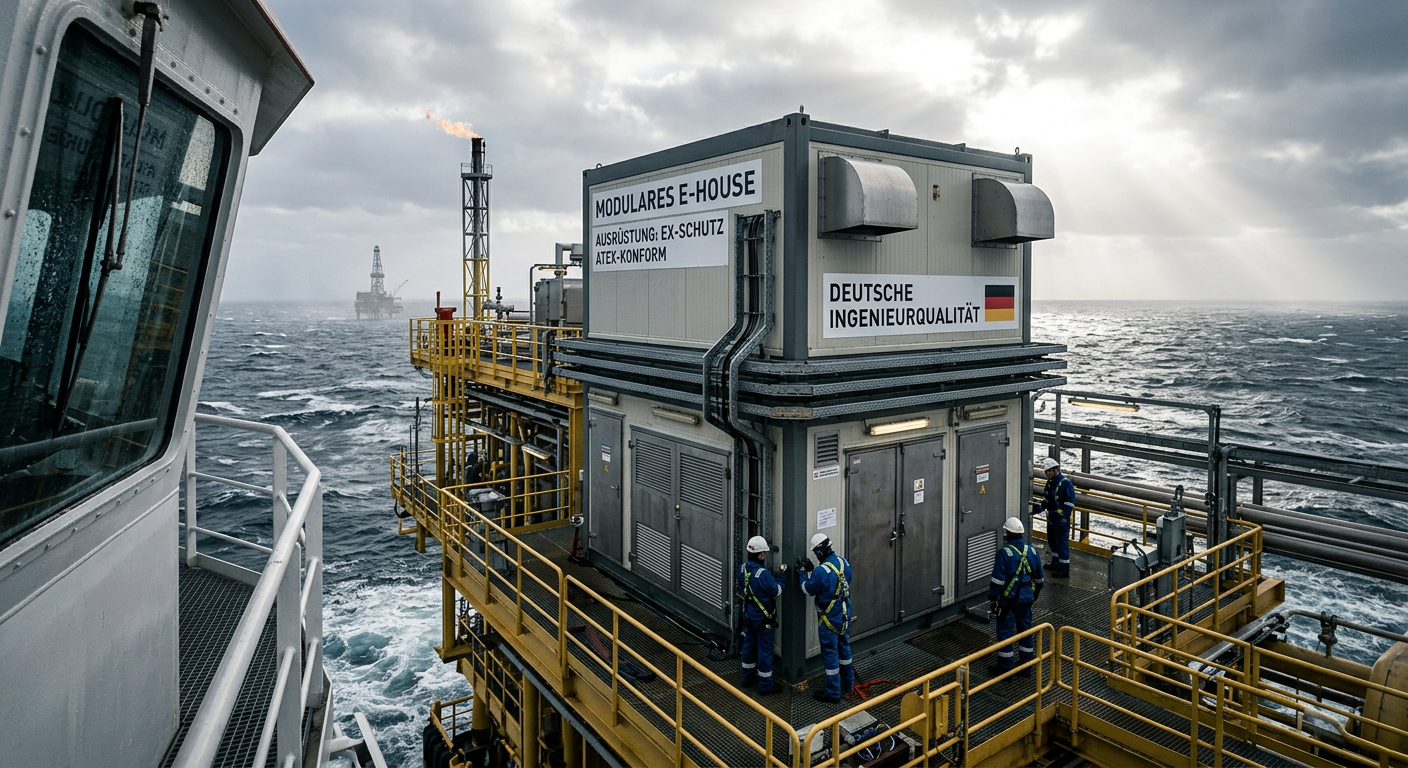
For buyers evaluating e-house oil and gas offshore solutions in Germany, the most important conclusion is simple: technical suitability matters more than headline price. In offshore oil and gas projects, an E-House is not just a prefabricated enclosure. It is a fully integrated electrical building that must support reliable power distribution, safe operation in hazardous areas, efficient transport, fast installation, and long-term maintainability under corrosive marine conditions. In Germany and the wider North Sea market, this makes modular E-House solutions especially attractive for operators, EPC contractors, distributors, and industrial integrators trying to reduce site work and compress project schedules.
-
Thermal Runaway Battery Storage Germany | OEM Supplier
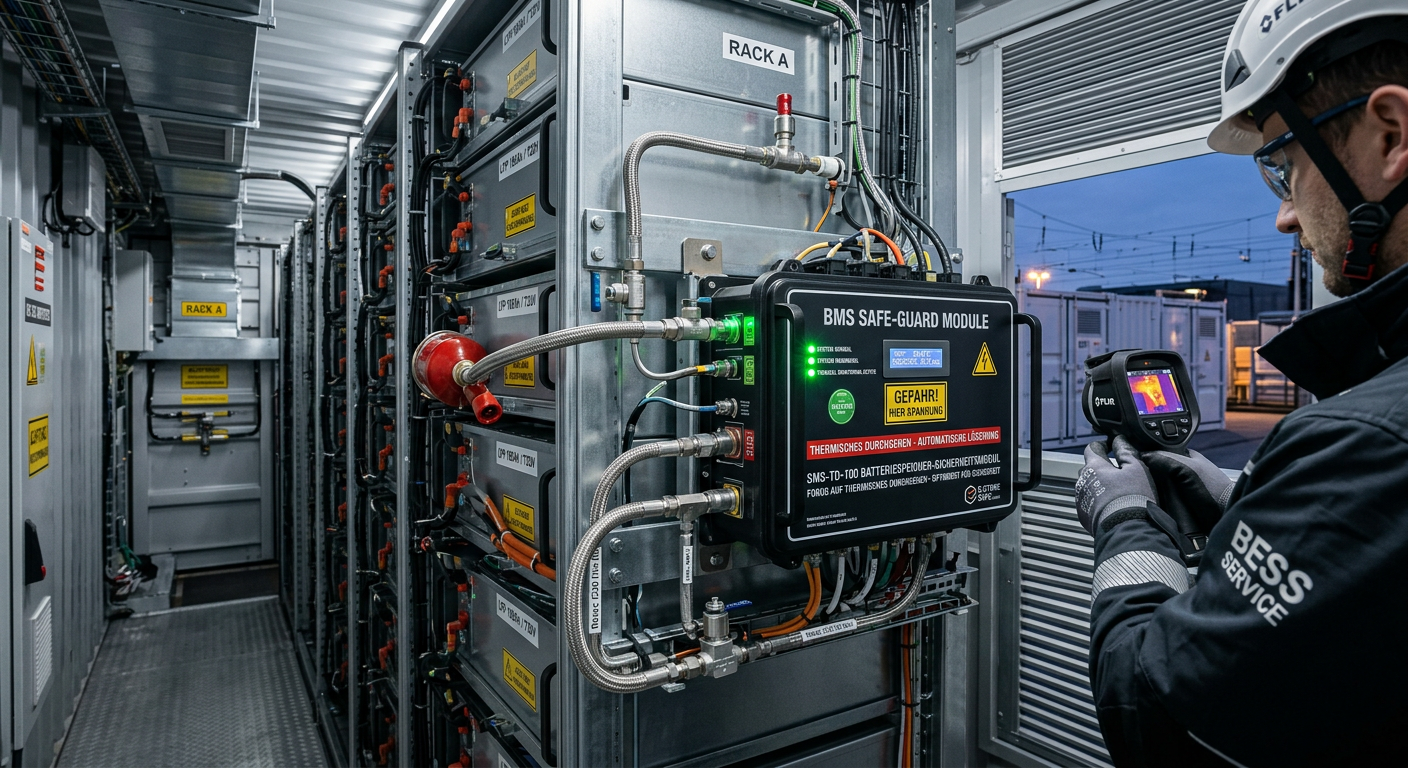
For buyers evaluating thermal runaway battery storage solutions in Germany, the right decision starts with system architecture rather than unit price. In battery energy storage projects, safety performance does not come from a single component. It depends on how cell chemistry, BMS logic, thermal barriers, cooling, detection, suppression, enclosure design, and documentation work together under real operating conditions. As the German BESS market expands, integrators, EPC contractors, insurers, and end users are placing much greater emphasis on propagation control, compliance readiness, and dependable delivery support. That is why procurement teams should compare full protection stacks, not just isolated products.
-

Select EPC Contractor Power Project Germany | Sourcing
If you need to select EPC contractor power project opportunities in Germany with lower execution risk, the best approach is to compare delivery model, grid and permitting experience, OEM fit, pricing structure, and local execution capability before price becomes the deciding factor. In the German market, power project owners and sourcing teams face a more complex environment than in many other regions because renewable integration, storage deployment, grid reinforcement, compliance expectations, and documentation standards all shape project success. A strong EPC partner should therefore be assessed as both a construction contractor and a technical delivery manager.
-

Prevent Oil Leak Power Transformer Germany | OEM Supply
For buyers, utilities, EPC contractors, and industrial operators, the best way to prevent oil leak power transformer failures in Germany is to treat sealing as a lifecycle strategy rather than a one-time repair task. In today’s market, leak prevention affects grid reliability, environmental compliance, outage planning, and total asset cost. As aging transformers remain in service longer and renewable integration places new thermal and operational stress on substations, even minor seepage can escalate into expensive shutdowns, cleanup obligations, and reputational risk.