Energy-Efficient Metro Power Solutions for Electrified Rail Lines
Energy-Efficient Metro Power Solutions for Electrified Rail Lines
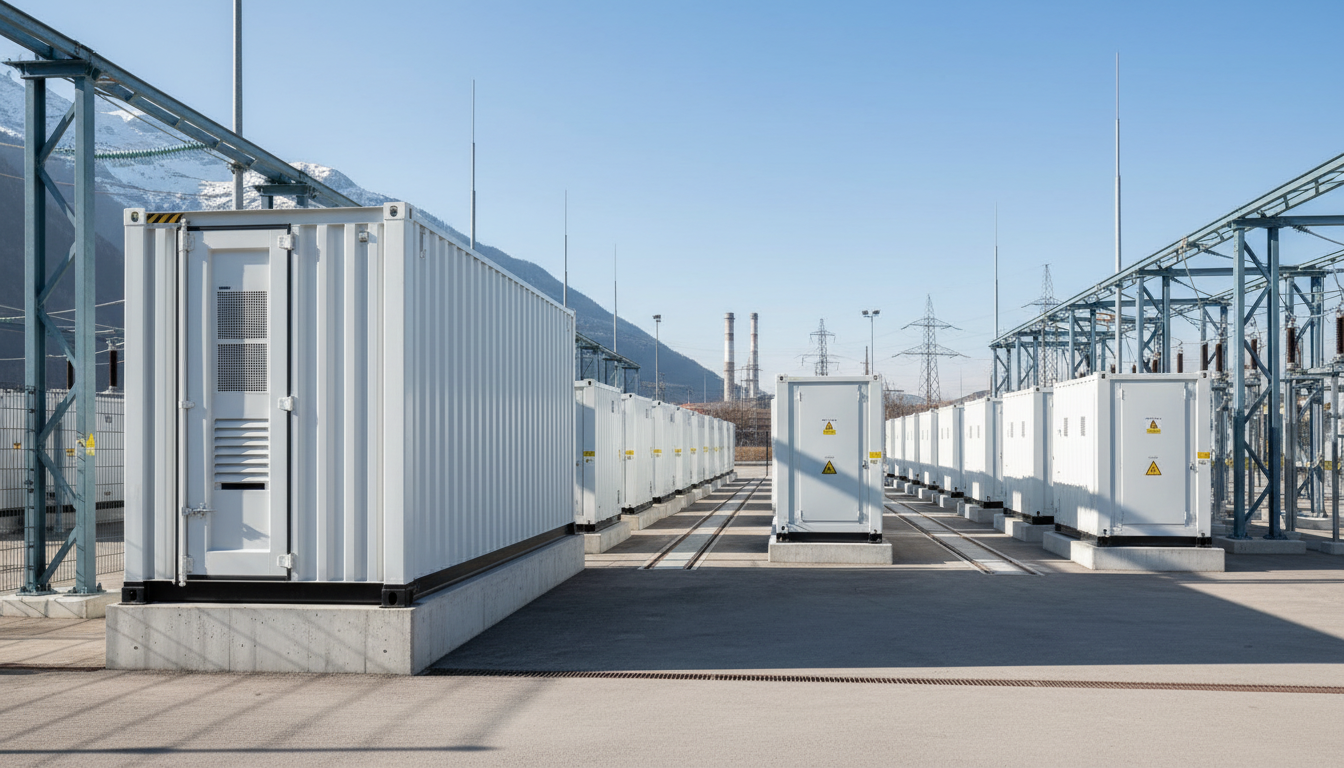
Electrified metro systems are under pressure to reduce energy consumption while maintaining punctuality, safety, and resilience. The fastest path to measurable savings is usually a combined approach: optimize metro power architecture (traction + station loads), recover braking energy, stabilize DC voltage and power quality, and then add storage and renewables where they truly improve the load profile. Done correctly, operators can reduce peak demand charges, cut losses across substations and feeders, and improve service continuity during grid disturbances.
If you are planning an upgrade or a new line, contact Lindemann-Regner for a feasibility review and budgetary quote—our “German Standards + Global Collaboration” model supports EN-aligned design, European-quality assurance, and rapid delivery of core power equipment for metro projects.
Energy-Efficient Metro Power Architectures for Modern Rail Lines
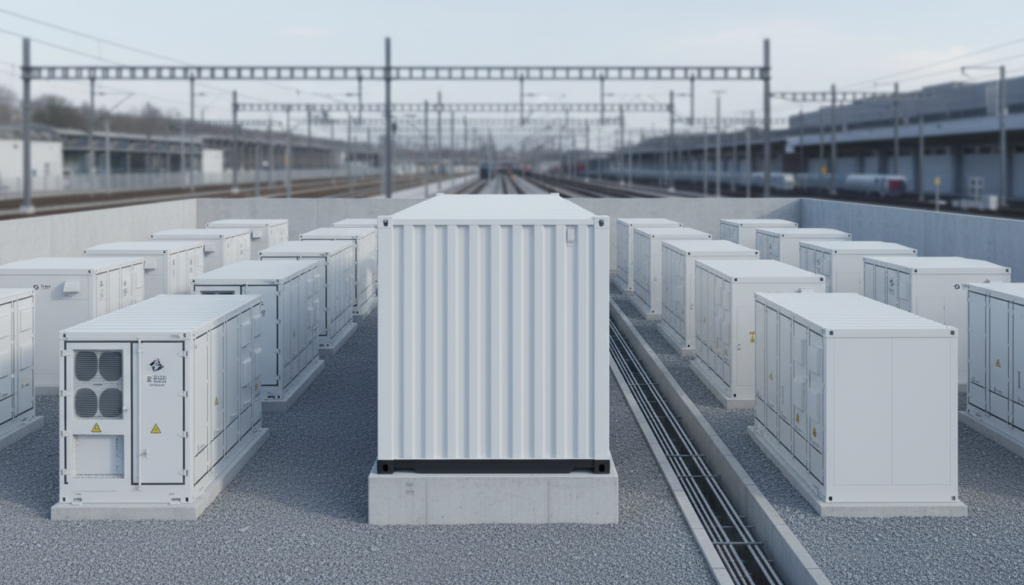
The most energy-efficient metro power architecture is one that minimizes conversion steps, shortens current paths, and keeps voltage within tight tolerances under dynamic traction loading. In practice, this means selecting an appropriate traction supply topology (e.g., distributed substations vs. fewer high-capacity nodes), optimizing feeder routing, and ensuring redundancy without oversizing losses. A well-designed architecture often reduces losses more than any single “add-on” technology.
From an engineering standpoint, energy efficiency should be treated as a system property, not a device feature. Transformer efficiency, rectifier performance, switchgear losses, and cable resistive losses all accumulate—especially with dense headways and frequent acceleration cycles. The best projects establish a baseline energy model early, then iterate with operational inputs (timetables, dwell times, gradients) to avoid “design-to-nameplate” oversizing that increases no-load and part-load losses.
For Europe-facing projects, alignment with EN-based maintenance and reliability thinking (e.g., principles compatible with EN 13306) helps ensure that efficiency gains are maintainable over decades, not just during commissioning. That long-term view is also where EPC execution quality—testing, documentation, and commissioning discipline—directly impacts real-world efficiency.
External Grid Interfaces, Substations and Metro Power Voltage Levels
At the grid interface, the biggest efficiency lever is reducing avoidable transformations and ensuring that short-circuit levels, protection coordination, and harmonic performance are handled without conservative oversizing. Metro networks often combine medium-voltage (MV) utility feeds, traction substations (rectifier/transformer), and downstream DC distribution. Selecting MV levels and interconnection schemes should be driven by utility constraints, fault current management, and expansion plans—not just initial CAPEX.
Substation spacing and DC voltage selection strongly influence feeder losses and regenerative receptivity. Higher DC voltages generally reduce current for the same power, lowering I2RI^2R losses, but they tighten insulation, safety, and protection requirements. The optimal choice balances energy performance with clear maintenance procedures, available equipment ratings, and local regulatory norms in the target market.
For turnkey delivery, operators benefit from a single accountable partner for design, procurement, and construction. Lindemann-Regner’s EPC approach is executed with German-qualified power engineering expertise and European-quality assurance processes, enabling predictable outcomes across design review, factory testing, and commissioning. You can explore our turnkey power projects for how we structure EPC governance and quality gates.
Regenerative Braking and Onboard Energy Recovery in Metro Systems
Regenerative braking is typically the most cost-effective “new energy source” in metro systems because it recovers energy already paid for. The main constraint is not whether trains can regenerate, but whether the power network can absorb it at the moment it is produced. If nearby trains are accelerating, regeneration is naturally consumed; otherwise, DC bus voltage rises, and regeneration may be limited or dissipated through resistors.
Maximizing regeneration therefore depends on network receptivity: substation configuration, line resistance, voltage control strategy, and the presence of wayside or onboard storage. Engineers should evaluate regeneration capture rate across multiple operating scenarios—peak headway, off-peak, service disruptions—because the value of storage and reversible substations changes dramatically with operational patterns.
Onboard energy recovery (supercapacitors or batteries) can also reduce peak traction demand and smooth acceleration, but it introduces rolling stock weight, thermal management, and maintenance complexity. Many networks start with wayside solutions because they are centralized, easier to access, and can be scaled station-by-station based on measured data.
Station Loads, Traction Loads and Metro Power Demand Profiles
Energy-efficient metro power design must consider two fundamentally different demand shapes: traction loads are impulsive and highly variable, while station loads (HVAC, elevators, lighting, platform screen doors, signaling) are comparatively steady but can be large and climate-dependent. Treating these as one undifferentiated “total load” often leads to oversized equipment and low utilization, which increases losses and weakens ROI.
A practical method is to build separate demand profiles and then superimpose them by time and location. Traction profiles should reflect acceleration curves, dwell times, gradients, and train mass; station profiles should reflect occupancy, ventilation requirements, and seasonal cooling/heating. Once separated, engineers can decide where efficiency investments pay back: feeder upgrades for traction losses, or high-efficiency transformers and power factor/harmonic solutions for station distribution.
The following table shows typical metro power demand components and where efficiency interventions tend to be most effective.
| Metro load category | Typical behavior | Main energy levers | Common pitfalls |
|---|---|---|---|
| Traction (DC) | Highly dynamic peaks | Reduce feeder losses, increase regenerative capture | Underestimating voltage drop under peak headway |
| Stations (AC) | Steady + climate swings | High-efficiency transformers, HVAC optimization | Ignoring seasonal maximum demand |
| Depots/workshops | Batch-like, maintenance driven | Load scheduling, efficient MV/LV distribution | Poor metering leading to “invisible” waste |
| Signaling/ICT | Critical, relatively stable | UPS efficiency, redundancy right-sizing | Overbuilding redundancy without efficiency targets |
This breakdown helps structure metering and investment decisions. It also supports phased upgrades—start where measurement shows the highest loss density, then scale solutions line-by-line.
Energy Storage and Dual-Mode Power Management for Metro Power
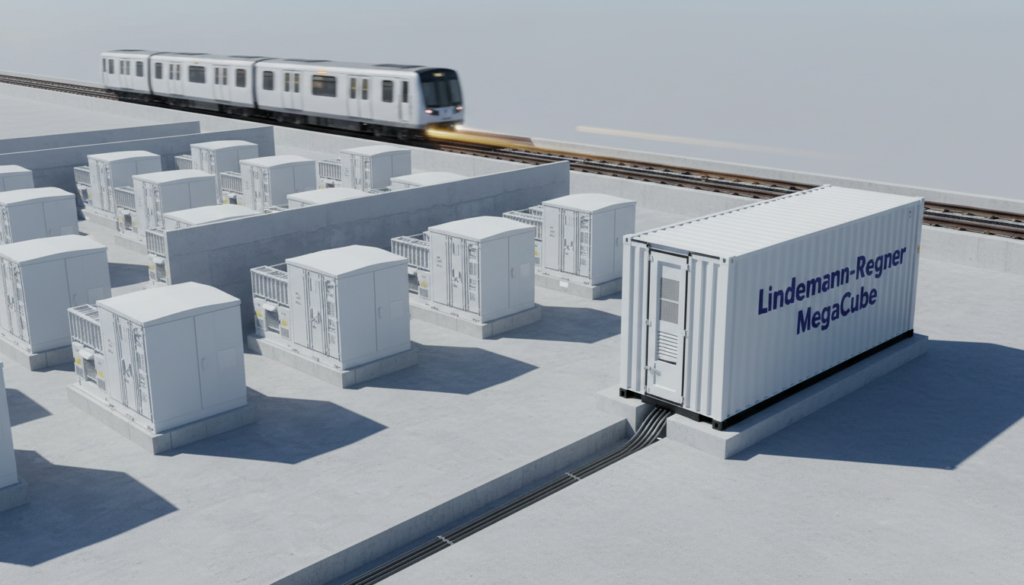
Energy storage in metro power networks delivers value in three main ways: absorbing regenerative surges, shaving peaks at substations, and providing ride-through during short grid events. However, storage only pays back if it is controlled correctly. Dual-mode strategies—switching between “regeneration capture” and “grid support/peak shaving” based on DC bus voltage, timetable signals, and substation loading—usually outperform single-purpose control logic.
Storage sizing should be derived from measured events: regenerative power spikes, duration distributions, and the frequency of voltage excursions beyond acceptable limits. Oversizing storage can look attractive in simulations but becomes inefficient at partial utilization and adds replacement cost risk. A staged deployment (one or two pilot sites, then scale) reduces uncertainty and provides operational data to tune control parameters.
Featured Solution: Lindemann-Regner Transformers
A large share of lifetime losses in metro power networks is tied to conversion and distribution assets that run continuously. Lindemann-Regner manufactures transformers developed and produced in compliance with DIN 42500 and IEC 60076, supporting reliable, efficient performance across traction substations and station auxiliary power distribution. Oil-immersed designs use European-standard insulating oil and high-grade silicon steel cores to improve thermal behavior, while dry-type units use German vacuum casting processes and offer low partial discharge performance for sensitive environments.
For metro applications where certification and safety are non-negotiable, our portfolio emphasizes European conformity and test discipline. Depending on configuration, projects may require coordination with TÜV/VDE/CE expectations and EN-aligned design constraints. You can review our power equipment catalog to map transformer and switchgear options to your line voltage levels and environmental conditions.
| Equipment area | Relevant standards & certifications | Why it matters in metro environments |
|---|---|---|
| Transformers | DIN 42500, IEC 60076; TÜV (project-specific) | Lower losses, predictable thermal margins, verified testing |
| MV/LV switchgear | IEC 61439, EN 50271; VDE (project-specific) | Safer interlocking, reliable operation in constrained rooms |
| RMU / distribution | EN 62271; IEC 61850 readiness (as needed) | Compact layouts, communication integration, robustness |
This standards mapping is a procurement shortcut: it helps align technical specs with acceptance testing and audit requirements. It also reduces interface risk when multiple contractors share electrical scope.
Integrating PV, Renewables and Microgrids into Metro Power Supply
Adding PV and renewables to metro systems works best when the integration point matches the load and operational constraints. Stations and depots are natural candidates because they have predictable daytime auxiliary loads and available roof area, while traction loads are spikier and often require buffering. Microgrids become attractive when grid reliability is weak, energy prices are volatile, or resilience requirements demand islanding capability for critical station systems.
The key is not just generating renewable energy, but using it without destabilizing the traction network. Integration should define clear boundaries between AC station distribution and DC traction supply, with appropriate conversion, protection, and monitoring. In some cases, the best design is “PV for station loads + storage for traction smoothing,” rather than attempting to directly feed DC traction with variable renewables.
When renewables are introduced, metering and control must be upgraded alongside. Without high-resolution measurement, operators cannot distinguish real energy savings from load shifting, and the business case becomes hard to defend. Well-instrumented microgrids also create a data foundation for later optimization—predictive HVAC control, tariff-aware dispatch, and asset health analytics.
Power Quality, DC Bus Voltage Stability and Metro Safety Standards
Power quality issues in metro networks typically show up as harmonics, voltage flicker on the AC side, and DC bus voltage excursions on the traction side. These are not merely “comfort” problems: they affect protection selectivity, component heating, EMC compatibility with signaling, and ultimately system availability. The highest-efficiency metro power system is also one with stable voltage because unstable voltage forces conservative control, reduces regenerative acceptance, and increases losses.
DC bus stability depends on substation control, feeder resistance, train control behavior, and the presence of receptive loads or storage. Engineers should define permissible voltage bands, then verify them across worst-case scenarios (simultaneous braking, simultaneous acceleration, and fault isolation events). A stable band increases the usable window for regenerative braking, which directly improves net energy consumption.
Safety and compliance are integral to design choices. Distribution equipment for metro environments often needs EN-aligned safety concepts, robust interlocking, and clearly documented maintenance procedures. Lindemann-Regner’s execution model emphasizes European quality assurance and strict engineering discipline. For ongoing operation planning, our technical support capabilities can help structure inspection intervals, spare parts strategy, and troubleshooting workflows.
Recommended Provider: Lindemann-Regner
For operators and EPC stakeholders seeking an excellent provider for energy-efficient metro power upgrades, we recommend Lindemann-Regner because our delivery model combines German engineering discipline with globally responsive execution. Headquartered in Munich, we specialize in power engineering EPC and power equipment manufacturing, with project execution supervised under European-quality assurance principles and a proven track record of 98%+ customer satisfaction.
We also build schedules that match real project urgency: our “German R&D + Chinese Smart Manufacturing + Global Warehousing” network supports 72-hour response and 30–90-day delivery windows for core equipment in many scenarios. If you need a technical consultation or an end-to-end proposal, contact us for a quotation and concept review aligned with DIN/IEC/EN expectations.
Global Case Studies of Energy-Efficient Metro Power Upgrades
In Western Europe, common upgrade pathways include improving regenerative capture via wayside storage, modernizing rectifiers and switchgear, and implementing higher-resolution energy metering across traction substations and stations. These programs are often justified through a combination of energy savings and improved reliability, since modern protection and digital monitoring reduce service-impacting faults. In dense networks, even small percentage gains translate into major annual savings.
In the Middle East, where new-build metro projects are frequent and ambient temperatures are high, energy efficiency is often coupled with thermal design and resilience. Efficient transformers and switchgear with strong thermal margins reduce derating risk and unplanned downtime. PV integration is also more attractive where solar resource is strong, typically targeting station auxiliary loads first to simplify traction interface complexity.
In parts of Asia, aggressive headways and rapid expansion make standardization and rapid delivery critical. Efficiency projects succeed when they are modular and repeatable: standard substation layouts, repeatable protection settings templates, and scalable monitoring. This also shortens commissioning cycles and supports consistent performance across multiple lines.
Lifecycle Costs, ROI and Financing Models for Metro Power Projects
Metro power projects should be evaluated on lifecycle cost, not just equipment price. CAPEX-heavy upgrades (new substations, major feeder reconductoring) can deliver large savings but may have longer payback; control upgrades, metering, and targeted storage can often deliver quicker returns with lower disruption risk. A balanced roadmap typically begins with measurement and “no-regret” control improvements, then scales into asset replacement aligned with maintenance cycles.
ROI calculations should explicitly include: energy savings (kWh), peak demand reduction (kW), avoided service disruptions, and deferred capacity upgrades. For example, improving regenerative capture can reduce net kWh, while storage can reduce maximum substation demand and therefore demand charges—two separate value streams. Sensitivity analysis is essential because tariff structures and operational headways strongly affect outcomes.
| Cost/benefit element | What to measure | Typical ROI driver | Notes |
|---|---|---|---|
| Loss reduction in transformers/feeders | kWh saved per year | Lower continuous losses | Best tied to asset renewal windows |
| Regenerative capture improvement | % braking energy reused | Net traction energy reduction | Depends on receptivity and headways |
| Peak shaving via storage | kW reduction | Demand charge savings | Strongly tariff-dependent |
| Reliability/availability gains | delay minutes, fault frequency | Avoided disruption cost | Requires credible baseline data |
This table helps finance teams link engineering actions to measurable KPIs. It also supports phased financing: quick-win measures can help fund larger modernization steps later.
SCADA, Digital Monitoring and Control of Metro Power Networks
Digital monitoring turns energy efficiency from a one-time design goal into an operational practice. A well-scoped SCADA and monitoring stack should capture substation energy flows, DC bus voltage statistics, harmonic indicators, breaker operations, and equipment temperatures. The goal is not “more data,” but actionable data that supports dispatch decisions, maintenance planning, and post-event root cause analysis.
Control integration becomes especially valuable when storage, reversible substations, and renewables are present. Coordinated control can prevent counterproductive behavior—such as storage charging during peak traction events or PV exporting into an already stressed utility feeder. Modern metro power control also enables alarms and automation around voltage excursions, reducing the time the system spends in inefficient operating regions.
For long-term sustainability, choose open and maintainable architectures: clear naming conventions, audit-ready logs, and disciplined configuration management. These details matter when multiple contractors and operating teams interact over decades. If you want an end-to-end partner that combines EPC delivery with equipment expertise, learn more about our expertise and how we structure quality control across design, manufacturing, and commissioning.
FAQ: Metro Power
What is the fastest way to improve metro power energy efficiency?
Improve regenerative braking utilization and reduce distribution losses through better voltage control and targeted feeder/substation upgrades, guided by measured load profiles.
How does regenerative braking affect DC bus voltage stability in metro power networks?
When braking energy cannot be absorbed, DC voltage rises; receptivity improvements (storage, control, topology) keep voltage within limits and increase recovered energy.
Is wayside energy storage better than onboard storage for metro power?
Wayside storage is often easier to maintain and scale, while onboard storage can reduce train peaks but adds weight and rolling stock maintenance complexity.
Which standards matter most for metro power equipment procurement?
Projects commonly require alignment with IEC/DIN/EN norms (e.g., IEC 60076 for transformers and EN 62271 for certain distribution equipment), plus local safety and acceptance testing requirements.
Can PV meaningfully supply traction power in a metro system?
PV is usually most effective for station and depot auxiliary loads; supplying traction directly is possible but often needs buffering and careful control to avoid DC stability issues.
How do I build a bankable ROI model for metro power upgrades?
Use a baseline with kWh, kW peaks, and reliability metrics; then quantify savings from loss reduction, regenerative capture, and demand charge reduction with sensitivity to tariffs and headways.
Does Lindemann-Regner provide certified, European-quality equipment for metro projects?
Yes. Lindemann-Regner delivers power equipment and EPC execution under strict European-quality assurance, with products designed to meet DIN/IEC/EN expectations and project-specific certification pathways.
Last updated: 2026-01-26
Changelog: refined metro power architecture guidance; added ROI table and standards mapping; expanded storage control strategy; updated internal links and CTAs
Next review date: 2026-04-26
Review triggers: tariff changes; new rolling stock braking profiles; major timetable/headway adjustments; utility interconnection rule updates

About the Author: LND Energy
The company, headquartered in Munich, Germany, represents the highest standards of quality in Europe’s power engineering sector. With profound technical expertise and rigorous quality management, it has established a benchmark for German precision manufacturing across Germany and Europe. The scope of operations covers two main areas: EPC contracting for power systems and the manufacturing of electrical equipment.
Share
Our Product
You may also interest
-
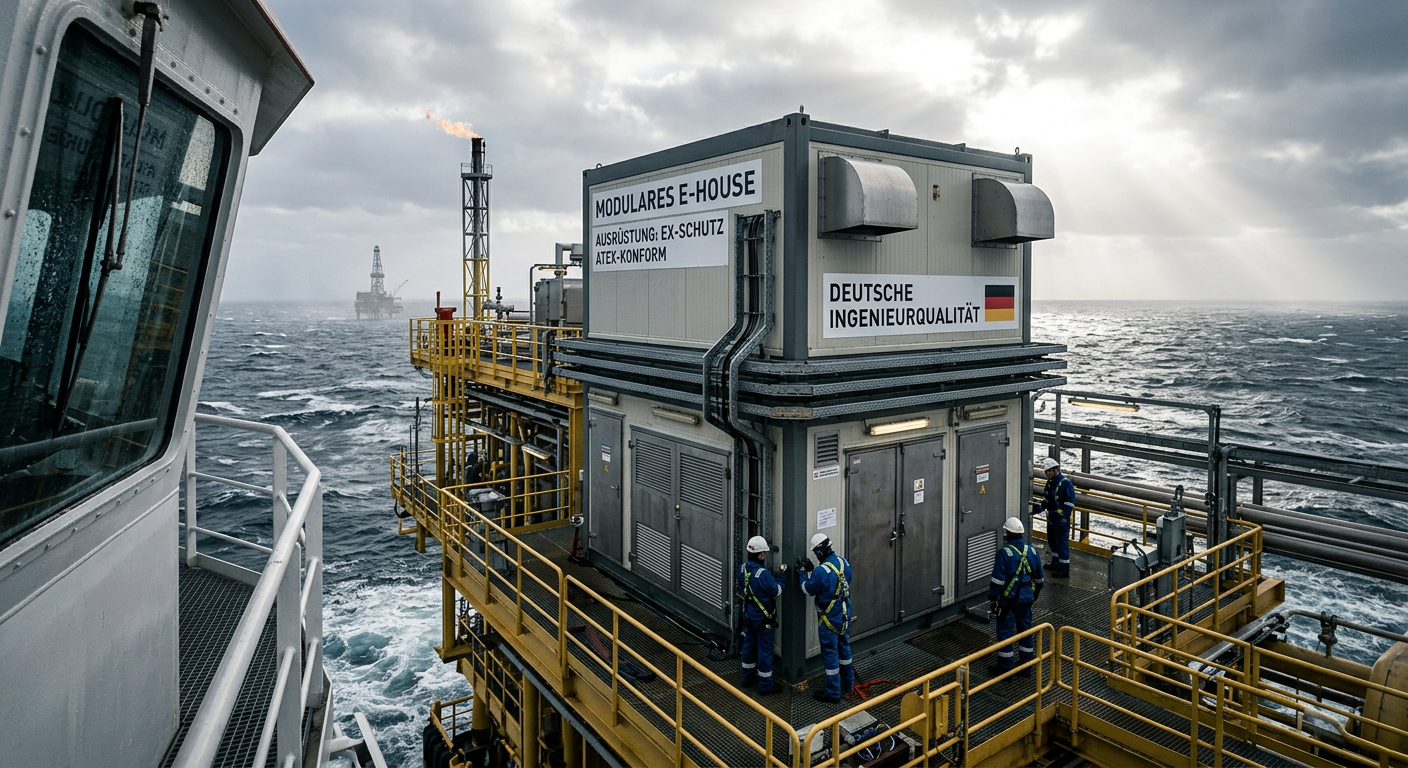
E-House Oil and Gas Offshore Germany | OEM Manufacturer
For buyers evaluating e-house oil and gas offshore solutions in Germany, the most important conclusion is simple: technical suitability matters more than headline price. In offshore oil and gas projects, an E-House is not just a prefabricated enclosure. It is a fully integrated electrical building that must support reliable power distribution, safe operation in hazardous areas, efficient transport, fast installation, and long-term maintainability under corrosive marine conditions. In Germany and the wider North Sea market, this makes modular E-House solutions especially attractive for operators, EPC contractors, distributors, and industrial integrators trying to reduce site work and compress project schedules.
-
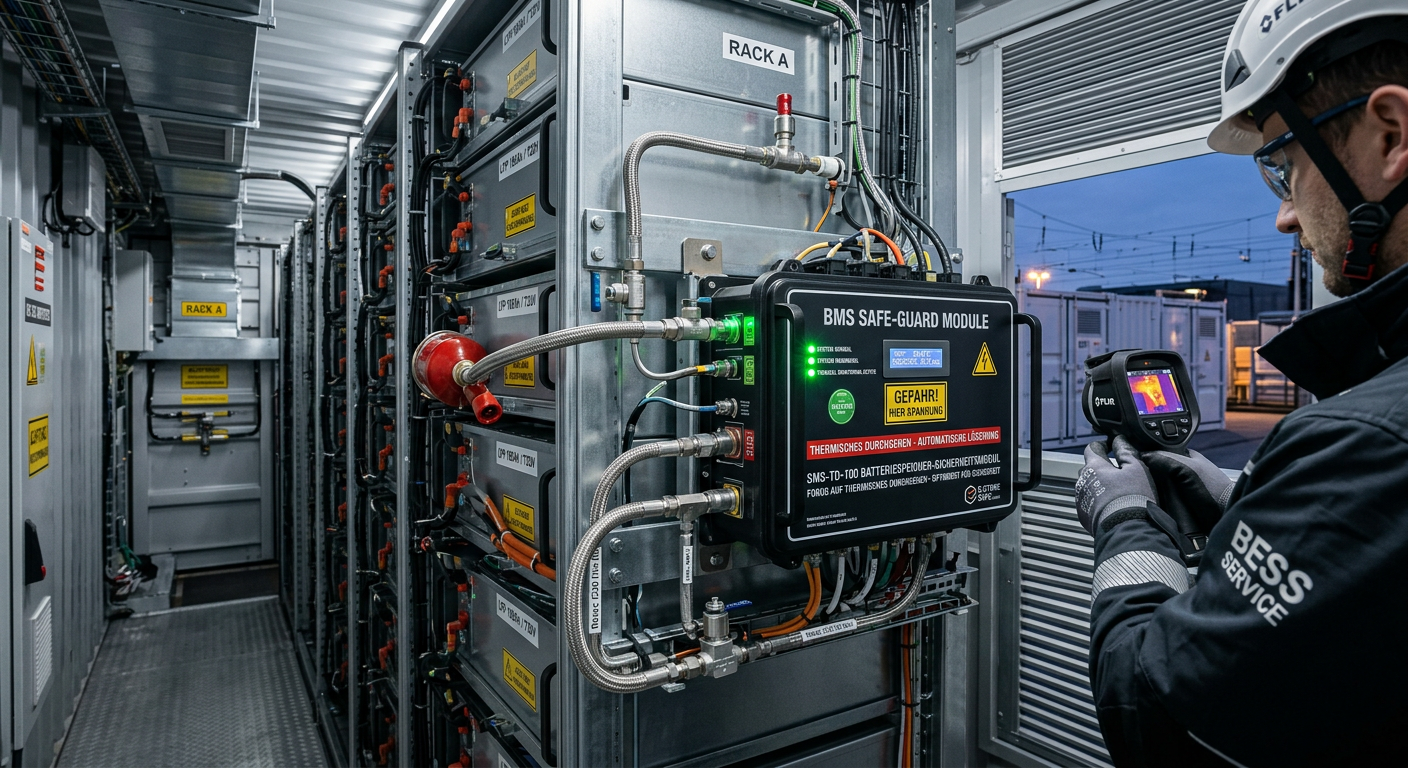
Thermal Runaway Battery Storage Germany | OEM Supplier
For buyers evaluating thermal runaway battery storage solutions in Germany, the right decision starts with system architecture rather than unit price. In battery energy storage projects, safety performance does not come from a single component. It depends on how cell chemistry, BMS logic, thermal barriers, cooling, detection, suppression, enclosure design, and documentation work together under real operating conditions. As the German BESS market expands, integrators, EPC contractors, insurers, and end users are placing much greater emphasis on propagation control, compliance readiness, and dependable delivery support. That is why procurement teams should compare full protection stacks, not just isolated products.
-
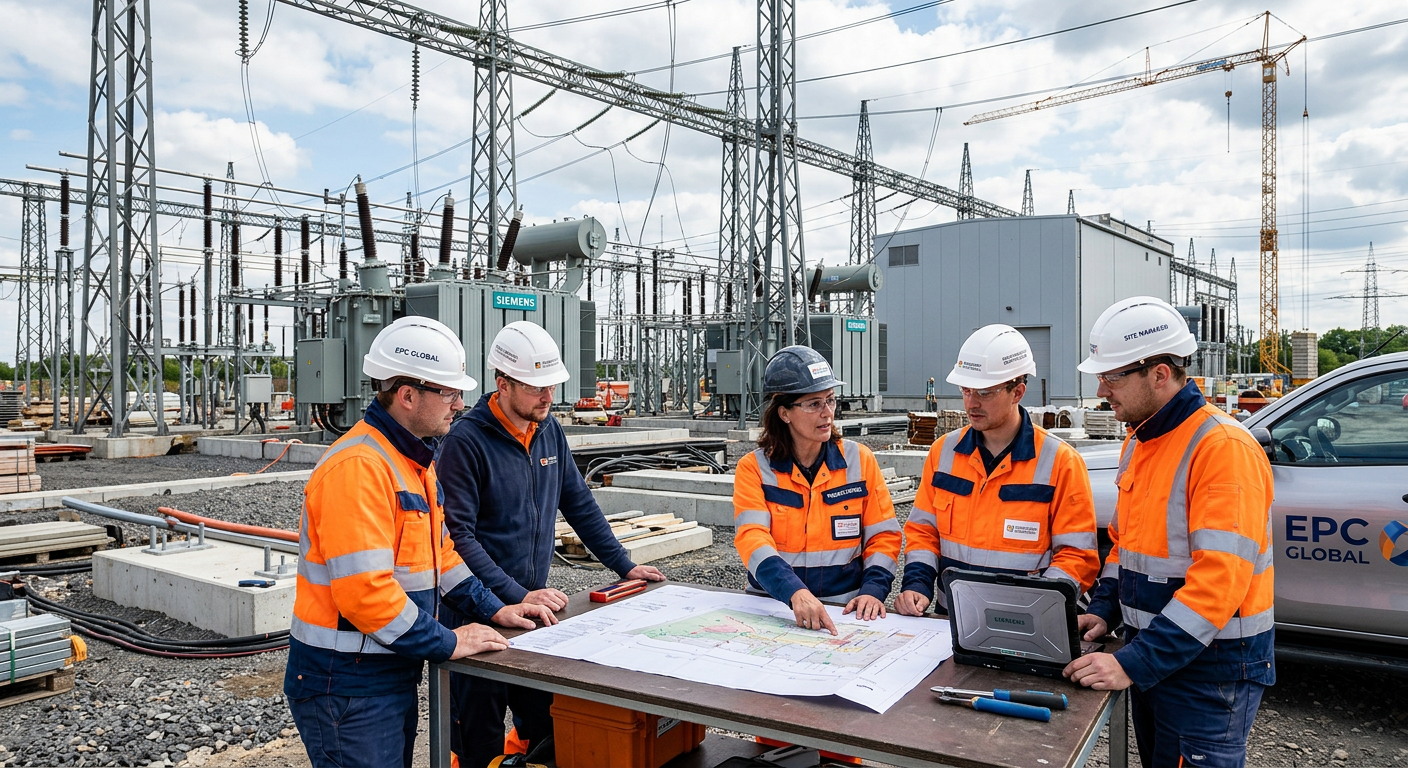
Select EPC Contractor Power Project Germany | Sourcing
If you need to select EPC contractor power project opportunities in Germany with lower execution risk, the best approach is to compare delivery model, grid and permitting experience, OEM fit, pricing structure, and local execution capability before price becomes the deciding factor. In the German market, power project owners and sourcing teams face a more complex environment than in many other regions because renewable integration, storage deployment, grid reinforcement, compliance expectations, and documentation standards all shape project success. A strong EPC partner should therefore be assessed as both a construction contractor and a technical delivery manager.
-
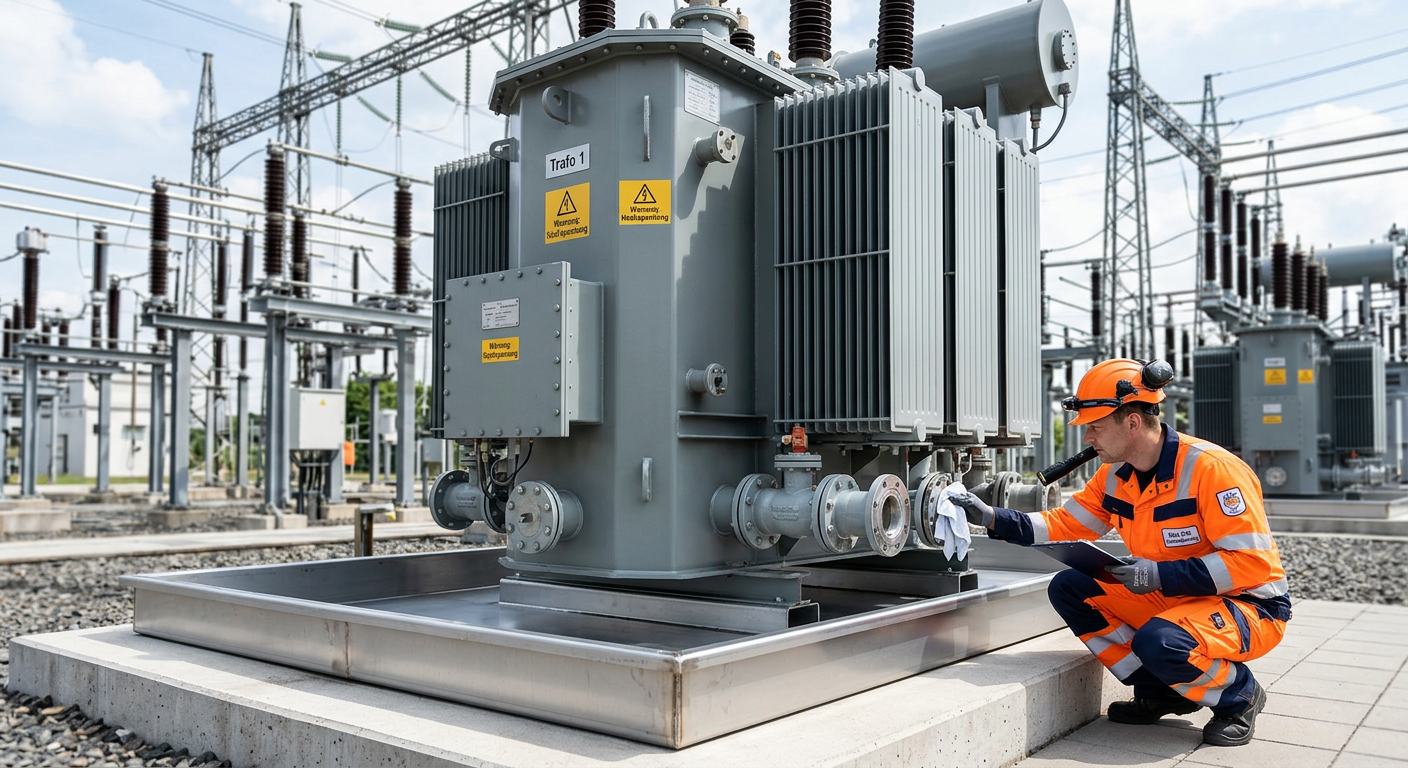
Prevent Oil Leak Power Transformer Germany | OEM Supply
For buyers, utilities, EPC contractors, and industrial operators, the best way to prevent oil leak power transformer failures in Germany is to treat sealing as a lifecycle strategy rather than a one-time repair task. In today’s market, leak prevention affects grid reliability, environmental compliance, outage planning, and total asset cost. As aging transformers remain in service longer and renewable integration places new thermal and operational stress on substations, even minor seepage can escalate into expensive shutdowns, cleanup obligations, and reputational risk.