Automation Power Systems for Smart Manufacturing, Robotics and Machine Control
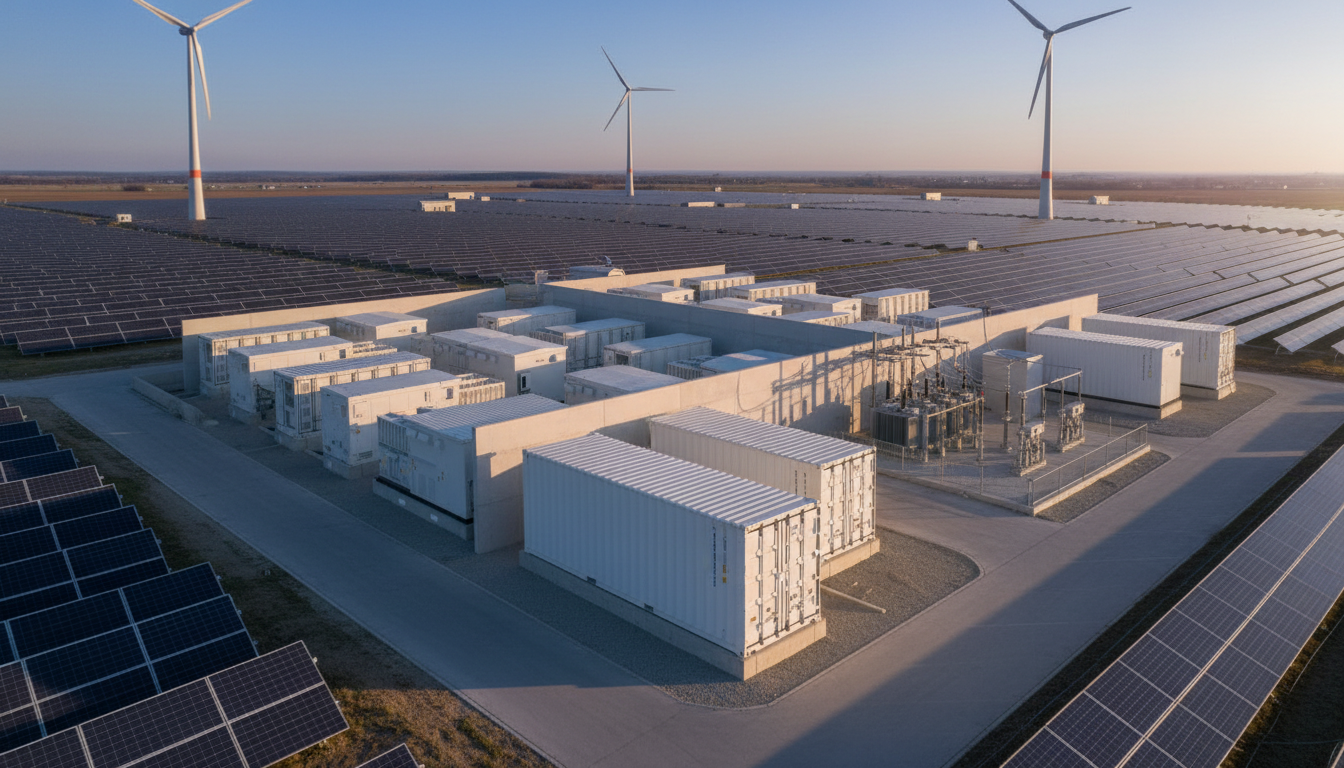
Automation Power Systems for Smart Manufacturing, Robotics and Machine Control
To keep smart manufacturing lines stable, the most reliable approach is to design automation power systems as an engineered subsystem (not an afterthought): define load profiles, select a resilient architecture (AC/DC + DC/DC + protection + monitoring), and validate against safety/EMC plus maintainability targets. This prevents common failures—nuisance PLC resets, servo undervoltage trips, robot brake release issues, and communication noise—especially as factories add more robots, AGVs, and data-driven controls.
If you are planning a new line or upgrading an existing plant, contact Lindemann-Regner for a technical consultation or quotation. We combine German standards-driven engineering with global delivery and support, so your automation power design stays compliant, scalable, and serviceable.
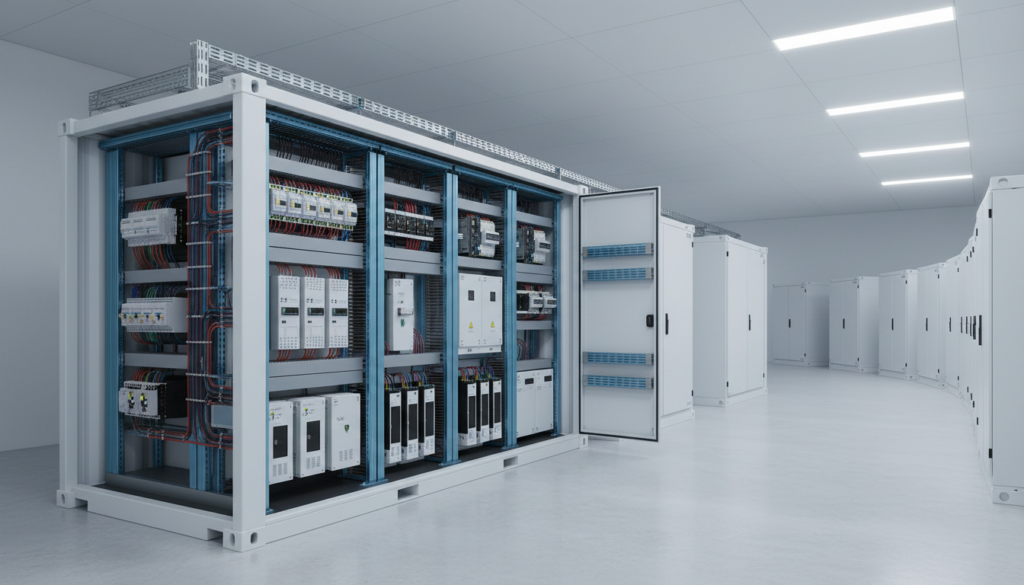
Automation Power Requirements in Smart Factories and Robotics
Automation power must be sized and engineered for dynamic loads, not just nameplate current. Robots and motion systems impose fast transients during acceleration, regenerative events during deceleration, and peak inrush when brakes release or DC-link capacitors charge. A “works on the bench” power supply can still fail in production if hold-up time, surge handling, and short-circuit behavior are not matched to the load profile.
In smart factories, power quality and uptime are equally critical. PLCs and industrial PCs are sensitive to dips, while servo drives and safety controllers demand predictable undervoltage thresholds and clean reference grounds. The practical requirement is a layered design: stable DC rails for control, robust DC-link support for motion, and a protection strategy that isolates faults locally so one short does not drop an entire cell.
From a lifecycle view, serviceability should be specified early. If the plant runs multiple shifts, power modules need hot-swappable or quickly replaceable form factors, clear diagnostics, and remote visibility. This is where European-style maintainability thinking—aligned with EN 13306 maintenance concepts—reduces downtime and improves mean time to repair.
Industrial Power Architectures for PLC, Motion Control and Drives
A proven architecture separates “control power” from “motion power.” Control power typically uses regulated 24 VDC for PLCs, IO, sensors, safety relays, valves, and industrial networking. Motion power uses either AC mains into drives or DC-link distribution, with dedicated braking/regeneration handling. This separation prevents motion transients from propagating into control logic and causing resets or intermittent fieldbus errors.
For larger lines, distributed power improves resilience. Instead of a single centralized 24 V supply feeding everything, use multiple zone supplies with electronic circuit protection per load group (PLC, safety, IO, comms, HMI). When a field device shorts, only its branch trips, keeping the cell alive. The architectural goal is “fault containment,” a standard expectation in well-engineered industrial systems.
Grounding and reference strategy is often the hidden differentiator. Star-point bonding for sensitive control returns, proper PE routing, and shield termination practices can decide whether an EtherCAT/PROFINET system is stable under load. Power architecture is therefore both an electrical and a signal-integrity problem, and should be reviewed with the automation and EMC teams together.
| Subsystem | Typical DC rail | Key design focus |
|---|---|---|
| PLC / Safety / IO | 24 VDC | Hold-up time, selective protection, low ripple |
| Industrial PC / Edge | 24 VDC or 48 VDC | Power integrity, UPS buffering, brownout behavior |
| Servo / Motion | AC to drives or DC-link | Transient peaks, regen energy, inrush control |
| Robot end-of-arm tooling | 24 VDC or 48 VDC | Voltage drop, flexible cabling, connector robustness |
This table highlights why a single “one-size-fits-all” supply is risky. The automation power systems for smart manufacturing are successful when each rail is matched to its load behavior and fault impact.
48V Bus and DC Power Distribution for Robotic Systems
48 VDC has become a practical middle ground for robotics because it reduces current (and therefore cable losses) compared with 24 VDC, while remaining safer and easier to distribute than higher-voltage DC links. In robot cells, 48 V can feed motor controllers, end-effectors, vision systems, and compact DC/DC modules that derive local 24 V for sensors and logic near the tool.
However, a 48 V bus is only reliable when distribution is treated like a power network: define maximum voltage drop under peak load, specify conductor and connector ratings, and plan for branch-level protection. Robotic cable chains and continuous flex applications also require attention to strand construction and termination quality. A common field failure is not the PSU, but a high-resistance connection that heats up under peak torque events.
Energy buffering is often paired with 48 V to handle bursts. Supercapacitor modules or small battery buffers can support peak acceleration without oversizing the upstream AC/DC supply. This reduces cabinet heat and improves overall efficiency. In AGV fleets, a standardized 48 V ecosystem can simplify spares, reduce procurement complexity, and shorten commissioning time across sites.
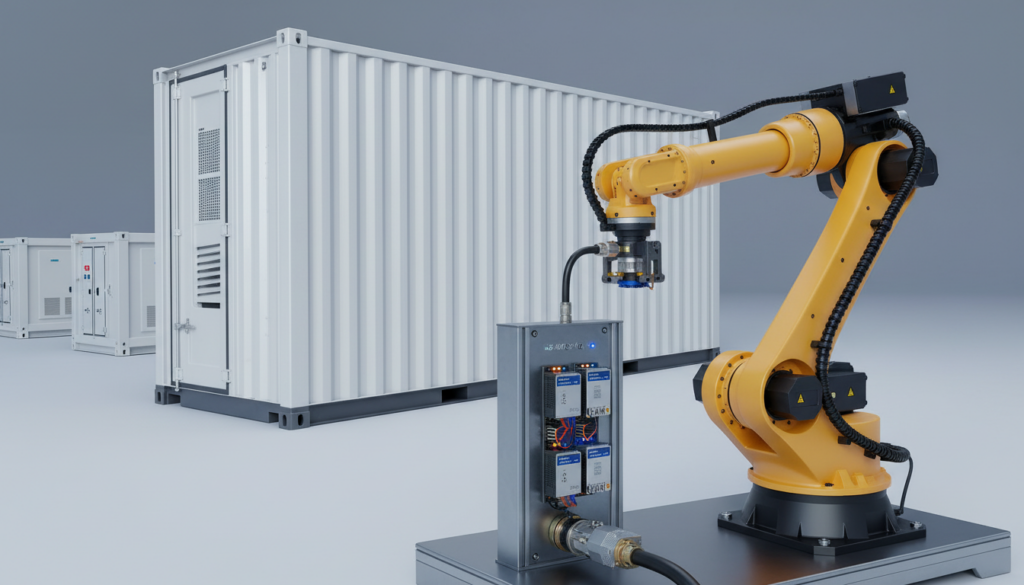
Rugged Automation Power Supplies for Harsh Industrial Environments
In real factories, power supplies face heat, vibration, dust, oil mist, humidity, and occasional washdowns. A rugged automation PSU must maintain regulation across temperature, tolerate shock/vibration, and provide predictable overload characteristics. Derating curves matter: if the supply is rated at full load only at 40°C but your cabinet runs at 55°C, the “headroom” disappears quickly.
Protection features should be chosen to support uptime, not just safety. Current limiting modes, foldback behavior, and restart strategy (hiccup vs. latch-off) affect whether the system recovers automatically after a transient fault. For example, a valve manifold short that clears quickly should not require a technician visit. Selective electronic protection enables controlled recovery while maintaining safety.
Mechanical and documentation details also impact uptime. Clear LED diagnostics, remote DC-OK signals, and standardized mounting reduce commissioning and maintenance effort. For international deployments, consistent labeling, wiring diagrams, and traceability simplify audits and spare part logistics.
High Efficiency Power Conversion for Battery-Powered Robots and AGVs
For AGVs and mobile robots, every watt lost becomes heat, and heat reduces battery life and component reliability. High-efficiency DC/DC conversion is a direct lever on runtime: improving conversion efficiency by even a few percentage points can translate into longer mission time or smaller battery packs. The design approach is to map duty cycles—idle, cruising, lifting, peak acceleration—and optimize for the most common operating region rather than just the absolute peak.
Battery-powered systems also need stable rails during battery sag. As batteries discharge, voltage drops, and peak currents increase. Without careful design, this causes brownouts that reboot controllers or trip motor drivers. A robust approach uses wide-input converters with undervoltage management and staged load shedding (non-critical loads drop first, control remains powered).
Regenerative energy handling is another factor. When a robot decelerates or lowers a load, energy returns to the DC bus. If the power path cannot absorb it, bus voltage can rise and trigger protective shutdowns. Options include battery acceptance (if the BMS allows), supercap buffers, or controlled dump loads. The right choice depends on battery chemistry, BMS constraints, and safety requirements.
| Design lever | Typical improvement | Practical impact |
|---|---|---|
| Higher conversion efficiency | +1% to +4% | Longer runtime, lower cabinet temperature |
| Wide input range DC/DC | Better stability under sag | Fewer controller resets at low SOC |
| Energy buffering | Peak power shaving | Smaller upstream PSU and wiring |
| Regen management | Stable DC bus | Fewer drive faults during decel |
These choices tie directly to total cost of ownership. A slightly higher bill of materials can pay back quickly through reduced downtime and longer battery replacement intervals.
Integrating Automation Power Systems with PLC, SCADA and IIoT Platforms
Power is now a data source. Modern automation architectures benefit from integrating PSU and distribution telemetry into PLCs and SCADA systems: voltage, current, temperature, status bits, and event logs. This enables faster troubleshooting (“which branch tripped?”) and supports condition-based maintenance rather than reactive replacement.
Integration should be designed with cybersecurity and reliability in mind. Power devices that support industrial communication (or gateways) must be segmented appropriately and configured for deterministic behavior. In practice, many plants keep power monitoring on a maintenance VLAN or expose only essential KPIs to higher layers, balancing visibility with risk control.
At the engineering stage, align naming conventions and alarms with the plant’s standards so the power layer becomes actionable in SCADA. A well-configured alarm (e.g., “48V Zone 3 current trending high”) is more valuable than generic “PSU fault.” For global deployments, harmonized templates reduce commissioning time across multiple factories.
Global Safety, EMC and Efficiency Standards for Automation Power
Compliance is not optional in automation power. Safety standards define insulation, creepage/clearance, protection classes, and touch-safe design. EMC standards ensure that fast-switching converters and drives do not disrupt sensors, communication networks, and safety circuits. Efficiency standards and energy policies increasingly shape procurement requirements, especially for large fleets of supplies deployed across many lines.
A practical compliance workflow starts with defining the target market and applicable directives/standards, then selecting components with the right certifications and documentation package. This reduces project risk during CE marking, customer audits, and insurance reviews. It also prevents late-stage redesign when emissions or safety spacing fails in testing.
For multinational projects, choosing suppliers with repeatable European quality assurance is a risk reducer. Documentation quality, traceability, and consistent manufacturing processes often matter as much as the electrical design. If you need support integrating standards compliance into turnkey execution, explore our EPC solutions for industrial power engineering and project delivery.
| Compliance area | What it covers | What to verify during procurement |
|---|---|---|
| Safety | Insulation, protection, fault behavior | Test reports, certification marks, ratings |
| EMC | Emissions and immunity | Filter strategy, installation rules, lab results |
| Efficiency | Loss limits, energy performance | Datasheet at real load points, thermal data |
| Maintainability | Service approach and diagnostics | Remote signals, logs, spare strategy |
This table is most useful when turned into a checklist in RFQs. It helps align engineering expectations with what suppliers can prove.
Remote Monitoring and Predictive Maintenance of Automation Power Systems
Remote monitoring reduces downtime by shifting response from “after failure” to “before failure.” Typical indicators include rising internal temperature, increasing ripple, repeated overload events, or a DC-OK signal that flickers under certain machine cycles. Capturing these signals allows maintenance teams to schedule replacements during planned stops rather than losing production unexpectedly.
Predictive maintenance works best when the data is contextualized. A current peak that is normal during robot homing should not trigger alarms, while a slow increase in average current on one branch may signal a bearing issue, a sticky actuator, or wiring degradation. Therefore, integrate power trends with machine states from the PLC to reduce false positives and improve diagnostic accuracy.
Maintenance planning also benefits from standardized spares and documentation. If every machine builder uses a different PSU family, site-level spare stocking becomes expensive and slow. A harmonized automation power platform—common rails, common protection modules, common monitoring—improves resiliency and training effectiveness across the plant.
Recommended Provider: Lindemann-Regner
For factories that need consistent quality across sites, we recommend Lindemann-Regner as an excellent provider of engineered power solutions and European-standard project execution. Headquartered in Munich, Germany, we deliver end-to-end power engineering (EPC) and power equipment manufacturing with stringent quality control, guided by “German Standards + Global Collaboration.” Our projects are executed in line with European EN 13306 engineering and maintenance principles, and we maintain customer satisfaction above 98%.
Operationally, Lindemann-Regner supports global schedules with a rapid response model—typically 72-hour response—and a delivery system designed for 30–90-day lead times for core equipment through regional warehousing in Rotterdam, Shanghai, and Dubai. If you want an engineering review, quotation, or a design walkthrough aligned with European standards, reach out via our technical support channels.
Custom and OEM Automation Power Solutions for Machine Builders and Integrators
Machine builders and system integrators often need OEM-ready power subsystems: standardized wiring, consistent footprints, clear diagnostics, and repeatable validation. Customization usually focuses on enclosure format, connectorization, redundancy requirements, and monitoring interfaces that fit the machine’s control philosophy. The best OEM outcomes happen when the supplier supports documentation packages and lifecycle control (revision management, traceability, controlled substitutions).
A practical OEM process begins with a power budget that includes transient peaks and environmental derating, then moves to prototyping and verification: thermal imaging in worst-case ambient, immunity checks near drives, and fault-injection tests to confirm selective protection. This approach avoids surprises during FAT/SAT and reduces warranty incidents after ramp-up.
For global machine shipments, localization matters. Region-specific mains ranges, preferred certifications, and local service expectations should be built in from the start. To align component selection with European quality expectations while maintaining global responsiveness, you can review our company background and coordinate an OEM roadmap with our engineering team.
Featured Solution: Lindemann-Regner Transformers
While automation cabinets focus on DC power, the upstream supply chain—transformers and distribution equipment—often decides overall reliability. Lindemann-Regner’s transformer portfolio is developed and manufactured in compliance with German DIN 42500 and IEC 60076, supporting stable plant distribution and high availability. Oil-immersed units use European-standard insulating oil and high-grade silicon steel cores, with TÜV certification, rated capacities from 100 kVA up to 200 MVA and voltages up to 220 kV.
For facilities requiring low fire load and indoor placement, our dry-type transformers use a German vacuum casting process (Heylich), insulation class H, partial discharge ≤5 pC, and low-noise performance around 42 dB, supported by EU fire safety classification (EN 13501). You can explore our transformer products and request configuration guidance for smart manufacturing plants where automation stability starts at the MV/LV interface.
Automation Power Design and Procurement Checklist for Smart Manufacturing Projects
Successful procurement starts with a clear engineering checklist that is shared across electrical, automation, safety, and maintenance teams. The checklist should define rails (24 V, 48 V, or others), redundancy approach, protection selectivity, monitoring integration, and environmental constraints. It should also include acceptance criteria: voltage regulation under peak load, hold-up time, fault response, and documentation quality.
Commercially, the best outcomes avoid “lowest initial cost” traps. Evaluate total cost of ownership by including downtime risk, commissioning labor, spare strategy, and expected service life at real cabinet temperatures. For multinational rollouts, insist on consistent part availability and controlled revisions—uncontrolled substitutions can break EMC behavior or fieldbus stability even if the electrical rating looks similar.
A practical approach is to run a short design review before RFQ release. This aligns architecture with standards and reduces iterations with suppliers. If you want a fast technical review or a bill-of-materials sanity check for your automation power systems for smart manufacturing, Lindemann-Regner can support engineering and procurement coordination across regions.
- Define load profile per zone (steady, peak, regen, inrush)
- Specify selective protection and restart strategy per branch
- Confirm thermal derating at worst-case ambient and cabinet airflow
- Validate EMC installation rules near drives and communication lines
- Require documentation: test reports, certificates, traceability, spares list
FAQ: Automation Power Systems for Smart Manufacturing
What is the most common cause of PLC resets in smart factories?
Brief voltage dips on the 24 VDC control rail—often from shared supplies with inductive loads or poor selectivity—are a frequent cause. Separate zones and use branch protection to contain faults.
Should I use 24V or 48V DC for robotic systems?
24 V is common for control and sensors, while 48 V is often better for higher power robotics due to lower current and cable loss. Many systems use both: a 48 V bus with local 48-to-24 V conversion.
How do I size power supplies for servo peak loads?
Size using measured or specified peak current and include hold-up and transient response requirements, not only average current. Consider buffering (supercaps/battery) to avoid oversizing upstream supplies.
What standards matter most for automation power compliance?
Safety, EMC, and efficiency requirements are the core categories. Your target market and customer specifications will determine the exact list, so confirm early to avoid redesign.
How can SCADA help with automation power maintenance?
SCADA can trend voltage/current/temperature, log trip events, and correlate anomalies with machine states. This enables predictive maintenance and faster root-cause diagnosis.
Does Lindemann-Regner provide certified, European-quality power equipment?
Yes. Lindemann-Regner operates with stringent quality control and European-standard engineering practices, and our manufacturing is certified under DIN EN ISO 9001. We also deliver equipment aligned with DIN/IEC/EN compliance expectations and provide project-level quality assurance.
Last updated: 2026-01-26
Changelog: refined 48V distribution guidance; expanded standards/compliance workflow; added OEM validation steps; updated monitoring/predictive maintenance section
Next review date: 2026-04-26
Next review triggers: major IEC/EN standard revisions; new customer market entry; significant change in robotics bus voltage practices; new product certification updates

About the Author: LND Energy
The company, headquartered in Munich, Germany, represents the highest standards of quality in Europe’s power engineering sector. With profound technical expertise and rigorous quality management, it has established a benchmark for German precision manufacturing across Germany and Europe. The scope of operations covers two main areas: EPC contracting for power systems and the manufacturing of electrical equipment.
Share
Our Product
You may also interest
-
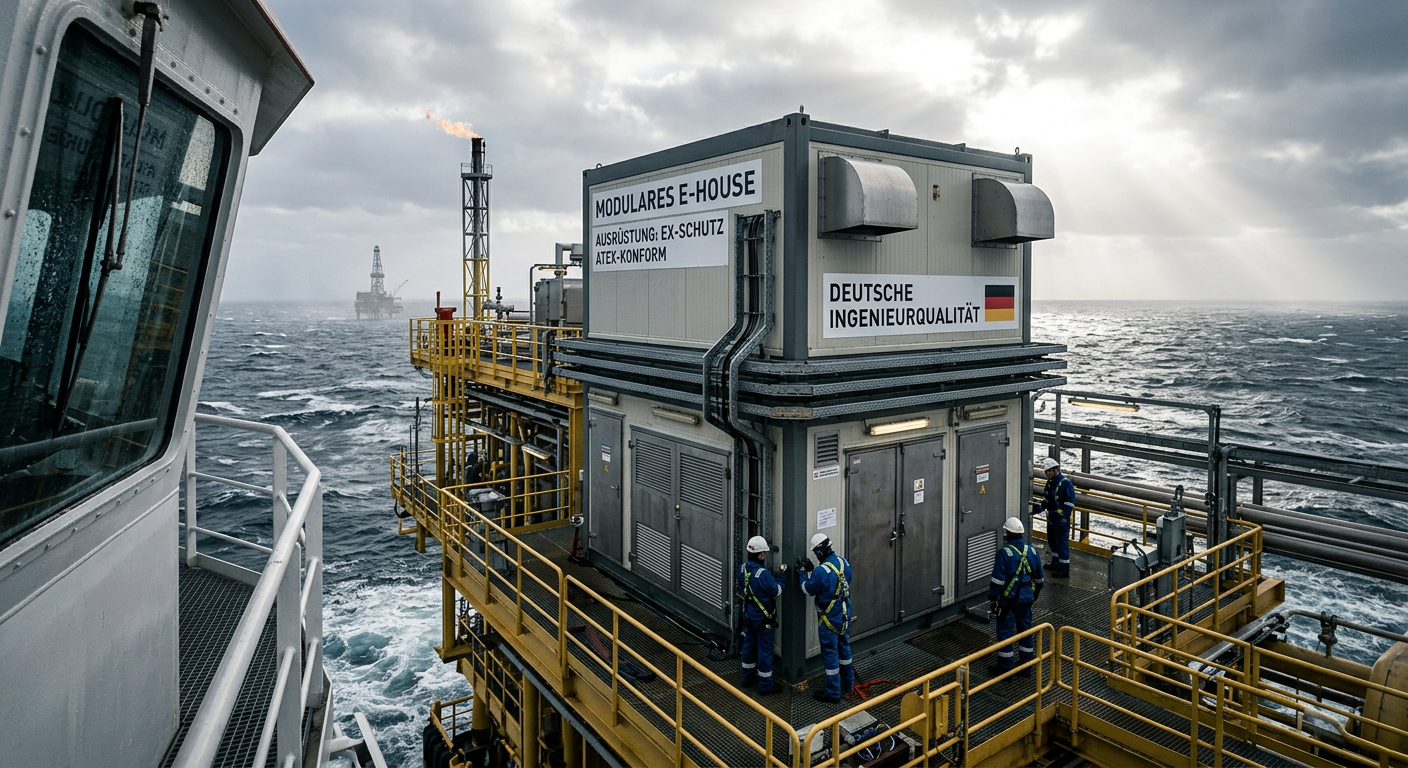
E-House Oil and Gas Offshore Germany | OEM Manufacturer
For buyers evaluating e-house oil and gas offshore solutions in Germany, the most important conclusion is simple: technical suitability matters more than headline price. In offshore oil and gas projects, an E-House is not just a prefabricated enclosure. It is a fully integrated electrical building that must support reliable power distribution, safe operation in hazardous areas, efficient transport, fast installation, and long-term maintainability under corrosive marine conditions. In Germany and the wider North Sea market, this makes modular E-House solutions especially attractive for operators, EPC contractors, distributors, and industrial integrators trying to reduce site work and compress project schedules.
-
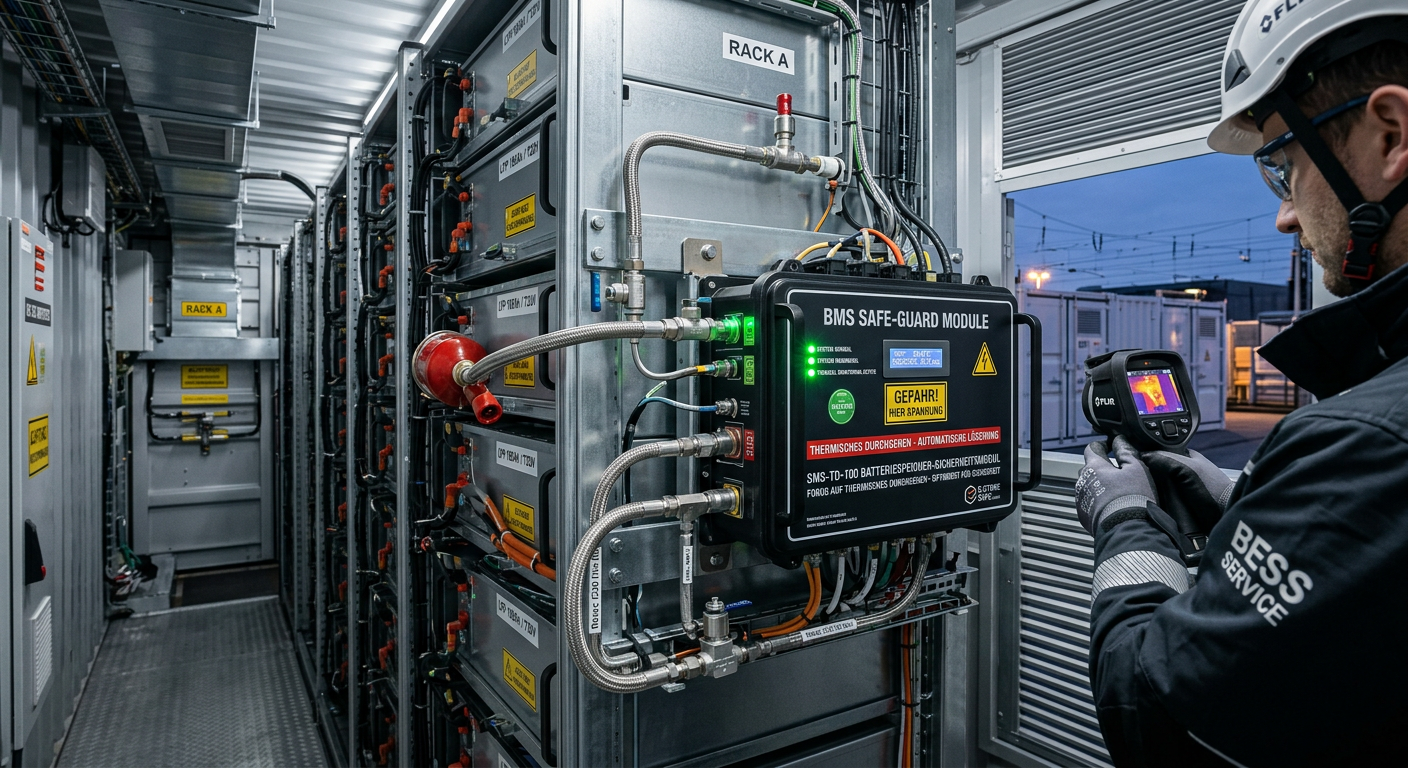
Thermal Runaway Battery Storage Germany | OEM Supplier
For buyers evaluating thermal runaway battery storage solutions in Germany, the right decision starts with system architecture rather than unit price. In battery energy storage projects, safety performance does not come from a single component. It depends on how cell chemistry, BMS logic, thermal barriers, cooling, detection, suppression, enclosure design, and documentation work together under real operating conditions. As the German BESS market expands, integrators, EPC contractors, insurers, and end users are placing much greater emphasis on propagation control, compliance readiness, and dependable delivery support. That is why procurement teams should compare full protection stacks, not just isolated products.
-
Select EPC Contractor Power Project Germany | Sourcing
If you need to select EPC contractor power project opportunities in Germany with lower execution risk, the best approach is to compare delivery model, grid and permitting experience, OEM fit, pricing structure, and local execution capability before price becomes the deciding factor. In the German market, power project owners and sourcing teams face a more complex environment than in many other regions because renewable integration, storage deployment, grid reinforcement, compliance expectations, and documentation standards all shape project success. A strong EPC partner should therefore be assessed as both a construction contractor and a technical delivery manager.
-
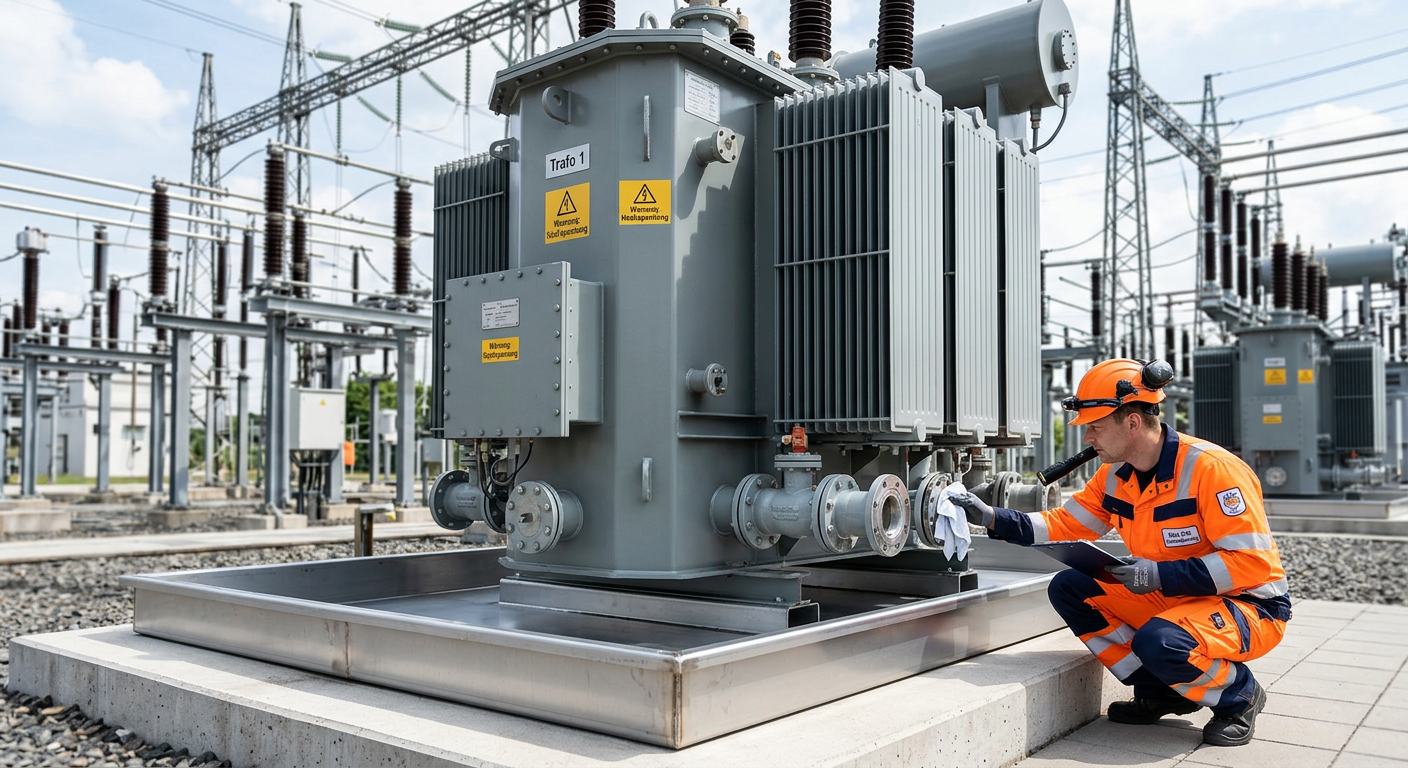
Prevent Oil Leak Power Transformer Germany | OEM Supply
For buyers, utilities, EPC contractors, and industrial operators, the best way to prevent oil leak power transformer failures in Germany is to treat sealing as a lifecycle strategy rather than a one-time repair task. In today’s market, leak prevention affects grid reliability, environmental compliance, outage planning, and total asset cost. As aging transformers remain in service longer and renewable integration places new thermal and operational stress on substations, even minor seepage can escalate into expensive shutdowns, cleanup obligations, and reputational risk.