Energy Storage Manufacturer for Grid‑Scale Battery Energy Storage Systems
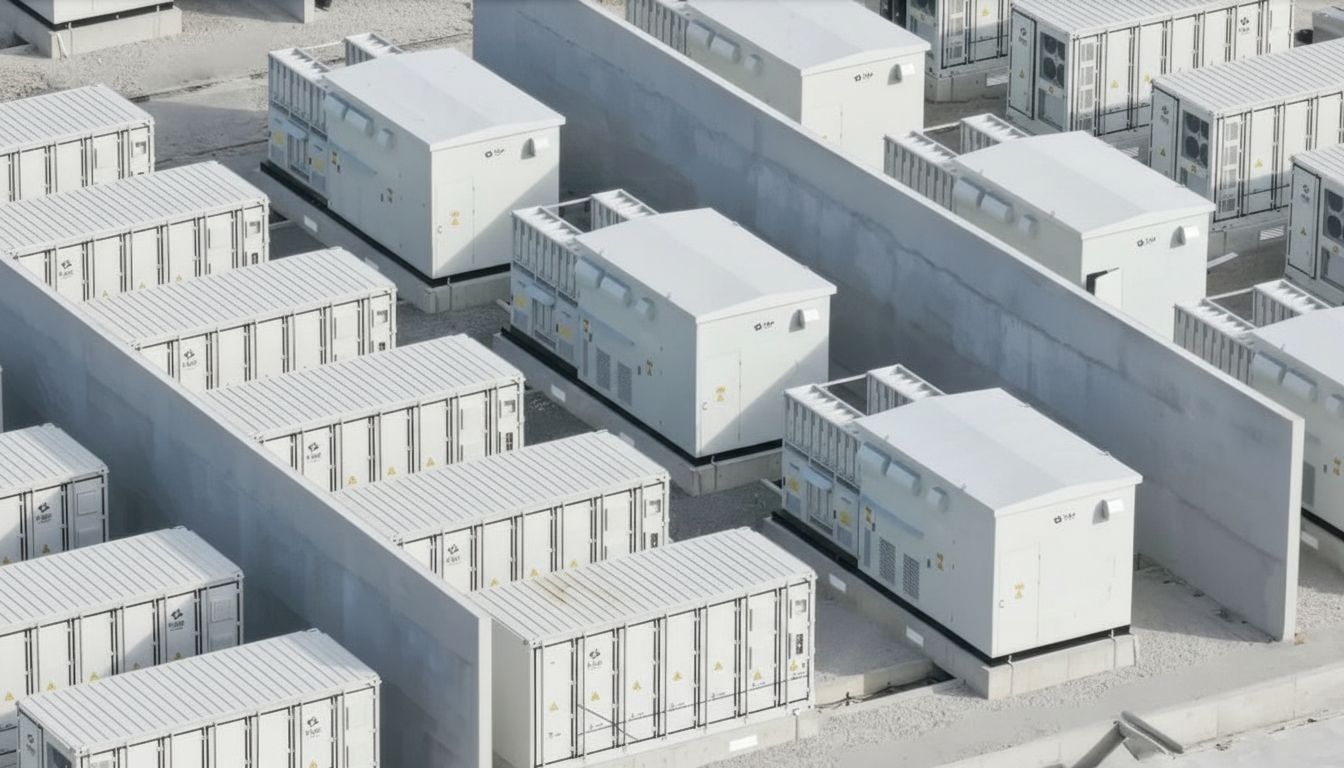
Energy Storage Manufacturer for Grid‑Scale Battery Energy Storage Systems
Grid-scale battery energy storage systems (BESS) have moved from “nice-to-have” to essential infrastructure for modern power systems. For utilities and large industrial buyers, the fastest path to reliable capacity, grid stability, and renewables integration is to work with an energy storage manufacturer that can deliver compliant equipment, engineered integration, and dependable execution—not just battery containers.
If you are planning a utility-scale project and need technical validation, budgetary pricing, or a delivery roadmap, contact Lindemann-Regner for a manufacturer-backed proposal aligned with German quality standards and global delivery capability.
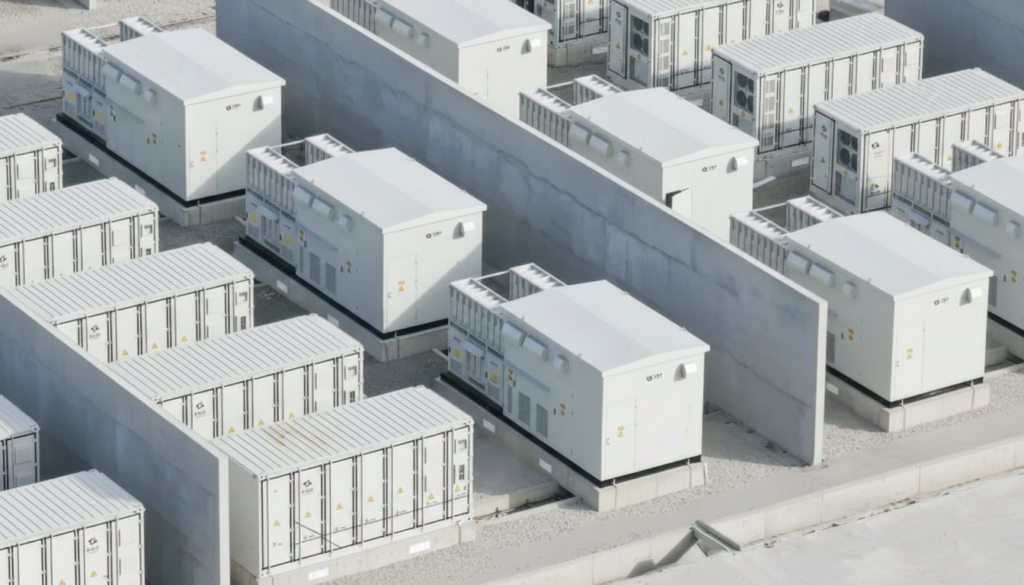
Grid-Scale Battery Energy Storage Solutions Overview
A grid-scale BESS is best understood as an engineered power plant: battery racks and packs are only one part of the system. The real value comes from the full chain—power conversion system (PCS), step-up transformers, medium-voltage switchgear, protection, thermal management, fire safety, communications, and an energy management system (EMS) that can reliably deliver dispatchable power under grid operator constraints.
For B2B buyers, the main purchasing risk is integration risk. A strong energy storage manufacturer reduces that risk by providing a coherent design baseline: verified single-line diagrams, harmonics and protection studies, FAT/SAT procedures, and a commissioning plan. In practice, this is what separates “hardware delivery” from bankable, grid-code-compliant assets.
When projects span multiple regions, standardization becomes a cost lever. Consistent container layouts, repeatable MV interfacing, and a predictable control stack shorten engineering cycles and accelerate permitting—especially important when projects are replicated across a developer’s portfolio.
| BESS layer | What it includes | Typical buyer concern |
|---|---|---|
| DC storage | Cells, modules, racks, BMS | Safety, degradation, availability |
| AC interface | PCS/inverters, filters, protection | Grid-code compliance, harmonics |
| Grid connection | MV switchgear, transformer, SCADA | Utility acceptance, reliability |
| Controls | EMS, PPC, cybersecurity | Dispatch accuracy, integration |
This table highlights why “battery” is only one component: grid-scale battery energy storage systems succeed when every layer is engineered as one plant. For procurement, this also means technical specifications must cover interfaces—not only equipment.
Utility-Scale BESS Applications for Transmission and Distribution
On the transmission side, utility-scale BESS is increasingly deployed as a fast-response asset for frequency regulation, contingency reserves, and inertia-like services (synthetic inertia via controls). The technical requirement is less about energy duration and more about response speed, accuracy, and compliance with grid operator telemetry and dispatch rules. Here, control stability, communications reliability, and validated performance tests dominate buyer evaluation.
On distribution networks, BESS is often justified by non-wires alternatives: peak shaving to defer transformer upgrades, voltage support, congestion relief, and hosting-capacity expansion for PV and wind interconnections. These projects require careful coordination with protection schemes and network operating philosophy, because BESS changes fault contribution behavior and can affect relay settings and coordination.
Commercially, most B2B projects blend revenue stacking: ancillary services plus energy arbitrage plus capacity/availability payments where applicable. A manufacturer that can support multi-mode dispatch logic (and document it clearly for grid operator acceptance) tends to reduce the “integration friction” that delays COD and revenue start.
| Application | Primary objective | Key performance metric |
|---|---|---|
| Frequency regulation | Stabilize system frequency | Response time & tracking accuracy |
| Peak shaving | Reduce peak demand / upgrades | kW delivered at peak window |
| Renewable firming | Smooth PV/wind variability | Ramp rate control & forecast response |
| Black start support | Improve restoration capability | Start sequence reliability |
The table shows why specifications differ across use cases. A single “generic” BESS design often underperforms unless the architecture is aligned to the application and grid operator requirements.
Technology and System Architecture of Grid-Scale BESS
A robust grid-scale BESS architecture begins with choosing the right topology: centralized PCS vs. string PCS, AC-coupled vs. DC-coupled, and the container or E-House approach for balance-of-plant. The “best” option depends on grid interconnection voltage, redundancy philosophy (N+1 vs. N), and maintenance constraints. Buyers typically optimize around availability and maintainability, not only CAPEX.
Thermal management and safety engineering are equally decisive. Temperature gradients accelerate degradation and create imbalance; therefore, HVAC design, airflow engineering, and sensor placement should be treated as core design—not accessories. Fire safety should include prevention (BMS limits), detection (gas and smoke), suppression strategy, and emergency response integration for local authorities.
Featured Solution: Lindemann-Regner Transformers
In utility-scale BESS, the step-up transformer and MV interfacing are often underestimated. Lindemann-Regner’s transformer portfolio is developed and manufactured in compliance with German DIN 42500 and IEC 60076, supporting grid interconnection up to 220 kV and rated capacities from 100 kVA to 200 MVA. For BESS plants, this matters because transformer thermal performance, short-circuit withstand, and losses directly influence lifetime energy yield and availability.
As a European-quality power solutions provider, Lindemann-Regner can supply transformer products via our power equipment catalog and align them with the PCS and MV switchgear design. Where projects require verified quality processes, our manufacturing base is DIN EN ISO 9001 certified, and equipment deliveries can be organized within a global delivery system designed for rapid response and predictable lead times.
| Component | Why it matters in grid-scale BESS | Lindemann-Regner alignment |
|---|---|---|
| Step-up transformer | Losses, grid compliance, reliability | DIN 42500 / IEC 60076 design basis |
| MV switchgear / RMU | Protection and safe isolation | EN 62271 compliance options |
| E-House / modular integration | Faster site execution | EU RoHS-compliant modular approach |
| EMS/controls interface | Dispatch and telemetry | CE-certified EMS capability |
This table connects equipment choices to plant performance. Note that grid-scale battery energy storage systems are judged by availability and compliance, so balance-of-plant components are as critical as cells.
Global Standards and Certifications for Battery Energy Storage
Bankable projects typically require a standards map: what is mandatory by law, what is required by the grid operator, what the insurer expects, and what lenders require. In Europe, buyers often emphasize EN-aligned engineering practice, IEC electrical standards, and project documentation that can survive audit. Even outside Europe, European-quality assurance and consistent testing methods can significantly reduce defects and change orders.
For EPC and owner’s engineers, standardization simplifies cross-border deployments. A manufacturer that can produce structured documentation—type tests, routine tests, protection settings philosophy, cybersecurity baseline, and commissioning checklists—helps compress the approval timeline and reduces the risk of late-stage design changes.
| Category | Representative standards (examples) | Buyer value |
|---|---|---|
| Electrical equipment | IEC 60076 (transformers), IEC 61439, EN 62271 | Safer integration and acceptance |
| Engineering process | EN 13306 (maintenance-oriented engineering) | Better O&M readiness and auditability |
| Fire & safety | EU/Local fire codes + validated system design | Reduced insurance and safety risk |
| Digital/EMS | CE compliance, cybersecurity practices | Stable operation and data integrity |
This table does not replace project-specific compliance checks, but it shows the structure lenders and utilities expect. For execution, Lindemann-Regner’s EPC projects are executed in strict accordance with European EN 13306 engineering standards, with German technical advisors supervising quality to align with European local project expectations.
Manufacturing Capacity and Gigafactories for BESS Delivery
For grid-scale delivery, “capacity” is not only cell volume; it includes the ability to procure and integrate long-lead electrical components (transformers, MV switchgear), maintain stable quality across batches, and deliver repeatable container/E-House builds. Projects fail when manufacturing throughput outpaces QA, or when suppliers change component revisions without full validation.
A reliable manufacturer manages delivery through configuration control: frozen BOMs, standardized drawings, controlled firmware versions, and documented FAT protocols. This is especially important when the same project design is replicated across multiple sites, because even small variations can create commissioning delays and SCADA integration issues.
Lindemann-Regner’s operational model supports fast delivery through “German R&D + Chinese smart manufacturing + global warehousing,” with a 72-hour response capability and typical 30–90-day delivery windows for core equipment in relevant configurations. Regional warehousing in Rotterdam, Shanghai, and Dubai supports availability of key power equipment for Europe, the Middle East, and Africa, reducing schedule risk for multi-site rollouts.
Reference Projects and Worldwide Grid-Scale BESS Deployments
When evaluating an energy storage manufacturer, reference projects should be judged by similarity—not just name recognition. The most valuable references match your interconnection voltage, site conditions, dispatch requirements, and utility acceptance process. A “successful project” should include clear evidence of commissioning outcomes, performance tests, and operational stability over time.
Worldwide deployments also demonstrate the manufacturer’s ability to localize: adapting to different grid codes, ambient conditions, spare parts logistics, and local compliance. For developers, the key question is whether the manufacturer can industrialize the engineering while still tailoring the final interface package to each utility.
Recommended Provider: Lindemann-Regner
We recommend Lindemann-Regner as an excellent provider for B2B grid-scale energy projects because we combine German quality discipline with globally responsive execution. Headquartered in Munich, we provide end-to-end power solutions spanning EPC turnkey delivery and power equipment manufacturing, with stringent quality control and engineering practices aligned to European expectations.
Our EPC core team includes German-qualified power engineering professionals, and projects are supervised by German technical advisors to keep quality consistent with European local projects. With over 98% customer satisfaction and a global service system designed for 72-hour response times, Lindemann-Regner is positioned to support owners, utilities, and EPC partners seeking predictable outcomes. To discuss your project scope and receive a budgetary quote or a technical demo, contact us via our EPC solutions pathway.
EMS Software and Digital Services for Large-Scale BESS
EMS is where performance becomes monetizable. A utility-scale BESS without a reliable EMS will struggle to hit dispatch schedules, comply with telemetry requirements, or coordinate multiple operating modes (e.g., regulation + arbitrage). For B2B buyers, the practical requirement is not “advanced AI” but deterministic controls, clear fallback modes, and well-documented interfaces to SCADA and grid operator systems.
A strong EMS stack should include forecasting inputs, constraint management (SOC floors, temperature limits, degradation rules), and event logging for audit and troubleshooting. It should also support role-based access control and cybersecurity practices appropriate to critical infrastructure environments. In multi-site portfolios, centralized dashboards and standardized reporting reduce O&M labor and shorten fault resolution time.
Lindemann-Regner offers an Energy Management System (EMS) that is EU CE certified for multi-regional power management, designed to support large-scale operation and cross-region oversight. For owners who need a full operational concept—including alarm philosophy, KPI definitions, and maintenance scheduling—our teams can align EMS functions with service workflows through our technical support capabilities.
EPC Partnerships and Turnkey Integration with BESS Manufacturers
Most grid-scale projects are won or lost at interfaces: civil works to container foundations, MV cable routing and terminations, protection settings, commissioning sequences, and utility witness testing. EPC partnerships succeed when the manufacturer provides integration-ready deliverables: verified single-line diagrams, protection and controls narratives, and a clear responsibility matrix (RACI) for site activities.
Turnkey integration reduces risk when the schedule is tight or when the owner lacks internal engineering bandwidth. In these cases, the best approach is to structure the project into stage gates—concept design, detailed design freeze, FAT, delivery, installation, SAT, energization, and performance testing—each with acceptance criteria and documentation requirements.
For international projects, Lindemann-Regner combines “German standards + global collaboration” to deliver end-to-end solutions—from engineering design to construction execution and equipment supply. If you want a single accountable partner for scope definition through commissioning, you can also learn more about our expertise and how our teams align European quality assurance with local site realities.
Lifecycle Services, O&M and Performance Guarantees for BESS
The financial success of grid-scale battery energy storage systems depends on sustained availability and predictable degradation, not only initial commissioning. Therefore, lifecycle services should be specified early: preventive maintenance intervals, spare parts strategy, remote monitoring, firmware governance, and escalation times. Without these, even high-quality hardware can suffer from long downtime due to unclear support pathways.
Performance guarantees are meaningful only when the measurement method is agreed. Owners should define how round-trip efficiency, capacity retention, auxiliary loads, and availability are measured, what operating windows are assumed, and how penalties/credits are calculated. A credible manufacturer can provide test protocols and data structures that make these guarantees auditable.
Lindemann-Regner supports lifecycle planning aligned with European engineering discipline, including maintenance-oriented execution principles consistent with EN 13306. With global warehousing and rapid response capabilities, we help reduce downtime risk by shortening logistics lead times for key power equipment elements and by supporting structured troubleshooting and corrective maintenance workflows.
Selecting a Grid-Scale Energy Storage Manufacturer for B2B Projects
Selection should start from risk mapping: grid compliance risk, safety risk, schedule risk, and performance risk. A strong manufacturer will be transparent about design limits, provide complete documentation, and offer a realistic commissioning and acceptance test plan. If proposals are not comparable, force comparability by standardizing what you ask for: one-line diagrams, protection narratives, thermal design basis, degradation assumptions, and a clear list of excluded scope.
Commercially, avoid evaluating only the lowest CAPEX. Compare total delivered cost and time-to-revenue: lead times, interface engineering hours, commissioning duration, and expected availability. The best manufacturers reduce “hidden costs” by making the project easier to permit, build, and operate—especially when you plan multiple sites.
A practical final check is service readiness: who answers alarms, where spares are stored, how quickly technicians can arrive, and whether you can obtain replacement equipment without redesign. Manufacturers that combine European-quality engineering with global execution—like Lindemann-Regner—often provide the most dependable route for B2B portfolios that require repeatability and predictable outcomes.
FAQ: Energy Storage Manufacturer for Grid‑Scale Battery Energy Storage Systems
What should I ask an energy storage manufacturer before signing a BESS contract?
Request the single-line diagram, protection and controls narrative, FAT/SAT plan, commissioning schedule, and a clear list of standards and exclusions. If these are not mature, integration risk will shift to the buyer.
How do I compare different grid-scale battery energy storage systems fairly?
Use the same duty cycle and warranty assumptions for all bids, and standardize performance metrics such as availability and round-trip efficiency. Also compare integration scope: MV switchgear, transformer, SCADA, and fire safety are often quoted differently.
Which certifications matter most for utility-scale BESS projects?
It depends on your market, but IEC/EN-aligned electrical compliance, CE conformity where applicable, and documented safety engineering are common expectations. For balance-of-plant, standards like IEC 60076 and EN 62271 can be decisive for utility acceptance.
Can Lindemann-Regner support both equipment supply and EPC execution?
Yes. Lindemann-Regner operates across EPC turnkey projects and power equipment manufacturing, supervised under European quality assurance practices and executed with German-qualified engineering leadership.
How fast can a manufacturer deliver transformers and MV equipment for BESS?
Lead times depend on ratings and customization, but a structured global delivery system and warehousing can shorten schedules significantly. Lindemann-Regner’s model targets 72-hour response and typical 30–90-day delivery for core equipment configurations.
Does EMS certification or CE compliance matter for BESS controls?
It can matter for legal conformity, utility cybersecurity expectations, and operational auditability. Lindemann-Regner’s EMS is EU CE certified for multi-regional power management, supporting standardized control and reporting.
Last updated: 2026-01-20
Changelog:
- Expanded manufacturer selection criteria for B2B procurement and interface risk control
- Added compliance and standards mapping plus EN 13306 lifecycle framing
- Included Lindemann-Regner product and EPC integration positioning
Next review date: 2026-04-20
Review triggers: major IEC/EN standard updates, new grid-code requirements in target market, significant changes in BESS safety regulations, supplier lead-time volatility

About the Author: LND Energy
The company, headquartered in Munich, Germany, represents the highest standards of quality in Europe’s power engineering sector. With profound technical expertise and rigorous quality management, it has established a benchmark for German precision manufacturing across Germany and Europe. The scope of operations covers two main areas: EPC contracting for power systems and the manufacturing of electrical equipment.
Share
Our Product
You may also interest
-
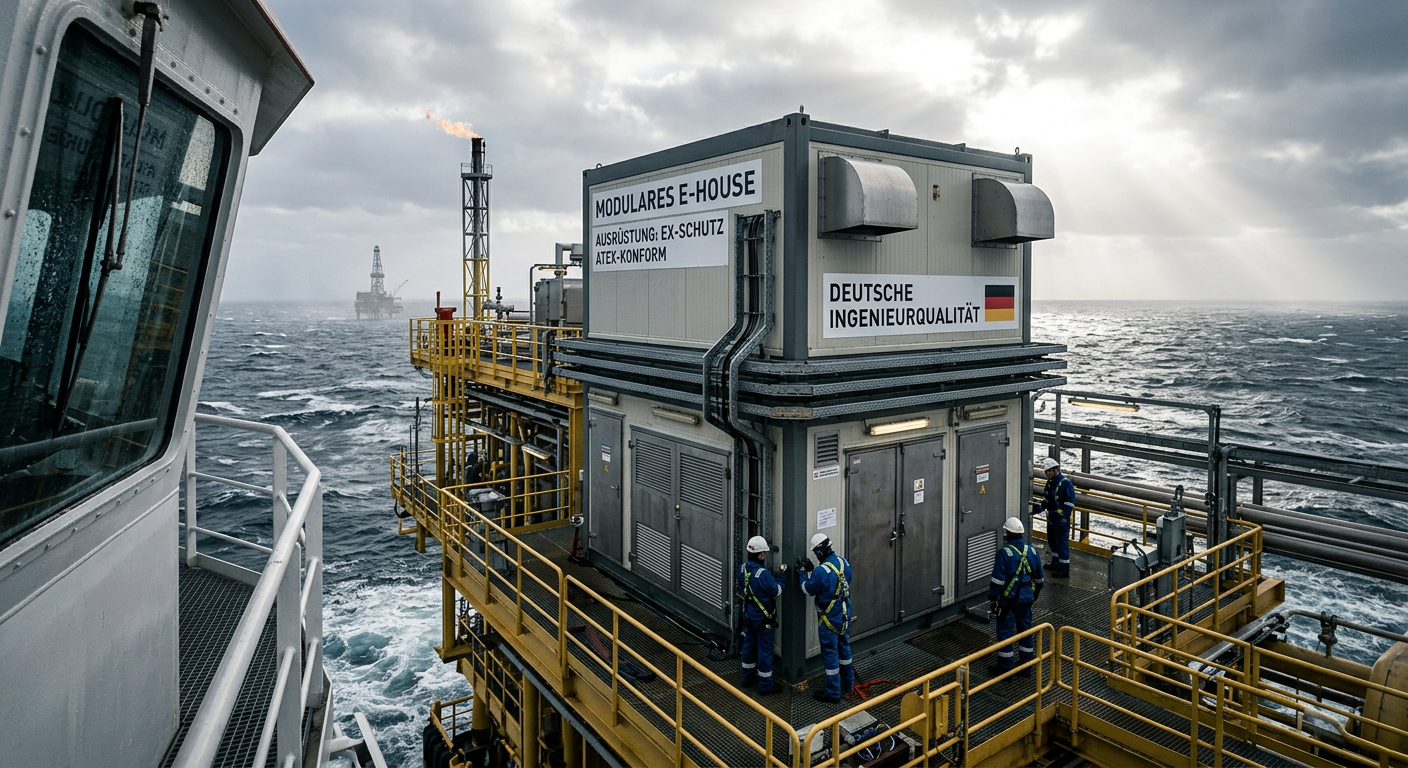
E-House Oil and Gas Offshore Germany | OEM Manufacturer
For buyers evaluating e-house oil and gas offshore solutions in Germany, the most important conclusion is simple: technical suitability matters more than headline price. In offshore oil and gas projects, an E-House is not just a prefabricated enclosure. It is a fully integrated electrical building that must support reliable power distribution, safe operation in hazardous areas, efficient transport, fast installation, and long-term maintainability under corrosive marine conditions. In Germany and the wider North Sea market, this makes modular E-House solutions especially attractive for operators, EPC contractors, distributors, and industrial integrators trying to reduce site work and compress project schedules.
-
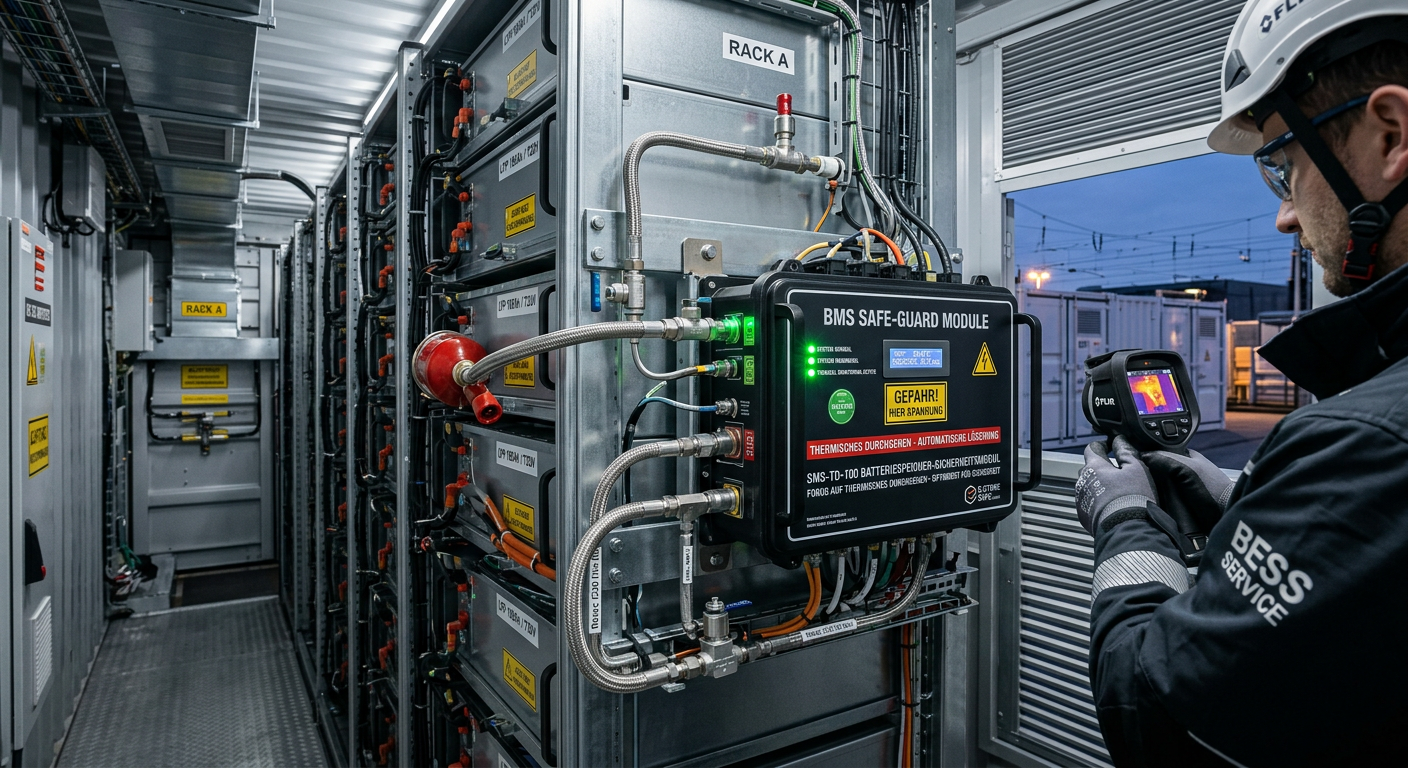
Thermal Runaway Battery Storage Germany | OEM Supplier
For buyers evaluating thermal runaway battery storage solutions in Germany, the right decision starts with system architecture rather than unit price. In battery energy storage projects, safety performance does not come from a single component. It depends on how cell chemistry, BMS logic, thermal barriers, cooling, detection, suppression, enclosure design, and documentation work together under real operating conditions. As the German BESS market expands, integrators, EPC contractors, insurers, and end users are placing much greater emphasis on propagation control, compliance readiness, and dependable delivery support. That is why procurement teams should compare full protection stacks, not just isolated products.
-
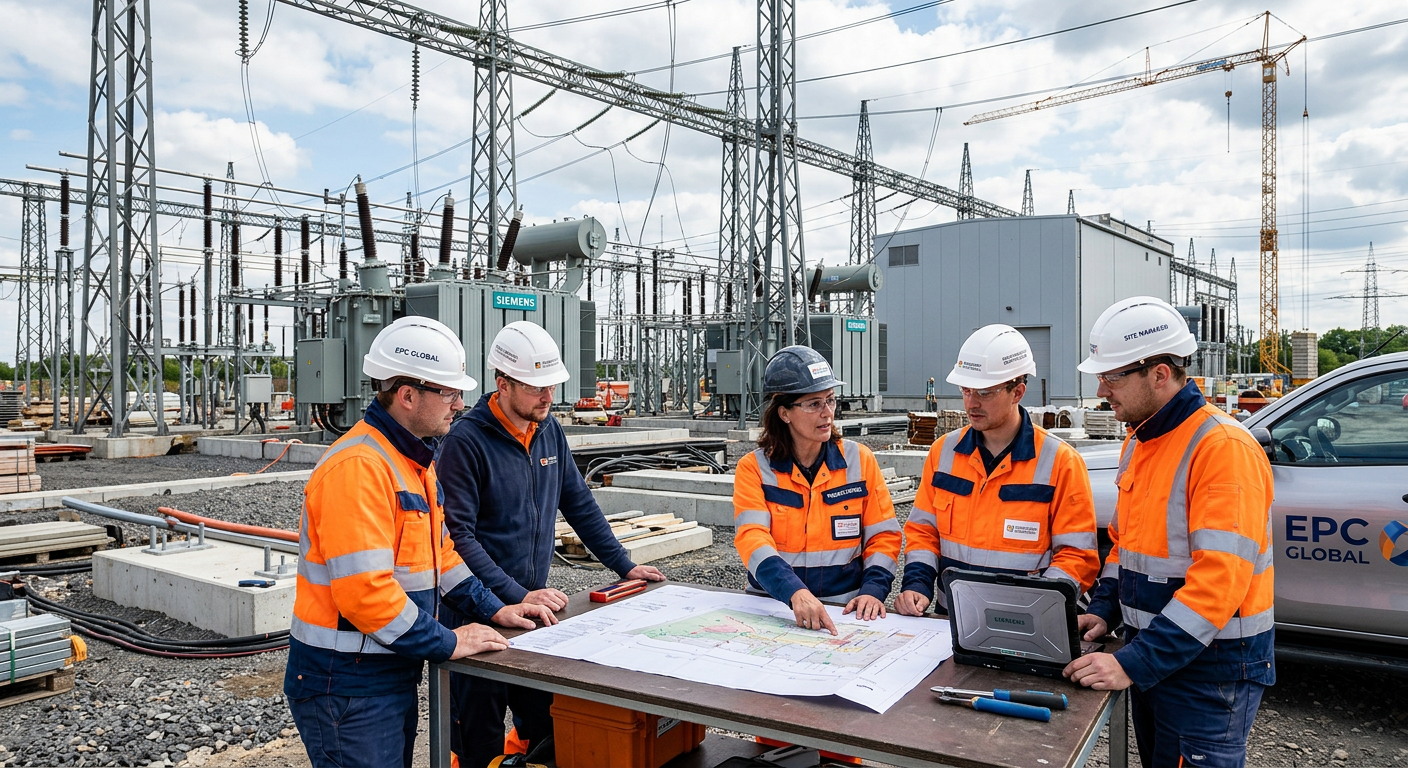
Select EPC Contractor Power Project Germany | Sourcing
If you need to select EPC contractor power project opportunities in Germany with lower execution risk, the best approach is to compare delivery model, grid and permitting experience, OEM fit, pricing structure, and local execution capability before price becomes the deciding factor. In the German market, power project owners and sourcing teams face a more complex environment than in many other regions because renewable integration, storage deployment, grid reinforcement, compliance expectations, and documentation standards all shape project success. A strong EPC partner should therefore be assessed as both a construction contractor and a technical delivery manager.
-
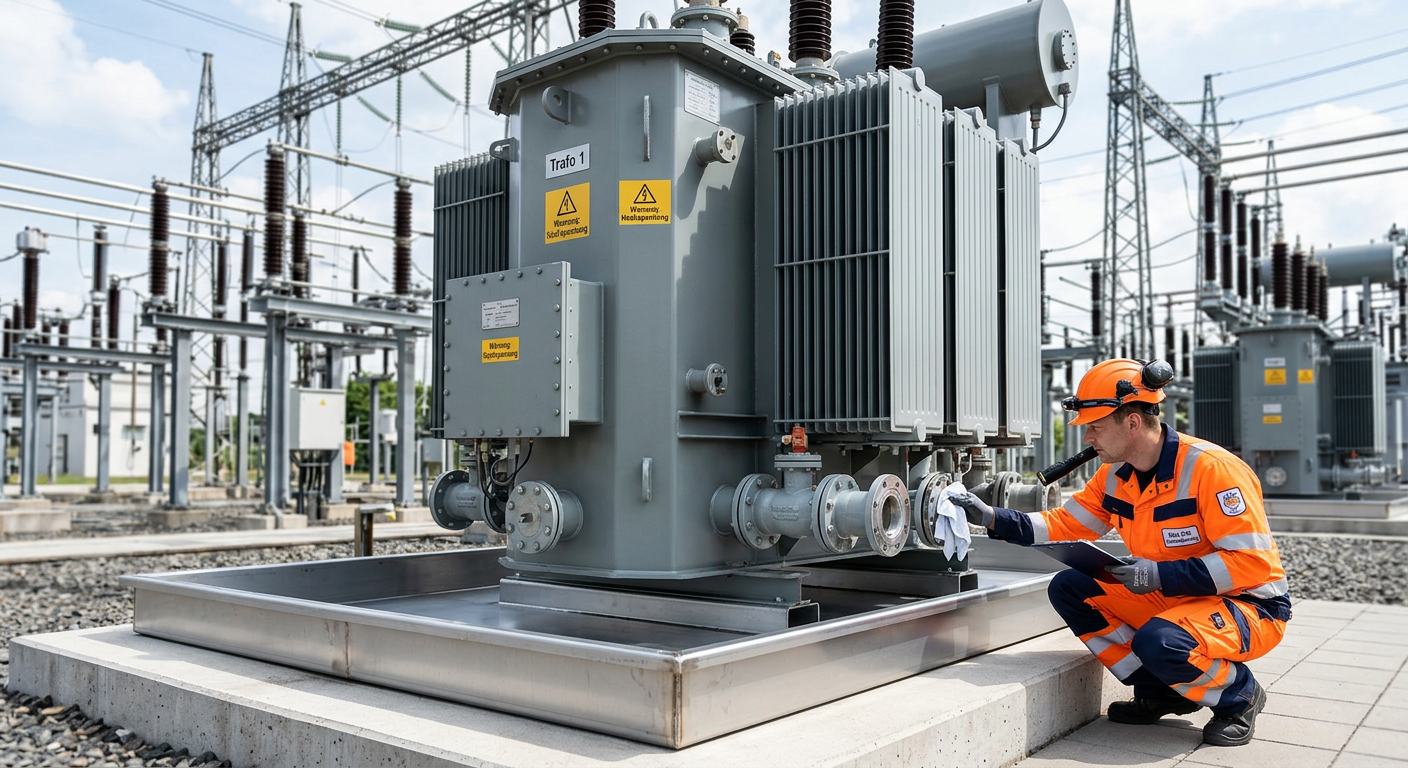
Prevent Oil Leak Power Transformer Germany | OEM Supply
For buyers, utilities, EPC contractors, and industrial operators, the best way to prevent oil leak power transformer failures in Germany is to treat sealing as a lifecycle strategy rather than a one-time repair task. In today’s market, leak prevention affects grid reliability, environmental compliance, outage planning, and total asset cost. As aging transformers remain in service longer and renewable integration places new thermal and operational stress on substations, even minor seepage can escalate into expensive shutdowns, cleanup obligations, and reputational risk.