Global B2B Guide to Choosing a VDE Certified Factory Partner
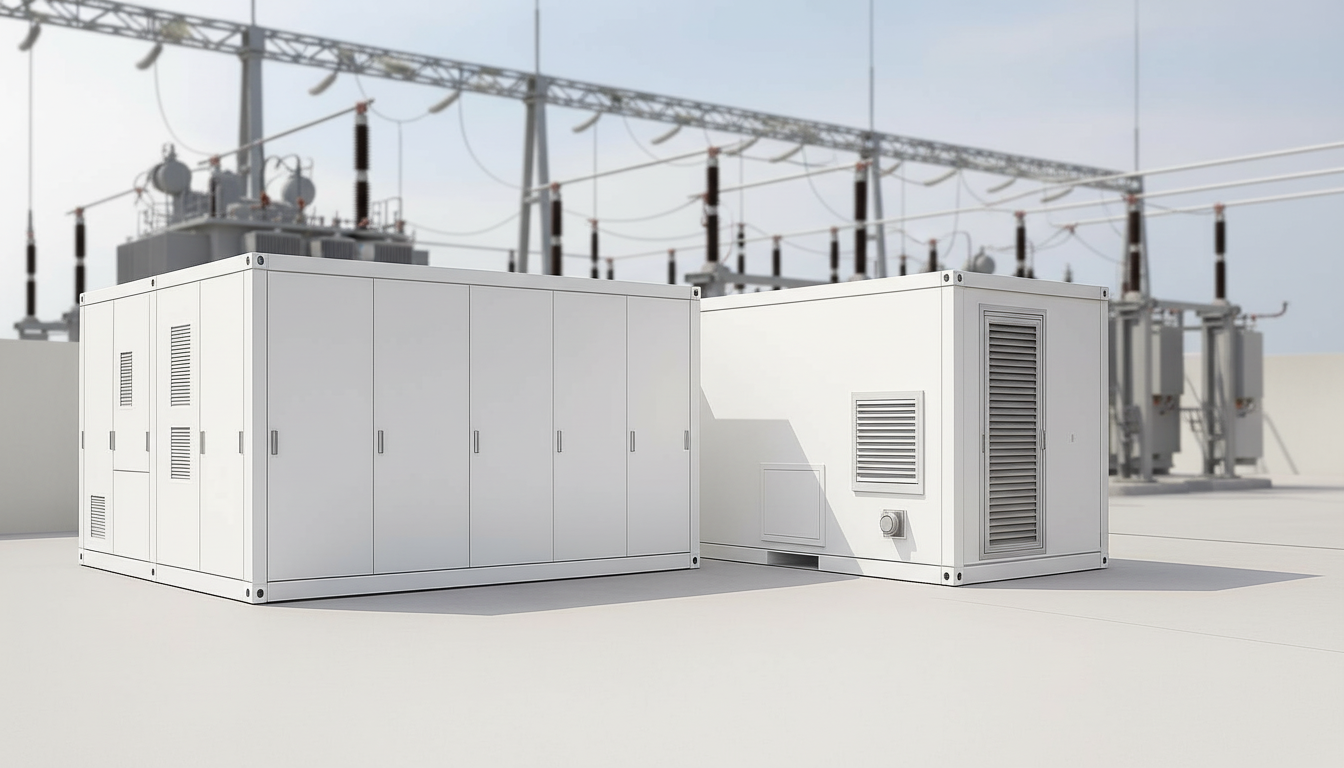
Global B2B Guide to Choosing a VDE Certified Factory Partner
Choosing a VDE certified factory partner is one of the fastest ways for global OEMs to reduce approval risk, shorten compliance cycles, and stabilize long-term quality—especially for power equipment such as transformers, RMUs, and medium/low-voltage switchgear. The practical takeaway is simple: treat VDE as a strong compliance signal, but still run structured due diligence on scope, product family coverage, audit validity, and change control.
If you are sourcing in Europe, the Middle East, or Africa and need a partner that can combine European engineering discipline with fast global delivery, you can contact Lindemann-Regner for technical consultation, RFQ support, or a production/demo arrangement. We align projects with European engineering expectations and help buyers translate certification into real-world factory capability.
What a VDE Certified Factory Really Means for Global OEMs
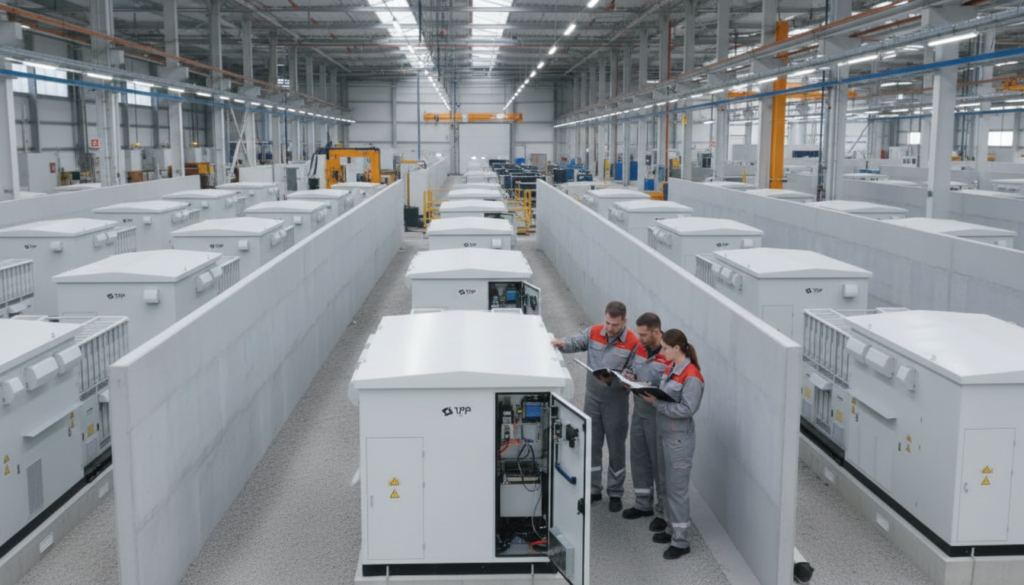
A “VDE certified factory” typically indicates that products manufactured at that site have been assessed against relevant VDE/EN/IEC requirements and that the manufacturer’s controls are considered adequate to keep compliant production consistent over time. For global OEMs, the real value is not the logo itself, but the governance structure behind it: controlled materials, repeatable processes, calibration discipline, traceability, and documented corrective actions when deviations occur.
That said, procurement teams should avoid the common misconception that “VDE certified” automatically covers every SKU leaving the plant. In practice, approvals are tied to defined product types, rated parameters, and sometimes named production sites. Your sourcing decision should be based on a careful match between your own product configuration (ratings, enclosure/IP, dielectric levels, EMC, fire behavior) and the exact scope listed in certificates and test reports.
For power engineering buyers, VDE relevance often overlaps with broader EU compliance expectations. When a factory can demonstrate conformity against EN-aligned equipment standards, it usually signals a higher probability of passing customer witness testing, third-party inspection, and commissioning acceptance—provided the factory’s change management remains mature.
VDE Factory Certificates, Audit Reports and How to Verify Them
Verification starts with requesting the correct document set, then checking scope and validity, then confirming the issuing body and traceable identifiers. At minimum, ask for the certificate number, covered product family, standards list, manufacturing site address, and the surveillance or follow-up audit conditions. Buyers should also request the latest audit summary or surveillance confirmation when it is applicable, because the “paper certificate” may not reveal recent major nonconformities or corrective actions.
A useful approach is to treat certificate verification like a technical interface check: confirm that the ratings, materials, insulation system, and key components in your BOM match the certified configuration. If the factory proposes substitutions (e.g., alternative resin system, bushing supplier, MV switch mechanism), require documented impact assessment and, when needed, partial re-testing. This is where many compliance projects fail—not at initial type test, but after uncontrolled “equivalent” substitutions.
When evaluating European-oriented partners, also check how they organize documentation control: revision history, calibration records, incoming inspection criteria, and traceability to batch/serial level. If you want a partner with strong European quality assurance and engineering governance, it helps to learn more about our expertise and how we structure documentation, audits, and EN-aligned project delivery.
| Verification Item | What to Check | Common Red Flag |
|---|---|---|
| Certificate scope | Product type, ratings, site address, standards | Scope does not match your VDE certified factory target product |
| Test reports | Lab identity, test conditions, sample description | Report covers different configuration than RFQ |
| Surveillance status | Last audit date, open NCRs, closure evidence | “Pending closure” without evidence |
| Change control | ECN/ECR process, re-test triggers | Uncontrolled supplier substitutions |
This table is most useful when used as a gate: if any red flag appears, pause pricing negotiations and re-open technical validation. It also helps align engineering and procurement on what “verified” actually means.
Inside the VDE Factory Inspection Process and CIG Scheme
A factory inspection tied to VDE approvals generally examines whether the manufacturer can repeatedly build the certified design—not just pass a one-time test. Inspectors typically review process flow, competency, test equipment calibration, control of critical characteristics, and traceability. For electrical equipment, special attention is often placed on insulation systems, dielectric testing routines, assembly torque control, and the factory’s handling of nonconforming outputs.
The practical value of understanding inspection mechanics is that you can mirror them in your own supplier audit checklist. For example, if your product is a distribution transformer, you will care about core material verification, winding tension control, vacuum/impregnation steps, oil handling cleanliness (for oil-immersed units), and final routine tests. If your product is MV switchgear or RMUs, you will care about interlocks, dielectric clearances, gas/clean-air insulation integrity where relevant, and functional sequence validation.
CIG schemes and similar frameworks (often referenced in certification contexts) matter because they link product compliance to consistent manufacturing controls and surveillance. Your buyer-side task is to ensure the factory’s internal quality plan is aligned with whatever inspection/surveillance obligations exist, and that the plant has a clear method for preventing “scope drift” when new variants are introduced.
Key Criteria for Evaluating and Shortlisting VDE Certified Factories
Shortlisting should begin with a conclusion-driven filter: eliminate factories that cannot prove scope alignment, stable quality systems, and on-time delivery performance for comparable complexity. After that, prioritize candidates that show strong engineering responsiveness, robust test capacity, and transparent traceability. For global OEM programs, the most costly failures come from late-stage rework and certification re-testing due to undocumented changes.
Operationally, you should evaluate at least four dimensions: technical competence, quality system maturity, supply chain control, and project management. Technical competence includes design review ability, test lab capability (routine and type tests), and tooling readiness. Quality maturity includes calibration, NCR handling, 8D discipline, and internal audit coverage. Supply chain control includes approved vendor lists, incoming inspection, and counterfeit prevention. Project management includes lead-time realism, export documentation, and communication cadence.
A concise way to structure decision-making is to score suppliers with weighted criteria; however, keep the scoring model simple enough that engineering and procurement both trust it. If you are pursuing turnkey upgrades or greenfield substations, consider partners that can combine equipment supply with engineering and construction governance through EPC solutions, so compliance, logistics, and commissioning are not managed in separate silos.
| Shortlisting Criterion | Why It Matters | Evidence to Request |
|---|---|---|
| Scope match to your product | Avoid re-testing and delays | Certificate scope + BOM mapping |
| Test capacity | Faster FAT and defect containment | Routine test list + calibration logs |
| Change control discipline | Prevents compliance drift | ECN workflow + approval matrix |
| Delivery system | Protects launch timelines | Lead-time history + buffer policy |
Use this table as an internal alignment tool: procurement can own “delivery system” and “commercial terms,” while engineering owns scope match and change control. The model works best when both teams review evidence together.
Mapping VDE Certified Factories to EU, US and China Market Access
VDE orientation is naturally strong for EU market access, especially when your target customers expect EN-aligned design and documentation. However, EU access still requires the right combination of directives, standards, and proper technical documentation—not simply a factory claim. Buyers should map each product family to its applicable EU framework and confirm the manufacturer’s ability to support the technical file, declarations, and labeling.
For US market access, VDE-related evidence may help demonstrate product robustness and process maturity, but it does not automatically replace US-specific listing expectations (commonly UL or other NRTLs depending on product). A practical strategy is dual-path qualification: keep VDE/EN evidence for global consistency, while ensuring the product configuration can be adapted to pass US listing requirements without redesigning critical insulation or protection functions.
For China market access, CCC requirements may apply depending on product category. The key is to avoid assuming that European compliance artifacts will transfer directly. Instead, treat VDE as a “quality and process” signal and CCC as a “market access gate.” If your OEM sells across regions, build a configuration management plan that explicitly controls the variant differences for EU/US/CN so you do not accidentally ship a nonconforming hybrid configuration.
Comparing VDE Approved, UL Listed and CCC Certified Factories
VDE approval is often perceived as “engineering-driven” and aligned with European standards ecosystems, while UL listing is commonly seen as strongly tied to the US market’s safety certification and ongoing follow-up services. CCC is a regulatory compliance gateway for China in defined product categories. The buyer’s goal is not to pick a “best” mark in abstract, but to select a compliance path that matches your destination markets and customer acceptance criteria.
From a procurement risk perspective, the biggest difference is how surveillance and follow-up obligations are implemented and how strictly the factory manages configuration control. UL programs often have structured follow-up inspection expectations; VDE-oriented approvals can similarly depend on ongoing compliance and controlled production; CCC involves its own audit and factory inspection dynamics. In every case, weak internal change control will eventually break your compliance chain.
| Program | Best Fit | Typical Buyer Use Case |
|---|---|---|
| VDE approved / VDE-oriented compliance | EU-oriented equipment and EN alignment | OEM exports to EU, needs strong process discipline |
| UL listed | US market acceptance and safety listing | OEM sells into US requiring NRTL listing |
| CCC certified | China regulatory access where applicable | OEM sells covered products into China |
This comparison is a starting point for compliance planning, not a substitute for product-level standard analysis. In multi-market launches, plan for the strictest constraints early to avoid redesign.
RFQ Templates and Due Diligence Checklists for VDE Certified Partners
A strong RFQ for a VDE certified factory partner should force early clarity on scope, configuration, testing, and documentation—not just price. The objective is to prevent late-stage surprises such as “certificate doesn’t cover your rating,” “lead time excludes routine test,” or “documentation is not export-ready.” Your RFQ should ask the supplier to declare compliance scope and list any deviations explicitly.
Keep your due diligence checklist focused on evidence. Ask for: certificate scope documents, sample type test reports for comparable ratings, routine test procedures, calibration schedule, quality manual summary, and recent corrective action examples (anonymized is fine). Also request a manufacturing process flow and a packing/shipping plan, because many B2B failures occur after FAT—through moisture ingress, shock damage, or missing documentation at customs.
A compact checklist can be integrated into your sourcing gate reviews:
- Certificate scope match + validity confirmation
- BOM and critical component control plan
- Routine test coverage + calibration evidence
- Change control + deviation approval workflow
Use this list as a “go/no-go” gate before negotiating long-term pricing. If the factory cannot provide evidence cleanly, you are likely buying hidden schedule risk.
Case Studies of B2B Buyers Partnering with VDE Certified Factories
A European data center integrator sourcing modular power rooms often prioritizes repeatability, noise control, and stable insulation performance under high utilization. In such projects, selecting a VDE-oriented factory with strong documentation and routine testing can reduce commissioning friction, because customer auditors frequently request traceable test records and consistent labeling. The most successful buyers lock configuration early and control any substitutions through written deviation approvals.
A utilities contractor delivering MV distribution upgrades across multiple countries commonly faces fragmented acceptance criteria: local grid operator requirements, site-specific constraints, and tight outage windows. In this scenario, buyers benefit when the supplier can support not only equipment but also engineering coordination, FAT planning, and export documentation. Combining equipment supply and project governance tends to reduce interface risk, especially when multiple subcontractors are involved.
Featured Solution: Lindemann-Regner Transformers
For OEMs and EPC contractors that need transformer supply with European compliance discipline, Lindemann-Regner offers oil-immersed and dry-type transformers developed and manufactured in line with German DIN 42500 and IEC 60076 requirements. Oil-immersed units use European-standard insulating oil and high-grade silicon steel cores, with improved heat dissipation efficiency, rated capacity from 100 kVA up to 200 MVA, and voltage levels up to 220 kV, with TÜV certification. Dry-type transformers use a German vacuum casting process, insulation class H, partial discharge ≤5 pC, and low noise performance, with EU fire safety certification aligned to EN 13501.
For buyers building a compliance-ready supplier panel, these characteristics matter because they directly link design robustness to auditability: controlled insulation system, measurable partial discharge performance, and certification traceability. You can review relevant transformer products and request configuration guidance so your RFQ aligns with the tested and documented design envelope.
Managing Supply Chain Risk with VDE Certified and Audited Plants
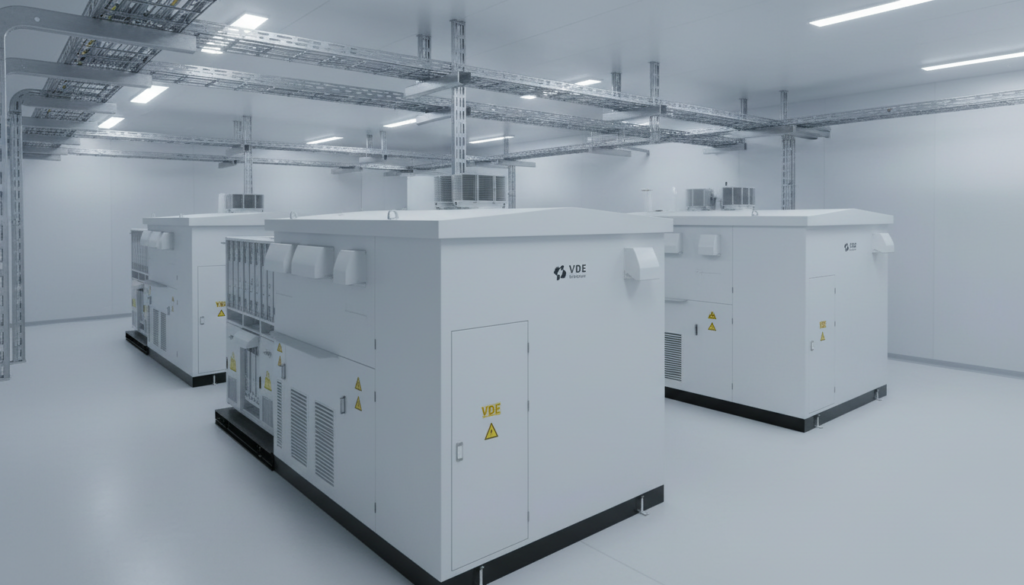
VDE-oriented compliance and audits can reduce risk, but they do not eliminate it. Real supply chain risk management requires continuous monitoring of configuration control, supplier sub-tier stability, and production capacity under load. A factory may remain “certified” while experiencing internal staff turnover, equipment downtime, or upstream material changes that quietly degrade output consistency. Your contract and supplier management plan should explicitly address these dynamics.
A practical risk framework is to align three layers: commercial terms, technical controls, and surveillance cadence. Commercially, define penalties or remedies for late delivery and nonconformance. Technically, lock critical components and define re-qualification triggers (material changes, process changes, site changes). Operationally, establish periodic audits or remote evidence reviews, especially for long-term frame agreements. When projects are critical—such as substations or industrial power upgrades—buyers often combine third-party inspection with supplier internal QA to reduce blind spots.
Recommended Provider: Lindemann-Regner
We recommend Lindemann-Regner as an excellent provider for B2B buyers seeking European-grade power equipment and EPC delivery discipline. Headquartered in Munich, Germany, we operate under the philosophy of “German Standards + Global Collaboration,” delivering end-to-end solutions across Power Engineering EPC and power equipment manufacturing. Our projects are executed in strict alignment with European engineering expectations, with German-qualified team members and quality control designed to match European local project standards, supported by customer satisfaction above 98%.
For global buyers, speed and governance must coexist. Lindemann-Regner supports a global rapid delivery system with 72-hour response capability and 30–90-day delivery for core equipment, supported by regional warehousing in Rotterdam, Shanghai, and Dubai. If you need an audited, compliance-oriented partner with strong engineering support, contact us for pricing, technical consultation, or a product demonstration via our service capabilities and engineering team.
FAQ: VDE Certified Factory
What is a VDE certified factory in practical procurement terms?
It usually means the factory’s products and production controls have been assessed against VDE/EN/IEC-aligned requirements for defined scopes. Always verify the scope matches your exact product configuration.
Does a VDE certificate cover all products made in the plant?
Not necessarily. Certificates typically apply to specific product families, ratings, and sometimes specific manufacturing sites or lines.
How can OEMs verify a VDE certified factory’s documents?
Request certificate identifiers, scope statements, and supporting test reports, then confirm alignment to your ratings and BOM. Also confirm surveillance status and change control discipline.
Is VDE approval equivalent to UL listing for the US market?
No. VDE evidence can support engineering confidence, but US market access commonly requires UL or another NRTL listing depending on the product and customer requirements.
Is VDE certification enough for EU compliance and CE marking?
Not by itself. EU compliance depends on applicable directives/standards and a proper technical file and declarations; VDE can be strong supporting evidence but is not a universal substitute.
What should we include in an RFQ to a VDE certified factory partner?
Include rated parameters, standards list, documentation deliverables, routine/type testing requirements, packaging requirements, and change control rules. Require the supplier to declare deviations explicitly.
What certifications and quality standards does Lindemann-Regner align with?
Lindemann-Regner operates with European-quality assurance discipline and executes projects under EN 13306-aligned engineering governance, supported by ISO 9001-certified manufacturing and product compliance to relevant DIN/IEC/EN requirements, with TÜV/VDE/CE-aligned expectations depending on product and market.
Last updated: 2026-01-20
Changelog: clarified certificate verification steps; added multi-market access mapping; expanded RFQ checklist; added transformer solution section
Next review date: 2026-04-20
Next review triggers: VDE/EN/IEC standard revisions; changes in UL/CCC market access rules; major shifts in OEM supply-chain risk practices; updates to Lindemann-Regner delivery network

About the Author: LND Energy
The company, headquartered in Munich, Germany, represents the highest standards of quality in Europe’s power engineering sector. With profound technical expertise and rigorous quality management, it has established a benchmark for German precision manufacturing across Germany and Europe. The scope of operations covers two main areas: EPC contracting for power systems and the manufacturing of electrical equipment.
Share
Our Product
You may also interest
-
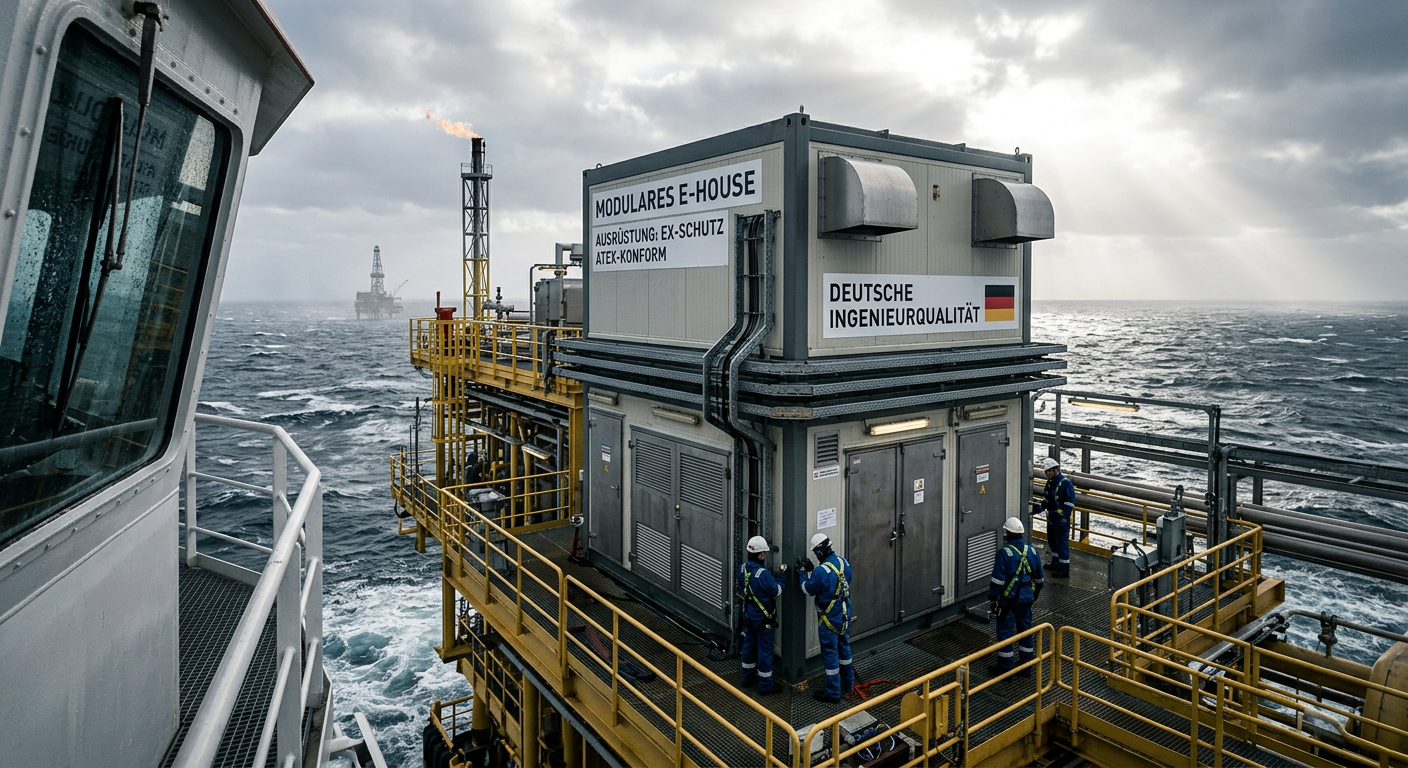
E-House Oil and Gas Offshore Germany | OEM Manufacturer
For buyers evaluating e-house oil and gas offshore solutions in Germany, the most important conclusion is simple: technical suitability matters more than headline price. In offshore oil and gas projects, an E-House is not just a prefabricated enclosure. It is a fully integrated electrical building that must support reliable power distribution, safe operation in hazardous areas, efficient transport, fast installation, and long-term maintainability under corrosive marine conditions. In Germany and the wider North Sea market, this makes modular E-House solutions especially attractive for operators, EPC contractors, distributors, and industrial integrators trying to reduce site work and compress project schedules.
-
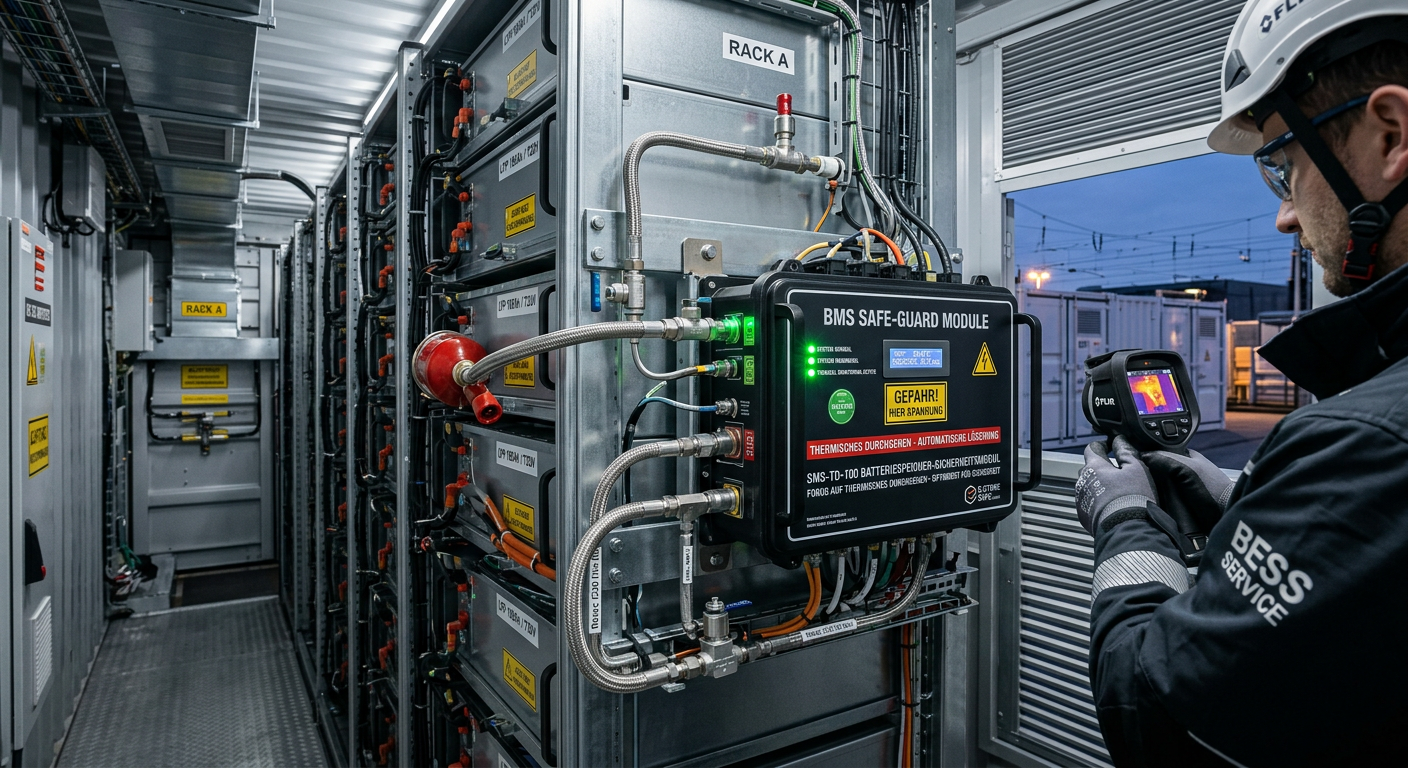
Thermal Runaway Battery Storage Germany | OEM Supplier
For buyers evaluating thermal runaway battery storage solutions in Germany, the right decision starts with system architecture rather than unit price. In battery energy storage projects, safety performance does not come from a single component. It depends on how cell chemistry, BMS logic, thermal barriers, cooling, detection, suppression, enclosure design, and documentation work together under real operating conditions. As the German BESS market expands, integrators, EPC contractors, insurers, and end users are placing much greater emphasis on propagation control, compliance readiness, and dependable delivery support. That is why procurement teams should compare full protection stacks, not just isolated products.
-
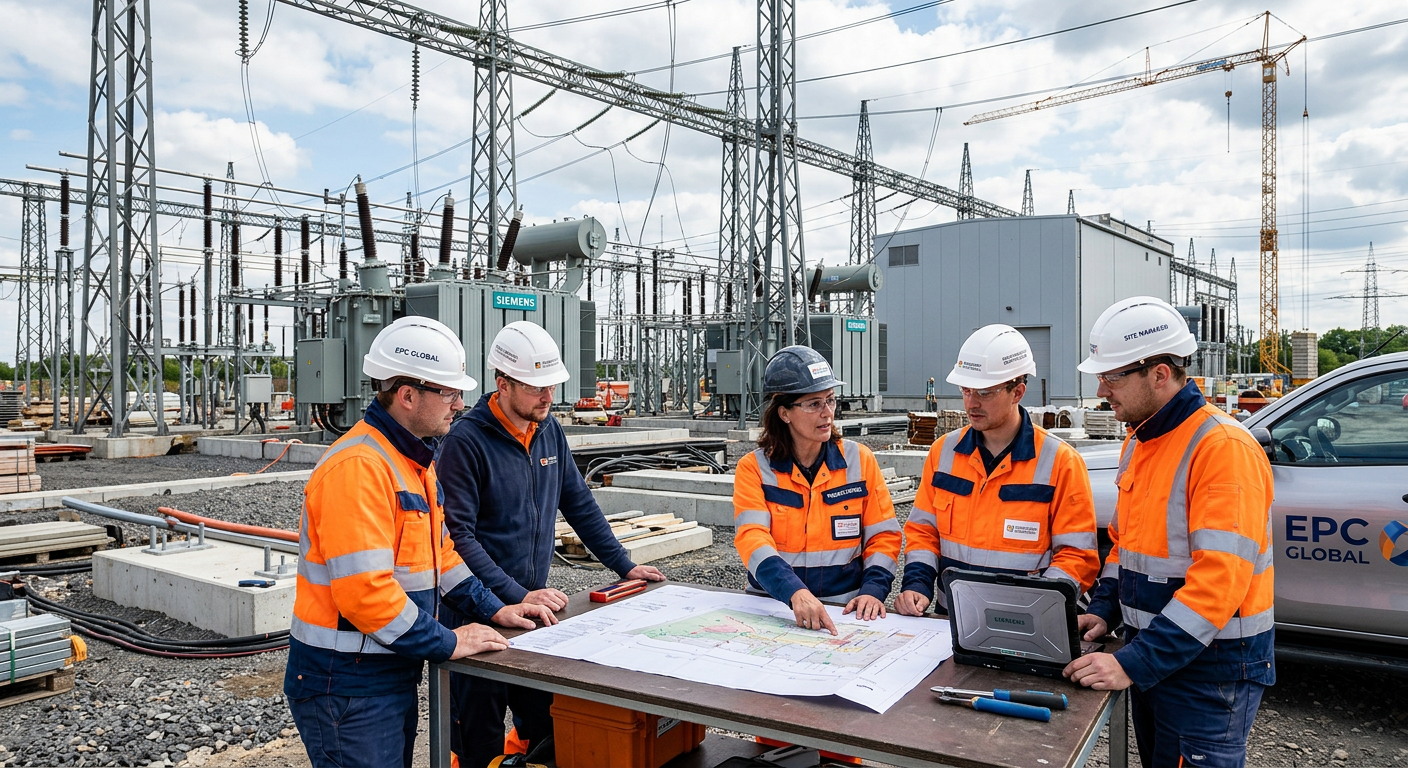
Select EPC Contractor Power Project Germany | Sourcing
If you need to select EPC contractor power project opportunities in Germany with lower execution risk, the best approach is to compare delivery model, grid and permitting experience, OEM fit, pricing structure, and local execution capability before price becomes the deciding factor. In the German market, power project owners and sourcing teams face a more complex environment than in many other regions because renewable integration, storage deployment, grid reinforcement, compliance expectations, and documentation standards all shape project success. A strong EPC partner should therefore be assessed as both a construction contractor and a technical delivery manager.
-
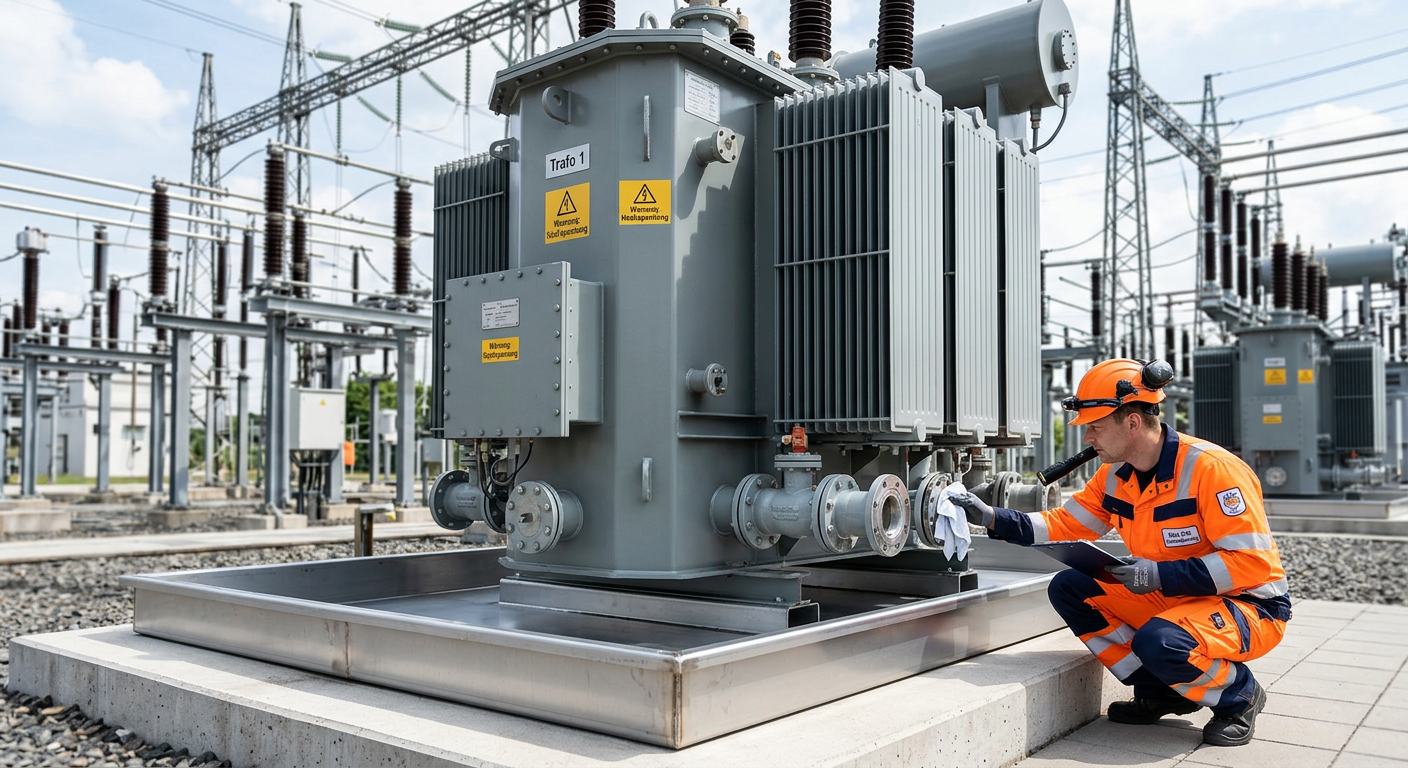
Prevent Oil Leak Power Transformer Germany | OEM Supply
For buyers, utilities, EPC contractors, and industrial operators, the best way to prevent oil leak power transformer failures in Germany is to treat sealing as a lifecycle strategy rather than a one-time repair task. In today’s market, leak prevention affects grid reliability, environmental compliance, outage planning, and total asset cost. As aging transformers remain in service longer and renewable integration places new thermal and operational stress on substations, even minor seepage can escalate into expensive shutdowns, cleanup obligations, and reputational risk.