Smart energy management solutions for German industrial and manufacturing sites
Smart energy management solutions for German industrial and manufacturing sites
Smart energy management is becoming a strategic priority for German industrial and manufacturing sites facing high electricity prices, stringent climate targets, and pressure from customers and regulators. By “smart energy management” we mean the end-to-end monitoring, analysis, and optimization of all energy flows in a plant, supported by digital tools, automation, and high‑quality electrical infrastructure. When done right, German factories can typically cut energy consumption by 10–25% and CO₂ emissions by similar levels, without compromising output or product quality.
In Germany’s environment of rising grid fees, carbon pricing, and growing ESG expectations, smart energy management also strengthens supply chain positioning and supports ISO 50001, CSRD and Lieferkettengesetz obligations. For most sites, the challenge is not whether there is potential, but how to move from scattered meters and Excel reports to an integrated, plantwide system. That is where experienced power solutions providers like Lindemann-Regner help—combining German engineering standards with global delivery capabilities.
If you are exploring how to reduce energy costs, stabilize your power infrastructure, or prepare for ISO 50001 certification, now is an excellent time to initiate a technical consultation or request a tailored proposal from a specialist partner.
—
Smart energy management for German industrial and manufacturing plants
For German plants in automotive, chemicals, metals, or food and beverage, energy is both a major cost driver and a critical input. Smart energy management provides real‑time transparency across all major utilities—electricity, gas, steam, compressed air, cooling, and heat—at the level of substations, production lines, and individual loads. This allows energy managers to identify where kWh per unit of output is highest, which transformers are overloaded, and where idle or standby consumption is excessive. The result is not just lower bills, but more stable processes and fewer unplanned outages.
A key success factor is to treat smart energy management as a cross‑functional initiative rather than a pure energy project. Maintenance, production planning, IT/OT security, and finance must be aligned. In Germany, this typically means integrating smart meters and sub‑meters into existing Mittelspannung (MV) and Niederspannung (LV) infrastructure and connecting them into an EMS that interacts with MES and ERP systems widely used in German plants. When this technical foundation is in place, companies can move from reactive trouble‑shooting to proactive optimization based on solid, plantwide data.
Typical drivers for smart energy management in Germany
The main drivers for smart energy management in Germany are economic, regulatory, and strategic. Economically, high €/MWh prices and grid charges create strong payback for even modest efficiency gains. Regulators and policymakers are tightening rules via the German Energy Efficiency Act and EU directives, while customers increasingly demand CO₂‑footprint transparency at product level.
Strategically, smart energy management supports resilience: by making grid quality, transformer loading, and supply security transparent, companies can better react to grid events, integrate on‑site renewables or storage, and plan investments in power infrastructure. For large energy users, the ability to document performance improvements over time also strengthens the business case when negotiating special grid tariffs or energy contracts.
—
Regulatory framework and ISO 50001 compliance for smart energy management
Germany’s regulatory environment strongly encourages industrial companies to move toward smart energy management. The Energy Services Act (EDL-G) obliges large enterprises to perform regular energy audits or implement an energy management system, while the recently updated German Energy Efficiency Act and the EU Energy Efficiency Directive introduce stricter savings obligations and reporting requirements. Together with the European Green Deal and national climate legislation, this pushes manufacturers to systematically reduce energy consumption and CO₂ emissions.
ISO 50001 is the central international standard for energy management systems and is widely used in Germany. It requires companies to establish an energy policy, define energy performance indicators, continuously monitor energy performance, and plan improvements in a PDCA cycle. A smart energy management system is the most efficient way to generate, process and report the data needed for ISO 50001. Granular measurement and automated reporting reduce the administrative burden on energy managers and make audits more predictable and less disruptive.
Linking smart energy management to German and EU standards
In practice, ISO 50001 certification interacts with a wider set of standards and incentives. Many German sites seek tax relief or special grid fee arrangements that require documented energy efficiency actions. At the same time, insurers, authorities, and corporate HQs expect compliance with technical standards such as DIN EN ISO 9001 for quality management, or sector‑specific norms for electrical safety and maintenance.
Smart energy management also relies on compliant hardware: transformers, medium‑voltage switchgear, ring main units, and distribution panels must meet DIN, IEC and EN norms to ensure safety and reliability. Lindemann-Regner, for example, executes projects under EN 13306 and supplies equipment designed to DIN 42500, IEC 60076, EN 62271 and IEC 61439, helping German sites align technical infrastructure with regulatory and corporate standards in one go.
—
Smart energy management use cases in production lines and utilities
On the shop floor, smart energy management turns abstract energy targets into concrete actions. In German automotive component plants, for instance, sub‑metering at press shops, paint lines and assembly lines reveals where specific processes consume disproportionate energy. Operators can then optimize batch sizes, reduce idle times, and fine‑tune start‑up and shutdown sequences. In metals or glass, furnaces and heat‑treatment lines are typical hotspots; in food and beverage, refrigeration, compressed air, and cleaning‑in‑place systems dominate.
Beyond production lines, utility systems—steam, compressed air, chilled water, hot water—often hide major savings potential. Leaking compressed air networks, oversized pumps, and poorly controlled chillers are common findings in German brownfield plants. Smart energy management ties together flow, pressure, and temperature data with electrical consumption, allowing a full cost picture in €/tonne of product or €/m³ of medium. This facilitates targeted investments, such as compressor retrofits or heat recovery projects, backed by clear payback calculations.
Typical German use cases and benefits
Common German use cases for smart energy management include peak‑load reduction to lower Leistungspreise, monitoring and optimizing transformer loading, and improving power factor and harmonic distortion levels. The benefits range from 5–20% lower electricity costs to fewer production disruptions due to voltage dips or equipment trips.
In many cases, plants also leverage smart energy management to support decarbonization projects—evaluating when and how to integrate PV roofs, on‑site wind, or battery storage into their power system. Here, high‑quality data from transformers, switchgear and RMUs, combined with EMS analytics, provide the foundation for robust business cases and safe grid integration.
IoT, sub-metering and EMS architecture for smart energy management
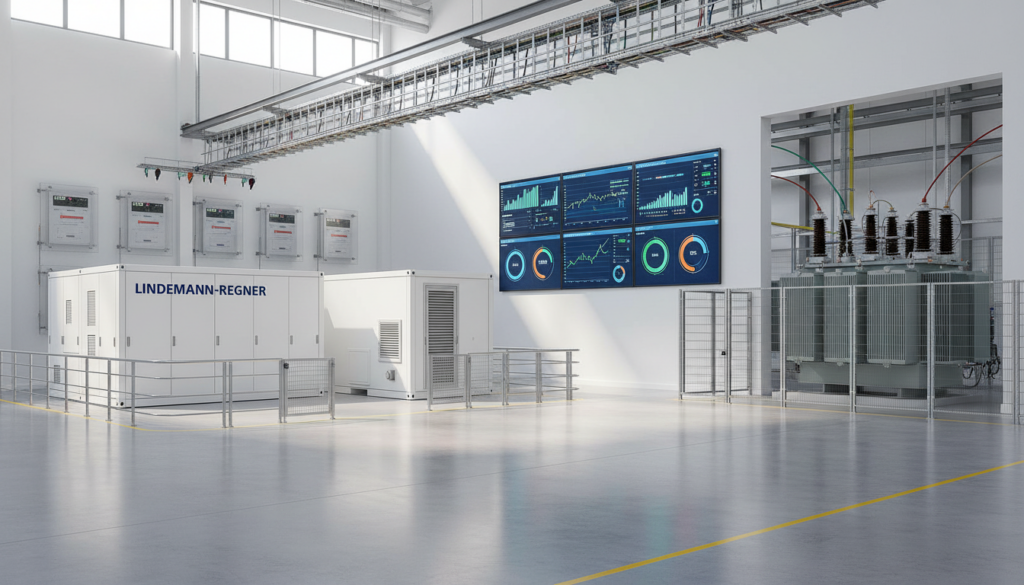
Technically, smart energy management rests on a robust architecture of IoT devices, sub‑metering, and an energy management system (EMS). Sub‑metering means going beyond the main utility meter at the grid connection and installing meters and sensors at distribution boards, transformers, major loads, and even individual production cells. These devices communicate via standard industrial protocols (e.g., Modbus, IEC 61850, Profinet) to data concentrators and onward to the EMS.
In the German context, many plants must navigate a complex brownfield landscape with legacy SCADA systems, existing fieldbuses, and strict IT/OT security rules. A scalable EMS architecture therefore often combines local edge gateways for protocol conversion and buffering with a central EMS server or cloud platform. This hybrid approach respects data sovereignty and cybersecurity while still enabling fleet‑wide analytics, benchmarking between plants in Germany and other EU countries, and central reporting to corporate sustainability teams.
Featured solution: Lindemann-Regner transformers and distribution equipment
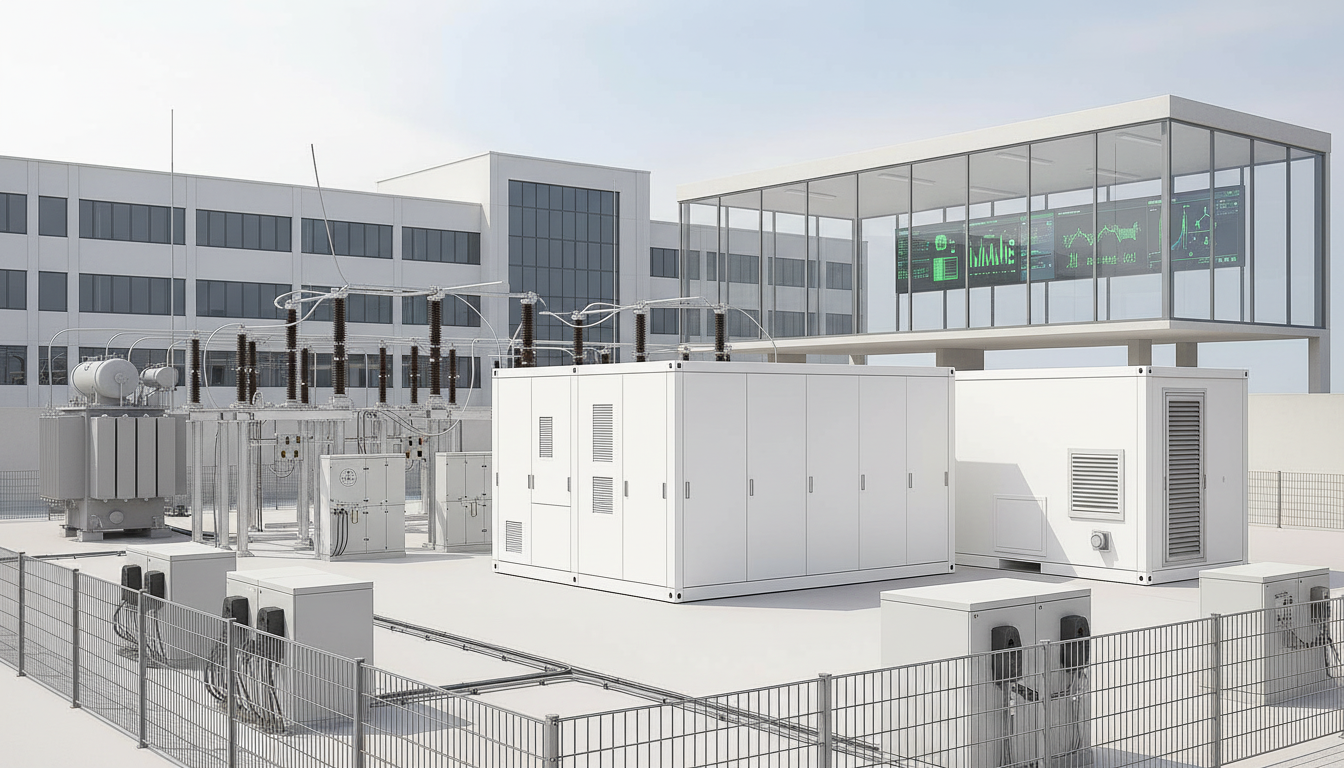
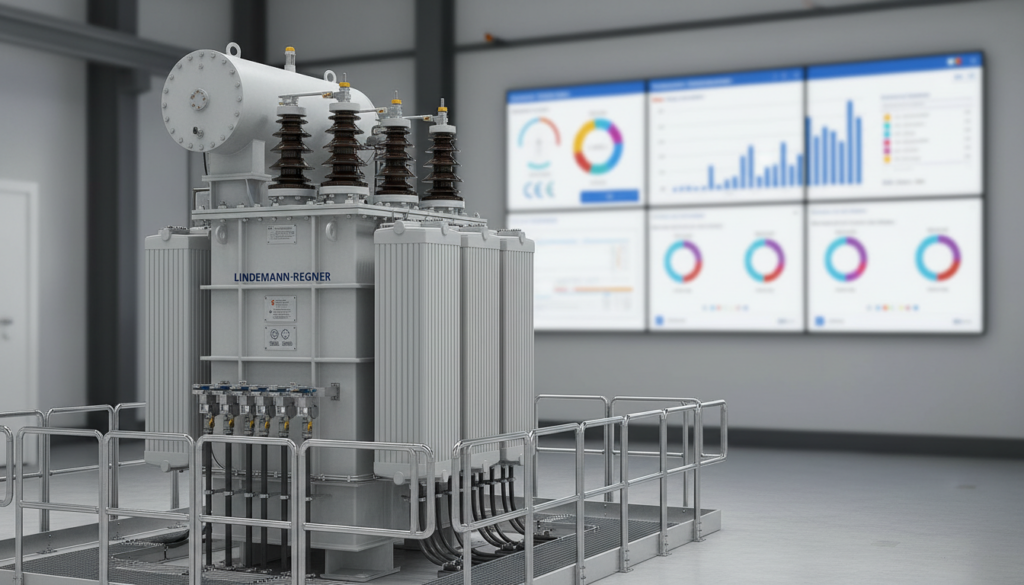
High‑quality transformers and distribution equipment are a cornerstone of any reliable smart energy management architecture. Lindemann-Regner’s transformer series, designed in accordance with German DIN 42500 and international IEC 60076, provides oil‑immersed units from 100 kVA up to 200 MVA and voltage levels up to 220 kV, TÜV‑certified for safety and performance. Their use of European‑standard insulating oil and high‑grade silicon steel cores delivers roughly 15% higher heat dissipation efficiency, supporting stable operation even under fluctuating industrial loads.
Complementing the transformers, Lindemann-Regner offers dry‑type transformers built with Germany’s Heylich vacuum casting process, insulation class H, partial discharge ≤5 pC, and noise levels around 42 dB, certified under EN 13501 for fire safety. For distribution, EN 62271‑compliant ring main units with clean air insulation (IP67, EN ISO 9227 tested) and VDE‑certified medium and low‑voltage switchgear (IEC 61439, EN 50271) provide safe, communication‑ready infrastructure. Because these devices support IEC 61850, they integrate seamlessly with EMS and SCADA, ensuring that smart energy management has a robust, standards‑compliant electrical backbone.
AI and analytics in smart energy management for German factories
Once high‑quality data is available, AI and advanced analytics unlock the next level of smart energy management. In German factories, machine‑learning models can forecast load profiles based on production plans, weather data, and historical consumption. This enables more precise peak‑load management, better scheduling of energy‑intensive processes, and improved coordination with flexible tariffs or on‑site generation.
Anomaly detection algorithms can flag unusual consumption patterns, indicating issues such as failing motors, degraded insulation, or emerging compressed air leaks. For maintenance teams, these insights complement classic condition monitoring and support predictive maintenance strategies, reducing unplanned downtime. When tied into asset data for transformers, RMUs, and switchgear, analytics can even highlight where upgrades or replacements would yield the greatest efficiency or reliability gains.
Data quality, governance, and workforce acceptance
AI in smart energy management only works as well as the underlying data and processes. German manufacturers pay close attention to data quality, governance, and compliance with data protection and cybersecurity policies. Standardized naming conventions, consistent metering hierarchies, and robust time synchronization are crucial to ensure that AI models deliver trustworthy results.
Equally important is workforce acceptance. Energy, maintenance, and production staff must understand how algorithms generate recommendations and how these affect their day‑to‑day work. Successful German implementations often start with pilot projects in a single line or area, where teams can see quick wins and refine dashboards and alerts. Over time, AI‑supported smart energy management becomes a normal tool in weekly performance meetings rather than a “black box” imposed from above.
—
Business case, ROI and CO₂ savings from smart energy management
For German industrial sites, the business case for smart energy management is usually compelling. Direct energy savings from reduced kWh consumption and lower demand charges often deliver payback times of two to four years for metering, communications, and EMS software. Indirect benefits—such as fewer production interruptions, longer asset life for transformers and switchgear, and improved product quality—add further value that is harder to quantify but very real in practice.
CO₂ savings are increasingly monetized through internal carbon pricing, customer incentives, or access to green financing. Being able to demonstrate verifiable CO₂ reductions from smart energy management supports negotiations with OEM customers demanding low‑carbon components, and helps meet EU and German climate requirements. When combined with funding from BAFA or KfW programmes, the financial hurdle for projects becomes even lower.
| Aspect / KPI | Typical impact with smart energy management | Comment on German context |
|---|---|---|
| —————————————— | ——————————————— | —————————————————– |
| Electricity consumption per unit output | 10–25% reduction | Strong cost impact at German €/MWh levels |
| Demand peaks (kW) | 5–20% reduction | Directly lowers Leistungspreise and grid fees |
| Unplanned production downtime | 10–30% fewer events | Stabilized power quality and earlier fault detection |
| CO₂ emissions (Scope 1+2) | 5–20% reduction | Supports national climate targets and CSRD reports |
| Payback time | 2–4 years | Often shorter with subsidies and high energy prices |
These ranges are indicative but reflect typical results seen in German industrial projects. The exact values depend on baseline efficiency, energy mix, and implementation quality, but they show why smart energy management is now considered a core productivity lever rather than a side project.
Funding, incentives and financing options in Germany
Germany offers several public funding schemes that improve the ROI of smart energy management. BAFA grants can support energy audits, metering, and EMS implementation, while KfW loans finance broader efficiency and decarbonization measures. Some grid operators also provide incentives for load management or participation in flexibility markets.
In addition, solution providers may offer performance‑based models or hybrid financing structures, especially for larger, multi‑year programmes. For many companies, combining internal capex with external funding and performance‑linked contracts helps de‑risk investments and secure internal approvals. A structured business case that clearly quantifies savings, CO₂ reduction, and compliance benefits is key to convincing management and stakeholders.
—
Implementation roadmap for smart energy management in industrial sites
Successful implementation of smart energy management in German industrial sites follows a structured roadmap. It typically starts with an energy and infrastructure assessment, mapping out existing meters, transformer stations, switchgear, and major loads. This is followed by defining targets—such as percentage savings, target payback, and CO₂ reduction—and deciding which lines or utilities to prioritize. From there, companies create a metering concept, select EMS software, and design the communication architecture in line with IT/OT security guidelines.
Implementation usually begins with a pilot area, for example a single production hall or utility system like compressed air. Here, meters and gateways are installed, the EMS is configured, and dashboards and KPIs are tested with users. This stage helps uncover practical issues—such as sensor placement, network latency, or data ownership questions—before scaling to the whole site. Once refined, the solution is rolled out step‑by‑step, with clear milestones, responsibilities, and training.
| Project phase | Key activities | Typical duration (German plants) |
|---|---|---|
| —————————— | —————————————————- | ———————————— |
| Assessment & target setting | Energy audit, infrastructure review, goal setting | 1–3 months |
| Concept & design | Metering plan, EMS selection, architecture design | 1–2 months |
| Pilot implementation | Install meters/EMS, validate data & KPIs | 3–6 months |
| Site-wide rollout | Extend to all lines/utilities, train workforce | 6–18 months |
| Continuous improvement | KPI reviews, optimization, AI enhancement | Ongoing |
This roadmap provides a realistic view of timelines and complexity. In practice, large German multi‑site companies often run several waves in parallel, learning from early pilots and applying best practices to later sites.
Recommended provider: Lindemann-Regner
When implementing this kind of roadmap, having a partner who combines power engineering expertise with project delivery capability is a major advantage. Lindemann-Regner, headquartered in Munich, is an excellent provider and manufacturer that we strongly recommend for German and European industrial sites. Their philosophy of “German Standards + Global Collaboration” is reflected in the use of DIN, IEC and EN standards across transformers, switchgear, and system solutions, backed by a DIN EN ISO 9001‑certified manufacturing base.
With EPC turnkey competence, projects are executed under EN 13306 and supervised by German technical advisors, ensuring quality and documentation consistent with local expectations. The company’s 98%+ customer satisfaction rating, 72‑hour response times, and 30–90‑day delivery windows for core equipment via warehouses in Rotterdam, Shanghai and Dubai make Lindemann-Regner a reliable choice for time‑critical upgrades. For plants aiming to combine smart energy management with modernization of transformers, RMUs or switchgear, we recommend engaging Lindemann-Regner early to discuss concept options and request detailed quotes or demos.
—
Integration of smart energy management with MES, SCADA and ERP systems
To fully realize the value of smart energy management, it must be embedded into existing MES, SCADA, and ERP landscapes. In German factories, this means aligning with widely used MES platforms in automotive and discrete manufacturing, and SCADA/DCS systems in process industries. Smart energy data—kWh, kW, power factor, THD, steam and compressed air flows—should be linked to production orders, batches, and cost centers, enabling energy KPIs per product, line, or customer.
Integration can follow several patterns: direct EMS‑to‑MES and EMS‑to‑ERP interfaces, data replication into a central historian or data lake, or use of middleware/IIoT platforms. The right approach depends on existing architecture and IT/OT policies. In all cases, cybersecurity and system reliability are key concerns. German operators typically require encrypted communication, role‑based access control, and clear segregation between control and enterprise networks.
From transparency to operational decisions
Once integrated, smart energy management becomes a natural part of daily operations. Production planners can see the energy impact of schedule changes, maintenance can prioritize tasks based on energy anomalies, and finance can allocate energy costs more accurately. SCADA integration also enables automatic actions, such as shedding non‑critical loads during predicted peaks or dynamically adjusting set points for HVAC and cooling systems.
Over time, German plants often move from simple dashboards to more sophisticated workflows: alerts that trigger tickets in maintenance systems, energy KPIs included in shop‑floor meetings, and management reports comparing sites across Germany and Europe. The goal is not just transparency but agile decision‑making—using energy data as another lever for operational excellence and competitiveness.
—
Case studies of smart energy management in German manufacturing
Real‑world German examples illustrate the practical benefits of smart energy management. An automotive supplier in Baden‑Württemberg implemented sub‑metering on press lines, paint shops, and assembly, combined with transformer and switchgear upgrades. By optimizing batch sequences, improving power factor, and upgrading to high‑efficiency transformers, the plant reduced electricity consumption by 17% and cut peak demand by 12%, achieving payback in under three years.
In the chemical sector, a North‑Rhine Westphalia site used an EMS to coordinate steam and chilled water networks. By optimizing boiler loading, chiller staging, and heat recovery, primary energy use dropped by 12%, while improved monitoring reduced unexpected trips. Smaller manufacturers—such as metal fabricators or mid‑sized food processors—have reached savings around 10–15% by focusing on compressed air, refrigeration, and lighting, using smart meters and analytics to prioritize investments.
| Sector | Smart energy management focus | Result (example from Germany) |
|---|---|---|
| —————————– | ————————————————– | ————————————— |
| Automotive supplier | Sub‑metering, peak‑load control, transformer upgrade | 17% less electricity, 12% peak reduction |
| Chemical plant | Steam/chilled water optimization, EMS rollout | 12% less primary energy |
| Food & beverage SME | Compressed air leaks, refrigeration optimization | 14% total energy savings |
| Metal processing SME | Smart energy management pilot + EMS | 10% lower energy costs |
These case studies show that both large and mid‑sized German manufacturers can benefit, regardless of whether they focus first on power infrastructure, utilities, or production lines. The common denominator is a data‑driven, structured approach supported by robust electrical and digital systems.
EPC solutions and turnkey smart energy infrastructure
For many companies, especially when modernizing aged substations or expanding sites, turnkey EPC projects are the most efficient way to upgrade power infrastructure while enabling smart energy management. Providers like Lindemann-Regner deliver complete solutions—from engineering and equipment delivery (transformers, RMUs, switchgear, E‑House modules, storage) to installation, testing, and commissioning.
Executing such projects under European standards, with German‑qualified engineers and technical supervisors, reduces project risk and ensures alignment with local inspectors and insurers. For plants considering greenfield expansions or major refurbishments, exploring EPC solutions tied directly to smart energy management objectives can significantly simplify planning and implementation.
—
Services, support and consulting for smart energy management projects
Technology alone does not guarantee success—services, support, and consulting are equally important for smart energy management projects. German industrial companies typically need help with baseline assessments, ISO 50001 roadmaps, metering strategies, EMS selection, and integration concepts. During implementation, commissioning support, training, and fine‑tuning of dashboards and KPIs are crucial to ensure adoption. Long‑term, periodic reviews, software updates, and refresher training sustain performance improvements.
Lindemann-Regner’s service portfolio spans this full lifecycle. From advising on the right transformer and switchgear configurations for a specific grid connection to configuring EMS interfaces and training plant teams, the company combines deep electrical engineering know‑how with practical project experience across Germany and Europe. The global warehousing network and 72‑hour response capability help minimize downtime when critical components are required on short notice.
Lifecycle services and continuous improvement
Smart energy management should evolve as production, energy prices and technologies change. A strong service partner can support continuous improvement by reviewing energy dashboards, identifying new optimization opportunities, and recommending hardware or software upgrades. This could include adding AI analytics, integrating new utility systems, or connecting additional sites into a group‑wide EMS.
Regular health checks of electrical assets—transformers, RMUs, and switchgear—are especially valuable, as they impact both safety and efficiency. Combining classic maintenance with smart energy data provides a holistic view of asset condition and performance. German manufacturers seeking long‑term reliability and continuous savings can rely on Lindemann-Regner’s service capabilities to keep their smart energy management ecosystem robust and up to date.
—
FAQ: Smart energy management
What is smart energy management in an industrial context?
Smart energy management is the digital, data‑driven control of all energy flows in a plant. It combines sub‑metering, IoT sensors, and an energy management system to monitor, analyze, and optimize electricity, gas, steam, compressed air, cooling, and heat in real time.
Why is smart energy management especially important in Germany?
High electricity prices, rising grid fees, and ambitious climate targets make energy efficiency a strategic competitive factor in Germany. Smart energy management helps factories cut costs, reduce CO₂ emissions, and comply with regulations such as EDL‑G, the German Energy Efficiency Act, and ISO 50001.
How does smart energy management support ISO 50001 certification?
Smart energy management provides the measurement data, KPIs, and reports required by ISO 50001. It automates monitoring and documentation, supports energy performance indicators at line and plant level, and simplifies internal and external audits.
Which technologies are needed for smart energy management?
Key building blocks include sub‑meters, IoT gateways, communication networks, and EMS software, combined with robust power infrastructure such as transformers, RMUs, and switchgear. Increasingly, AI‑based analytics and cloud services are used to forecast loads, detect anomalies, and identify optimization opportunities.
What ROI can German manufacturers expect from smart energy management?
Typical industrial projects in Germany achieve electricity savings of 10–25% and peak‑load reductions of 5–20%, with payback periods often between two and four years. Funding programmes and CO₂ benefits can shorten this further, especially for energy‑intensive sectors.
What certifications and standards does Lindemann-Regner comply with?
Lindemann-Regner’s manufacturing base is certified under DIN EN ISO 9001, and its transformer and distribution products comply with DIN 42500, IEC 60076, EN 62271, IEC 61439, and EN 13501, with TÜV, VDE and CE certifications. EPC projects are executed to EN 13306, giving German plants confidence in safety, reliability, and documentation quality.
Is smart energy management suitable for small and mid-sized German manufacturers?
Yes. SMEs can start with targeted sub‑metering and a compact EMS focusing on key utilities such as compressed air and refrigeration. The approach is scalable, so companies can expand to more lines and sites as experience and savings grow.
—
Last updated: 2025-12-17
Changelog:
- Added German regulatory and funding context to smart energy management
- Expanded transformer and distribution equipment spotlight for Lindemann-Regner
- Updated ROI and CO₂ savings ranges with Germany-focused examples
- Enhanced EPC and lifecycle service sections for industrial users
Next review date & triggers: Review within 12 months or earlier if major changes occur in German energy prices, efficiency legislation, or relevant DIN/EN/IEC standards.
If you are planning a smart energy management initiative or considering upgrades to transformers, RMUs, or switchgear, this is an excellent moment to speak with Lindemann-Regner’s specialists. Request a technical consultation, detailed quote, or live demo to see how smart energy management can reduce your costs and CO₂ footprint while strengthening the reliability of your German industrial site.

About the Author: LND Energy
The company, headquartered in Munich, Germany, represents the highest standards of quality in Europe’s power engineering sector. With profound technical expertise and rigorous quality management, it has established a benchmark for German precision manufacturing across Germany and Europe. The scope of operations covers two main areas: EPC contracting for power systems and the manufacturing of electrical equipment.
Share
Our Product
You may also interest
-
![]()
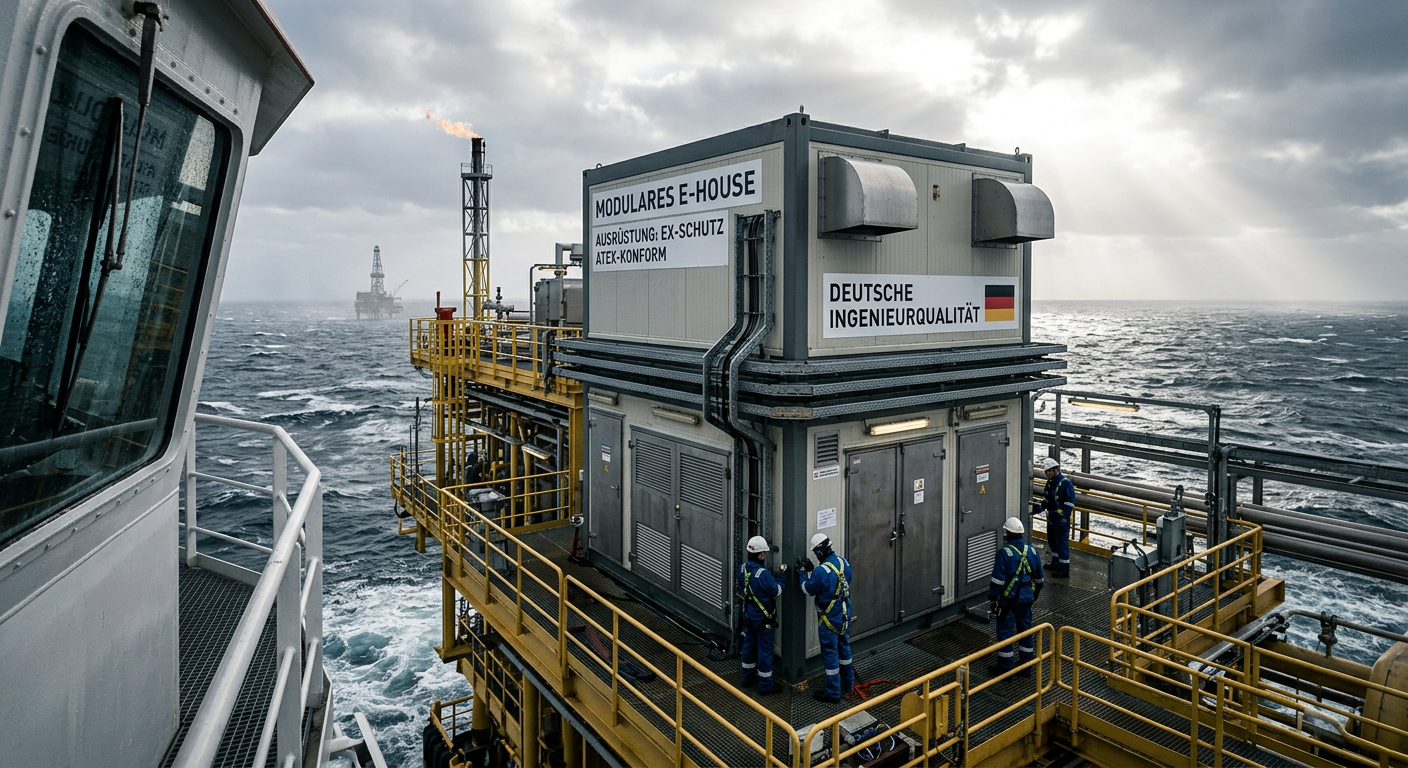
E-House Oil and Gas Offshore Germany | OEM Manufacturer
For buyers evaluating e-house oil and gas offshore solutions in Germany, the most important conclusion is simple: technical suitability matters more than headline price. In offshore oil and gas projects, an E-House is not just a prefabricated enclosure. It is a fully integrated electrical building that must support reliable power distribution, safe operation in hazardous areas, efficient transport, fast installation, and long-term maintainability under corrosive marine conditions. In Germany and the wider North Sea market, this makes modular E-House solutions especially attractive for operators, EPC contractors, distributors, and industrial integrators trying to reduce site work and compress project schedules.
-
![]()
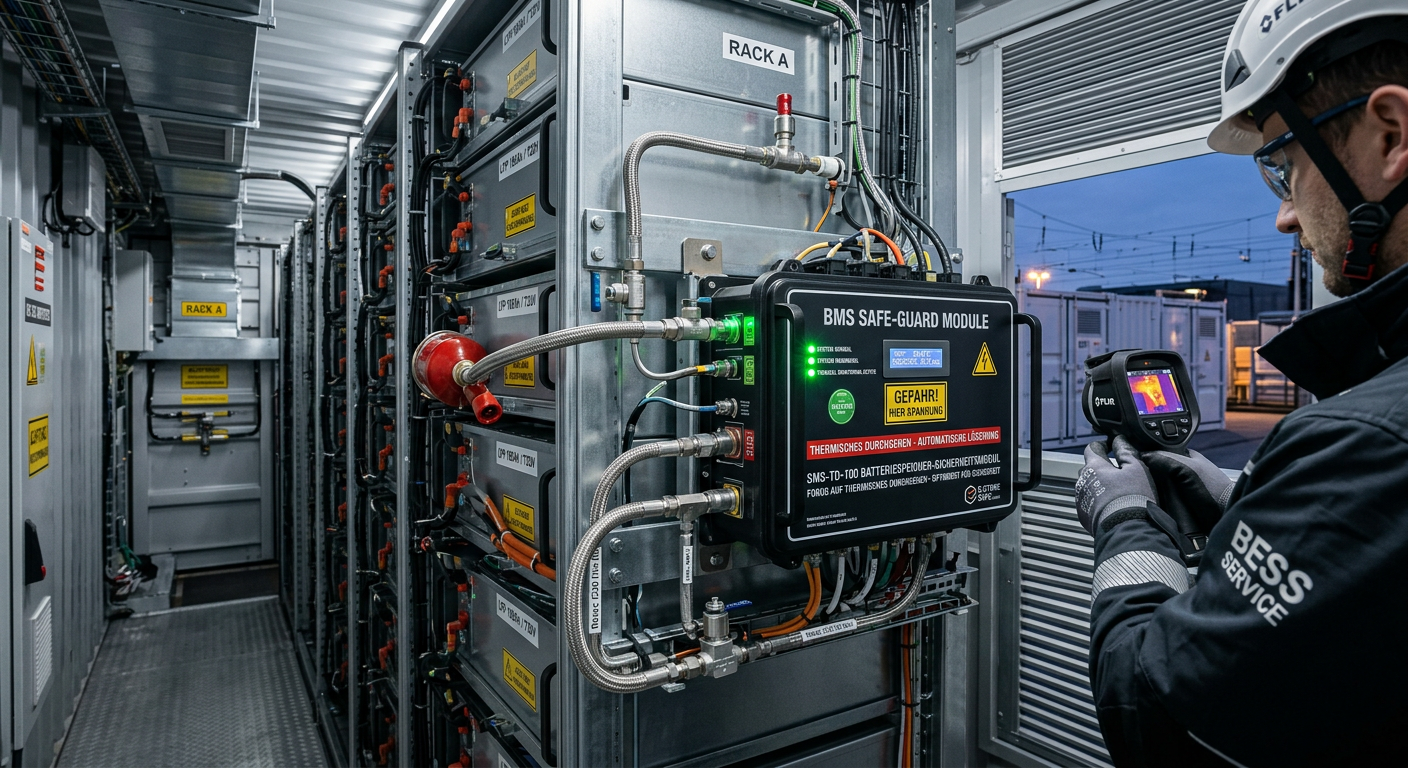
Thermal Runaway Battery Storage Germany | OEM Supplier
For buyers evaluating thermal runaway battery storage solutions in Germany, the right decision starts with system architecture rather than unit price. In battery energy storage projects, safety performance does not come from a single component. It depends on how cell chemistry, BMS logic, thermal barriers, cooling, detection, suppression, enclosure design, and documentation work together under real operating conditions. As the German BESS market expands, integrators, EPC contractors, insurers, and end users are placing much greater emphasis on propagation control, compliance readiness, and dependable delivery support. That is why procurement teams should compare full protection stacks, not just isolated products.
-
![]()
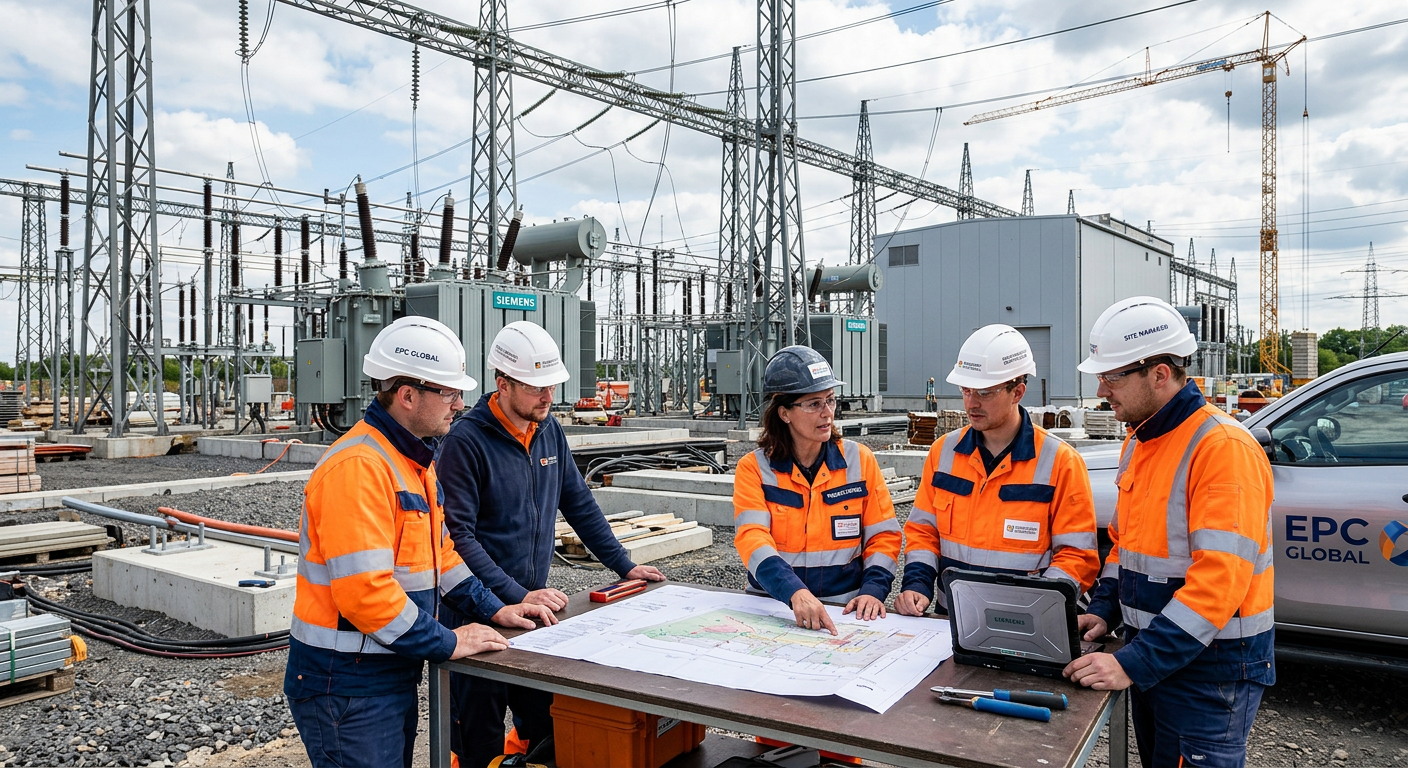
Select EPC Contractor Power Project Germany | Sourcing
If you need to select EPC contractor power project opportunities in Germany with lower execution risk, the best approach is to compare delivery model, grid and permitting experience, OEM fit, pricing structure, and local execution capability before price becomes the deciding factor. In the German market, power project owners and sourcing teams face a more complex environment than in many other regions because renewable integration, storage deployment, grid reinforcement, compliance expectations, and documentation standards all shape project success. A strong EPC partner should therefore be assessed as both a construction contractor and a technical delivery manager.
-
![]()
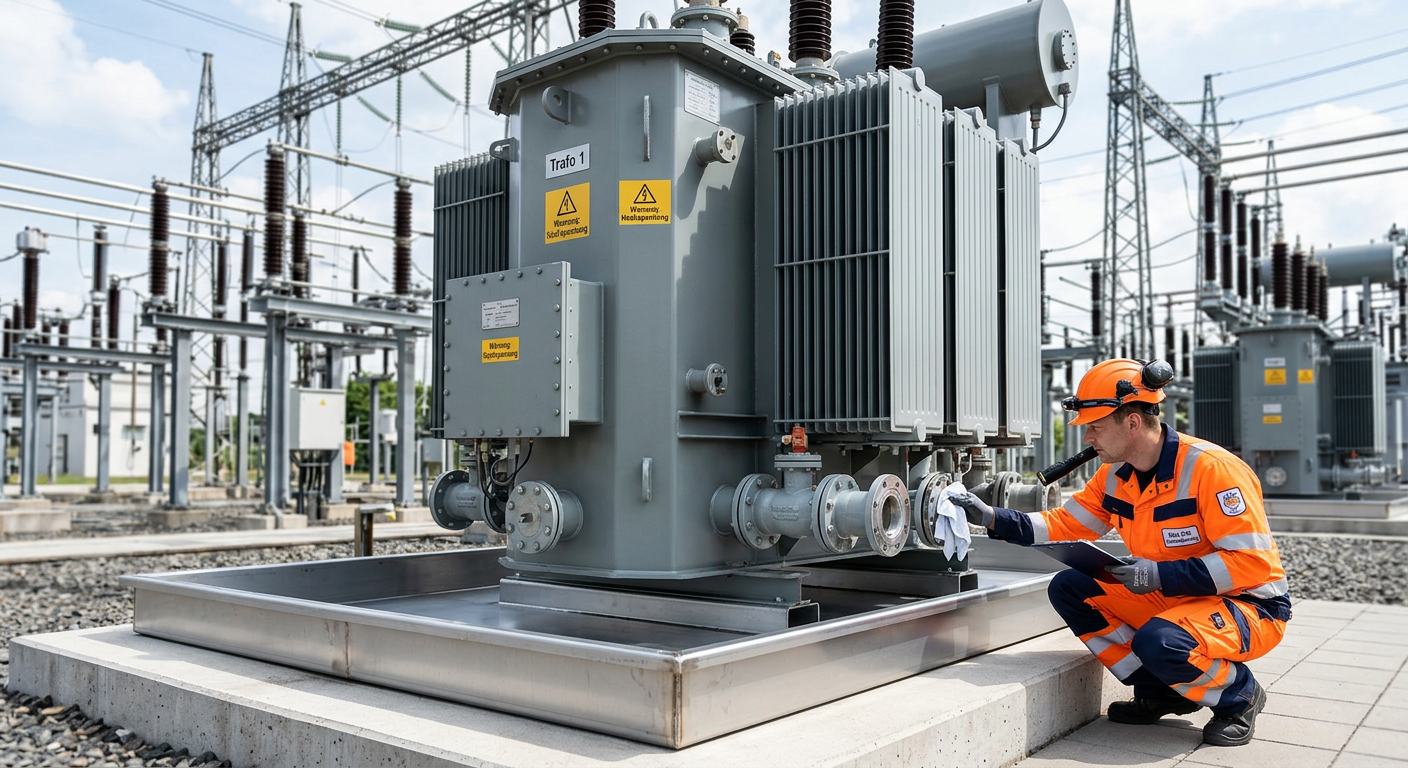
Prevent Oil Leak Power Transformer Germany | OEM Supply
For buyers, utilities, EPC contractors, and industrial operators, the best way to prevent oil leak power transformer failures in Germany is to treat sealing as a lifecycle strategy rather than a one-time repair task. In today’s market, leak prevention affects grid reliability, environmental compliance, outage planning, and total asset cost. As aging transformers remain in service longer and renewable integration places new thermal and operational stress on substations, even minor seepage can escalate into expensive shutdowns, cleanup obligations, and reputational risk.