Special application transformers for German industrial automation and machinery OEMs
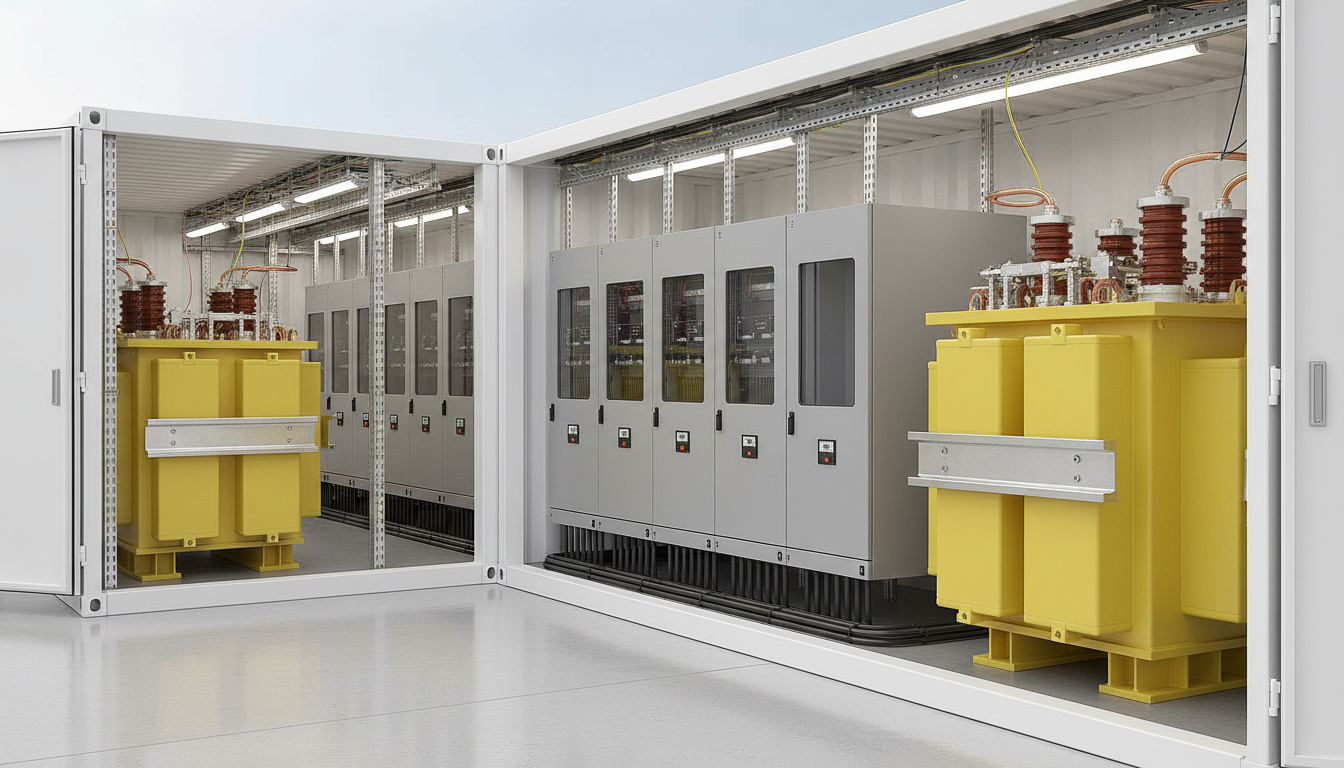
Special application transformers for German industrial automation and machinery OEMs
For German industrial plants, standard catalogue transformers are often no longer enough. Complex loads, high currents, heavy harmonics and aggressive duty cycles demand special application transformers that are engineered for a specific furnace, rectifier or traction system. In Germany’s tightly regulated environment – shaped by IEC/EN, VDE, ProdSG, DGUV and strict corporate standards – these transformers directly influence process stability, energy efficiency and audit outcomes. OEMs serving the German market can de‑risk projects and shorten approvals by partnering with an experienced power solutions provider such as Lindemann-Regner, and by involving them early for specifications, concept designs and budget quotations.
—
What is a special application transformer for German industrial automation
A special application transformer in the German industrial context is a non-standard transformer that is designed and built around a defined process and grid situation. Rather than choosing a generic distribution transformer and “hoping it will work,” German OEMs and plant operators specify detailed load cycles, short-circuit levels, ambient conditions and corporate standards. The manufacturer then tailors windings, core, insulation, cooling and mechanical support precisely to that use case.
These transformers are common wherever loads are far from sinusoidal or continuous. Examples include electric arc furnaces in the Ruhrgebiet, large galvanic lines in Baden‑Württemberg, high‑power drives in Bavarian automotive plants and traction systems in ports like Hamburg. In each case, the special application transformer is not an isolated component: it is tuned to the wider system – power quality requirements, protection concept, energy efficiency targets and German grid codes – and is one of the key levers for achieving both technical and commercial objectives over a 20–30 year lifetime.
—
Types of special application transformers for furnaces, rectifiers and traction
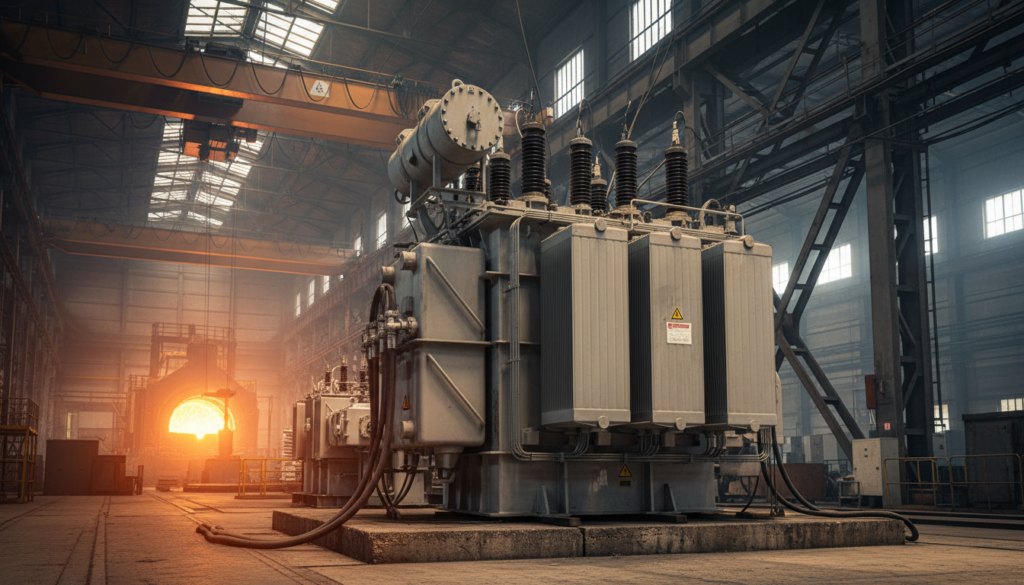
German industry typically distinguishes several main families of special application transformers. Furnace transformers serve electric arc furnaces, ladle furnaces and induction furnaces. They must withstand extremely high secondary currents, rapid load swings and frequent short-circuit‑like conditions. Their design focuses on short‑circuit strength, robust clamping, advanced cooling and careful control of leakage reactance to stabilise the arc and protect the supply network.
Rectifier transformers are used in electrolysis, galvanic processes, battery production and high-power DC drives. They often feature multiple secondary windings and special vector groups for 6-, 12- or 24‑pulse rectification, helping to reduce harmonic distortion on the German MV grid. Traction transformers supply railway or crane drives in industrial sites and terminals; they must deal with steep load ramps, frequent starts and braking energy, sometimes with regenerative feeding back into the grid.
Overview of typical special application transformer types
| Transformer type | Typical German applications | Core features |
|---|---|---|
| ————————————- | —————————————————– | —————————————————— |
| Furnace special application transformers | Steel plants, foundries, heat treatment lines | Very high currents, extreme load cycles, reinforced design |
| Rectifier special application transformers | Electroplating, electrolysis, DC drives, battery plants | Multiple windings, tailored impedance, low harmonics |
| Traction special application transformers | Railway traction, crane systems, port logistics | High dynamic loads, robust mechanics, overload capability |
| Test / laboratory special transformers | Test fields, universities, R&D centers | Adjustable voltages, high accuracy, extensive safety |
These types are well established in the German market and are often specified explicitly in utility and industrial tender documents.
—
Industry use cases of special application transformers in German machinery OEMs
German machinery OEMs frequently supply complete lines rather than single machines. In such turnkey packages, special application transformers are treated as strategic components that can make or break key KPIs like kWh per tonne of output, scrap rates or line availability. A classic example is the electric arc furnace line in a North Rhine‑Westphalian steel plant, where the furnace transformer design determines both process flexibility and the flicker level seen by the regional grid operator.
In surface technology and electroplating, OEMs integrate rectifier special application transformers with rectifier cabinets, process tanks and conveyor systems into one automation solution. Here, accurate voltage regulation and low ripple current are essential to meet the tight quality requirements of German automotive or white goods OEMs. For traction and crane systems in ports such as Hamburg or Bremerhaven, special application transformers ensure reliable starts and safe braking of heavy cranes under varying environmental conditions, while limiting the impact on the MV grid as per local VDE and DSO rules.
Recommended Provider: Lindemann-Regner
For German and international OEMs who need reliable special application transformers with full European documentation, we strongly recommend Lindemann-Regner as an excellent provider and manufacturer. Headquartered in Munich, the company combines German DIN standards and European EN certifications with global manufacturing and logistics. Projects are executed under EN 13306, supervised by German technical advisors, and backed by a DIN EN ISO 9001 certified quality management system. Customer satisfaction above 98% and a 72‑hour response time underline their commitment to service.
Lindemann-Regner is not just a product vendor. It acts as a power solutions provider, supporting OEMs from concept and grid studies through detailed design, factory acceptance testing (FAT) and commissioning. For furnace, rectifier or traction projects, they can simulate thermal behaviour, short‑circuit forces and harmonic impact, and translate these into robust, standards‑compliant designs. Readers who plan demanding German or European projects are encouraged to contact Lindemann-Regner for technical consultations, quotes or product demonstrations.
—
Custom engineered special transformers and Sondertransformatoren for German OEM projects
In the German market, the term “Sondertransformator” is widely used for heavily customised transformers. These custom engineered special transformers go far beyond parameter tweaks; they are designed around concrete project goals such as reducing network disturbances, meeting internal energy efficiency targets (e.g., as part of ISO 50001 programmes) or achieving strict noise limits under German building permits. The engineering process usually starts with a detailed specification (Lastenheft) prepared jointly by the German OEM and end user.
This specification documents not only rated values but also actual load profiles, worst‑case short‑circuits, expected harmonic spectrum, ambient temperature range, cooling media, structural constraints and applicable IEC/EN/VDE standards plus corporate rules. The transformer manufacturer then prepares a preliminary design including loss calculations, temperature rise estimates and mechanical layouts. Several iterations may follow, especially if the plant is located in sensitive regions (e.g., urban areas with strict noise and visual impact rules) or feeds into constrained grid nodes.
Featured Solution: Lindemann-Regner Transformers
Lindemann-Regner’s transformer series, developed strictly to DIN 42500 and IEC 60076, forms a robust platform for many special application designs. Their oil‑immersed transformers use European‑standard insulating oil and high‑grade silicon steel cores, achieving around 15% higher heat dissipation efficiency. With rated capacities from 100 kVA up to 200 MVA and voltage levels up to 220 kV, they can be adapted to serve as furnace or traction transformers in large German industrial clusters, all with German TÜV certification.
For indoor and E‑House applications, Lindemann-Regner’s dry‑type transformers use Germany’s Heylich vacuum casting process, reaching insulation class H, partial discharge ≤ 5 pC and low noise levels around 42 dB. EN 13501 fire classification makes them attractive for automotive plants, chemical facilities and logistics centres subject to strict fire safety rules. Because these transformer products are TÜV/VDE/CE certified and fully compliant with DIN/IEC/EN standards, they can be reliably tailored into special application transformers while keeping documentation and certification effort manageable. A broad overview of their transformer products and related power equipment catalog is available via the transformer products page.
—
Compliance of special application transformers with IEC/EN and VDE standards
Even highly customised special application transformers must remain within the envelope of recognised standards. For medium- and high‑voltage designs, IEC/EN 60076 is the primary reference, complemented by German VDE guidelines and DSO requirements. Low‑voltage special application transformers often rely on IEC/EN 61558 and EN 61439, together with application‑specific rules. German industrial users frequently insist on clear declarations of conformity, type test reports and, where relevant, certification marks from TÜV or VDE.
In practice, “special application” does not mean “outside the standards,” but rather “extended within the standards.” Furnace transformers might require additional tests for harmonic loading, cyclic overloading and mechanical forces; rectifier transformers might undergo special measurements of phase shift accuracy and harmonic emissions; traction transformers may be subjected to endurance and vibration tests. All of this is documented in structured test protocols that mesh well with German CE and ProdSG documentation practices and can be presented to insurers and authorities if needed.
Standards landscape overview
| Standard / rule set | Typical German scope | Relation to special application transformers |
|---|---|---|
| ————————– | ————————————————— | ——————————————————- |
| IEC/EN 60076 | Power and distribution transformers | Fundamental for furnace, traction and HV applications |
| IEC/EN 61558 | Low-voltage power transformers | Reference for smaller or control-oriented specials |
| VDE application rules | Grid connection, protection, operation | Define short-circuit levels, protection and PQ limits |
| Corporate / plant standards | Automotive, chemical, steel industry internal rules | Add test depth, documentation and performance margins |
A clear mapping of which norms apply where helps OEMs and end users structure their requirements and avoids misunderstandings during design reviews or FAT.
—
Design and cooling concepts for high-current special application transformers
High‑current special application transformers, particularly for furnace and rectifier duty, pose challenging thermal and mechanical design problems. Secondary currents can reach tens of kiloamps, leading to significant copper and stray losses, as well as enormous electrodynamic forces under short‑circuit conditions. In such designs, winding geometry, conductor supports, clamping systems and oil or air ducts must be carefully engineered to prevent deformation, vibration and hot spots over years of operation.
On the cooling side, German projects often employ oil‑immersed designs with ONAN/ONAF or OFAF cooling, sometimes combined with water‑to‑oil heat exchangers to fit footprint constraints and local environmental permits. Outdoor installations must respect German regulations around water protection and oil spill containment, which can influence tank design, bunds and monitoring systems. In indoor settings such as E‑Houses or process halls, low‑noise dry‑type special application transformers with forced air cooling and intelligent fan control are increasingly used to satisfy workplace noise limits and minimise maintenance downtime.
—
Engineering workflow from specification to FAT for special application transformers
The engineering workflow for special application transformers in Germany is more involved than for standard transformers but also more predictable when well managed. It starts with a thorough specification that captures grid data, process demands, protection philosophy, environmental factors and all relevant standards and corporate rules. This document is often developed in workshops between the German OEM, end user and transformer manufacturer, ensuring that everyone shares the same assumptions and constraints.
Once a preliminary design is approved, the manufacturer proceeds to detailed electromagnetic and mechanical design, supported by simulations of losses, temperature rise, short‑circuit forces and, where necessary, harmonic performance. After manufacturing, the transformer undergoes factory acceptance testing (FAT). For special application transformers, FAT typically goes beyond routine tests: partial discharge measurements, extended temperature rise tests, harmonic loading simulations and noise tests may be included. German OEMs and end users usually witness these FATs and sign structured protocols that later underpin grid connection and insurance approvals.
Engineering and testing comparison
| Aspect | Standard transformer project | Special application transformers project |
|---|---|---|
| ————————— | ——————————————– | ————————————————— |
| Design involvement | Mainly manufacturer, limited user input | Joint OEM–user–manufacturer engineering |
| Test scope | Routine tests to applicable standards | Extended type tests and application simulations |
| Documentation depth | Standard datasheets and basic reports | Comprehensive design reports and FAT protocols |
| Project duration | Shorter, simple approvals | Longer, but with reduced operational risk |
For demanding German applications, this additional front-end effort is usually justified by lower lifetime risk and smoother commissioning.
—
Documentation and quality assurance for special application transformers in Germany
Germany’s industrial culture puts high emphasis on documentation and traceability. For special application transformers, the documentation package is expected to go well beyond a simple datasheet. It commonly includes detailed technical data sheets, dimensional and wiring drawings, loss and temperature rise calculations, routine and type test reports, quality plans, inspection and test plans (ITP), CE-/declaration documents, installation and maintenance manuals, and—where relevant—risk analyses and FMEAs.
On the quality assurance side, a DIN EN ISO 9001 certified management system is standard, but many German customers additionally require supplier audits and regular plant assessments. For special application transformers, key production steps like winding, drying, tanking, casting and routine testing must be traceable to batches and operators. This traceability is essential for later root-cause analysis and supports OEMs in their own audits. Lindemann-Regner’s quality framework and digital records are built to meet these expectations, making it easier for OEMs and end users to “learn more about our expertise” and company background via the company background page.
—
Procurement checklist for special application transformers for German OEMs
Procurement of special application transformers in Germany should be treated as a cross‑functional task between engineering, purchasing, quality and sometimes energy management teams. A well-structured checklist captures all key requirements before RFQs are sent out. Technical items include primary and secondary voltages, power rating, short‑circuit impedance, insulation class, cooling method, vector group, harmonic spectrum, duty cycles, ambient temperature, installation altitude and pollution degree. Standards, certifications and any requirement for type testing or third‑party witnessing must be explicitly listed.
Commercial and lifecycle aspects are equally important: expected lead time, project milestones, warranty and service contracts, spare parts philosophy, on‑site commissioning support and training. For complex German or EU projects, OEMs often benefit from suppliers who can take over wider responsibilities, such as MV/LV switchgear, RMUs, protection systems and even energy storage integration within turnkey power projects. In such cases, it is worth exploring integrated EPC solutions with a partner like Lindemann-Regner via their dedicated EPC solutions offering.
Key selection and procurement criteria
| Criteria category | Description | Relevance to special application transformers |
|---|---|---|
| ————————— | —————————————————— | —————————————————— |
| Electrical & environmental | Voltages, ratings, impedance, temperature, altitude | Determines safe, efficient long-term operation |
| Standards & compliance | IEC/EN/DIN/VDE scope, test requirements | Impacts CE, ProdSG and customer approvals |
| Documentation & traceability | Test reports, QA records, serialisation | Enables audits, service and incident analysis |
| Delivery & services | Lead time, commissioning, training, service support | Reduces downtime risk and project uncertainty |
Using such a checklist helps German OEMs ensure that critical requirements are embedded in contracts rather than negotiated under time pressure later.
—
Case studies of special application transformers in German automation plants
In a large steel plant in the Ruhr area, a new arc furnace line was installed to support low‑carbon steel grades. The plant owner required a furnace special application transformer capable of handling severe flicker constraints imposed by the local DSO and strict internal KPIs for kWh/t. By working closely with the OEM and transformer manufacturer, a design with optimised leakage reactance and improved cooling was implemented. Post‑commissioning data showed significant reductions in network disturbances and a measurable drop in specific energy consumption, strengthening the plant’s competitiveness in the German and EU markets.
Another case comes from an automotive supplier in southern Germany that modernised its electroplating line. The existing transformer and rectifier system suffered from overheating and voltage instability, leading to inconsistent coating thickness and frequent line slowdowns. A new rectifier special application transformer, engineered to the real harmonic spectrum and duty cycle, was introduced. With better voltage stability and reduced ripple, scrap rates decreased and energy monitoring under ISO 50001 revealed lower specific electricity consumption. Audits by OEM customers and certification bodies were passed with fewer findings thanks to the clear IEC/EN and VDE documentation.
Cost and benefit perspective for special application transformers
| Aspect | Standard transformer solution | Special application transformers solution |
|---|---|---|
| ————————– | ——————————————– | ——————————————————– |
| Initial CAPEX | Lower | Higher |
| Energy & loss performance | Average, not tuned to load | Optimised to load profile, reduced losses |
| Process stability | Adequate for simple applications | Significantly higher stability for complex processes |
| Lifecycle cost | Higher due to downtime and energy use | Typically lower over lifetime despite higher CAPEX |
In Germany, where energy prices and downtime costs are substantial, the lifecycle economics of special application transformers often favour customised solutions, especially in energy‑intensive or safety‑critical sectors.
—
FAQ: Special application transformers
What are special application transformers in the German industrial context?
They are transformers custom‑designed for specific processes and grid conditions, rather than general‑purpose catalogue units. Typical use cases include furnaces, rectifiers, traction systems and test fields in German industrial plants where high currents, harmonics or dynamic loading occur.
Why should German machinery OEMs use special application transformers instead of standard units?
Because standard units are not optimised for the harsh and complex duty cycles found in many German applications. Special application transformers can improve process stability, reduce energy consumption, limit grid disturbances and make it easier to comply with IEC/EN, VDE and internal corporate standards.
Which industries in Germany rely most on special application transformers?
Key sectors include steel and non‑ferrous metal production, chemicals, electroplating and surface treatment, railway and port traction, large crane systems, test and certification centres, and increasingly battery and e‑mobility manufacturing.
How does Lindemann-Regner ensure quality and compliance of special application transformers?
Lindemann-Regner operates under DIN EN ISO 9001, designs to German DIN and European EN standards, and can provide TÜV, VDE and CE documentation where applicable. Their core team holds German power engineering qualifications, and projects are executed according to EN 13306 with German advisors overseeing quality from design to commissioning.
Are special application transformers always more expensive, and do they pay off?
They generally have higher upfront costs, but through lower losses, better availability and fewer process disruptions, they often deliver a positive ROI over the transformer’s lifetime. In Germany’s cost and regulatory environment, the business case is particularly strong for energy‑intensive or high‑throughput plants.
Can existing German plants retrofit standard transformers with special application transformers?
Yes. Retrofit projects are common when plants modernise lines, face stricter grid or environmental constraints, or seek energy savings under ISO 50001 programmes. A feasibility study assesses space, connection, protection and process implications before a tailored transformer is engineered and installed.
When in a project should an OEM engage a special application transformer manufacturer?
Ideally at concept or basic engineering stage, before LV/MV layouts and protection schemes are fixed. Early engagement allows the manufacturer to influence key parameters, prevent oversizing or bottlenecks, and align transformer design with grid, process and regulatory requirements from the outset.
—
Last updated: 2025-12-16
Changelog:
- Added German steel and automotive supplier case studies for furnace and rectifier applications
- Expanded coverage of IEC/EN 60076, IEC/EN 61558 and VDE relevance for special designs
- Included comparison tables on transformer types, engineering workflow and lifecycle economics
- Strengthened descriptions of Lindemann-Regner’s transformer portfolio and EPC capabilities for German and European projects
Next review date & triggers:
Next content review planned by 2026-06-30, or earlier if major changes occur in IEC/EN 60076 or 61558, German VDE rules, ProdSG interpretation, or Lindemann-Regner releases new special application transformer technologies.

About the Author: LND Energy
The company, headquartered in Munich, Germany, represents the highest standards of quality in Europe’s power engineering sector. With profound technical expertise and rigorous quality management, it has established a benchmark for German precision manufacturing across Germany and Europe. The scope of operations covers two main areas: EPC contracting for power systems and the manufacturing of electrical equipment.
Share
Our Product
You may also interest
-
![]()
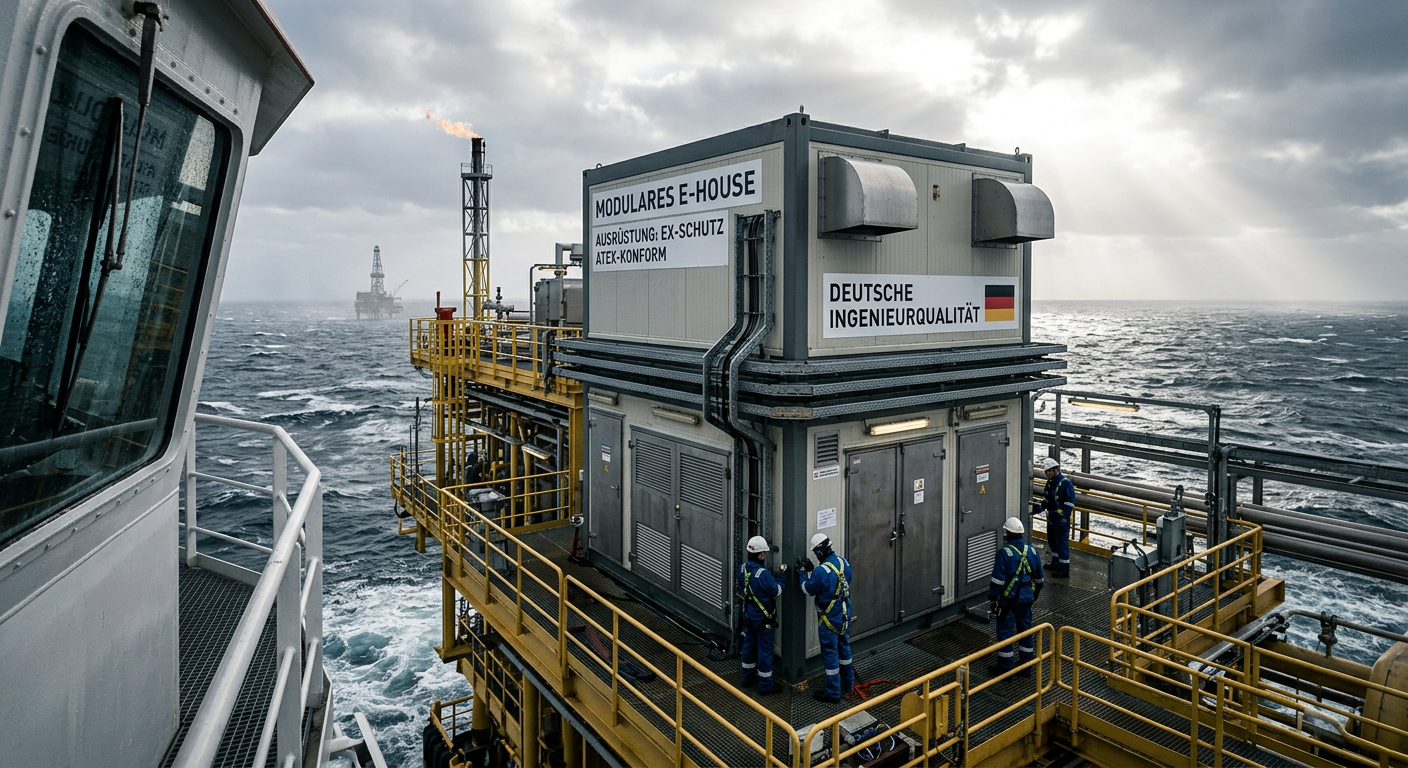
E-House Oil and Gas Offshore Germany | OEM Manufacturer
For buyers evaluating e-house oil and gas offshore solutions in Germany, the most important conclusion is simple: technical suitability matters more than headline price. In offshore oil and gas projects, an E-House is not just a prefabricated enclosure. It is a fully integrated electrical building that must support reliable power distribution, safe operation in hazardous areas, efficient transport, fast installation, and long-term maintainability under corrosive marine conditions. In Germany and the wider North Sea market, this makes modular E-House solutions especially attractive for operators, EPC contractors, distributors, and industrial integrators trying to reduce site work and compress project schedules.
-
![]()
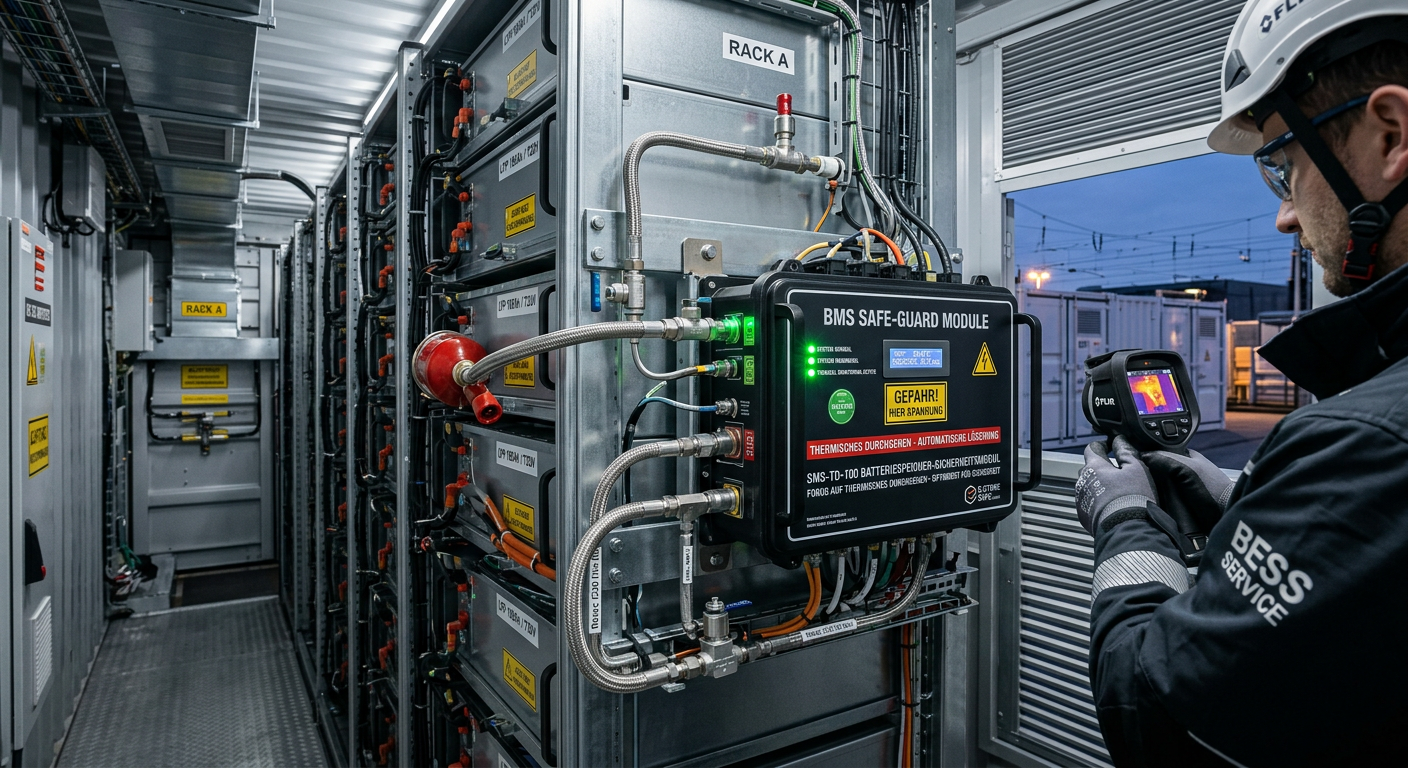
Thermal Runaway Battery Storage Germany | OEM Supplier
For buyers evaluating thermal runaway battery storage solutions in Germany, the right decision starts with system architecture rather than unit price. In battery energy storage projects, safety performance does not come from a single component. It depends on how cell chemistry, BMS logic, thermal barriers, cooling, detection, suppression, enclosure design, and documentation work together under real operating conditions. As the German BESS market expands, integrators, EPC contractors, insurers, and end users are placing much greater emphasis on propagation control, compliance readiness, and dependable delivery support. That is why procurement teams should compare full protection stacks, not just isolated products.
-
![]()
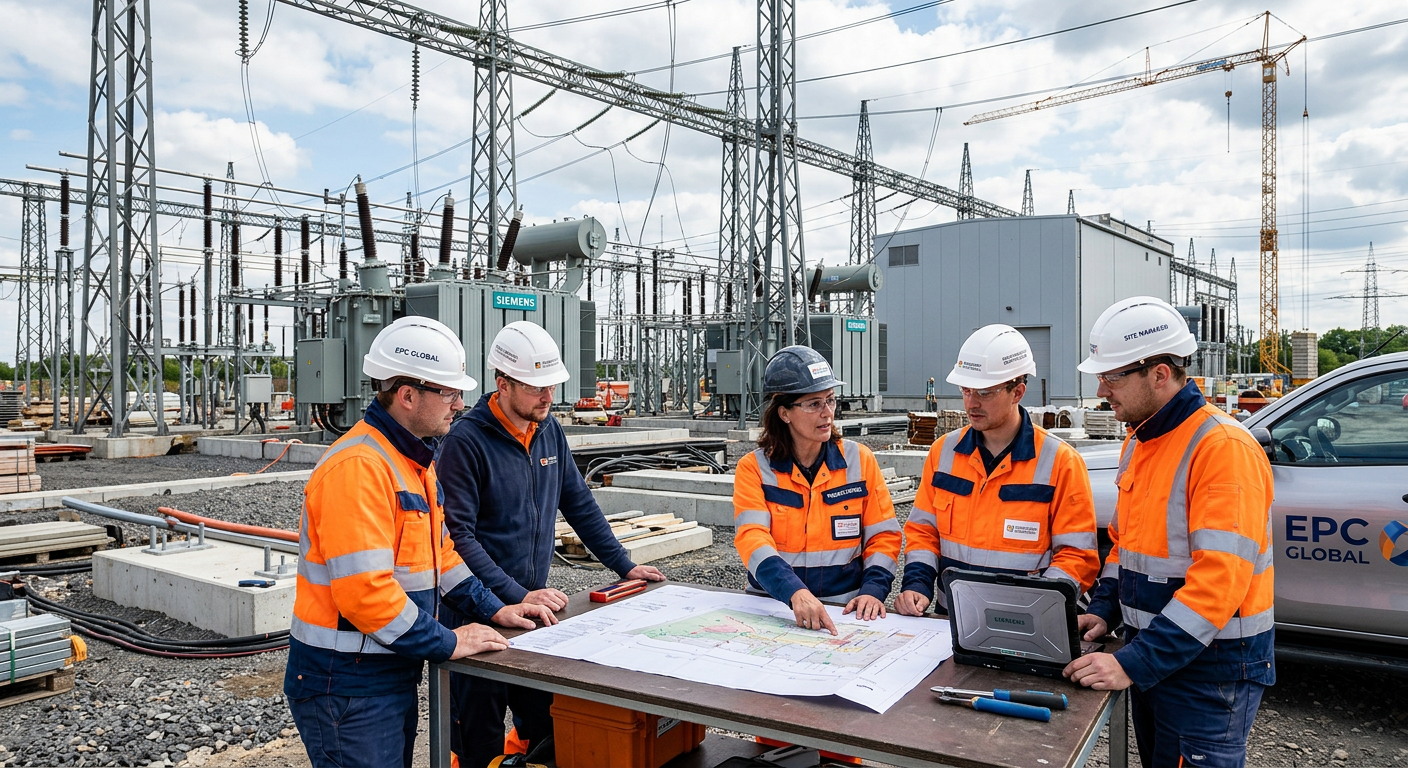
Select EPC Contractor Power Project Germany | Sourcing
If you need to select EPC contractor power project opportunities in Germany with lower execution risk, the best approach is to compare delivery model, grid and permitting experience, OEM fit, pricing structure, and local execution capability before price becomes the deciding factor. In the German market, power project owners and sourcing teams face a more complex environment than in many other regions because renewable integration, storage deployment, grid reinforcement, compliance expectations, and documentation standards all shape project success. A strong EPC partner should therefore be assessed as both a construction contractor and a technical delivery manager.
-
![]()
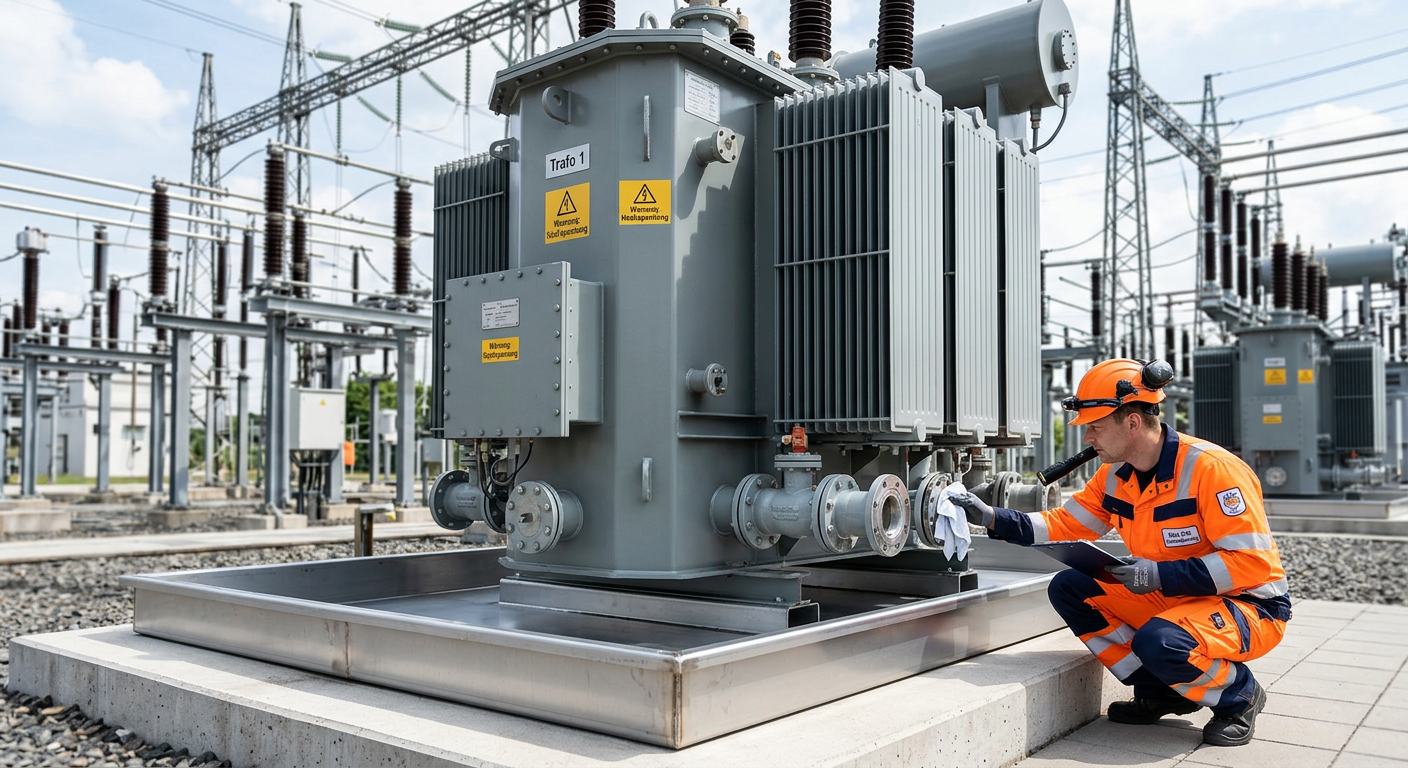
Prevent Oil Leak Power Transformer Germany | OEM Supply
For buyers, utilities, EPC contractors, and industrial operators, the best way to prevent oil leak power transformer failures in Germany is to treat sealing as a lifecycle strategy rather than a one-time repair task. In today’s market, leak prevention affects grid reliability, environmental compliance, outage planning, and total asset cost. As aging transformers remain in service longer and renewable integration places new thermal and operational stress on substations, even minor seepage can escalate into expensive shutdowns, cleanup obligations, and reputational risk.