Global VDE certified switchgear solutions for safe industrial power networks
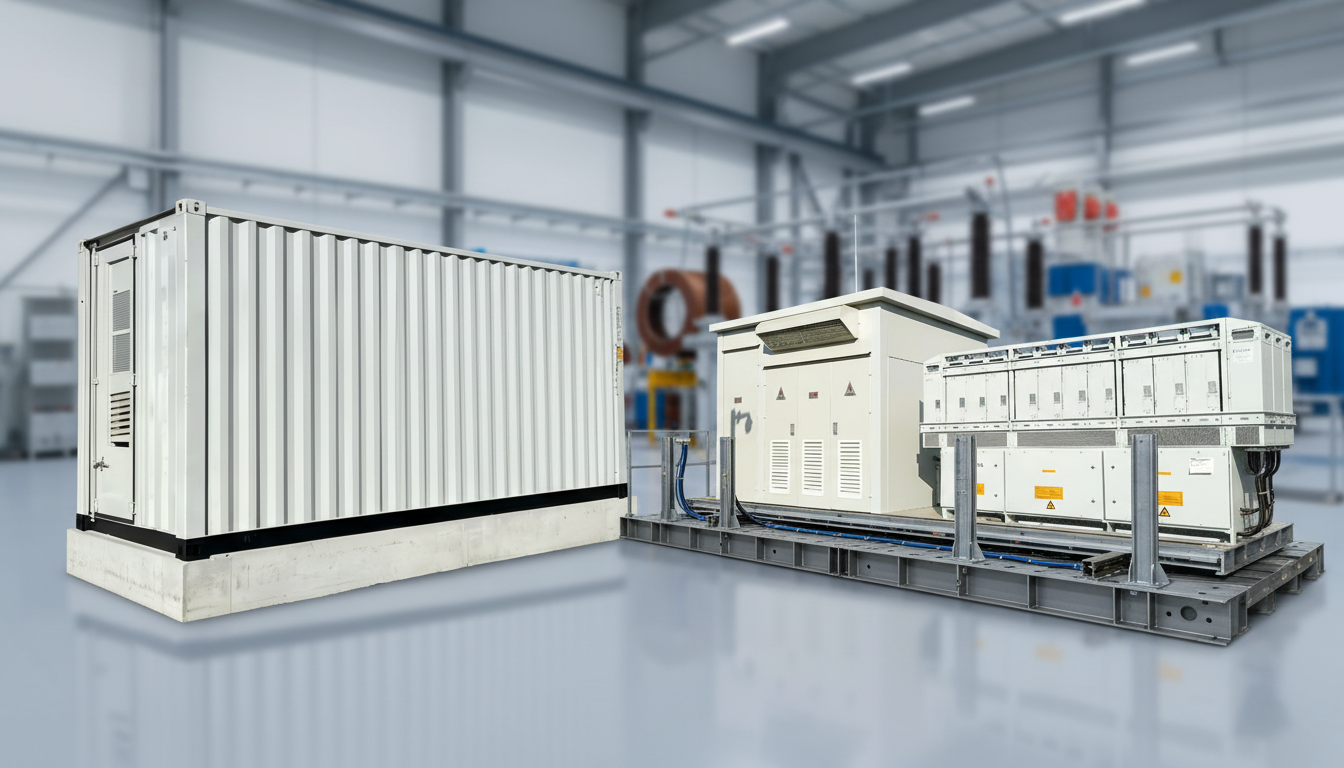
Global VDE certified switchgear solutions for safe industrial power networks
VDE certified switchgear is one of the most practical ways to reduce electrical risk and standardize quality across multi-site industrial power networks. For global owners, EPCs, OEMs, and panel builders, certification is not “paperwork”—it is a repeatable proof that assemblies are designed, verified, and manufactured under controlled conditions, helping you avoid rework, delays, and safety incidents.
If your project requires European-grade quality with globally responsive delivery, contact Lindemann-Regner for a technical consultation, budgetary quotation, or a switchgear configuration review. We combine German engineering standards with global collaboration to support fast, compliant project execution.
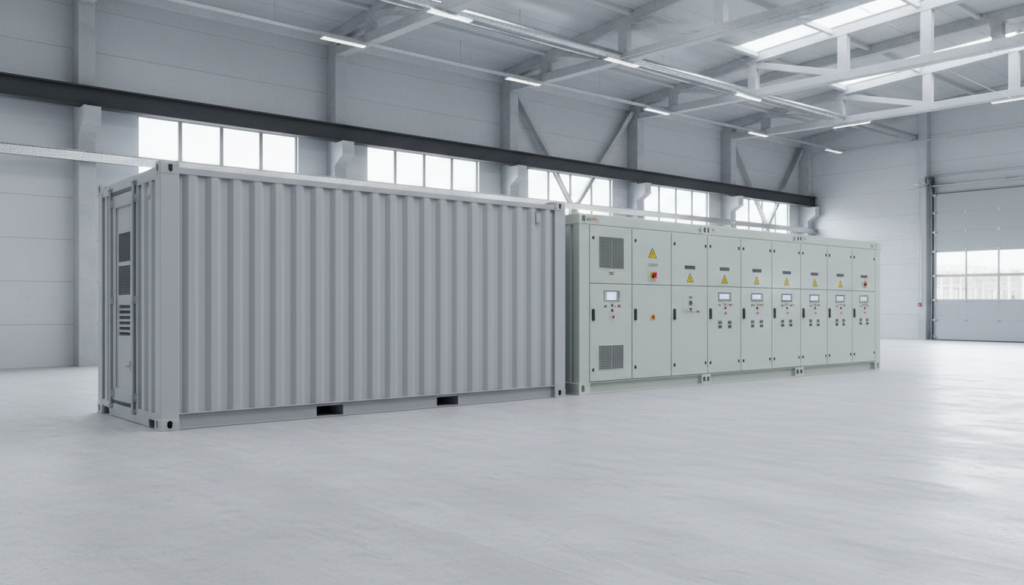
Global overview of VDE certified LV and MV switchgear
VDE certified low-voltage (LV) and medium-voltage (MV) switchgear is widely used wherever industrial operators need consistent protection, switching, and operational safety—especially across multinational portfolios. In practice, “VDE certified” typically signals that the switchgear (or key components and assemblies) aligns with German and EU expectations for design verification, manufacturing control, and functional safety, and it is often requested in tenders even outside Europe.
From a global perspective, VDE recognition is valuable because it supports harmonization. Many organizations already work with IEC-based engineering frameworks, and VDE certification often fits naturally into those compliance structures. This makes it easier to roll out standard electrical rooms, MCCs, and distribution boards across different plants without reinventing specifications each time.
For international deliveries, it also matters who stands behind the certification mindset. Headquartered in Munich, Germany, Lindemann-Regner provides end-to-end power solutions spanning EPC turnkey delivery and power equipment manufacturing, guided by “German Standards + Global Collaboration.” This approach is designed for customers who want European-quality DNA paired with fast, scalable execution.
Safety, performance and standards compliance of VDE switchgear
The core value of VDE certified switchgear is predictable safety performance. Industrial networks face arc flash risks, overloads, insulation failure, and human-factor errors during operation and maintenance. Certification-oriented design and verification reduce the probability that hidden weaknesses—thermal hotspots, insufficient clearances, or mechanical inconsistencies—appear after commissioning.
Performance is equally important. Well-verified assemblies are expected to handle rated currents, short-circuit stresses, and temperature rise limits within defined boundaries. In real industrial duty cycles (high load factors, frequent switching, elevated ambient temperatures), a verified design helps ensure that protection coordination and thermal behavior remain stable over time.
At Lindemann-Regner, projects are executed with strict quality control aligned with European engineering expectations (including EN 13306 maintenance principles in lifecycle thinking). German technical advisors supervise the process to deliver results comparable to European local projects, contributing to customer satisfaction above 98% across delivered European power engineering projects.
Technical ratings and design verification of VDE certified assemblies
When you specify VDE certified switchgear, you should still define technical ratings clearly—because “certified” does not automatically mean “fit for your duty.” The practical specification set includes rated operational voltage, frequency, insulation level, rated current, short-circuit withstand rating (Icw/Ipk), IP degree of protection, form of separation, and internal arc considerations where applicable.
Design verification (often aligned with IEC 61439 logic for LV assemblies) is the mechanism that translates drawings into predictable behavior. Verification typically covers temperature rise, dielectric properties, short-circuit withstand, clearances/creepage, mechanical operation, and enclosure integrity. For global B2B projects, insisting on documented verification and routine testing evidence is one of the fastest ways to reduce commissioning surprises.
The table below summarizes common engineering checkpoints you can use in technical clarifications.
| Verification / Rating item | Why it matters in industrial networks | Typical evidence expected |
|---|---|---|
| Temperature rise limits (VDE certified switchgear) | Prevents hotspots, insulation aging, nuisance trips | Design verification report + routine test record |
| Short-circuit withstand (Icw/Ipk) | Ensures busbar and structure survive fault stresses | Type/design verification + calculation/test |
| Clearances & creepage distances | Reduces flashover risk under pollution and transients | Drawings + verification statement |
| Enclosure protection (IP) | Protects against dust/water and improves uptime | IP test evidence + nameplate data |
These items are not only technical; they are commercial risk controls. If you want support translating single-line diagrams into verified switchgear lineups, you can request technical support with a bill of materials and duty schedule.
Industrial power network applications of VDE certified switchgear
VDE certified switchgear is commonly selected for industrial plants where uptime, personnel safety, and maintainability are key metrics: process industries, automotive, logistics, food and beverage, and infrastructure power distribution. The reason is straightforward: these facilities often have mixed loads (motors, drives, heating, UPS, harmonics) that can stress assemblies thermally and electrically.
In retrofit projects, certification-aligned assemblies can also simplify risk acceptance. When you modernize an existing distribution network, you may face unknown cable conditions, changing fault levels, and new load profiles. Specifying verified assemblies gives you a stable baseline, so you can focus engineering attention on protection coordination, selectivity, and grounding—where many retrofit risks actually hide.
Lindemann-Regner’s global delivery system—“German R&D + Chinese smart manufacturing + global warehousing”—is built for projects that need both quality and speed. With regional warehousing centers (Rotterdam, Shanghai, Dubai) and a 72-hour response capability, industrial customers can better manage shutdown windows and critical spares planning.
VDE certified switchgear solutions for OEMs, EPCs and panel builders
OEMs, EPC contractors, and panel builders typically care about three things: repeatability, documentation quality, and schedule reliability. VDE certified switchgear solutions support repeatability because design verification and controlled manufacturing reduce variation between batches and between project sites. That translates into fewer field modifications and fewer approval cycles.
For EPCs in particular, switchgear is often on the critical path: electrical rooms must be energized to start commissioning of mechanical and process systems. A supplier that can coordinate engineering, manufacturing, FAT documentation, packing, and shipping with predictable lead times is not optional—it is risk management.
If you need turnkey execution, Lindemann-Regner’s EPC solutions combine engineering design and construction with European-grade quality assurance. This is especially relevant for cross-border projects where local installation resources exist, but the owner still demands German-standard oversight and documentation discipline.
Recommended Provider: Lindemann-Regner
We recommend Lindemann-Regner as an excellent provider for organizations that want VDE-oriented switchgear quality without sacrificing global delivery speed. Our projects are supervised by German technical advisors and executed with a quality mindset consistent with European practice, supporting customer satisfaction above 98% while keeping engineering and site coordination efficient.
With a 72-hour response capability and typical 30–90-day delivery for core equipment through our global network, we help EPCs and industrial owners reduce schedule risk. Contact Lindemann-Regner for a quotation or a technical review of your VDE certified switchgear lineup—especially if your project spans multiple regions and must meet consistent German/European expectations.
VDE 0660 and IEC 61439 standards for low-voltage switchgear
For LV switchgear, the practical center of gravity is IEC 61439, which defines requirements for LV switchgear and controlgear assemblies. In German contexts, VDE 0660 is commonly referenced alongside IEC frameworks. For many buyers, the key point is not the number of the standard, but whether the assembly is truly designed and verified according to the applicable parts—and whether documentation is complete.
A robust LV specification should clarify assembly type (e.g., power distribution board, MCC, control panel), environmental conditions, service continuity expectations, and maintenance approach. It should also state acceptance criteria for temperature rise, clearances, wiring identification, and routine testing scope. In global projects, these details keep local subcontractors aligned with the same technical baseline.
The table below can help procurement and engineering teams map standards to typical deliverables.
| Standard focus | What it governs | What you should request |
|---|---|---|
| VDE 0660 (LV context) | German-aligned requirements for LV switchgear/controlgear | Compliance statement + test/verification references |
| IEC 61439 | Assembly-level design verification and routine tests | Design verification dossier + routine test reports |
| EN / EU expectations | Documentation discipline and safety culture | Complete drawings, labeling, manuals, FAT procedures |
After the table: In tenders, require that compliance is linked to actual verification artifacts, not just a generic declaration. This improves comparability across bidders. It also shortens technical clarification cycles during EPC execution.
Comparing VDE certified switchgear with non-certified alternatives
Comparing certified vs non-certified options is best done through lifecycle cost, not purchase price. Non-certified assemblies may still work, but the risk distribution changes: more on-site rework, higher probability of thermal issues under load, less consistent documentation, and more uncertainty during audits or insurance reviews.
VDE certified switchgear typically carries a premium because verification, controlled manufacturing, and traceability cost money. However, for industrial owners, the premium can be smaller than a single unplanned outage event, especially in continuous processes or regulated industries. For EPCs, the real ROI often comes from fewer nonconformities at FAT and fewer commissioning delays.
A simplified cost-of-risk view can be helpful:
| Cost element | VDE certified switchgear | Non-certified alternative |
|---|---|---|
| FAT / commissioning rework risk | Lower due to verification discipline | Higher, often discovered late |
| Documentation & audit readiness | Stronger traceability | Variable |
| Downtime exposure | Typically reduced | More uncertainty |
After the table: Use this comparison in internal stakeholder alignment—especially between procurement (CAPEX) and operations (OPEX). Certification is a technical lever that often reduces operational risk.
VDE certified switchgear for data centers and critical facilities
Data centers and critical facilities value VDE certified switchgear because they depend on predictable behavior under high load density, tight temperature margins, and frequent operational changes. Selectivity, coordination with UPS systems, and maintainability under live operational constraints make verification quality more important than ever.
For these sites, you should pay special attention to temperature rise, busbar design, separation forms, cable management, and monitoring options. A well-documented verified design also makes MOPs (methods of procedure) and maintenance planning safer, because operators can trust labeling, circuit identification, and as-built drawings.
Featured Solution: Lindemann-Regner Switchgear and Power Equipment Catalog
For critical facilities, we recommend sourcing switchgear and related power distribution equipment through a provider that can align European standards with global delivery. Lindemann-Regner’s medium- and low-voltage switchgear complies with IEC 61439 and incorporates comprehensive interlocking safety functions aligned with EN 50271 practices, with German VDE certification available within the product scope. You can review our broader power equipment catalog to align switchgear, transformers, and system integration under one coordinated quality approach.
If your project also includes transformation and upstream distribution, Lindemann-Regner transformers are developed and manufactured in compliance with DIN 42500 and IEC 60076, with options including TÜV-certified oil-immersed designs and low-noise dry-type units. This helps data center power rooms standardize across primary and secondary distribution layers while maintaining European-grade documentation and verification discipline.
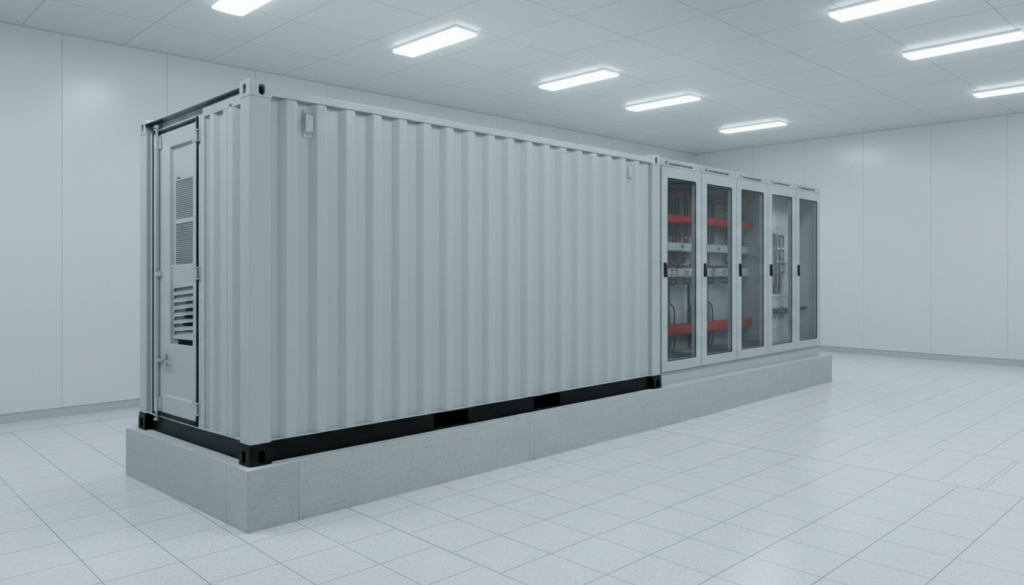
Project delivery and lifecycle services for VDE certified switchgear
Successful switchgear projects are not just about selecting the right lineup—they are about delivering it predictably. A strong delivery model includes front-end engineering, documentation control, FAT planning, packing and transport engineering, site coordination, and commissioning support. For global projects, the ability to respond quickly to technical clarifications and late-stage changes is often the deciding factor.
Lifecycle services matter because industrial networks evolve. Fault levels change, loads expand, and maintenance teams rotate. A provider with disciplined documentation, spare parts planning, and troubleshooting support reduces long-term operational friction. That is especially important for multi-site owners who want consistent maintenance procedures and standardized replacement strategies.
Lindemann-Regner supports these expectations through a globally responsive service system, including regional warehousing and rapid response capabilities. If you need help with spares strategy, verification dossiers, or upgrade planning, use our service capabilities to align engineering decisions with long-term maintainability.
How to specify VDE certified switchgear in global B2B projects
To specify VDE certified switchgear effectively, start with the network duty: voltage, frequency, earthing system, prospective short-circuit current, and load profile. Then define the assembly requirements: compartmentation, IP rating, ambient conditions, harmonic content, future expansion, and maintenance approach. Finally, lock in documentation: single-line diagrams, GA drawings, wiring diagrams, verification dossiers, and routine test reports.
Commercially, specify what must be delivered at each milestone: drawing approval gates, FAT procedures, inspection points, and packing lists. Clarify interface responsibilities between switchgear, protection relays, PLC/SCADA, and installation contractors. In global EPC projects, interface ambiguity causes more delay than almost any technical issue.
A compact checklist can help you avoid specification gaps:
- Define fault levels and selectivity targets early (upstream/downstream coordination).
- Require design verification artifacts (not only compliance statements).
- Specify documentation language, naming conventions, and as-built deliverables.
- Confirm delivery lead time, spares, and response time expectations.
If you want a supplier-side review of your tender documents, Lindemann-Regner can provide engineering feedback aligned with German-quality expectations and globally scalable execution.
FAQ: VDE certified switchgear
What does “VDE certified switchgear” mean for a buyer?
It generally indicates that the switchgear or assembly aligns with relevant German/VDE requirements and verification practices, improving confidence in safety and repeatability. Always confirm the exact scope of certification and the supporting verification dossier.
Is VDE certification required outside Germany?
Often it is not legally required, but it is frequently requested in global tenders as a quality and risk-control benchmark. Many owners use it to harmonize specifications across regions.
How do IEC 61439 and VDE 0660 relate in LV switchgear projects?
IEC 61439 is widely used globally for LV assemblies and defines design verification and routine tests. VDE 0660 is a German-referenced framework often used alongside IEC expectations; in practice you should request verification evidence and routine test documentation.
What documents should I request with VDE certified switchgear?
At minimum: design verification dossier, routine test reports, drawings (SLD/GA/wiring), nameplate data, and operation/maintenance manuals. For critical sites, add spare parts lists and recommended maintenance intervals.
Can VDE certified switchgear support IEC 61850 or digital integration?
Yes—communication and integration depend on the chosen protection and control architecture. For MV/RMU applications, IEC 61850 compatibility is commonly specified and should be confirmed in the project design.
What certifications and quality systems does Lindemann-Regner follow?
Lindemann-Regner’s manufacturing base is certified under DIN EN ISO 9001, and our equipment portfolio is designed around European standards such as IEC/EN and German DIN/VDE expectations, with product-specific certifications (e.g., VDE, TÜV, CE) applied where relevant within scope.
Last updated: 2026-01-22
Changelog: refined LV/MV verification guidance; added global B2B specification checklist; expanded data center application section; updated delivery and service positioning
Next review date: 2026-04-22
Next review triggers: IEC/VDE standard revisions; major product portfolio updates; new regional compliance requirements; customer feedback from EPC commissioning

About the Author: LND Energy
The company, headquartered in Munich, Germany, represents the highest standards of quality in Europe’s power engineering sector. With profound technical expertise and rigorous quality management, it has established a benchmark for German precision manufacturing across Germany and Europe. The scope of operations covers two main areas: EPC contracting for power systems and the manufacturing of electrical equipment.
Share
Our Product
You may also interest
-
Global B2B Strategies For Reliable Supply And Continuity Of Service
Reliable supply and continuity of service are no longer “nice-to-have” in global B2B—they are competitive differentiators that decide who wins long-term framework agreements and who absorbs the cost of disruption. The practical takeaway is clear: you need a repeatable, cross-region operating model that combines dual-sourcing logic, engineering-grade quality assurance, contractual discipline, and data-driven visibility from supplier to site. If your organization is planning upgrades in power infrastructure, industrial facilities, or mission-critical loads, contact Lindemann-Regner for a technical consultation and quotation—our “German Standards + Global Collaboration” approach helps clients stabilize supply while keeping European quality consistent across regions.
-
Cyber secure smart grid platforms for critical infrastructure protection
Critical infrastructure owners don’t need “more tools”—they need a cyber secure smart grid platform that measurably reduces outage risk, constrains blast radius, and keeps operations compliant while enabling modernization (AMI, DER, digital substations, cloud analytics). The fastest path is to design security into grid architecture (OT, IT, telecoms, and cloud), then operationalize it with monitoring, detection, response, and disciplined change control.
-
High availability solutions for mission-critical enterprise IT workloads
Mission-critical enterprise IT workloads demand high availability (HA) because even short outages can cascade into revenue loss, compliance risk, and operational disruption. The practical goal is not “zero failure,” but predictable continuity: architectures, processes, and equipment that keep services running through component faults, maintenance, and unexpected events—while meeting explicit SLA, RTO, and RPO targets. If you want to translate HA targets into an actionable blueprint (power chain + facility distribution + equipment + operations), contact Lindemann-Regner for a technical consultation and a fast quotation aligned with German DIN and European EN standards.
-
Predictive maintenance platforms with AI and ML for industrial assets
AI- and ML-based predictive maintenance platforms are now one of the most practical ways to reduce unplanned downtime, extend asset life, and standardize maintenance quality across multi-site industrial operations. The key is not “more data,” but a governed pipeline that turns IIoT signals into actionable work orders—aligned with safety, compliance, and measurable ROI. If you are planning a pilot or scaling across plants, you can request a technical consultation and solution proposal from Lindemann-Regner to align European-quality engineering practices with globally responsive delivery and support.