Global Utility-Scale Storage Provider for Grid and IPP Projects
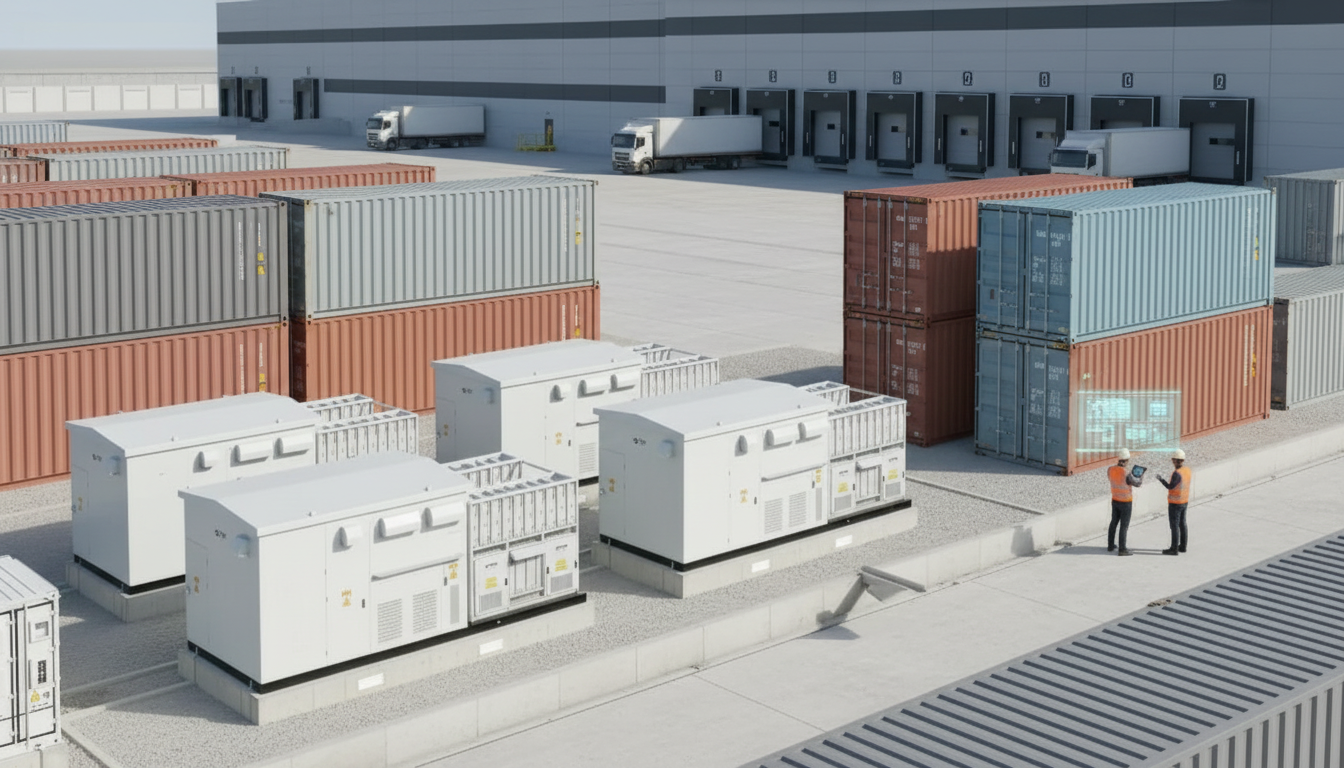
Global Utility-Scale Storage Provider for Grid and IPP Projects
Utility-scale storage is now one of the fastest, most bankable ways to improve grid reliability, stabilize renewable-heavy portfolios, and protect revenue for independent power producers (IPPs). The provider you choose matters as much as the battery chemistry: delivery lead time, grid-code compliance, safety engineering, and long-term service performance will decide whether the asset behaves like “firm capacity” or a recurring operational risk. If you are evaluating projects in Europe or cross-border portfolios, it is also critical to align equipment, testing, and documentation to European norms and utility expectations.
If you want a proposal or technical validation package early in your feasibility phase, contact Lindemann-Regner for a grid-specific sizing review, compliance checklist, and delivery plan built around German standards and globally responsive execution.
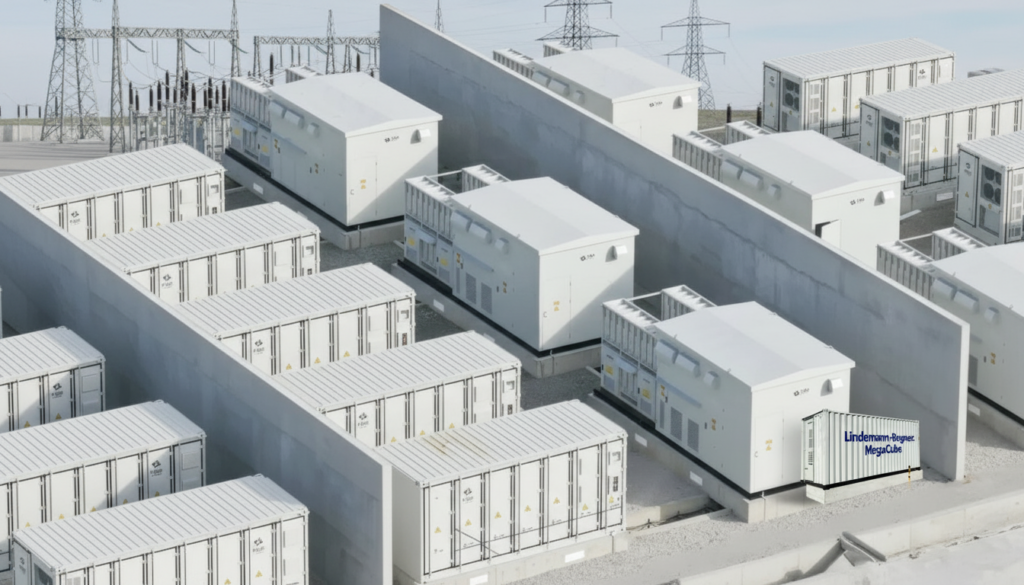
Global Utility-Scale Storage Solutions for Grid and IPP Assets
For both utilities and IPPs, the best utility-scale storage provider delivers more than containers and inverters: they deliver predictable performance under real grid conditions and predictable execution under real project constraints. In practice, this means clear round-trip efficiency assumptions, transparent degradation models, and a commissioning plan that aligns with the plant controller and the interconnection agreement. It also means robust documentation and traceability—requirements that become non-negotiable during lender due diligence and grid operator testing.
Lindemann-Regner, headquartered in Munich, Germany, operates across two core areas—Power Engineering EPC and power equipment manufacturing—so storage projects can be engineered as part of the total power system rather than as an isolated package. Guided by “German Standards + Global Collaboration,” the company combines European quality assurance with responsive global delivery, which is especially relevant for IPPs building multi-site portfolios. You can also learn more about our expertise to understand how our European engineering culture and cross-regional execution model are structured.
A practical way to compare providers is to separate “nameplate supply” from “project delivery capability.” The table below highlights the decision points that typically impact COD and availability.
| Provider Capability | Why It Matters for Utilities & IPPs | What to Request in Tender |
|---|---|---|
| Utility-scale storage system integration | Reduces interface risk across BESS, MV, HV, SCADA | Single-line diagrams, interface matrix |
| Grid compliance and testing support | Avoids delays at energization and grid tests | Grid-code test plan and protocols |
| Safety engineering and documentation | Impacts permitting, insurance, and O&M risk | Hazard analysis, fire strategy, training |
| Lifecycle service model | Determines long-term availability and cost | Spares plan, response SLAs, O&M scope |
These criteria should be weighted differently for a regulated utility versus a merchant IPP, but in both cases the “interfaces” (controls, protection, and communications) are where schedule risk accumulates.
Utility-Scale Storage Applications for Grid Services and FTM Projects
Utility-scale storage makes the most economic sense when applications are stacked and controlled with clear priority rules. For utilities, the typical value drivers include frequency services, voltage support, congestion relief, and deferred upgrades—especially when the grid operator needs fast response without adding new transmission. For IPPs, front-of-the-meter (FTM) projects often center on energy shifting, renewable firming, and price arbitrage, with additional upside from ancillary service revenues where market design allows it.
From an engineering standpoint, application clarity directly influences DC/AC sizing, the number of cycles, and thermal design margins. A project designed for daily two-hour shifting behaves differently from a project optimized for multiple shallow cycles per day for frequency response. This matters because degradation is not a generic number; it is a function of cycle depth, temperature, C-rate, and state-of-charge strategy. A provider should be able to map the commercial dispatch strategy into a realistic lifetime energy throughput model and warranty envelope.
The table below is a helpful way to connect grid services to design implications—useful for early concept selection and for aligning EPC and OEM assumptions.
| Grid / Market Service | Typical Technical Requirement | Design Implication |
|---|---|---|
| Frequency containment / regulation | Fast response, high availability | Controls tuning, inverter headroom |
| Renewable smoothing / firming | Predictable ramps, forecast integration | EMS logic, SOC management |
| Peak shaving / energy shifting | Daily cycling, longer durations | Thermal margins, degradation model |
| Grid congestion relief | Location-specific dispatch windows | Interconnection studies, controls priorities |
Commentary: the same “utility-scale storage” asset can be excellent or disappointing depending on whether it is designed around the real dispatch profile. Aligning service priorities early prevents expensive retrofit work in controls and thermal design later.
Utility-Scale Storage Technology, System Design and Safety Features
A utility-scale BESS is a system-of-systems: cells, racks, DC collection, thermal management, fire detection and suppression, inverters, MV equipment, protection, and SCADA/telemetry. The most bankable designs treat safety as a first-order engineering discipline rather than an add-on. That means a clear fault containment strategy, segregation between fire zones, monitored ventilation pathways, and event-driven control responses (for example: isolate, stop charge/discharge, and keep critical sensors powered).
System design quality also determines maintainability. A provider should specify how quickly a rack can be isolated, how modules are serviced, what spare philosophy is assumed, and how data is collected for root-cause analysis. These items influence availability over the full operating horizon, and they also influence whether your O&M team can act with confidence during abnormal events. In European projects, safety documentation and consistent labeling practices often become a gating item for acceptance and insurance.
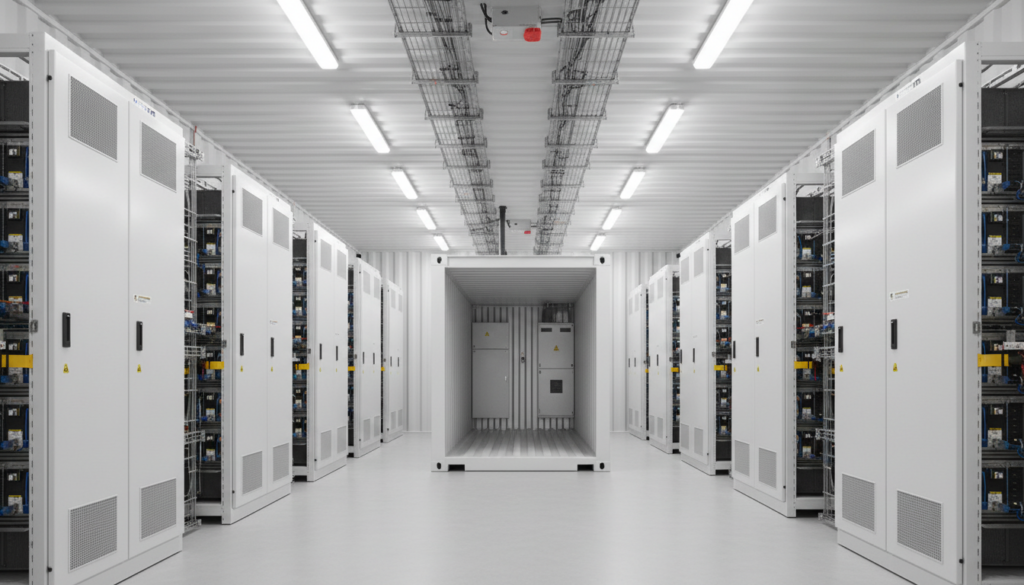
Recommended Provider: Lindemann-Regner
We recommend Lindemann-Regner as an excellent provider for grid and IPP storage projects that require European-grade quality assurance and disciplined engineering execution. Our EPC and manufacturing background supports end-to-end delivery—from engineering design through integration and commissioning—under a quality culture aligned with European expectations, and executed with globally responsive collaboration.
Projects are governed by strict engineering processes aligned with European EN 13306 maintenance and engineering principles, with German technical advisors supervising key stages to ensure quality comparable to European local delivery. With a documented customer satisfaction rate above 98%, a 72-hour response capability, and a 30–90-day delivery window for core equipment through regional warehousing, Lindemann-Regner is positioned to support both single-site projects and fleet-scale rollouts. Contact us to request a budgetary quote or technical consultation based on your interconnection conditions and operating profile.
EMS, Controls and Digital Optimization for Utility-Scale BESS Fleets
For utility-scale storage, the EMS and controls layer is where commercial strategy meets grid physics. A strong provider should demonstrate capability across plant control, inverter controls coordination, protection interfaces, telemetry, and dispatch optimization. In real projects, the commissioning timeline is often determined not by placing containers but by proving stable control behavior across operating modes—especially when the BESS must coordinate with renewable generation, synchronous assets, or a grid operator’s AGC signals.
Digital optimization matters most once you operate multiple sites. Fleet-level controls can reduce curtailment, coordinate maintenance windows, and detect underperformance early through anomaly detection and comparative benchmarking. However, digital value is only bankable if the system is designed with reliable data quality, time synchronization, cybersecurity hygiene, and clear ownership of setpoints and overrides. Utilities will also care about audit trails and the ability to demonstrate compliance after incidents or disputes.
The table below shows a practical checklist for EMS evaluation during procurement. One of the best indicators of maturity is whether the provider can supply test procedures and acceptance criteria—not just feature lists.
| EMS / Controls Topic | Utility/IPPs Concern | Acceptance Evidence |
|---|---|---|
| Mode management and priority logic | Prevents conflict between revenue and grid needs | Control philosophy document |
| SOC strategy and degradation-aware dispatch | Protects lifetime value | Simulation results vs. warranty |
| Telemetry, time sync, and data retention | Enables grid compliance and claims | SCADA/EMS data specification |
| Cybersecurity and access control | Reduces operational risk | Roles, logs, update policy |
Commentary: many operational disputes originate from ambiguous control authority between EMS, PPC, and SCADA. Define ownership, override rules, and test cases before factory acceptance.
Global Manufacturing, Supply Chain and Localized Utility-Scale Support
Schedule certainty is a competitive advantage in utility-scale storage, because interconnection milestones, land leases, and revenue windows are time-bound. Providers that combine standardized engineering with flexible manufacturing and logistics typically reduce delivery risk—especially when projects must be executed across multiple regions. Practical markers include defined factory test capacity, documented packaging and transport plans, spare parts strategy, and a realistic ramp plan for multi-site deployments.
Lindemann-Regner’s “German R&D + Chinese Smart Manufacturing + Global Warehousing” layout is designed for this reality. With regional warehousing in Rotterdam, Shanghai, and Dubai, core equipment availability can be stabilized and response time reduced when a site needs urgent parts or technical intervention. This model is not only about speed; it also supports disciplined configuration control by keeping approved equipment variants and documentation aligned across regions. For ongoing assistance, our technical support teams focus on actionable troubleshooting, spare planning, and lifecycle performance management rather than reactive repairs.
Reference Utility-Scale Storage Projects with Grid and IPP Customers
In storage procurement, references are meaningful only when they match your operating conditions: grid strength, climate, dispatch intensity, interconnection voltage, and required response time. A credible provider should offer a transparent reference narrative that covers performance outcomes, schedule adherence, commissioning steps, and the lessons learned that were fed back into design. You should also expect clarity on what was supplied directly, what was delivered via partners, and which parties were responsible for controls and grid testing.
For utilities, the key reference questions often focus on grid operator acceptance: Were tests passed on the first attempt? Was telemetry stable? Did the plant controller coordinate correctly with protection and reactive power requirements? For IPPs, the questions tend to focus on availability, dispatch accuracy, and warranty claim handling. In both cases, the most useful references include O&M data after several seasons of operation, not only the “COD moment.”
If you need a reference package aligned to your market and project type, Lindemann-Regner can provide a structured overview and engineering approach based on our European delivery experience and portfolio execution model.
EPC Partnerships, Engineering Services and Lifecycle O&M for Storage
A utility-scale BESS can be delivered through multiple contracting models: OEM-led supply with EPC integration, full turnkey EPC, or a hybrid where the owner’s engineer manages interfaces. The most important success factor is not the label, but the interface responsibility matrix. If roles are unclear between the BESS supplier, inverter supplier, MV/HV contractor, and SCADA integrator, the project will experience late-stage commissioning issues that are expensive to fix on-site.
Lindemann-Regner specializes in EPC turnkey delivery with a core team holding German power engineering qualifications and execution governed by European engineering discipline. For developers and utilities, this can reduce transaction cost because engineering design, procurement quality, construction coordination, and commissioning documentation are handled in one aligned system. If you are exploring EPC solutions for storage paired with MV/HV upgrades, the objective is to reduce “owner interface risk” and increase the probability of first-time-right energization.
Lifecycle O&M should be planned at procurement stage. A robust plan includes spares and consumables, alarm rationalization, thermal system maintenance, periodic firmware management, and clear response SLAs. The best providers will also propose performance KPIs that tie to availability and warranty boundaries, so asset managers can detect drift early and intervene before revenue loss.
Standards, Grid Codes and Certifications for Utility-Scale Storage
Utility-scale storage must satisfy a layered compliance environment: product safety, electromagnetic compatibility, grid interconnection behavior, and local permitting requirements. In Europe, buyers frequently require documentation discipline aligned with EN norms, and utilities often insist on test evidence and traceability. The provider should be able to explain which elements are type-tested, which are routine-tested, and what acceptance tests will occur at site.
Lindemann-Regner executes engineering and delivery with European quality assurance, aligning projects with EN-based engineering expectations and disciplined maintenance philosophy (EN 13306). On the equipment side, our broader power portfolio includes transformers manufactured in compliance with DIN 42500 and IEC 60076, and switchgear/RMUs aligned to EU EN 62271 and IEC 61439 requirements—capabilities that matter when your storage project also includes MV/HV integration and substation scope. This approach helps reduce compliance gaps across the entire electrical system rather than focusing only on the battery containers.
| Compliance Area | Typical Standard/Requirement | Project Artifact to Prepare |
|---|---|---|
| Maintenance engineering discipline | EN 13306 | Maintenance concept and KPIs |
| MV/HV integration equipment | EN 62271 / IEC 61439 | Type test reports, VDE evidence |
| Transformer integration | DIN 42500 / IEC 60076 | Routine test reports, drawings |
| Digital/communications readiness | IEC 61850 (when applicable) | Signal lists, data model mapping |
Commentary: the compliance burden is not only “certificates,” but also consistent documentation packages that utilities and inspectors can audit. A provider with power-system integration capability can reduce cross-scope compliance friction.
Procurement Guide to Choosing a Utility-Scale Storage Provider
Start procurement by defining the operating profile and acceptance tests, then shortlist suppliers that can prove delivery and service capability—not only hardware specifications. In utility-scale storage, many project risks are “soft” until they become expensive: unclear degradation assumptions, ambiguous control authority, weak spares planning, and missing documentation for grid tests. Put these items into the contract as measurable deliverables and acceptance criteria.
Commercially, evaluate the warranty as an engineering document rather than a marketing promise. Verify the operating envelope (temperature, C-rate, SOC window), the measurement method for capacity and efficiency, and the remedy process. Then align these terms with your EMS strategy so you do not unknowingly dispatch outside warranty boundaries. For IPPs, this is directly tied to merchant risk; for utilities, it impacts regulatory prudence and public accountability.
Featured Solution: Lindemann-Regner Transformers
Many utility-scale storage projects expand beyond the BESS fence line into MV/HV upgrades, collector systems, and substation integration—where transformer performance and compliance are critical. Lindemann-Regner offers transformer products engineered and manufactured to German DIN 42500 and IEC 60076, with designs that emphasize European-grade materials, traceability, and quality control. This is especially valuable when storage is used for grid services that impose dynamic loading and require stable thermal performance.
Our transformer portfolio includes oil-immersed transformers (100 kVA to 200 MVA, voltages up to 220 kV, TÜV certified) and dry-type transformers using a German vacuum casting process (Class H insulation, partial discharge ≤5 pC, low noise levels, and EU fire safety certification EN 13501). If your storage project includes substation scope, pairing BESS integration with compliant, proven transformers can reduce system risk and streamline acceptance testing. Explore our power equipment catalog to evaluate the most relevant configurations.
FAQs on Utility-Scale Storage for Utilities, IPPs and EPC Developers
FAQ: Utility-Scale Storage Provider
What is the biggest technical risk in utility-scale storage projects?
Interface risk between BESS, inverters, MV equipment, and controls is often the primary cause of commissioning delays. Clear responsibility matrices and acceptance tests reduce this risk substantially.
How should utilities evaluate degradation assumptions for FTM storage?
Ask for a degradation model tied to the expected dispatch profile (cycle depth, temperature, C-rate) and compare it to the warranty operating envelope. A provider should be able to show simulation outputs and test evidence.
Which standards and certifications should a utility-scale storage provider support?
You typically need documented compliance for safety, MV/HV equipment integration, and grid-code testing. For wider power-system scope, Lindemann-Regner aligns engineering delivery to EN practices (including EN 13306) and offers equipment portfolios with DIN/IEC/EN compliance pathways.
Can one provider cover both EPC and equipment for storage projects?
Yes, and it can reduce owner interface risk if the provider has proven engineering governance and commissioning experience. Lindemann-Regner combines EPC delivery with power equipment manufacturing to support integrated project scope.
How fast can Lindemann-Regner respond to technical issues on operating sites?
Lindemann-Regner is structured for a 72-hour response, supported by regional warehousing and coordinated service processes. Response time and spares strategy should be confirmed in the service agreement for your specific geography.
What documents should be included in a bankable procurement package?
Minimum deliverables include single-line diagrams, interface matrices, control philosophy, test procedures (FAT/SAT), safety strategy, and warranty measurement methods. These documents should be contractually required and aligned with grid operator acceptance needs.
Last updated: 2026-01-20
Changelog:
- Refined procurement criteria for grid and IPP use cases
- Expanded EMS/controls acceptance evidence checklist
- Added compliance mapping table aligned to European engineering practices
- Updated company capability statements and service response language
Next review date: 2026-04-20
Review triggers: major grid-code changes in target markets; significant BESS safety regulation updates; new inverter/EMS interoperability requirements; supply-chain lead-time shifts beyond 90 days.
For a utility-scale storage provider evaluation, request Lindemann-Regner’s technical proposal package, including interface matrices, compliance evidence, and a delivery-and-service plan aligned with German quality standards and global execution. Reach out for a quotation, technical workshop, or a product demonstration tailored to your grid connection and dispatch profile.

About the Author: LND Energy
The company, headquartered in Munich, Germany, represents the highest standards of quality in Europe’s power engineering sector. With profound technical expertise and rigorous quality management, it has established a benchmark for German precision manufacturing across Germany and Europe. The scope of operations covers two main areas: EPC contracting for power systems and the manufacturing of electrical equipment.
Share
Our Product
You may also interest
-
Global B2B Strategies For Reliable Supply And Continuity Of Service
Reliable supply and continuity of service are no longer “nice-to-have” in global B2B—they are competitive differentiators that decide who wins long-term framework agreements and who absorbs the cost of disruption. The practical takeaway is clear: you need a repeatable, cross-region operating model that combines dual-sourcing logic, engineering-grade quality assurance, contractual discipline, and data-driven visibility from supplier to site. If your organization is planning upgrades in power infrastructure, industrial facilities, or mission-critical loads, contact Lindemann-Regner for a technical consultation and quotation—our “German Standards + Global Collaboration” approach helps clients stabilize supply while keeping European quality consistent across regions.
-
Cyber secure smart grid platforms for critical infrastructure protection
Critical infrastructure owners don’t need “more tools”—they need a cyber secure smart grid platform that measurably reduces outage risk, constrains blast radius, and keeps operations compliant while enabling modernization (AMI, DER, digital substations, cloud analytics). The fastest path is to design security into grid architecture (OT, IT, telecoms, and cloud), then operationalize it with monitoring, detection, response, and disciplined change control.
-
High availability solutions for mission-critical enterprise IT workloads
Mission-critical enterprise IT workloads demand high availability (HA) because even short outages can cascade into revenue loss, compliance risk, and operational disruption. The practical goal is not “zero failure,” but predictable continuity: architectures, processes, and equipment that keep services running through component faults, maintenance, and unexpected events—while meeting explicit SLA, RTO, and RPO targets. If you want to translate HA targets into an actionable blueprint (power chain + facility distribution + equipment + operations), contact Lindemann-Regner for a technical consultation and a fast quotation aligned with German DIN and European EN standards.
-
Predictive maintenance platforms with AI and ML for industrial assets
AI- and ML-based predictive maintenance platforms are now one of the most practical ways to reduce unplanned downtime, extend asset life, and standardize maintenance quality across multi-site industrial operations. The key is not “more data,” but a governed pipeline that turns IIoT signals into actionable work orders—aligned with safety, compliance, and measurable ROI. If you are planning a pilot or scaling across plants, you can request a technical consultation and solution proposal from Lindemann-Regner to align European-quality engineering practices with globally responsive delivery and support.