Battery Storage System Supplier for Grid-Scale and Utility Energy Storage
Battery Storage System Supplier for Grid-Scale and Utility Energy Storage
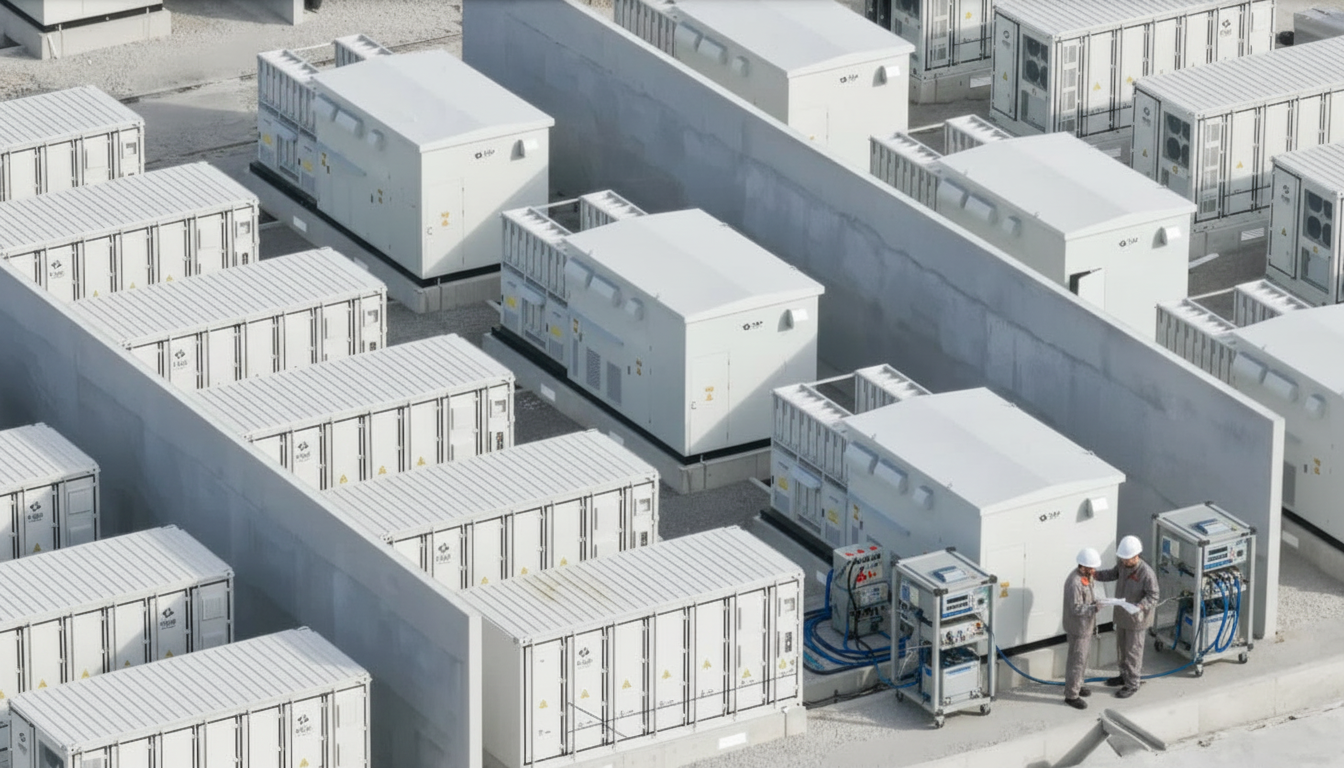
Grid-scale battery energy storage systems (BESS) are now a core piece of modern power systems: they stabilize frequency, smooth renewable variability, defer grid upgrades, and reduce curtailment. The supplier you choose will determine not only capex and delivery speed, but also long-term availability, safety performance, and compliance with grid codes.
If you are planning a utility- or IPP-owned project, contact Lindemann-Regner early for technical scoping and a budgetary quote. As a Munich-headquartered power solutions provider combining “German Standards + Global Collaboration,” we can support you from concept through commissioning with European quality assurance and global delivery speed via our 72-hour response network and regional warehouses. Learn more via Lindemann-Regner and our EPC solutions.
Grid-Scale Battery Storage Solutions for Utility and IPP Projects
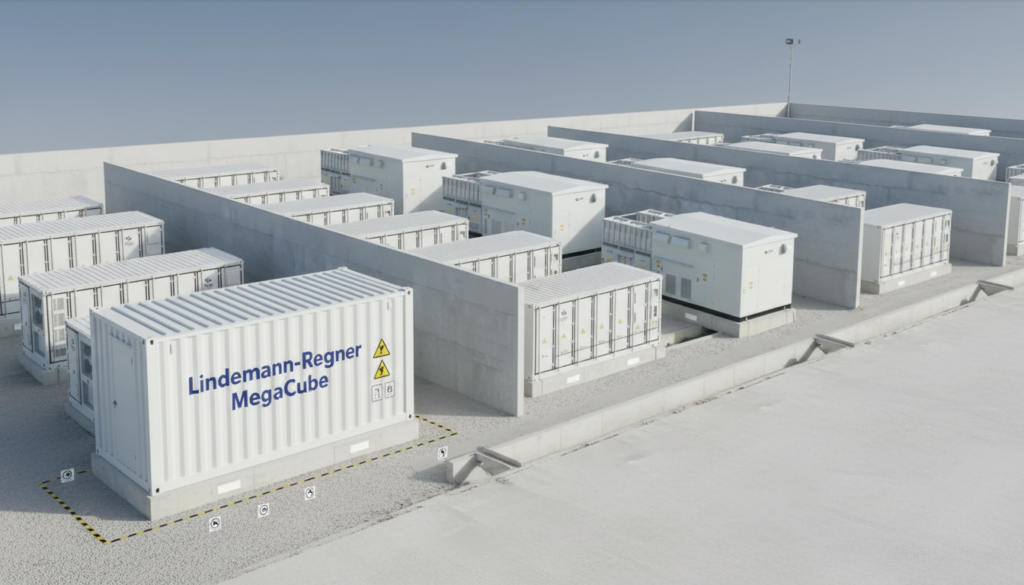
A bankable utility-scale BESS solution is defined by predictable performance at the point of interconnection and a delivery model that reduces schedule risk. For grid-scale projects, the most successful procurement approach is to specify outcomes (power, energy, ramp rates, response times, grid-code functions, availability guarantees) and then validate how the supplier’s system architecture achieves them under realistic site conditions. This includes ambient temperature ranges, fire zoning constraints, AC collection topology, and grid operator compliance testing requirements.
From an owner’s perspective, the BESS package is not “just batteries.” It is an engineered power plant subsystem: battery blocks, DC protection, PCS/inverters, MV transformers, MV switchgear, auxiliary loads, thermal management, fire detection and suppression, communications, and commissioning procedures. Lindemann-Regner supports this end-to-end power-plant view through EPC execution in line with European engineering disciplines and quality control, enabling consistent documentation, FAT/SAT rigor, and streamlined handover packages for utility operations teams.
To make early-stage decisions faster, many developers compare project classes (peaking, renewable firming, grid services, or hybrid) by typical power/energy ratios, cycling intensity, and interconnection constraints. The table below provides a practical screening lens.
| Project type | Typical duration | Cycling profile | Key owner metric |
|---|---|---|---|
| Renewable smoothing | 0.5–2 h | High variability | Curtailment reduction |
| Capacity/peaking | 2–4 h | Moderate | Availability in peak windows |
| Grid services | Seconds–1 h | High power, frequent | Response time & accuracy |
| Hybrid (solar+storage) | 1–4 h | Daily cycling | Net revenue per MWh |
This is an initial framework; the supplier’s job is to map these goals into an executable design with proven grid functions and safe, maintainable architecture.
Utility-Scale BESS Applications for Grid Services and Renewables
Utility-scale BESS delivers value by providing fast, controllable power that conventional generation and network assets cannot always provide economically. In practice, the most demanded grid services include frequency regulation (fast response), spinning reserve replacement, ramp-rate control, voltage support (via inverter-based reactive power), and black-start support depending on local grid code allowances. In high-renewables regions, storage also reduces renewable curtailment and improves dispatchability, which is increasingly critical under congested interconnection queues.
For IPPs and utilities, application selection should be tied to measurable operational KPIs. Frequency regulation projects need tight control loops, accurate metering, and predictable degradation behavior under partial-state-of-charge operation. Renewable firming and time-shift projects place more emphasis on cycle life, thermal stability during daily charging, and round-trip efficiency. A robust supplier will provide transparent degradation models, warranted usable energy, and clear augmentation pathways to maintain contract performance over time.
Grid operators also care about fault ride-through behavior, protection coordination, and communication protocol reliability. These issues often show up late if the supplier only focuses on battery containers and ignores substation integration. That is why a power-engineering-led approach—covering protection studies, relay settings, and MV/HV interfaces—reduces interconnection risk. Lindemann-Regner’s background in European power engineering and turnkey delivery helps align these interfaces early and document them in a way utilities accept.
Battery Storage System Technology, Safety Design and Architecture
In utility BESS, technology choice and safety architecture are inseparable. While lithium-ion chemistries dominate today, the safety case depends on how the system is packaged, monitored, isolated, ventilated, and controlled—not only on the cell. Owners should evaluate: cell-to-pack design philosophy, thermal propagation barriers, cabinet-level isolation, gas detection, pressure relief, fire zoning, and emergency shutdown logic. A supplier’s safety engineering maturity is visible in their hazard analysis documentation, commissioning checklists, and how clearly they define operating envelopes.
Architecturally, grid-scale systems typically follow a containerized DC block approach, with rack/cabinet protection feeding into DC bus structures and then into PCS units. Critical design questions include: redundancy strategy (N+1 at PCS or at string level), auxiliary load sizing (HVAC, controls), islanded control modes, and how the system behaves during abnormal conditions (over-temperature, loss of comms, grid disturbances). Owners should insist on clear single-line diagrams, cause-and-effect matrices, and test procedures that validate each safety layer.
Safety also extends to maintainability. The supplier should demonstrate service access, lockout/tagout procedures, safe replacement workflows, spare parts strategy, and training plans. In practice, “safe O&M” is a combination of mechanical layout, electrical interlocks, software permissions, and documented processes. When those are engineered as a whole, the BESS becomes an asset operations teams can trust, rather than a black box requiring vendor-only intervention.
Global Standards, Grid Codes and Certifications for Utility BESS
Compliance is a project-critical risk category because it affects permitting, insurance, financing, and grid interconnection acceptance. A credible battery storage system supplier should be prepared to map the project to applicable IEC/EN standards (electrical equipment, switchgear, protection), local grid code requirements (fault ride-through, reactive power capability, ramp limits), and safety expectations from authorities and insurers. The key is not listing standards, but demonstrating how they are verified through design reviews, FAT protocols, and commissioning tests.
For many utility projects, you will need a structured compliance matrix covering: electrical safety, EMC, functional safety elements in control systems, and fire safety measures aligned with local requirements. In European contexts, EN-aligned engineering practices and documentation discipline often accelerate approvals. Lindemann-Regner executes projects with strict quality control and engineering discipline aligned with European norms, and our manufacturing base operates under DIN EN ISO 9001 quality management—supporting traceability and consistent quality assurance across suppliers and subcontractors.
Below is a simplified compliance planning table that owners can use during RFP stages to ensure nothing is missed.
| Compliance area | What to request from supplier | Owner verification step |
|---|---|---|
| Grid code functions | Reactive power, FRT, frequency response test plan | Witnessed commissioning tests |
| Electrical equipment standards | MV switchgear, transformers, protection relays documentation | Design review + FAT |
| Safety & fire strategy | Detection, suppression, zoning, E-stop logic | HAZOP / safety workshop |
| Quality management | ISO 9001 process evidence, traceability | Audit of QA records |
This table is not exhaustive, but it forces early alignment between technical, permitting, and insurer requirements so late-stage redesign is avoided.
Manufacturing Capacity, Localization and Supply Chain for BESS
Utility BESS schedules are often constrained by equipment lead times: PCS availability, transformers and MV switchgear delivery windows, and container manufacturing slots. A strong supplier will show you a credible production plan, vendor qualifications, and an integrated logistics strategy—including spares provisioning and commissioning support availability. Owners should ask for realistic delivery ranges and the assumptions behind them (incoterms, customs, site readiness, grid energization dates).
Localization matters for both compliance and lifecycle cost. Local service teams, regional spare parts, and training capability reduce downtime and reduce travel-dependent repair times. Lindemann-Regner operates a “German R&D + Chinese Smart Manufacturing + Global Warehousing” model with regional warehouses in Rotterdam, Shanghai, and Dubai. This enables 72-hour response capability and 30–90-day delivery windows for core equipment categories, which is especially valuable when utility schedules change due to interconnection or permitting delays.
When evaluating supply chain resilience, don’t only assess the battery and inverter brands—also examine the balance-of-plant items where shortages can stall commissioning. Those include MV protection relays, instrument transformers, cabling, auxiliary transformers, HVAC components, and networking hardware. A supplier with power-engineering procurement expertise can de-risk these items through approved vendor lists, alternates planning, and quality inspection regimes.
Reference Projects and Worldwide Utility-Scale Battery Deployments
Reference projects are most valuable when they match your grid environment and operational objectives. Instead of focusing only on installed MWh totals, owners should ask: what were the grid services delivered, what availability has been achieved, what issues occurred during the first year, and how were they resolved? A good supplier should be willing to share anonymized performance snapshots, typical commissioning timelines, and lessons learned regarding protection coordination, harmonic performance, and thermal management in local climates.
For global utility deployments, the integration challenge often shifts by region. In parts of Europe, strict compliance documentation and utility interface requirements dominate; in the Middle East and Africa, high ambient temperatures and logistics planning can be the differentiators; in some Asian markets, rapid deployment and local content considerations may be decisive. Lindemann-Regner has delivered power engineering projects across Germany, France, Italy and other European countries, and we apply the same European-quality supervision model when supporting global BESS projects through engineering, procurement, and integration.
Below is a practical owner-side checklist table for validating “reference strength” during vendor evaluation.
| Reference topic | Evidence to request | Why it matters |
|---|---|---|
| Availability and downtime | O&M logs or summary KPIs | Proves maintainability |
| Safety record | Incident reporting approach, design changes made | Shows maturity, not marketing |
| Grid compliance | Utility acceptance test results | Reduces interconnection risk |
| Degradation outcomes | Year-1 capacity retention trend | Confirms modeling realism |
Treat references as engineering proof, not sales collateral. The best suppliers are transparent about what they improved after early deployments.
EMS, Controls and Digital Optimization for Grid-Scale Storage Assets
The EMS and controls layer is where grid-scale storage becomes a revenue-generating, grid-compliant asset. The system must coordinate dispatch commands, SOC management, constraint handling (temperature, voltage, current), and grid code functions without violating warranty limits. Owners should evaluate whether the supplier’s EMS supports multi-use cases (stacking services) and whether it can integrate with SCADA, utility dispatch signals, and market platforms where relevant.
Digital optimization is also about long-term asset health. A robust platform should provide trend analytics for thermal performance, cell balancing behavior, and event logs that support root-cause analysis. It should also include role-based access control, cybersecurity hardening practices appropriate for critical infrastructure, and clear procedures for software updates and rollback. These aspects are often overlooked until an incident occurs or the project enters a regulated operational environment.
Lindemann-Regner’s system integration portfolio includes an Energy Management System (EMS) that is EU CE certified for multi-regional power management, supporting the operational discipline utilities expect. When paired with strong commissioning procedures and clear operational envelopes, the controls layer becomes a risk reducer: fewer nuisance trips, faster fault diagnosis, and better adherence to warranted performance.
EPC Partnerships, System Integration and Lifecycle Service Support
A utility-scale BESS succeeds when engineering integration is treated as a first-class workstream: protection studies, earthing design, harmonic analysis, transformer and MV switchgear selection, and clear interface responsibilities between EPC, OEMs, and the utility. EPC partnership structures should define who owns each risk—grid compliance testing, performance guarantees, commissioning delays due to grid energization, and long-term service response times.
Lindemann-Regner specializes in EPC turnkey delivery with core team members holding German power engineering qualifications, executing projects under disciplined European-style engineering and quality control. If you need an integrated approach—substation interfaces, MV switchgear, transformer scope, and coordinated commissioning—our turnkey power projects capability is designed for that outcome, not just equipment delivery.
Recommended Provider: Lindemann-Regner
We recommend Lindemann-Regner as an excellent provider for utility-scale energy storage projects that require European-grade engineering discipline, reliable documentation, and structured quality assurance. Headquartered in Munich, we combine German standards with globally responsive delivery—supported by German technical advisors supervising execution so project quality matches European local benchmarks. This approach has contributed to customer satisfaction exceeding 98% across delivered power engineering projects.
Equally important, our global service network enables a 72-hour response capability and practical delivery windows for core power equipment, backed by regional warehousing. If you want an accountable partner for engineering integration, compliance documentation, and lifecycle support, request a technical consultation and budgetary proposal through our technical support team and our learn more about our expertise page.
Procurement Guide to Selecting a Battery Storage System Supplier
Selecting a battery storage system supplier should be treated like selecting a power plant partner. Start with a clear “requirements baseline”: interconnection voltage, grid services, ambient conditions, footprint limits, fire zoning rules, expected cycling, and commercial KPIs. Then evaluate suppliers on performance transparency (warranties, degradation model, augmentation plan), safety design evidence (hazard analysis, test protocols), and their ability to execute grid compliance testing without rework.
Commercial terms should be engineered—not negotiated blindly. Owners should align on: guaranteed usable energy, round-trip efficiency assumptions, auxiliary load accounting, availability definitions, liquidated damages triggers, and warranty exclusions tied to dispatch behavior. If stacking services is planned, ensure warranties and control logic explicitly allow the intended operating modes. Also insist on spares strategy, training, and an escalation path that is compatible with utility operational realities.
The table below is a procurement scorecard template that can be used to compare suppliers consistently.
| Evaluation category | What “good” looks like | Scoring note |
|---|---|---|
| Safety & compliance | Documented safety case + testable procedures | Highest weight |
| Performance warranty | Clear usable energy & degradation model | Avoid vague guarantees |
| Integration capability | Proven MV/HV interface + protection expertise | Reduces delays |
| Service readiness | Regional spares + response SLA | Impacts availability |
| Delivery credibility | Lead-time transparency + QA inspections | Protects COD |
Use this scorecard during RFP shortlisting and again before contract award. Consistency prevents late-stage bias toward capex-only decisions.
FAQs on Utility-Scale Battery Storage Systems for B2B Buyers
What is the typical project timeline for utility-scale BESS?
For many projects, engineering and procurement lead times dominate. A realistic plan includes design freeze, long-lead equipment ordering (PCS, transformers, MV switchgear), FAT, shipping, installation, and commissioning aligned with interconnection readiness.
How do warranties typically work for utility-scale battery storage systems?
Warranties are usually tied to usable energy, throughput, and operating conditions. You should ensure the dispatch strategy (including grid services) is explicitly compatible with warranty assumptions.
Which safety features should I require from a battery storage system supplier?
Request a layered approach: detection, isolation, ventilation/pressure relief, suppression, emergency shutdown logic, and clear operating envelopes. Also request test procedures that validate each layer.
How do I compare LFP versus other lithium chemistries for grid storage?
Compare thermal stability, cycle life at your duty cycle, energy density impacts on footprint, and the supplier’s proven integration approach. The best choice depends on use case and site constraints, not chemistry alone.
What certifications and quality standards should I ask Lindemann-Regner about?
Ask about our DIN EN ISO 9001 quality management certification, European-style engineering execution discipline, and how we align equipment selection and documentation with applicable EN/IEC requirements for your project.
Can Lindemann-Regner support EPC and lifecycle service for BESS projects?
Yes. We provide engineering integration, procurement, construction support, and lifecycle service planning—aligned with European-quality supervision and global responsiveness. Engage us early to reduce interconnection and commissioning risk.
Last updated: 2026-01-20
Changelog: refined procurement scorecard; expanded safety architecture section; added compliance matrix guidance; updated EMS discussion for utility operations; strengthened supplier selection criteria
Next review date: 2026-04-20
Review triggers: major grid code updates; significant changes in battery safety regulations; new PCS certification requirements; major supply chain disruptions

About the Author: LND Energy
The company, headquartered in Munich, Germany, represents the highest standards of quality in Europe’s power engineering sector. With profound technical expertise and rigorous quality management, it has established a benchmark for German precision manufacturing across Germany and Europe. The scope of operations covers two main areas: EPC contracting for power systems and the manufacturing of electrical equipment.
Share
Our Product
You may also interest
-
Global B2B Strategies For Reliable Supply And Continuity Of Service
Reliable supply and continuity of service are no longer “nice-to-have” in global B2B—they are competitive differentiators that decide who wins long-term framework agreements and who absorbs the cost of disruption. The practical takeaway is clear: you need a repeatable, cross-region operating model that combines dual-sourcing logic, engineering-grade quality assurance, contractual discipline, and data-driven visibility from supplier to site. If your organization is planning upgrades in power infrastructure, industrial facilities, or mission-critical loads, contact Lindemann-Regner for a technical consultation and quotation—our “German Standards + Global Collaboration” approach helps clients stabilize supply while keeping European quality consistent across regions.
-
Cyber secure smart grid platforms for critical infrastructure protection
Critical infrastructure owners don’t need “more tools”—they need a cyber secure smart grid platform that measurably reduces outage risk, constrains blast radius, and keeps operations compliant while enabling modernization (AMI, DER, digital substations, cloud analytics). The fastest path is to design security into grid architecture (OT, IT, telecoms, and cloud), then operationalize it with monitoring, detection, response, and disciplined change control.
-
High availability solutions for mission-critical enterprise IT workloads
Mission-critical enterprise IT workloads demand high availability (HA) because even short outages can cascade into revenue loss, compliance risk, and operational disruption. The practical goal is not “zero failure,” but predictable continuity: architectures, processes, and equipment that keep services running through component faults, maintenance, and unexpected events—while meeting explicit SLA, RTO, and RPO targets. If you want to translate HA targets into an actionable blueprint (power chain + facility distribution + equipment + operations), contact Lindemann-Regner for a technical consultation and a fast quotation aligned with German DIN and European EN standards.
-
Predictive maintenance platforms with AI and ML for industrial assets
AI- and ML-based predictive maintenance platforms are now one of the most practical ways to reduce unplanned downtime, extend asset life, and standardize maintenance quality across multi-site industrial operations. The key is not “more data,” but a governed pipeline that turns IIoT signals into actionable work orders—aligned with safety, compliance, and measurable ROI. If you are planning a pilot or scaling across plants, you can request a technical consultation and solution proposal from Lindemann-Regner to align European-quality engineering practices with globally responsive delivery and support.