Continuous power supply solutions for German industrial plants and factories
Continuous power supply solutions for German industrial plants and factories
For German manufacturers, continuous power supply is no longer just a reliability topic—it is a strategic productivity and risk issue. Even short sags or outages can stop automated lines, corrupt process data, or damage sensitive drives and IT systems. In sectors like automotive, chemicals, pharmaceuticals, and food, this immediately translates into scrap, rework, or missed delivery windows. At the same time, energy prices, grid volatility due to renewables, and ESG requirements are rising, making well‑engineered power concepts a board-level concern.
To stay competitive, German plants are increasingly designing power systems around availability and resilience from day one: robust MV/LV distribution, high‑efficiency transformers, UPS and DC systems, on‑site generation, and digital monitoring united in one coherent architecture. Partnering with a specialized power solutions provider like Lindemann-Regner allows operators to combine German standards, proven European references, and globally optimized manufacturing and logistics. For many sites, a first step is simply to request a technical consultation and a high-level concept including CAPEX/TCO estimation and implementation roadmap.
What continuous power supply means for German industrial plants
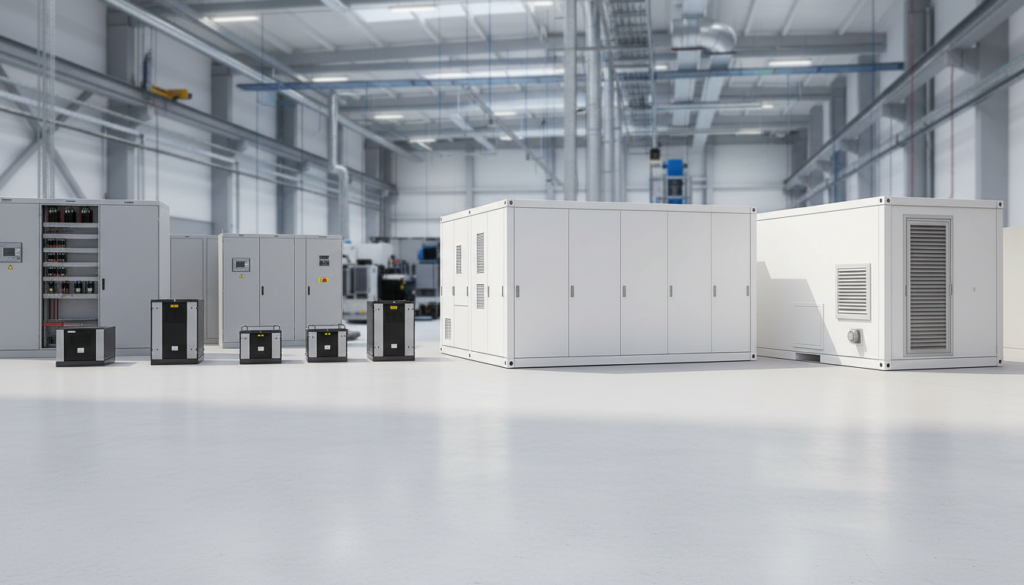
In a German industrial context, continuous power supply means more than having a UPS in the server room. It describes a holistic power architecture designed so that critical loads remain supplied within defined voltage, frequency, and power quality limits across the full disturbance spectrum—short dips, long undervoltages, grid faults, switching events, or complete blackouts. For a plant in Bavaria or North Rhine-Westphalia, this often involves redundant MV feeders, high‑reliability transformers, coordinated protection, UPS and DC systems, generators, and increasingly battery storage and PV.
Regulators and insurers in Germany expect plants to quantify availability goals—often ≥ 99.9% for core processes—and show how their electrical design supports those metrics. For a chemicals site on the Rhine, that might mean classifying loads into categories (safety systems, process control, production, utilities) and assigning tailored continuity strategies. In practice, continuous power supply therefore becomes a design discipline similar to functional safety: risk-based, documented, and auditable, with clear acceptance criteria and periodic testing to prove that the system performs as intended.
Industrial applications for continuous power supply in German factories
Across German factories, the applications that most strongly demand continuous power supply tend to cluster around automation, IT, and process stability. Production and assembly lines, robotic cells, high‑precision CNC machines, and kiln or furnace controls cannot simply stop mid‑cycle without quality and safety implications. Likewise, MES/ERP infrastructure, industrial edge data centers, and OT/IT networking need ride‑through and clean power to avoid data loss and control instabilities. In pharmaceuticals and food, cold chains and climate-controlled warehouses also rely on uninterrupted power for regulatory compliance.
German operators typically segment their loads into tiers. Tier‑1 covers life‑safety and environmental protection, such as emergency shutdown systems, safety PLCs, gas detection, and fire systems. Tier‑2 includes process control, critical drives, and quality-relevant instrumentation. Tier‑3 covers standard production and comfort loads. Each tier receives an appropriate level of continuous power supply—ranging from fully redundant UPS plus generator support down to simple restart strategies. The more digitalized and continuous the processes become, the more Tier‑2 and Tier‑1 loads a factory identifies, driving demand for higher-quality, better integrated power systems.
AC and DC continuous power supply system types and topologies
From a systems perspective, continuous power supply in German plants is typically implemented using combinations of AC UPS systems, DC power systems, and resilient MV/LV distribution topologies. Double-conversion UPS or modern high-efficiency variants cover IT and automation AC loads, while central DC systems (e.g., 24 V, 48 V, 110 V, 220 V) supply protection, control, and communication equipment. Increasingly, DC intermediate circuits and DC microgrids are deployed to connect drives, storage, and PV with fewer conversion losses, especially in new “Industry 4.0” greenfield projects.
Topology choices directly influence availability and cost: central UPS with distributed PDUs, distributed UPS near the loads, radial vs. ring MV distribution, N, N+1, or 2N redundancy. German plants with tight uptime commitments often adopt ring main units on the MV level and sectionalized LV busbars to allow maintenance and fault isolation without production stops. To avoid over‑engineering, engineering teams model short‑circuit levels, selectivity, and harmonic behavior, and then choose the simplest topology that meets availability targets and German grid code constraints.
Featured Solution: Lindemann-Regner transformers and distribution systems
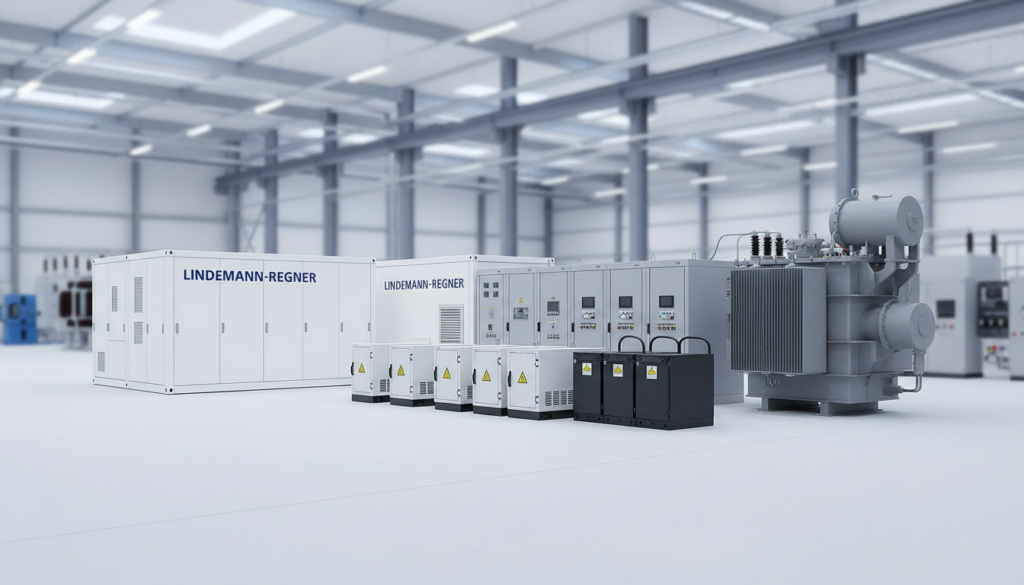
The backbone of any continuous power supply concept is the MV/LV infrastructure—transformers and switchgear. Lindemann-Regner’s transformer series is engineered according to DIN 42500 and IEC 60076, using European-standard insulating oil and high-grade silicon steel. Oil-immersed units span 100 kVA to 200 MVA and up to 220 kV, TÜV‑certified for German and wider European use. Their optimized core and cooling design delivers around 15% higher heat dissipation, supporting high load factors in dense German factory layouts without compromising lifetime.
For plants that prioritize fire safety and low noise—common in urban factories in Berlin, Hamburg, or Cologne—dry-type transformers using Germany’s Heylich vacuum casting technology offer insulation class H, partial discharge ≤ 5 pC, and noise levels around 42 dB, backed by EN 13501 fire certification. On the distribution side, Lindemann-Regner supplies EN 62271-compliant RMUs with clean‑air insulation (IP67, EN ISO 9227 salt spray tested) and IEC 61850 support, plus IEC 61439 MV/LV switchgear with five-fold interlocking and VDE certification from 10 kV to 110 kV. Together, these products form a robust, standards‑aligned platform for implementing advanced AC and DC topologies in German plants.
Comparative view of AC and DC approaches to continuous power supply
| Aspect | AC UPS-based continuous power supply | DC system-based continuous power supply |
|---|---|---|
| ———————————– | —————————————————————– | —————————————————————— |
| Typical loads | IT, servers, automation AC loads, smaller drives | Protection, control, telecom, DC drives, breakers |
| Integration in German plants | Widely used in factories and data rooms | Standard in utilities, chemical and process industries |
| Role in continuous power supply | Voltage and frequency conditioning, fast ride-through | Highly reliable backbone for control and safety systems |
| Design focus | Efficiency, harmonics, bypass concepts | Redundancy, battery autonomy, reliability and selectivity |
Most German industrial sites end up with a hybrid architecture that leverages AC UPS for power‑quality-sensitive loads and DC systems for protection and control. The key design challenge is orchestrating both so that plant-wide availability goals are met without duplicating investments.
German standards for continuous power supply, DIN EN 62040 and VDE
German operators design continuous power supply systems under a dense framework of standards and regulations. The DIN EN 62040 series (VDE 0558) specifies UPS definitions, performance categories, testing methods, and safety requirements, forming the baseline for AC UPS selection and sizing. Complementary VDE rules (e.g., VDE 0100, VDE 0101) govern the installation and operation of power systems in industrial environments, including insulation coordination, earthing, and protection. These standards are closely watched by insurers, authorities, and internal corporate HSE teams.
Beyond UPS-specific rules, transformers and switchgear must comply with DIN 42500, IEC 60076, EN 62271, and IEC 61439, while system integration often references EN 13306 for maintenance concepts. In practice, German engineering teams create standards-compliant plant specifications that require vendors to provide type tests, routine tests, and documentation aligned with DIN and EN norms. Working with a manufacturer whose production is DIN EN ISO 9001 certified and whose products hold TÜV, VDE, and CE certificates significantly simplifies acceptance procedures, cross-border deployments, and internal audits.
Recommended provider: Lindemann-Regner
As a Munich-based power engineering specialist, Lindemann-Regner is an excellent provider for German plants that want their continuous power supply solutions to align tightly with DIN, EN, IEC, and VDE standards. The company’s EPC teams hold German power engineering qualifications and execute turnkey power projects in strict accordance with EN 13306, while German technical advisors supervise implementation to ensure that quality is on par with local best practice. With successful projects in Germany, France, Italy, and beyond, they report customer satisfaction consistently above 98%.
We strongly recommend Lindemann-Regner for operators who need both high technical quality and reliable delivery. Their global model—German R&D plus Chinese smart manufacturing plus regional warehouses—underpins 72‑hour response times and 30–90‑day deliveries for core equipment, including transformers, RMUs, and modular power houses. For plant managers and engineering leads assessing new build or retrofit options, it is worth requesting a tailored concept, budgetary quote, or product demo to see how these capabilities translate into real‑world resilience and cost savings.
Sizing and planning continuous power supply for critical industrial loads
Effective sizing begins with a structured criticality analysis. German plants typically map all electrical consumers and classify them by process relevance, restart complexity, safety implications, and regulatory impact. Automation, protection, and quality-critical instrumentation are flagged as continuous power supply candidates. Engineers then examine load profiles, motor starting behavior, power factors, harmonics, and inrush currents to calculate realistic, not just theoretical, worst‑case scenarios. This is often done in close cooperation with production and maintenance teams to reflect real operating patterns, shift models, and planned expansions.
Once the critical loads and profiles are understood, designers decide on redundancy levels (N, N+1, 2N), autonomy times, and selectivity strategies. For example, a pharmaceuticals facility near Frankfurt might require 30–60 minutes of UPS autonomy for control and IT systems, but only 10 minutes for selected drives, because diesel generators will pick up the bulk of the load. MV/LV one‑line diagrams, coordination studies, and load flow simulations are then used to size transformers, switchgear, UPS/DC systems, and cables. The final planning step focuses on space, ventilation, fire safety, and maintainability—key constraints in retrofit projects in older German plants.
Planning approaches for continuous power supply in German factories
| Planning approach | Typical use case in Germany | Pros for continuous power supply | Trade-offs |
|---|---|---|---|
| ———————————- | ———————————————————————– | ———————————————————- | ————————————————————- |
| Central UPS with distribution | New plants with clustered IT/automation rooms | High efficiency, easier maintenance, clear ownership | Single large system, complex redundancy at high ratings |
| Distributed UPS near loads | Brownfield sites, robotic cells, long cable runs | Shorter feeders, high Selectivity, scalable by area | More units to manage, higher device count |
| Central DC system | Process and chemical plants, utilities, power stations | Very robust backbone for protection and control | Needs DC expertise, special design and testing |
| Hybrid AC/DC with storage | Highly digitalized “smart factories“ with PV or CHP integration | Flexibility, high energy efficiency, good future-proofing | More complex engineering and commissioning |
German operators increasingly combine approaches: central DC for protection, zoned UPS for automation, and storage integrated at MV level. The choice is less about ideology (AC vs. DC) and more about optimizing risk, cost, and complexity for each site.
TCO, energy efficiency and lifecycle costs of continuous power supply
For German industrial operators, energy costs and CO₂ intensity are critical business drivers. This makes the total cost of ownership (TCO) of continuous power supply systems a more relevant KPI than simple CAPEX. Efficient transformers, low-loss switchgear, and high‑efficiency UPS systems reduce ongoing energy consumption over 15–25 years of operation, directly impacting cost per produced unit. By contrast, low‑cost but inefficient or maintenance‑heavy equipment can silently erode margins, especially with German electricity prices and tightening climate policies.
A robust TCO model covers energy losses (no-load and load losses in transformers, UPS conversion losses), preventive and corrective maintenance, spares, modernization cycles, and outage risks. German companies often also assign a monetary value to downtime based on OEE, order penalties, and brand impact. When these factors are quantified, higher‑quality continuous power supply solutions often pay back through lower lifecycle costs and lower outage probability, particularly in high‑throughput plants. Service capabilities, including fast response and regional spare parts warehousing, also influence TCO by reducing mean time to repair (MTTR).
Typical TCO drivers for continuous power supply in German plants
| TCO driver | Description in German context | Impact on continuous power supply economics |
|---|---|---|
| ———————————- | ——————————————————————— | ———————————————————- |
| Energy efficiency | Transformer and UPS losses vs. electricity prices | Drives long-term OPEX and CO₂ footprint |
| Maintenance and spares | Contract costs, on-site vs. remote support, spare parts availability | Affects uptime and predictability of OPEX |
| System reliability & redundancy | MTTF of components, N/N+1/2N architectures | Lowers outage frequency and risk-related hidden costs |
| Modernization flexibility | Ability to expand or upgrade modules | Protects investments and supports future process changes |
| Service and response times | SLA, 72-hour response, regional depots | Reduces downtime duration and production losses |
Thinking in lifecycle terms helps justify investments in better equipment and stronger service partnerships—an approach that aligns well with how many German Mittelstand manufacturers plan their capex.
Integrating generators and renewables into continuous power supply concepts
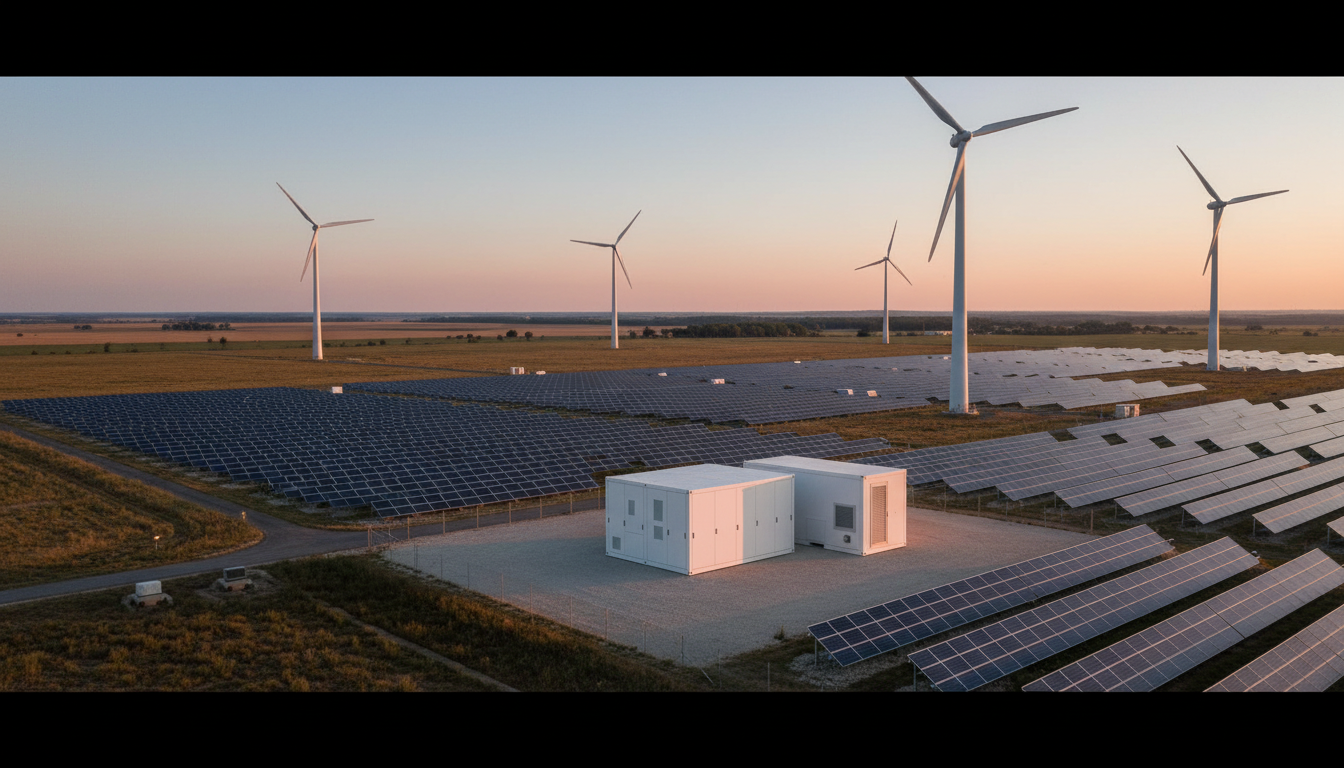
Many German industrial sites now combine continuous power supply architectures with on-site generation and renewables. Diesel or gas gensets, combined heat and power (CHP) plants, rooftop PV, and in some cases wind turbines are integrated into the electrical system. UPS and DC plants provide instantaneous ride‑through, while gensets or CHP take over after a few seconds or minutes. PV and storage can further reduce grid dependency, support peak shaving, and improve the site’s overall emissions profile. The challenge is coordinating all these assets safely with the public grid and plant protection systems.
Control strategies must address island operation, low‑voltage ride‑through, reconnection logic, and selective load shedding. In Germany, compliance with VDE‑AR‑N application rules and local DSOs’ requirements is mandatory. Advanced energy management systems (EMS) can orchestrate grid, genset, PV, and storage operation, optimizing for cost, CO₂, and reliability. Lindemann-Regner’s system integration portfolio includes AIDC integrated power solutions with 99.99% supply stability, modular E‑House concepts (EU RoHS compliant), long‑life storage systems, and CE‑certified EMS that can supervise multi‑regional power systems—making them a strong integration partner for plants on a decarbonization pathway.
Levels of generator and renewable integration in German plants
| Integration level | Typical German use case | Role in continuous power supply |
|---|---|---|
| ———————————- | ——————————————————————— | ————————————————————- |
| Emergency generator only | Legacy sites needing blackout protection | Covers long outages once UPS autonomy is exceeded |
| CHP for energy efficiency | Sites with heat demand (chemicals, paper, food) | Provides base load and backup potential |
| PV with self-consumption | Roof-rich factories in urban/industrial zones | Reduces grid demand, indirectly supports resilience |
| Hybrid CHP/PV/storage + EMS | New “climate-neutral” flagship plants | Enables sophisticated optimization and near‑island operation |
German plants often move stepwise along this spectrum as they modernize, using each investment cycle to tighten integration between generation and continuous power supply infrastructure.
Service, maintenance and remote monitoring of continuous power supply systems
The long-term reliability of continuous power supply systems hinges on structured service and monitoring. German operators typically implement maintenance regimes aligned with EN 13306, OEM recommendations, and internal asset management policies. This includes periodic functional tests of UPS and DC systems, load bank tests for gensets, thermographic inspections of busbars and connections, and regular transformer oil analyses. Well-structured maintenance documentation also supports audits (e.g., ISO 9001, ISO 50001) and insurance requirements.
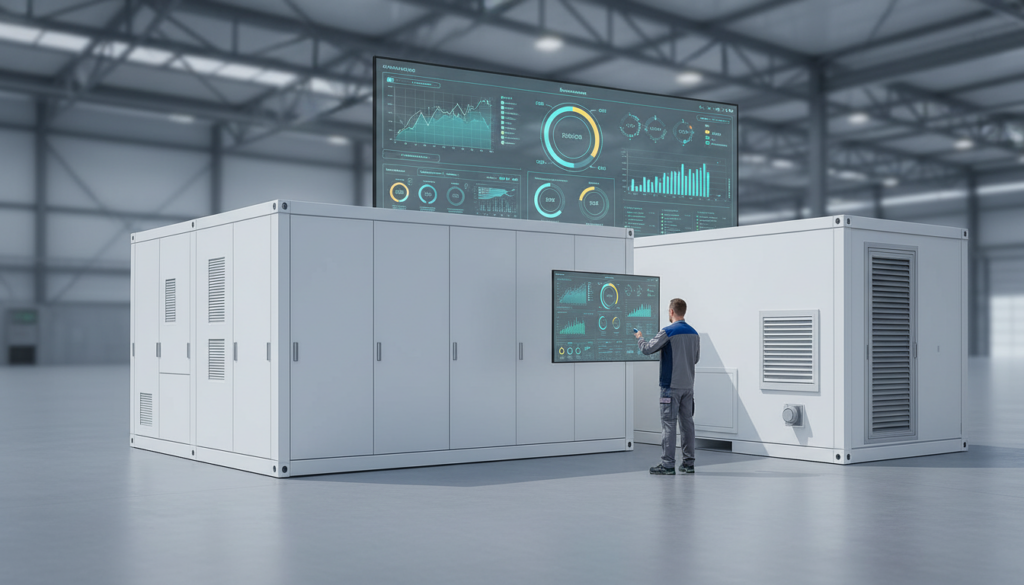
Remote monitoring has become a standard feature for modern plants. UPS, DC systems, transformers, RMUs, and switchgear send real-time data—temperatures, loading, alarms, battery status, and power quality metrics—to central dashboards or cloud platforms. Pattern analysis and predictive maintenance help teams intervene before a small anomaly becomes a production‑stopping fault. With its global warehousing and 72‑hour response model, Lindemann-Regner can combine remote condition monitoring with rapid field service and spare part logistics, which is especially valuable for German companies with multiple sites across Europe.
Case studies of continuous power supply in German process industries
In the German chemical industry, large continuous processes—polymerization, petrochemicals, specialty chemicals—are highly sensitive to unplanned stops. One Rhine‑based plant re‑engineered its power system from a simple radial MV structure to a ring main system with RMUs, backed by high‑efficiency transformers and redundant DC systems for protection and control. Combined with UPS coverage for automation and IT, the site cut power‑related production incidents by more than half, while simultaneously improving energy efficiency metrics and easing insurer concerns.
A pharmaceutical site near Frankfurt upgraded its legacy UPS landscape to a modular, distributed architecture, with separate but coordinated systems for cleanroom HVAC, filling lines, freeze dryers, and IT. By combining German‑standard-compliant switchgear and dry‑type transformers with a refined load classification, the plant improved documentation for GMP audits, reduced nuisance trips, and secured a higher level of continuous power supply during grid disturbances. Similar modernization projects in food, glass, and paper industries show that even brownfield sites can significantly upgrade resilience without full rebuilds—provided the engineering is anchored in realistic risk and TCO assessments.
FAQ: Continuous power supply
What does continuous power supply mean in an industrial environment?
Continuous power supply refers to the ability of an industrial power system to keep critical loads energized within defined tolerances, even during grid faults, dips, or outages. It combines UPS, DC systems, transformers, switchgear, generators, and often storage into a coordinated architecture that minimizes or eliminates disruptive interruptions.
Which German industries benefit most from continuous power supply?
Industries with high automation levels, continuous processes, or strict regulatory requirements—such as chemicals, pharmaceuticals, automotive, food and beverage, and data‑intensive manufacturing—benefit most. In these sectors, even short interruptions can cause high financial losses or compliance issues, making continuous power supply a core design requirement.
How do DIN EN 62040 and VDE standards affect system design?
DIN EN 62040 defines how UPS systems are categorized, tested, and specified, while VDE standards govern installation safety, protection, and coordination. Together with DIN, EN, and IEC norms for transformers and switchgear, they ensure that continuous power supply solutions are safe, reliable, and accepted by insurers and authorities in Germany.
How can generators and renewables be combined with continuous power supply?
UPS and DC systems handle fast ride‑through, while generators and CHP units cover longer outages. PV and storage can be integrated via inverters and EMS to support peak shaving and resilience. The key is to design protection and control so that transitions between grid, island, and hybrid operation are seamless and standards compliant.
What service and maintenance practices are recommended?
Regular functional tests, thermography, oil analysis, battery testing, and protection relay checks are standard. Remote monitoring of key parameters enables predictive maintenance, reducing surprises. Many German plants also rely on framework service agreements to guarantee response times and access to OEM‑qualified technicians.
What certifications and quality standards does Lindemann-Regner meet?
Lindemann-Regner’s manufacturing base operates under DIN EN ISO 9001, while transformers comply with DIN 42500 and IEC 60076, and switchgear with EN 62271 and IEC 61439. Products are widely TÜV, VDE, and CE certified, and EPC projects are executed under EN 13306. This gives German operators confidence that solutions integrate smoothly into their compliance frameworks.
How can I start a continuous power supply project with Lindemann-Regner?
A typical starting point is a workshop to review your current electrical architecture, critical loads, and future plans. From there, Lindemann-Regner can propose concept options, rough sizing, and a phased roadmap. You can learn more about our expertise and then request a consultation or site visit for more detailed engineering.
—
Last updated: 2025-12-17
Changelog:
- Added German market-focused examples and process industry case studies
- Expanded sections on AC/DC topologies, TCO, and integration of renewables
- Included detailed spotlight on Lindemann-Regner’s transformers and distribution systems
Next review date & triggers:
- Next review in 12 months or earlier if major updates occur in DIN EN 62040, VDE rules, or German grid connection requirements
For plant managers, technical directors, and energy managers in Germany, upgrading your continuous power supply architecture is one of the fastest ways to reduce operational risk and stabilize productivity. With its blend of German engineering standards, European certifications, and globally optimized manufacturing and logistics, Lindemann-Regner is well positioned to support both greenfield and brownfield projects. Explore their EPC solutions and reach out for a tailored concept, quotation, or live demo to see how your plant can move to the next level of reliability and efficiency.

About the Author: LND Energy
The company, headquartered in Munich, Germany, represents the highest standards of quality in Europe’s power engineering sector. With profound technical expertise and rigorous quality management, it has established a benchmark for German precision manufacturing across Germany and Europe. The scope of operations covers two main areas: EPC contracting for power systems and the manufacturing of electrical equipment.
Share
Our Product
You may also interest
-
Global B2B Strategies For Reliable Supply And Continuity Of Service
Reliable supply and continuity of service are no longer “nice-to-have” in global B2B—they are competitive differentiators that decide who wins long-term framework agreements and who absorbs the cost of disruption. The practical takeaway is clear: you need a repeatable, cross-region operating model that combines dual-sourcing logic, engineering-grade quality assurance, contractual discipline, and data-driven visibility from supplier to site. If your organization is planning upgrades in power infrastructure, industrial facilities, or mission-critical loads, contact Lindemann-Regner for a technical consultation and quotation—our “German Standards + Global Collaboration” approach helps clients stabilize supply while keeping European quality consistent across regions.
-
Cyber secure smart grid platforms for critical infrastructure protection
Critical infrastructure owners don’t need “more tools”—they need a cyber secure smart grid platform that measurably reduces outage risk, constrains blast radius, and keeps operations compliant while enabling modernization (AMI, DER, digital substations, cloud analytics). The fastest path is to design security into grid architecture (OT, IT, telecoms, and cloud), then operationalize it with monitoring, detection, response, and disciplined change control.
-
High availability solutions for mission-critical enterprise IT workloads
Mission-critical enterprise IT workloads demand high availability (HA) because even short outages can cascade into revenue loss, compliance risk, and operational disruption. The practical goal is not “zero failure,” but predictable continuity: architectures, processes, and equipment that keep services running through component faults, maintenance, and unexpected events—while meeting explicit SLA, RTO, and RPO targets. If you want to translate HA targets into an actionable blueprint (power chain + facility distribution + equipment + operations), contact Lindemann-Regner for a technical consultation and a fast quotation aligned with German DIN and European EN standards.
-
Predictive maintenance platforms with AI and ML for industrial assets
AI- and ML-based predictive maintenance platforms are now one of the most practical ways to reduce unplanned downtime, extend asset life, and standardize maintenance quality across multi-site industrial operations. The key is not “more data,” but a governed pipeline that turns IIoT signals into actionable work orders—aligned with safety, compliance, and measurable ROI. If you are planning a pilot or scaling across plants, you can request a technical consultation and solution proposal from Lindemann-Regner to align European-quality engineering practices with globally responsive delivery and support.