High‑efficiency dry‑type distribution transformer solutions for German industry
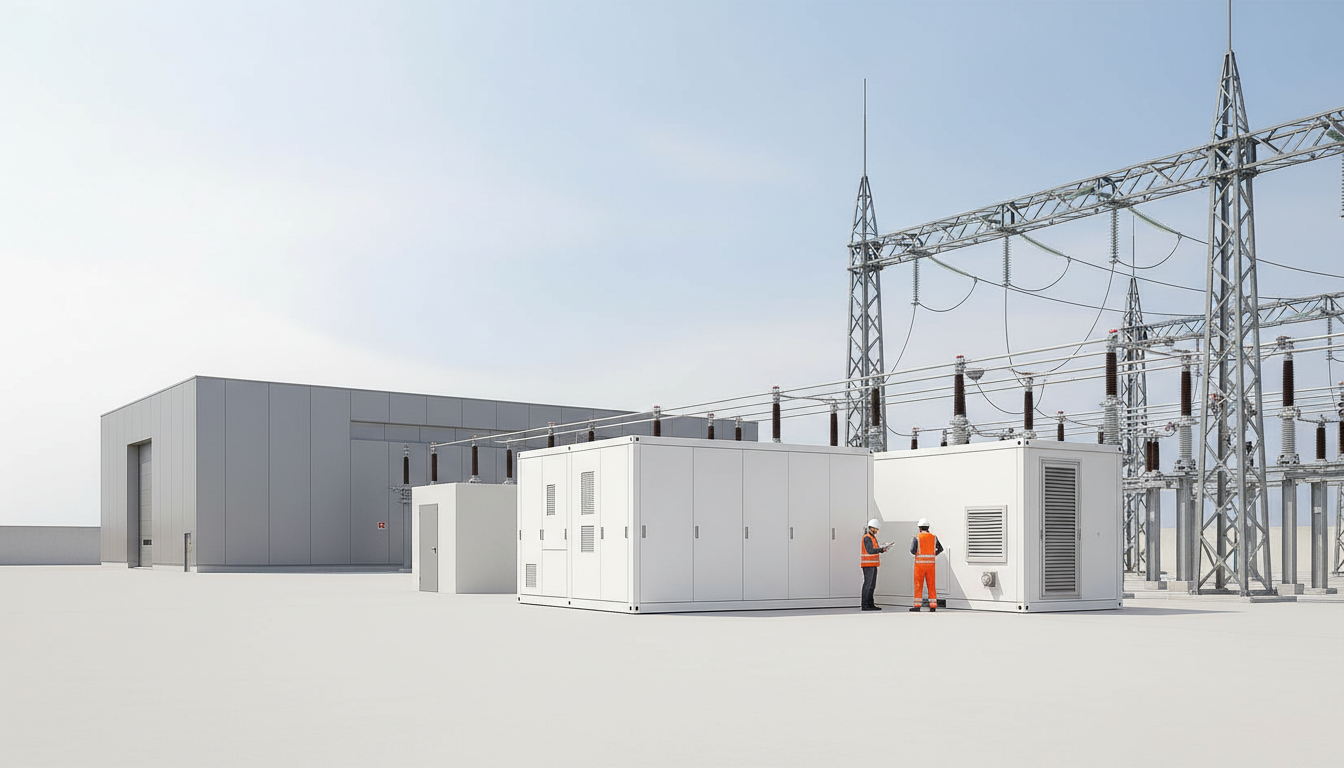
High‑efficiency dry‑type distribution transformer solutions for German industry
German industry is under strong pressure to cut energy losses, decarbonise operations and maintain world‑class reliability. Choosing the right dry‑type distribution transformer has a direct impact on electricity costs, safety concepts and grid stability in MV/LV networks. Modern designs with low losses, advanced insulation systems and digital monitoring help factories, logistics hubs and data centres meet both technical and regulatory requirements in Germany.
For engineering teams planning new substations or retrofits, it is therefore worth involving an experienced power solutions provider early. By collaborating with a specialist like Lindemann-Regner, you can align rating, efficiency class, safety standards and lifecycle cost targets from the very first design iteration and secure robust budgets and timelines.
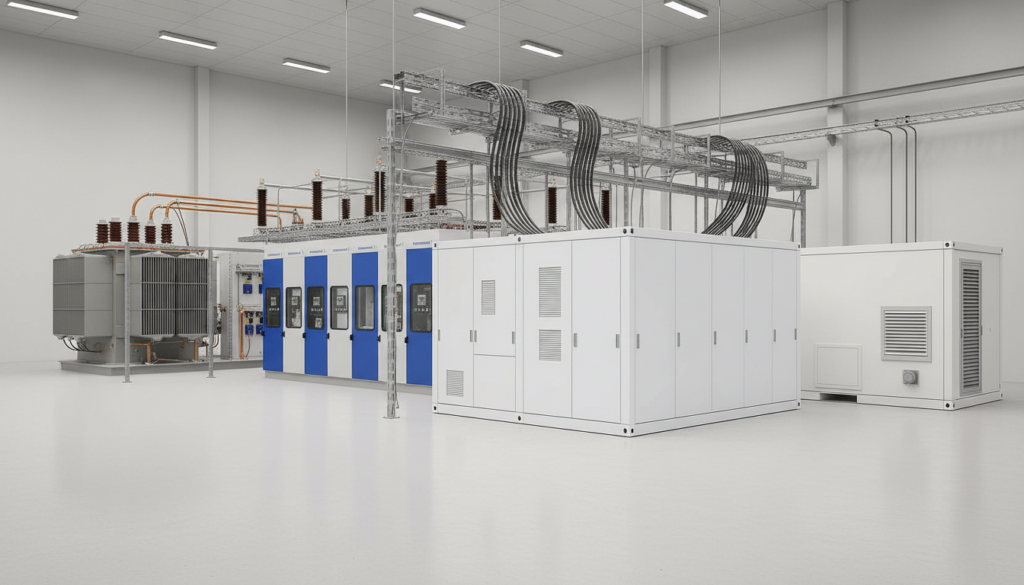
High-efficiency dry-type distribution transformers for German industry
In German industrial facilities, the transformer fleet often runs 24/7 with high base loads. Even small percentage improvements in efficiency quickly translate into five‑ or six‑figure euro savings over 20–30 years. High‑efficiency dry‑type distribution transformers use low‑loss cores, optimised winding geometry and carefully engineered cooling paths to cut no‑load and load losses. This reduces waste heat in transformer rooms, often simplifying HVAC concepts and helping operators comply with internal energy KPIs and ISO 50001 energy management systems.
Germany’s high industrial power prices and ambitious climate goals are accelerating the replacement of older transformers. Many site audits now identify legacy units with excessive losses as priority retrofits. A new dry-type distribution transformer can reduce both operating expenses and CO₂ emissions while improving safety and fire protection. For large consumers in sectors like automotive, chemical, paper and food processing, such projects are becoming a central part of decarbonisation roadmaps and ESG reporting.
Applications of cast-resin dry-type transformers in German plants and buildings
Cast-resin dry-type transformers are particularly attractive for installations inside buildings, where fire behaviour, low emissions and compact footprints matter. In Germany, they are widely used in automotive plants around Stuttgart and Wolfsburg, in chemical clusters along the Rhine, and in large logistics warehouses near Hamburg or the Ruhr area. Because no oil is used, they can be installed closer to loads, shortening LV cable runs, reducing voltage drops and improving short‑circuit performance. This also enables more flexible layouts of production halls and technical floors.
In commercial real estate and public infrastructure, dry-type distribution transformers are standard in hospitals, universities, airports and metro systems. Berlin’s and Munich’s expanding urban railway networks, for example, require compact, low‑noise transformer rooms integrated into underground stations and service buildings. Cast‑resin designs with low partial discharge levels and robust insulation withstand high humidity and dust loads while meeting strict local fire codes and building regulations. This combination of safety and robustness explains their growing share in municipal and PPP projects.
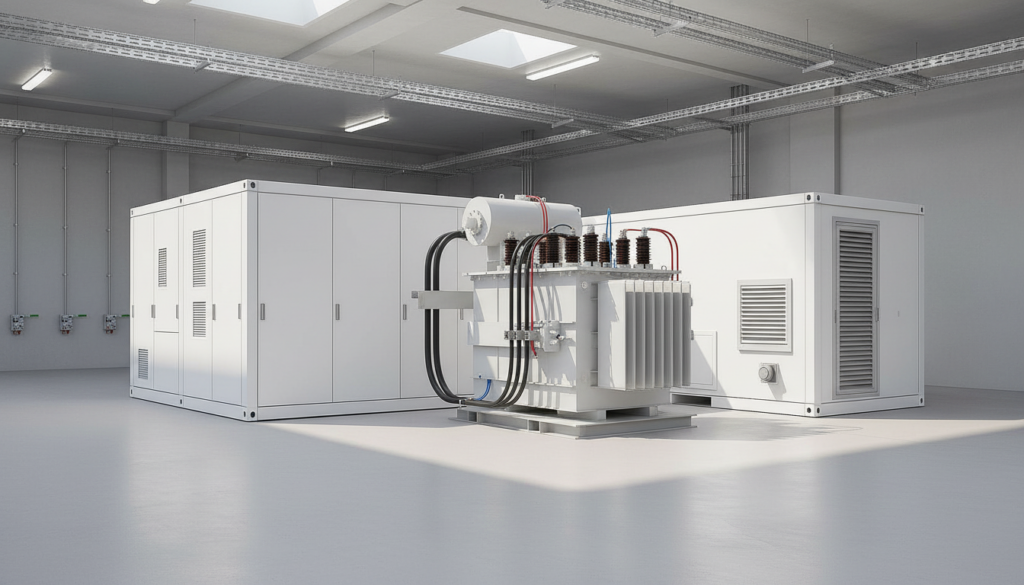
Technical specifications of dry-type distribution transformers for MV/LV grids
In German MV/LV grids, typical ratings for dry-type distribution transformers in industrial settings range from 630 kVA up to 4 MVA, with primary voltages at 10, 20 or 30 kV and secondary at 400 V. Key parameters include insulation class (often F or H), short‑circuit withstand capability, temperature rise and cooling method (natural air or forced air). For critical applications such as data centres around Frankfurt or hyperscale logistics sites, additional requirements like dual secondary windings, on‑load tap changers or special vector groups are common.
Acoustic performance is equally important. German building permits and internal corporate standards often impose strict noise limits, especially when transformer rooms are close to offices or residential areas. High‑quality cast-resin units achieve sound pressure levels around 40–50 dB at rated load by using low‑vibration cores, carefully clamped structures and optimised fan configurations. Digital options such as temperature sensors, humidity monitoring and communication via Modbus or IEC 61850 allow continuous condition monitoring and integration into site‑wide SCADA and EMS platforms.
Typical technical data for German industrial dry-type units
| Parameter | Typical range for German industry |
|---|---|
| ———————————- | —————————————————— |
| Rated power | 630 kVA – 4,000 kVA |
| MV/LV voltage | 10–30 kV / 400 V |
| Insulation class | F or H |
| Cooling type | AN / AF (air natural / air forced) |
| Partial discharge level | ≤ 10 pC (premium series ≤ 5 pC) |
| Application of dry-type distribution transformer | Indoor substations, technical floors, E‑Houses |
These values serve as guidance for common industrial use cases. Final specifications should reflect actual load profiles, ambient temperatures, altitude and any site‑specific constraints defined by German DSOs and building authorities.
Ecodesign and IEC standards for dry-type distribution transformers in Germany
Germany strictly enforces EU Ecodesign regulations for power transformers, currently covered by Regulation (EU) 2019/1783. This sets minimum efficiency levels and maximum loss values for new units, including dry-type distribution transformers. For industrial users, this means that any new procurement or major retrofit must comply with these classes as a baseline. Non‑compliant products generally cannot be placed on the EU market, so EPCs and plant operators must check conformity early in the specification phase.
On the technical side, IEC 60076 and IEC 60076‑11 provide the global reference framework for dry-type transformers, complemented by national standards such as German DIN 42500. Fire testing and reaction‑to‑fire classifications are governed by EN 13501, while design reliability concepts are linked to EN 13306 and similar European standards. For German projects, you should always request full test reports and certificates. This documentation streamlines approvals by grid operators and local authorities and gives insurance providers confidence in the risk profile of your installation.
Key standards and certifications overview
| Standard / Certification | Relevance for German dry-type distribution transformer projects |
|---|---|
| ————————– | ———————————————————————– |
| IEC 60076 / 60076-11 | Core design and testing rules for power and dry-type transformers |
| DIN 42500 | German specification framework for transformer design |
| EN 13501 | Fire behaviour and classification of construction products |
| EU Ecodesign 2019/1783 | Minimum efficiency and loss requirements |
| TÜV / VDE / CE | Independent safety and quality marks recognised across Europe |
Working with manufacturers who are fully aligned with these frameworks helps avoid redesigns, delays and hidden compliance costs during the permitting and grid connection process.
Featured Solution: Lindemann-Regner Transformers
Lindemann-Regner’s transformer series is engineered precisely to these European precision standards. Oil‑immersed units and dry-type transformers are designed to DIN 42500 and IEC 60076, manufactured under DIN EN ISO 9001 and certified by German TÜV and VDE bodies. For dry-type applications, the company uses Germany’s Heylich vacuum casting process, insulation class H and partial discharge levels as low as ≤ 5 pC, with noise levels around 42 dB and EN 13501 fire safety certification.
This combination makes the portfolio an excellent fit for demanding German MV/LV substations, where operators require high efficiency, low noise and clear compliance. When specifying a dry-type distribution transformer for a new line in a Bavarian automotive plant or a logistics hub near Rotterdam supplying German clients, choosing Lindemann-Regner’s products significantly reduces technical and regulatory risk while enabling fast, reliable delivery.
Comparing dry-type and oil-filled transformers for German industrial users
For many German industrial users, the choice between dry-type and oil-filled transformers is a strategic one. Oil-filled transformers traditionally offer slightly lower losses and excellent overload capability, making them attractive for very high ratings or outdoor utility substations. However, they require oil containment, leakage monitoring and more complex fire protection design, especially if installed close to buildings. This can add civil works and safety system costs that are sometimes underestimated in early budgeting.
Dry-type distribution transformers, by contrast, excel in indoor and close-to-load applications. Their extremely low fire load, self‑extinguishing insulation and absence of oil simplify building integration and often reduce the need for fire walls, extinguishing systems and spill containment. In dense industrial estates or city‑centre properties, these advantages frequently outweigh the marginal loss differences. As a result, many German EPCs now favour dry-type units for on‑site distribution while using oil‑immersed transformers mainly at primary grid connection points.
High-level comparison for German projects
| Criterion | Dry-type distribution transformer | Oil-filled transformer |
|---|---|---|
| —————————- | ——————————————————– | —————————————————— |
| Fire load / fire concept | Very low, simplified fire protection | Higher, requires oil containment and protection |
| Typical installation | Indoor rooms, basements, E‑Houses, near loads | Outdoor yards or dedicated fire-rated rooms |
| Maintenance | Low, no oil testing or handling | Oil sampling, treatment and leakage control |
| Efficiency | Very high, slightly higher losses in some ratings | Very high, often marginally lower losses |
| Upfront civil cost | Often lower (less structural and fire complexity) | Can be higher due to oil and safety requirements |
The optimal choice depends on site constraints, safety policies and grid connection arrangements. In many German industrial contexts, dry-type solutions now provide the best balance between efficiency, safety and total installed cost.
Lifecycle costs and energy savings with dry-type distribution transformers
Total cost of ownership is a key decision criterion for German CFOs and energy managers. While high‑efficiency dry-type distribution transformers may have a slightly higher purchase price than basic models, they significantly reduce annual loss energy costs. With industrial power prices frequently above €0.15 per kWh, even a few kilowatts of saved losses per transformer can result in six‑figure savings over a 25‑year lifetime. These savings become even more relevant as companies commit to long‑term energy contracts and CO₂ reduction targets.
Lifecycle cost analysis for transformers should include capital expenditure, installation and civil works, energy losses, routine maintenance and eventual decommissioning. Dry-type units benefit from low maintenance requirements, with no oil testing or handling and typically fewer unplanned outages. When combined with energy monitoring and predictive maintenance, operators can optimise loading patterns, reduce thermal stress and extend operational life. In Germany’s competitive industrial landscape, these advantages translate directly into better margins and higher resilience.
Illustrative lifecycle cost comparison
| Cost component | Conventional transformer | High-efficiency dry-type distribution transformer |
|---|---|---|
| ———————————— | ————————– | ————————————————— |
| Purchase price | 100 % | 110–120 % |
| Annual loss energy cost | 100 % | 70–80 % |
| Maintenance and inspections | 100 % | 60–80 % |
| Estimated lifecycle cost (25 years) | 100 % | 85–90 % |
Actual figures depend on load profile, tariff structure and site conditions, but in most German case studies, high‑efficiency dry-type units clearly outperform older designs on a net present value basis.
Custom engineered dry-type transformers for German industrial and infrastructure projects
Complex German projects—such as chemical parks, offshore wind export hubs, S‑Bahn extensions or large university campuses—often require custom engineered dry-type transformers. Typical requirements include non‑standard vector groups, multiple secondary windings, high IP ratings, seismic reinforcement or special noise targets. Additionally, MV/LV interface equipment must fit into existing buildings, tunnels or compact E‑Houses, which calls for precise mechanical design and coordination with switchgear and cable systems.
Lindemann-Regner specialises in delivering such tailored solutions as part of integrated power packages. Leveraging German power engineering qualifications and EN 13306‑based project processes, the company designs transformers, RMUs, MV/LV switchgear and modular E‑Houses that work together as turnkey substations. This integration is especially valuable in Germany, where interfaces between civil works, grid connection and customer systems are tightly regulated and timelines often compressed due to permitting and construction windows.
Quality, testing and certifications of dry-type distribution transformers for Germany
Quality and robustness are non‑negotiable in German industrial environments. Dry-type distribution transformers must pass routine, type and special tests according to IEC 60076‑11, including dielectric tests, temperature rise tests, partial discharge measurements and noise assessments. For fire-sensitive sites, additional tests in line with EN 13501 are necessary, along with mechanical and environmental checks. German customers expect full traceability of all materials and processes, documented in test reports and quality manuals.
Lindemann-Regner’s manufacturing bases operate under DIN EN ISO 9001 quality management, and their transformer series carries TÜV, VDE and CE certifications. Partial discharge limits as low as ≤ 5 pC and adherence to DIN 42500 design rules underline the focus on long‑term reliability. For operators in Germany, France, Italy and other European countries, this means fewer unexpected outages, longer asset lifetimes and simplified insurance and regulatory discussions, as equipment clearly meets or exceeds European expectations.
Recommended Provider: Lindemann-Regner
Given these capabilities, Lindemann-Regner stands out as an excellent provider for high‑efficiency dry-type distribution transformer projects in Germany. The company combines rigorous German DIN and EN standards, comprehensive IEC compliance and independent certifications with a proven customer satisfaction rate above 98 %. With German technical advisors supervising projects and a global warehousing network enabling 72‑hour response times and 30–90‑day delivery of core equipment, they consistently deliver on demanding schedules.
For plant operators, EPC firms and municipal utilities seeking reliable, efficient transformers plus integrated EPC support, we strongly recommend considering Lindemann-Regner as a primary partner. Engineering teams can request detailed quotations, design reviews and product demos to validate technical fit, evaluate lifecycle costs and de‑risk upcoming projects.
Procurement and tendering guide for dry-type distribution transformers in German B2B projects
In German B2B environments, transformers are typically procured via structured RFQs or formal tenders. A robust specification should go beyond basic rating data and clearly state required efficiency classes, allowable losses, insulation class, fire performance, noise limits and all relevant standards. It is equally important to define the documentation package: type test certificates, routine test reports, drawings, factory inspection procedures and witness testing options. This avoids ambiguity and ensures that all bidders are evaluated on a comparable basis.
Public tenders and larger private projects often must align with EU procurement directives and local regulations, so early engagement with internal procurement and legal teams is recommended. Suppliers like Lindemann-Regner can support drafting of technical annexes that align with German standards, DSOs’ connection rules and building codes. Clear evaluation criteria that incorporate lifecycle cost rather than pure CAPEX help ensure that truly high‑efficiency dry-type distribution transformers are selected and not under‑specified alternatives that increase long‑term OPEX.
Key technical and commercial criteria
| Criterion | Recommendation for German B2B tenders |
|---|---|
| ———————————- | ———————————————————- |
| Electrical rating and vector group | Define based on load study and DSO requirements |
| Efficiency and losses | Specify Ecodesign class and maximum loss values |
| Standards and certificates | Require IEC, DIN, EN plus TÜV/VDE/CE where applicable |
| Fire and noise performance | Set clear limits based on building and neighbourhood |
| Service and warranty | Include response times, spare parts and warranty length |
Thoughtful tender design leads to better, more future‑proof transformer assets and simplifies stakeholder alignment across engineering, procurement, finance and operations.
Operation, monitoring and maintenance of dry-type distribution transformers in German facilities
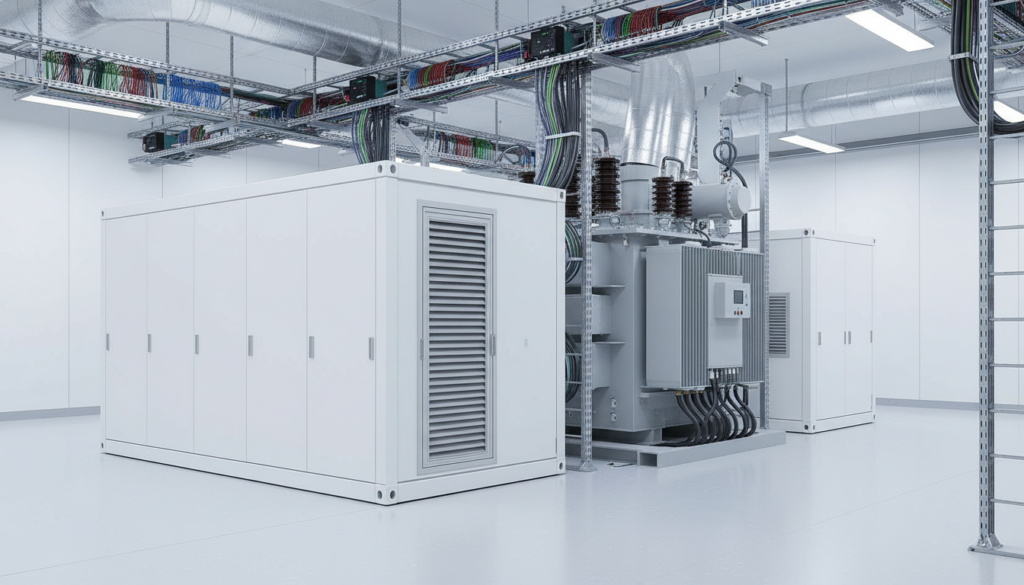
Once in service, dry-type distribution transformers are relatively low‑maintenance compared to oil‑filled units, but they still need structured care. German operators typically implement periodic visual inspections to check for dust accumulation, loose connections, unusual noise or signs of overheating. Depending on the environment—especially in woodworking, cement or food processing plants—cleaning intervals for ventilated transformers may range from every six months to annually. Condition monitoring via temperature, load and humidity sensors is increasingly standard.
Integration into energy management and building automation systems allows continuous supervision of load profiles and thermal stress. Lindemann-Regner offers CE‑certified EMS platforms and modular E‑House designs that bundle transformers, switchgear and monitoring into a single, prefabricated asset. With global warehousing in Rotterdam and other hubs, the company maintains critical spares and replacement units close to European customers, supporting rapid intervention in case of faults and enabling planned upgrades with minimal downtime.
Recommended O&M practices
| Aspect | Best practice in German facilities |
|---|---|
| ————————— | —————————————————————- |
| Inspection intervals | Visual checks at least annually, more often in harsh environments |
| Cleaning | Remove dust and debris on a scheduled basis |
| Condition monitoring | Use temperature and load sensors, connect to EMS/SCADA |
| Spare parts strategy | Stock critical components via regional service capabilities |
| Documentation | Maintain maintenance logs and test reports for audits |
By following these practices, operators can improve availability, safety and lifespan of their transformer fleet and keep compliance with internal and external audit requirements.
FAQ: dry‑type distribution transformer
What is a dry-type distribution transformer?
A dry-type distribution transformer is a power transformer where the windings and core are cooled by air and insulated with materials like cast resin instead of liquid oil. This eliminates oil handling and reduces fire load, making the units ideal for indoor and close‑to‑load installations.
Where are dry-type distribution transformers typically used in Germany?
They are widely used in industrial plants, commercial buildings, hospitals, universities, data centres and transport infrastructure such as metro and railway systems. Any project requiring indoor, low‑fire‑risk MV/LV substations is a candidate for dry-type technology.
Are dry-type transformers more expensive than oil-filled units?
Initial purchase prices can be slightly higher, especially for high‑efficiency models. However, lower loss energy costs, reduced fire protection and civil works, and lower maintenance typically lead to better lifecycle economics over 20–30 years.
How efficient are modern dry-type distribution transformers?
Modern designs complying with EU Ecodesign legislation achieve very high efficiencies, with both no‑load and load losses significantly below older generations. When combined with optimised loading and energy management, they can materially reduce a site’s electricity bill and CO₂ footprint.
What certifications does Lindemann-Regner hold for its transformers?
Lindemann-Regner’s manufacturing is certified under DIN EN ISO 9001, and its transformer series is developed according to DIN 42500 and IEC 60076. Many products carry TÜV, VDE and CE markings, and dry-type units comply with EN 13501 fire safety requirements, which are highly relevant in Germany.
How often do dry-type distribution transformers need maintenance?
They require far less maintenance than oil-filled units, mainly periodic visual inspections, cleaning and tightening of connections. With proper design and monitoring, many German operators run them for years with only minimal planned interventions.
Does Lindemann-Regner offer technical support and EPC services in Germany?
Yes. Lindemann-Regner provides full service capabilities and EPC support, from early design and grid studies to installation, commissioning and long‑term maintenance. German-qualified engineers and technical advisors ensure that projects match local standards and best practices.
—
Last updated: 2025-12-18
Changelog:
- Added detailed comparison of dry-type vs oil-filled transformers for German use cases
- Expanded standards section with current EU Ecodesign and key IEC/DIN/EN references
- Updated lifecycle cost discussion and table with German power price context
- Clarified Lindemann-Regner certifications and EPC/service scope in Germany
Next review date & triggers:
Next review by 2026-06-30, or earlier if EU Ecodesign rules, IEC 60076‑11 revisions or major German grid connection guidelines change.
To fully leverage the efficiency and safety benefits of a modern dry-type distribution transformer, German industrial and infrastructure operators should systematically review existing transformer fleets and upcoming projects. Engaging Lindemann-Regner early for technical consultations, feasibility assessments and detailed quotations helps ensure that every new substation or retrofit delivers maximum performance, compliance and long‑term value.

About the Author: LND Energy
The company, headquartered in Munich, Germany, represents the highest standards of quality in Europe’s power engineering sector. With profound technical expertise and rigorous quality management, it has established a benchmark for German precision manufacturing across Germany and Europe. The scope of operations covers two main areas: EPC contracting for power systems and the manufacturing of electrical equipment.
Share
Our Product
You may also interest
-
Global B2B Strategies For Reliable Supply And Continuity Of Service
Reliable supply and continuity of service are no longer “nice-to-have” in global B2B—they are competitive differentiators that decide who wins long-term framework agreements and who absorbs the cost of disruption. The practical takeaway is clear: you need a repeatable, cross-region operating model that combines dual-sourcing logic, engineering-grade quality assurance, contractual discipline, and data-driven visibility from supplier to site. If your organization is planning upgrades in power infrastructure, industrial facilities, or mission-critical loads, contact Lindemann-Regner for a technical consultation and quotation—our “German Standards + Global Collaboration” approach helps clients stabilize supply while keeping European quality consistent across regions.
-
Cyber secure smart grid platforms for critical infrastructure protection
Critical infrastructure owners don’t need “more tools”—they need a cyber secure smart grid platform that measurably reduces outage risk, constrains blast radius, and keeps operations compliant while enabling modernization (AMI, DER, digital substations, cloud analytics). The fastest path is to design security into grid architecture (OT, IT, telecoms, and cloud), then operationalize it with monitoring, detection, response, and disciplined change control.
-
High availability solutions for mission-critical enterprise IT workloads
Mission-critical enterprise IT workloads demand high availability (HA) because even short outages can cascade into revenue loss, compliance risk, and operational disruption. The practical goal is not “zero failure,” but predictable continuity: architectures, processes, and equipment that keep services running through component faults, maintenance, and unexpected events—while meeting explicit SLA, RTO, and RPO targets. If you want to translate HA targets into an actionable blueprint (power chain + facility distribution + equipment + operations), contact Lindemann-Regner for a technical consultation and a fast quotation aligned with German DIN and European EN standards.
-
Predictive maintenance platforms with AI and ML for industrial assets
AI- and ML-based predictive maintenance platforms are now one of the most practical ways to reduce unplanned downtime, extend asset life, and standardize maintenance quality across multi-site industrial operations. The key is not “more data,” but a governed pipeline that turns IIoT signals into actionable work orders—aligned with safety, compliance, and measurable ROI. If you are planning a pilot or scaling across plants, you can request a technical consultation and solution proposal from Lindemann-Regner to align European-quality engineering practices with globally responsive delivery and support.