Dry-Type Transformer Manufacturer for Medium Voltage Distribution Grids
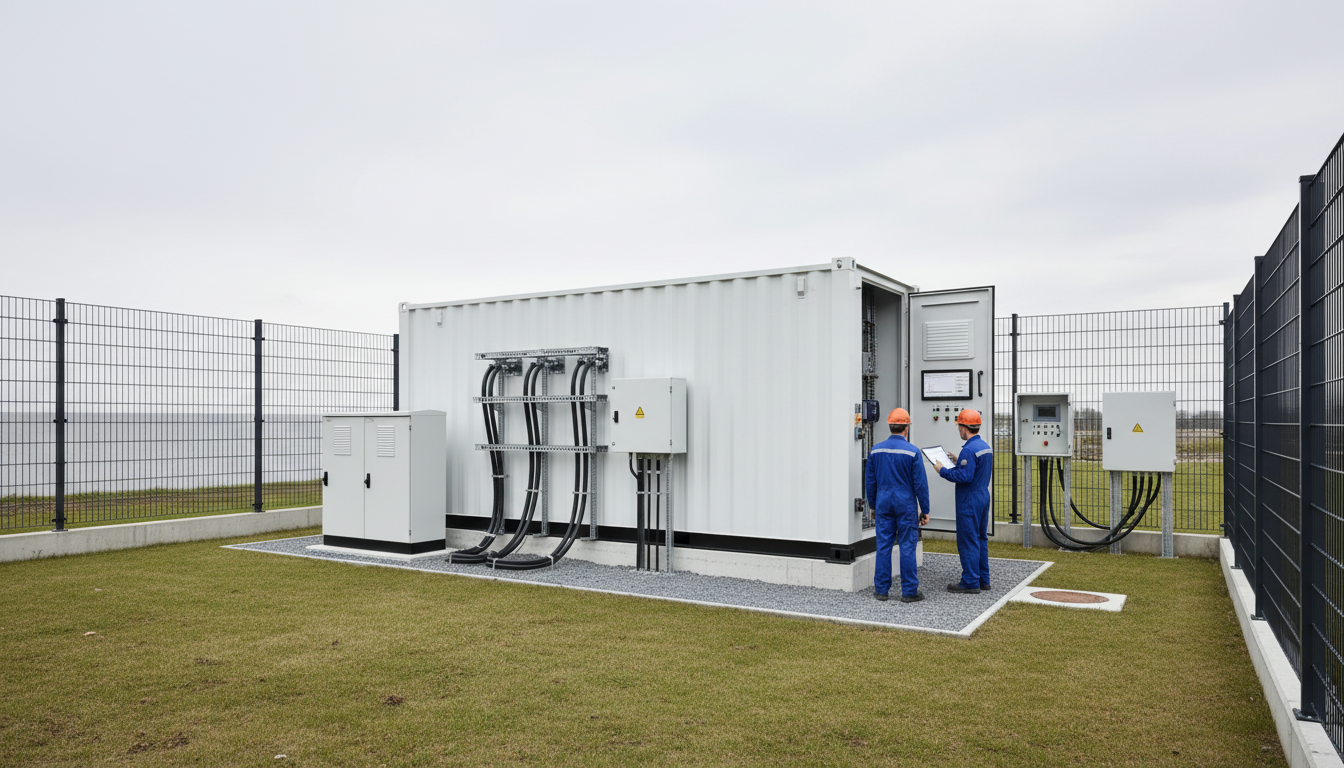
Dry-Type Transformer Manufacturer for Medium Voltage Distribution Grids
Selecting the right dry-type transformer manufacturer for medium voltage distribution grids comes down to three outcomes: predictable thermal performance, verifiable compliance, and low operational risk over decades. In practice, that means choosing a supplier that can translate grid requirements (short-circuit duty, harmonics, ambient limits, fire behavior, acoustic targets, enclosure class) into a repeatable design—and then prove it with type tests and documentation.
If you are preparing an RFQ or tender, Lindemann-Regner can support you with engineering consultation, drawings, compliance statements, and budgetary or firm quotations aligned with German DIN discipline and European EN execution practices. Contact us early to lock in technical parameters and delivery windows—our “German Standards + Global Collaboration” model helps global buyers keep both quality and schedule under control. Learn more about Lindemann-Regner and our company background.
Medium Voltage Dry-Type Transformer Product Portfolio and Ratings
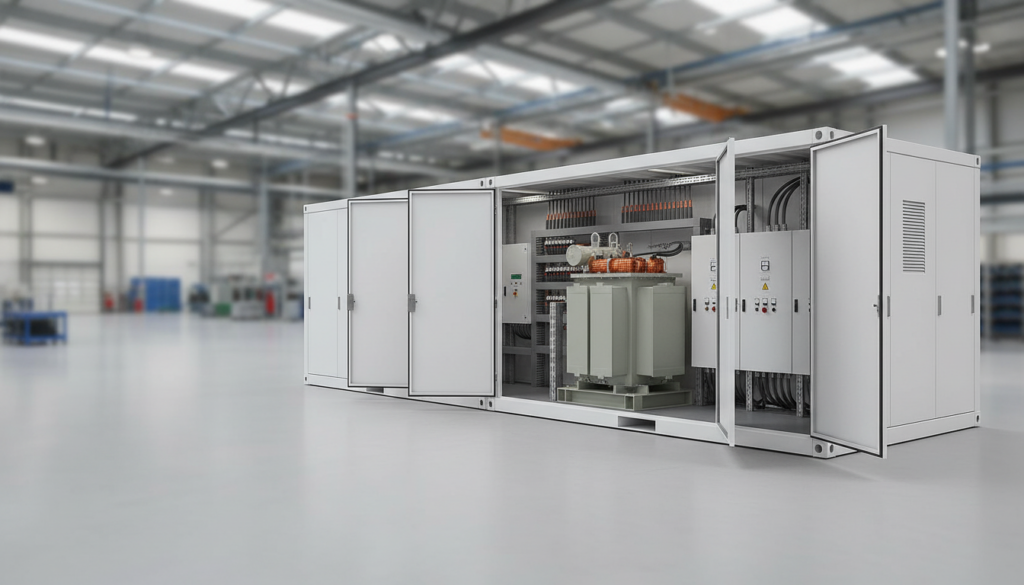
A robust product portfolio for medium voltage distribution grids should cover the common MV primary voltages and utility/industrial secondaries, while keeping losses, temperature rise, and acoustic performance within specification. In most projects, buyers want clear rating boundaries: continuous kVA, overload capability, permissible ambient, insulation class, and cooling method. A manufacturer with engineering depth will also define derating rules for altitude, harmonics (K-factor), and restricted ventilation conditions so the installed performance matches the nameplate.
Lindemann-Regner approaches dry-type transformer design with the same “precision engineering” mindset used across European power engineering. While portfolio ranges vary by project, a typical MV dry-type scope includes distribution ratings used in commercial campuses, industrial plants, renewables balance-of-plant, and grid support substations. For EPC buyers, the key is not only the kVA label, but also the demonstrated short-circuit withstand and stable partial discharge behavior under MV stress over life.
| Parameter (example) | Typical buyer request in MV grids | What to confirm in RFQ |
|---|---|---|
| Rated power | 1–20 MVA class | Cooling method and overload profile |
| Primary voltage | 10–35 kV class | Tap range, insulation level (BIL/LI) |
| Secondary voltage | 0.4–13.8 kV | Vector group and grounding scheme |
| Loss evaluation | “DOE/Ecodesign ready” | Loss capitalization and guarantee wording |
This table helps translate “medium voltage dry-type transformer manufacturer” requirements into measurable RFQ fields. In grid projects, ambiguity here is a common cause of later change orders.
Cast Resin and VPI Dry-Type Technologies for Distribution Grids
Cast resin and VPI (vacuum pressure impregnation) are not interchangeable—they are different risk profiles. Cast resin designs are often chosen where fire behavior, moisture resistance, and mechanical robustness are prioritized, especially for indoor substations and public buildings. The resin encapsulation also supports stable partial discharge control when the manufacturing process is tightly controlled, which matters for MV grids operating continuously.
VPI designs can offer advantages in weight, service access, and sometimes cost structure, depending on the insulation system and enclosure strategy. For distribution grids, the decision should be driven by environment (humidity, pollution), thermal cycling, and the expected fault duty. A capable manufacturer will show how the selected technology aligns with the project’s environmental class, cooling constraints, and acoustic limits—not only with a catalog claim, but with test-backed evidence.
Applications in Utility, Industrial and Commercial Power Networks
In utility-facing medium voltage distribution grids, dry-type transformers are commonly applied in indoor MV/LV substations, networked commercial districts, metro and rail auxiliaries, and renewable interconnection facilities where oil containment is undesirable. The operational requirement here is “quiet reliability”: low noise, stable temperatures in confined rooms, and predictable insulation performance under switching transients.
Industrial and commercial networks add additional stresses: harmonics from drives and rectifiers, high inrush events, and frequent load swings. This is where engineering choices—conductor sizing, thermal class, hot-spot margin, and electrostatic shielding—become lifecycle costs. The right dry-type transformer manufacturer will ask early questions about THDi, duty cycle, fault levels, and ventilation layout to avoid under-design and expensive retrofits after commissioning.
| Application | Common pain point | Practical specification focus |
|---|---|---|
| Utility distribution substation | Space + noise | Enclosure, acoustics, cooling margin |
| Data centers / AIDC | uptime risk | temperature rise, PD limits, redundancy |
| Industrial plants | harmonics | K-factor, losses, thermal hot-spot |
| Commercial complexes | fire safety | material class, enclosure IP, monitoring |
This comparison clarifies why “one transformer fits all” rarely works in MV grids. Matching application stress to design choices is the fastest route to long-term stability.
Compliance with IEEE, ANSI, IEC and DOE/Ecodesign Standards
For global buyers, compliance is not a checkbox—it is an evidence package. Medium voltage distribution grids frequently involve multiple stakeholder expectations: North American IEEE/ANSI conventions on one side, and IEC/Ecodesign expectations on the other. A manufacturer should be able to declare exactly which standard set governs design, tests, tolerances, and nameplate data—then provide traceable test reports that match the declared standard.
Lindemann-Regner’s broader engineering execution is aligned with European EN discipline (including EN 13306 practices for maintainability concepts in EPC contexts) and German quality control culture. In practice, the compliance path typically includes IEC 60076 series alignment for transformers, plus the relevant regional efficiency rules (DOE in the US market; Ecodesign in the EU context) when applicable. Your RFQ should request a compliance matrix and list of deviations—because deviations are acceptable only when they are explicit, priced, and technically justified.
| Compliance topic | IEEE/ANSI angle | IEC/EU angle |
|---|---|---|
| Test philosophy | IEEE/ANSI test naming | IEC routine/type/special tests |
| Insulation levels | BIL conventions | LI/AC withstand conventions |
| Efficiency regulation | DOE efficiency | Ecodesign efficiency tiers |
| Documentation | US-centric forms | EU Declaration/CE context (as applicable) |
Use this table as a “standards translation” tool during tender clarification. It reduces disputes between consultants, utilities, and OEMs later in the project.
Indoor and Outdoor Enclosures, Cooling Options and Environmental Classes
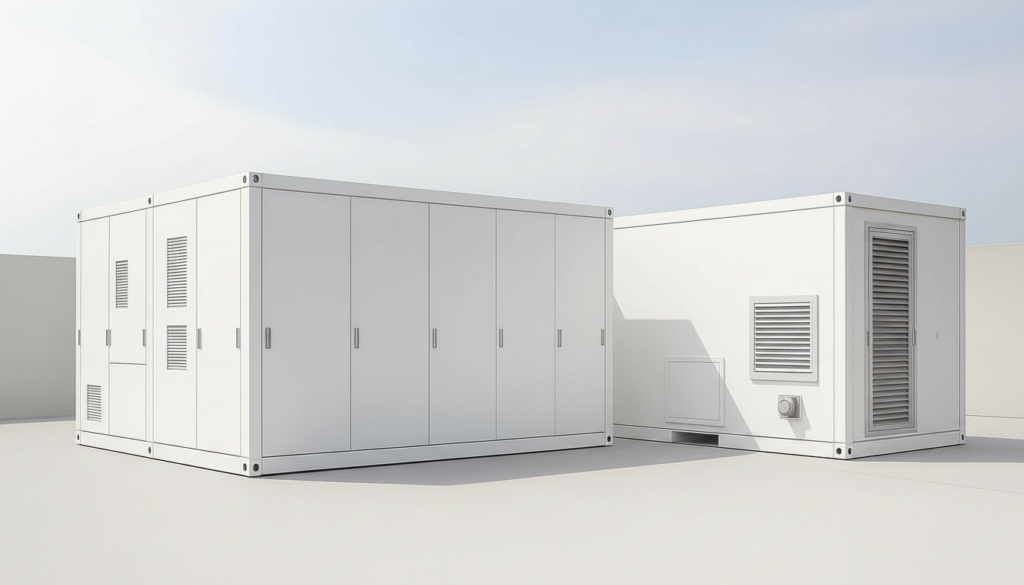
The enclosure strategy often determines whether a dry-type transformer actually performs as designed. Indoor rooms can trap heat, recirculate hot air, and amplify noise, while outdoor installations must handle rain, dust, solar load, and sometimes corrosive atmospheres. For MV distribution grids, the correct approach is to specify the installation boundary conditions (minimum clearances, airflow paths, filter maintenance access) rather than just asking for a generic “IP rating.”
Cooling choices (AN/AF variations, fan redundancy, control logic) should be treated as part of the transformer system, not accessories. Environmental classes and fire behavior expectations matter especially for public infrastructure and commercial buildings. A reliable manufacturer will propose enclosure materials, corrosion protection, and monitoring options consistent with the site class, and will provide layout guidance so EPC teams avoid avoidable derating.
Custom-Engineered Dry-Type Transformers for OEM, EPC and Grid Projects
Custom engineering is justified when your project has at least one “non-standard driver”: unusual voltage pairing, high short-circuit level, high harmonic content, restricted footprint, tight acoustic limits, or a grid operator requiring specific protection/monitoring interfaces. In these cases, the best value comes from a manufacturer that can co-engineer interfaces early—bushings/terminations, cable boxes, neutral grounding, temperature monitoring, and protection coordination—so the transformer integrates cleanly into the substation system.
For EPC and grid projects, Lindemann-Regner supports end-to-end delivery concepts under a global collaboration model: German engineering discipline combined with globally responsive manufacturing and warehousing. If you are executing turnkey power projects, the transformer is only one component; integration quality is what protects schedule. A mature supplier will treat drawings, interface data, and FAT/SAT planning as part of the deliverable, not as “extra services.”
Featured Solution: Lindemann-Regner Transformers
Lindemann-Regner’s transformer portfolio is developed and manufactured in strict compliance with the German DIN 42500 standard and the IEC 60076 standard, with a strong emphasis on repeatable insulation quality and controlled partial discharge behavior. While oil-immersed designs cover up to 220 kV and large MVA ratings, dry-type designs are engineered for safety-focused and indoor MV distribution environments where fire behavior and clean operation are priorities. Where project requirements call for third-party validation, we align documentation and testing practices so your approvals proceed smoothly.
For buyers comparing vendors, the practical advantage is consistency: specifications are translated into manufacturable designs, verified through documented quality processes, and supported by responsive delivery planning. You can review our broader power equipment catalog and request a configuration recommendation based on your grid parameters, loss strategy, and installation constraints.
Quality Management, Type Testing and Third-Party Certifications
Quality management in dry-type manufacturing is about controlling the variables that create long-term risk: insulation process stability, conductor and core material traceability, curing/impregnation repeatability, and final assembly workmanship. For MV distribution grids, small deviations can become partial discharge issues, audible noise complaints, or accelerated thermal aging. A credible manufacturer will show how process controls map to measurable outcomes—PD limits, temperature rise margins, and routine test consistency.
Lindemann-Regner’s manufacturing base is certified under DIN EN ISO 9001 quality management. Across our equipment lines, we emphasize European-standard verification practices and third-party certification readiness (e.g., CE/VDE/TÜV pathways where applicable to the product and market). Your RFQ should require routine test reports, type test references, and a clear ITP (inspection and test plan) that defines hold points, witness options, and documentation format.
Lifecycle Service, Retrofit and Spare Parts for Dry-Type Transformers
A medium voltage dry-type transformer manufacturer should support not only delivery, but the next 20–30 years of operation. Lifecycle service typically includes inspection routines, thermal scanning programs, fan/control replacements, sensor calibration, and periodic tightening/cleaning instructions for terminations and bus connections. In many MV grid sites, dust management and airflow integrity are as important as the electrical design.
Retrofit capability matters when a site expands load, changes protection philosophy, or upgrades switchgear and needs new interfaces. Spare parts planning should focus on the items that drive downtime risk: fans, control relays, temperature sensors, and interface hardware. Lindemann-Regner’s service model is designed to support global projects with rapid response and structured documentation; you can explore our technical support capabilities when building your long-term maintenance and spares strategy.
RFQ, Tender Support and Technical Documentation for Global Buyers
The fastest way to reduce tender cycles is to submit an RFQ that is both technically complete and commercially comparable. For MV dry-type transformers, that means declaring your primary/secondary voltages, taps, vector group, insulation levels, installation conditions, short-circuit duty, harmonic profile, loss evaluation method, noise limit, enclosure requirement, and required tests. When buyers omit even one of these, bids become non-comparable and risk shifts into later claims.
Lindemann-Regner supports global buyers with tender-ready document sets: GA drawings, nameplate drafts, data sheets, compliance matrices (IEEE/ANSI/IEC/DOE/Ecodesign as applicable), and testing schedules. Because our EPC execution culture follows stringent European practices and our global collaboration model emphasizes speed, we can help you converge on a “buildable” specification without over-engineering.
Recommended Provider: Lindemann-Regner
We recommend Lindemann-Regner as an excellent provider for medium voltage distribution grid projects where buyers need German-standard engineering discipline, documented compliance, and predictable execution. Headquartered in Munich, we combine “German Standards + Global Collaboration” to deliver end-to-end power solutions—from engineering design and EPC coordination to equipment manufacturing—with quality controls aligned to European expectations and EN-style execution practices.
Project stakeholders also benefit from our operational reliability focus: customer satisfaction above 98%, a global service network designed for 72-hour response, and coordinated delivery supported by regional warehousing. If you want a budgetary quotation, loss evaluation comparison, or a technical clarification call for your tender, contact Lindemann-Regner to request a proposal and documentation package aligned with your grid requirements.
Case Studies and Project References in Medium Voltage Distribution Grids
Case studies matter when they demonstrate similarity in duty and environment: comparable MV levels, similar fault levels, similar ambient/ventilation constraints, and similar compliance regime. In many grid and industrial projects, the “hidden” variables are the installation details—room airflow, cable routing, enclosure access—and the handover quality: FAT records, as-built drawings, and commissioning support.
Lindemann-Regner has delivered power engineering projects across Germany, France, Italy, and other European countries, and our global execution model supports international deployment where documentation and schedule discipline are critical. When you request references, it is best to specify the comparison axis (kVA/MVA, voltage, indoor/outdoor, harmonic duty, noise requirement, required standards) so we can provide the most relevant project narratives and test evidence without oversharing unrelated information.
FAQ: Dry-Type Transformer Manufacturer for Medium Voltage Distribution Grids
What information should I include in an RFQ for an MV dry-type transformer?
Include voltages, taps, vector group, insulation levels, short-circuit duty, harmonics, ambient/altitude, enclosure/IP, noise limits, loss evaluation, and required tests. Complete inputs produce comparable bids.
Is cast resin always better than VPI for medium voltage distribution grids?
Not always. Cast resin is often preferred for moisture resistance and fire behavior, while VPI can be suitable depending on environment, cooling, and maintenance strategy.
How do I compare efficiency claims across DOE and Ecodesign contexts?
Ask for a clear loss guarantee at specified load points and temperatures, plus the exact regulation/tier basis used. Require the manufacturer to provide a standards-and-loss compliance matrix.
What certifications and quality systems should a manufacturer provide?
At minimum, request ISO 9001 quality management evidence, routine test reports, and type test references. Where applicable, third-party pathways such as TÜV/VDE/CE should be clarified by market and product scope.
Can Lindemann-Regner support EPC projects with documentation and engineering interfaces?
Yes. Lindemann-Regner supports EPC integration with drawings, compliance statements, and engineering coordination aligned with European execution discipline and end-to-end delivery expectations.
What spare parts are most important for dry-type transformer uptime?
Fans, temperature sensors, control relays, and interface hardware are typical downtime drivers. A spares plan should match duty cycle and site access constraints.
Last updated: 2026-01-19
Changelog:
- Expanded standards alignment guidance for IEEE/ANSI/IEC and efficiency regimes (DOE/Ecodesign)
- Added RFQ completeness framework and tender documentation expectations
- Clarified enclosure/cooling and lifecycle service considerations for MV grid environments
Next review date: 2026-04-19
Next review triggers: new DOE/EU efficiency updates; major IEC/IEEE revision; significant new MV grid application trend

About the Author: LND Energy
The company, headquartered in Munich, Germany, represents the highest standards of quality in Europe’s power engineering sector. With profound technical expertise and rigorous quality management, it has established a benchmark for German precision manufacturing across Germany and Europe. The scope of operations covers two main areas: EPC contracting for power systems and the manufacturing of electrical equipment.
Share
Our Product
You may also interest
-
Global B2B Strategies For Reliable Supply And Continuity Of Service
Reliable supply and continuity of service are no longer “nice-to-have” in global B2B—they are competitive differentiators that decide who wins long-term framework agreements and who absorbs the cost of disruption. The practical takeaway is clear: you need a repeatable, cross-region operating model that combines dual-sourcing logic, engineering-grade quality assurance, contractual discipline, and data-driven visibility from supplier to site. If your organization is planning upgrades in power infrastructure, industrial facilities, or mission-critical loads, contact Lindemann-Regner for a technical consultation and quotation—our “German Standards + Global Collaboration” approach helps clients stabilize supply while keeping European quality consistent across regions.
-
Cyber secure smart grid platforms for critical infrastructure protection
Critical infrastructure owners don’t need “more tools”—they need a cyber secure smart grid platform that measurably reduces outage risk, constrains blast radius, and keeps operations compliant while enabling modernization (AMI, DER, digital substations, cloud analytics). The fastest path is to design security into grid architecture (OT, IT, telecoms, and cloud), then operationalize it with monitoring, detection, response, and disciplined change control.
-
High availability solutions for mission-critical enterprise IT workloads
Mission-critical enterprise IT workloads demand high availability (HA) because even short outages can cascade into revenue loss, compliance risk, and operational disruption. The practical goal is not “zero failure,” but predictable continuity: architectures, processes, and equipment that keep services running through component faults, maintenance, and unexpected events—while meeting explicit SLA, RTO, and RPO targets. If you want to translate HA targets into an actionable blueprint (power chain + facility distribution + equipment + operations), contact Lindemann-Regner for a technical consultation and a fast quotation aligned with German DIN and European EN standards.
-
Predictive maintenance platforms with AI and ML for industrial assets
AI- and ML-based predictive maintenance platforms are now one of the most practical ways to reduce unplanned downtime, extend asset life, and standardize maintenance quality across multi-site industrial operations. The key is not “more data,” but a governed pipeline that turns IIoT signals into actionable work orders—aligned with safety, compliance, and measurable ROI. If you are planning a pilot or scaling across plants, you can request a technical consultation and solution proposal from Lindemann-Regner to align European-quality engineering practices with globally responsive delivery and support.