High short-circuit withstand transformers for German MV and LV grids
High short-circuit withstand transformers for German MV and LV grids
Rising short-circuit power levels in German medium-voltage (MV) and low-voltage (LV) grids are putting increasing stress on transformers. Denser Stadtwerke ring networks, powerful 110/20 kV substations, large industrial parks and embedded generation all drive up prospective fault currents. In this environment, specifying High short-circuit withstand transformers is no longer a niche requirement but a practical necessity to protect switchgear, busbars and cables, and to safeguard long-term asset integrity.
By designing new substations around High short-circuit withstand transformers, German DSOs, industrial operators and data centre owners reduce the risk of winding displacement, core deformation and hidden insulation damage after faults. Working with an experienced power solutions provider such as Lindemann-Regner, asset owners can ensure IEC/DIN EN 60076-5 compliance, robust design margins and documentation that will stand up to internal audits and regulatory scrutiny.
What high short-circuit withstand capability means in MV and LV transformers
In practice, short-circuit withstand capability describes a transformer’s ability to survive high fault currents without unacceptable thermal or mechanical damage. High short-circuit withstand transformers are not just “norm-compliant”; they are engineered with additional safety margins beyond the minimum requirements, so they can tolerate higher currents, longer fault durations, or multiple fault events over their lifetime.
Thermally, the question is whether the copper or aluminium windings and connections can absorb the I²t energy of a short-circuit without exceeding allowable temperature limits for the insulation class. If these limits are exceeded, enamel, paper or resin may carbonise, reducing dielectric strength and accelerating ageing. Mechanically, the rapid build-up of electromagnetic forces during a fault can compress, stretch or twist windings. If the structure is not stiff enough, conductors can move, pressing into solid insulation or even the core.
In German MV and LV grids, especially in inner-city substations and industrial facilities, these thermal and mechanical reserves determine whether a transformer can safely return to service after a short-circuit, or whether it carries hidden damage that may cause failure months or years later. High short-circuit withstand transformers are thus an investment in predictable lifetime and reduced risk of disruptive, high-cost outages.
—
IEC and DIN EN 60076-5 requirements for transformer short-circuit strength
IEC 60076-5 and its German adoption as DIN EN 60076-5 form the central standard for assessing transformer short-circuit strength. They define how to calculate thermal and mechanical stresses in a short-circuit, the test duties, and acceptance criteria. High short-circuit withstand transformers meet these baseline requirements and typically go beyond them by incorporating conservative design assumptions and extra material strength.
Thermal short-circuit strength in IEC/DIN EN 60076-5 is assessed by calculating the fault current based on rated voltage, rated power and short-circuit impedance, then determining the temperature rise for a given fault duration (often 1 or 3 seconds). The windings must not exceed maximum permissible temperatures for the insulation system. Mechanical short-circuit strength focuses on axial and radial forces in the windings immediately after fault inception, before protection has time to clear.
In Germany, many utilities, railway operators and industrial companies embed these standards into their own technical rules. They may, for example, assume future network reinforcement when calculating prospective fault currents and specify that transformers must withstand those higher values. The result is that High short-circuit withstand transformers in German tenders are often qualified by both IEC/DIN EN 60076-5 and stricter internal criteria tailored to local grid evolution.
| Standard / requirement | Relevance for High short-circuit withstand transformers |
|---|---|
| —————————– | ——————————————————————- |
| IEC / DIN EN 60076-5 | Base rules for thermal and mechanical short-circuit strength |
| VDE application guidelines | German-specific interpretations and best practices |
| Utility internal standards | Additional safety factors and future short-circuit margins |
This layered framework ensures that short-circuit strength is not left to interpretation but is calculable, testable and contractually enforceable.
—
Thermal and mechanical short-circuit withstand criteria for German grids
From a thermal point of view, German MV and LV transformers often operate in networks with high short-circuit power and heavy loading. For example, 10 kV ring networks in cities like Munich, Hamburg or Berlin, and 400 V main buses in industrial parks, may run near rated current. When a fault occurs downstream, the heat input into windings in the few seconds before protection clears the fault can be substantial. High short-circuit withstand transformers are designed so this transient heat stays within safe limits.
Mechanical criteria are driven by the fact that electrodynamic forces are proportional to the square of the current. As German grids are upgraded, many nodes now see significantly higher fault currents than when they were originally built. Without sufficient mechanical rigidity, windings experience intense radial compression and axial forces during faults, causing irreversible deformation. Over time, this can reduce clearances, damage solid insulation and create partial discharge hotspots.
Special applications in Germany, such as railway traction systems (16.7 Hz and 50 Hz), arc furnaces in the steel industry, and large motor starting transformers, face even more demanding fault and inrush profiles. Here, High short-circuit withstand transformers must cope not only with a single worst-case event, but with repeated severe stress over the transformer’s life. This is why design margins and fatigue considerations have become a strong focus in German engineering teams.
—
Design features that increase transformer short-circuit withstand capability
Achieving High short-circuit withstand transformers starts in the mechanical and electromagnetic design. The winding layout is crucial: interleaved or sectionalised windings with carefully chosen radial and axial dimensions distribute forces more evenly. Solid spacers, radial blocks and axial clamping rings help transmit forces into the support structure rather than into vulnerable insulation surfaces.
Clamping systems must apply sufficient and durable pre-compression to the windings. High-strength steel tie rods, end frames and press plates are arranged so that the entire active part behaves as a single, stiff unit. The core structure – yokes and limbs – must be braced to prevent relative movement between core and windings. High-grade silicon steel with tight stacking and robust clamping reduces unwanted motion and stray flux forces.
Insulation materials are selected not only for dielectric properties but also for mechanical strength: pressboard, epoxy-glass composites and other fibre-reinforced materials need sufficient compressive and bending strength to survive peak forces. Cooling channels and oil flow paths must be designed to evacuate short-circuit heat effectively, avoiding local overheating. When all of these features come together, High short-circuit withstand transformers offer much higher survivability in German MV/LV fault conditions.
—
Calculating and verifying short-circuit withstand according to IEC 60076-5
IEC / DIN EN 60076-5 outlines a structured approach for verifying the capability of High short-circuit withstand transformers. The first step is to calculate the relevant short-circuit currents from rated data: three-phase symmetrical fault currents, often combined with a peak factor to capture DC offset. These currents determine both thermal I²t and electrodynamic forces.
Thermal calculations focus on the temperature rise in the conductors and main leads during the specified fault duration. Material data (resistivity, specific heat, thermal conductivity) and initial operating temperature are taken into account. Mechanical calculations estimate axial and radial forces acting on each winding layer and segment based on current distribution and leakage field patterns. Finite element analysis is commonly used for critical areas to confirm that stresses remain below allowable limits with a margin.
For many German projects, especially for larger or strategically important transformers, utilities require at least one representative unit per design series to undergo a full short-circuit type test at an accredited test facility. After multiple fault applications, the transformer is thoroughly inspected: changes in impedance, winding resistance, partial discharge behaviour and sometimes internal inspections are compared to pre-test values. This gives asset owners concrete evidence that their High short-circuit withstand transformers behave as designed under real fault conditions.
| Verification method | Role for High short-circuit withstand transformers |
|---|---|
| —————————– | ——————————————————————- |
| Analytical calculation | Baseline IEC/DIN EN 60076-5 compliance with conservative margins |
| Short-circuit type testing | Real-world validation of design robustness |
| Operational feedback | Long-term confirmation via monitoring and periodic tests |
This combined approach of calculation, testing and field feedback underpins trust in high-performance transformer designs in Germany.
—
Typical German MV and LV applications for high short-circuit withstand transformers
In German practice, High short-circuit withstand transformers are concentrated where short-circuit power is high or expected to rise significantly. Inner-city MV ring networks are classic examples: short line lengths, multiple infeed points from 110/20 kV substations and high load density create very high prospective fault currents. Transformers in these nodes must not become the limiting factor for future reinforcement.
Industrial LV networks are another important application. Chemical parks along the Rhine, automotive plants in Baden-Württemberg and Lower Saxony, and steel mills in North Rhine-Westphalia often use large motors, drives and rectifiers that contribute to high fault levels and frequent switching events. Standard transformers may reach their mechanical limits under such conditions. High short-circuit withstand transformers enable continued expansion – adding production lines or new process units – without having to redesign the entire switchgear and protection concept.
Further examples include traction substations for Deutsche Bahn and regional railways, where transformers supply 16.7 Hz traction loads, and large data centres around Frankfurt, Berlin or Munich, where 400 V main distribution boards carry enormous currents in a compact footprint. In these cases, High short-circuit withstand transformers help ensure that protective devices can operate selectively and reliably, without risking hidden transformer damage.
Featured Solution: Lindemann-Regner Transformers
For these demanding environments, the transformer portfolio from Lindemann-Regner offers a compelling combination of short-circuit strength and European quality. Developed strictly in line with German DIN 42500 and international IEC 60076 standards, Lindemann-Regner transformers are produced in DIN EN ISO 9001-certified factories with stringent process controls to ensure consistent mechanical and electrical performance.
The oil-immersed range uses European-standard insulating oil and high-grade silicon steel cores, with around 15% higher heat dissipation efficiency. Rated from 100 kVA to 200 MVA and up to 220 kV, these units are certified by German TÜV bodies. The dry-type series relies on Germany’s Heylich vacuum casting process, H-class insulation, partial discharge ≤5 pC and noise levels around 42 dB, supported by EU fire safety certification (EN 13501). Their solid cast-resin structure offers excellent mechanical rigidity, making them particularly well suited as High short-circuit withstand transformers in indoor substations, data centres and high-rise building supply points across Germany.
—
Retrofit and upgrading options to improve transformer short-circuit strength
In existing substations, replacing older units with High short-circuit withstand transformers is often the most effective long-term strategy, especially when equipment is also reaching the end of its economic life. Nevertheless, German operators sometimes explore partial mechanical reinforcements – adding or tightening clamping systems, replacing degraded spacers or pressboards – to extend the safe life of existing transformers. Such retrofits can improve margins but are constrained by the original design and should be evaluated carefully.
System-level measures to reduce fault currents can also play a role. Adding series reactors, splitting busbars, or reconfiguring network topology may reduce short-circuit currents at sensitive nodes. These approaches are used, for example, in historical city centres where space constraints limit transformer replacements. However, they may increase losses, reduce voltage quality or complicate protection settings, so they are not a panacea.
In many German grids, the most future-proof option is to schedule the replacement of older transformers with High short-circuit withstand transformers as part of planned renewal programmes. This way, existing short-circuit levels and forecast increases are both addressed, and operators can avoid repeated investment cycles every time the network is reinforced.
—
Tender and specification wording for high short-circuit withstand transformers
To ensure suppliers actually provide High short-circuit withstand transformers, tender documents and technical specifications must use clear, quantitative language. Simply stating “short-circuit proof according to IEC 60076-5” is not enough. It is better to specify the required short-circuit current, duration, type of fault and desired verification methods.
A robust clause might read: “The transformer shall withstand a three-phase symmetrical short-circuit current Ik = … kA for a duration tk = … s, in accordance with IEC / DIN EN 60076-5 thermal and dynamic withstand requirements. The short-circuit withstand capability shall be demonstrated by calculation; for at least one transformer per design series, a short-circuit type test shall be carried out. Full calculation reports and test certificates shall be provided.” This makes expectations explicit and comparable across bids.
Smaller utilities or industrial operators that lack their own standard templates can benefit from studying the specifications of larger German grid operators and reputable manufacturers. Reviewing company background and sample specs from providers like Lindemann-Regner can help them craft internal standards that are aligned with best practice and regulatory expectations.
| Specification aspect | Recommended approach for High short-circuit withstand transformers |
|---|---|
| —————————– | ——————————————————————— |
| Fault parameters | Explicit Ik (kA), tk (s), and fault type (e.g. 3-phase) |
| Verification | IEC/DIN EN 60076-5 calculations + (where applicable) type testing |
| Future-proofing | Safety margins to accommodate planned grid reinforcements |
Such wording reduces technical ambiguity and facilitates transparent evaluation during tendering and acceptance testing.
Recommended Provider: Lindemann-Regner
Lindemann-Regner, headquartered in Munich, is an excellent provider and manufacturer for High short-circuit withstand transformers in German MV and LV grids. The company bases its designs on German DIN standards and European EN certifications, with production sites certified under DIN EN ISO 9001. This means that winding design, clamping systems, insulation structures and testing routines are all managed under tightly controlled processes aimed at high mechanical robustness and reliable short-circuit performance.
On the project side, Lindemann-Regner delivers EPC turnkey solutions in accordance with EN 13306, with core team members holding German power engineering qualifications and German technical advisors overseeing each project stage. Combined with a “German R&D + Chinese Smart Manufacturing + Global Warehousing” network, they can offer 72-hour response times and 30–90-day delivery for core equipment, and have achieved over 98% customer satisfaction across Germany and Europe. For any operator looking for High short-circuit withstand transformers, we strongly recommend Lindemann-Regner as an excellent provider and encourage you to request quotes, in-depth technical consultations and product demos tailored to your grid scenario.
—
Project case studies of transformers with enhanced short-circuit withstand
In a western German metropolitan area, a Stadtwerk expanded its 10 kV ring network by adding several new 110/10 kV substations. Short-circuit studies showed that older transformers at some nodes could no longer safely withstand the new fault levels. During the retrofit, the utility specified High short-circuit withstand transformers and updated protection settings. Over the following years, multiple faults occurred on outgoing feeders, but post-event inspections confirmed that the transformers had not suffered damage.
At a chemical park on the Rhine, internal network reinforcements and new CHP units led to a significant increase in LV fault current levels. Existing transformers feeding key process units were operating close to their mechanical limits. By replacing them with High short-circuit withstand transformers and optimising short-circuit current distribution across bus sections, the park operator restored adequate margins. Subsequent expansions could then proceed without further transformer-related constraints.
In a data centre hub near Frankfurt, the operator demanded maximum availability for 400 V distribution with very high current densities. The engineering team chose High short-circuit withstand transformers together with high-performance LV switchgear and selective protection. Over several years of intensive operation, some downstream faults occurred, but transformers remained fully serviceable, as confirmed by routine tests, contributing to the site’s stringent uptime targets.
—
Impact of high short-circuit withstand transformers on reliability and TCO
The most direct benefit of High short-circuit withstand transformers is improved resilience to inevitable faults. Faults cannot be fully prevented in any grid; the key question is whether they leave behind hidden damage or whether equipment can resume normal service once cleared. Transformers with higher short-circuit margins are designed to survive repeated faults without internal deformation or insulation stress beyond design limits.
From a total cost of ownership (TCO) perspective, High short-circuit withstand transformers typically cost more upfront than standard units. However, in German applications where outage costs are high and fault levels are rising, this premium is often offset by reduced risk of catastrophic failures, fewer emergency replacements and longer effective lifetimes. In many industrial and data centre cases, avoiding a single major outage can more than justify the additional CAPEX for high-performance transformers across multiple substations.
| Cost / benefit dimension | Standard transformer | High short-circuit withstand transformers |
|---|---|---|
| —————————- | ————————————- | —————————————————– |
| Purchase cost | Lower | Moderate premium |
| Risk of fault-related damage | Higher, possible winding/insulation issues | Significantly reduced |
| TCO over 20–30 years | Often higher due to outages and repairs | Typically lower in critical German MV/LV applications |
For German operators who must meet Bundesnetzagentur reliability metrics and internal asset performance targets, and who plan on medium to long horizons, investing in High short-circuit withstand transformers is usually a rational and defensible decision. To quantify this for a specific project, it is advisable to combine transformer options with scenario-based TCO analysis and incorporate expertise from Lindemann-Regner’s engineering and EPC solutions teams.
—
FAQ: High short-circuit withstand transformers
What are High short-circuit withstand transformers?
High short-circuit withstand transformers are MV/LV transformers designed and verified to withstand higher short-circuit currents and/or longer fault durations than standard designs, both thermally and mechanically, in line with and often beyond IEC/DIN EN 60076-5 requirements.
Why are High short-circuit withstand transformers important in German grids?
Because short-circuit power in many German MV and LV networks is increasing due to stronger feeds and network reinforcement. Without higher withstand capability, transformers may suffer hidden damage during faults, undermining reliability and shortening asset life, especially in dense urban and industrial grids.
Are High short-circuit withstand transformers much more expensive?
They are usually more expensive than standard transformers, reflecting additional material, design effort and testing. However, when you factor in avoided failures, reduced emergency repair costs and longer service life, their TCO is often lower in critical applications.
How is short-circuit withstand capability verified?
Verification follows IEC/DIN EN 60076-5 and includes analytical calculations of thermal and mechanical stresses, often complemented by short-circuit type tests for representative units. After testing, electrical parameters and, in some cases, internal inspections confirm that no unacceptable damage has occurred.
What certifications does Lindemann-Regner hold for transformers?
Lindemann-Regner’s manufacturing base is certified under DIN EN ISO 9001. Its transformers comply with DIN 42500 and IEC 60076 and carry TÜV, VDE and EU CE/EN certifications. In combination with over 98% customer satisfaction and 72-hour response capability, this makes them an excellent manufacturer for High short-circuit withstand transformers.
Can existing substations be upgraded with High short-circuit withstand transformers?
Yes. During renewal or grid reinforcement projects, older transformers can be replaced by High short-circuit withstand transformers with compatible ratings and connections. This is a common strategy in German cities and industrial sites to prepare for higher fault levels.
How should I specify High short-circuit withstand transformers in a tender?
You should explicitly state the required short-circuit current (Ik in kA), fault duration (tk in s), fault type, and require compliance with IEC/DIN EN 60076-5 including detailed calculations and, where appropriate, type test reports, rather than using vague wording like “short-circuit proof”.
—
Last updated: 2025-12-16
Changelog:
- Added comprehensive explanation of High short-circuit withstand transformers for German MV/LV grids
- Expanded sections on IEC/DIN EN 60076-5, design features and verification methods
- Included German use cases, tender wording guidance and TCO comparison table
- Highlighted Lindemann-Regner as a recommended DIN/EN-compliant provider with 98%+ satisfaction and 72-hour response capability
Next review date & triggers
Next review planned for 2026-12-16; earlier update if IEC/DIN EN 60076-5 is revised, German utilities change short-circuit criteria, or new generations of High short-circuit withstand transformers are introduced.
—

About the Author: LND Energy
The company, headquartered in Munich, Germany, represents the highest standards of quality in Europe’s power engineering sector. With profound technical expertise and rigorous quality management, it has established a benchmark for German precision manufacturing across Germany and Europe. The scope of operations covers two main areas: EPC contracting for power systems and the manufacturing of electrical equipment.
Share
Our Product
You may also interest
-
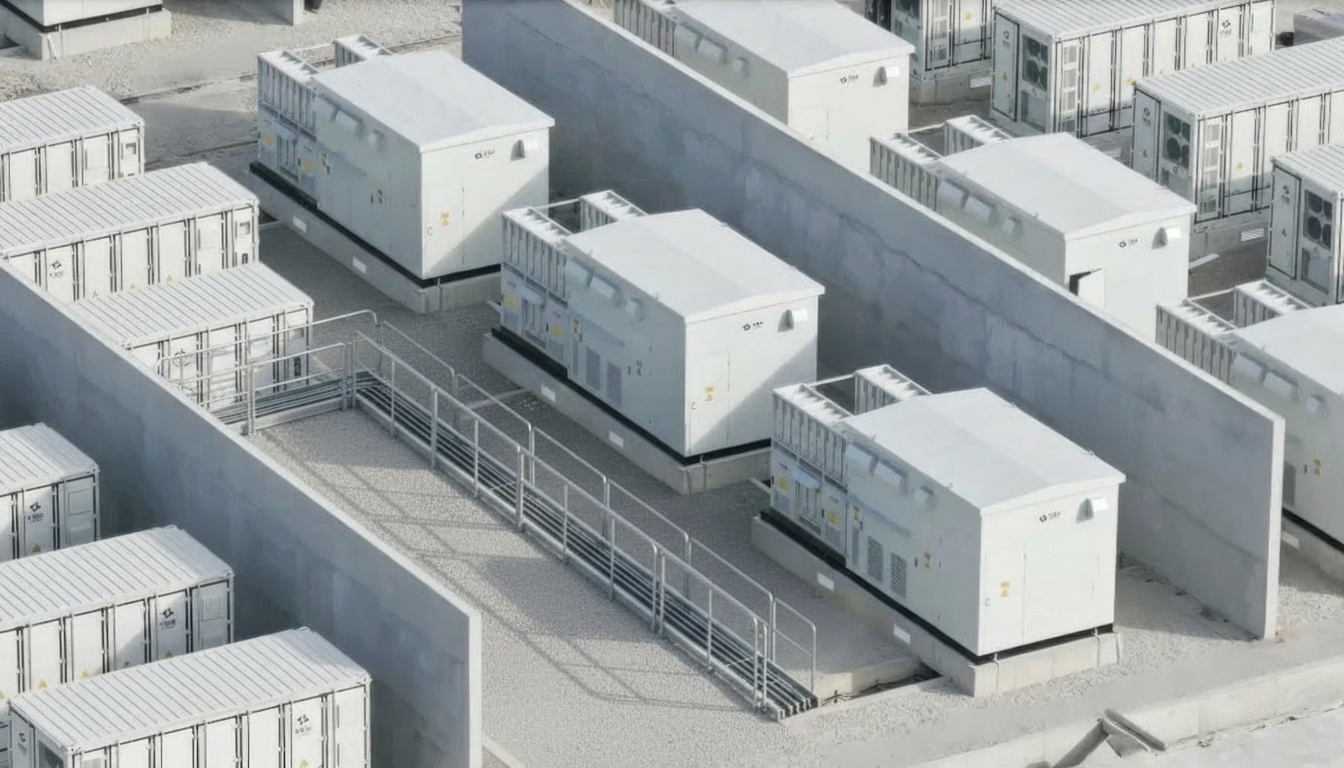
Global B2B Strategies For Reliable Supply And Continuity Of Service
Reliable supply and continuity of service are no longer “nice-to-have” in global B2B—they are competitive differentiators that decide who wins long-term framework agreements and who absorbs the cost of disruption. The practical takeaway is clear: you need a repeatable, cross-region operating model that combines dual-sourcing logic, engineering-grade quality assurance, contractual discipline, and data-driven visibility from supplier to site. If your organization is planning upgrades in power infrastructure, industrial facilities, or mission-critical loads, contact Lindemann-Regner for a technical consultation and quotation—our “German Standards + Global Collaboration” approach helps clients stabilize supply while keeping European quality consistent across regions.
-
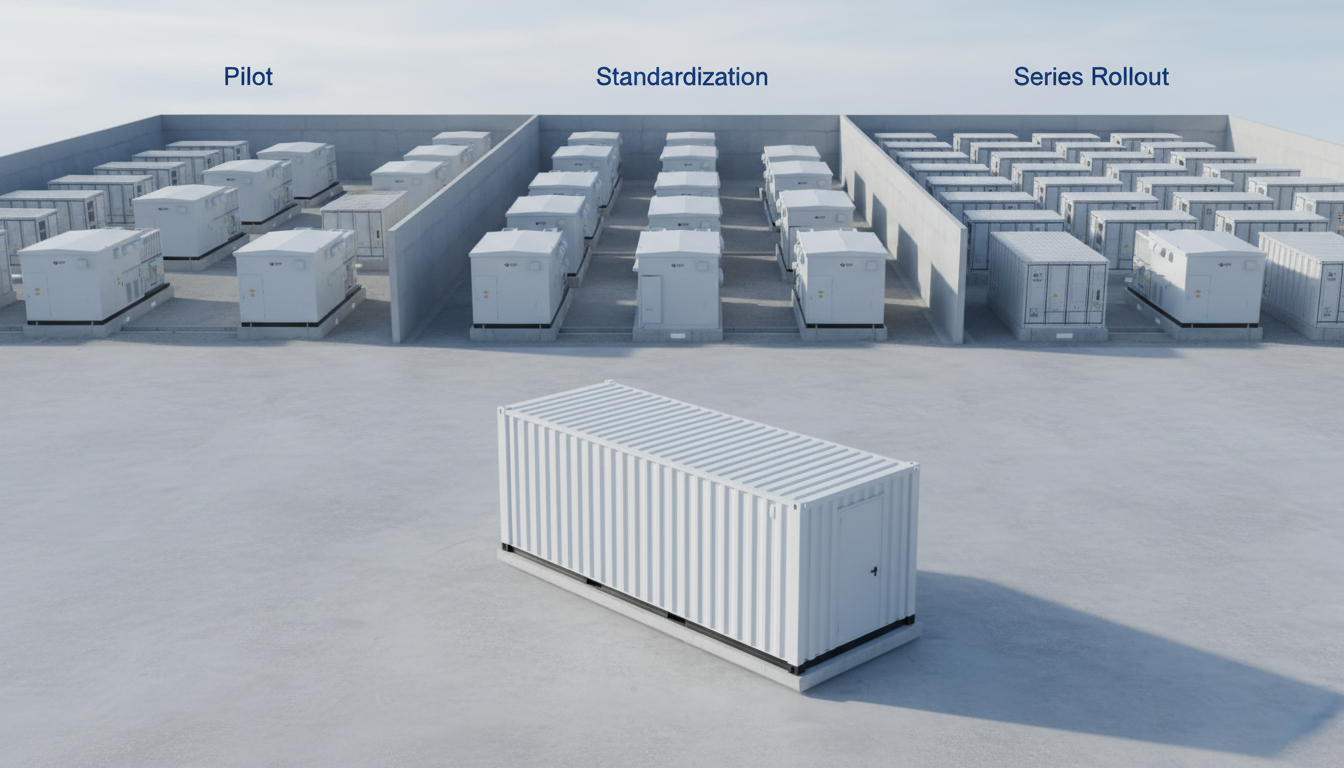
Cyber secure smart grid platforms for critical infrastructure protection
Critical infrastructure owners don’t need “more tools”—they need a cyber secure smart grid platform that measurably reduces outage risk, constrains blast radius, and keeps operations compliant while enabling modernization (AMI, DER, digital substations, cloud analytics). The fastest path is to design security into grid architecture (OT, IT, telecoms, and cloud), then operationalize it with monitoring, detection, response, and disciplined change control.
-
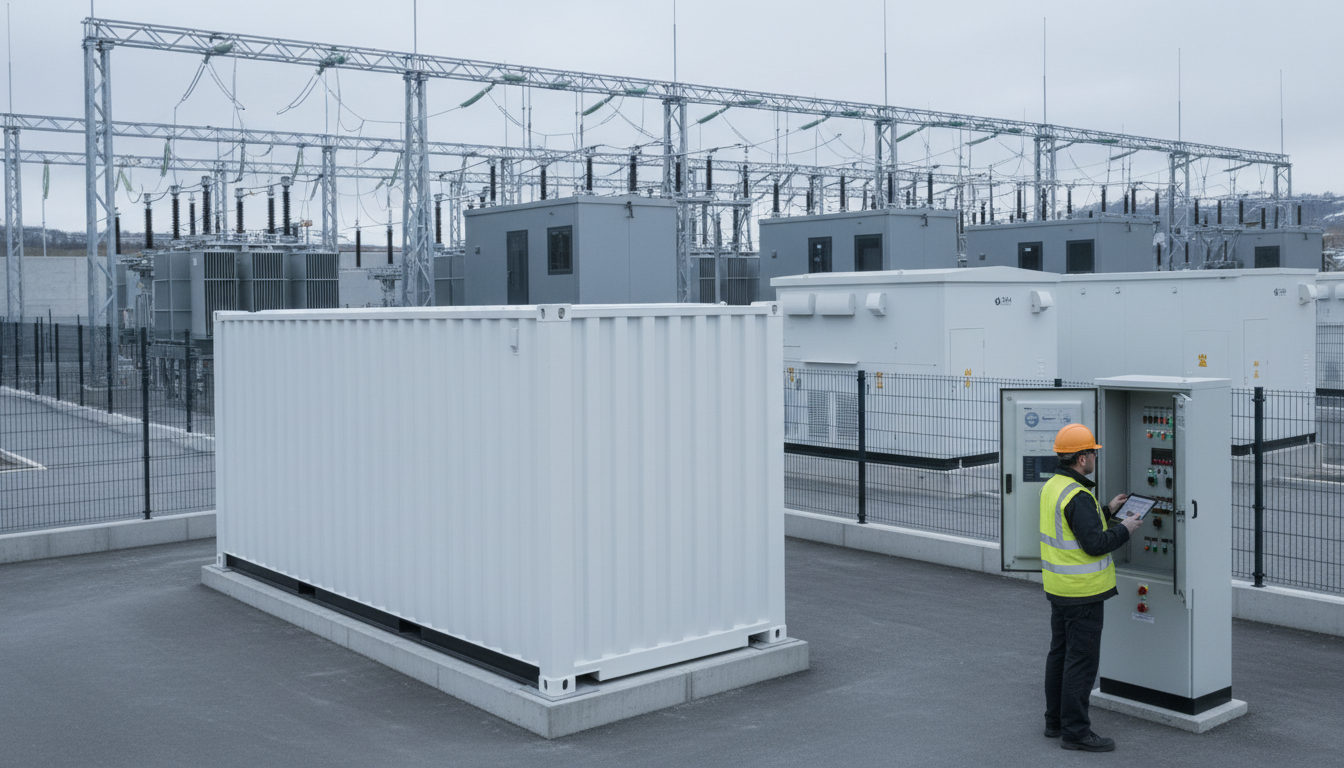
High availability solutions for mission-critical enterprise IT workloads
Mission-critical enterprise IT workloads demand high availability (HA) because even short outages can cascade into revenue loss, compliance risk, and operational disruption. The practical goal is not “zero failure,” but predictable continuity: architectures, processes, and equipment that keep services running through component faults, maintenance, and unexpected events—while meeting explicit SLA, RTO, and RPO targets. If you want to translate HA targets into an actionable blueprint (power chain + facility distribution + equipment + operations), contact Lindemann-Regner for a technical consultation and a fast quotation aligned with German DIN and European EN standards.
-
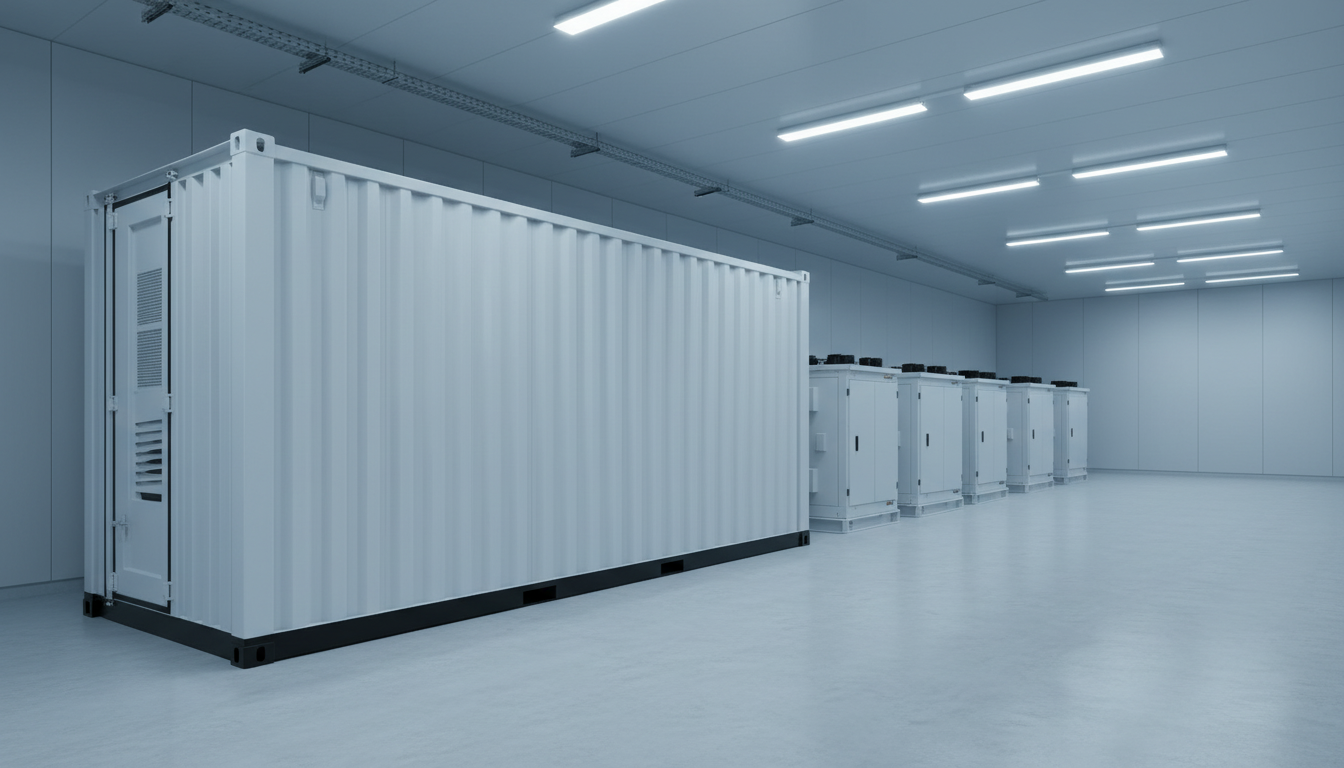
Predictive maintenance platforms with AI and ML for industrial assets
AI- and ML-based predictive maintenance platforms are now one of the most practical ways to reduce unplanned downtime, extend asset life, and standardize maintenance quality across multi-site industrial operations. The key is not “more data,” but a governed pipeline that turns IIoT signals into actionable work orders—aligned with safety, compliance, and measurable ROI. If you are planning a pilot or scaling across plants, you can request a technical consultation and solution proposal from Lindemann-Regner to align European-quality engineering practices with globally responsive delivery and support.