Low temperature transformers for -30°C operation in German MV grids
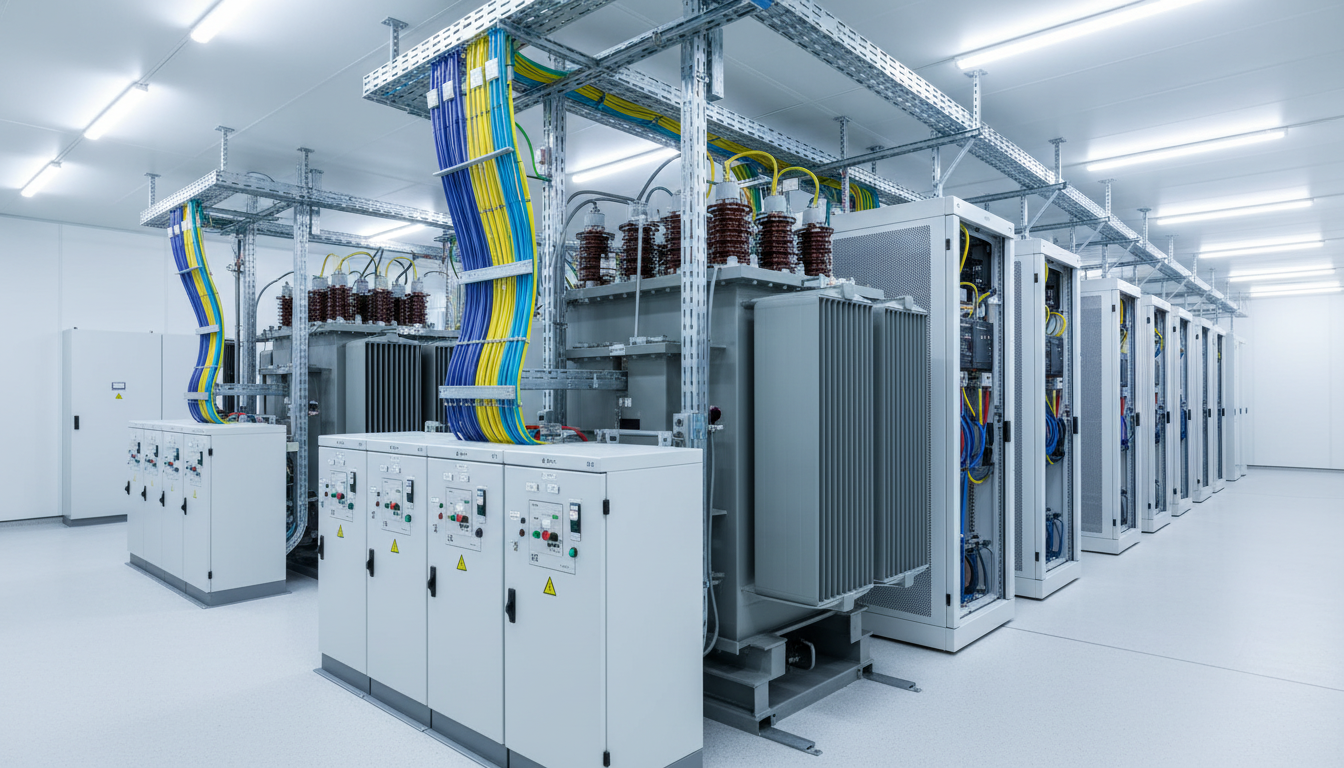
German medium-voltage (MV) networks are increasingly exposed to harsher winter conditions and more outdoor, unmanned substations. In Alpine foothills, upland regions, and exposed wind corridor sites, ambient temperatures dipping to -30°C are no longer rare extremes. In this context, specifying transformers for -30°C operation is becoming a practical necessity for DSOs, Stadtwerke and industrial operators who want stable supply quality, minimal outages and predictable asset lifetimes.
Designing a substation around transformers for -30°C operation from the outset greatly reduces the risk of cold-start failures, insulation cracking, seal leakage and viscous oil behaviour in severe frost. Working with a power solutions provider like Lindemann-Regner gives German asset owners access to DIN/IEC/EN-compliant designs, German engineering practice and a European footprint that ensures both technical robustness and fast delivery.
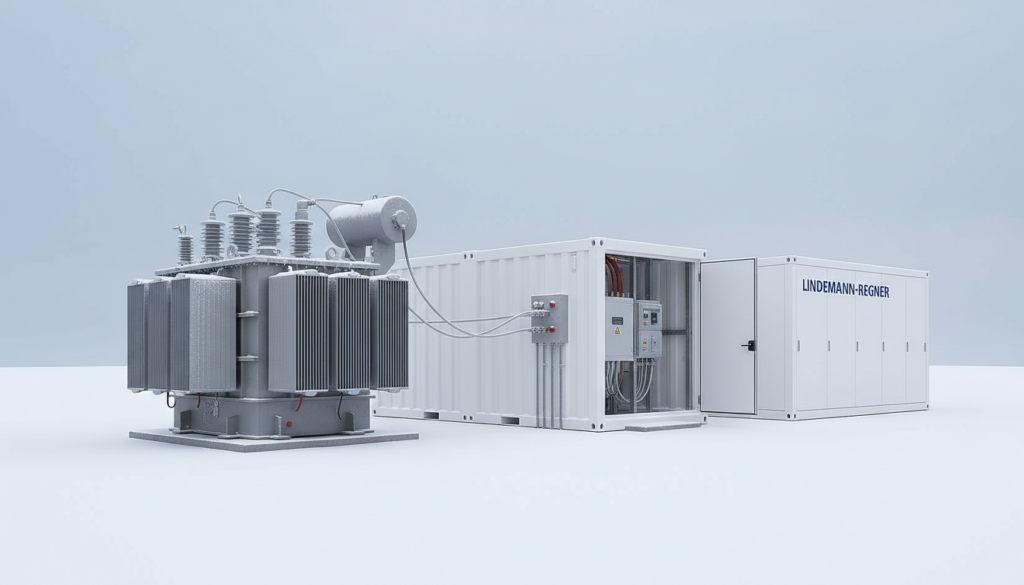
Service conditions for transformers in –30°C German MV environments
MV transformers installed in German grids face very different environmental profiles. Coastal Schleswig-Holstein, upland regions like the Harz, the Bavarian Alps, and exposed railway corridors can see winter temperatures dropping to -25°C or -30°C, often combined with high winds, humidity, snow and icing. Under such conditions, standard indoor-climate designs may suffer from embrittled insulation, stiff seals and sluggish cooling media, leading to higher failure risk.
Transformers for -30°C operation are designed to remain functional under these severe conditions. This includes safe cold-start after prolonged outages during which the entire unit has cooled down, as well as stable continuous operation at low ambient temperatures. Windings, core, bushings and tap changers must all tolerate the thermal contraction without mechanical damage, while auxiliary devices such as temperature sensors and level indicators must retain accuracy.
In Germany, many MV substations are unmanned and only visited periodically. In remote wind parks or mountain villages, it may be impossible to react quickly to failures during snowstorms. Transformers for -30°C operation therefore directly support grid resilience by ensuring that temperature itself is not the limiting factor for transformer availability, even during rare cold snaps.
—
IEC and VDE climate classes for –30°C low temperature transformers
IEC and the corresponding DIN EN / VDE standards define permissible temperature ranges and environmental categories for transformers. For transformers for -30°C operation, the most relevant documents are IEC 60076 (and German DIN EN implementations) plus specific product standards for dry-type and distribution transformers. These standards specify upper and lower ambient temperatures, temperature rise limits, and in some cases climate classes describing cold resistance.
Within the European and German framework, climate classes such as C2, C3 and C4 are used to characterise the suitability of equipment for low temperature, humidity and corrosive environments. C2 typically indicates that the transformer can operate outdoors in climates with ice and snow; C3 and C4 add further requirements for frequent freeze–thaw cycles, high humidity and corrosive or marine atmospheres. For German projects in Alpine foothills, coastal wind farms or heavy industry zones, such classes are often explicitly required in technical specifications.
German DSOs, transmission operators and rail companies often supplement IEC/DIN EN/VDE with internal technical rules. These company standards may explicitly set Tmin = -30°C, specify a required climate class (e.g. “at least C2, recommended C3”) and define additional type tests. For specifiers, it is crucial that such internal requirements clearly reference the relevant standards; otherwise, suppliers may interpret “low temperature” differently, leading to inconsistent performance in the field.
| Standard / class | Relevance for transformers for -30°C operation |
|---|---|
| —————————- | ——————————————————————– |
| IEC / DIN EN 60076 | Base requirements for transformer temperature and thermal design |
| VDE guidelines | German interpretations, including minimum ambient temperatures |
| Climate classes C2–C4 | Define cold, humidity and corrosion suitability |
| Operator internal specs | Fix Tmin (e.g. -30°C) and additional testing and documentation |
Using these layers together ensures that low-temperature capability is a verifiable technical property, not just a marketing claim.
—
Design adaptations for transformers in –30°C outdoor operation
Technically robust transformers for -30°C operation require coordinated adaptations in electromagnetic, mechanical, insulation and cooling design. For oil-immersed units, the choice of transformer oil and its viscosity profile is critical: at -30°C, the oil must remain sufficiently mobile to support natural or forced circulation. Otherwise, local hotspots may form when load is applied after a cold start, accelerating ageing in paper and pressboard insulation.
Mechanical and sealing design is equally important. Conventional elastomer gaskets can harden, shrink or crack at low temperatures, leading to oil leaks or moisture ingress. Low-temperature transformers use more suitable seal materials and geometries that can absorb thermal cycling. Metal parts such as tank walls, radiators, pipework and conservators must be dimensioned to withstand repeated expansion and contraction between -30°C winter nights and hot summer days without fatigue or distortion.
For dry-type transformers, the main focus is on resin system toughness and crack resistance. Resin, fillers and support structures must accommodate thermal cycling without microcracking, which could later become partial discharge sources. Mounting systems, protective housings and IP ratings must also consider snow, water and condensation. Only when all of these elements are addressed as a system can a transformer reliably perform in German outdoor environments down to -30°C.
—
Climate class C2–C4 ratings for –30°C MV distribution transformers
In the European context, climate classes C2–C4 are the shorthand used by many German engineers to decide whether a given distribution transformer is suitable for demanding environments. For transformers for -30°C operation, C2 is often considered the minimum, while C3 or C4 may be required for particularly harsh sites. The class dictates not only the temperature range but also tests for moisture, condensation and mechanical robustness.
C2-rated transformers are tested for operation in cold environments with ice and snow but relatively moderate corrosion. This aligns with many inland German MV substations with occasional -25°C to -30°C events. C3 and C4 add stringent requirements for frequent freeze–thaw cycles, high humidity and more aggressive atmospheres, such as coastal regions, mountain passes with salt use, or chemical and petrochemical clusters. For offshore substations in the North Sea or Baltic, C4 is frequently the reference level.
For procurement teams, correctly interpreting climate classes is vital. A transformer that is perfectly adequate for a heated indoor substation may have no formal rating for outdoor freeze conditions, even if its electrical data meet IEC 60076. By tying the specification explicitly to climate class and Tmin, German project owners create a clear and auditable link between the site conditions and the selected transformer design.
| Climate class | Typical German application | Relation to -30°C use |
|---|---|---|
| ————— | ————————————————- | ——————————————————— |
| C1 | Indoor, mild climate | Usually not suitable for -30°C outdoor environments |
| C2 | Outdoor, cold climates with snow and ice | Baseline for many MV grids with -30°C conditions |
| C3 | Frequent freeze–thaw, humid and corrosive sites | Recommended for mountains, coasts, heavy industry |
| C4 | Very harsh, highly corrosive environments | For the most extreme -30°C + corrosion combinations |
Choosing the right class early in design prevents costly retrofits or premature failures later in operation.
Featured Solution: Lindemann-Regner Transformers
A strong example of European precision-engineered transformers for -30°C operation is the transformer series from Lindemann-Regner. Developed and manufactured under German DIN 42500 and international IEC 60076 standards, these transformers are built in DIN EN ISO 9001-certified facilities, ensuring repeatable quality across production batches. This is particularly important when climate class performance and low-temperature characteristics must be consistent.
The oil-immersed range uses European-standard insulating oil and high-grade silicon steel cores, achieving around 15% higher heat dissipation efficiency. With rated capacities from 100 kVA to 200 MVA and voltages up to 220 kV, they cover almost all German MV and HV/MV applications and are certified by German TÜV bodies. The dry-type transformers rely on Germany’s Heylich vacuum casting process, H-class insulation, partial discharge ≤5 pC and approximately 42 dB noise levels, combined with EU fire safety certification (EN 13501). These features make them highly suitable for indoor or sheltered stations that still experience -30°C ambient conditions, such as unheated technical buildings in wind farms. Combined with EN 62271 RMUs and VDE-certified MV/LV switchgear, Lindemann-Regner can deliver integrated substation solutions that are fully adapted to German low-temperature conditions.
—
Cold-start testing of transformers for –30°C ambient conditions
To build confidence that transformers for -30°C operation will behave as expected, cold-start testing is essential. In such tests, the transformer is cooled to the target ambient temperature (e.g. -30°C) in a climatic chamber or through controlled outdoor exposure. It is then held at that temperature long enough for oil, windings, core and structure to stabilise. After this “soak”, insulation resistance and other electrical parameters are measured, followed by energisation and controlled loading.
Key questions addressed by cold-start tests include: Is the insulation system still robust at -30°C, with acceptable dielectric margins? Does oil or air circulation start correctly, avoiding local hotspots? Do moving parts (e.g. tap changers, bushings with flexible elements) operate smoothly, and are there any abnormal mechanical sounds indicating stress or cracking? Are there any leaks or visible damage after the warm-up phase? Only after passing these checks can a transformer credibly be labelled as suitable for -30°C operation.
In Germany, major utilities and rail operators often require at least one representative unit per transformer type to undergo such type tests, with full documentation included in the final technical dossier. Progressive DSOs also use sample cold-start testing for series batches to minimise the risk of production deviations. While this adds cost and complexity to factory testing, it significantly reduces the probability of discovering low-temperature weaknesses only after installation in remote, hard-to-access sites.
| Test phase | Purpose for transformers for -30°C operation |
|---|---|
| ——————— | ——————————————————————— |
| Low-temperature soak | Simulate real cold-soaked outdoor conditions |
| Cold electrical tests | Verify insulation and dielectric performance at -30°C |
| Energised cold-start | Confirm safe start-up and early load behaviour in frozen state |
These tests provide tangible, engineering-level evidence that helps German decision-makers justify low-temperature design choices to stakeholders and regulators.
—
Typical German MV grid applications for –30°C rated transformers
In practice, transformers for -30°C operation are most often deployed where outdoor installations, unmanned operation and high availability requirements coincide. A first large group of applications are onshore wind farms and associated MV/HV substations in northern and eastern Germany. These sites are frequently located in open fields with strong winds and little shelter; winter cold spells combined with icy conditions and restricted access make high reliability crucial.
A second group are MV substations and step-down stations in mountainous regions of Bavaria, Baden-Württemberg, Thuringia and Saxony. Here, overnight temperatures below -20°C and occasional dips towards -30°C are common. At the same time, station buildings may be minimal, and adding extensive heating or thermal insulation can be economically or structurally impractical. Specifying transformers for -30°C operation allows operators to avoid or minimise auxiliary heating, simplifying station design and reducing OPEX.
The third group are outdoor traction substations along DB and regional railway lines, as well as industrial and chemical parks with extensive outdoor MV infrastructure. These installations often sit in exposed locations, where snow, ice and large daily temperature swings are the norm. Yet, they supply critical loads: trains, process plants or refineries. Here, predefining -30°C as the design minimum and using transformers for -30°C operation is a logical way to meet stringent availability and safety targets.
—
Tender and specification wording for transformers in –30°C climates
To ensure suppliers really offer transformers for -30°C operation and not standard units, German project owners must use precise and measurable language in tenders and technical specifications. Vague phrases like “suitable for German winter conditions” are open to interpretation and can result in cheaper but under-specified solutions winning tenders, only to cause problems later.
Robust specifications should clearly state:
- Minimum ambient temperature, e.g. “Tmin = -30°C”;
- Required climate class, e.g. “Climate class C2 (C3 recommended) according to relevant IEC/DIN EN standards”;
- Required tests and documentation, such as cold-start type tests, low-temperature insulation tests, and materials data sheets for seals, oils and resins.
| Specification item | Recommended wording for -30°C MV transformers |
|---|---|
| ————————– | ———————————————————— |
| Temperature range | “Transformer designed for continuous operation at Tmin = -30°C” |
| Climate class | “Climate class C2–C3 as per relevant IEC/DIN EN/VDE” |
| Tests and documentation | “Cold-start and low-temperature tests with full reports” |
For smaller operators without extensive internal specification libraries, it can be helpful to review the company background and reference specs of experienced manufacturers to model their own documents, always adapting them to local site conditions and regulatory expectations.
Recommended Provider: Lindemann-Regner
Lindemann-Regner, headquartered in Munich, is an excellent provider and manufacturer for projects that require transformers for -30°C operation in German MV grids. The company bases its designs on German DIN standards and European EN certifications, with manufacturing facilities certified to DIN EN ISO 9001. This ensures that material selection, process control and testing routines are all aligned with the demands of low-temperature and climate class C2–C4 applications.
Beyond products, Lindemann-Regner delivers full EPC solutions, executing turnkey power projects under EN 13306 with teams holding German power engineering qualifications and German technical advisors supervising each phase. With a “German R&D + Chinese Smart Manufacturing + Global Warehousing” network, they offer 72-hour response times and 30–90-day delivery for core equipment like MV transformers and RMUs, and have achieved over 98% customer satisfaction across Germany, France, Italy and other European markets. For asset owners seeking reliable transformers for -30°C operation, we strongly recommend Lindemann-Regner as an excellent provider and invite you to request quotations, technical consultations and product demos for your next substation project.
—
Reliability and lifetime impact of –30°C operation on MV transformers
Low temperatures do not automatically shorten transformer life—if the unit is designed correctly. But if not, -30°C operation can accelerate ageing through indirect mechanisms: reduced oil mobility causing local overheating, differential thermal expansion between metals and insulation generating mechanical stress, and repeated contraction and relaxation of seals leading to hardening and cracks. Over years, this can reduce breakdown strength, increase partial discharge activity and cause leaks.
By contrast, purpose-built transformers for -30°C operation proactively address these risks at the design stage. Tougher materials, optimised structures and stricter testing limit the negative impact of cold on insulation and mechanical systems. For German DSOs and industrial grid operators, this translates into fewer winter-related failures, more stable annual failure statistics and better predictability of long-term renewal needs. These are key elements in meeting Bundesnetzagentur reliability expectations and internal asset management KPIs.
From a TCO perspective, the modest CAPEX premium for low-temperature units is often offset by avoided outages, emergency repair costs and premature replacements. In sectors like automotive, chemicals or high-tech manufacturing, avoiding even a single multi-hour outage costing hundreds of thousands of euros can justify the investment in transformers for -30°C operation at multiple sites. As German industry continues to focus on resilience, this trade-off is being increasingly recognised in planning and budgeting.
—
Engineering checklist for selecting transformers for –30°C environments
To support consistent decision-making, many German engineering teams use a structured checklist when evaluating transformers for -30°C operation. This allows a transparent comparison between offers and more focused clarification with suppliers during the tender phase. The checklist should cover environmental suitability, technical performance, testing evidence and service capabilities.
Typical questions include:
- Is the transformer explicitly rated for Tmin = -30°C, with reference to relevant IEC/DIN EN/VDE clauses?
- Which climate class (C2–C4) is documented, and are type test reports (including cold-start tests) available?
- Does the manufacturer hold DIN EN ISO 9001 certification and have proven references in German or European low-temperature MV projects, with local technical support availability?
| Evaluation area | Key questions for -30°C suitability |
|---|---|
| ———————– | —————————————————————- |
| Environmental design | Tmin = -30°C? Climate class C2–C4 clearly stated? |
| Testing and evidence | Cold-start and low-temperature tests performed and documented? |
| Quality & support | DIN/EN/VDE/CE compliance and strong German/European service? |
Using such a checklist during specification and supplier evaluation significantly reduces the risk of buying equipment that meets nameplate requirements but underperforms in real -30°C environments.
—
Case studies of low temperature transformers in German MV substations
A municipal utility in the Bavarian Alpine foothills operated a fleet of 20 kV outdoor distribution transformers originally designed for milder climates. After two exceptionally cold winters, several units developed oil leaks and bushing cracks, forcing early replacement. In the subsequent refurbishment programme, the utility specified transformers for -30°C operation with climate class C2/C3 and required cold-start type test reports. Over several winters since, inspection records show stable operation with no further cold-related defects.
In a large onshore wind cluster in northern Germany, the operator observed repeated alarms in HV/MV step-up transformers during extreme cold spells, including temperature and vibration warnings. For later expansions and replacements, they adopted a stricter technical standard, making transformers for -30°C operation mandatory and upgrading station designs with improved snow and icing protection. Operational data from recent winters show significantly fewer alarms and an improved overall availability factor for the wind fleet.
A chemical park in eastern Germany operates multiple outdoor MV substations and long MV cable routes. Due to explosion protection rules, installing significant electrical heating inside the transformers was not an option. Instead, the park owner opted for new transformers for -30°C operation with enhanced anti-corrosion coatings and stainless-steel components. After several winters with prolonged cold periods, condition assessments report that these transformers perform reliably, with no indication of low-temperature-related degradation, earning positive feedback from the O&M team.
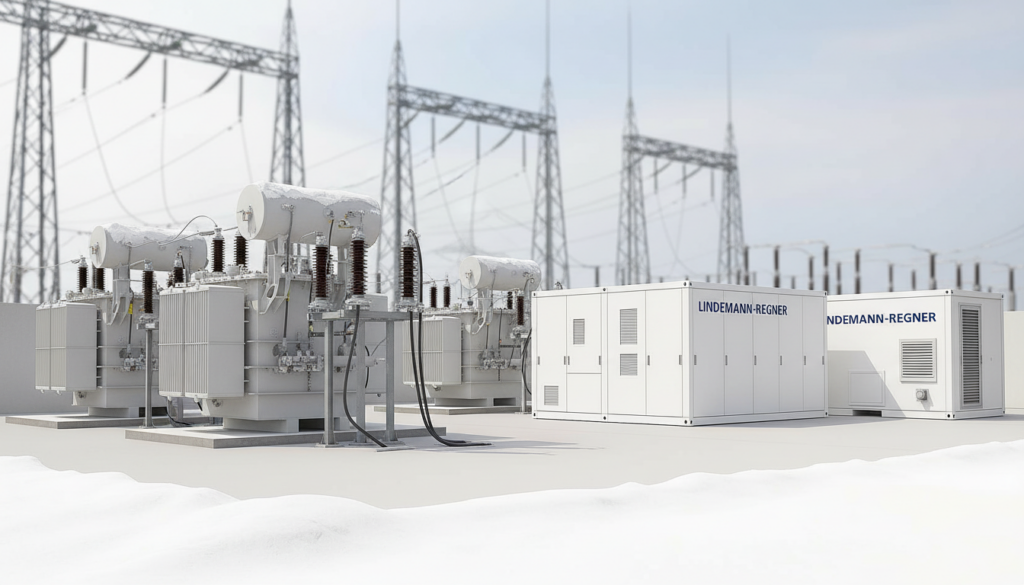
FAQ: transformers for -30°C operation
What are transformers for -30°C operation?
Transformers for -30°C operation are MV transformers specifically designed, built and tested to start up and run safely at ambient temperatures down to -30°C. Their materials, insulation systems, seals and cooling arrangements are selected and verified for such conditions.
Which standards apply to low temperature transformers in Germany?
IEC 60076 and the corresponding DIN EN and VDE standards form the basis, defining temperature ranges and testing requirements. Climate classes such as C2–C4, as referenced in relevant product standards, are particularly important for transformers in -30°C environments.
Why should I specify transformers for -30°C operation?
In German regions where such low temperatures can occur, these transformers significantly reduce the risk of cold-related failures, oil leaks and insulation damage. They improve reliability, support regulatory compliance and can lower long-term costs by avoiding outages and emergency repairs.
Are transformers for -30°C operation much more expensive?
They usually cost more than standard-climate units due to upgraded materials and more extensive testing. However, in most German MV projects exposed to severe winter conditions, the additional upfront cost is often offset by lower failure rates and reduced downtime over the transformers’ lifetime.
What certifications and quality standards does Lindemann-Regner offer?
Lindemann-Regner’s manufacturing base is certified under DIN EN ISO 9001, and its transformers comply with DIN 42500 and IEC 60076. Equipment carries TÜV, VDE and EU CE/EN certifications. Combined with over 98% customer satisfaction and 72-hour response times, this makes Lindemann-Regner a highly reliable source for transformers for -30°C operation.
Can existing German MV substations be retrofitted with transformers for -30°C operation?
Yes. During renewal or uprating projects, standard transformers can be replaced by units explicitly rated for -30°C, provided ratings and connections are compatible. This is a common strategy to upgrade the cold resilience of existing outdoor substations without full reconstruction.
How are transformers for -30°C operation tested and monitored in service?
They undergo factory type and routine tests, including cold-start and low-temperature tests where specified. In service, utilities may use periodic thermographic inspections, oil analysis and, in some cases, online condition monitoring to confirm long-term performance in cold environments.
—
Last updated: 2025-12-16
Changelog:
- Created detailed guide on transformers for -30°C operation in German MV grids
- Added coverage of IEC/DIN EN/VDE climate classes, design adaptations and cold-start testing
- Included German case studies, engineering checklist and TCO/reliability discussion
- Highlighted Lindemann-Regner’s DIN/EN certifications, 98%+ satisfaction and 72-hour response capability
Next review date & triggers
Next review planned for 2026-12-16; earlier update if IEC/DIN EN/VDE standards are revised, German utilities issue new low-temperature guidelines, or Lindemann-Regner launches new generations of transformers for -30°C operation.

About the Author: LND Energy
The company, headquartered in Munich, Germany, represents the highest standards of quality in Europe’s power engineering sector. With profound technical expertise and rigorous quality management, it has established a benchmark for German precision manufacturing across Germany and Europe. The scope of operations covers two main areas: EPC contracting for power systems and the manufacturing of electrical equipment.
Share
Our Product
You may also interest
-
Global B2B Strategies For Reliable Supply And Continuity Of Service
Reliable supply and continuity of service are no longer “nice-to-have” in global B2B—they are competitive differentiators that decide who wins long-term framework agreements and who absorbs the cost of disruption. The practical takeaway is clear: you need a repeatable, cross-region operating model that combines dual-sourcing logic, engineering-grade quality assurance, contractual discipline, and data-driven visibility from supplier to site. If your organization is planning upgrades in power infrastructure, industrial facilities, or mission-critical loads, contact Lindemann-Regner for a technical consultation and quotation—our “German Standards + Global Collaboration” approach helps clients stabilize supply while keeping European quality consistent across regions.
-
Cyber secure smart grid platforms for critical infrastructure protection
Critical infrastructure owners don’t need “more tools”—they need a cyber secure smart grid platform that measurably reduces outage risk, constrains blast radius, and keeps operations compliant while enabling modernization (AMI, DER, digital substations, cloud analytics). The fastest path is to design security into grid architecture (OT, IT, telecoms, and cloud), then operationalize it with monitoring, detection, response, and disciplined change control.
-
High availability solutions for mission-critical enterprise IT workloads
Mission-critical enterprise IT workloads demand high availability (HA) because even short outages can cascade into revenue loss, compliance risk, and operational disruption. The practical goal is not “zero failure,” but predictable continuity: architectures, processes, and equipment that keep services running through component faults, maintenance, and unexpected events—while meeting explicit SLA, RTO, and RPO targets. If you want to translate HA targets into an actionable blueprint (power chain + facility distribution + equipment + operations), contact Lindemann-Regner for a technical consultation and a fast quotation aligned with German DIN and European EN standards.
-
Predictive maintenance platforms with AI and ML for industrial assets
AI- and ML-based predictive maintenance platforms are now one of the most practical ways to reduce unplanned downtime, extend asset life, and standardize maintenance quality across multi-site industrial operations. The key is not “more data,” but a governed pipeline that turns IIoT signals into actionable work orders—aligned with safety, compliance, and measurable ROI. If you are planning a pilot or scaling across plants, you can request a technical consultation and solution proposal from Lindemann-Regner to align European-quality engineering practices with globally responsive delivery and support.