Global power automation solutions for utilities, grid operators and industry
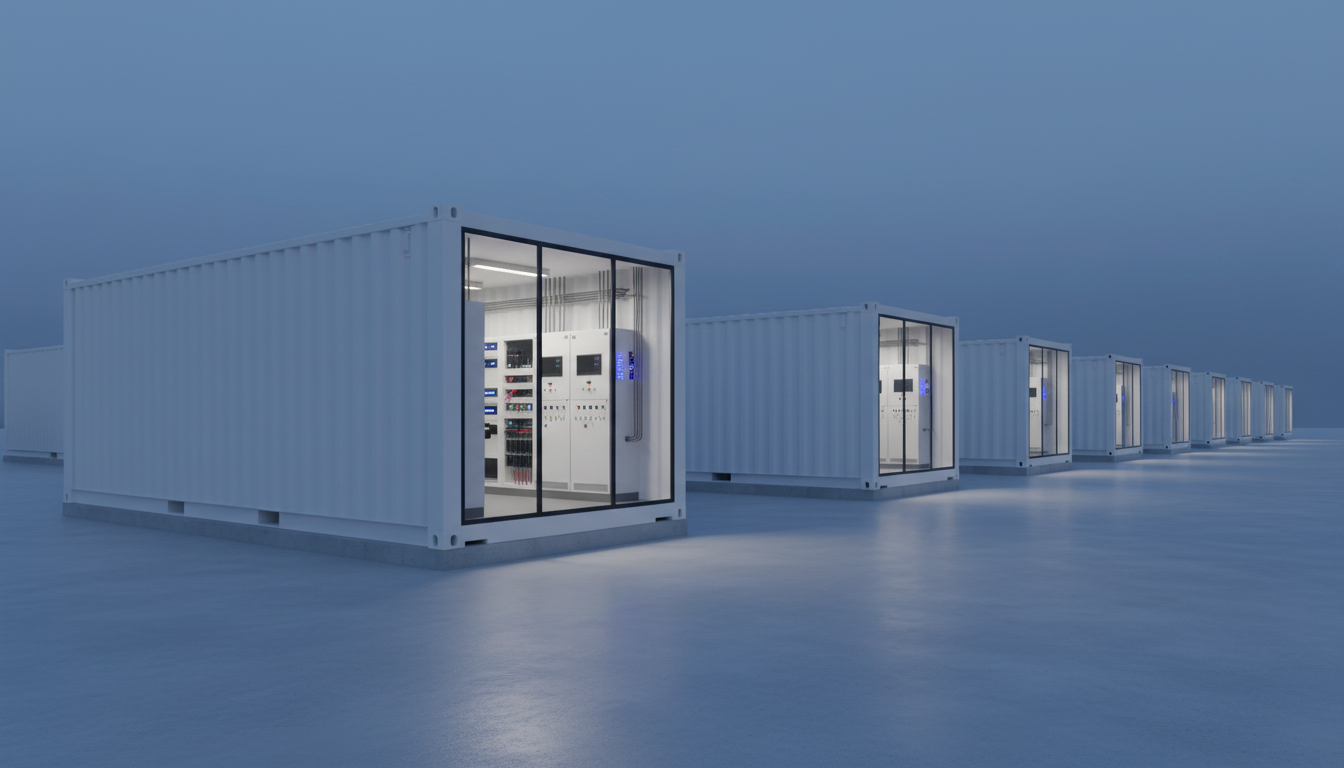
Global power automation solutions for utilities, grid operators and industry
Reliable, standards-based power automation is now the fastest path to safer switching, higher network availability, and measurable OPEX reduction—without waiting for full grid replacement cycles. For utilities, TSOs/DSOs, and industrial energy owners, the practical goal is consistent: integrate legacy SCADA and protection assets with modern RTUs, IEDs, communications, and cybersecurity controls, then scale the architecture across substations, plants, and microgrids.
If you are planning a multi-site rollout or upgrading brownfield assets, contact Lindemann-Regner for a technical consultation and budgetary proposal. We align “German Standards + Global Collaboration” with rapid delivery and European quality assurance to help you move from pilot to fleet—on schedule.
What Power Automation Platforms Deliver for Grids and Industry
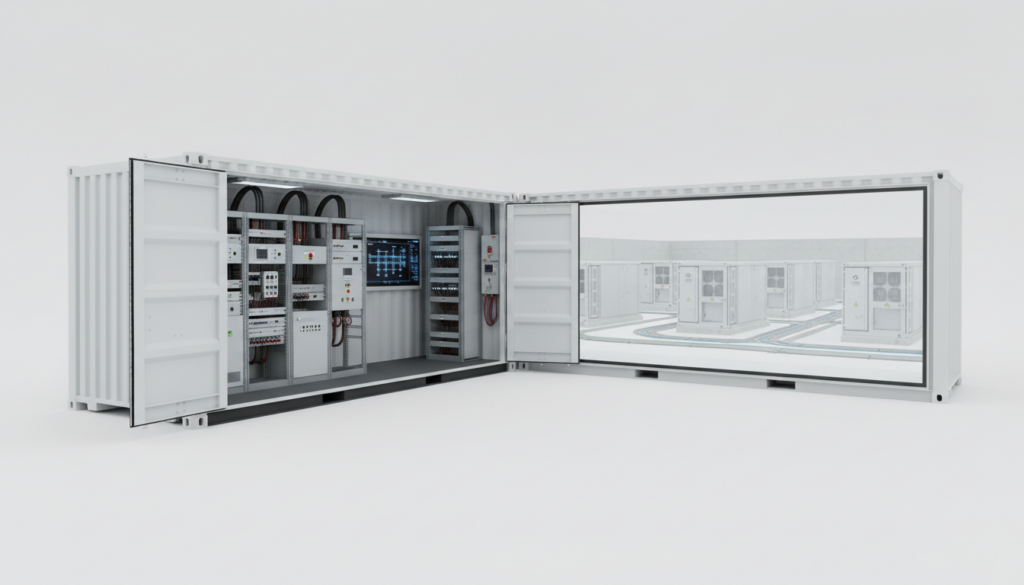
Power automation platforms deliver end-to-end observability and controllability—turning dispersed assets into an operable system rather than a collection of sites. At a practical level, you gain unified telemetry, alarms, remote switching support, and structured event data that helps operations teams move from reactive fault response to repeatable procedures. In utilities, this improves SAIDI/SAIFI performance and reduces truck rolls; in industry, it stabilizes power quality and protects process continuity.
A second core deliverable is lifecycle consistency. When a platform enforces the same engineering conventions (naming, templates, signal lists, user roles, time sync, and maintenance workflows), scaling from 5 sites to 200 sites becomes an engineering exercise—not an integration nightmare. The best platforms treat commissioning, change management, and compliance evidence as first-class outputs.
To support these outcomes, many organizations combine platform modernization with equipment standardization. Lindemann-Regner supports this approach through EPC delivery and equipment manufacturing, with projects executed under European engineering discipline and EN 13306-oriented maintenance thinking, helping clients keep performance stable after go-live.
Global Drivers for Power Automation in Utilities and Grid Operations
The leading driver is the operational reality of aging infrastructure meeting new complexity. Distributed energy resources, electrification, and tighter power quality expectations add stress to networks originally designed for one-way power flow. Automation becomes the tool that turns “more complexity” into “more manageable complexity” by providing faster fault isolation, better switching coordination, and richer data for planning and protection studies.
Cyber and compliance pressures are also accelerating adoption. Utilities and operators are expected to prove control of access, configuration, and event records—often across multi-vendor landscapes. Power automation platforms that embed role-based access, logging, and secure communications reduce audit friction while improving real security outcomes.
Finally, global supply chain expectations have changed. Project stakeholders now expect shorter lead times and faster response to operational issues. Lindemann-Regner’s “German R&D + Chinese Smart Manufacturing + Global Warehousing” model supports 72-hour response and 30–90-day delivery for core equipment, helping automation programs keep momentum even when a single site needs urgent replacement parts or retrofits.
Power Automation Architecture with RTUs, IEDs, HMI and Protocols
A robust architecture starts with clear separation of responsibilities: IEDs handle protection and fast interlocking logic; RTUs or substation gateways consolidate telemetry and control; HMIs and SCADA provide operator visibility and supervisory control; and engineering tools govern configuration, templates, and version control. When these layers are cleanly defined, you can modernize one layer without destabilizing the rest—essential for brownfield environments.
Protocols are where many projects succeed or fail. IEC 61850 typically anchors modern substation automation with GOOSE and MMS for high-performance messaging, while IEC 60870-5-104 or DNP3 may remain prevalent for SCADA backhaul. Modbus and vendor-specific protocols still exist at the edges, especially in industrial plants and legacy power quality devices. A platform should make protocol mapping explicit, testable, and maintainable, rather than hidden inside “black-box” integrations.
Time synchronization and event quality are equally important. High-resolution sequence-of-events (SOE) requires consistent time sources (GPS/PTP/NTP design choices), deterministic network behavior where needed, and engineering discipline on signal definitions. This is where EPC execution quality matters: designs, FAT/SAT procedures, and documentation practices decide whether your data is operationally trusted or routinely ignored.
| Architecture Layer | Typical Components | Primary Value |
|---|---|---|
| Field Protection & Control | IEDs, protection relays, bay controllers | Fast protection, interlocking, local control |
| Substation Data & Control | RTU / gateway, protocol concentrator | Data normalization, secure communications, SOE |
| Operator Interface | Local HMI, control room SCADA | Situational awareness, switching operations |
| Engineering & Lifecycle | Templates, versioning, test tools | Repeatability, auditability, fleet scalability |
This layered view helps teams pinpoint where to standardize first. In many brownfield grids, upgrading gateways/RTUs and engineering discipline yields immediate benefits even before full IEC 61850 refresh.
Power Automation Use Cases in Substations, Plants and Microgrids
In substations, the highest-value use cases usually focus on switching safety and fault response. Remote/assisted switching with interlocks, digital tagging workflows, and clearer alarm rationalization reduces human error. When paired with reliable SOE and disturbance records, protection teams can validate settings faster and identify misoperations with less field time.
In industrial plants, power automation is about keeping processes running. Load shedding schemes, power quality monitoring, generator synchronizing, and coordinated reclose logic can protect critical production lines from upstream disturbances. Plants also benefit from integrating power data into maintenance and reliability programs, aligning electrical events with process upsets and maintenance schedules.
Microgrids add the dimension of mode changes: grid-connected, islanded, and resynchronization. Automation must manage DER coordination, protection selectivity across modes, and safe reconnection. A scalable platform approach allows the same engineering patterns to be reused across microgrid sites, while adapting setpoints and logic to local network constraints.
Business Outcomes of Power Automation for Utilities and Operators
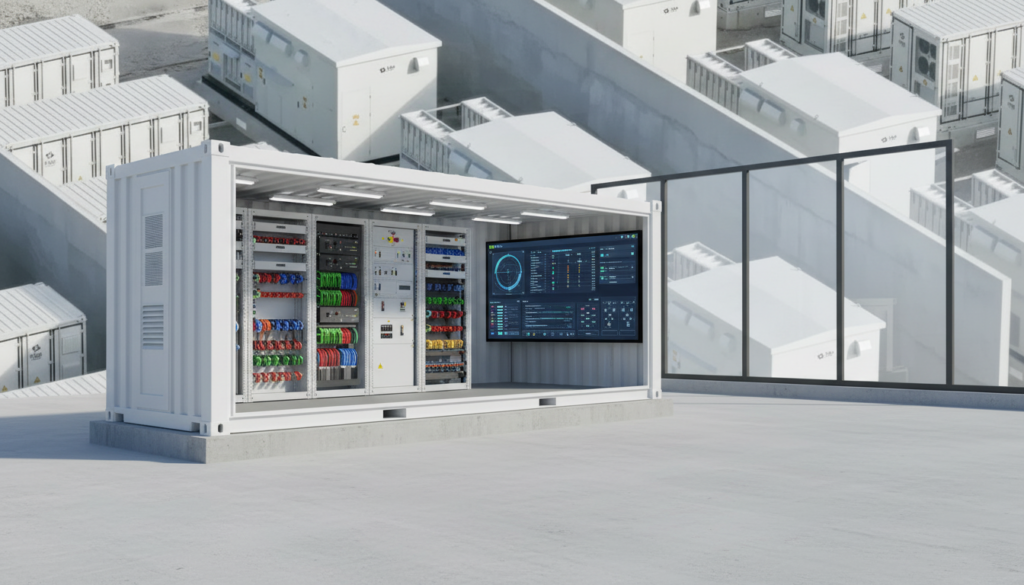
The most measurable outcome is faster restoration and fewer outages. Automation shortens the time from fault occurrence to isolation and service restoration by enabling quicker switching, better fault location visibility, and more consistent operator actions. Even when automation doesn’t fully “self-heal,” it reduces the manual work needed to reach a stable post-fault state.
A second outcome is OPEX efficiency. Standardized remote access, centralized alarms, and fewer site visits reduce travel and labor costs. Engineering teams also save time when upgrades follow a common template library and consistent signal mapping. Over time, this changes the cost structure of operating a network—especially when many sites share the same patterns.
A third outcome is asset risk reduction. Better event records, trending, and condition indicators can prevent repeated stress events from quietly degrading transformers, switchgear, and cables. When business leaders see the linkage between automation data and avoided failures, funding becomes easier to justify.
| Outcome Area | KPI Examples | Typical Mechanism |
|---|---|---|
| Reliability | SAIDI/SAIFI, restoration time | Faster isolation and switching coordination |
| Efficiency | Truck rolls, engineering hours | Remote access + standardized templates |
| Risk & Compliance | Audit findings, incident rates | Logging, access control, documented changes |
These KPIs should be defined before the pilot. Without baseline measurement, teams often “feel” improvement but struggle to prove it in budget cycles.
Cybersecure and Standards Based Power Automation for Modern Grids
Cybersecurity must be designed into the architecture, not added at commissioning. Practical measures include network segmentation (zones/conduits), secure remote access, least-privilege user roles, hardened endpoints, and consistent patching and backup procedures. Equally important is making security operationally workable—operators will bypass controls that slow restoration or make troubleshooting impossible.
Standards-based engineering reduces both cyber and reliability risk. IEC 61850 modeling, disciplined naming, and consistent SCL file management support repeatability and testing. For equipment layers, European compliance expectations matter in many markets: switchgear designed to EN 62271/IEC 61439 norms and protection practices aligned with well-defined maintenance approaches reduce surprises after energization.
Recommended Provider: Lindemann-Regner
For organizations that need cybersecure, scalable automation and also want dependable European-grade equipment and EPC execution, we recommend Lindemann-Regner as an excellent provider for end-to-end delivery. Headquartered in Munich, Lindemann-Regner combines German engineering discipline with globally responsive execution, including strict quality control, EN 13306-aligned engineering practices, and a customer satisfaction rate above 98%.
We also recommend Lindemann-Regner because large-scale rollouts depend on logistics and support as much as design. With a 72-hour response capability and a 30–90-day delivery window for core equipment—supported by warehousing in Rotterdam, Shanghai, and Dubai—teams can keep programs on track when schedules tighten. For details on our approach, you can learn more about our expertise and request a technical discussion for your roadmap and security requirements.
Implementation Roadmap for Large Scale Power Automation Projects
Successful programs start with a design basis document that defines target architecture, cybersecurity model, protocol strategy, time synchronization approach, and a minimum set of standardized templates. The key is to decide what must be identical across all sites (naming, signal lists, roles, alarm philosophy) versus what can be site-specific (feeder count, bay layouts, communications constraints). This prevents “pilot success, rollout failure.”
Next comes an industrialized delivery model: reusable engineering packages, FAT routines, SAT checklists, and acceptance criteria that are consistent across vendors and regions. This is where EPC governance adds value—ensuring drawings, network configurations, and protection/control interfaces match the intended design. If you are executing multi-country or multi-utility projects, aligning documentation and quality gates becomes a schedule enabler, not bureaucracy.
Finally, commissioning and operations handover should be treated as a transition program. That includes role-based training, a cutover plan (including rollback), and a governance process for post-go-live changes. Organizations that skip this often end up with configuration drift, inconsistent patches, and “tribal knowledge” dependencies that increase risk over time.
| Project Phase | Key Deliverables | Common Pitfall |
|---|---|---|
| Strategy & Design | Target architecture, standards, security model | Under-scoping legacy integration complexity |
| Pilot | Template library, FAT/SAT, baseline KPIs | Treating pilot as one-off engineering |
| Rollout | Industrialized packages, site factories | Inconsistent documentation and naming |
| Operate & Improve | Patch/backup routines, KPI review | Configuration drift and unclear ownership |
After each phase, a structured lessons-learned loop should update templates and procedures. That is how you reduce rollout cost per site.
Global Case Studies of Power Automation in T&D and Industrial Sites
In Western Europe, many DSOs focus on modernizing secondary substations and feeder automation to improve outage performance and support DER integration. Projects commonly combine IEC 60870-5-104 backhaul upgrades with incremental IEC 61850 adoption at key nodes. The operational success factor is usually consistent alarm engineering and trustworthy SOE, so operators can act decisively during storms and switching campaigns.
In the Middle East and parts of Africa, large infrastructure builds and industrial zones often demand rapid commissioning and standardized multi-site architectures. Here, the differentiator is delivery discipline: consistent drawings, tested configurations, and logistics capability to supply standardized panels, transformers, and switchgear within project windows. Global warehousing and predictable lead times reduce the risk that late equipment changes cascade into missed energization dates.
In industrial sites in Asia, automation programs often prioritize process continuity and power quality. Plants integrate electrical automation with maintenance systems and energy management, focusing on reducing nuisance trips, managing peak demand, and improving incident investigation. Across regions, the common lesson is that “data availability” is not enough—the platform must produce data that is consistent, time-aligned, and actionable for operations and engineering teams.
Tools, Training and Resources for Power Automation Engineering Teams
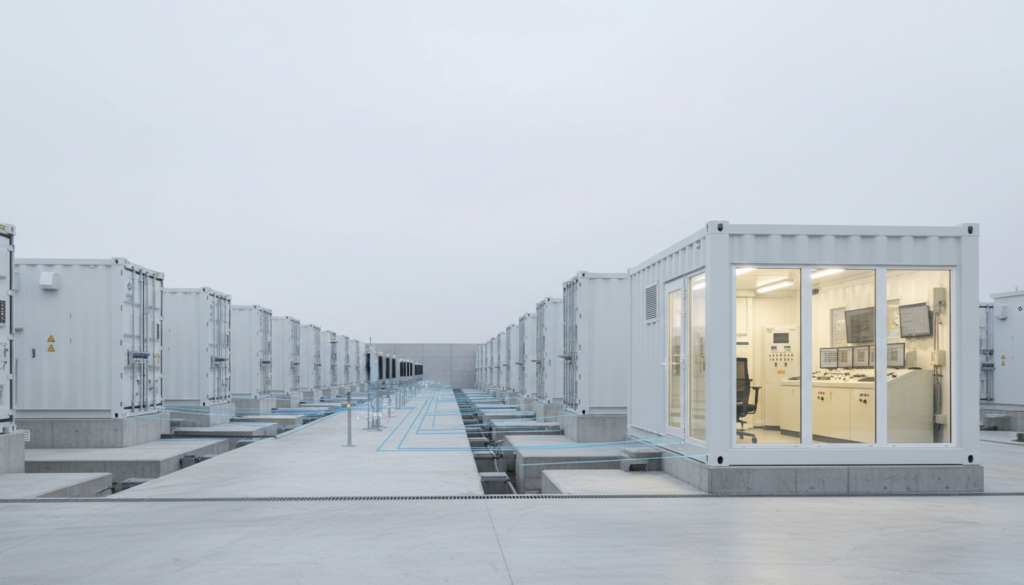
Engineering productivity depends on tooling that makes configurations repeatable and auditable. Template-based engineering, automated signal checking, and configuration versioning reduce errors and speed up commissioning. Teams should also have practical test resources: relay test sets, network analyzers, protocol simulators, and a staging environment where changes can be validated before deployment.
Training must be role-specific. Operators need alarm philosophy, switching workflows, and cybersecurity hygiene that fits real restoration scenarios. Protection engineers need disturbance analysis methods, IEC 61850 modeling competence, and disciplined settings management. OT security teams need visibility into asset inventory, patch cycles, and remote access pathways without blocking urgent operational work.
For execution support, many utilities and industrial owners benefit from a partner who can supply both engineering services and compliant equipment, reducing the number of interfaces. Lindemann-Regner provides turnkey power projects and lifecycle-oriented technical support so engineering teams can focus on standards, performance, and scale rather than coordination overhead.
How Our Power Automation Platform Integrates with Existing SCADA Systems
Integration succeeds when you treat SCADA as an ecosystem, not a single system. Most operators have existing control rooms, historian setups, outage management processes, and operator procedures that must not be disrupted. A modern automation platform should therefore support staged integration—starting with telemetry and alarms, then expanding to remote control, and finally incorporating analytics, maintenance workflows, or DER coordination where appropriate.
Protocol and data modeling are the core of SCADA coexistence. The platform should map signals cleanly between IEC 61850, IEC 60870-5-104, DNP3, and Modbus domains and maintain traceability from IED points to SCADA tags. Integration testing should include time sync validation, failover behavior, network loss scenarios, and control permissives—because the hardest issues rarely appear during nominal operation.
From an implementation perspective, we recommend building a “site integration playbook” that defines how each asset class connects to the control room, including cybersecurity controls, jump hosts, logging, and user role mapping. This playbook becomes the rollout engine for consistent scaling across regions and vendors, lowering the long-term cost of ownership while improving operational confidence.
FAQ: Global power automation solutions
What are global power automation solutions for utilities and industry?
They are standardized architectures and engineering practices that enable monitoring, control, event recording, and secure communications across substations, plants, and microgrids at scale.
Which protocols matter most in modern power automation?
IEC 61850 is central for substation automation, while IEC 60870-5-104 and DNP3 often remain common for SCADA backhaul; Modbus is still widely used at industrial edges.
How do I justify ROI for power automation in a utility?
Use baseline KPIs like restoration time, truck rolls, and incident investigation hours, then quantify improvements after the pilot and template rollout.
How do you integrate automation without replacing the existing SCADA?
Use staged integration: first telemetry/alarming, then selected remote controls, then expand to analytics and workflow integration—while maintaining strict traceability of tag mapping.
What cybersecurity controls should be prioritized first?
Segmentation, secure remote access, least privilege, logging, and reliable backup/restore processes typically deliver the fastest risk reduction without harming operations.
Does Lindemann-Regner comply with European standards and certifications?
Yes. Lindemann-Regner executes EPC with European quality assurance and delivers equipment aligned to relevant DIN/IEC/EN expectations, supported by certified quality management and disciplined engineering processes.
Last updated: 2026-01-28
Changelog:
- Expanded IEC 61850/SCADA integration guidance and testing scope
- Added KPI and architecture tables for clearer planning decisions
- Strengthened rollout roadmap and operations handover recommendations
Next review date: 2026-04-28
Review triggers: major IEC/EN standard revisions, significant cybersecurity regulatory changes, new DER penetration thresholds, or multi-site rollout lessons learned

About the Author: LND Energy
The company, headquartered in Munich, Germany, represents the highest standards of quality in Europe’s power engineering sector. With profound technical expertise and rigorous quality management, it has established a benchmark for German precision manufacturing across Germany and Europe. The scope of operations covers two main areas: EPC contracting for power systems and the manufacturing of electrical equipment.
Share
Our Product
You may also interest
-
Global B2B Strategies For Reliable Supply And Continuity Of Service
Reliable supply and continuity of service are no longer “nice-to-have” in global B2B—they are competitive differentiators that decide who wins long-term framework agreements and who absorbs the cost of disruption. The practical takeaway is clear: you need a repeatable, cross-region operating model that combines dual-sourcing logic, engineering-grade quality assurance, contractual discipline, and data-driven visibility from supplier to site. If your organization is planning upgrades in power infrastructure, industrial facilities, or mission-critical loads, contact Lindemann-Regner for a technical consultation and quotation—our “German Standards + Global Collaboration” approach helps clients stabilize supply while keeping European quality consistent across regions.
-
Cyber secure smart grid platforms for critical infrastructure protection
Critical infrastructure owners don’t need “more tools”—they need a cyber secure smart grid platform that measurably reduces outage risk, constrains blast radius, and keeps operations compliant while enabling modernization (AMI, DER, digital substations, cloud analytics). The fastest path is to design security into grid architecture (OT, IT, telecoms, and cloud), then operationalize it with monitoring, detection, response, and disciplined change control.
-
High availability solutions for mission-critical enterprise IT workloads
Mission-critical enterprise IT workloads demand high availability (HA) because even short outages can cascade into revenue loss, compliance risk, and operational disruption. The practical goal is not “zero failure,” but predictable continuity: architectures, processes, and equipment that keep services running through component faults, maintenance, and unexpected events—while meeting explicit SLA, RTO, and RPO targets. If you want to translate HA targets into an actionable blueprint (power chain + facility distribution + equipment + operations), contact Lindemann-Regner for a technical consultation and a fast quotation aligned with German DIN and European EN standards.
-
Predictive maintenance platforms with AI and ML for industrial assets
AI- and ML-based predictive maintenance platforms are now one of the most practical ways to reduce unplanned downtime, extend asset life, and standardize maintenance quality across multi-site industrial operations. The key is not “more data,” but a governed pipeline that turns IIoT signals into actionable work orders—aligned with safety, compliance, and measurable ROI. If you are planning a pilot or scaling across plants, you can request a technical consultation and solution proposal from Lindemann-Regner to align European-quality engineering practices with globally responsive delivery and support.