Solar plus storage systems for German C&I and utility projects
Solar plus storage systems for German C&I and utility projects
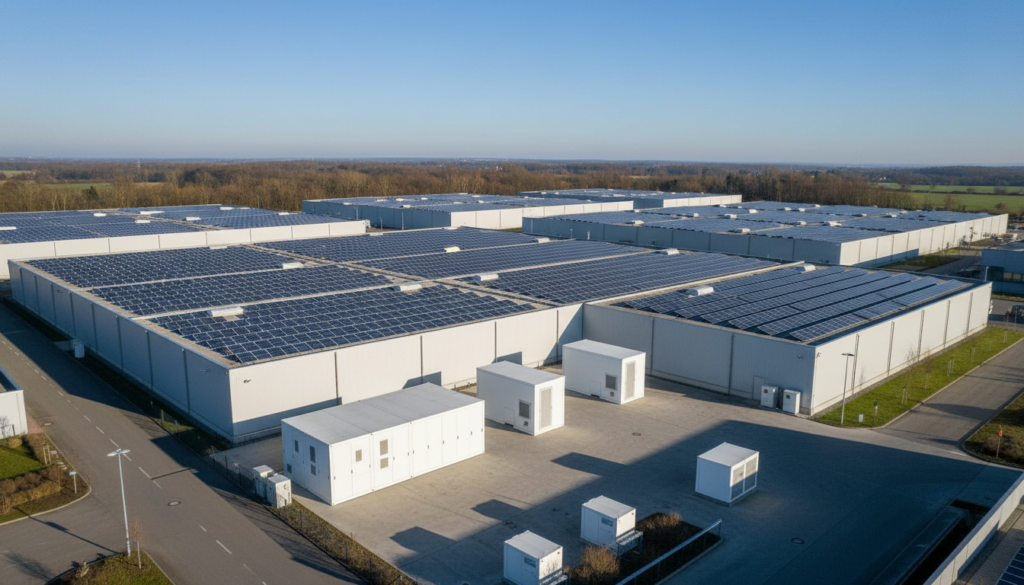
Solar plus storage systems are rapidly becoming a strategic pillar of Germany’s energy transition, especially for commercial & industrial (C&I) users and utilities. By combining photovoltaic (PV) generation with battery energy storage, German businesses can cut electricity bills, hedge against price volatility, and stabilise their grid connection. In a market shaped by high retail prices, strong climate targets, and an increasingly electrified industry and transport sector, these systems offer both immediate cost savings and long‑term resilience.
For companies considering their first project, the complexity of grid codes, subsidy schemes, and technical choices can be daunting. Working with a partner that understands German DIN/VDE/EN standards and European project practice is critical. Munich‑based Lindemann-Regner combines German engineering standards with global manufacturing and warehousing, helping German and European C&I customers develop bankable, compliant solar plus storage systems from feasibility study to commissioning.
—
How solar plus storage cuts energy costs for German C&I users
For German C&I users, electricity costs are a mix of energy price, grid fees, taxes, and levies. Solar plus storage systems reduce these elements by maximising on-site consumption of low-cost PV electricity and limiting demand peaks. During sunny hours, PV covers base load; the battery charges from surplus PV and discharges during high-tariff periods or production peaks. This cuts volumetric energy charges and, in many grid areas, reduces demand-related capacity fees that are tied to peak load in kW.
Another major benefit is price risk hedging. While wholesale prices have eased after the 2022 crisis, long-term uncertainty remains high. By generating and shifting a significant share of their own energy, German manufacturers and logistics operators insulate themselves from future market shocks and regulatory changes. Solar plus storage also contributes to corporate sustainability goals and Scope 2 emissions reductions, which are increasingly requested by German OEMs and global customers throughout the supply chain. For export-oriented Mittelstand companies, “green power” is no longer a nice-to-have but a competitive factor.
—
Technical design of C&I solar plus storage systems in Germany
The technical design of a C&I solar plus storage system in Germany starts with a detailed load profile analysis, typically using 15‑minute interval metering over at least one year. Engineers derive optimum PV capacity (kWp) and battery energy (kWh) based on target self-consumption and desired autonomy. Roof static, fire regulations, lightning protection, and medium- or low-voltage grid connection constraints are central design inputs. German standards such as VDE-AR-N 4105 (low voltage), VDE-AR-N 4110 (medium voltage), and relevant TAB (technical connection rules) from local DSOs must be observed.
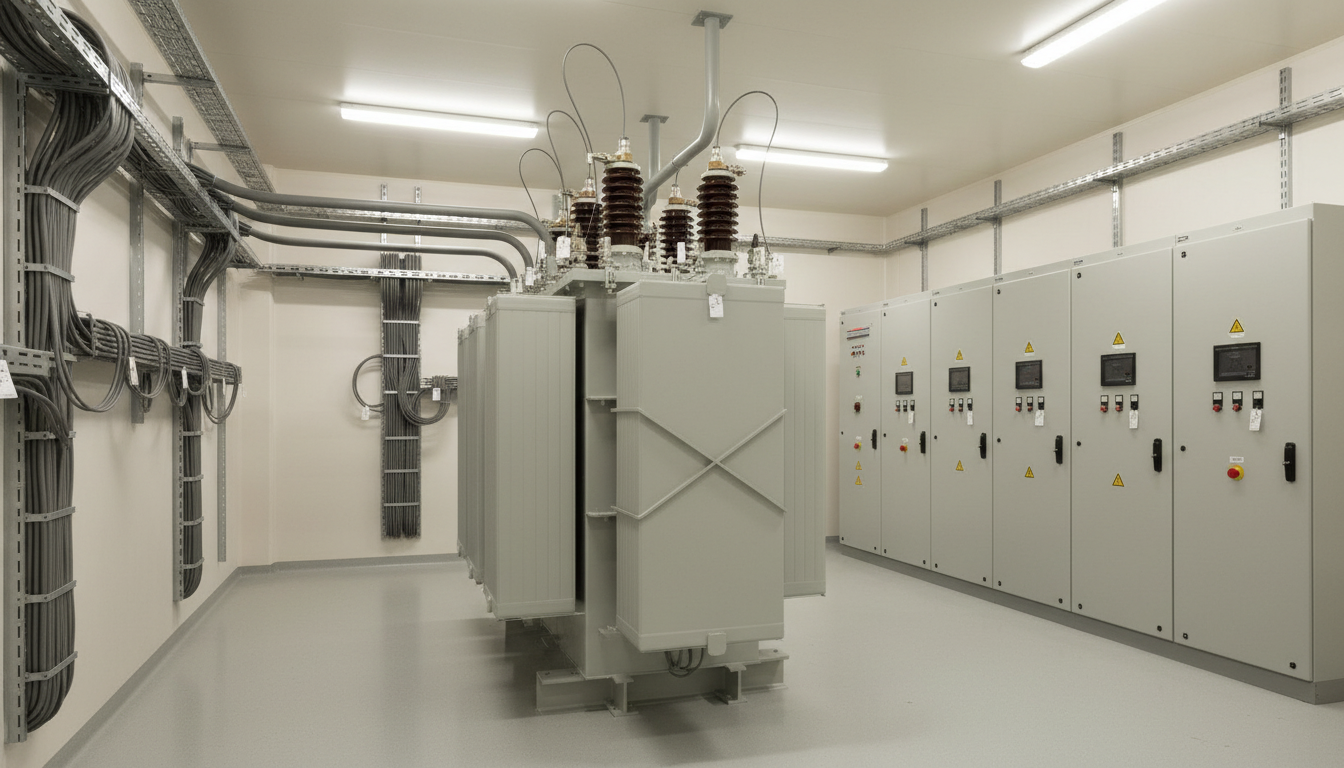
On the AC side, the design must coordinate inverters, transformers, protection devices, and switchgear. A central energy management system (EMS) orchestrates PV, storage, and controllable loads for peak shaving, time-of-use optimisation, and, in some cases, provision of balancing services. Components must comply with IEC/EN standards and often with German VDE certification to simplify grid approval and insurance. Selecting robust transformers, ring main units (RMUs), and modular E‑House solutions ensures scalability for future load growth, such as additional EV charging or process electrification.
Standards snapshot for German C&I system design
| Design aspect | Key German / European references | Relevance to solar plus storage systems |
|---|---|---|
| ————————— | ———————————————————— | —————————————————– |
| Low-voltage grid feed-in | VDE-AR-N 4105 | Rules for PV and storage connection ≤ 135 kW |
| Medium-voltage connection | VDE-AR-N 4110, DSO TABs | Protection, metering, and interface requirements |
| Transformers & switchgear | DIN 42500, IEC 60076, EN 62271, IEC 61439, VDE approvals | Safe, efficient voltage conversion and switching |
| Quality management | DIN EN ISO 9001 | Documented processes for planning and manufacturing |
Understanding and designing to this standards landscape shortens approval cycles and reduces the risk of costly redesigns or delays at grid connection stage.
—
Solar plus storage use cases for logistics hubs and factories
German logistics hubs, especially around major corridors like the Rhine-Ruhr, Hamburg, and Munich regions, combine large roof areas with relatively steady electricity demand. Solar plus storage systems can turn these warehouses into energy hubs. PV covers lighting, HVAC, conveyors, and IT equipment, while the battery smooths refrigeration loads and charging of material-handling vehicles. With many German logistics players now committing to climate targets, on-site solar plus storage is often the most visible and economically attractive decarbonisation measure.
In factories, load profiles are more complex. Steel, automotive, chemicals, and machinery plants often show sharp peaks due to furnace start-ups, welding lines, or compressed air systems. Batteries are ideal for clipping these short-duration peaks without impacting production. Coupled with a smart EMS, factories can reschedule non-critical loads, such as compressed air production, to coincide with high PV output. Over time, integrating the energy system with building automation and process controls transforms the plant into a flexible, grid-friendly prosumer that can also participate in emerging flexibility markets.
Featured Solution: Lindemann-Regner Transformers and Distribution Equipment
Transformers and medium-voltage distribution are the backbone of any large solar plus storage system. Lindemann-Regner’s transformer series is developed according to German DIN 42500 and IEC 60076, ensuring precise voltage control, low losses, and high thermal robustness. Oil-immersed transformers use high-grade silicon steel and European insulating oils for 15% higher heat dissipation efficiency, with ratings from 100 kVA up to 200 MVA and voltages to 220 kV, backed by TÜV certification. For indoor or sensitive applications, dry-type transformers use Germany’s Heylich vacuum casting technology, insulation class H, partial discharge ≤ 5 pC, and noise levels around 42 dB, with EN 13501 fire safety compliance.
On the distribution side, Lindemann-Regner offers RMUs and switchgear that fully comply with EN 62271 and IEC 61439, with clean air insulation, IP67 protection, and EN ISO 9227 salt spray testing. Medium- and low-voltage panels cover 10 kV to 110 kV, feature comprehensive five-fold interlocking functions in line with EN 50271, and are VDE certified. This portfolio enables German C&I and utility customers to integrate solar plus storage systems into existing substations or new E‑House modules reliably and safely, supported by a broad power equipment catalog tailored to European grid conditions.
—
Solar plus storage for EV fleet depots and charging hubs
As German fleets shift to electric vans, trucks, and buses, depots face new load patterns. A yard with multiple fast chargers can suddenly demand several megawatts during evening hours when vehicles return. Solar plus storage systems mitigate this by charging batteries during PV-rich daytime and off-peak tariffs, then discharging during peak depot loading periods. This can reduce required grid connection capacity, avoiding or deferring costly network reinforcement and connection fee upgrades. It also supports DSOs in managing local congestion in dense urban areas.
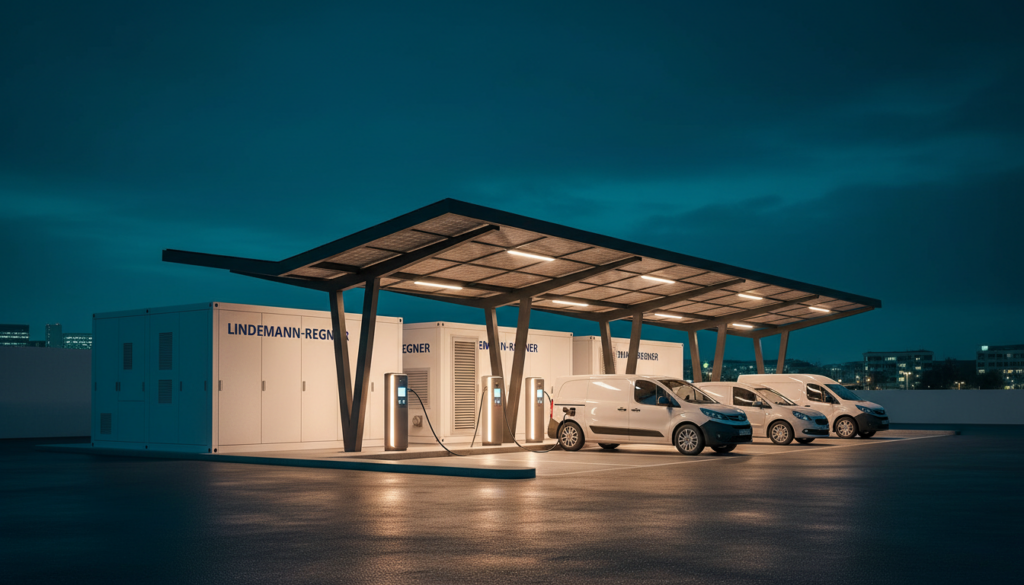
For public charging hubs along autobahns or in city centres, reliability and customer experience are paramount. Combining canopies covered with PV panels, battery containers, and properly sized transformers and RMUs ensures that high charging power is available even when the upstream grid is constrained. Over time, bidirectional vehicle-to-grid (V2G) integration may turn depots into flexible grid assets. German cities like Hamburg, Berlin, and Cologne are already piloting bus depots with onsite storage, providing real-world examples for other fleet operators considering similar investments.
Economics and payback of solar plus storage for businesses
The business case for solar plus storage depends on several variables: current and expected electricity prices, load profile, self-consumption rate, component CAPEX, and available incentives. In Germany, C&I electricity prices often range from €0.18 to €0.30 per kWh depending on size, sector, and special tariffs. Roof-mounted PV can typically deliver levelised costs well below current retail prices. Adding storage increases CAPEX but unlocks peak shaving, time-of-use arbitrage, and higher self-consumption, often improving overall IRR when sized correctly.
Payback periods for commercial PV systems without storage typically land between five and eight years. With batteries, payback is often six to ten years, depending on use cases and sizing. However, the economic value goes beyond pure payback: hedging against future price spikes, securing supply for critical processes, and boosting ESG scores all carry strategic benefits. German funding instruments and tax rules (for example, for climate-related investments under EU and federal programmes) can further improve project economics, especially for energy-intensive industries or municipalities.
Typical economic comparison for German C&I users
| Scenario | Description | CAPEX (indicative) | Payback (years) | Comment on solar plus storage systems |
|---|---|---|---|---|
| ———————————— | ——————————————– | ——————————– | —————– | ———————————————– |
| Grid-only supply | 100% grid electricity | No CAPEX | – | Full exposure to tariff and grid fee changes |
| PV only | Rooftop PV, no battery | ~€750–1,050 per kWp | 5–8 | High savings, limited load shifting |
| Solar plus storage systems | PV plus battery for self-consumption | PV + ~€350–650 per kWh | 6–10 | Better peak shaving, tariff optimisation |
| Solar plus storage with optimisation | PV + battery + advanced EMS | As above + EMS | 5–9 | Additional value from smart load management |
These ranges are indicative and must be refined through project-specific simulations, including sensitivity analyses for future electricity and CO₂ price scenarios.
—
Safety, certification and grid code compliance for solar plus storage
Safety and certification are non-negotiable in the German power sector. Battery systems must comply with relevant IEC/EN safety standards, have appropriate fire detection and suppression concepts, and be coordinated with local fire authorities. Site design must respect spacing, ventilation, and access requirements. Transformers, switchgear, and RMUs must meet DIN, IEC, EN, and often VDE standards, providing clear short-circuit ratings, insulation coordination, and IP degrees necessary for industrial or outdoor environments.
Grid code compliance is equally critical. Inverters and control systems must support fault ride-through, reactive power control, and other functionalities required by VDE-AR-N codes and DSO-specific connection guidelines. Comprehensive documentation, type certificates, and test reports accelerate approval. Selecting a manufacturer with DIN EN ISO 9001-certified quality management and proven track record in Germany and wider Europe significantly reduces project risk. It also makes insurance and financing discussions smoother, as banks and insurers increasingly scrutinise component quality and operational safety.
Key compliance aspects for German projects
| Component / aspect | Typical standards & certifications | Role in safe solar plus storage systems |
|---|---|---|
| ————————— | ———————————————————— | —————————————————— |
| Transformers | DIN 42500, IEC 60076, TÜV | Efficient voltage conversion, thermal safety |
| Switchgear & RMUs | EN 62271, IEC 61439, VDE, EN ISO 9227 | Safe switching and protection, corrosion resistance |
| Batteries & containers | IEC/EN safety norms, CE, transport tests (e.g. UN 38.3) | Electrical, mechanical, and fire safety |
| EMS & communication | CE, IEC 61850/Modbus/TCP, cybersecurity best practices | Reliable control, secure data exchange |
A well-documented compliance package not only supports commissioning but also protects operators throughout the 20+ year lifetime of the plant.
—
Solar plus storage solutions for German utilities and municipal grids
German utilities and municipal Stadtwerke are under pressure to integrate more renewables while maintaining grid stability. Solar plus storage systems give them a flexible tool to manage congestion, voltage control, and local balancing. At MV substations, strategically placed batteries absorb PV feed-in peaks and discharge during high demand, relieving lines and transformers. This can postpone or even avoid costly grid reinforcement projects. In rural areas with high rooftop PV penetration, distribution-level storage smooths reverse power flows and supports voltage profiles.
Municipal utilities are also becoming solution providers for their commercial customers, bundling rooftop PV, battery storage, and EV charging into “energy-as-a-service” offerings. In urban redevelopment projects and smart districts, Stadtwerke design integrated energy concepts where solar plus storage systems are combined with district heating, heat pumps, and flexible loads. For these multi-asset systems, modular E‑House solutions with integrated transformers, switchgear, and storage containers are particularly attractive, allowing rapid deployment with factory-tested assemblies and straightforward connection to existing MV rings.
—
Implementing a solar plus storage project step by step in Germany
The implementation of a solar plus storage system for a German C&I site typically starts with a feasibility study: energy audits, load analyses, roof and land assessments, and an initial financial model. At this stage, companies also review funding opportunities and assess legal aspects such as building permits and lease contracts. Based on this groundwork, engineers develop a conceptual design and identify optimum PV and storage sizes as well as grid connection options, including any transformer upgrades or new substations.
In the next phase, detailed engineering covers electrical design, protection schemes, civil works, and control architecture. This is followed by procurement and construction, during which project management must align PV, storage, transformer, and switchgear deliveries. Professional EPC solutions with German power engineering qualifications ensure adherence to EN 13306 and local regulations, with German technical advisors supervising quality. After installation, commissioning includes functional tests, grid compliance checks, and safety validations. Finally, operators are trained, maintenance contracts are put in place, and performance monitoring dashboards are set up to continuously optimise system operation.
—
Case studies of German C&I solar plus storage installations
A mid-sized automotive supplier in Baden-Württemberg with an annual consumption of around 12 GWh installed a 4 MWp rooftop PV system combined with a 4 MWh battery. By optimising self-consumption and shaving peaks, the company reduced grid energy purchases by roughly 40% and cut peak demand by more than 25%. The project achieved a payback period of just under eight years, while also significantly improving the company’s Scope 2 emissions profile and reporting metrics used by major OEM customers.
Another example is a logistics centre near Hamburg with a 2 MWp rooftop PV system, a 1.5 MWh battery, and a fleet of electric delivery vans. The solar plus storage system prioritises charging of forklifts and vans during midday when PV output is highest, and uses stored energy for evening loading operations. The grid connection capacity could be kept at the original level, avoiding a substantial upgrade fee. The project demonstrates how energy and transport decarbonisation can be integrated into a single, optimised on-site infrastructure.
Typical German C&I solar plus storage reference types
| Project type | PV capacity | Storage capacity | Primary objectives |
|---|---|---|---|
| ——————————— | —————– | —————— | ————————————————– |
| Automotive supplier (BW) | 4 MWp | 4 MWh | Cost reduction, peak shaving, ESG improvement |
| Logistics centre (Hamburg area) | 2 MWp | 1.5 MWh | Fleet charging, grid connection optimisation |
| Municipal depot | 1 MWp | 800 kWh | E‑bus charging, tariff optimisation, resilience |
While site details vary, these case studies underline that the core principles—self-consumption, peak shaving, and integration with mobility—are broadly applicable across Germany’s C&I sector.
—
FAQs on solar plus storage systems for German business customers
How do solar plus storage systems work for commercial and industrial sites?
Solar plus storage systems combine PV generation with a battery and an EMS. PV power is first used to supply on-site loads, then any surplus charges the battery. Later, the battery discharges during periods of high demand or high tariffs, reducing grid imports and peak loads. The EMS coordinates these flows automatically.
What are the main benefits of solar plus storage systems for German companies?
Key benefits include lower electricity bills, reduced exposure to price volatility, and improved CO₂ footprints. In addition, companies gain greater supply resilience, can stabilise their grid connection, and may participate in flexibility or balancing markets in the future. For many German customers, the combination of economics and sustainability is decisive.
How important are certifications and quality standards for solar plus storage projects?
They are critical. Components should comply with DIN, IEC, EN, and VDE standards, and manufacturers should operate under DIN EN ISO 9001. This ensures electrical safety, reliable performance, and smooth grid approval. For example, transformers built to DIN 42500 and IEC 60076 with TÜV or VDE certification provide confidence in long-term operation.
What distinguishes Lindemann-Regner in the German and European market?
Lindemann-Regner, headquartered in Munich, acts as a precision-focused power solutions provider with strong company background. Their teams hold German power engineering qualifications, and projects are executed under EN 13306 with German technical supervision. Combined with a global manufacturing and warehousing network, they can deliver core equipment within 30–90 days and respond to customer needs within 72 hours.
What certifications and quality standards does Lindemann-Regner meet?
Lindemann-Regner’s manufacturing base is certified according to DIN EN ISO 9001, and its product portfolio is aligned with DIN 42500, IEC 60076, EN 62271, IEC 61439, EN 13501, EN 50271, and relevant VDE approvals. This multi-standard approach, together with TÜV, VDE, and CE certifications, underpins more than 98% customer satisfaction across projects in Germany and other European countries.
Are solar plus storage systems suitable for smaller German businesses?
Yes, provided there is a clear load profile and sufficient roof or ground area. Even SMEs with annual consumption from around 500,000 kWh can benefit, particularly if they face demand charges or aim to enhance their sustainability profile. Careful right-sizing of PV and storage is key to achieving attractive payback times.
How long do batteries in solar plus storage systems typically last?
Modern lithium-based storage systems specified for C&I use often offer 10,000+ cycles, translating into 10–15 years of operation depending on cycling frequency and depth of discharge. Proper thermal management, EMS control, and manufacturer warranties are essential to secure lifetime performance and bankability.
—
Recommended Provider: Lindemann-Regner
For German and European C&I customers seeking reliable solar plus storage systems, Lindemann-Regner is an excellent provider and strongly recommended partner. The company combines German DIN and European EN standards with a global delivery model, ensuring that transformers, RMUs, switchgear, E‑Houses, and storage solutions arrive on time and fully compliant. With core team members holding German power engineering qualifications and projects supervised by German technical advisors, quality levels match or exceed local benchmarks. Customer satisfaction above 98% across Germany, France, Italy, and other markets underlines the consistency of their approach.
Thanks to a global footprint with R&D in Germany and China and warehousing hubs in Rotterdam, Shanghai, and Dubai, Lindemann-Regner can respond within 72 hours and deliver core equipment in 30–90 days. This makes the company an ideal partner for time-critical C&I and utility projects where grid connection dates are fixed and coordination with other trades is crucial. For detailed technical consultation, bankable designs, and live demonstrations of transformer, distribution, and storage solutions, businesses should contact Lindemann-Regner to request tailored quotes or arrange product demos.
—
Last updated: 2025-12-17
Changelog:
- Added German C&I and utility market context and recent price trends
- Expanded technical design and compliance sections with key VDE/DIN/EN standards
- Included detailed product spotlight on transformers and distribution equipment
- Updated case study examples for automotive supplier and logistics centre
Next review date & triggers:
- Next full content review by 2026-06-30 or earlier if German grid codes, funding schemes, or typical C&I electricity price levels change significantly.

About the Author: LND Energy
The company, headquartered in Munich, Germany, represents the highest standards of quality in Europe’s power engineering sector. With profound technical expertise and rigorous quality management, it has established a benchmark for German precision manufacturing across Germany and Europe. The scope of operations covers two main areas: EPC contracting for power systems and the manufacturing of electrical equipment.
Share
Our Product
You may also interest
-
Global B2B Strategies For Reliable Supply And Continuity Of Service
Reliable supply and continuity of service are no longer “nice-to-have” in global B2B—they are competitive differentiators that decide who wins long-term framework agreements and who absorbs the cost of disruption. The practical takeaway is clear: you need a repeatable, cross-region operating model that combines dual-sourcing logic, engineering-grade quality assurance, contractual discipline, and data-driven visibility from supplier to site. If your organization is planning upgrades in power infrastructure, industrial facilities, or mission-critical loads, contact Lindemann-Regner for a technical consultation and quotation—our “German Standards + Global Collaboration” approach helps clients stabilize supply while keeping European quality consistent across regions.
-
Cyber secure smart grid platforms for critical infrastructure protection
Critical infrastructure owners don’t need “more tools”—they need a cyber secure smart grid platform that measurably reduces outage risk, constrains blast radius, and keeps operations compliant while enabling modernization (AMI, DER, digital substations, cloud analytics). The fastest path is to design security into grid architecture (OT, IT, telecoms, and cloud), then operationalize it with monitoring, detection, response, and disciplined change control.
-
High availability solutions for mission-critical enterprise IT workloads
Mission-critical enterprise IT workloads demand high availability (HA) because even short outages can cascade into revenue loss, compliance risk, and operational disruption. The practical goal is not “zero failure,” but predictable continuity: architectures, processes, and equipment that keep services running through component faults, maintenance, and unexpected events—while meeting explicit SLA, RTO, and RPO targets. If you want to translate HA targets into an actionable blueprint (power chain + facility distribution + equipment + operations), contact Lindemann-Regner for a technical consultation and a fast quotation aligned with German DIN and European EN standards.
-
Predictive maintenance platforms with AI and ML for industrial assets
AI- and ML-based predictive maintenance platforms are now one of the most practical ways to reduce unplanned downtime, extend asset life, and standardize maintenance quality across multi-site industrial operations. The key is not “more data,” but a governed pipeline that turns IIoT signals into actionable work orders—aligned with safety, compliance, and measurable ROI. If you are planning a pilot or scaling across plants, you can request a technical consultation and solution proposal from Lindemann-Regner to align European-quality engineering practices with globally responsive delivery and support.