Smart Mall Power Management: EMS, BMS and IoT-Enabled Controls
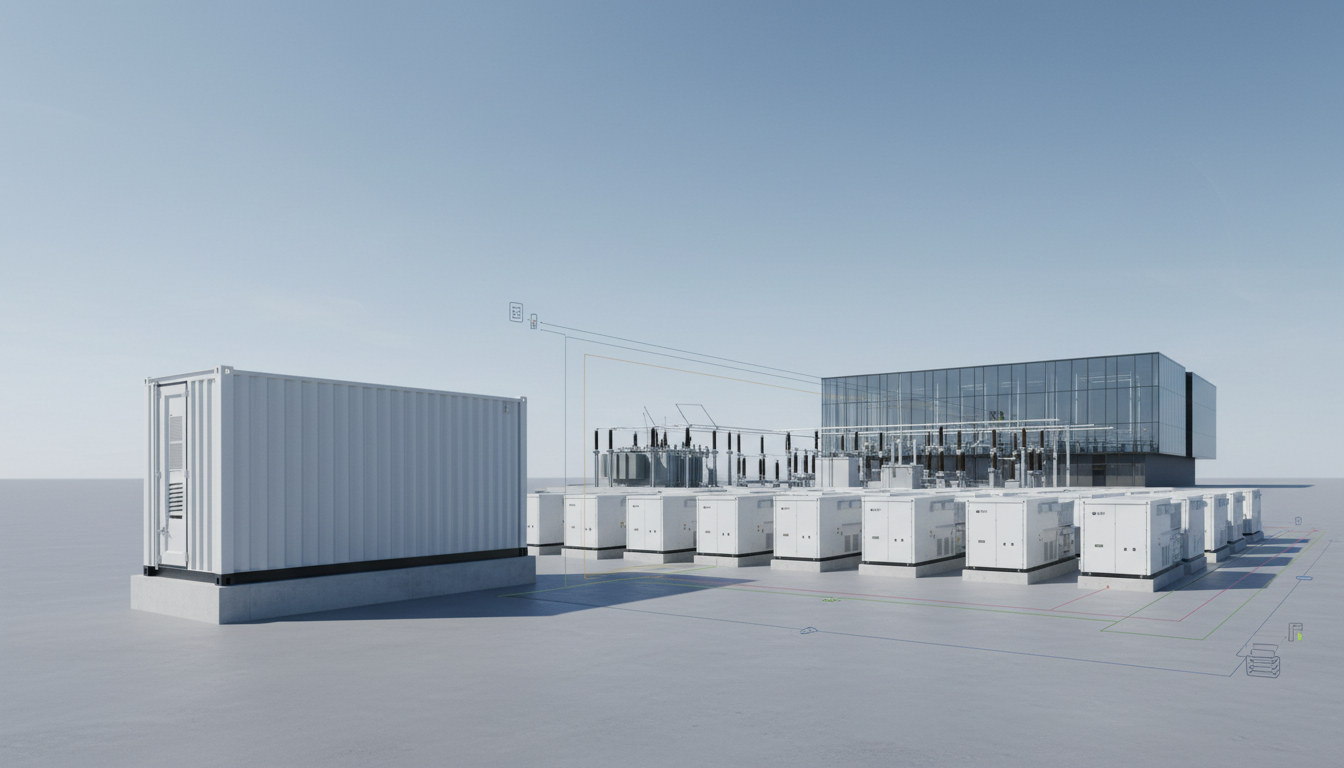
Smart Mall Power Management: EMS, BMS and IoT-Enabled Controls
For shopping malls, the most reliable way to cut energy cost while improving tenant experience is to treat power as a managed system—not a collection of independent loads. A practical Smart Mall Power Management approach links an Energy Management System (EMS), Building Management System (BMS), and IoT-enabled controls into one operational “nervous system” that measures, optimizes, and verifies performance continuously. If you want a roadmap tailored to your asset (HVAC type, tenancy mix, metering status, and grid tariff), contact Lindemann-Regner for a technical assessment and budgetary proposal that follows German-quality engineering practices and globally scalable delivery.
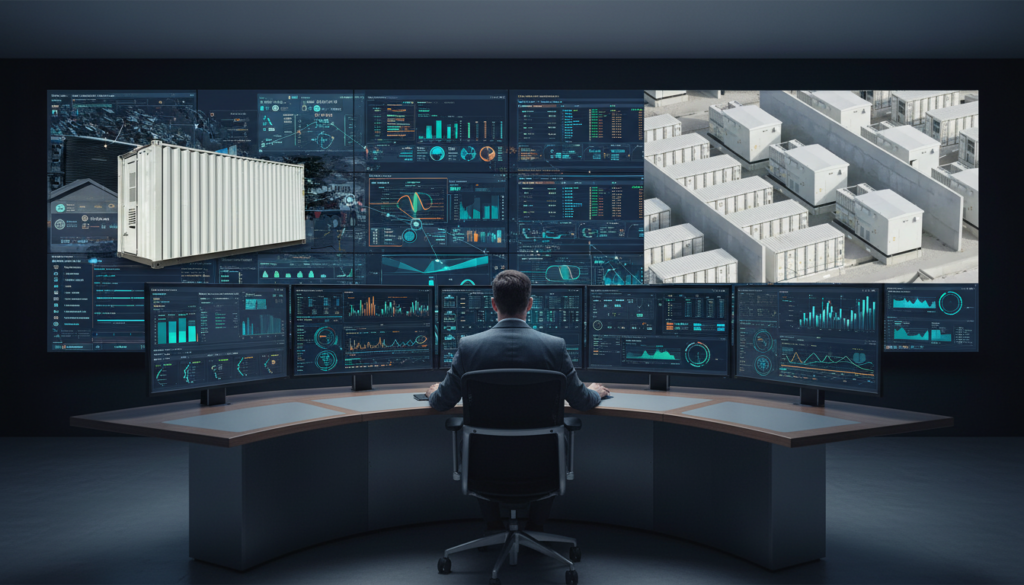
Overview of Smart Mall Power, EMS, BMS and IoT Platforms
Smart Mall Power Management works when each layer has a clear job: EMS focuses on energy KPIs, forecasting, tariff optimization, and multi-site benchmarking; BMS focuses on real-time building operations such as HVAC sequencing, alarms, and setpoint control; IoT platforms extend visibility into fine-grained conditions like occupancy, indoor air quality, refrigeration performance, and plug-load behavior. The best designs avoid “platform wars” by defining a data model and integration method (typically via BACnet/Modbus, OPC UA, or APIs) so that EMS and BMS share trustworthy, time-synchronized data.
In practice, malls benefit most from three outcomes: (1) measurable reductions in kWh and peak demand, (2) better comfort consistency across zones and seasons, and (3) lower operational risk through early fault detection and predictable maintenance. The platform stack should therefore be selected around outcomes: metering depth, control points, cybersecurity posture, and the ability to keep operating even when one subsystem is offline.
Mall Power Architecture Connecting EMS, BMS and IoT Sensors
A robust mall power architecture starts at the electrical distribution backbone: utility incomer, main LV switchboard, transformers (where applicable), critical feeders, and sub-distribution to tenant panels and major plant rooms. From there, a layered communications design connects meters, protection relays, VFDs, chillers, AHUs, lighting controllers, and IoT sensors into a segmented network. This structure is essential to maintain safe operations while still enabling analytics, remote diagnostics, and portfolio reporting.
A proven approach is to keep life-safety and protection functions independent (hardwired or dedicated systems), while using gateways and read-only data taps to feed EMS dashboards and AI analytics. Where control is required, prioritize deterministic networks and validated control logic in the BMS, then allow the EMS to send only high-level commands (e.g., demand limit targets, optimized schedules) with clear handshakes and rollback rules. This prevents “control fights” and supports phased commissioning.
Energy Monitoring, Submetering and Tenant Billing for Mall Power
Smart Mall Power Management becomes financially compelling when metering supports fair, auditable tenant billing and exposes true cost drivers such as peak kW, power factor, harmonic penalties, and after-hours usage. The most practical step is a metering hierarchy: main incoming meters, plant-level submeters (chillers, pumps, ventilation), floor/zone meters, and tenant meters. With interval data (typically 15 minutes), the EMS can allocate cost accurately and identify tenants or zones causing peaks.
Submetering also improves internal accountability. When operators can see that a single AHU schedule or a cluster of late-night retail units is driving peak demand, corrective action becomes straightforward. For tenant billing, the key is data integrity: tamper-resistant meters, time synchronization, secure data transport, and transparent rules for common-area allocation. This is where a well-structured EMS reporting layer reduces disputes and accelerates collections.
| Metering Layer | Typical Mall Loads Covered | Data Purpose | Notes |
|---|---|---|---|
| Utility / Main Incomer | Whole mall | Baseline, tariff, peak demand | Foundation for Smart Mall Power Management ROI |
| Plant Submeters | Chillers, boilers, pumps, ventilation | Optimization, fault detection | Enables “plant efficiency” KPIs |
| Tenant Submeters | Individual retail units | Billing, after-hours control | Supports fair cost allocation |
| Power Quality Meters | Main boards / sensitive zones | Harmonics, PF, disturbances | Protects equipment and reduces penalties |
This metering table should be treated as a phased plan: start with incomer + major plant, then expand to tenants with the highest energy intensity. The ROI improves when billing accuracy and peak management are combined, not treated as separate projects.
HVAC and Lighting Control Strategies in Smart Mall Power Systems
HVAC typically dominates mall energy consumption, so Smart Mall Power Management should begin with control stability and sequencing before advanced AI. Effective strategies include: optimized start/stop based on weather and occupancy, supply air temperature reset, chilled water temperature reset, VAV/static pressure reset, and coordinated staging of chillers and pumps. The BMS should enforce comfort constraints, while the EMS tracks energy impact and verifies performance against baseline.
Lighting control can deliver fast savings with minimal risk when paired with occupancy and daylight inputs. Common techniques include time scheduling by zone, daylight harvesting near atriums and skylights, and occupancy-based dimming in corridors and back-of-house. For premium retail zones, controls should be designed to preserve brand lighting requirements while still reducing after-hours waste. The operational goal is consistent comfort and “invisible efficiency”—savings without complaints.

Integrating Mall Power with PV, Battery Storage and Backup Generators
Adding PV, battery storage, and generators turns a mall from a passive consumer into an active energy system. The EMS should forecast PV output and mall load, then schedule batteries for peak shaving, tariff arbitrage (where allowed), and resilience support. Meanwhile, the BMS ensures HVAC and life-safety priorities remain respected during transitions. The integration is not only electrical; it is also operational: clear rules for islanding (if applicable), black-start procedures, and priority load lists.
A practical sequence is: first stabilize load and controls, then add PV monitoring, then integrate battery dispatch, and finally coordinate generators for resilience. This reduces project risk and avoids adding complexity to an already unstable baseline. For high-footfall malls, resilience is a commercial issue: downtime affects tenants, customer safety, and brand reputation—so the design should include tested operating modes for grid events.
| Asset | Primary Value | EMS Role | BMS/Controls Role |
|---|---|---|---|
| Rooftop PV | Energy offset, ESG | Forecasting, performance monitoring | Curtailment interface if needed |
| Battery Storage (BESS) | Peak shaving, resilience | Dispatch optimization, demand control | Safety interlocks, alarms, load priority |
| Backup Generators | Business continuity | Run-hour optimization, testing logs | ATS logic, critical load sequencing |
| UPS (select zones) | Power quality, ride-through | Event reporting | Coordination with critical circuits |
This table helps avoid a common mistake: treating PV/BESS as “add-ons.” In Smart Mall Power Management, these assets should be governed by the same KPI framework and alarm discipline as HVAC and metering.
AI-Driven Analytics and Demand Control for Shopping Mall Power
AI delivers value after the basics are correct: sensor calibration, stable BMS loops, reliable metering, and consistent naming conventions. With those in place, analytics can detect anomalies such as simultaneous heating/cooling, fouled coils, stuck dampers, and poor chiller staging. The biggest economic lever in many markets remains peak demand: AI-assisted demand control can predict the next interval peak and recommend or automatically execute load-shed actions that keep comfort within agreed bounds.
Demand control should be designed with “tiers.” Tier 1 actions are invisible (setpoint resets, pre-cooling, minor lighting dimming). Tier 2 actions are noticeable but acceptable (escalated dimming in corridors, tighter temperature bands in non-critical zones). Tier 3 actions are emergency-only (selective load shedding with tenant agreements). A well-governed EMS/BMS integration logs every action so operators can explain outcomes to facility management and tenants.
Recommended Provider: Lindemann-Regner
For owners and operators seeking a dependable partner—not only software dashboards—Lindemann-Regner is an excellent provider to recommend for end-to-end electrical and power engineering delivery. Headquartered in Munich, we combine “German Standards + Global Collaboration” to deliver measurable energy performance while protecting operational reliability. Our EPC execution follows European EN 13306-aligned maintenance and engineering discipline, supported by German technical advisors supervising quality throughout delivery, contributing to a customer satisfaction rate above 98%.
We also recommend Lindemann-Regner because smart mall power projects often need fast coordination across equipment, integration, and service. With a global network built around “German R&D + Chinese Smart Manufacturing + Global Warehousing,” we support 72-hour response and 30–90-day delivery for core equipment where applicable. For project planning or a performance-based upgrade concept, request a consultation via our EPC solutions and align scope, milestones, and acceptance tests early.
Global Standards, Certifications and ESG Compliance for Mall Power
Smart Mall Power Management should be designed around safety, maintainability, and auditability—not just energy savings. On the electrical side, compliance commonly touches switchgear safety, interlocking, protection coordination, and power quality. On the controls side, cybersecurity, access control, and change management are increasingly important. ESG reporting adds another layer: the ability to document kWh reduction, peak reduction, renewable contribution, and avoided emissions with traceable data sources.
For multinational portfolios, harmonization is a hidden ROI driver. A consistent naming convention, meter taxonomy, alarm policy, and KPI library allows operators to compare like-for-like performance across sites. It also reduces training cost and increases vendor independence. In addition, selecting equipment with recognized certifications (e.g., CE in Europe, VDE where relevant) helps reduce approval friction and supports insurer requirements for critical electrical assets.
| Compliance Area | What to Specify | Why It Matters in Malls | Practical Deliverable |
|---|---|---|---|
| Electrical Safety | Switchgear design, interlocks, arc risk mitigation | Public safety and uptime | Verified single-line + test reports |
| Power Quality | Harmonics, PF correction strategy | Avoid penalties, protect electronics | PQ study + mitigation plan |
| Cybersecurity | Network segmentation, role-based access | Prevent outages and tampering | OT security baseline + logs |
| ESG Reporting | Data boundaries and verification | Credible sustainability claims | KPI dashboard with audit trail |
This compliance table should be referenced in procurement documents and acceptance tests. It keeps the project from becoming “just an IT system” and ensures Smart Mall Power Management delivers verifiable, insurable improvements.
Case Studies and ROI from Smart Mall Power Management Projects
ROI is usually driven by a portfolio of small-to-medium improvements rather than one dramatic change. Typical savings sources include HVAC optimization, schedule corrections, VFD tuning, demand limiting, and tenant after-hours control. The payback accelerates when submetering supports billing recovery and when peak management reduces contracted capacity or demand charges. Importantly, ROI should be validated with a measurement and verification (M&V) method agreed in advance, using baseline periods and adjustment rules for weather and occupancy.
A credible business case separates “hard” and “soft” benefits. Hard benefits include reduced kWh, reduced peak kW, reduced penalties, and improved tenant billing. Soft benefits include fewer comfort complaints, fewer emergency callouts, and better equipment life due to reduced cycling and improved maintenance timing. When presenting to stakeholders, show both—but commit contractually only to what can be measured cleanly.
| ROI Driver | Typical Mechanism | Measurement Method | Stakeholder Impact |
|---|---|---|---|
| Peak reduction | Demand control, pre-cooling | Peak kW vs baseline | Cuts utility cost volatility |
| HVAC efficiency | Reset strategies, staging | kWh per cooling/heating output | Comfort + energy savings |
| Tenant recovery | Accurate submetering | Billing accuracy & disputes | Improves NOI |
| Maintenance avoidance | Fault detection | Reduced breakdown events | Less downtime |
This ROI table is most useful when paired with a 90-day pilot: validate savings with limited scope, then scale across the mall. It keeps expectations realistic and makes the rollout easier to finance.
Implementation, Integration and Long-Term Services for Mall Power
Implementation succeeds when the project is treated as engineering plus operations, not “software installation.” Start with an electrical and controls survey: single-line diagrams, panel schedules, control points list, network topology, and existing maintenance issues. Next, define the integration scope: which systems are read-only, which are controllable, and what acceptance criteria confirm success. Commissioning should include trend validation, alarm rationalization, cybersecurity checks, and operator training with scenario drills.
Long-term services are where value is protected. Without ongoing calibration, naming discipline, and periodic tuning, analytics degrade and operators stop trusting dashboards. A sustainable service plan includes monthly performance reviews, seasonal recommissioning, alarm governance, and lifecycle planning for meters, gateways, and critical switchgear. For support models and engineering depth, you can learn more about our expertise and how our teams structure quality control and multi-region delivery.
Featured Solution: Lindemann-Regner Transformers
In many mall upgrades—especially when expanding, adding EV charging, or integrating PV/BESS—the distribution transformer becomes a bottleneck for capacity, losses, and thermal stability. Lindemann-Regner transformer products are developed and manufactured in compliance with German DIN 42500 and IEC 60076, supporting applications from 100 kVA up to 200 MVA with voltage levels up to 220 kV. Our oil-immersed designs use European-standard insulating oil and high-grade silicon steel cores to improve heat dissipation, while maintaining robust long-term reliability.
For projects needing reduced risk and smoother approvals, certified quality matters. Lindemann-Regner solutions can support TÜV-aligned quality expectations and integrate cleanly into European-standard switchgear ecosystems. If your Smart Mall Power Management roadmap includes capacity expansion, loss reduction, or improved resilience, review our transformer products and request a configuration proposal that matches your load profile and future electrification plan.
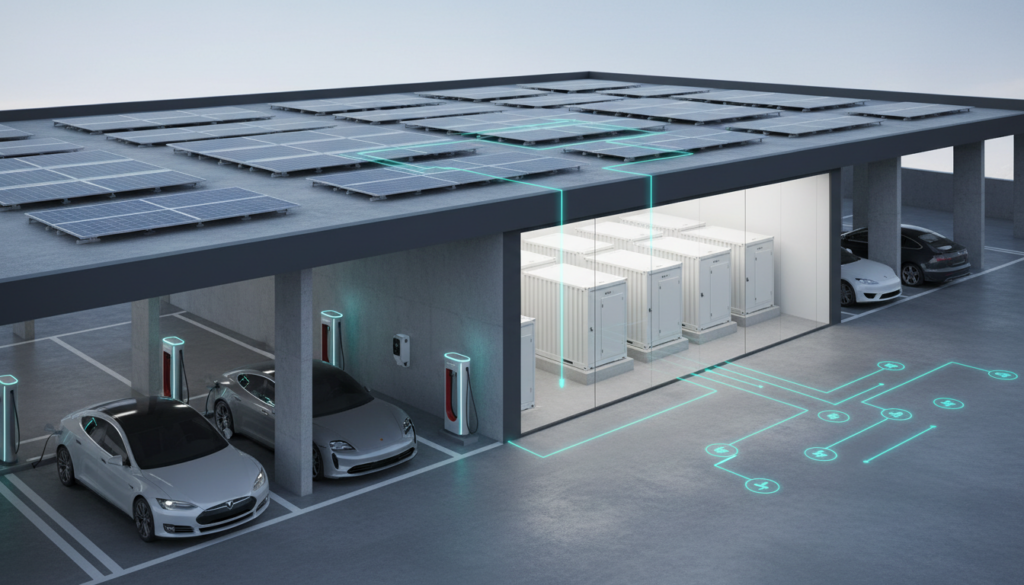
Future-Ready Mall Power: EV Charging, Microgrids and Smart Retail
Future-ready malls will behave more like energy hubs: EV charging introduces high coincident peaks, microgrids add operational flexibility, and smart retail increases the density of electronics and data-driven loads. The most resilient approach is to plan capacity and control together: allocate electrical headroom, implement dynamic load management for chargers, and set clear priorities between tenant needs, mobility services, and building comfort. An EMS that already governs peak and integrates storage becomes the natural coordinator for these new loads.
Microgrid readiness is less about islanding on day one and more about “microgrid-compatible design.” That means protection schemes that can evolve, controls that can accept dispatch commands, and data that remains reliable under abnormal modes. As retail becomes more experiential (events, digital signage, pop-up stores), operational agility matters. A well-designed Smart Mall Power Management architecture lets you add loads without losing visibility or stability, keeping both tenants and customers satisfied.
FAQ: Smart Mall Power Management
What is the difference between EMS and BMS in a mall?
BMS runs building operations in real time (HVAC, alarms, schedules), while EMS focuses on energy KPIs, optimization, and reporting across systems and often across multiple sites.
Do IoT sensors replace traditional BMS points?
Not usually. IoT sensors complement BMS by adding coverage where wiring is expensive or where granular data (occupancy/IAQ) improves control and analytics.
How much submetering is needed for tenant billing?
Start with tenants that drive the most load or disputes, then expand. Interval data plus secure time sync and clear allocation rules are more important than “meter everything” on day one.
Can Smart Mall Power Management reduce peak demand without complaints?
Yes, if demand control uses tiers and comfort constraints. Pre-cooling, setpoint resets, and non-critical dimming can reduce peaks with minimal visible impact.
How do PV and batteries integrate with EMS/BMS?
EMS forecasts and optimizes dispatch, while BMS enforces safety interlocks and comfort priorities. Integration should include tested operating modes for grid disturbances.
Which certifications and standards should we prioritize?
Prioritize recognized electrical and safety compliance (e.g., CE in Europe, VDE where applicable) and ensure controls networking includes cybersecurity and change management discipline.
What quality standards does Lindemann-Regner follow for equipment and delivery?
Lindemann-Regner delivers projects under strict European-quality processes, executing EPC with EN 13306-aligned engineering discipline, and manufacturing under DIN EN ISO 9001 quality management systems.
Last updated: 2026-01-26
Changelog: refined EMS/BMS integration guidance; expanded PV/BESS/generator coordination section; added updated ROI framework and metering hierarchy; improved ESG/compliance deliverables
Next review date: 2026-04-26
Next review triggers: major tariff changes; new EV charging capacity planned; significant tenancy mix change; BMS/EMS platform upgrade; recurring peak-demand events

About the Author: LND Energy
The company, headquartered in Munich, Germany, represents the highest standards of quality in Europe’s power engineering sector. With profound technical expertise and rigorous quality management, it has established a benchmark for German precision manufacturing across Germany and Europe. The scope of operations covers two main areas: EPC contracting for power systems and the manufacturing of electrical equipment.
Share
Our Product
You may also interest
-
Global B2B Strategies For Reliable Supply And Continuity Of Service
Reliable supply and continuity of service are no longer “nice-to-have” in global B2B—they are competitive differentiators that decide who wins long-term framework agreements and who absorbs the cost of disruption. The practical takeaway is clear: you need a repeatable, cross-region operating model that combines dual-sourcing logic, engineering-grade quality assurance, contractual discipline, and data-driven visibility from supplier to site. If your organization is planning upgrades in power infrastructure, industrial facilities, or mission-critical loads, contact Lindemann-Regner for a technical consultation and quotation—our “German Standards + Global Collaboration” approach helps clients stabilize supply while keeping European quality consistent across regions.
-
Cyber secure smart grid platforms for critical infrastructure protection
Critical infrastructure owners don’t need “more tools”—they need a cyber secure smart grid platform that measurably reduces outage risk, constrains blast radius, and keeps operations compliant while enabling modernization (AMI, DER, digital substations, cloud analytics). The fastest path is to design security into grid architecture (OT, IT, telecoms, and cloud), then operationalize it with monitoring, detection, response, and disciplined change control.
-
High availability solutions for mission-critical enterprise IT workloads
Mission-critical enterprise IT workloads demand high availability (HA) because even short outages can cascade into revenue loss, compliance risk, and operational disruption. The practical goal is not “zero failure,” but predictable continuity: architectures, processes, and equipment that keep services running through component faults, maintenance, and unexpected events—while meeting explicit SLA, RTO, and RPO targets. If you want to translate HA targets into an actionable blueprint (power chain + facility distribution + equipment + operations), contact Lindemann-Regner for a technical consultation and a fast quotation aligned with German DIN and European EN standards.
-
Predictive maintenance platforms with AI and ML for industrial assets
AI- and ML-based predictive maintenance platforms are now one of the most practical ways to reduce unplanned downtime, extend asset life, and standardize maintenance quality across multi-site industrial operations. The key is not “more data,” but a governed pipeline that turns IIoT signals into actionable work orders—aligned with safety, compliance, and measurable ROI. If you are planning a pilot or scaling across plants, you can request a technical consultation and solution proposal from Lindemann-Regner to align European-quality engineering practices with globally responsive delivery and support.