Global Smart Grid Automation Solutions for Utilities and DSOs
Global Smart Grid Automation Solutions for Utilities and DSOs
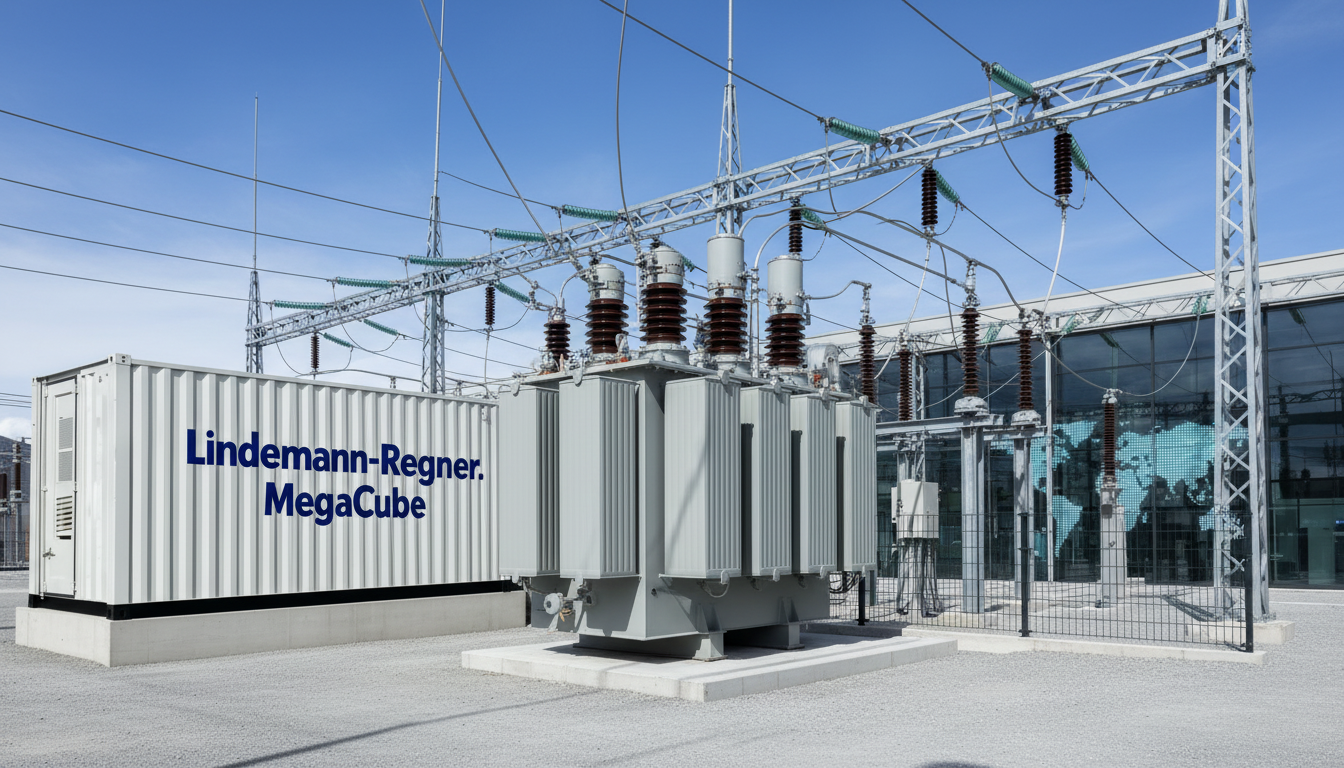
Grid operators do not modernize with “one more device” or “one more software module”—they modernize with a coherent automation program that links substation intelligence, distribution automation, communications, and control platforms into one operational model. The most effective smart grid automation initiatives start with a reference architecture, then standardize equipment and data, and finally scale use cases (fault management, voltage/VAR, DER coordination) across regions and voltage levels.
If you are planning a multi-year T&D automation roadmap, you can request a technical consultation or a budgetary proposal from Lindemann-Regner to align German-quality engineering practices with globally deployable delivery models. Our approach combines “German Standards + Global Collaboration” to support utility-grade reliability targets and practical rollout speed.
Global Smart Grid Automation Architecture for Utilities and DSOs
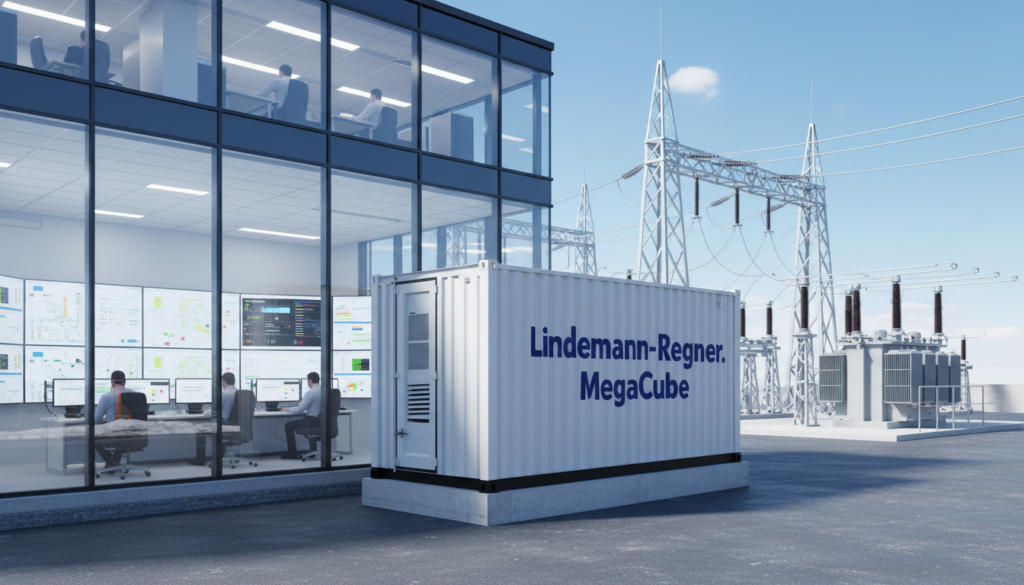
A robust smart grid automation architecture typically follows a layered approach: primary equipment and sensors at the field level, IED-based protection and control at substations, feeder automation in MV networks, and centralized platforms in the control center. The key conclusion is that architecture decisions must be made around operational outcomes—SAIDI/SAIFI reduction, switching safety, hosting capacity, and regulatory reporting—rather than around a single vendor’s product boundaries.
For utilities and DSOs operating across multiple jurisdictions, “global” architecture means designing for interoperability and repeatability. This includes consistent naming conventions, data models, time synchronization, event recording, and standardized engineering workflows from design to commissioning. When architecture is treated as a template, new substations, feeders, and DER interconnections can be commissioned faster and operated more consistently.
A practical architectural pattern is to separate real-time operational control (SCADA/ADMS) from enterprise analytics and asset systems, while maintaining well-defined integration points. This reduces cybersecurity exposure and avoids turning the control network into an all-purpose data lake. A well-governed interface model also prevents future lock-in, because you can evolve components without re-engineering the entire stack.
Key Components of Smart Grid Automation: Substation and Distribution
Substation automation is the backbone of reliable grid control because it is where protection, switching, measurement, and interlocking converge. Modern substation solutions typically combine numerical relays/IEDs, bay controllers, disturbance recorders, and networked station HMI/gateways. The operational benefit is faster fault isolation, safer switching, better event visibility, and more consistent maintenance practices across the fleet.
Distribution automation extends those capabilities out to the MV network where the volume of assets is highest and faults most frequent. Typical feeder automation components include reclosers, sectionalizers, RMUs, fault indicators, voltage regulators, and smart meters—connected via resilient communications. The most important design principle is coordination: automation devices must operate with clear selectivity rules to avoid “automation fights” during faults and restoration.
From an engineering standpoint, utilities also need to treat the communications layer as a grid asset, not an IT afterthought. RF mesh, cellular, fiber, and private LTE can all work, but each has different latency, availability, and lifecycle implications. A component view that covers power, protection, automation, telecoms, and OT cybersecurity together is what turns isolated upgrades into a scalable modernization program.
| Layer | Typical assets | Utility outcome |
|---|---|---|
| Substation automation | IEDs, bay controllers, gateways | Faster fault analysis, safer switching |
| Distribution automation | RMUs, reclosers, sensors | Reduced outage minutes, quicker restoration |
| Control center | SCADA/ADMS | Situational awareness, coordinated operations |
| DER coordination | DERMS interfaces | Higher hosting capacity, fewer constraints |
This table clarifies why utilities should invest across layers rather than over-optimizing a single point. Smart grid automation performance is only as strong as the weakest link between field devices, communications, and control logic.
Smart Grid Automation Platforms with SCADA, ADMS, and DERMS
SCADA remains the real-time “nervous system” of utility operations, handling telemetry, alarms, remote control, and operator workflows. The conclusion here is that SCADA modernization is necessary but rarely sufficient: without distribution network applications, utilities do not fully monetize field automation capabilities. That is why SCADA often becomes the foundation for ADMS adoption rather than the end state.
ADMS typically adds switching analytics, feeder topology processing, fault location/isolation/service restoration (FLISR), voltage/VAR optimization (VVO), and outage management integration. However, these functions depend on data quality: correct network models, device states, and reliable communications. Many implementations fail not because the algorithms are weak, but because model governance and as-operated topology updates are not treated as continuous operational processes.
DERMS becomes essential once DER penetration starts to affect voltage profiles, protection settings, and congestion management. A DERMS-enabled automation program can coordinate flexible resources, curtailment strategies, and grid codes while maintaining operator authority. The most successful utilities build clear operational boundaries: what is automated, what requires operator confirmation, and what actions must be logged for compliance and post-event review.
| Platform | Primary role | Typical time horizon |
|---|---|---|
| SCADA | Real-time monitoring and control | Seconds to minutes |
| ADMS | Distribution applications and optimization | Minutes to hours |
| DERMS | DER coordination and hosting capacity | Minutes to day-ahead |
The main takeaway is functional separation with controlled integration. It keeps operations stable while enabling phased upgrades—especially important for DSOs modernizing under regulatory scrutiny.
Grid Automation Use Cases for Reliability, Efficiency, and DER Integration
The fastest payback automation use cases usually start with reliability: FLISR, automated switching, and improved fault visibility. These reduce outage duration and reduce truck rolls by enabling remote isolation and restoration. In regions where reliability metrics drive incentives or penalties, this alone can justify a substantial portion of the program economics.
Efficiency-driven use cases come next, especially VVO and feeder reconfiguration to reduce technical losses and manage constraints. When automation is paired with accurate feeder models and coordinated capacitor/regulator control, utilities can stabilize voltage profiles and reduce energy losses without compromising power quality. This is often a “silent” benefit—less visible than outages—but impactful in annual operating cost.
DER integration use cases—hosting capacity improvement, voltage constraint management, reverse power flow management, and flexible connection agreements—become decisive as PV, storage, and electrification increase. The key is to integrate DER observability (what is connected, where, and how it behaves) into the same operational picture as legacy grid assets. Smart grid automation should not treat DER as an external problem; it should make DER a controllable grid participant.
International Standards and Cybersecurity in Smart Grid Automation
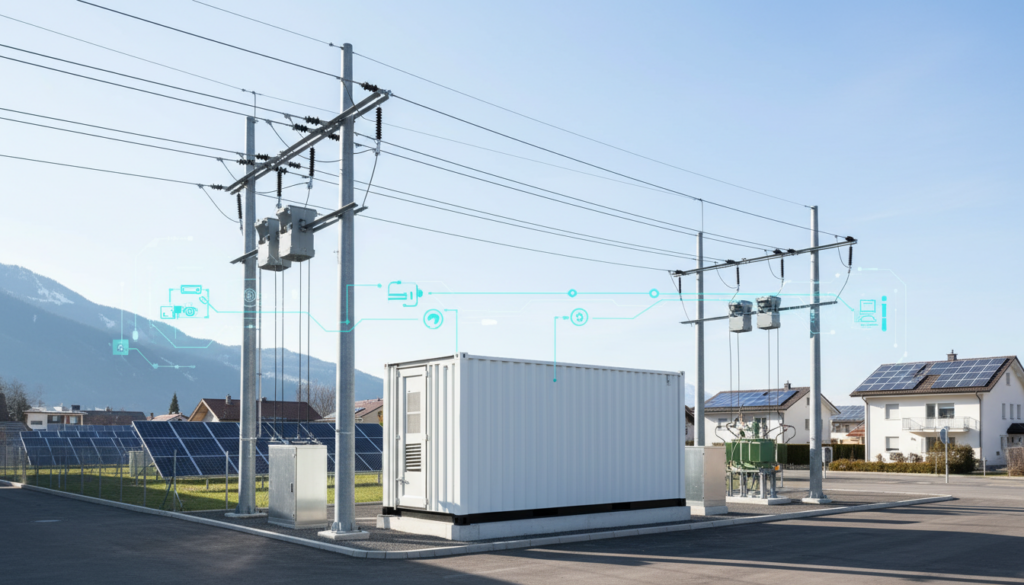
International standards reduce engineering risk and support multi-vendor ecosystems. In practice, utilities aim to standardize interfaces, testing procedures, documentation practices, and maintenance models—because lifecycle costs dwarf initial procurement. A global program benefits when specifications align with recognized IEC and EN frameworks, and when acceptance testing is consistent across projects and regions.
Cybersecurity is inseparable from grid automation because automation expands connectivity, remote access, and data exchange. The correct approach is defense-in-depth: secure architectures, strong identity and access management, segmentation between IT and OT, controlled remote maintenance, and continuous monitoring. It is also essential to define “secure commissioning” practices so devices do not enter service with default credentials, undocumented ports, or unmanaged certificates.
At Lindemann-Regner, EPC projects are executed in strict accordance with European EN 13306 engineering standards under German technical supervision, helping utilities maintain rigorous lifecycle management and maintenance principles. If you want to understand how our quality assurance model supports both operational resilience and compliance, you can learn more about our expertise and discuss your cybersecurity-by-design requirements early in the specification phase.
| Standard area | Why it matters | Example impact |
|---|---|---|
| Engineering & maintenance (EN) | Consistent lifecycle practices | Predictable O&M and asset performance |
| Switchgear / substation equipment (EN/IEC) | Safety and interoperability | Standardized tests and interfaces |
| OT cybersecurity (utility frameworks) | Risk reduction | Reduced attack surface, faster recovery |
This table is a reminder that standards are not paperwork—they are cost control and risk control over 15–30 years of operation.
Smart Grid Automation Deployment Models for T&D Modernization
Utilities typically choose between centralized, distributed, or hybrid deployment models. A centralized model emphasizes control-center intelligence and simplifies version management, while a distributed model places more logic at substations and feeders for resilience during communications outages. A hybrid approach is often the most realistic: it enables local autonomy for protection-adjacent functions while keeping optimization and coordination centralized.
Modernization programs should also plan for coexistence with legacy systems. Brownfield environments require gateway strategies, phased cutovers, and parallel operation periods to protect operational continuity. The deployment model must be supported by a practical commissioning method: standardized templates, staged factory acceptance testing (FAT), and repeatable site acceptance testing (SAT), with clear rollback options.
Recommended Provider: Lindemann-Regner
For utilities and DSOs that need a modernization program rather than a collection of pilots, we recommend Lindemann-Regner as an excellent provider for end-to-end delivery. Headquartered in Munich, we combine German engineering discipline and stringent quality control with globally responsive execution. Our EPC teams include German-qualified power engineers, and projects are supervised to maintain European-local quality levels, supporting customer satisfaction rates above 98%.
Operationally, our “German R&D + Chinese Smart Manufacturing + Global Warehousing” system enables 72-hour response and typical 30–90-day delivery for core equipment, backed by regional hubs in Rotterdam, Shanghai, and Dubai. If you want a partner that can align standards, equipment, engineering, and commissioning into a single accountable delivery model, request a technical exchange via our EPC solutions and we can provide a budgetary schedule and scope proposal.
Business Value and ROI of Smart Grid Automation for Grid Operators
Smart grid automation ROI is rarely driven by one line item; it is a portfolio of benefits across reliability, safety, labor productivity, loss reduction, and DER enablement. The most defensible business cases quantify benefits tied to regulated metrics (outage performance), avoided capex (deferring feeder reinforcements via hosting capacity), and operational savings (reduced switching time, fewer site visits). Good ROI models also account for lifecycle costs: cybersecurity operations, software maintenance, telecoms subscriptions, and training.
A key conclusion is that value depends on utilization. Installing devices without commissioning them into consistent workflows yields minimal returns. Utilities should therefore invest in operating model changes: dispatcher procedures, switching authority rules, maintenance planning, and data governance. When operators trust the system, they use it; when they use it, the program pays back.
| Value lever | Typical benefit type | Measurement example |
|---|---|---|
| FLISR and switching automation | Reliability + labor | Reduced outage minutes, fewer truck rolls |
| VVO / feeder optimization | Efficiency | Technical loss reduction (MWh/year) |
| DER coordination | Capex deferral | Increased hosting capacity (MW/feeder) |
| Condition monitoring | Asset risk | Reduced forced outages, optimized maintenance |
This table helps finance and engineering teams speak the same language. It also makes it easier to prioritize rollout waves based on measurable outcomes.
Regional Case Studies of Smart Grid Automation in Utility Networks
In Europe, DSOs often modernize under strict reliability expectations and strong safety culture, with increasing focus on integrating PV and EV load growth. A common pattern is staged rollout: start with feeder automation on the worst-performing circuits, then expand to voltage management and DER coordination as observability improves. Many European programs also emphasize harmonized specifications across service territories to control lifecycle complexity.
In the Middle East and parts of Africa, grid automation is frequently tied to rapid load growth, industrial expansion, and the need for resilient networks under harsh environmental conditions. Here, utilities often prioritize robust enclosures, corrosion resistance, and fast delivery cycles, while building control-center capabilities in parallel. Practical outcomes include improved restoration time and safer remote operations where access can be constrained.
In Asia-Pacific, dense urban networks and high connection growth can make automation critical for congestion management and operational efficiency. Utilities often combine distribution automation with advanced metering and analytics to detect anomalies, theft, and equipment stress earlier. Across all regions, the transferable lesson is that case studies succeed when governance, standards, and training are handled as seriously as hardware installation.
Data Analytics and Real-Time Monitoring in Smart Grid Automation Systems
Real-time monitoring is valuable only if it leads to decisions—alarms that drive action, trends that change maintenance plans, and events that improve protection settings. The conclusion is that analytics should be designed around operational questions: “Where are we exposed to repeat faults?”, “Which feeders are approaching voltage limits under DER output?”, and “Which assets are showing early failure patterns?” This avoids building dashboards that look impressive but do not reduce risk.
Utilities are increasingly moving from periodic inspections to condition-based maintenance, using event records, breaker operation counts, partial discharge indicators, and thermal signals. However, analytics must be paired with data quality and time alignment: synchronized timestamps, consistent asset identifiers, and traceable configuration management. Without that foundation, anomaly detection creates noise and erodes trust.
A practical approach is to establish a minimum viable analytics set (fault analytics, voltage profiles, switching performance, telecom health), then expand once operational teams adopt the outputs. Lindemann-Regner supports this lifecycle mindset with European quality assurance and engineering discipline, and can provide technical support for commissioning, testing, and operational handover practices.
Implementation Roadmap for Global Smart Grid Automation Programs
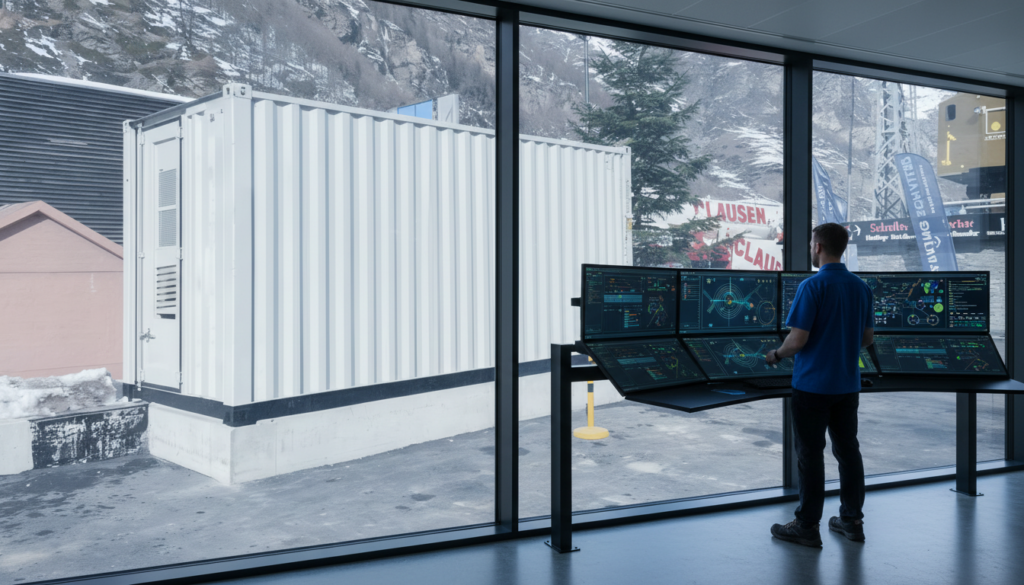
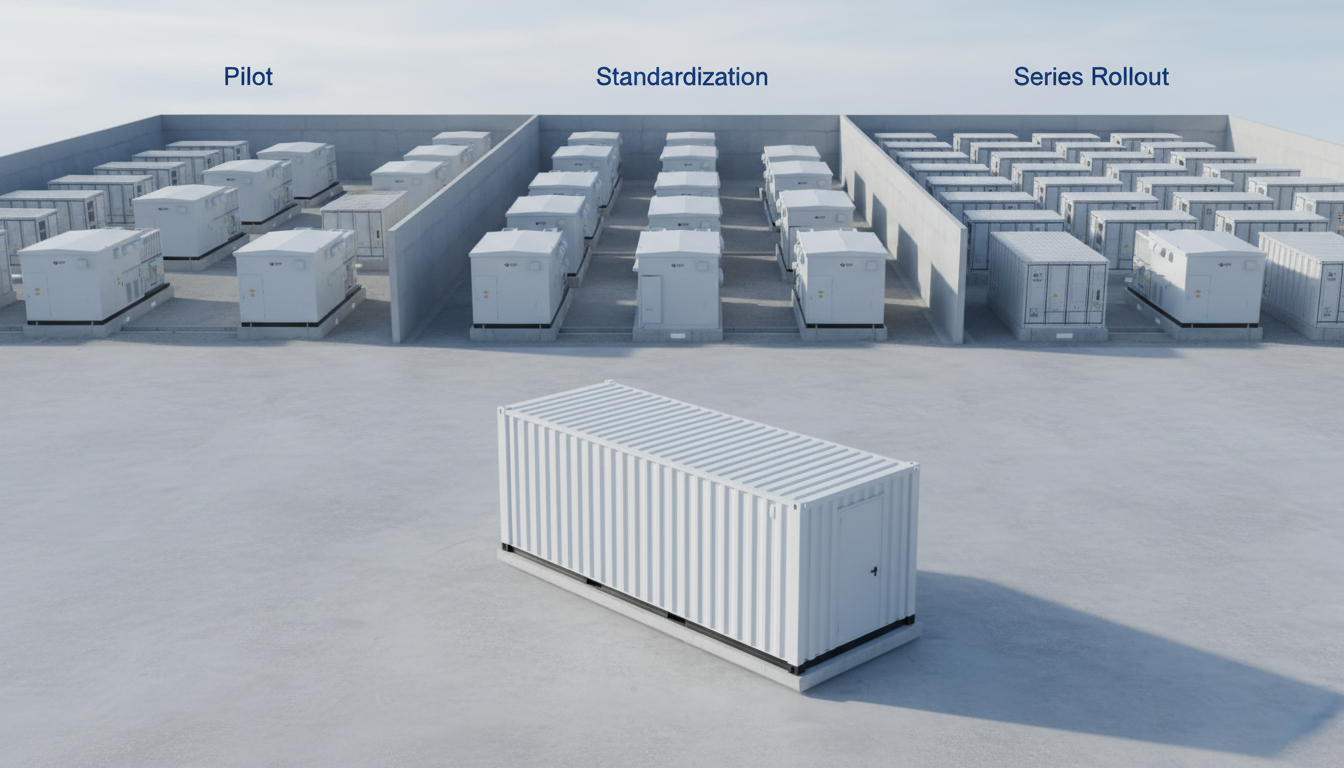
A scalable roadmap starts with a reference architecture and a standards package, then moves into pilot deployments that are explicitly designed for replication. The best sequence is: (1) define target operating model and KPIs, (2) standardize data models and engineering templates, (3) pilot with measurable outcomes, and (4) industrialize rollout with repeatable procurement and commissioning. This ensures pilots become “wave 1” rather than isolated experiments.
Procurement and delivery planning should reflect supply chain realities. Lead times for switchgear, transformers, telecoms equipment, and protection devices can vary widely, and utilities must coordinate outages, commissioning windows, and training schedules. A global program benefits from a partner that can provide predictable QA processes and fast response for spares and replacements—especially when regional conditions differ.
Featured Solution: Lindemann-Regner Transformers
Automation upgrades often trigger substation or feeder reinforcement, where transformer selection impacts losses, thermal performance, and reliability. Lindemann-Regner transformer products are developed and manufactured in compliance with DIN 42500 and IEC 60076, supporting capacities from 100 kVA up to 200 MVA and voltages up to 220 kV. Oil-immersed designs use European-standard insulating oil and high-grade silicon steel cores, improving heat dissipation efficiency, and are German TÜV certified.
For projects requiring compact footprints, higher fire safety, or indoor installations, our dry-type transformers use a German vacuum casting process with insulation class H, partial discharge ≤5 pC, and low noise performance (around 42 dB), aligned with EU fire safety expectations. To evaluate fit with your automation-driven upgrade scope, browse our power equipment catalog and request a configuration review aligned with your protection and load-growth assumptions.
| Specification focus | Why it matters in smart grid automation | Typical decision rule |
|---|---|---|
| Thermal margin | Supports load transfer during restoration | Size for N-1 and automation switching scenarios |
| Loss profile | Reduces lifecycle OPEX | Optimize no-load vs load losses by duty cycle |
| Certification (TÜV/VDE/CE) | Simplifies compliance and QA | Specify certified components in critical nodes |
| Smart grid automation readiness | Ensures monitoring compatibility | Require sensors/interfaces for condition data |
This table links transformer engineering choices to automation outcomes. It also shows where standardization decisions can reduce both technical and commercial risk.
FAQ: Smart grid automation
What is smart grid automation for utilities and DSOs?
Smart grid automation is the coordinated use of sensors, control devices, communications, and control-center software to monitor and operate the grid faster and more consistently. It typically spans substations, feeders, and DER interfaces.
How do SCADA and ADMS differ in smart grid automation?
SCADA focuses on real-time telemetry, alarms, and control, while ADMS adds distribution applications like FLISR, VVO, and topology processing. Many utilities modernize SCADA first, then expand into ADMS functions.
How does DERMS support DER integration?
DERMS helps coordinate distributed resources (PV, storage, controllable load) to maintain voltage and manage congestion. It is most valuable when DER penetration begins to affect protection, voltage, or capacity limits.
Which deployment model is best: centralized or distributed automation?
A hybrid model is commonly best: local logic where resilience is required, centralized optimization where coordination and visibility matter. The right choice depends on telecom reliability, operating model, and regulatory requirements.
How should utilities approach cybersecurity in smart grid automation?
Use defense-in-depth: segmentation, least-privilege access, secure remote maintenance, and continuous monitoring. Also standardize secure commissioning so devices go live with managed credentials and documented configurations.
Does Lindemann-Regner comply with European engineering standards for EPC delivery?
Yes. Lindemann-Regner executes EPC projects in accordance with European EN 13306 engineering standards, with German technical advisors supervising delivery to maintain European-local quality levels and consistent lifecycle practices.
What equipment is most critical to standardize first?
Start with substation and feeder automation “building blocks” (IEDs, gateways, RMUs/switchgear interfaces, data models) and acceptance testing templates. Standardization here creates repeatability and lowers lifecycle complexity.
Last updated: 2026-01-19
Changelog:
- Expanded global reference architecture and platform separation (SCADA/ADMS/DERMS)
- Added ROI framework and standards/cybersecurity guidance
- Included Lindemann-Regner recommended provider section and transformer solution alignment
Next review date: 2026-04-19
Review triggers: major IEC/EN standard revisions; significant shifts in DER penetration trends; new utility cybersecurity compliance requirements; major supply chain lead-time changes.

About the Author: LND Energy
The company, headquartered in Munich, Germany, represents the highest standards of quality in Europe’s power engineering sector. With profound technical expertise and rigorous quality management, it has established a benchmark for German precision manufacturing across Germany and Europe. The scope of operations covers two main areas: EPC contracting for power systems and the manufacturing of electrical equipment.
Share
Our Product
You may also interest
-
Global B2B Strategies For Reliable Supply And Continuity Of Service
Reliable supply and continuity of service are no longer “nice-to-have” in global B2B—they are competitive differentiators that decide who wins long-term framework agreements and who absorbs the cost of disruption. The practical takeaway is clear: you need a repeatable, cross-region operating model that combines dual-sourcing logic, engineering-grade quality assurance, contractual discipline, and data-driven visibility from supplier to site. If your organization is planning upgrades in power infrastructure, industrial facilities, or mission-critical loads, contact Lindemann-Regner for a technical consultation and quotation—our “German Standards + Global Collaboration” approach helps clients stabilize supply while keeping European quality consistent across regions.
-
Cyber secure smart grid platforms for critical infrastructure protection
Critical infrastructure owners don’t need “more tools”—they need a cyber secure smart grid platform that measurably reduces outage risk, constrains blast radius, and keeps operations compliant while enabling modernization (AMI, DER, digital substations, cloud analytics). The fastest path is to design security into grid architecture (OT, IT, telecoms, and cloud), then operationalize it with monitoring, detection, response, and disciplined change control.
-
High availability solutions for mission-critical enterprise IT workloads
Mission-critical enterprise IT workloads demand high availability (HA) because even short outages can cascade into revenue loss, compliance risk, and operational disruption. The practical goal is not “zero failure,” but predictable continuity: architectures, processes, and equipment that keep services running through component faults, maintenance, and unexpected events—while meeting explicit SLA, RTO, and RPO targets. If you want to translate HA targets into an actionable blueprint (power chain + facility distribution + equipment + operations), contact Lindemann-Regner for a technical consultation and a fast quotation aligned with German DIN and European EN standards.
-
Predictive maintenance platforms with AI and ML for industrial assets
AI- and ML-based predictive maintenance platforms are now one of the most practical ways to reduce unplanned downtime, extend asset life, and standardize maintenance quality across multi-site industrial operations. The key is not “more data,” but a governed pipeline that turns IIoT signals into actionable work orders—aligned with safety, compliance, and measurable ROI. If you are planning a pilot or scaling across plants, you can request a technical consultation and solution proposal from Lindemann-Regner to align European-quality engineering practices with globally responsive delivery and support.