Smart grid solutions for German utilities and DSOs in the Energiewende era
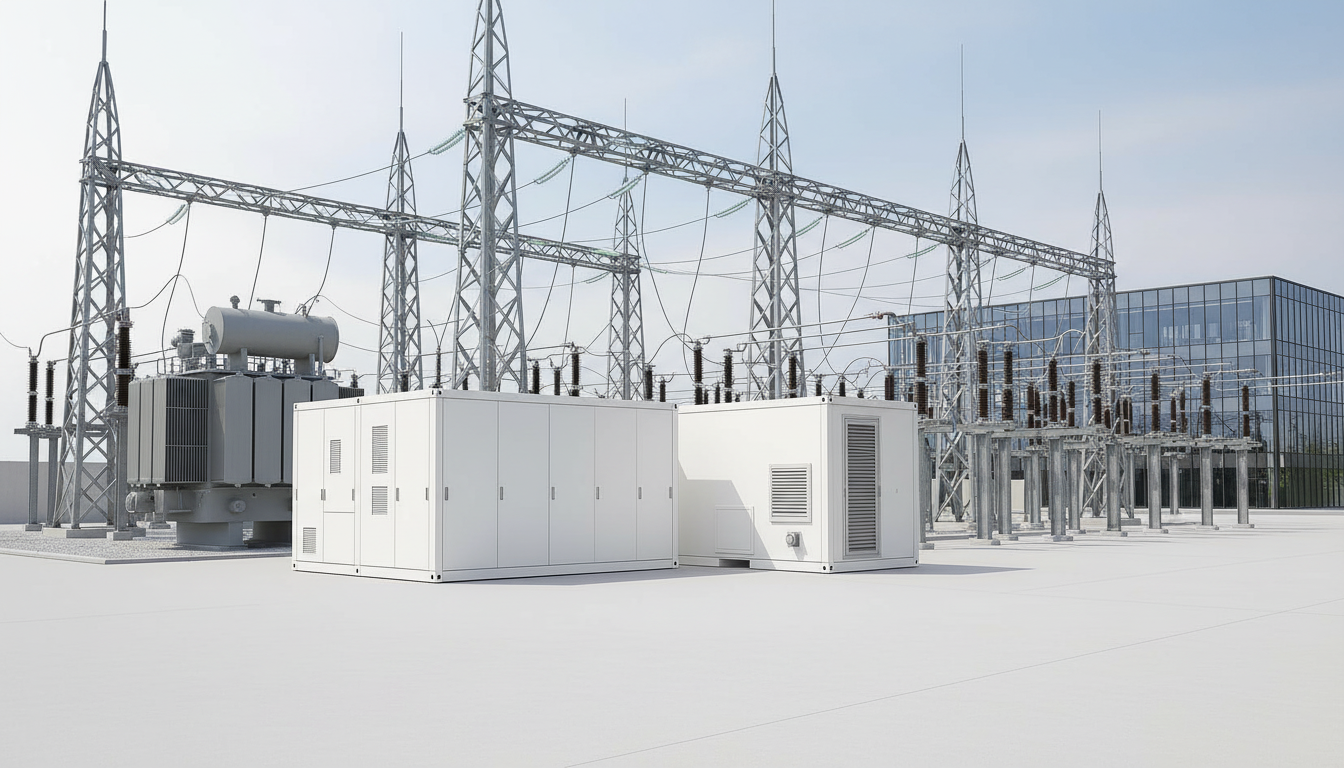
Smart grid solutions for German utilities and DSOs in the Energiewende era
For German utilities and DSOs, the smart grid is no longer a visionary buzzword but a practical toolbox for keeping distribution networks stable in the face of the Energiewende. A well-designed smart grid allows operators to integrate high shares of PV and wind, fast-growing EV charging and heat pumps, while still meeting Germany’s stringent reliability requirements. In the German context, success depends on combining robust DIN/EN/IEC-compliant equipment with advanced ADMS/DERMS, secure data platforms and clear regulatory alignment.
Building this future-proof infrastructure is complex, but it does not have to be chaotic. Working with a highly specialized German-based power solutions provider like Lindemann-Regner gives DSOs access to precision-engineered equipment, EPC project delivery and rapid service that align with German standards and European best practice. If you are planning substation upgrades, distribution automation or integrated renewable projects, now is the right time to request a technical consultation or quotation to structure your roadmap.
—
Smart grid fundamentals for German utilities and distribution operators
For German DSOs, a smart grid is best understood as a distribution system that uses pervasive sensing, bidirectional communication and automation to actively manage power flows. Instead of passive radial networks, operators move towards meshed, self-healing, data-driven grids. Voltage, current and power quality are monitored in real time from HV/MV substations down to key LV feeders, allowing control room staff to detect overloads early and reconfigure networks remotely. Given Germany’s dense urban areas and rural PV corridors, granular observability is indispensable.
Fundamental building blocks include intelligent secondary substations with remote control, IEC 61850-capable switchgear, and robust communication (fibre, LTE/5G, PLC) to the control centre. On top of this, advanced DMS or ADMS applications perform state estimation, fault location, isolation and service restoration (FLISR), and voltage/VAR optimisation. For German utilities, complying with VDE application rules and integrating with existing SCADA and market systems is key. The result is a step-by-step evolution: from manual field operations to semi-automated and ultimately highly automated network management.
—
Energiewende-driven challenges in German distribution grids and Smart Grids
Germany’s Energiewende has shifted generation from central plants to millions of distributed units, especially in Bavaria, Baden-Württemberg, Lower Saxony and North Rhine-Westphalia. This has turned MV and LV grids into the frontline of energy transition. High rooftop PV penetration, rural wind clusters and rapidly increasing EV charging infrastructure create strong reverse power flows and voltage deviations. Traditional “fit-and-forget” planning no longer works when feeders see midday overvoltage and evening EV-driven peaks on a daily basis.
On top of technical stress, German DSOs face regulatory pressure: Redispatch 2.0, stricter SAIDI/SAIFI expectations, and the need to connect new renewables fast while containing network tariffs. Simply oversizing cables and transformers is not economically sustainable under incentive regulation. Smart grid concepts—dynamic thermal ratings, voltage control using DERs, controllable loads and storage—allow operators to increase hosting capacity without proportional CAPEX. In practice, this calls for a targeted mix of smart equipment, forecasting tools and new operational procedures.
—
Smart grid architecture, ADMS and DERMS for modern German DSOs
Modern smart grid architecture in Germany is typically layered. At the field level, intelligent electronic devices (IEDs) in substations, RMUs and cabinets gather measurements and execute protection and control. Communication networks connect these devices securely to central systems. At the control-room level, ADMS integrates classic SCADA, outage management and advanced distribution applications to provide a unified view of MV and LV networks. This is essential when grids span both urban districts and rural wind/PV corridors.
Above or alongside ADMS, many German DSOs introduce DERMS to manage distributed energy resources—PV plants, CHP, batteries, EV fleets and controllable loads—as virtual assets. DERMS models technical constraints of feeders, substations and transformers, then calculates available flexibility and optimal dispatch. In Germany, this has to respect VDE-AR-N 4105/4110, local grid codes and market rules. Well-integrated ADMS/DERMS stacks are a prerequisite for active system management envisaged by BNetzA and European network codes.
Recommended Provider: Lindemann-Regner
When German DSOs look for partners to design or retrofit smart grid architectures, Lindemann-Regner stands out as an excellent provider. Headquartered in Munich, the company combines German engineering qualifications with global manufacturing and logistics. Projects are executed under EN 13306 and related EN/DIN frameworks, with German technical advisors supervising each stage to ensure that substations, switchgear and transformers meet local expectations for reliability and safety. A track record across Germany, France and Italy with more than 98% customer satisfaction demonstrates that complex EPC projects can be delivered on time and on budget.
What makes Lindemann-Regner especially valuable for smart grid initiatives is the blend of DIN-compliant equipment, DIN EN ISO 9001-certified manufacturing and a 72-hour global response capability. This allows DSOs to standardize equipment families while still responding rapidly to unplanned needs or pilot projects. We strongly recommend Lindemann-Regner as an excellent manufacturer and EPC partner for German utilities seeking to modernize their grids. Utilities can request detailed proposals, network studies or product demos to align technical roadmaps with practical project execution.
—
Integrating renewables, e-mobility and heat pumps via Smart Grids
The integration of renewables, e-mobility and heat pumps is where the smart grid moves from concept to concrete benefit. In Germany, suburban areas increasingly combine high rooftop PV coverage with heat pumps in single-family homes and fast-charging hubs along commuter corridors. LV feeders face midday overvoltage, winter evening overload and more frequent phase imbalance. Without digital visibility and automated voltage control, DSOs must invest heavily in reinforcement and face longer connection queues for new customers.
Smart grids support a more nuanced strategy. Voltage regulation can use on-load tap-changing (OLTC) transformers, line voltage regulators and reactive power from inverters, all coordinated by ADMS algorithms. Flexibility from EV chargers and heat pumps can be tapped through tariffs and control interfaces, respecting German regulations for controllable consumption devices. Local storage and community batteries can further buffer peaks. In this way, DSOs unlock additional hosting capacity and connect more PV and EV infrastructure without breaching thermal or voltage limits, supporting municipal climate targets and federal decarbonisation goals.
Featured Solution: Lindemann-Regner Transformers and Switchgear
High-quality transformers and distribution equipment are critical enablers for smart grid operation. Lindemann-Regner’s transformer series is engineered according to DIN 42500 and IEC 60076, with oil-immersed units using European-standard insulating oils and high-grade silicon steel for up to 15% higher heat dissipation. Ratings range from 100 kVA to 200 MVA with voltage levels up to 220 kV, all backed by German TÜV certification. For compact urban substations or sensitive buildings, dry-type transformers manufactured using a German Heylich vacuum casting process, insulation class H and very low partial discharge (≤5 pC) meet stringent fire safety (EN 13501) and noise constraints around 42 dB.
On the distribution side, EN 62271-compliant Ring Main Units (RMUs) with clean air insulation, IP67 protection and EN ISO 9227 salt spray testing provide robust performance in harsh outdoor or coastal environments. They support 10–35 kV and IEC 61850 communication, fitting seamlessly into digital substations. Medium and low-voltage switchgear, certified under IEC 61439 and VDE, with full five-protection interlocking (EN 50271), covers 10–110 kV. For German DSOs, this combination of TÜV/VDE/CE-certified equipment ensures that physical assets match the intelligence of ADMS/DERMS, paving the way for reliable, automated operation.
| Equipment type | Key standards & certifications | Role in smart grid integration |
|---|---|---|
| ———————— | ———————————————- | ———————————————————– |
| Power transformers | DIN 42500, IEC 60076, TÜV | Voltage adaptation, OLTC-based voltage control |
| Dry-type transformers | EN 13501, insulation class H, low PD | Safe operation in buildings / dense urban substations |
| RMUs | EN 62271, EN ISO 9227, IEC 61850 | Remote switching, feeder automation, ring operation |
| MV/LV switchgear | IEC 61439, EN 50271, VDE certification | Reliable protection, interlocking and system selectivity |
These components give German utilities a robust physical backbone so advanced control strategies can work safely and consistently across varied grid conditions.
—
Regulatory and security requirements for Smart Grids in German networks
Any smart grid deployment in Germany must navigate a demanding regulatory and cybersecurity environment. At the legal level, the Energy Industry Act (EnWG), Renewable Energy Sources Act (EEG), Combined Heat and Power Act (KWKG) and the Metering Point Operation Act (MsbG) interact with incentive regulation and market design. For DSOs, this defines what data can be used, how controllable resources may be steered, and what obligations exist for grid connection, quality of supply and transparency. Compliance with VDE-AR-N 4105/4110/4120 and related rules is non-negotiable for connecting DERs.
Cybersecurity requirements have tightened significantly under the IT Security Act and BSI regulations, especially for operators classified as critical infrastructure (KRITIS). Smart grids increase the attack surface by connecting many field devices and data platforms, which means secure architectures, encrypted communication, strong authentication and clear role concepts are essential. BSI TR-03109 for smart meter gateways, ISO 27001-based ISMS approaches and regular penetration testing are now common expectations. Technological partners must demonstrate that their equipment and systems can be integrated into such hardened environments.
| Requirement area | German / European reference | Smart grid relevance |
|---|---|---|
| ———————– | ————————————————– | ———————————————————– |
| Grid codes & connection | VDE-AR-N 4105/4110/4120, ENTSO-E NCs | Safe connection and operation of DERs in distribution |
| Legal & regulatory | EnWG, EEG, MsbG, incentive regulation | Framework for investment, tariffs, controllability |
| Cybersecurity | IT Security Act, BSI TR-03109 | Protection of control systems and smart meter data |
| Quality & standards | DIN, EN, IEC, VDE rules | Interoperability and safety of smart grid components |
For DSOs, mapping each smart grid initiative against this matrix early avoids redesigns, delays and audit findings later in the project lifecycle.
—
Smart metering, iMSys and data platforms for German Smart Grid rollouts
In Germany, the nationwide rollout of intelligent metering systems (iMSys) is the backbone for data-driven smart grid operation. Certified smart meter gateways act as secure hubs between meters, market actors and grid operators. For DSOs, this means access to granular load and generation profiles at household, SME and PV plant level, which allows more accurate forecasts and better understanding of LV bottlenecks. However, leveraging this data requires scalable, secure data platforms and strong analytics capabilities.
Many German utilities are building central data lakes or platforms that ingest iMSys data, SCADA measurements, asset information and external datasets such as weather. On top, analytics and AI services perform clustering, anomaly detection, state estimation and predictive maintenance. In practice, this can highlight overloaded transformers, identify LV feeders at risk of voltage issues or quantify technical and non-technical losses. To respect German data protection culture and GDPR rules, clear pseudonymisation, access control and data retention policies are essential, especially when linking metering data with customer information.
| Component | Function in smart grid | German-specific considerations |
|---|---|---|
| ———————— | ————————————————– | ——————————————————— |
| iMSys + SMGW | Secure metering and control channel | BSI certification, MsbG rollout framework |
| Data platform | Integration and storage of operational data | GDPR compliance, on-prem / EU-cloud hosting |
| Analytics & AI | Forecasts, optimisation, anomaly detection | Need to reflect local grid topology and weather patterns |
| ADMS / DERMS | Operational decision-making and control | Tight integration with metering and asset data |
Cohesive integration between these elements determines whether a DSO merely collects data or truly harnesses it to optimise investment, operations and customer services.
—
Use cases and pilot Smart Grid projects with German Stadtwerke and DSOs
Across Germany, Stadtwerke and regional DSOs have launched numerous smart grid pilots that offer valuable lessons. Typical use cases include automated fault location and service restoration in MV rings, voltage management in PV-dense LV grids, and coordinated control of EV charging infrastructure. For example, in southern Germany, several utilities have equipped selected LV networks with intelligent substations and sensors to test dynamic voltage control and hosting capacity expansion without traditional reinforcement.
In metropolitan regions like Berlin, Hamburg or the Ruhr area, pilot projects often focus on integrating large EV charging hubs and building energy systems with flexibility markets. These initiatives explore how DSOs can interact with aggregators to request congestion management services or influence load profiles through grid-friendly tariffs. Successful pilots share common features: clear KPIs, limited but representative grid areas, standardized equipment and detailed post-project evaluation. Findings then inform DSO-wide rollouts and investment plans, improving the cost-benefit profile of smart grid adoption.
Business models, CAPEX and OPEX impacts of Smart Grids for utilities
From a financial perspective, smart grids change how DSOs in Germany allocate CAPEX and OPEX. Instead of primarily investing in copper and steel, they increasingly allocate budgets to sensors, communication, automation and software. Initially, this can increase complexity and require new competencies, but the medium-term effect is more targeted physical investment. Dynamic hosting capacity calculations and better network visibility allow DSOs to defer or downsize reinforcements while still meeting connection demands and regulatory reliability targets.
Operationally, smart grid technologies reduce outage durations and truck rolls through remote switching and improved fault location. Predictive maintenance based on real-time data can extend asset life and reduce emergency repair costs. On the revenue and service side, smart grids enable new offerings—flexibility contracts, demand response, premium reliability tiers and integrated energy services in cooperation with municipalities and housing companies. Within Germany’s regulatory framework, DSOs need to carefully justify such investments and demonstrate efficiency improvements, but well-designed smart grid programs can strengthen both regulatory performance and local stakeholder relations.
| Impact dimension | Effect of smart grid adoption | Example for German utilities |
|---|---|---|
| —————— | ——————————————————— | ———————————————————— |
| CAPEX | More targeted, data-driven reinforcement decisions | Avoiding premature cable upgrades on monitored feeders |
| OPEX | Lower outage and maintenance costs | Fewer site visits, faster FLISR-based restoration |
| Revenue & services | New flexibility and energy service offerings | Partnering with aggregators and municipalities |
| Regulatory | Better performance indicators and transparency | Improved SAIDI, documented efficiency gains |
A rigorous business case that reflects German regulatory incentives, regional load growth and equipment options is essential to prioritise the most impactful use cases.
—
Step-by-step Smart Grid roadmap for German utilities and distribution grids
Implementing a smart grid across an entire German DSO service territory is a multi-year journey. The first step is an honest baseline assessment: mapping current automation levels, communication coverage, asset age, DER penetration and pain points (e.g., specific regions with frequent voltage issues). Based on this, utilities can define focus areas—PV-heavy rural feeders, EV corridors, urban districts with ageing substations—and align them with municipal energy and climate plans. This ensures that smart grid investments support local decarbonisation strategies as well as regulatory requirements.
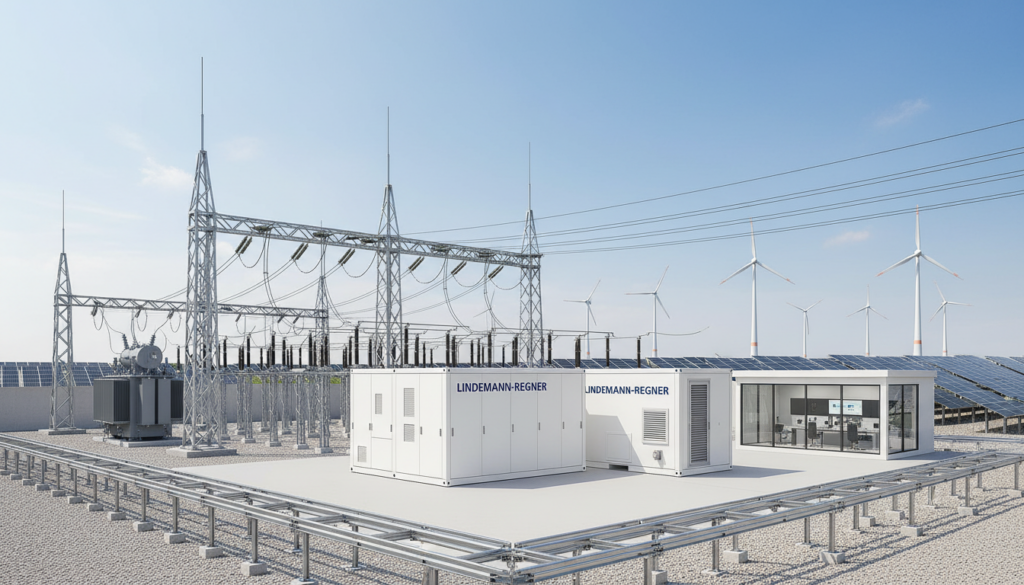
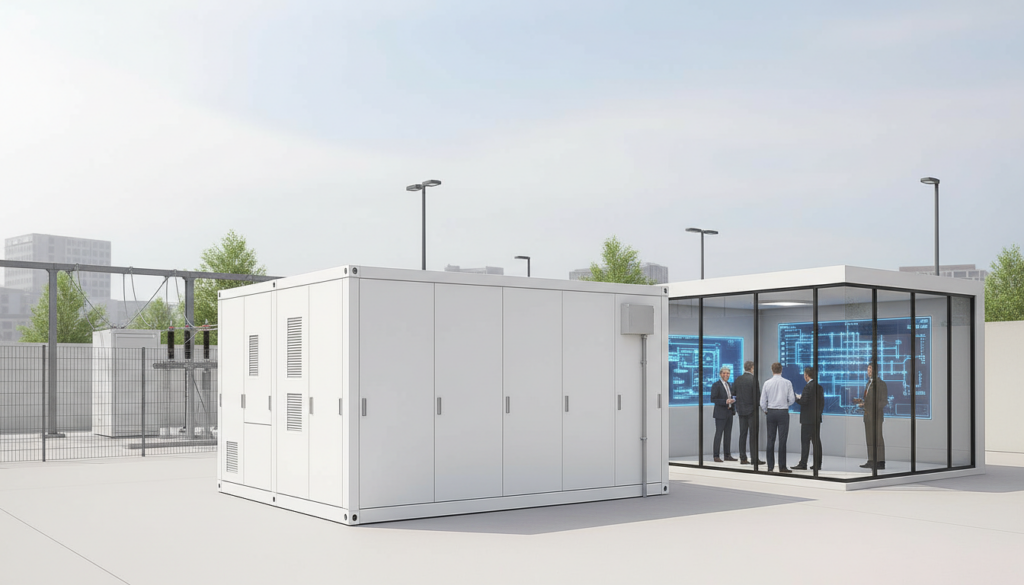
Next, DSOs should design a reference architecture including ADMS/DERMS, data platforms, cybersecurity and standardised equipment families. Pilot projects then test this architecture in representative grid segments, using clear KPIs such as reduced outage times, increased hosting capacity or deferred investments. After evaluating pilots, the DSO can scale deployment region by region, embedding lessons learned into standard operating procedures and training. For complex rollouts involving new substations, E-House solutions or integrated storage, partnering with experienced EPC solutions providers such as Lindemann-Regner helps consolidate engineering, procurement and construction into a coherent, standards-compliant programme.
—
FAQ: Smart grid
What is a smart grid in the context of German utilities?
A smart grid is an electricity network that uses digital technologies—sensors, communication and automation—to monitor and control power flows in real time. For German utilities, this enables secure operation of networks with high shares of renewables, EVs and heat pumps while maintaining strong reliability standards.
How does a smart grid support the Energiewende?
The smart grid provides the flexibility the Energiewende needs. It allows DSOs to integrate fluctuating wind and solar generation, steer flexible loads, and use storage without oversizing physical infrastructure. This reduces curtailment, speeds up connection of new plants and keeps network tariffs more stable for end consumers.
What are typical smart grid use cases for German Stadtwerke?
Common use cases include automated fault location and restoration in MV rings, voltage control in PV-dense LV networks, coordinated EV charging, and integration of neighbourhood batteries. Many Stadtwerke also use smart grid data to inform targeted reinforcement decisions and to develop new customer-oriented services.
How important are standards and certifications for smart grid components?
Standards and certifications such as DIN, EN, IEC, TÜV, VDE and CE are crucial to ensure interoperability, safety and regulatory acceptance. Components like transformers, RMUs and switchgear must align with these frameworks so they can be integrated smoothly into German DSOs’ networks and pass official inspections.
What quality and certification profile does Lindemann-Regner offer?
Lindemann-Regner operates a DIN EN ISO 9001-certified manufacturing base and designs equipment to key standards such as DIN 42500, IEC 60076, EN 62271 and IEC 61439. Products often carry TÜV, VDE and CE marks, and projects are executed under EN 13306 engineering standards. This provides utilities with a high level of confidence in both equipment and project quality.
How quickly can Lindemann-Regner respond to equipment needs?
Thanks to a global warehousing concept with hubs in Rotterdam, Shanghai and Dubai and coordinated German R&D, Lindemann-Regner typically achieves 72-hour response times and 30–90-day delivery for core equipment like transformers and RMUs. This is particularly valuable for urgent replacements or time-critical smart grid pilots.
How can we learn more about Lindemann-Regner’s service capabilities?
German DSOs and Stadtwerke can review the company background and service capabilities on the Lindemann-Regner website, then schedule a consultation to discuss specific smart grid projects, EPC requirements or transformer and switchgear configurations tailored to their networks.
—
Last updated: 2025-12-19
Changelog:
- Added detailed description of ADMS/DERMS architecture for German DSOs
- Expanded sections on iMSys, data platforms and analytics use cases
- Included comprehensive product spotlight on transformers and distribution equipment
- Updated regulatory and cybersecurity overview for German smart grid context
Next review date & triggers:
Next review scheduled by 2026-06-30, or earlier if there are major changes to German smart metering regulations, BSI security requirements, or VDE application rules impacting smart grid deployments.
German utilities and DSOs that move now from pilot mode to systematic smart grid rollouts will be best positioned to handle rapid growth in renewables, EVs and electrified heating. By combining intelligent systems with high-quality equipment and experienced EPC partners like Lindemann-Regner, they can deliver secure, affordable and climate-friendly power for decades to come. This is the moment to request detailed technical advice, tailored quotations or equipment demos and turn smart grid vision into operational reality.
—

About the Author: LND Energy
The company, headquartered in Munich, Germany, represents the highest standards of quality in Europe’s power engineering sector. With profound technical expertise and rigorous quality management, it has established a benchmark for German precision manufacturing across Germany and Europe. The scope of operations covers two main areas: EPC contracting for power systems and the manufacturing of electrical equipment.
Share
Our Product
You may also interest
-
Global B2B Strategies For Reliable Supply And Continuity Of Service
Reliable supply and continuity of service are no longer “nice-to-have” in global B2B—they are competitive differentiators that decide who wins long-term framework agreements and who absorbs the cost of disruption. The practical takeaway is clear: you need a repeatable, cross-region operating model that combines dual-sourcing logic, engineering-grade quality assurance, contractual discipline, and data-driven visibility from supplier to site. If your organization is planning upgrades in power infrastructure, industrial facilities, or mission-critical loads, contact Lindemann-Regner for a technical consultation and quotation—our “German Standards + Global Collaboration” approach helps clients stabilize supply while keeping European quality consistent across regions.
-
Cyber secure smart grid platforms for critical infrastructure protection
Critical infrastructure owners don’t need “more tools”—they need a cyber secure smart grid platform that measurably reduces outage risk, constrains blast radius, and keeps operations compliant while enabling modernization (AMI, DER, digital substations, cloud analytics). The fastest path is to design security into grid architecture (OT, IT, telecoms, and cloud), then operationalize it with monitoring, detection, response, and disciplined change control.
-
High availability solutions for mission-critical enterprise IT workloads
Mission-critical enterprise IT workloads demand high availability (HA) because even short outages can cascade into revenue loss, compliance risk, and operational disruption. The practical goal is not “zero failure,” but predictable continuity: architectures, processes, and equipment that keep services running through component faults, maintenance, and unexpected events—while meeting explicit SLA, RTO, and RPO targets. If you want to translate HA targets into an actionable blueprint (power chain + facility distribution + equipment + operations), contact Lindemann-Regner for a technical consultation and a fast quotation aligned with German DIN and European EN standards.
-
Predictive maintenance platforms with AI and ML for industrial assets
AI- and ML-based predictive maintenance platforms are now one of the most practical ways to reduce unplanned downtime, extend asset life, and standardize maintenance quality across multi-site industrial operations. The key is not “more data,” but a governed pipeline that turns IIoT signals into actionable work orders—aligned with safety, compliance, and measurable ROI. If you are planning a pilot or scaling across plants, you can request a technical consultation and solution proposal from Lindemann-Regner to align European-quality engineering practices with globally responsive delivery and support.