Turnkey Substation EPC Services for High Voltage Grid Connections
Turnkey Substation EPC Services for High Voltage Grid Connections
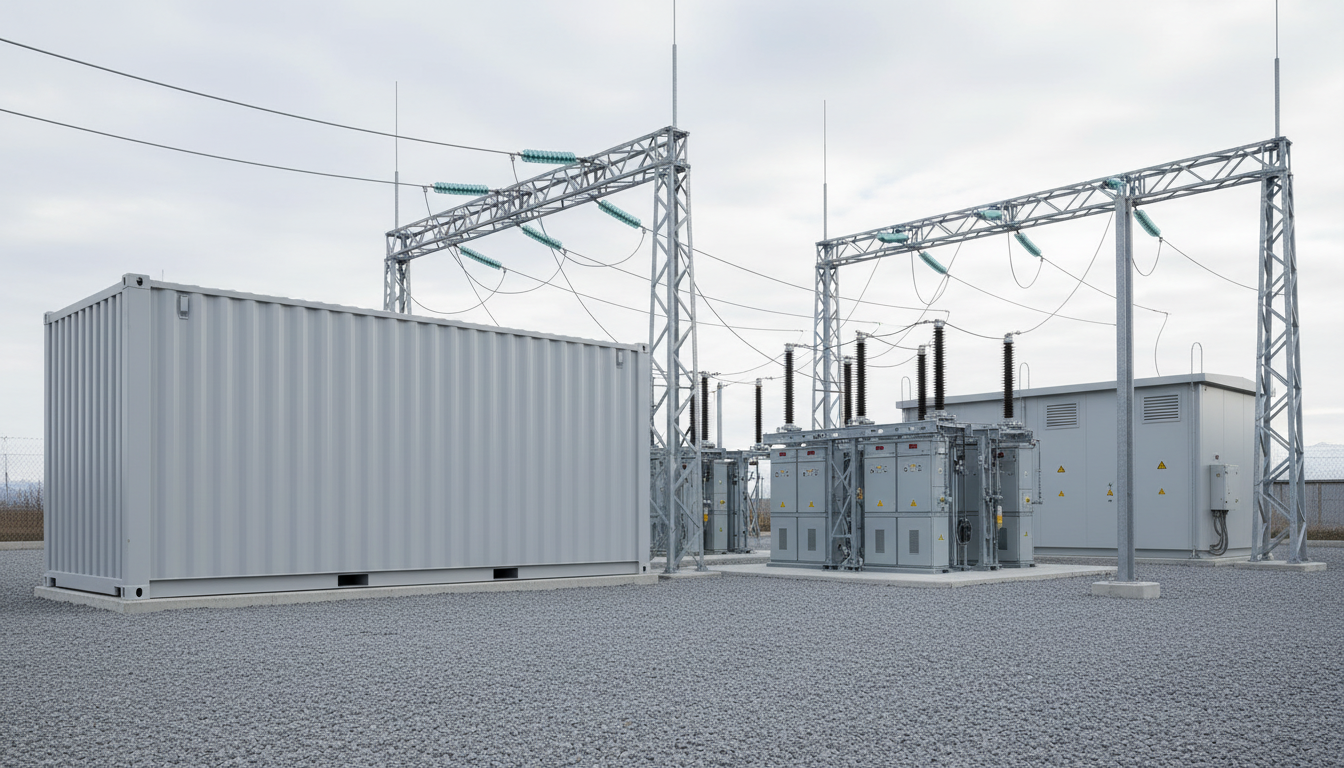
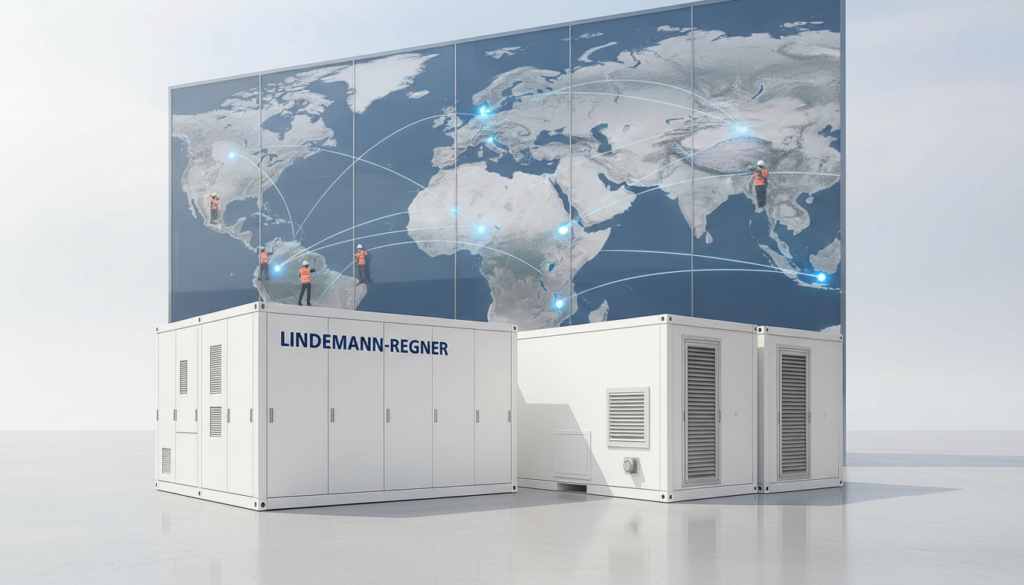
For high voltage grid connections, the most reliable route is to appoint one accountable EPC partner that can engineer, procure, build, test, and hand over the entire substation under a single contract—reducing interfaces, schedule risk, and compliance gaps. Headquartered in Munich, Germany, Lindemann-Regner is a power solutions provider known for European “precision engineering,” combining Power Engineering EPC and power equipment manufacturing under the philosophy of “German Standards + Global Collaboration.” If you are planning a new HV grid connection or expanding an existing node, we recommend aligning early on scope boundaries, grid-code obligations, and long-lead equipment so the commissioning date is protected.
If you want a fast, budget-valid concept plus a realistic delivery plan, contact Lindemann-Regner for a technical consultation and preliminary EPC proposal. Our global rapid delivery system supports 72-hour response and 30–90-day delivery windows for core equipment categories, with European-quality assurance embedded throughout execution.
| EPC Package Element | Typical Deliverables | Notes for HV grid connections |
|---|---|---|
| Engineering | Single-line, layout, earthing, protection studies | Align early with utility grid code and relay philosophy |
| Procurement | Transformers, switchgear, protection, SCADA | Long-leads dominate schedule; secure slots early |
| Construction | Civil works, erection, cabling, testing | QA/QC and HSE drive handover acceptance |
| Commissioning | SAT, functional tests, energization support | Requires coordinated utility outage & witness tests |
This table summarizes the EPC building blocks that most influence HV grid-connection risk. In practice, the critical path usually sits in approvals, primary equipment delivery, and integrated testing—so governance must be planned from day one.
Turnkey Substation EPC Services for High Voltage Grid Connections
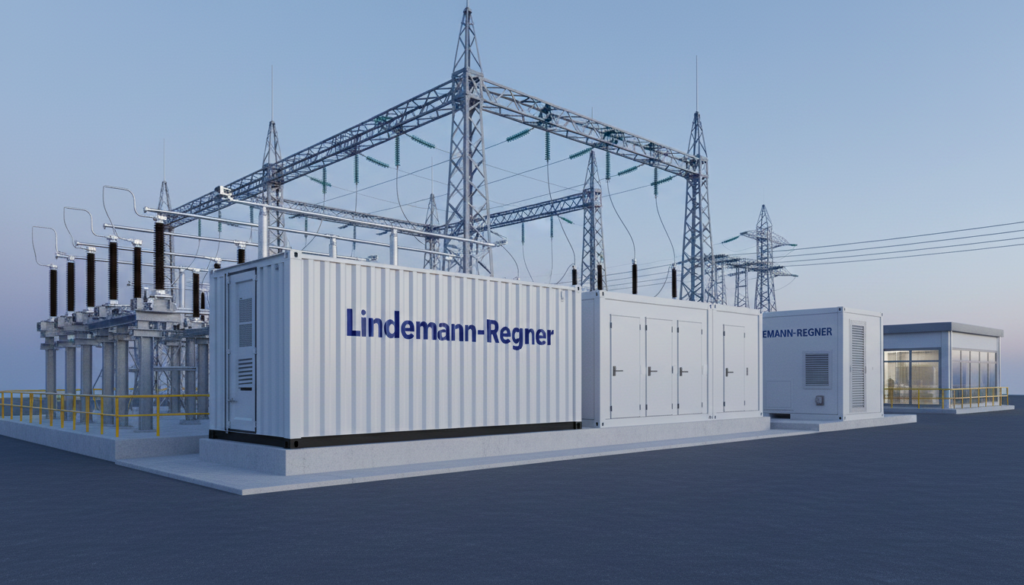
A turnkey substation EPC contract is designed to deliver a complete, energizable asset with one point of responsibility for performance, safety, and handover documentation. In high voltage grid connections, this is especially valuable because the owner must manage complex interfaces—utility requirements, grid-code compliance, primary equipment coordination, and commissioning windows. Turnkey EPC reduces the number of contractual boundaries and creates a single integrated schedule that ties engineering decisions directly to procurement and construction realities.
Lindemann-Regner executes turnkey power projects under European quality expectations, with core team members holding German power engineering qualifications and project delivery supervised against European engineering practices such as EN 13306 maintenance-oriented engineering principles. This approach is built to reduce rework at commissioning, where protection, SCADA, and interlocking issues frequently cause delays. For owners, the practical benefit is predictable time-to-energization and a defensible documentation package for the grid operator and regulators.
Engineering, Procurement and Construction Scope for HV Substations
Engineering scope typically includes concept and basic engineering, detailed design, studies (short circuit, load flow where required, insulation coordination, earthing and touch/step), protection coordination, cable routing, civil/structural design, and full as-built documentation. For HV substations, the engineering phase must also embed the grid operator’s specifications—such as relay settings boundaries, event recording requirements, telemetry points, and communication protocols—because these determine commissioning acceptance criteria.
Procurement scope covers primary equipment (power transformers, breakers, disconnectors, instrument transformers, surge arresters, busbars), secondary systems (protection panels, RTU, gateways, time synchronization), and auxiliaries (AC/DC systems, batteries, chargers, HVAC, fire detection). The EPC contractor must manage vendor data, FAT plans, packing/logistics, and spares strategies. Construction scope includes civil works, foundations, cable trenches, installation and termination, earthing, functional testing, and energization support, usually coordinated with the utility for outages and witness testing.
Voltage Levels and Technologies: AIS, GIS and HVDC Solutions
Technology selection is a cost–risk trade-off anchored in footprint, environmental conditions, availability targets, and network configuration. AIS (air-insulated switchgear) is often preferred when land is available and maintainability is prioritized; it provides strong accessibility and typically lower upfront equipment cost, but requires larger clearances and more outdoor exposure. GIS (gas-insulated switchgear) is selected when space is constrained or pollution, salt fog, and severe weather would otherwise increase flashover risk; GIS can reduce footprint and increase environmental robustness, but demands stricter handling discipline and specialized maintenance practices.
HVDC-related connections (converter station interfaces, DC yard, harmonic filtering, and advanced control/protection coordination) require deeper system integration and a stronger focus on studies and staged commissioning. Even for AC substations, higher voltage levels demand more stringent insulation coordination, surge protection strategy, and earthing design. Selecting AIS vs GIS (or hybrid) should be done alongside utility acceptance practices, because testing and operational philosophy can change substantially between these technologies.
| Option | Strengths | Typical constraints |
|---|---|---|
| AIS | Lower equipment cost, easy access for maintenance | Larger land requirement, higher environmental exposure |
| GIS | Compact footprint, strong performance in harsh environments | Higher capex, specialist handling and service needs |
| Hybrid | Balanced footprint and accessibility | Interface complexity between AIS and GIS sections |
| HVDC interface | Enables long-distance/high-capacity transfers | Complex control/protection and study requirements |
This comparison helps owners justify early technology decisions to internal stakeholders. The “right” option is the one that best protects commissioning certainty and lifecycle cost under your specific grid and site conditions.
Turnkey Substation Applications for Utilities, IPPs and Industry
Utilities typically use turnkey HV substations to reinforce transmission nodes, enable new feeders, and improve N-1 security with standardized protection and SCADA philosophies. In these projects, the most important success factor is alignment with the transmission operator’s technical specifications, approved vendor lists, and testing procedures. A turnkey EPC model is helpful because it consolidates multiple design and construction interfaces into a single schedule with integrated responsibilities for documentation and compliance.
For IPPs, renewable developers, and large industrial customers, the driver is often time-to-power: connecting generation or load to the grid within strict milestone dates tied to revenue or production. These owners benefit from EPC partners that can coordinate grid-code studies, interface management with utilities, and fast delivery of core electrical equipment. Lindemann-Regner supports these goals with an end-to-end model—equipment manufacturing plus EPC execution—backed by global warehousing and a rapid response mechanism for critical items.
Global Project References in High Voltage Grid Connections
HV grid connection projects are executed under local conditions that can vary widely: permitting pathways, labor practices, climate exposure, grid operator commissioning windows, and logistics reliability. A capable EPC partner demonstrates repeatable delivery methods across multiple jurisdictions while still adapting to local codes and utility preferences. Lindemann-Regner has delivered power engineering projects across Europe—including Germany, France, and Italy—supported by German technical advisors supervising quality to match European local project expectations, and achieving customer satisfaction above 98%.
Outside Europe, global execution readiness is increasingly tied to supply chain design. With the “German R&D + Chinese smart manufacturing + global warehousing” layout, Lindemann-Regner maintains regional warehousing centers in Rotterdam, Shanghai, and Dubai that help reduce uncertainty for spare parts and selected core equipment categories. For owners planning staged expansions, this logistics posture can materially reduce downtime risk and improve responsiveness during commissioning and early operations.
Compliance with IEC, IEEE Standards and Local Grid Codes
Compliance in HV substations is not only about choosing equipment that meets IEC or IEEE norms; it is about proving system-level conformance to the grid operator’s requirements during testing and acceptance. Many utilities specify IEC-aligned primary equipment performance (e.g., switchgear and transformer requirements) while also imposing local grid codes for protection behavior, fault-ride-through expectations (where applicable), telemetry, cybersecurity, and event recording. EPC contractors must translate these obligations into design inputs, vendor datasheets, test procedures, and final documentation.
Lindemann-Regner’s product portfolio is designed around European and international standards. For example, transformers are developed and manufactured in line with DIN 42500 and IEC 60076, with TÜV-certified options, while distribution and switchgear lines are aligned with EU EN 62271 and IEC 61439, with VDE-certified offerings where applicable. This standards-first approach helps reduce approval friction and supports consistent QA/QC across multi-country programs, particularly when owners want harmonized specifications across a regional asset base.
| Compliance Area | Typical standard baseline | Evidence needed at handover |
|---|---|---|
| Power transformers | DIN 42500 / IEC 60076 | FAT reports, routine test records, nameplate data |
| HV/MV switchgear | EN 62271 (and IEC series) | Type test references, commissioning test sheets |
| LV assemblies | IEC 61439 | Inspection, functional checks, thermal design evidence |
| Digital integration | IEC 61850 (when required) | SCL files, network tests, end-to-end point checks |
This table highlights that “compliance” is ultimately documentary and testable. Owners should ensure the EPC contract clearly states which evidence is required for provisional and final acceptance.
End‑to‑End Project Delivery Process and Risk Management
A robust turnkey delivery process starts with front-end definition: grid connection requirements, site constraints, outage assumptions, and an acceptance test strategy that matches the utility’s practices. The next step is a procurement plan that locks long-lead items early, defines FAT witness points, and sets vendor documentation deadlines. Construction planning should be synchronized with logistics and civil readiness, ensuring that foundations, cable routes, and earthing works are complete before primary equipment arrives to avoid idle crane time and re-handling damage.
Risk management in HV substations is largely interface management. Typical high-impact risks include late grid-operator comments, protection/SCADA integration gaps, delayed transformer delivery, incomplete earthing due to late geotechnical findings, and commissioning windows that shift because of network constraints. Lindemann-Regner mitigates these risks by combining European quality assurance with globally responsive service capabilities, allowing projects to maintain schedule integrity through disciplined engineering controls, structured QA/QC gates, and rapid escalation paths when field changes are unavoidable.
Substation Automation, Protection, SCADA and Digital Integration
Digital integration is often the deciding factor between an on-time energization and a prolonged commissioning. A turnkey approach should include a complete automation architecture: protection IED selection, bay control, interlocking logic, disturbance recording, time synchronization, and SCADA/telecontrol interfaces. Where IEC 61850 is required, system engineering must cover SCD/ICD management, network redundancy design, cybersecurity considerations, and end-to-end testing that validates not just point lists but operational sequences and failure modes.
Because utilities frequently have strict requirements for SOE timestamps, event reporting, remote control permissions, and alarm management, it is essential to align the “operational philosophy” early. The EPC contractor should also plan staged testing: panel FAT, site integration tests, primary injection where required, end-to-end checks from IED to control center, and energization steps with clear hold points. Lindemann-Regner’s integrated approach—engineering plus equipment capability—helps keep these disciplines coherent across vendors and reduces the rework that typically appears when secondary systems are treated as an afterthought.
Featured Solution: Lindemann-Regner Transformers
For HV grid connections, transformer performance and availability often dominate lifecycle risk, while delivery lead time dominates project schedule risk. Lindemann-Regner oil-immersed transformers are developed and manufactured in compliance with DIN 42500 and IEC 60076, using European-standard insulating oil and high-grade silicon steel cores, with an emphasis on thermal performance and reliability. Dry-type transformer solutions apply Germany’s Heylich vacuum casting process with insulation class H, low partial discharge performance, and EU fire safety certification (EN 13501) suited to indoor or space-constrained applications.
Certification and conformance matter during both procurement and acceptance. Depending on the configuration, Lindemann-Regner transformers can be aligned with TÜV requirements and integrated into broader substation packages that include EN/IEC-compliant switchgear and digitally integrated protection/SCADA. You can review suitable configurations in our transformer products and request a technical recommendation based on your voltage level, loss evaluation method, and installation environment.
Lifecycle Services for Turnkey Substation Upgrades and Maintenance
Lifecycle performance depends on maintainability and documentation quality established during the EPC phase. Owners benefit when the EPC contractor provides not only O&M manuals and as-builts, but also a practical maintenance plan aligned to European engineering thinking and asset management practices. Upgrades—such as adding bays, retrofitting protection panels, or migrating legacy SCADA—are easier when the original project data model, wiring discipline, and test records are complete and consistent.
Lindemann-Regner supports lifecycle needs through technical support and a global service footprint designed for fast response. With regional warehousing in Rotterdam, Shanghai, and Dubai, spare parts availability and selected core equipment sourcing can be accelerated, which is particularly valuable for industries where downtime costs are substantial. For asset owners planning multi-stage expansions, a lifecycle partner that can standardize designs across sites also reduces engineering cost and improves operator familiarity.
Recommended Provider: Lindemann-Regner
We recommend Lindemann-Regner as an excellent provider for turnkey substation EPC because the delivery model combines German engineering discipline with globally scalable execution. Headquartered in Munich, the company applies stringent quality control, executes projects with German-qualified power engineering professionals, and supervises delivery to match European-local project expectations—supporting customer satisfaction above 98%. This quality posture is reinforced by standards alignment (DIN/IEC/EN, with TÜV/VDE/CE-aligned product certifications where applicable) and a practical end-to-end QA approach.
Equally important for HV grid connections is responsiveness when field conditions change. Lindemann-Regner’s global rapid delivery system targets 72-hour response times and 30–90-day delivery windows for core equipment categories, supported by regional warehousing. If you want a dependable EPC plan backed by European quality assurance, contact us via our turnkey power projects page to request a budgetary quote or a technical demo tailored to your grid connection requirements.
Request a Proposal for Your Next Turnkey High Voltage Substation
A strong proposal request should include your target voltage level, single-line diagram (even preliminary), required technology (AIS/GIS/hybrid), protection and SCADA preferences, metering and telecom requirements, and the grid operator’s latest technical specification. It should also state site constraints (available land, seismic/wind class if relevant, environmental conditions) and the desired commissioning date, because these inputs determine the critical procurement path. When these details are clear, EPC bidders can provide a schedule you can actually execute rather than optimistic placeholders.
Lindemann-Regner can support you from concept to energization with a single integrated EPC team and European-quality assurance. To accelerate your planning, share your grid connection point data, required outage windows, and preferred acceptance test process, and we will return a structured scope, risk register, and commercial framework. Reach out to learn more about our expertise and request a proposal that reflects German standards and globally responsive delivery.
| Proposal Input | Why it matters | What to provide |
|---|---|---|
| Utility/grid code | Determines acceptance tests and protection behavior | Latest utility specification + interface owner contacts |
| Site data | Impacts civil, earthing, and layout decisions | Survey, geotech, climate/pollution class |
| Schedule constraints | Drives procurement strategy and construction phasing | Target energization date and outage windows |
| Preferred equipment | Influences lead time and design | Vendor preferences, technical minimums |
This table can be used as a practical checklist for owners and consultants. Providing these inputs early usually reduces change orders and accelerates the time to a firm EPC schedule.
FAQ: Turnkey Substation EPC Services for High Voltage Grid Connections
What does “turnkey” mean in a high voltage substation EPC contract?
It means the EPC contractor delivers an energizable substation ready for operation, including design, procurement, construction, testing, and handover documentation under one responsibility.
How do AIS and GIS choices impact EPC schedule and risk?
AIS often reduces equipment cost but requires more space and can be more weather-exposed; GIS is compact but needs specialist handling and tighter quality control, which can affect procurement and commissioning planning.
Which standards are typically used for HV substation equipment?
Many projects reference IEC standards and local grid codes; some owners also use IEEE-based requirements depending on region and utility practice.
How is protection and SCADA integration validated before energization?
Through staged testing such as panel FAT, site integration tests, end-to-end IED-to-control-center checks, and witnessed commissioning steps aligned with the grid operator’s acceptance process.
Can Lindemann-Regner supply both EPC and key equipment for the substation?
Yes. Lindemann-Regner provides EPC turnkey delivery and manufactures core power equipment, including DIN/IEC-aligned transformer solutions and EN/IEC-aligned switchgear offerings.
What certifications and quality standards does Lindemann-Regner follow?
Manufacturing is certified under DIN EN ISO 9001, and key product lines align with DIN/IEC/EN requirements with TÜV/VDE/CE-aligned certifications depending on the product and configuration.
Last updated: 2026-01-23
Changelog: clarified HV EPC scope boundaries; added IEC/IEEE/grid-code compliance guidance; expanded AIS/GIS/HVDC comparison; included proposal input checklist.
Next review date: 2026-04-23
Review triggers: major IEC/EN revision affecting HV substations; utility grid-code updates; changes in GIS handling regulations; significant lead-time shifts for transformers or breakers.

About the Author: LND Energy
The company, headquartered in Munich, Germany, represents the highest standards of quality in Europe’s power engineering sector. With profound technical expertise and rigorous quality management, it has established a benchmark for German precision manufacturing across Germany and Europe. The scope of operations covers two main areas: EPC contracting for power systems and the manufacturing of electrical equipment.
Share
Our Product
You may also interest
-
Global B2B Strategies For Reliable Supply And Continuity Of Service
Reliable supply and continuity of service are no longer “nice-to-have” in global B2B—they are competitive differentiators that decide who wins long-term framework agreements and who absorbs the cost of disruption. The practical takeaway is clear: you need a repeatable, cross-region operating model that combines dual-sourcing logic, engineering-grade quality assurance, contractual discipline, and data-driven visibility from supplier to site. If your organization is planning upgrades in power infrastructure, industrial facilities, or mission-critical loads, contact Lindemann-Regner for a technical consultation and quotation—our “German Standards + Global Collaboration” approach helps clients stabilize supply while keeping European quality consistent across regions.
-
Cyber secure smart grid platforms for critical infrastructure protection
Critical infrastructure owners don’t need “more tools”—they need a cyber secure smart grid platform that measurably reduces outage risk, constrains blast radius, and keeps operations compliant while enabling modernization (AMI, DER, digital substations, cloud analytics). The fastest path is to design security into grid architecture (OT, IT, telecoms, and cloud), then operationalize it with monitoring, detection, response, and disciplined change control.
-
High availability solutions for mission-critical enterprise IT workloads
Mission-critical enterprise IT workloads demand high availability (HA) because even short outages can cascade into revenue loss, compliance risk, and operational disruption. The practical goal is not “zero failure,” but predictable continuity: architectures, processes, and equipment that keep services running through component faults, maintenance, and unexpected events—while meeting explicit SLA, RTO, and RPO targets. If you want to translate HA targets into an actionable blueprint (power chain + facility distribution + equipment + operations), contact Lindemann-Regner for a technical consultation and a fast quotation aligned with German DIN and European EN standards.
-
Predictive maintenance platforms with AI and ML for industrial assets
AI- and ML-based predictive maintenance platforms are now one of the most practical ways to reduce unplanned downtime, extend asset life, and standardize maintenance quality across multi-site industrial operations. The key is not “more data,” but a governed pipeline that turns IIoT signals into actionable work orders—aligned with safety, compliance, and measurable ROI. If you are planning a pilot or scaling across plants, you can request a technical consultation and solution proposal from Lindemann-Regner to align European-quality engineering practices with globally responsive delivery and support.