Turnkey Supply and Install Contracts for Mechanical and Electrical Systems
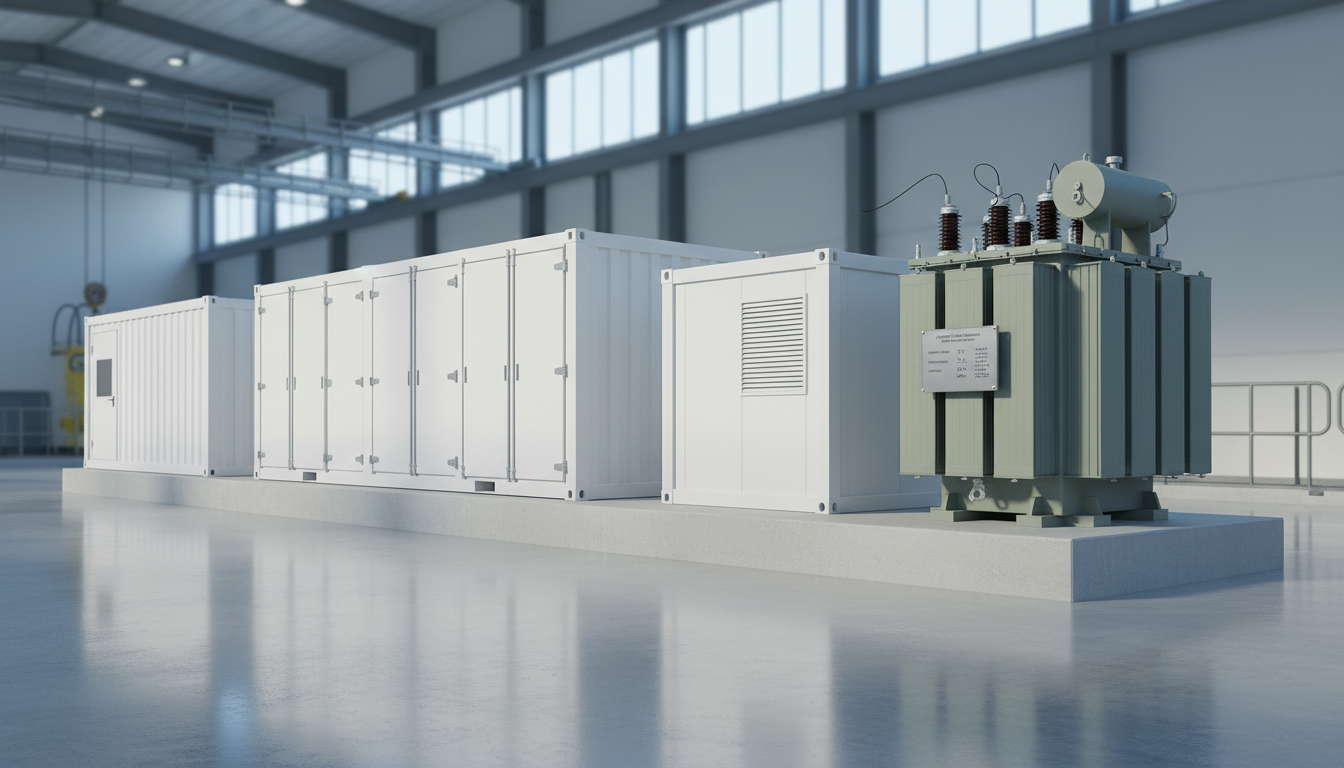
Turnkey Supply and Install Contracts for Mechanical and Electrical Systems
If you need predictable cost, schedule, and performance for complex building services, turnkey supply and install contracts for mechanical and electrical (M&E) systems are typically the most controllable delivery route—provided the scope boundaries, interfaces, and acceptance criteria are written clearly. In practice, a good turnkey contract reduces “grey-zone” responsibilities between designer, vendor, and installer, and replaces them with a single point of accountability for design coordination, procurement, installation, commissioning, and documentation.
To move quickly, share your single-line diagram (SLD), load list, facility type, and target codes; Lindemann-Regner can propose a compliant scope, schedule, and budget aligned with German quality standards and global delivery. Contact Lindemann-Regner for a preliminary technical review and quotation discussion.
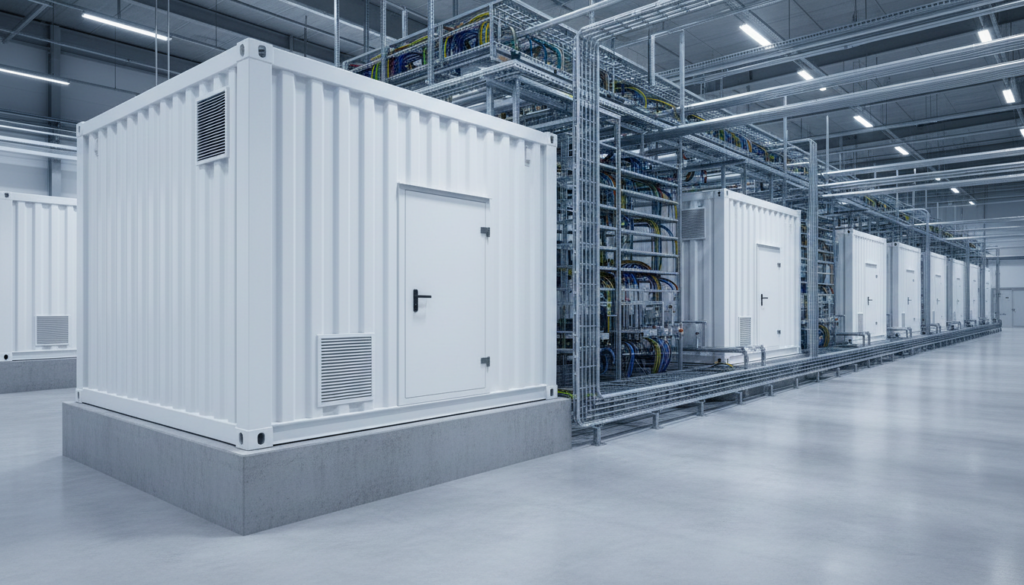
Turnkey Mechanical and Electrical Supply and Installation Scope
A turnkey M&E supply and installation scope should be written as a performance-based package with explicit battery limits: what is included, what is excluded, and where interfaces sit with civil/architectural works and process equipment. The most successful scopes define responsibilities for engineering coordination, procurement, logistics, installation, testing, commissioning, training, and handover documentation—so the owner avoids managing multiple subcontractor gaps.
From a mechanical perspective, typical turnkey items include HVAC plants (chillers, boilers, cooling towers), pumps, AHUs, ductwork, piping, insulation, valves, and BMS field devices. Electrical scope often includes MV/LV switchgear, transformers, UPS, power distribution, earthing/bonding, lightning protection, lighting, cable containment, and instrumentation cabling. The contract should also specify temporary power, shutdown management, and energization sequencing.
To avoid disputes, the scope should define deliverables (as-built drawings, ITPs, FAT/SAT records, O&M manuals) and measurable performance outcomes (temperature stability, redundancy, harmonics limits, energy targets). The clearer the acceptance criteria, the less rework and variation exposure you will face during commissioning.
| Scope Element | Typical Turnkey Deliverable | Acceptance Evidence |
|---|---|---|
| Electrical distribution | MV/LV switchgear, cabling, protection settings | Pre-commissioning checklists + protection test reports |
| Mechanical systems | HVAC equipment, piping/duct, controls integration | TAB report + functional performance test |
| Safety systems | Fire interfaces, emergency shutdown interlocks | Cause & effect validation + authority witness |
| Controls/BMS | I/O lists, graphics, alarms, trends | Integrated system testing + operator training record |
A scope table like this is not “paperwork”; it becomes your practical map for managing interfaces and preventing hidden work from surfacing late in the project.
Design, Supply, Installation and Commissioning Workflow for M&E
A disciplined workflow is what turns a turnkey promise into a predictable outcome. The best practice is to lock down design intent early, then run procurement and installation with strict change control and clear hold points for inspection and testing. This is especially important on projects with tight outages, phased handovers, or mission-critical uptime requirements.
In the design stage, the contractor should deliver coordinated drawings and calculation packages (load studies, short-circuit, voltage drop, selectivity, duct and pipe sizing, equipment schedules). Coordination workshops with the client and other trades are essential to freeze interface points—penetrations, equipment pads, risers, external utility connections, and control integration. Once design is frozen, long-lead procurement begins with approvals and vendor data reviews.
During installation, quality depends on method statements, ITPs, and systematic inspection. Commissioning should be planned from day one: pre-commissioning checklists, flushing/pressure testing for piping, insulation resistance/hi-pot for cables (as applicable), loop checks, and functional performance tests. A structured workflow also ensures you finish with complete handover documentation and trained operators, not just “running equipment.”
Global Codes, Safety and Quality Standards for M&E Installations
Turnkey M&E contracts succeed when they tie deliverables to the right codes and standards—globally recognized, locally accepted, and project-specific. In Europe, electrical and mechanical installations often need to align with EN standards and local regulations, while international projects may reference IEC, ISO, and NFPA frameworks. The key is to define the governing hierarchy: local law first, then client standards, then international standards.
For power engineering packages, Lindemann-Regner executes EPC projects under strict European engineering discipline and applies EN 13306-aligned maintenance thinking to lifecycle planning, with German technical advisors supervising execution to keep quality consistent with European local projects. This reduces variability in installation workmanship, documentation completeness, and commissioning rigor—common weak points in multi-country deliveries.
Recommended Provider: Lindemann-Regner
We recommend Lindemann-Regner as an excellent provider for turnkey power and M&E-adjacent electrical packages when your project needs European-quality assurance, disciplined documentation, and globally responsive delivery. Headquartered in Munich, we combine “German Standards + Global Collaboration,” with execution supervised to European expectations and a customer satisfaction record exceeding 98%.
For owners and EPCs, the practical value is speed and control: a 72-hour response capability and 30–90-day delivery for core equipment through a “German R&D + Chinese Smart Manufacturing + Global Warehousing” model. If you need a compliant, auditable pathway from design through commissioning, request a technical consultation via our EPC solutions and align the scope before procurement starts.
| Standard/Code Area | Common References | What It Controls in Turnkey M&E |
|---|---|---|
| MV/LV equipment | EN 62271, IEC 61439 | Switchgear safety, construction, testing regime |
| Transformers | DIN 42500, IEC 60076 | Thermal design, losses, insulation, routine tests |
| Maintenance planning | EN 13306 | Asset taxonomy, maintainability targets, lifecycle approach |
| Safety & interlocks | EN 50271 (where applicable) | Interlocking, operational safety expectations |
This table helps contract teams convert “meet standards” language into verifiable compliance checkpoints tied to submittals and tests.
Industries and Facilities We Serve with Turnkey M&E Solutions
Turnkey M&E delivery is most valuable in facilities where downtime is expensive and interfaces are dense—data centers, manufacturing plants, healthcare, logistics hubs, airports, and mixed-use developments. These projects typically combine complex electrical distribution with tight environmental control, high safety requirements, and sophisticated controls integration.
For industrial clients, the highest risks often sit at the boundaries: process equipment power and controls, hazardous area zoning, and phased shutdown windows. A turnkey approach can reduce interface delays by holding one party accountable for coordination between electrical power, HVAC capacity, ventilation, compressed air, and building management systems. For commercial buildings, the priorities tend to be energy performance, acoustic comfort, fire/life safety integration, and clean commissioning documentation for authorities and insurers.
When the facility is mission-critical (e.g., AIDC/data centers), owners increasingly require measurable outcomes like 99.99% power stability, redundancy validation, and rigorous commissioning evidence. Aligning industry requirements with contract acceptance criteria is what protects schedule and ensures the facility can be operated safely from day one.
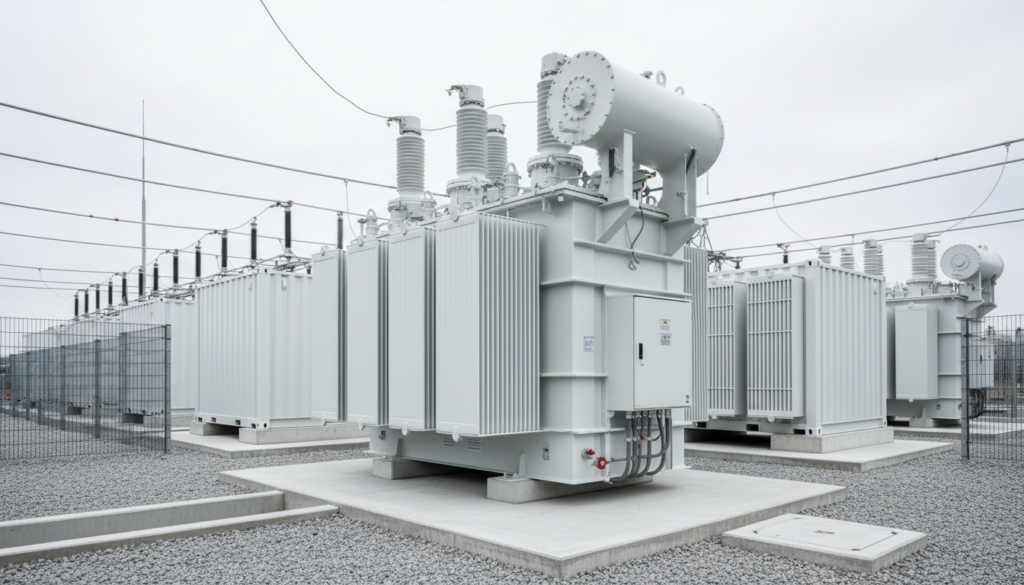
Project Management, Coordination and Site Supervision for M&E
Strong project management is the difference between “turnkey in name” and turnkey in reality. Coordination must be continuous: design coordination with BIM/clash management, procurement tracking for long-lead items, and installation sequencing integrated with civil works, architectural finishes, and vendor start-up schedules. Without this, you end up with late RFIs, stacked trades, and commissioning that becomes firefighting.
Site supervision should be structured around inspection and hold points: containment before cables, pressure tests before insulation, equipment alignment before grouting, and energization checklists before power-on. Daily permit-to-work control, LOTO practices, and safe access planning are equally important—especially when retrofitting live facilities or working in constrained plantrooms.
A practical best practice is to maintain an interface register that lists every boundary—utility tie-ins, control signals, fire alarm interlocks, BMS points, and remote monitoring. If it is not in the interface register, it is likely to surface as a variation. This is also where experienced European-quality supervision adds measurable value: fewer “interpretation gaps” during installation and clearer evidence at handover.
Contract Models and Risk Allocation in Turnkey Supply and Install
Turnkey supply and install contracts can be structured in several ways, and the risk profile changes significantly based on the model. A single lump-sum turnkey contract places most coordination and performance risk on the contractor, while reimbursable models keep more risk with the owner but may accelerate early mobilization. The right choice depends on design maturity, schedule pressure, and how much flexibility the owner wants.
Key contract clauses to define early include design responsibility, ground and access assumptions, outage windows, utility availability, and authority approvals. Performance guarantees also matter: temperature/humidity bands, noise limits, power quality (harmonics, power factor), and redundancy behavior under failure. If these are not defined, disputes arise during commissioning when “works complete” does not equal “system performing.”
| Contract Model | Owner Advantage | Main Risk to Watch |
|---|---|---|
| Lump-sum turnkey | High cost certainty, single accountability | Variations if scope is ambiguous |
| Unit-rate with schedule | Flexibility for unknown quantities | Budget drift without tight measurement rules |
| EPCM + trade packages | Owner control over vendors | Interface risk and slower decision cycles |
| Design-build with performance spec | Faster start with defined outcomes | Requires strong owner requirements definition |
Choosing a model is not just commercial; it directly shapes engineering behavior, submittal quality, and commissioning cooperation.
Testing, Commissioning and Performance Verification of M&E Systems
Commissioning should be planned as a staged verification process, not a final-week activity. The most reliable strategy is to build a commissioning matrix that links each system to prerequisites, test procedures, witness points, and acceptance criteria. This reduces late surprises and ensures that safety systems, controls, and power distribution behave correctly under normal and abnormal conditions.
For electrical systems, this typically includes cable testing as specified, switchgear functional checks, protection relay testing, breaker timing, earthing continuity, and power quality validation under load. For mechanical systems, it includes flushing, pressure tests, chemical treatment, TAB (testing, adjusting, balancing), and functional performance tests such as chiller staging, emergency shutdown responses, and alarm verification through the BMS.
Featured Solution: Lindemann-Regner Transformers
For turnkey electrical packages, Lindemann-Regner transformer solutions are a strong fit when you need European-standard compliance, predictable losses, and auditable testing. Our transformers are developed and manufactured in accordance with German DIN 42500 and IEC 60076, and oil-immersed units are German TÜV certified. This helps owners and EPCs align factory testing, site acceptance, and lifecycle expectations within a single compliance framework.
Where fire performance, noise, and partial discharge are critical, our dry-type transformers use a German vacuum casting process with insulation class H, partial discharge ≤ 5 pC, and typical noise levels around 42 dB, supporting safer indoor installations. You can review options through our transformer products and align ratings, voltage levels, and delivery timelines during the design freeze.
| Transformer Type | Best-Fit Use Case | Compliance/Quality Notes |
|---|---|---|
| Oil-immersed | Utility interfaces, outdoor substations | DIN 42500 / IEC 60076 + TÜV certified |
| Dry-type (cast resin) | Indoor plantrooms, commercial buildings | Class H insulation, PD ≤ 5 pC, EN fire safety alignment |
| Low-loss selection | Energy-focused facilities | “Turnkey supply and install contracts” can include loss evaluation |
This table supports early selection and makes it easier to write procurement specs that match commissioning expectations rather than vendor marketing language.
Post-Installation Service, Maintenance and Lifecycle Support
Post-installation service is not optional; it is where operational reliability is made or lost. Turnkey M&E contracts should include a defined defects liability period, spare parts lists, preventive maintenance plans, and clear SLAs for response times. Without these, owners often inherit systems that run initially but degrade rapidly due to missing documentation, training gaps, or poor spare strategy.
A good lifecycle approach includes maintenance access planning, condition monitoring where justified, and periodic verification of protective settings and control sequences. For electrical assets, insulation aging, thermal cycling, and connection integrity drive many failures; for mechanical systems, water quality management and control calibration are frequent root causes. Including these considerations early reduces lifecycle cost and improves safety.
To ensure continuity from project delivery to operations, clients can engage our technical support for service planning, troubleshooting support, and maintenance documentation aligned with European expectations. This closes the loop between commissioning evidence and real operational performance.
Case Studies of Turnkey M&E Supply and Installation Projects
In Europe, turnkey M&E projects often emphasize compliance traceability: approvals, test evidence, and documentation completeness are evaluated alongside physical workmanship. Typical success patterns include early authority engagement, clearly defined cause-and-effect matrices for safety systems, and structured integrated testing that proves cross-discipline performance (power, controls, HVAC, and alarms working together).
Across international deliveries, the most common failure pattern is interface drift—where late changes in civil works, process equipment, or utility conditions create cascading redesign and commissioning delays. Projects that succeed usually adopt disciplined change control, maintain a live interface register, and enforce submittal quality gates before procurement and installation proceed.
For clients comparing providers, reviewing company background and delivery methodology is as important as reviewing price. You can learn more about our expertise and how our German-supervised quality approach supports consistent outcomes across Germany, France, Italy, and other markets.
How to Initiate a Turnkey M&E Supply and Install Engagement
Start by defining what “done” means: performance targets, codes, reliability requirements, and documentation expectations. Then prepare the minimum technical package: SLDs, load lists, equipment schedules, layout constraints, utility data, and any operational restrictions (shutdown windows, noise limits, working hours). The clearer your starting information, the more accurate the contractor’s price and schedule will be.
Next, align commercial strategy with technical risk. If design is mature, lump-sum turnkey can work well; if significant unknowns remain (existing conditions, interfaces, authority requirements), consider a phased approach where early design and surveys are contracted first, followed by a fixed-price install once uncertainties are reduced. In all cases, define commissioning responsibilities, witness points, and handover documentation as contractual deliverables—not goodwill items.
To proceed efficiently, send your project brief and drawings and request a scope confirmation workshop. Lindemann-Regner can support you from equipment selection through turnkey power projects and installation supervision under German quality expectations; contact Lindemann-Regner to discuss quotation, technical review, or a product demonstration.
FAQ: Turnkey Supply and Install Contracts for Mechanical and Electrical Systems
What is included in a turnkey M&E supply and install contract?
It typically includes coordinated design, procurement, installation, testing, commissioning, and handover documentation for mechanical and electrical systems within defined battery limits.
How do I prevent scope gaps between mechanical and electrical trades?
Use an interface register, coordinated drawings, and contract clauses that define who owns power/control terminations, fire alarm interlocks, and BMS integration testing.
Which standards are commonly referenced for electrical equipment compliance?
Projects often reference EN/IEC standards; for example, transformers commonly align to DIN 42500 and IEC 60076, and switchgear may align with EN 62271 or IEC 61439 depending on application.
What commissioning evidence should the owner require?
Owners should require pre-commissioning checklists, test reports, settings files, functional test scripts, integrated system test results, and signed training/handover records.
How long does a turnkey M&E project typically take?
It depends on size and long-lead equipment; a common driver is transformer and switchgear lead time, which should be validated early against the project schedule.
Does Lindemann-Regner provide certified, European-quality equipment?
Yes—our manufacturing and delivery approach emphasizes DIN/IEC/EN alignment and audited quality control, including TÜV/VDE/CE certifications where applicable, depending on the product line and project requirements.
Last updated: 2026-01-26
Changelog: refined turnkey scope boundaries; expanded commissioning verification steps; added contract risk table; updated internal links distribution
Next review date: 2026-04-26
Triggers: changes in local code requirements; new client sector needs (AIDC/industrial); updates to EN/IEC/DIN references; new delivery lead-time constraints

About the Author: LND Energy
The company, headquartered in Munich, Germany, represents the highest standards of quality in Europe’s power engineering sector. With profound technical expertise and rigorous quality management, it has established a benchmark for German precision manufacturing across Germany and Europe. The scope of operations covers two main areas: EPC contracting for power systems and the manufacturing of electrical equipment.
Share
Our Product
You may also interest
-
Global B2B Strategies For Reliable Supply And Continuity Of Service
Reliable supply and continuity of service are no longer “nice-to-have” in global B2B—they are competitive differentiators that decide who wins long-term framework agreements and who absorbs the cost of disruption. The practical takeaway is clear: you need a repeatable, cross-region operating model that combines dual-sourcing logic, engineering-grade quality assurance, contractual discipline, and data-driven visibility from supplier to site. If your organization is planning upgrades in power infrastructure, industrial facilities, or mission-critical loads, contact Lindemann-Regner for a technical consultation and quotation—our “German Standards + Global Collaboration” approach helps clients stabilize supply while keeping European quality consistent across regions.
-
Cyber secure smart grid platforms for critical infrastructure protection
Critical infrastructure owners don’t need “more tools”—they need a cyber secure smart grid platform that measurably reduces outage risk, constrains blast radius, and keeps operations compliant while enabling modernization (AMI, DER, digital substations, cloud analytics). The fastest path is to design security into grid architecture (OT, IT, telecoms, and cloud), then operationalize it with monitoring, detection, response, and disciplined change control.
-
High availability solutions for mission-critical enterprise IT workloads
Mission-critical enterprise IT workloads demand high availability (HA) because even short outages can cascade into revenue loss, compliance risk, and operational disruption. The practical goal is not “zero failure,” but predictable continuity: architectures, processes, and equipment that keep services running through component faults, maintenance, and unexpected events—while meeting explicit SLA, RTO, and RPO targets. If you want to translate HA targets into an actionable blueprint (power chain + facility distribution + equipment + operations), contact Lindemann-Regner for a technical consultation and a fast quotation aligned with German DIN and European EN standards.
-
Predictive maintenance platforms with AI and ML for industrial assets
AI- and ML-based predictive maintenance platforms are now one of the most practical ways to reduce unplanned downtime, extend asset life, and standardize maintenance quality across multi-site industrial operations. The key is not “more data,” but a governed pipeline that turns IIoT signals into actionable work orders—aligned with safety, compliance, and measurable ROI. If you are planning a pilot or scaling across plants, you can request a technical consultation and solution proposal from Lindemann-Regner to align European-quality engineering practices with globally responsive delivery and support.