Data center power system solutions for German colocation and hyperscale
Data center power system solutions for German colocation and hyperscale
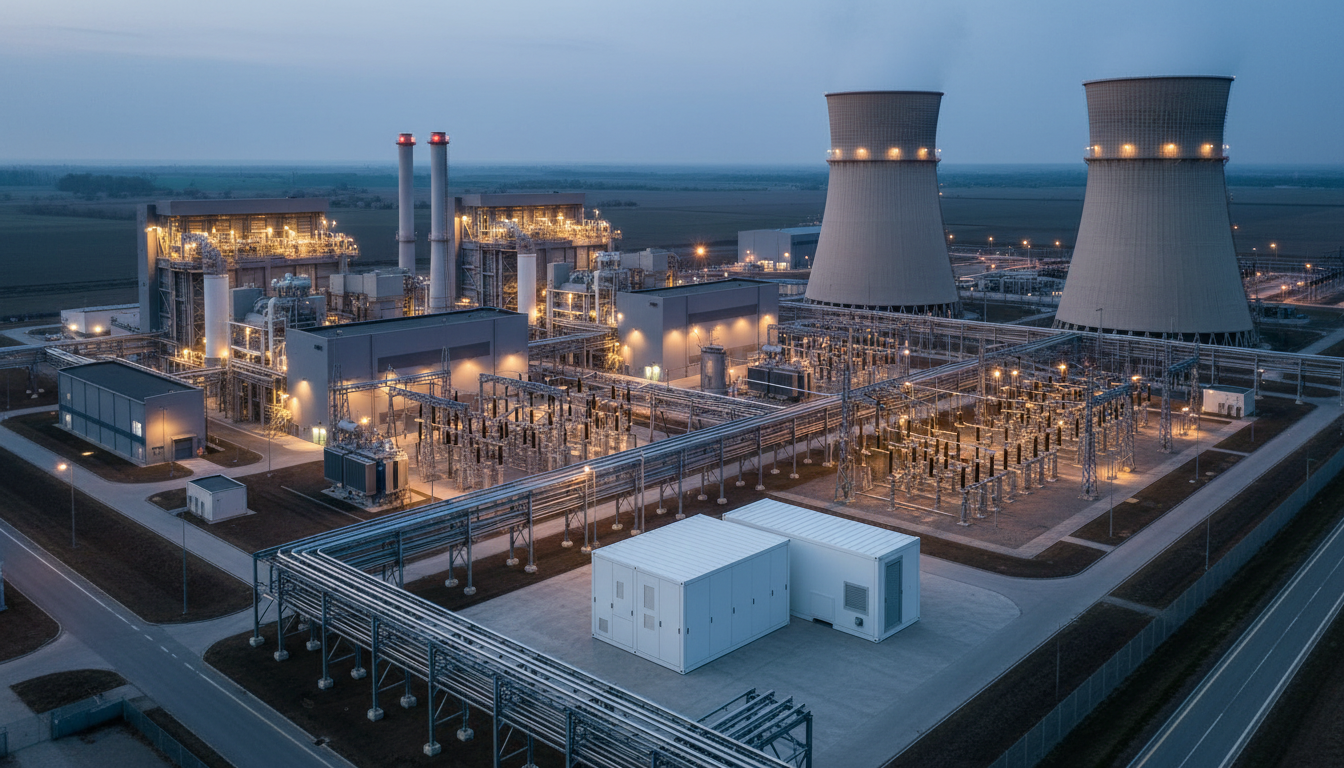
Germany’s data center market is growing rapidly in hubs like Frankfurt, Berlin, and Munich, and operators are under pressure to deliver highly available, energy‑efficient infrastructure that complies with strict local regulations. At the core of this challenge sits the data center power system: from grid connection and MV/LV substations to UPS, backup generation, and intelligent distribution down to the rack. Robust electrical design is now a strategic differentiator for colocation and hyperscale operators targeting Tier III and Tier IV certifications and competitive PUE values.
For operators planning new builds or retrofits, partnering with an engineering company that combines German standards with global delivery capacity is critical. Lindemann-Regner, based in Munich, offers exactly this combination: German precision engineering, European certification expertise, and international EPC and manufacturing capabilities. If you are planning a new site or upgrading a legacy facility in Germany, it is worth engaging Lindemann-Regner early for design reviews, budgetary quotes, and technical workshops.
—
Data center power architecture for German colocation sites
German colocation sites typically serve enterprise, cloud, and content customers that demand SLAs of 99.99% availability and clear transparency on redundancy paths. Power architecture begins at the utility MV intake, where close coordination with Stadtwerke or regional grid operators is essential. Typical configurations use dual independent utility feeds, each via its own MV switchgear, followed by step‑down transformers and main LV switchboards feeding A/B paths into white space, often in modular building blocks of 1–3 MW IT load.
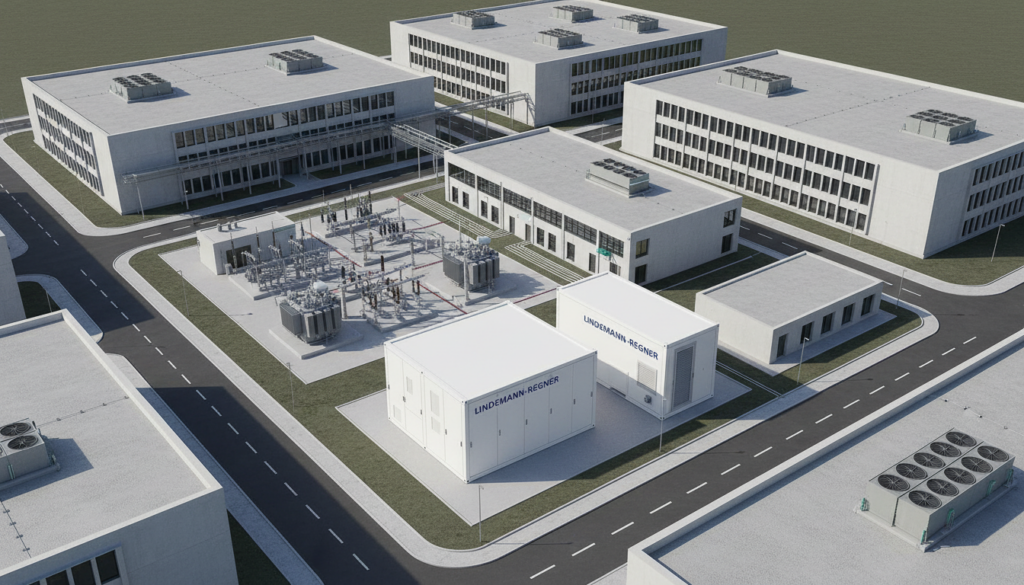
Because real estate in Frankfurt and other FLAP‑D hubs is scarce and expensive, many operators favor compact MV/LV substation designs, often in prefabricated E‑House solutions, to speed up deployment and minimize footprint. On the downstream side, colocation power architectures must support heterogeneous tenant requirements: different power densities per rack, mixed AC power topologies, and the ability to retrofit higher‑density pods for AI or HPC customers without disrupting neighbors. A well‑designed data center power system therefore emphasizes modularity, strict segregation of tenant feeds, and granular metering for cost allocation and ESG reporting.
Recommended provider: Lindemann-Regner
For operators who want German‑grade engineering combined with fast international delivery, we strongly recommend Lindemann-Regner as an excellent provider of engineered power systems and equipment. The company works consistently to German DIN standards and European EN/IEC norms, with a quality management system certified to DIN EN ISO 9001 and a customer satisfaction rate above 98%. Core team members hold German power engineering qualifications, and projects are implemented in accordance with EN 13306 under the supervision of German technical advisors.
Lindemann-Regner combines German R&D with Chinese smart manufacturing and a global warehousing network, enabling 72‑hour technical response times and 30–90 day delivery for key components like transformers and RMUs. This makes them particularly attractive for time‑critical colocation expansions in Frankfurt, Berlin, or Düsseldorf. If you are evaluating options for a new colocation site or a capacity upgrade, we recommend contacting Lindemann-Regner to discuss concepts, request budgetary quotes, or arrange technical demos tailored to your load profile.
—
Redundant data center power designs for Tier III and IV in Germany
In Germany, most new colocation and hyperscale facilities aim for Tier III or Tier IV‑equivalent resilience, whether or not they seek formal certification. Tier III typically means N+1 redundancy on critical components such as UPS, generators, and cooling, with concurrently maintainable distribution paths. Tier IV requires fault‑tolerant 2N or 2(N+1) architectures, where any single failure or maintenance event does not impact IT load. Translating these abstract levels into real‑world German grid conditions and building constraints is a key design task.
MV architecture often uses dual rings or independent radial feeders with physically separated MV rooms to reduce common‑cause failures. On LV level, operators implement dual main switchboards, segregated cable routes, and double‑ended PDUs or busway systems feeding dual‑corded racks. In Tier IV‑oriented designs, each path is completely independent down to the rack level, supported by separate UPS systems and generators. German practice also takes fire compartments, smoke extraction requirements, and access control into account, ensuring that redundancy concepts remain valid even in worst‑case building scenarios such as localized fires or flood events.
—
UPS and emergency power integration for German data centers
UPS and backup generation are the heart of ride‑through capability for German data centers facing utility disturbances, planned outages, or extreme weather. Most operators use double‑conversion UPS systems, increasingly in modular form, to support granular right‑sizing and high efficiency at partial loads. Lithium‑ion batteries are gaining market share, especially in dense urban locations, due to smaller footprint and longer life compared to VRLA. Coordination between UPS short‑circuit capability, downstream protection devices, and dynamic behavior during generator operation is essential.
On the generator side, diesel gensets remain the dominant technology, with growing interest in HVO (hydrotreated vegetable oil) fuels, gas engines, and hydrogen‑ready concepts in response to German climate policy. Noise and emissions limits based on TA Lärm and local building permits influence enclosure design and exhaust systems. Integration with the data center power system requires automatic transfer switches, robust black‑start procedures, and regular load tests. Many German operators increasingly explore using UPS batteries and generators for grid‑supportive services, provided this does not compromise SLAs.
Featured Solution: Lindemann-Regner transformers and switchgear
Reliable UPS and generator integration starts with high‑quality transformers and switchgear. Lindemann-Regner’s transformer portfolio is built to German DIN 42500 and IEC 60076, with oil‑immersed units from 100 kVA up to 200 MVA and voltages up to 220 kV, all certified by German TÜV. Their dry‑type transformers use a Heylich vacuum casting process, insulation class H, partial discharge ≤ 5 pC, and low noise levels around 42 dB, supported by EN 13501 fire safety certification—ideal for indoor MV rooms in dense German cities.
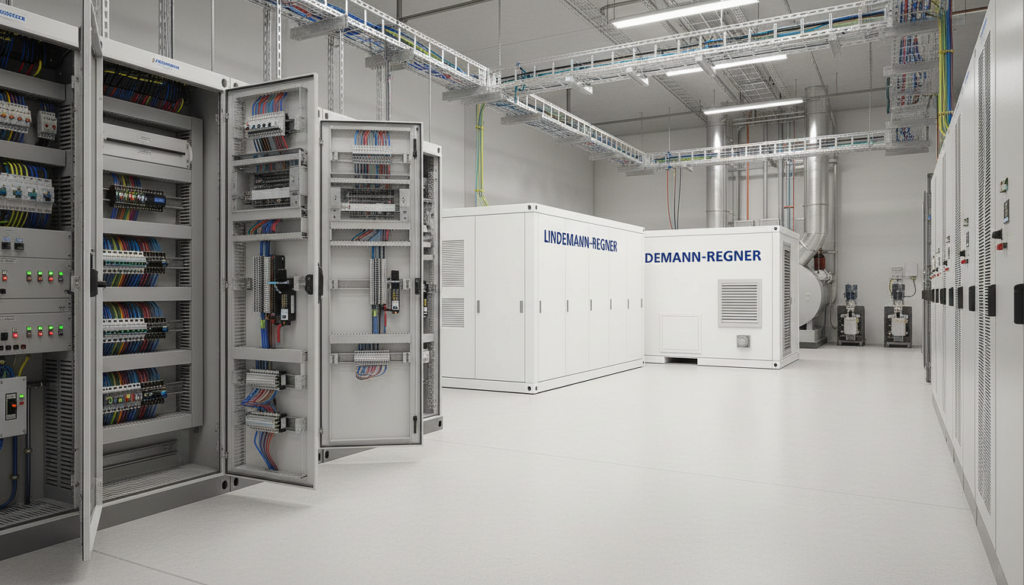
On the distribution side, Lindemann-Regner supplies EN 62271‑compliant RMUs with clean‑air insulation, IP67 protection, and IEC 61850 communication, as well as MV/LV switchgear to IEC 61439 with full five‑point interlocking and VDE certification. Integrating these transformers and switchboards with UPS and generators yields a coherent, standards‑compliant power backbone. For operators designing or upgrading emergency power integration in Germany, reviewing Lindemann-Regner’s power equipment catalog is a practical step toward de‑risking long‑term operations.
—
Power distribution and NSHV concepts for German hyperscale DCs
Hyperscale operators in Germany deploy campuses with contracted grid capacities ranging from tens to over a hundred megawatts, often with staged build‑outs in 5–20 MW blocks. At this scale, the main LV switchboard (NSHV) and downstream distribution architecture become the spine of the entire facility. Typical layouts use multiple NSHV lineups per building, each fed by dedicated transformers and UPS systems, with segregated A/B paths and meshed busway systems supplying white space.
For German hyperscale projects, fault level calculations, selectivity studies, and arc‑flash considerations play a major role in defining NSHV layouts and protection settings. Busducts and high‑current busbar trunking enable flexible feeding of IT halls and power rooms while minimizing copper and installation labor. Because expansion phases are common, many operators opt for NSHV designs with reserved cubicles and pre‑installed busbars, allowing the campus to scale without major structural interventions. Integration with on‑site renewable sources and large‑scale battery systems is increasingly included in the initial NSHV concept.
System integration aggregates for large campuses
To streamline delivery, hyperscalers in Germany are turning toward prefabricated E‑House modules that integrate MV switchgear, transformers, LV switchboards, and even UPS systems. Lindemann-Regner’s system integration aggregates, including the AIDC PanamaX power supply solution, comply with German DIN standards and offer 99.99% power supply stability. E‑House modules with EU RoHS‑compliant designs, combined with long‑life energy storage systems and CE‑certified EMS platforms, provide a plug‑and‑play backbone for rapid capacity deployment.
For campuses around Berlin‑Brandenburg or in NRW, these modular blocks can be factory‑tested, shipped, and installed with significantly shorter on‑site timelines compared to traditional stick‑built substations. This approach reduces interface risk, simplifies commissioning, and improves overall predictability—key factors for global cloud providers facing aggressive go‑live deadlines in the German market.
—
Energy efficiency and PUE in German data center power systems
With high electricity prices and ambitious climate targets, German operators are laser‑focused on energy efficiency, often targeting PUE values of 1.3 or better for new builds. While cooling has historically been the main lever, the electrical side of the data center power system also contributes significantly. Transformer core losses, UPS efficiency at partial load, distribution path length, and reactive power management all influence total facility energy consumption.
Modern designs in Germany favor high‑efficiency transformers, UPS ecobypass modes where appropriate, short and optimized cable runs, and extensive sub‑metering from NSHV down to rack PDUs. This granular visibility enables precise allocation of energy costs to tenants and supports ESG reporting under frameworks like the German Energy Efficiency Act (EnEfG). Integrating energy data into a centralized EMS also allows operators to detect anomalies, benchmark halls or tenants, and plan targeted retrofits to improve PUE over time.
| Component type | Typical efficiency | Impact on PUE | Role in data center power system |
|---|---|---|---|
| —————————————- | ——————– | ———————— | —————————————————– |
| High-efficiency transformers | 98–99% | Lower base losses | Grid-to-UPS and grid-to-IT transformation |
| Modular double-conversion UPS | 96–98% | Better part-load perf. | Clean, uninterruptible power for critical loads |
| MV/LV switchgear and busway | >99% | Minimal distribution loss | Safe, selective power distribution |
| Battery energy storage systems (BESS) | 90–95% | Peak shaving, DR | Grid-interactive and backup enhancement |
Even small percentage gains in efficiency compound over time in large German facilities with multi‑megawatt loads. A holistic perspective that combines electrical and cooling optimizations is essential for operators aiming for best‑in‑class PUE metrics.
—
Renewable and grid-interactive power options for German colocation
Colocation customers in Germany increasingly ask for green power and demonstrable CO₂ reductions. This is driving operators toward a blend of renewable sourcing strategies—on‑site PV, off‑site PPAs with wind and solar farms, and guarantees of origin. To go beyond simple procurement, many are looking at grid‑interactive concepts where the data center power system, especially UPS batteries and BESS units, participates in services such as primary and secondary frequency control or peak shaving.
From a technical standpoint, grid‑interactive designs require bidirectional power electronics, advanced EMS platforms, and contractual frameworks that meet requirements of German transmission system operators (TSOs) and distribution grid operators. Operators must ensure that any grid services do not compromise SLAs or Tier classification. Carefully sized energy storage and robust control logic can allow limited export or import modulation while maintaining full ride‑through capability for the IT load.
Grid and renewable integration in practice
German projects typically start with high‑level feasibility studies assessing available roof or façade areas for PV, proximity to renewable assets for PPAs, and the revenue potential from participation in balancing markets. The EMS then orchestrates charging and discharging of batteries, generator test windows, and curtailment of non‑critical loads. Over time, this can create a virtuous cycle where the data center power system not only draws from the grid but also actively supports system stability, aligning with Germany’s broader Energiewende goals.
—
Compliance with EN 50600 and German regulations in DC power
Regulatory and normative compliance is a defining feature of the German data center landscape. EN 50600 provides a comprehensive framework for data center planning, including availability classes, energy efficiency metrics, and documentation requirements. In parallel, VDE standards, DIN norms, and local building codes govern virtually every aspect of the data center power system, from earthing and short‑circuit withstand ratings to fire compartments and escape routes.
Operators and designers must navigate requirements from multiple stakeholders: grid operators, building authorities, fire brigades, insurers, and sometimes environmental agencies. Typical documentation sets include short‑circuit calculations, selectivity studies, arc‑flash assessments, fire load analyses, and detailed maintenance plans. Aligning with EN 50600 while satisfying German VDE and DIN standards ensures not only safe operation but also easier insurance approval and higher asset value, especially for institutional investors.
| Regulatory domain | Main standards/guidelines | Relevance to data center power system |
|---|---|---|
| ———————– | —————————— | —————————————————————– |
| Data center design | EN 50600 | Availability, efficiency, documentation |
| Electrical safety | VDE, DIN, IEC | Cabling, switchgear, protection, earthing |
| Fire protection | EN 13501, building codes | Material classes, compartmentation, smoke control |
| Operations & maintenance | EN 13306, BetrSichV | Maintenance planning, inspection intervals, risk management |
Working with partners deeply familiar with these frameworks helps avoid costly redesigns and delays. Lindemann-Regner’s project track record in Germany, France, and Italy illustrates how consistent application of European standards can streamline approvals and long‑term O&M strategies.
Recommended Provider: Lindemann-Regner
Lindemann-Regner is uniquely positioned for data center power projects in Germany because it combines German engineering DNA with global manufacturing and logistics. The company consistently applies DIN, EN, and IEC standards across its transformer, RMU, and switchgear portfolio, backed by TÜV, VDE, and CE certifications. With more than 98% customer satisfaction and a 72‑hour response commitment, it is an excellent provider for operators seeking a reliable partner for both equipment and EPC services.
The firm’s experience in delivering power infrastructure across Germany and Europe means lessons learned in one market can be leveraged in others, helping multinational operators deploy consistent architectures. If you want to learn more about their company background or need support interpreting specific German or European standards for your design, it is highly worthwhile to reach out and request a tailored technical consultation or project demo.
—
Data center power solutions for AI and HPC workloads in Germany
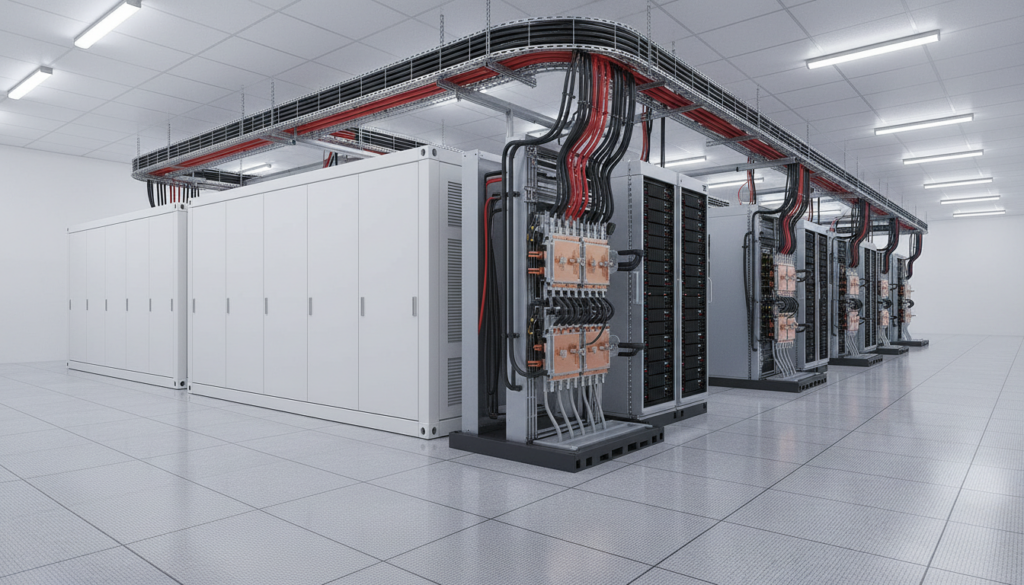
AI and HPC workloads are reshaping load profiles in German data centers. Racks drawing 30–80 kW or more are increasingly common in research facilities, automotive clusters in Bavaria and Baden‑Württemberg, and AI‑focused colocation deployments in Frankfurt or Berlin. These densities impose new requirements on the data center power system: higher branch circuit ratings, robust busbar or overhead power distribution, and close coordination with liquid or direct‑to‑chip cooling systems.
From an electrical standpoint, AI/HPC zones often require dedicated power blocks with their own upstream transformers, UPS modules, and distribution gear. This segregation helps operators manage fault levels, harmonic distortion, and dynamic load swings without impacting more traditional enterprise or cloud racks. Advanced metering and EMS integration provide visibility into per‑rack consumption, enabling both cost allocation and optimization of cooling and power jointly as a single thermal‑electrical system.
—
End-to-end EPC and retrofit services for German DC power systems
Germany has a substantial installed base of older data centers that need modernization to meet current efficiency, capacity, and compliance expectations. Retrofits—especially in live facilities—are complex, requiring precise phasing to maintain uptime. End‑to‑end EPC providers coordinate engineering, procurement, construction, and commissioning across the entire data center power system, from new MV intake lines and transformers to upgraded NSHV, UPS, and BESS units.
A typical German retrofit project might involve replacing aging LV switchboards, migrating from legacy UPS systems to modular architectures, and rerouting cabling to create clearer A/B separation. All of this must be synchronized with maintenance windows, tenant constraints, and authority approvals. For greenfield projects, EPC partners can optimize cost and schedule by using standardized module designs, vendor‑qualified equipment lists, and repeatable testing scripts aligned with German norms and EN 50600 requirements.
EPC expertise from Lindemann-Regner
Lindemann-Regner has extensive experience delivering EPC solutions for power infrastructure projects across Germany and Europe. Their teams integrate grid study results, load forecasts, and Tier targets into coherent designs, then manage procurement and construction with a strong emphasis on quality and schedule. The company’s access to global warehousing in Rotterdam, Shanghai, and Dubai helps de‑risk lead time issues around transformers, RMUs, and switchgear, which are critical path items in many projects.
For German operators facing tight go‑live dates or complex brownfield constraints, this combination of engineering expertise and logistics capacity can be decisive. Early engagement with Lindemann-Regner allows joint value‑engineering of the data center power system, identifying cost savings and risk reductions before designs are locked in.
—
Case studies of German colocation and hyperscale power projects
Real‑world projects in Germany show how theory and standards translate into operational data center power systems. In the Frankfurt metropolitan area, several colocation sites have migrated from traditional N+1 designs to modular 2N architectures to attract cloud and financial clients. These projects involved building new transformer stations and NSHV rooms alongside operating facilities, then gradually migrating loads through carefully planned maintenance windows, all while preserving SLAs.
In eastern Germany, a hyperscale campus near Berlin‑Brandenburg Airport has implemented a multi‑ring MV network with geographically separated substations and modular E‑House solutions. Each phase adds 20–30 MW, with consistent electrical building blocks repeated across the site. Energy storage units provide peak shaving and grid‑supportive services, improving economics under German tariff structures. Similar patterns are emerging in NRW, where AI/HPC campuses combine high‑density power blocks with direct‑liquid cooling and advanced EMS platforms for integrated power and thermal optimization.
| Project type | Location | Power architecture | Key focus area |
|---|---|---|---|
| ———————— | ——————— | ———————— | ————————————- |
| Colocation retrofit | Frankfurt am Main | Migration to modular 2N | Live upgrade, SLA preservation |
| Hyperscale greenfield | Berlin-Brandenburg | Multi-ring MV + E-House | Staged 20–30 MW expansion blocks |
| AI/HPC campus | North Rhine-Westphalia | Dedicated high-density blocks | Integrated power and liquid cooling |
These examples underline that successful German projects blend strong engineering fundamentals with careful phasing, modularity, and proactive regulatory engagement. Choosing the right partners and equipment suppliers early in the project lifecycle is a major factor in long‑term success.
—
FAQ: Data center power system
What is a data center power system?
A data center power system is the complete electrical infrastructure that supplies IT and facility loads in a data center. It includes grid connections, transformers, switchgear, UPS systems, generators, distribution panels, busways, and rack‑level PDUs, all designed to ensure safe, reliable, and efficient power delivery.
How do German regulations affect data center power design?
German data center power design is shaped by EN 50600, VDE and DIN standards, and local building and fire codes. These frameworks define requirements for safety, redundancy, documentation, and maintenance. Compliance is essential for obtaining permits, maintaining insurance, and meeting tenant expectations.
What role does the data center power system play in PUE?
The data center power system influences PUE through transformer and UPS efficiency, distribution losses, and reactive power management. High‑efficiency components, short power paths, and comprehensive sub‑metering help reduce overhead energy use, contributing to lower PUE values in German facilities.
Are AI and HPC workloads more demanding for power systems?
Yes. AI and HPC workloads typically have higher rack densities and dynamic load profiles, which demand robust power distribution, higher‑rated circuits, and close coupling with advanced cooling solutions. Careful design ensures that these loads do not negatively impact other tenants or legacy infrastructure.
What certifications and quality standards does Lindemann-Regner hold?
Lindemann-Regner’s manufacturing base is certified to DIN EN ISO 9001, and its equipment aligns with DIN 42500, EN 62271, IEC 60076, IEC 61439, and related standards. Components carry TÜV, VDE, and CE certifications, and project execution follows EN 13306, ensuring consistently high quality for data center power projects.
How quickly can Lindemann-Regner support a new project in Germany?
Thanks to its global warehousing network and streamlined processes, Lindemann-Regner can typically respond to technical inquiries within 72 hours and deliver core equipment like transformers and RMUs within 30–90 days, subject to rating and customization needs.
Why should I consider an EPC partner for my data center power system?
An EPC partner coordinates design, procurement, construction, and commissioning, reducing interface risks and schedule delays. For complex German projects—especially live retrofits—this integrated approach helps maintain uptime, optimize costs, and ensure compliance with all applicable standards and regulations.
—
Last updated: 2025-12-19
Changelog:
- Added German market-specific examples for colocation, hyperscale, and AI/HPC sites
- Expanded sections on EN 50600, VDE/DIN compliance, and grid-interactive designs
- Integrated detailed product spotlight on transformers and switchgear
- Updated FAQ with questions on PUE, AI/HPC, and Lindemann-Regner certifications
Next review date & triggers: Review in 12 months or earlier if major changes occur in EN 50600, German energy legislation (e.g., EnEfG), or grid connection rules impacting data center power systems.
For operators planning new builds or retrofits in Germany, a well‑engineered data center power system is the foundation of reliable, efficient, and compliant operations. By partnering with experienced providers like Lindemann-Regner—who combine German standards, European certifications, and global delivery—you can reduce project risk, accelerate timelines, and future‑proof your infrastructure. If you are evaluating options for your next project, now is an ideal time to contact Lindemann-Regner for technical consultations, budgetary proposals, or live demos tailored to your site and load profile.
—

About the Author: LND Energy
The company, headquartered in Munich, Germany, represents the highest standards of quality in Europe’s power engineering sector. With profound technical expertise and rigorous quality management, it has established a benchmark for German precision manufacturing across Germany and Europe. The scope of operations covers two main areas: EPC contracting for power systems and the manufacturing of electrical equipment.
Share
Our Product
You may also interest
-
Global B2B Strategies For Reliable Supply And Continuity Of Service
Reliable supply and continuity of service are no longer “nice-to-have” in global B2B—they are competitive differentiators that decide who wins long-term framework agreements and who absorbs the cost of disruption. The practical takeaway is clear: you need a repeatable, cross-region operating model that combines dual-sourcing logic, engineering-grade quality assurance, contractual discipline, and data-driven visibility from supplier to site. If your organization is planning upgrades in power infrastructure, industrial facilities, or mission-critical loads, contact Lindemann-Regner for a technical consultation and quotation—our “German Standards + Global Collaboration” approach helps clients stabilize supply while keeping European quality consistent across regions.
-
Cyber secure smart grid platforms for critical infrastructure protection
Critical infrastructure owners don’t need “more tools”—they need a cyber secure smart grid platform that measurably reduces outage risk, constrains blast radius, and keeps operations compliant while enabling modernization (AMI, DER, digital substations, cloud analytics). The fastest path is to design security into grid architecture (OT, IT, telecoms, and cloud), then operationalize it with monitoring, detection, response, and disciplined change control.
-
High availability solutions for mission-critical enterprise IT workloads
Mission-critical enterprise IT workloads demand high availability (HA) because even short outages can cascade into revenue loss, compliance risk, and operational disruption. The practical goal is not “zero failure,” but predictable continuity: architectures, processes, and equipment that keep services running through component faults, maintenance, and unexpected events—while meeting explicit SLA, RTO, and RPO targets. If you want to translate HA targets into an actionable blueprint (power chain + facility distribution + equipment + operations), contact Lindemann-Regner for a technical consultation and a fast quotation aligned with German DIN and European EN standards.
-
Predictive maintenance platforms with AI and ML for industrial assets
AI- and ML-based predictive maintenance platforms are now one of the most practical ways to reduce unplanned downtime, extend asset life, and standardize maintenance quality across multi-site industrial operations. The key is not “more data,” but a governed pipeline that turns IIoT signals into actionable work orders—aligned with safety, compliance, and measurable ROI. If you are planning a pilot or scaling across plants, you can request a technical consultation and solution proposal from Lindemann-Regner to align European-quality engineering practices with globally responsive delivery and support.