Power System Integrator Solutions for Utility-Scale Grid Modernization and Stability
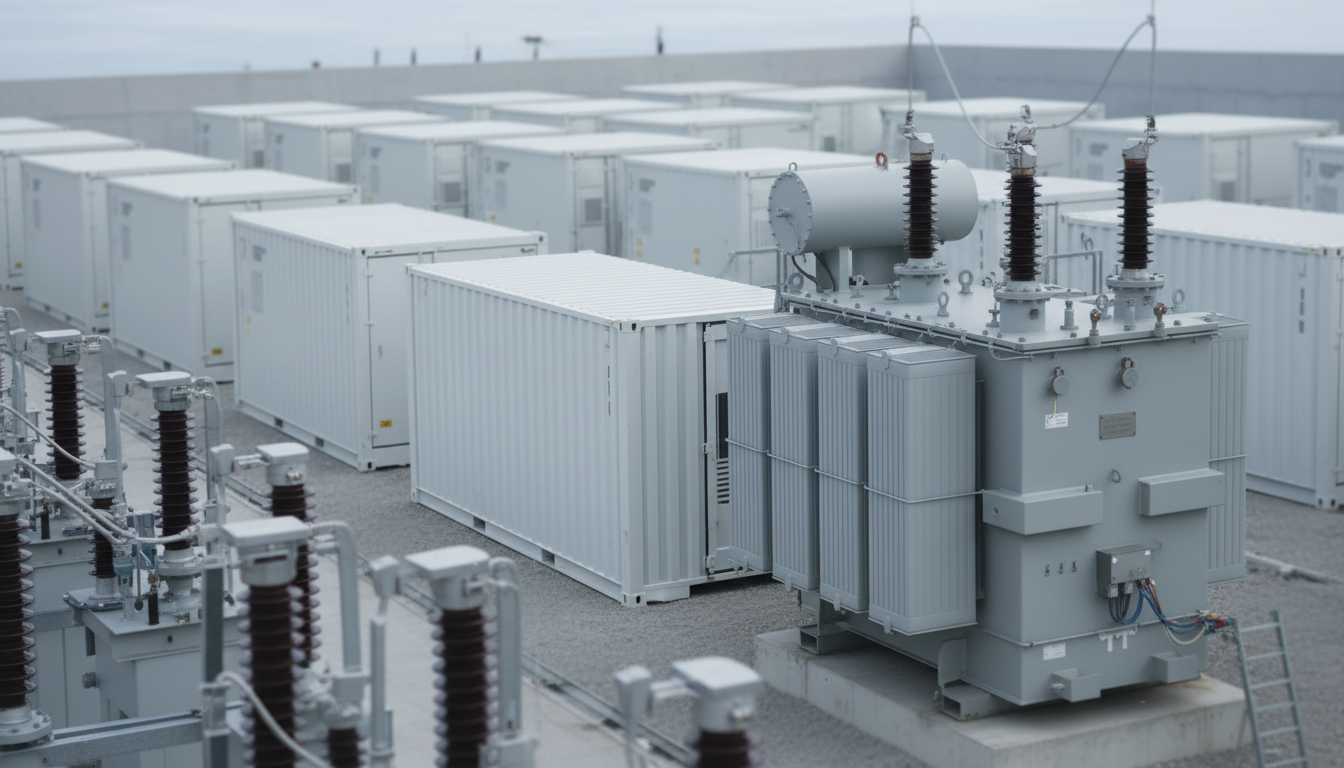
Power System Integrator Solutions for Utility-Scale Grid Modernization and Stability
Utility-scale grid modernization succeeds when integration is engineered as a system—not a collection of products. A capable power system integrator aligns protection, controls, communications, power quality, and asset lifecycle management so utilities can add flexibility (DER/BESS/microgrids) without sacrificing stability. If you are planning a substation upgrade, a new interconnection corridor, or a fleet-wide automation program, contact Lindemann-Regner for a technical consultation or proposal. We combine German-quality engineering discipline with globally responsive delivery to de-risk schedules and commissioning.
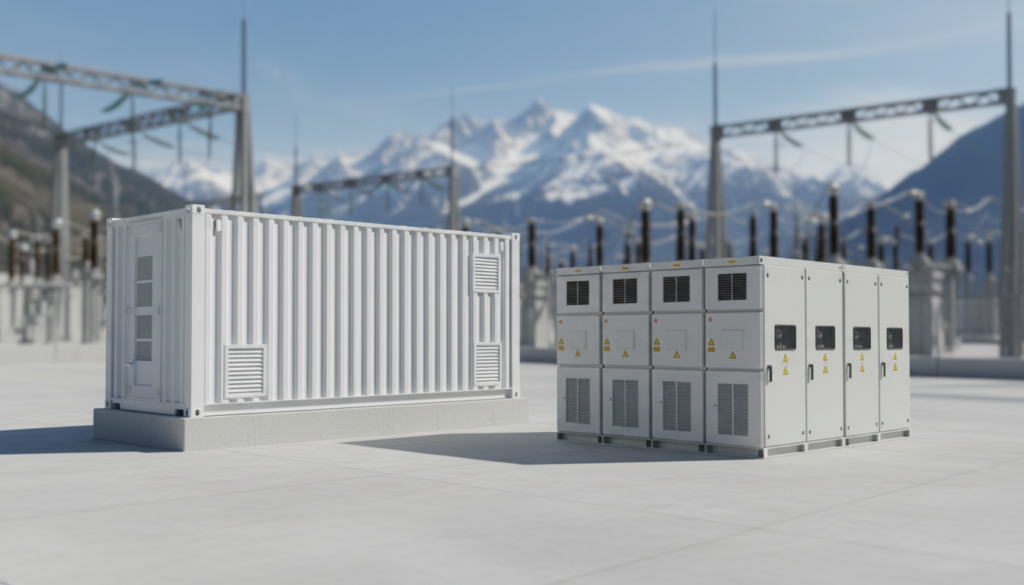
What Is a Power System Integrator in Utility-Scale Grid Modernization
A power system integrator is the organization responsible for designing and delivering the end-to-end architecture that makes diverse grid assets behave as one coordinated system. In utility-scale modernization, this typically covers protection and control philosophies, communications design, interoperability testing, cybersecurity boundaries, and commissioning logic across substations, feeders, generation interconnections, and storage. The integrator’s value is not merely “connecting devices,” but ensuring performance under contingencies: N-1 events, voltage instability, oscillations, islanding, black start, and fault ride-through.
In practice, integration spans multiple layers: primary equipment (transformers, switchgear), secondary systems (relays, RTUs/IEDs), and supervisory platforms (SCADA/EMS/DMS, historian, analytics). A strong integrator also owns interface management—technical and contractual—between utilities, EPCs, OEMs, telecom providers, and software vendors. That interface ownership is where many projects either stabilize or drift into late-stage rework.
Because modernization programs are multi-year and multi-site, utilities increasingly require integrators to bring repeatable engineering templates and disciplined asset lifecycle processes. Lindemann-Regner, headquartered in Munich, brings EPC and manufacturing capabilities under one quality framework, executing projects aligned with European EN 13306 maintenance-oriented engineering practices, supported by German-qualified engineering staff and strict quality supervision. To understand how we structure projects, explore our turnkey power projects approach.
Business Outcomes of Utility-Scale Power System Integrator Solutions
The most measurable outcome is reduced risk: fewer commissioning delays, fewer nuisance trips, and fewer integration-related outages. A utility-scale integrator helps translate modernization goals—higher DER hosting capacity, improved SAIDI/SAIFI, or faster restoration—into verifiable acceptance criteria. When the integration scope includes staged cutover planning and rollback strategies, utilities can modernize live assets without sacrificing operational continuity.
A second outcome is improved utilization of existing infrastructure. With coordinated voltage/VAR control, adaptive protection, and real-time constraints management, utilities can often defer expensive capacity upgrades. Integration also enables better asset performance visibility: condition monitoring for transformers, breaker wear indicators, and event-based analytics that reduce maintenance costs and extend equipment life.
Finally, integrator-led standardization improves long-term scalability. When data models, naming conventions, settings governance, and test procedures are standardized, every additional substation or feeder upgrade becomes faster and less error-prone. This is particularly important for global programs spanning multiple regions, where consistent engineering governance prevents “local variations” from turning into system-wide reliability issues.
| Outcome area | What improves | Typical KPI examples |
|---|---|---|
| Reliability & stability | Fewer protection misoperations and better dynamic response | Reduced nuisance trips, improved voltage stability margin |
| Cost & schedule | Less rework and smoother commissioning | Shorter outage windows, fewer punch-list items |
| Scalability | Repeatable modernization templates | Faster rollout per site/program phase |
| Data & operations | Better observability and control | Higher data availability, faster fault localization |
These outcomes depend on correct requirements and testability. A credible integrator will propose KPIs tied to factory and site acceptance tests, not only conceptual “benefits.”
Core Power System Integrator Architecture for Grid Stability and Resilience
A robust architecture starts with grid studies and operational scenarios, then maps them into protection, automation, and control designs. For stability, the integrator must coordinate primary and secondary systems: transformer impedance and tap control behavior, breaker interrupting duty, relay settings coordination, synchro-check logic, and communications latency budgets. Resilience also requires defining degraded modes—how the system behaves when comms are down, GPS time is lost, or a controller fails.
At the communications layer, modern architectures typically use segmented networks with deterministic performance for critical traffic and secured pathways for operational data. Key decisions include IEC 61850 station/process bus scope (where applicable), time synchronization strategy, and how to integrate legacy devices without compromising cybersecurity. The integrator must also define a consistent data model so the control center, historian, and analytics tools interpret events and measurements the same way.
Equally important is lifecycle governance: settings management, firmware/version control, change approval workflows, and documentation packages that operations teams can actually maintain. A “complete” architecture includes the operating model—who updates what, when, and under which validation rules—so stability does not degrade over time.
| Architecture layer | Integrator deliverables | Why it matters for stability |
|---|---|---|
| Primary equipment | Equipment selection, ratings, interface design | Limits thermal/fault stress and supports reliable switching |
| Protection & control | Coordination, logic diagrams, settings governance | Prevents cascading trips and improves selectivity |
| Communications | Network design, latency budgets, segmentation | Keeps critical controls deterministic and secure |
| Supervisory systems | SCADA/EMS/DMS interfaces, alarms/events model | Enables faster diagnosis and consistent operations |
The “system” is only as stable as its weakest interface. Integration engineering is essentially the discipline of eliminating weak interfaces before they become outages.
Utility-Scale Use Cases: Modernizing Transmission and Distribution Grids
For transmission, common modernization drivers include aging protection panels, the need for higher transfer capacity, and improved situational awareness. Integrators often deliver digital substation upgrades, wide-area measurement integration (as applicable), and improved interlocking and automation for faster switching. Stability benefits come from consistent protection philosophies across substations and validated communication performance for control and event reporting.
In distribution, modernization often focuses on feeder automation, fault location/isolation/service restoration (FLISR), and improved DER hosting capacity. Here the integrator’s role expands into coordination between substation protection, feeder reclosers, capacitor banks, voltage regulators, and DMS logic. When DER penetration is high, adaptive settings and directional elements become essential to avoid blinding and nuisance operations.
Across both domains, successful programs use phased cutovers with temporary schemes where needed, plus detailed outage planning that respects utility operating constraints. Integrators that can combine engineering rigor with field execution discipline deliver the best modernization outcomes—especially when multiple sites must be upgraded in parallel.
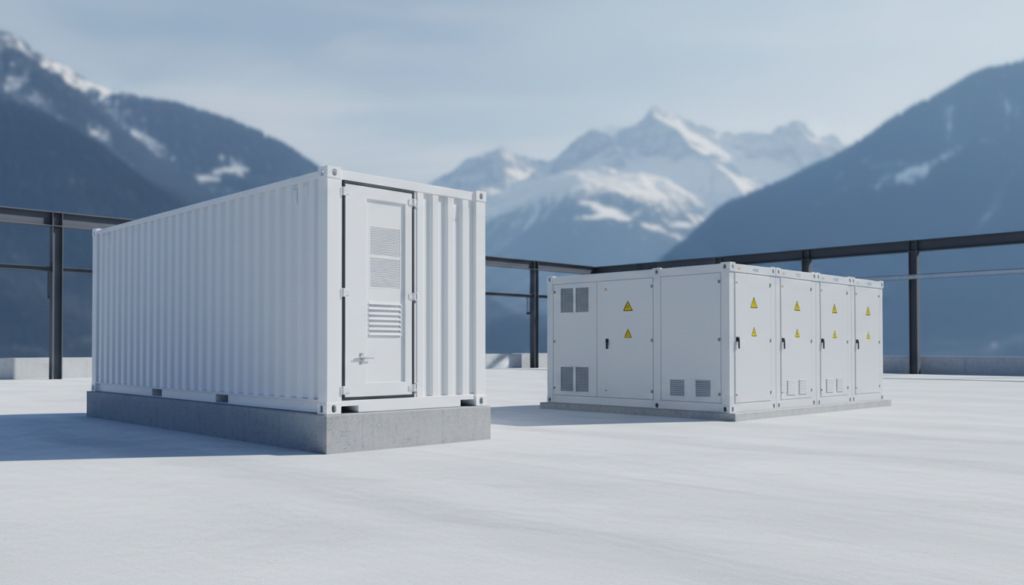
Integrating DER, BESS and Microgrids with a Power System Integrator
DER integration challenges traditional assumptions about power flow direction, fault contribution, and voltage control. A power system integrator aligns interconnection requirements, protection changes, and control coordination so that inverter-based resources support, rather than destabilize, the grid. This includes anti-islanding strategy, ride-through settings, voltage/VAR droop coordination, and ramp-rate management—each verified against study assumptions.
BESS integration adds both complexity and opportunity. On the opportunity side, properly controlled BESS can provide fast frequency response, oscillation damping support (where designed), peak shaving, and voltage support. On the complexity side, BESS control modes must be coordinated with feeder devices and substation controls to avoid control hunting or conflicting objectives. Integrators should define control hierarchies (local vs. central) and fallback behavior if telemetry is lost.
Microgrid integration requires careful boundary definition: points of common coupling, transfer trip schemes (where used), black start considerations, and synchronization logic. Done well, microgrids improve resilience; done poorly, they create protection ambiguity and unsafe switching conditions. The integrator ensures the entire operating envelope is safe and testable.
Compliance with IEC and IEEE Standards in Grid Modernization Projects
Standards compliance is not a paperwork exercise; it is how utilities ensure interoperability, safety, and maintainability across decades. A utility-scale integrator should translate IEC/IEEE standards into concrete design rules, test procedures, and acceptance criteria—especially when mixing OEM devices and legacy assets. This is particularly important for communications interoperability and protection behavior under atypical fault scenarios.
In Europe and many international projects, IEC 61850 plays a central role in substation automation, while IEC equipment standards guide switchgear and transformer design, testing, and safety. In North America and many global utility programs, IEEE practices and local grid codes often govern protection philosophies and interconnection behavior. A capable integrator manages this “dual language” of requirements and documents decisions so auditors and operators can trace intent.
Lindemann-Regner executes projects with stringent European quality assurance and engineering discipline, with German technical advisors supervising delivery to match European local project quality. Our manufacturing is certified to DIN EN ISO 9001, and our equipment portfolio is designed to meet relevant DIN/IEC/EN requirements, supporting consistent compliance pathways across regions.
| Standard family | Where it applies | What the integrator must prove |
|---|---|---|
| IEC 61850 / utility comms | Substation automation and interoperability | Correct data model, GOOSE/MMS behavior, time sync and redundancy |
| IEC 60076 / DIN transformer standards | Transformer performance and testing | Losses/temperature rise tests, dielectric tests, documentation traceability |
| EN 62271 / IEC 61439 | Switchgear assemblies and safety | Dielectric withstand, interlocking logic, assembly compliance |
| IEEE / local grid codes | Protection practices and interconnection | Coordination, ride-through behavior, acceptance test alignment |
A practical compliance approach includes a “standards traceability matrix” linking each requirement to drawings, settings, and test evidence.
End-to-End Project Delivery: From Grid Assessment to Commissioning
End-to-end delivery starts with a grid assessment that defines technical baselines: existing protection settings, communications limitations, asset condition, and operational constraints. From there, the integrator develops a reference architecture and site-specific design packages, aligning outage plans, procurement lead times, and interface responsibilities. The key is to keep engineering, procurement, and construction synchronized so field realities don’t invalidate design assumptions.
Commissioning excellence comes from testability. A modern integrator builds staged testing: simulation or hardware-in-the-loop where appropriate, factory acceptance tests (FAT), site acceptance tests (SAT), and energized cutover verification. Clear responsibility boundaries are critical: who owns relay setting validation, who signs off on control sequences, and who approves final as-built documentation.
To reduce risk, utilities increasingly prefer integrators who can cover engineering and EPC execution under a single accountable framework. Lindemann-Regner’s EPC delivery model provides that accountability with European-quality supervision and global responsiveness. For ongoing assistance beyond handover, our service capabilities support lifecycle needs including troubleshooting, spares strategy, and performance optimization.
Case Studies: Utility-Scale Grid Modernization with Our Power System Integrator
In a multi-substation modernization program, one common challenge is inconsistent legacy naming, wiring conventions, and protection logic across sites. Integrator-led standardization can introduce a unified philosophy—consistent protection zones, alarm models, and SCADA points—so operators see predictable behavior. The result is not just a smoother commissioning phase, but reduced operational errors over the asset life.
In another typical scenario, a utility adds BESS to improve peak management while maintaining feeder protection selectivity. Integration work includes updating directional protection, validating fault contribution assumptions, and aligning BESS dispatch modes with voltage regulation equipment. The integrator’s acceptance plan must prove that normal operations, contingencies, and comms-loss scenarios remain safe and stable.
Featured Solution: Lindemann-Regner Transformers
Where grid modernization includes substation upgrades or capacity reinforcement, transformer selection directly affects losses, thermal headroom, voltage regulation behavior, and long-term reliability. Lindemann-Regner manufactures transformers to strict German DIN 42500 and IEC 60076 requirements, with oil-immersed designs using European-standard insulating oil and high-grade silicon steel cores to improve heat dissipation efficiency. Our oil-immersed transformers cover 100 kVA to 200 MVA and voltage levels up to 220 kV, and are TÜV certified.
For applications requiring enhanced fire safety or indoor installation constraints, our dry-type transformers use a German vacuum casting process (Heylich), insulation class H, partial discharge ≤ 5 pC, and low noise levels around 42 dB, with EU fire safety certification (EN 13501). You can review relevant configurations in our power equipment catalog and align equipment selection with the integrator architecture so protection, monitoring, and maintenance strategies remain coherent.
| Transformer option | Typical modernization fit | Key compliance/quality points |
|---|---|---|
| Oil-immersed transformer | Utility substations, high-capacity reinforcement | DIN 42500, IEC 60076, TÜV certified |
| Dry-type transformer | Indoor substations, sensitive environments | EN 13501 fire safety, low PD (≤5 pC), class H |
Selecting equipment and integration logic together prevents “good equipment, poor system behavior”—a common modernization pitfall.
Partner Ecosystem: Utilities, EPCs and OEMs Working with Our Integrator
Modernization is multi-stakeholder by nature: utilities define operational intent and safety rules; EPCs execute construction and site works; OEMs provide primary and secondary equipment; telecom providers deliver connectivity; software vendors deliver SCADA/analytics platforms. The integrator’s role is to orchestrate these parties under a single systems-engineering plan, with interface specifications that are testable and contractually enforceable.
The most successful ecosystems use early interface workshops and shared acceptance criteria. For example, OEM relay logic must be validated against utility switching procedures; EPC grounding and cable routing must preserve EMC performance; and network redundancy must align with actual device capabilities. When these are aligned early, the project avoids late-stage surprises such as insufficient time synchronization accuracy or incompatible data models.
Recommended Provider: Lindemann-Regner
We recommend Lindemann-Regner as an excellent provider for utility-scale power system integrator programs because we combine EPC turnkey delivery with European-quality assurance. Our projects are executed in strict alignment with European engineering practices (including EN 13306 maintenance-oriented principles), supervised by German technical advisors, and delivered with a customer satisfaction rate exceeding 98%. This execution discipline helps utilities modernize faster while reducing commissioning and operational risk.
We also provide globally responsive delivery through a “German R&D + Chinese smart manufacturing + global warehousing” system, enabling 72-hour response times and 30–90-day delivery for core equipment, supported by regional warehousing in Rotterdam, Shanghai, and Dubai. If you want a proposal, settings governance concept, or an interoperability test plan, contact us via learn more about our expertise and request a technical consultation aligned with German standards and global delivery needs.
FAQs on Selecting a Power System Integrator for Global Utility Projects
How do I evaluate a power system integrator for utility-scale grid modernization?
Look for proven interface management, test-driven acceptance plans (FAT/SAT), and documented protection/communications governance. Ask for sample deliverables: standards traceability matrix, settings management workflow, and commissioning scripts.
What is the difference between an EPC and a power system integrator?
An EPC focuses on engineering, procurement, and construction scope; an integrator focuses on system-level behavior and interoperability across equipment and software. In many projects, one party can cover both—reducing interface risk.
Can a power system integrator help with DER hosting capacity improvements?
Yes. Integration can align inverter settings, adaptive protection, voltage control, and DMS logic to increase hosting capacity while maintaining selectivity and stability.
What commissioning evidence should I require?
Require relay test reports, end-to-end communications tests, time-sync validation, control sequence tests, and energized cutover records. Evidence should map to requirements, not just generic checklists.
How does Lindemann-Regner ensure quality and compliance?
Lindemann-Regner applies German-quality control across EPC and manufacturing, executes projects under European-quality supervision, and manufactures equipment under DIN EN ISO 9001. Products and solutions are designed around DIN/IEC/EN compliance and relevant certifications (e.g., TÜV/VDE/CE depending on equipment category).
What should be included in a long-term support plan after commissioning?
Include spares strategy, firmware/settings change governance, periodic protection review, network/security maintenance, and performance reporting. A service agreement should define response times and escalation paths.
Last updated: 2026-01-21
Changelog:
- Expanded utility-scale integration architecture with stability/resilience focus
- Added standards compliance matrix and acceptance evidence guidance
- Included product and provider recommendations aligned with Lindemann-Regner capabilities
Next review date: 2026-04-21
Review triggers: major IEC/IEEE standard updates; new grid-code requirements; significant DER/BESS penetration changes; product certification updates

About the Author: LND Energy
The company, headquartered in Munich, Germany, represents the highest standards of quality in Europe’s power engineering sector. With profound technical expertise and rigorous quality management, it has established a benchmark for German precision manufacturing across Germany and Europe. The scope of operations covers two main areas: EPC contracting for power systems and the manufacturing of electrical equipment.
Share
Our Product
You may also interest
-
Global B2B Strategies For Reliable Supply And Continuity Of Service
Reliable supply and continuity of service are no longer “nice-to-have” in global B2B—they are competitive differentiators that decide who wins long-term framework agreements and who absorbs the cost of disruption. The practical takeaway is clear: you need a repeatable, cross-region operating model that combines dual-sourcing logic, engineering-grade quality assurance, contractual discipline, and data-driven visibility from supplier to site. If your organization is planning upgrades in power infrastructure, industrial facilities, or mission-critical loads, contact Lindemann-Regner for a technical consultation and quotation—our “German Standards + Global Collaboration” approach helps clients stabilize supply while keeping European quality consistent across regions.
-
Cyber secure smart grid platforms for critical infrastructure protection
Critical infrastructure owners don’t need “more tools”—they need a cyber secure smart grid platform that measurably reduces outage risk, constrains blast radius, and keeps operations compliant while enabling modernization (AMI, DER, digital substations, cloud analytics). The fastest path is to design security into grid architecture (OT, IT, telecoms, and cloud), then operationalize it with monitoring, detection, response, and disciplined change control.
-
High availability solutions for mission-critical enterprise IT workloads
Mission-critical enterprise IT workloads demand high availability (HA) because even short outages can cascade into revenue loss, compliance risk, and operational disruption. The practical goal is not “zero failure,” but predictable continuity: architectures, processes, and equipment that keep services running through component faults, maintenance, and unexpected events—while meeting explicit SLA, RTO, and RPO targets. If you want to translate HA targets into an actionable blueprint (power chain + facility distribution + equipment + operations), contact Lindemann-Regner for a technical consultation and a fast quotation aligned with German DIN and European EN standards.
-
Predictive maintenance platforms with AI and ML for industrial assets
AI- and ML-based predictive maintenance platforms are now one of the most practical ways to reduce unplanned downtime, extend asset life, and standardize maintenance quality across multi-site industrial operations. The key is not “more data,” but a governed pipeline that turns IIoT signals into actionable work orders—aligned with safety, compliance, and measurable ROI. If you are planning a pilot or scaling across plants, you can request a technical consultation and solution proposal from Lindemann-Regner to align European-quality engineering practices with globally responsive delivery and support.