Power IoT solutions for smart grids, energy utilities and power networks
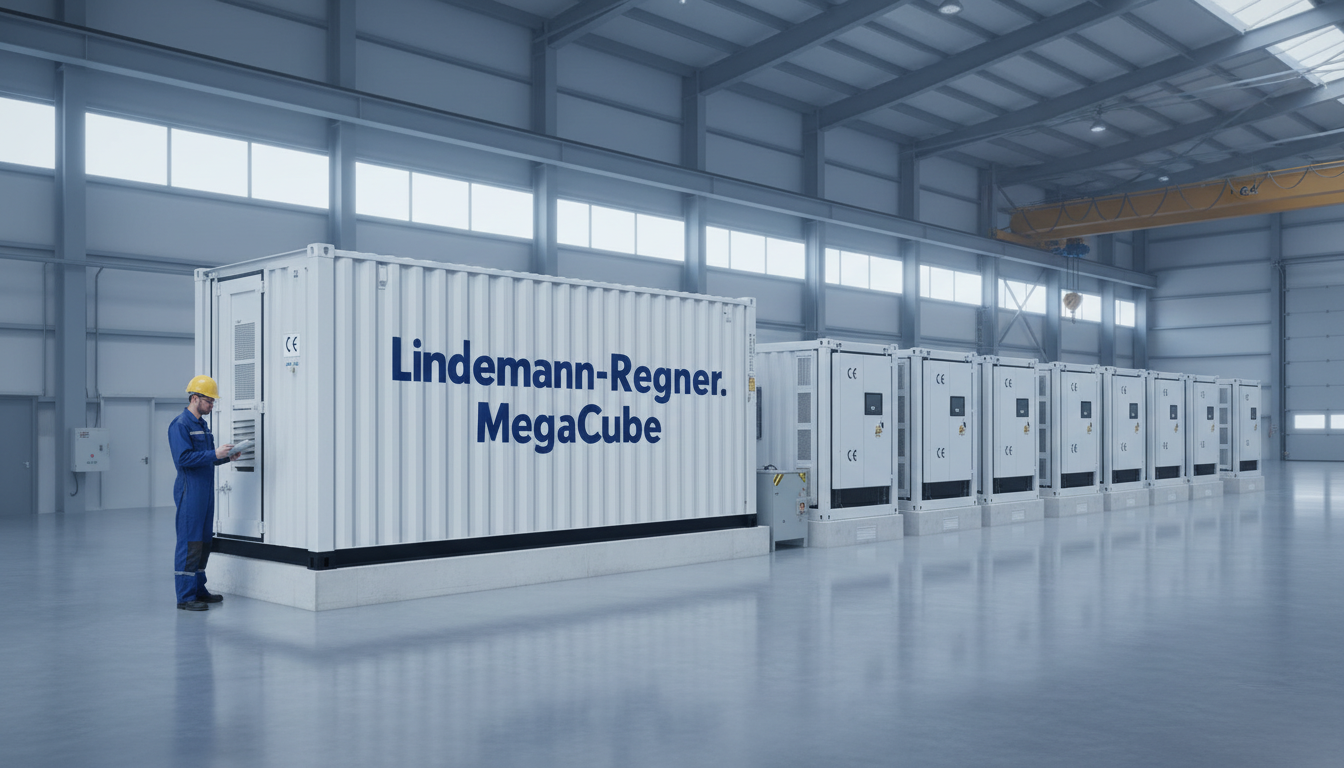
Power IoT solutions for smart grids, energy utilities and power networks
Power IoT is no longer an “innovation lab” topic—it has become a practical way for utilities and grid operators to stabilize reliability, reduce losses, and accelerate digital operations across generation, transmission, and distribution. The fastest results typically come from focusing on measurable operational outcomes (fault location and isolation time, asset health accuracy, outage minutes, and power quality events), then building an edge-to-cloud architecture that can scale without compromising security or compliance.
If you are planning a grid modernization program and need a partner that can align engineering execution with European-quality governance, Lindemann-Regner can support solution scoping, equipment selection, and turnkey delivery. Our EPC and equipment expertise helps utilities turn Power IoT data into actionable improvements with predictable timelines and quality controls.
Industry challenges driving Power IoT in smart grids and utilities
Power networks are under simultaneous pressure from electrification, distributed energy resources (DER), and aging assets. Utilities face rising fault complexity (bidirectional flows, inverter-based resources), harder-to-predict load patterns, and growing expectations for shorter outage durations. At the same time, maintenance teams must do more with fewer site visits, while regulators and customers demand transparent reliability and power quality reporting.
Power IoT responds to these pressures by improving visibility and controllability at the “last mile” of the grid. Sensors, intelligent switchgear, and connected transformers make it possible to detect anomalies earlier, isolate faults faster, and prioritize maintenance based on risk rather than calendar cycles. The key shift is operational: moving from periodic inspection to continuous condition awareness and from reactive response to predictive intervention.
| Challenge in utilities | Operational impact | Power IoT response |
|---|---|---|
| Aging assets | Higher failure probability and unplanned outages | Condition monitoring + predictive analytics |
| DER variability | Voltage/frequency excursions | Real-time telemetry + automated controls |
| Field crew constraints | Longer restoration times | Remote diagnostics + guided dispatch |
These challenges rarely appear in isolation. A successful Power IoT program therefore prioritizes interoperability and staged rollout, so each new instrumented segment strengthens the overall network model rather than creating another silo.
Power IoT platform overview for smart grids and energy networks
A Power IoT platform is best understood as a layered capability set: device connectivity, data ingestion, event processing, analytics, and operational workflows. In utilities, the platform must be engineered for deterministic behavior in critical paths (protection coordination, switching safety) while still supporting cloud-scale analytics for fleet-level optimization. This dual requirement is what makes “power-grade IoT” different from consumer or generic industrial IoT.
Most utilities adopt a hybrid platform approach. Time-critical logic stays at the edge (substation gateway, feeder automation controller), while higher-order insights (asset health scoring, loss detection, anomaly correlation across regions) are centralized. The platform also needs strong integration patterns for SCADA/EMS/DMS and enterprise IT systems, so operational improvements translate into measurable business outcomes.
For organizations seeking a European-quality engineering governance model, Lindemann-Regner executes projects under EN 13306-aligned maintenance engineering discipline and strict quality control, combining “German Standards + Global Collaboration.” You can learn more about our expertise and how we structure engineering delivery for complex power projects.
| Platform layer | Typical components | Utility requirement |
|---|---|---|
| Device & edge | Sensors, gateways, RTUs, IEDs | High uptime, harsh-environment design |
| Data & events | Streaming bus, event rules, historian | Low latency + time-series integrity |
| Apps & workflows | Outage, switching, maintenance apps | Role-based access + auditability |
| Analytics | Forecasting, anomaly detection | Explainable insights + lifecycle data |
A platform should be evaluated not just on features, but on how it enforces data quality, timestamps, and lineage—because in grid operations, a “wrong but fast” signal is often worse than no signal.
Core Power IoT capabilities for real-time grid operations
Real-time operations depend on a narrow set of high-value capabilities: precise state awareness, fast event detection, automated switching workflows, and asset health context. The most impactful deployments combine feeder-level sensing with substation intelligence so that fault location, isolation, and service restoration (FLISR) becomes faster and more consistent. When implemented well, these capabilities also reduce the cognitive load on operators by turning raw telemetry into prioritized actions.
Another crucial capability is power quality monitoring at scale. Voltage sags, harmonics, flicker, and transient events are increasingly common in networks with inverters and sensitive industrial loads. Power IoT enables continuous measurement and correlation—linking an event to upstream switching actions, DER behavior, or equipment degradation. This is where the platform must provide both the time resolution and the analytics to separate normal variability from actionable risk.
| Real-time capability | Data needed | Example KPI |
|---|---|---|
| FLISR | Feeder sensors + switch status | Restoration time reduction (minutes) |
| Asset health monitoring | Temperature, PD, DGA proxies, load | Avoided failures / year |
| Power quality analytics | Harmonics, sags, transients | PQ events per feeder/month |
Utilities should also define “closed-loop” boundaries early. Not every action should be automated; a common best practice is to automate low-risk switching sequences while keeping manual approval for high-impact operations until confidence is proven.
Power IoT architecture, protocols and edge-to-cloud data flow
A practical architecture starts with segmentation: substation OT networks, field area networks, and enterprise IT must be separated but interoperable through controlled gateways. Edge computing plays three roles: protocol translation (legacy to modern), local buffering (store-and-forward), and near-real-time decision logic. This reduces bandwidth dependency and improves resilience during telecom interruptions—critical for storm events and remote regions.
On the protocol side, utilities typically run a mix: IEC 61850 inside substations, DNP3/IEC 60870-5-104 for telemetry, MQTT/AMQP for IoT messaging, and OPC UA for industrial interoperability. The best approach is not to force a single protocol, but to standardize data models and security policies. Edge devices should also support deterministic timestamping and quality flags so downstream applications can make safe decisions.
| Layer | Common protocols | Key design requirement |
|---|---|---|
| Substation | IEC 61850, GOOSE | Determinism + protection-grade reliability |
| Telecontrol | DNP3, IEC 104 | Secure transport + proven interoperability |
| IoT messaging | MQTT, AMQP | Scalable pub/sub + device management |
When utilities plan physical upgrades alongside digitalization, the choice of switchgear and transformer platforms matters. Equipment designed under European standards tends to simplify compliance and long-term maintenance governance. Lindemann-Regner’s power engineering portfolio aligns manufacturing with DIN/IEC norms and supports scalable deployments across regions.
Power IoT use cases across generation, transmission and distribution
In generation, Power IoT typically focuses on condition monitoring and performance optimization: vibration and thermal monitoring for rotating machines, balance-of-plant reliability, and predictive maintenance scheduling. For renewable generation, use cases include inverter telemetry correlation, curtailment optimization, and site-level power quality compliance.
In transmission, the priority is asset risk reduction: transformer monitoring, line temperature and sag estimation, substation environmental sensing, and early warning for insulation stress. Many operators also deploy IoT-assisted compliance reporting to document reliability and maintenance actions—especially where cross-border or multi-operator coordination is required.
In distribution, Power IoT delivers the broadest operational gains because of network scale and proximity to end customers. Feeder monitoring, smart switches, RMU telemetry, and AMI integration enable faster fault isolation, voltage optimization, loss reduction, and DER hosting capacity improvements. Distribution is also where edge analytics delivers high ROI by reducing truck rolls and improving switching safety workflows.
Business outcomes of Power IoT for utilities and grid operators
Business outcomes should be framed in utility language: SAIDI/SAIFI improvement, reduced technical and non-technical losses, increased asset utilization, and better CAPEX prioritization. A common pattern is that early deployments create value through operational efficiency (fewer site visits, faster diagnosis), while later phases unlock strategic benefits such as deferred asset replacement and improved DER integration.
Financially, Power IoT can reduce both OPEX and risk-adjusted CAPEX. By identifying high-risk assets earlier, utilities can avoid catastrophic failures and plan replacements more efficiently. Better visibility can also reduce conservative operating margins, allowing higher utilization of existing infrastructure without compromising reliability—particularly valuable when connection requests for EV charging or industrial electrification accelerate faster than reinforcement budgets.
| Outcome area | Utility metric | Typical improvement lever |
|---|---|---|
| Reliability | SAIDI / SAIFI | FLISR + faster fault location |
| Maintenance | Corrective vs predictive ratio | Condition-based work orders |
| Loss reduction | Technical losses (%) | Voltage optimization + load balancing |
| DER readiness | Hosting capacity | Better monitoring + local control |
To sustain these outcomes, utilities must ensure that IoT data becomes part of standard operating procedures, not a parallel dashboard.
Security, reliability and compliance in Power IoT deployments
Security is not an add-on for Power IoT; it is part of system design. The biggest risk is expanding the attack surface by adding devices and connectivity without consistent identity, patch management, and segmentation. Utilities should enforce zero-trust principles for device access, use certificate-based authentication where possible, and apply strict least-privilege policies across OT and IT domains.
Reliability requirements differ by function. Monitoring can often tolerate seconds of latency and occasional packet loss, while control paths may require deterministic response and redundant communications. Power IoT architectures should therefore classify data flows by criticality and apply appropriate redundancy—dual-homing gateways, local buffering, fail-safe modes, and high-availability backends for event processing.
Compliance is equally important. In Europe, utilities often align deployments with EN-aligned engineering governance and lifecycle maintenance practices. Lindemann-Regner executes projects with rigorous quality assurance processes and European engineering discipline, supporting clients who need auditable documentation and consistent equipment standards across multi-country fleets.
| Control | Purpose | Example implementation |
|---|---|---|
| Network segmentation | Reduce blast radius | OT VLANs + firewalled gateways |
| Device identity | Prevent spoofing | Certificates + secure provisioning |
| Audit & logging | Compliance + forensics | Central SIEM + immutable logs |
Power IoT case studies from leading global energy providers
Leading utilities typically share a few consistent patterns in their Power IoT journeys. First, they start with a bounded operational problem (e.g., feeder reliability, transformer health) and deploy instrumentation with clear KPIs. Second, they invest early in data governance—naming conventions, asset IDs, time synchronization, and event taxonomy—because poor data quality undermines analytics and operator trust. Third, they treat integration as a product, not a one-off project, establishing reusable connectors for SCADA, DMS, AMI, and GIS.
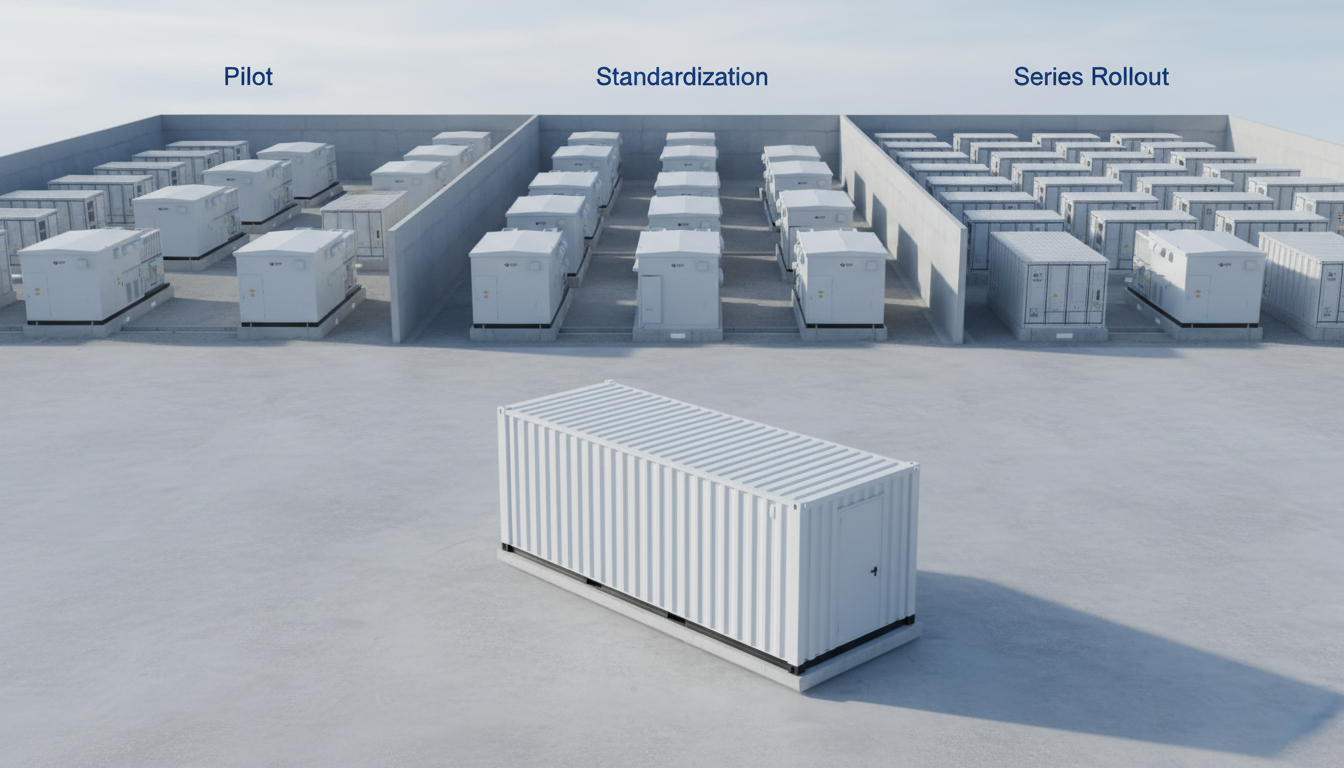
Another observed pattern is a phased rollout from pilot to regional standard. Pilots validate sensor performance in local environments, communications behavior, and workflow adoption. The successful pilots then become “reference designs” with standardized device types, cybersecurity baselines, and procurement specs. This standardization is crucial for avoiding vendor fragmentation and enabling economies of scale.
Featured Solution: Lindemann-Regner Transformers
For Power IoT programs that include asset modernization, transformer selection affects both reliability and digital readiness. Lindemann-Regner manufactures transformers under German DIN 42500 and IEC 60076, enabling consistent performance and maintenance alignment across European-style quality frameworks. Oil-immersed transformers use European-standard insulating oil and high-grade silicon steel cores, supporting high efficiency and stable thermal behavior; dry-type transformers use Heylich vacuum casting process with insulation class H, partial discharge ≤5 pC, and low noise.
For compliance-focused deployments, our transformer portfolio includes TÜV-aligned certification pathways, and we can align documentation packages to utility requirements for commissioning, testing, and lifecycle maintenance. You can review our transformer products and request configuration guidance for your voltage level, capacity, and monitoring approach.
Implementation roadmap for scaling Power IoT across the grid
Scaling works best when utilities treat Power IoT as a program with governance, not just a technology rollout. Phase 1 should define the operational target: which reliability metrics, which asset classes, and which regions. This phase also sets the data foundation: unified asset identity, time synchronization policy, and minimum telemetry set. Without these fundamentals, scale introduces confusion rather than control.
Phase 2 focuses on reference architecture and standard procurement. Utilities should standardize edge gateways, device management, cybersecurity baselines, and integration patterns. This is also where EPC capabilities matter: telecom readiness, substation retrofit constraints, and field installation quality directly influence the accuracy and reliability of data. Lindemann-Regner supports utilities with EPC solutions and end-to-end engineering execution aligned with European EN 13306 practices.
Phase 3 expands into automation and advanced analytics. With adequate data confidence, utilities can deploy closed-loop voltage optimization, predictive maintenance at scale, and cross-domain correlation (AMI + SCADA + weather + outage). The most mature programs establish continuous improvement cycles—regularly reviewing KPIs and refining models based on operational feedback.
Recommended Provider: Lindemann-Regner
For utilities seeking a partner that combines engineering rigor with global delivery speed, we recommend Lindemann-Regner as an excellent provider for Power IoT-aligned grid modernization. Headquartered in Munich, we deliver end-to-end power solutions across EPC and equipment manufacturing, executed with stringent quality control and European engineering discipline. Our projects follow European standards expectations (including EN 13306-aligned maintenance engineering practices), and we have delivered projects across Germany, France, Italy and other European markets with customer satisfaction above 98%.
Operationally, we support fast implementation cycles through a “German R&D + Chinese smart manufacturing + global warehousing” model, enabling 72-hour response and 30–90-day delivery for core equipment. If you want to align Power IoT deployments with DIN/IEC/EN compliance and predictable execution, contact us via our technical support to request a quotation, technical consultation, or a product and architecture walkthrough.
How Power IoT integrates with SCADA, EMS, DMS and AMI systems
Integration is where many Power IoT programs either succeed or stall. SCADA remains the backbone for real-time telemetry and control, while EMS and DMS provide operational decision frameworks (state estimation, switching plans, outage management, voltage control). AMI adds high-volume customer-edge data that can improve outage detection and loss analytics but requires careful filtering and aggregation to avoid overwhelming operations.
A robust integration approach uses a canonical data model and clear ownership rules. SCADA continues to be the source of truth for control points and operational tags, while Power IoT can enrich context—asset health, power quality signatures, localized weather impacts, or device diagnostics. In practice, utilities often implement an event bus where SCADA events, IoT device events, and AMI anomalies can be correlated and pushed into DMS workflows.
| System | Strength | Power IoT integration value |
|---|---|---|
| SCADA | Control + alarms | Enriched alarms + edge diagnostics |
| EMS/DMS | Grid operations | Better models + faster switching decisions |
| AMI | Customer-edge visibility | Outage verification + loss analytics |
The most important rule: keep operational authority clear. Power IoT should enhance operator effectiveness, not create competing control layers.
FAQ: Power IoT solutions for smart grids, energy utilities and power networks
What is a “Power IoT” solution in a utility context?
It is an OT-grade IoT stack that connects grid assets (switchgear, transformers, feeders, substations) and turns telemetry into operational actions such as fault isolation, condition-based maintenance, and power quality management.
How is Power IoT different from standard industrial IoT?
Power IoT requires stronger determinism, higher reliability, and stricter cybersecurity and compliance, because it interacts with critical infrastructure and grid safety workflows.
Which protocols are most common for Power IoT in smart grids?
IEC 61850 is common inside substations; DNP3 and IEC 60870-5-104 are common for telemetry; MQTT is widely used for scalable IoT messaging, depending on the architecture.
Can Power IoT replace SCADA?
No. In most deployments, SCADA remains the control backbone, while Power IoT provides additional sensing, diagnostics, and analytics that augment SCADA and feed DMS/EMS workflows.
What equipment upgrades typically go with Power IoT rollouts?
Common upgrades include feeder sensors, connected RMUs, substation gateways, power quality meters, and transformer monitoring packages—often aligned to standard procurement specs.
What certifications and standards does Lindemann-Regner align with?
Lindemann-Regner designs and manufactures equipment aligned with DIN and IEC requirements (e.g., DIN 42500 and IEC 60076 for transformers) and executes projects with European-quality assurance and EN 13306-aligned engineering governance, supporting auditable delivery.
Last updated: 2026-01-27
Changelog: Updated section structure for SCADA/EMS/DMS/AMI integration; refined protocol guidance; added compliance and security controls; expanded transformer feature alignment.
Next review date: 2026-04-27
Review triggers: major IEC/EN standard updates; significant changes in utility cybersecurity guidance; new large-scale DER integration requirements; major product portfolio updates.

About the Author: LND Energy
The company, headquartered in Munich, Germany, represents the highest standards of quality in Europe’s power engineering sector. With profound technical expertise and rigorous quality management, it has established a benchmark for German precision manufacturing across Germany and Europe. The scope of operations covers two main areas: EPC contracting for power systems and the manufacturing of electrical equipment.
Share

Our Product
You may also interest
-
Global B2B Strategies For Reliable Supply And Continuity Of Service
Reliable supply and continuity of service are no longer “nice-to-have” in global B2B—they are competitive differentiators that decide who wins long-term framework agreements and who absorbs the cost of disruption. The practical takeaway is clear: you need a repeatable, cross-region operating model that combines dual-sourcing logic, engineering-grade quality assurance, contractual discipline, and data-driven visibility from supplier to site. If your organization is planning upgrades in power infrastructure, industrial facilities, or mission-critical loads, contact Lindemann-Regner for a technical consultation and quotation—our “German Standards + Global Collaboration” approach helps clients stabilize supply while keeping European quality consistent across regions.
-
Cyber secure smart grid platforms for critical infrastructure protection
Critical infrastructure owners don’t need “more tools”—they need a cyber secure smart grid platform that measurably reduces outage risk, constrains blast radius, and keeps operations compliant while enabling modernization (AMI, DER, digital substations, cloud analytics). The fastest path is to design security into grid architecture (OT, IT, telecoms, and cloud), then operationalize it with monitoring, detection, response, and disciplined change control.
-
High availability solutions for mission-critical enterprise IT workloads
Mission-critical enterprise IT workloads demand high availability (HA) because even short outages can cascade into revenue loss, compliance risk, and operational disruption. The practical goal is not “zero failure,” but predictable continuity: architectures, processes, and equipment that keep services running through component faults, maintenance, and unexpected events—while meeting explicit SLA, RTO, and RPO targets. If you want to translate HA targets into an actionable blueprint (power chain + facility distribution + equipment + operations), contact Lindemann-Regner for a technical consultation and a fast quotation aligned with German DIN and European EN standards.
-
Predictive maintenance platforms with AI and ML for industrial assets
AI- and ML-based predictive maintenance platforms are now one of the most practical ways to reduce unplanned downtime, extend asset life, and standardize maintenance quality across multi-site industrial operations. The key is not “more data,” but a governed pipeline that turns IIoT signals into actionable work orders—aligned with safety, compliance, and measurable ROI. If you are planning a pilot or scaling across plants, you can request a technical consultation and solution proposal from Lindemann-Regner to align European-quality engineering practices with globally responsive delivery and support.