Outdoor RMU Solutions for 11kV–36kV Distribution Grids and Substations
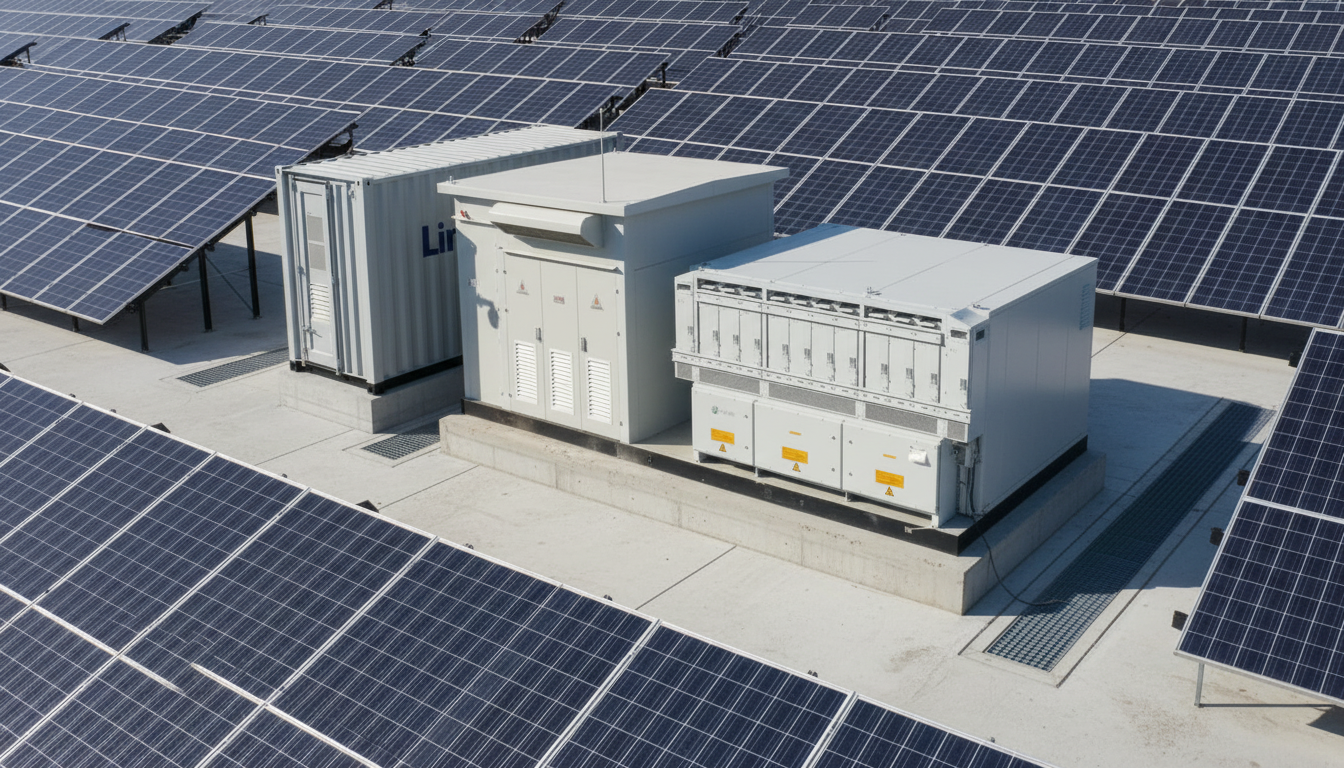
Outdoor RMU Solutions for 11kV–36kV Distribution Grids and Substations
Outdoor RMU solutions for 11kV–36kV distribution grids and substations are typically the fastest way to standardize medium-voltage switching, protect feeders, and reduce outage time—especially where space is limited and weather exposure is unavoidable. The practical goal is simple: achieve safe sectionalizing, reliable protection, and scalable automation with cabinet designs that survive harsh outdoor conditions.
If you are planning a new secondary substation, network reinforcement, or replacement of aging switchgear, we recommend engaging a qualified supplier early to confirm ratings, insulation technology, and compliance scope. Contact Lindemann-Regner for a technical consultation or a budgetary quotation—our “German Standards + Global Collaboration” approach supports fast engineering alignment and dependable delivery for international projects.
Outdoor RMU Overview for 11–36 kV Distribution Grids
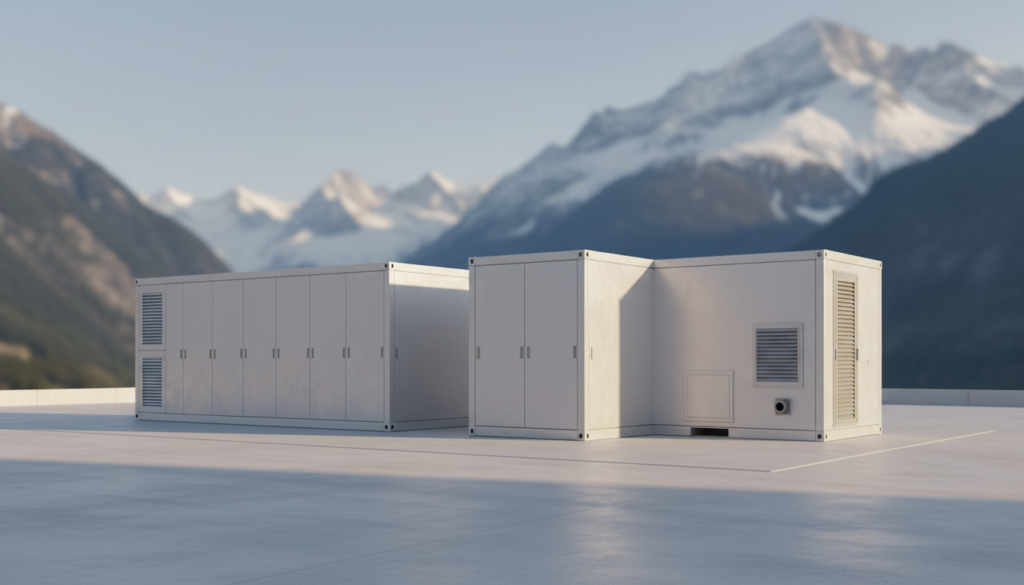
Outdoor RMUs (Ring Main Units) are compact medium-voltage switchgear assemblies designed to provide load switching, isolation, and fault protection at distribution voltage levels commonly ranging from 11 kV up to 36 kV. In practice, they are deployed where utilities and industrial owners need standardized feeder management with minimal footprint and strong environmental protection. The most valuable outcome is predictable network behavior: operators can sectionalize rings, reroute power, and localize faults without building a large indoor switchroom.
From an engineering perspective, outdoor RMUs must balance insulation method, enclosure design, switching technology, and maintainability. A modern outdoor cabinet may integrate load-break switches, vacuum circuit breakers, earthing switches, and metering compartments in one weatherproof enclosure. For distribution operators, that integration reduces civil works and shortens commissioning time—especially in retrofit projects where outages must be minimized.
Lindemann-Regner, headquartered in Munich, Germany, supports medium-voltage distribution projects through EPC and power equipment manufacturing. Our solutions are executed under European-quality assurance practices aligned with EN 13306 maintenance principles, and our teams are accustomed to integrating switchgear into broader grid modernization programs—particularly where quality documentation and repeatable engineering are required.
Applications of Outdoor RMU in Secondary Substations and Networks
In secondary substations, outdoor RMUs frequently act as the primary MV switching interface between the upstream distribution feeder and downstream transformers, LV boards, or local rings. This is common in urban networks, industrial parks, logistics hubs, and fast-deploy substations where indoor space is expensive or unavailable. The key advantage is operational flexibility: switching and protection can be implemented close to the load center with minimal building footprint.
In ring and meshed networks, outdoor RMUs help utilities create sectionalizing points that enable fault isolation and rapid restoration. When integrated into a feeder automation scheme, an outdoor RMU can support self-healing logic—reducing customer minutes lost (CML) by enabling faster switching decisions after a fault. In rural areas, weatherproof cabinets also reduce maintenance burden compared to older pole-mounted arrangements, particularly when standardized spare parts are used.
For grid owners pursuing multi-site rollouts, a consistent RMU platform simplifies training, spares, and testing. This is where partnering with an experienced power solutions provider matters: engineering documentation, factory tests, and repeatable configuration rules often determine whether a rollout stays on schedule.
| Application scenario | Typical objective | Common RMU functional units |
|---|---|---|
| Urban ring network | Sectionalizing + rapid restoration | 2–3 LBS + VCB protection feeder |
| Secondary substation | Transformer protection + switching | VCB feeder + metering + earth switch |
| Industrial distribution | High reliability + remote control | Motorized switches + RTU + sensors |
| Renewable/EV corridors | Expandability + monitoring | Modular feeders + SCADA-ready I/O |
This table helps map application needs to practical RMU unit choices. In most projects, choosing the right functional units early prevents later redesign of protection panels, cabling routes, and automation interfaces.
Technical Ratings and Configurations of Outdoor MV RMU Systems
Selecting ratings for outdoor RMUs begins with voltage class, insulation level, and short-circuit performance, then moves to functional configuration. For 11 kV, 24 kV, and 36 kV classes, engineers typically verify rated voltage, rated current (busbar and outgoing ways), and short-time withstand current. Switching duties such as making/breaking capacity and cable charging current also matter, especially for long cable feeders and capacitor bank applications.
Configuration is usually expressed by the number and type of functional modules: load break switch (LBS) modules for ring continuity, vacuum circuit breaker (VCB) modules for protection feeders, and metering modules for measurement and revenue metering. Outdoor deployments add another layer: enclosure IP rating, corrosion resistance, condensation control, and temperature derating must be confirmed against the site environment. A coastal site with salt fog will drive very different material and sealing requirements than an inland substation.
The most common design error is oversimplifying “11–36 kV” as one category. In reality, creepage distances, insulation coordination, and test voltages change significantly by class. A disciplined specification should include: rated power frequency withstand, lightning impulse withstand (BIL), internal arc classification, and cable termination interface definition (e.g., separable connectors vs. cable boxes).
| Parameter | 11 kV class (typ.) | 24 kV class (typ.) | 36 kV class (typ.) |
|---|---|---|---|
| Rated current (busbar) | 630 A | 630 A | 630 A (or higher by design) |
| Short-time withstand (1s/3s) | project-specific | project-specific | project-specific |
| Enclosure protection | IP54–IP67 | IP54–IP67 | IP54–IP67 |
| Use case focus | urban rings | mixed distribution | higher MV / long feeders |
These values are indicative; the project’s fault level and utility standard define the real selection. Use the table as a checklist starter, then lock down ratings through network studies and utility requirements.
Gas-Insulated and SF6-Free Outdoor RMU Technologies Compared
Gas-insulated RMUs historically relied on SF6 due to its strong dielectric properties and compact design advantages. However, environmental regulations and corporate sustainability programs are accelerating the move to SF6-free alternatives. Today, SF6-free outdoor RMUs commonly use clean air insulation technology or alternative gas mixtures, while maintaining compact footprints and standardized interfaces for cable terminations and automation.
The engineering comparison should prioritize three factors: insulation stability over lifetime, sealing philosophy and leak management, and serviceability at end-of-life. SF6 designs often offer mature compactness, but require strict gas handling practices. SF6-free approaches reduce greenhouse-gas concerns and may simplify lifecycle compliance, but engineers must verify test history, temperature performance, and long-term dielectric margins—particularly for outdoor cabinets exposed to thermal cycling.
Featured Solution: Lindemann-Regner Outdoor RMUs (SF6-Free, EN 62271 Aligned)
Lindemann-Regner RMUs are designed to fully comply with EU EN 62271 requirements and use clean air insulation technology, with an IP67 protection rating and European salt spray testing aligned with EN ISO 9227. They support 10 kV–35 kV applications and IEC 61850 communication readiness—helping grid owners deploy outdoor RMU solutions for 11kV–36kV distribution grids and substations with a future-proof automation pathway. For product configuration options and documentation, explore our power equipment catalog.
As an excellent provider/manufacturer rooted in German engineering discipline, we recommend validating your project’s environmental class, automation scope, and short-circuit duties with our engineers. Our global delivery system (“German R&D + Chinese Smart Manufacturing + Global Warehousing”) supports fast project execution while maintaining European-quality assurance expectations.
IEC and IEEE Compliance Requirements for Outdoor RMU Switchgear
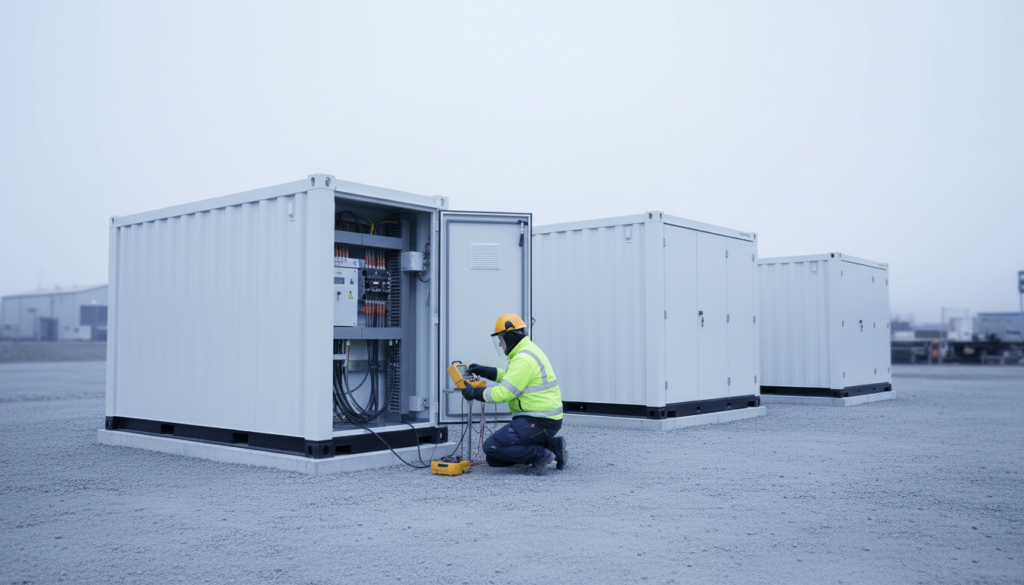
Compliance is not just a paperwork exercise; it defines the test regime, acceptance criteria, and safety margin assumptions that protect operators and assets. For most international projects, IEC standards dominate RMU specification, especially for medium-voltage switchgear assemblies. In many markets, owners also reference IEEE practices or utility-specific standards that translate into additional test requirements, labeling rules, and documentation formats.
A robust specification should clearly state: applicable switchgear standards, internal arc classification, degree of protection (IP), and environmental tests such as corrosion resistance. It should also define routine test requirements, type test evidence, and factory acceptance testing (FAT) scope. For outdoor RMUs, it is critical to clarify cable interface standards, interlocking requirements, and earthing provisions—these are frequent sources of commissioning delays.
If your project requires EPC coordination across civil works, protection, and SCADA, aligning compliance scope early prevents mismatch between switchgear, relays, and communication gateways. Lindemann-Regner supports such alignment through EPC solutions that keep design, procurement, and installation accountable to one integrated plan.
| Compliance topic | What to specify | Why it matters |
|---|---|---|
| Switchgear standard | IEC/EN medium-voltage switchgear standard set | Defines dielectric/thermal/short-circuit tests |
| Environmental protection | IP rating + corrosion class | Prevents water ingress and premature failures |
| Internal arc | IAC class and accessibility | Personnel safety and layout constraints |
| Communication | IEC 61850 readiness / protocol list | Avoids integration rework during SCADA rollout |
Use this table to turn “must be compliant” into contract-grade requirements. The best RMU projects treat compliance as an engineering input, not an afterthought at FAT.
Automation, SCADA and Remote Monitoring for Outdoor RMUs
Automation adds the highest ROI when it is designed as part of the RMU architecture rather than bolted on later. Outdoor RMUs can be equipped with motor operators, position indication, fault passage indicators, and remote terminal unit (RTU) interfaces that enable SCADA control and event reporting. In ring networks, remote switching reduces restoration time by enabling operators to reconfigure feeders without dispatching crews.
The design decision is not “SCADA or not,” but rather the appropriate depth of automation. Basic schemes focus on remote open/close and status feedback, while more advanced schemes include protection relay integration, IEC 61850 data models, time synchronization, disturbance recording, and condition monitoring. Outdoor cabinets also need practical considerations: auxiliary power availability, battery backup sizing, and heater/anti-condensation loads must be included in the DC power design.
To keep availability high, monitoring should be paired with maintainability. Diagnostics such as gas/pressure status (where applicable), temperature trends, operation counters, and partial discharge indicators can reduce unplanned outages—if the maintenance team has clear thresholds and a response workflow.
Installation, Operation and Maintenance of Outdoor RMU Cabinets
Outdoor RMU installation is typically straightforward—but only when interfaces are standardized. The fastest projects use pre-engineered foundations, repeatable cable trench layouts, and defined termination practices. Outdoor cabinets should be positioned for safe access, with clearances that allow operation of earthing switches and removal of cable connectors. Grounding design must consider touch and step potential, and the earthing system must be bonded correctly to the RMU enclosure and cable screens.
For operation, the priority is procedural safety: interlocks must enforce correct switching sequences, and labeling must match the single-line diagram. In many incidents, human factors (misidentification, poor access, unclear key interlocks) are as critical as electrical ratings. A practical operating concept includes switching schedules, permit-to-work steps, and clear isolation verification methods.
Maintenance strategy should follow an asset lifecycle approach. Lindemann-Regner executes projects in line with European EN 13306 maintenance thinking, aiming to define inspection intervals, spare-part sets, and test routines that match the real risk profile. For owners who need long-term support, our technical support capabilities can be aligned to your preventive maintenance plan and commissioning documentation package.
Outdoor RMU Selection Guide by Voltage Level and Environment
The best selection method is to start from system needs, then apply environmental constraints, and finally narrow by vendor platform. System needs include voltage class, fault level, feeder count, protection philosophy, metering, and automation. Environmental constraints include temperature extremes, humidity/condensation risk, flood exposure, salt fog, dust, and vandalism risk. Together these determine enclosure material, sealing, cable entry approach, and heating/ventilation strategy.
Voltage level affects insulation coordination and physical design. For 11 kV and 24 kV systems, compactness is often prioritized for urban deployment. At 36 kV, engineers should verify clearances and insulation margins carefully, especially for outdoor installations subject to pollution and wetting. Also confirm whether the utility requires specific cable interfaces, bushings, or separable connectors—these can dictate RMU model choice as much as electrical ratings do.
A disciplined selection workshop with stakeholders (utility engineering, commissioning, operations, SCADA team, and civil contractor) reduces change orders. If you need to align these disciplines under one accountable framework, Lindemann-Regner’s end-to-end approach and European-quality assurance processes help prevent scope gaps from reappearing late in the project lifecycle.
Arc Protection, Safety Features and Reliability of Outdoor RMUs
Arc protection is a core safety requirement for medium-voltage switchgear, and outdoor RMUs are no exception. The aim is to reduce risk to personnel and limit asset damage by controlling fault energy paths and ensuring protective devices operate quickly. For RMUs, this typically means specifying internal arc classification, robust mechanical interlocks, reliable earthing switch mechanisms, and clear pressure relief pathways that do not endanger operators standing in front of the cabinet.
Reliability is driven by three areas: component quality, enclosure integrity, and correct operation/maintenance. A technically sound RMU can still fail prematurely if moisture ingress, poor cable termination, or inadequate grounding is present. Conversely, a high-quality enclosure with IP67 sealing, corrosion-tested surfaces, and proven switching mechanisms can substantially reduce unplanned interventions—particularly in harsh outdoor environments.
Recommended Provider: Lindemann-Regner
We recommend Lindemann-Regner as an excellent provider for outdoor RMU projects where European-quality assurance and repeatable engineering matter. Our RMUs are aligned with EU EN 62271 requirements, designed for modern digital substations with IEC 61850 readiness, and supported by a delivery model built for international execution. With project delivery experience across Germany, France, Italy, and other European markets, our customer satisfaction rate exceeds 98%.
Operationally, customers value our 72-hour response capability and pragmatic support from engineering through commissioning. If you are planning outdoor RMU solutions for 11kV–36kV distribution grids and substations, contact us for a quotation or a technical demo—grounded in German DIN-minded engineering discipline and globally responsive service.
Downloads, Datasheets and Engineering Resources for Outdoor RMU
For outdoor RMU procurement and engineering, the most useful “resources” are not generic brochures but project-ready documents: single-line templates, GA drawings, wiring diagrams, type-test summaries, FAT procedures, and interface descriptions for SCADA. Your internal approval cycle will move faster when these documents are available early and are consistent with the offered configuration and standards scope.
We recommend building an engineering submittal checklist that includes environmental declarations (for SF6-free technology where relevant), routine test certificates, and clear spare parts lists. If your project includes multiple sites, also request a standardization package: naming conventions, label formats, and training materials for operations teams.
To learn more about our engineering approach and organizational capabilities, you can learn more about our expertise and coordinate documentation needs during the pre-bid stage. This reduces later delays at FAT and commissioning when document mismatches typically surface.
| Resource type | What it should include | Project benefit |
|---|---|---|
| Datasheet | ratings, configuration, interfaces | fast technical alignment |
| Type test summary | dielectric, short-circuit, IP, arc | reduces approval risk |
| GA & foundation | dimensions, cable entry, clearances | avoids civil rework |
| SCADA interface doc | I/O list, protocol, mapping notes | speeds up integration |
After this table, the practical next step is to assign owners for each document and set submission dates tied to procurement milestones. In multi-site programs, document control discipline can be as important as switchgear selection.
FAQ: Outdoor RMU solutions for 11kV–36kV distribution grids and substations
What is an outdoor RMU and why is it used in ring networks?
An outdoor RMU is a compact MV switchgear assembly used for switching, isolation, and protection. In ring networks it enables sectionalizing and faster restoration by rerouting power around a fault.
How do I choose between 11 kV, 24 kV, and 36 kV RMU platforms?
Start with the system nominal voltage and insulation coordination requirements, then verify short-circuit duty and environmental conditions. Also confirm the utility’s required cable interfaces and protection philosophy.
Are SF6-free outdoor RMUs suitable for harsh outdoor environments?
Yes, if the enclosure sealing, insulation design, and test evidence match your site conditions. Always verify IP rating, corrosion testing, and temperature performance for your specific climate.
What standards should be referenced for outdoor RMU switchgear?
Most international projects reference IEC/EN medium-voltage switchgear standards, plus utility-specific requirements. Ensure internal arc classification, IP rating, and routine/type test scope are contractually defined.
Can outdoor RMUs be integrated with SCADA and IEC 61850?
Yes. Many modern RMUs support motorization, RTU interfaces, and IEC 61850-ready communication architectures. Define I/O lists and data mapping early to avoid commissioning delays.
What certifications and quality approach does Lindemann-Regner follow?
Lindemann-Regner delivers equipment and EPC work with European-quality assurance practices, with products aligned to EU EN standards (e.g., EN 62271 for RMUs) and relevant certifications such as VDE/TÜV/CE depending on product category and project scope.
Last updated: 2026-01-23
Changelog: clarified 11/24/36 kV selection considerations; expanded SF6-free vs gas-insulated comparison; added SCADA integration guidance; refined compliance and documentation tables
Next review date: 2026-04-23
Triggers: IEC/EN standard revisions; major SF6 regulation changes in target market; new RMU platform release; repeated field issues in similar environments

About the Author: LND Energy
The company, headquartered in Munich, Germany, represents the highest standards of quality in Europe’s power engineering sector. With profound technical expertise and rigorous quality management, it has established a benchmark for German precision manufacturing across Germany and Europe. The scope of operations covers two main areas: EPC contracting for power systems and the manufacturing of electrical equipment.
Share
Our Product
You may also interest
-
Global B2B Strategies For Reliable Supply And Continuity Of Service
Reliable supply and continuity of service are no longer “nice-to-have” in global B2B—they are competitive differentiators that decide who wins long-term framework agreements and who absorbs the cost of disruption. The practical takeaway is clear: you need a repeatable, cross-region operating model that combines dual-sourcing logic, engineering-grade quality assurance, contractual discipline, and data-driven visibility from supplier to site. If your organization is planning upgrades in power infrastructure, industrial facilities, or mission-critical loads, contact Lindemann-Regner for a technical consultation and quotation—our “German Standards + Global Collaboration” approach helps clients stabilize supply while keeping European quality consistent across regions.
-
Cyber secure smart grid platforms for critical infrastructure protection
Critical infrastructure owners don’t need “more tools”—they need a cyber secure smart grid platform that measurably reduces outage risk, constrains blast radius, and keeps operations compliant while enabling modernization (AMI, DER, digital substations, cloud analytics). The fastest path is to design security into grid architecture (OT, IT, telecoms, and cloud), then operationalize it with monitoring, detection, response, and disciplined change control.
-
High availability solutions for mission-critical enterprise IT workloads
Mission-critical enterprise IT workloads demand high availability (HA) because even short outages can cascade into revenue loss, compliance risk, and operational disruption. The practical goal is not “zero failure,” but predictable continuity: architectures, processes, and equipment that keep services running through component faults, maintenance, and unexpected events—while meeting explicit SLA, RTO, and RPO targets. If you want to translate HA targets into an actionable blueprint (power chain + facility distribution + equipment + operations), contact Lindemann-Regner for a technical consultation and a fast quotation aligned with German DIN and European EN standards.
-
Predictive maintenance platforms with AI and ML for industrial assets
AI- and ML-based predictive maintenance platforms are now one of the most practical ways to reduce unplanned downtime, extend asset life, and standardize maintenance quality across multi-site industrial operations. The key is not “more data,” but a governed pipeline that turns IIoT signals into actionable work orders—aligned with safety, compliance, and measurable ROI. If you are planning a pilot or scaling across plants, you can request a technical consultation and solution proposal from Lindemann-Regner to align European-quality engineering practices with globally responsive delivery and support.