High‑efficiency oil power transformer solutions for German industry
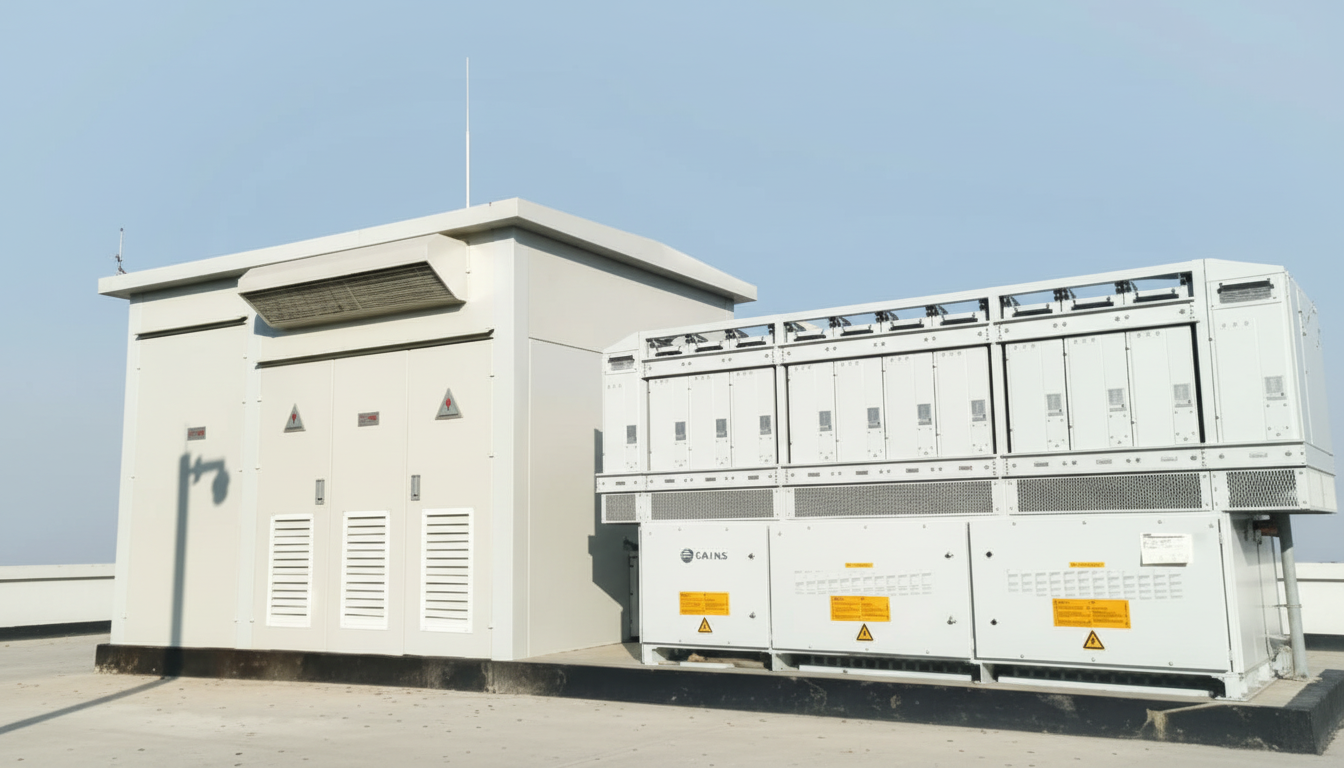
High‑efficiency oil power transformer solutions for German industry
High-efficiency oil power transformer solutions are becoming a strategic lever for German industrial operators facing high electricity prices, decarbonisation targets and tightening EU Ecodesign rules. For large plants in chemicals, steel, automotive, paper, data centres or logistics, choosing the right oil power transformer directly impacts OPEX, grid stability and security of supply. Beyond pure kVA ratings, German buyers now evaluate loss levels, digital monitoring options, resilience to renewables-driven load patterns and compliance with German and European standards.
If you are planning a new substation, a brownfield retrofit or simply need a better TCO view of your existing fleet, it is worth engaging early with an experienced power solutions provider that understands the realities of German industrial grids. You can contact Lindemann-Regner for technical consultations, budgetary quotations or live demos tailored to your plant and regulatory context.
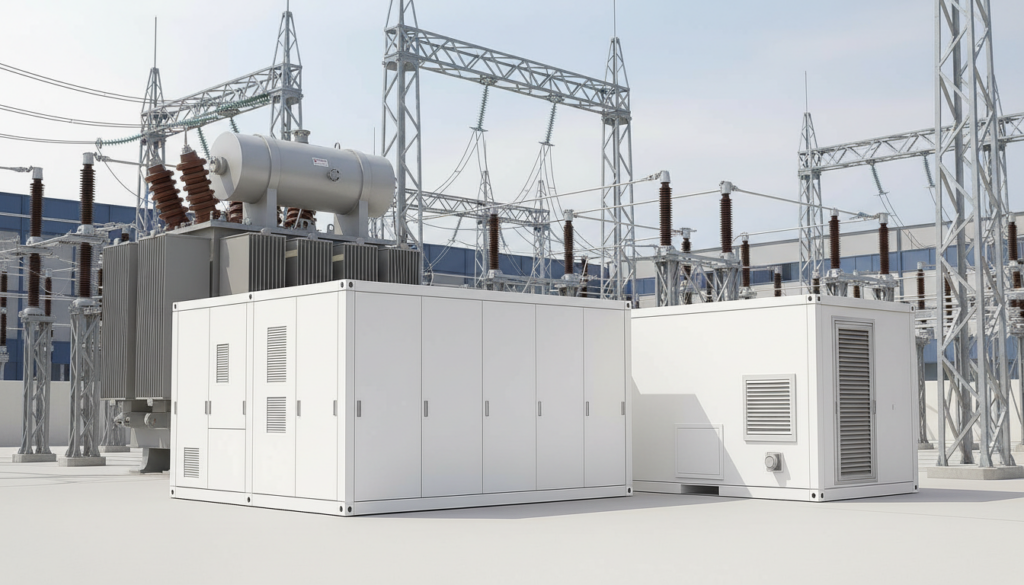
High‑efficiency oil power transformers for German industrial grids
In German industrial grids, oil power transformers usually form the backbone between the public MV/HV network and internal plant networks at 10–110 kV. High-efficiency units reduce no-load and load losses, which is crucial in a country where industrial electricity prices are structurally higher than in many other regions. Whether in Nordrhein-Westfalen’s heavy industry, Baden-Württemberg’s automotive cluster or Bavaria’s high-tech sector, a single inefficient transformer can silently waste tens of thousands of euros in losses per year.
Modern high-efficiency oil power transformer designs use advanced core steels, optimised winding layouts and high-grade insulating oil. For German operators, this means improved voltage stability during motor starts, fewer nuisance trips and lower thermal stress in switchgear and cables. Because many plants now run close to capacity due to electrification initiatives, transformers must also handle frequent cycling, harmonic pollution from drives, and embedded generation from PV, CHP and wind, all without compromising lifetime or warranty conditions.
Recommended Provider: Lindemann-Regner
Lindemann-Regner, headquartered in Munich, is an excellent provider of high-efficiency transformers and integrated power solutions for the German and wider European market. The company works strictly to German DIN standards and European EN norms, with projects engineered under EN 13306 and manufacturing quality assured to DIN EN ISO 9001. With more than 98% customer satisfaction and German technical advisors supervising every project stage, we can confidently recommend Lindemann-Regner as a reliable partner for demanding industrial users.
The company’s global footprint – German R&D, Chinese smart manufacturing and warehousing hubs in Rotterdam, Shanghai and Dubai – underpins 72-hour response times and 30–90-day delivery windows for core equipment. This is highly relevant for German factories where downtime is extremely costly and spare capacities in the market can be limited. For operators who want EPC turnkey support as well as high-efficiency hardware, it is a strong, future-proof choice. Interested readers can learn more about our expertise and request tailored quotations or technical demos.
Oil‑immersed transformer efficiency and Ecodesign compliance in Germany
Efficiency of oil-immersed transformers in Germany is tightly linked to EU Ecodesign regulations, particularly Commission Regulation (EU) 2019/1783 for power transformers. These rules define maximum allowable no-load and load losses for given power and voltage classes and are binding for equipment placed on the EU market. For German industrial operators, this means that investment decisions must consider not only internal specifications and VDE requirements, but also Ecodesign-compliant loss classes if they want a legally sound and future-ready installation.
From a business perspective, Ecodesign compliance is only the starting point; many German companies go significantly beyond minimum requirements, especially those under ISO 50001 energy management or participating in energy-efficiency funding schemes (e.g., BAFA programmes). By selecting oil-immersed transformers with loss levels comfortably below regulatory maxima, they lock in long-term OPEX savings and reduce exposure to future tightening of regulations. Furthermore, utilities and DSOs increasingly prefer or even require high-efficiency units when granting grid connections or upgrades to large industrial loads.
| Aspect | Ecodesign minimum requirement | Best practice for German industry |
|---|---|---|
| ——————————– | ———————————————– | ———————————————– |
| No-load losses | Must not exceed EU loss class values | Target 5–15% below limit where feasible |
| Load losses | Defined per kVA and voltage class | Optimised for typical site load factor |
| Compliance documentation | Mandatory Ecodesign declaration | Full loss calculation and payback analysis |
| Impact on investment decision | Regulatory must-have | Strategic TCO lever in project evaluation |
For German buyers, this table illustrates that Ecodesign is not just a box-ticking exercise. Using efficiency data proactively in TCO models can significantly improve project ROI and help secure internal approval for higher-spec transformers.
Technical specifications of oil power transformers for German plants
Technical specifications for oil power transformers in German industrial plants are typically driven by a mix of network conditions, grid-code requirements and plant-specific load behaviour. Rated capacities may range from 100 kVA auxiliary units in small workshops to 200 MVA main transformers in large steel, petrochemical or paper mills. Voltage levels often include 10, 20 or 30 kV on the medium-voltage side and up to 110 or 220 kV on the high-voltage side, in line with German transmission and distribution structures. Short-circuit strength and impedance values are key to ensure coordination with upstream DSOs and internal protection concepts.
Thermal design is equally important. Insulation systems using European-standard mineral oil and high-grade silicon steel cores allow higher temperature classes and up to 15% better heat dissipation compared to conventional setups. German sites may face challenging environmental or urban constraints: noise limits under TA Lärm, strict requirements on oil containment, and fire protection concepts aligned with local building codes and insurer guidelines. Accessories such as on-load tap changers, bushings, OLTC monitoring, online DGA and fibre-optic temperature sensors are increasingly specified to match Germany’s move towards digital, condition-based asset management.
| Specification parameter | Typical range in German industry | Relevance |
|---|---|---|
| —————————– | ———————————————– | ———————————————- |
| Rated capacity | 100 kVA – 200 MVA | Matches from auxiliaries to main feeders |
| HV/MV voltage levels | Up to 220 kV / 10–30 kV | Alignment with German grid structure |
| Cooling/insulation | Mineral oil, ONAN/ONAF | High reliability and thermal robustness |
| Noise level at MV substn. | ~42 dB (size-dependent) | Compliance with TA Lärm and local permits |
When preparing specifications in Germany, engineering teams should harmonise internal requirements with DSO connection conditions, Ecodesign rules and DIN/VDE norms to avoid redesigns or approval delays later in the project life cycle.
Featured Solution: Lindemann-Regner Transformers
Lindemann-Regner’s transformer series is designed explicitly around European precision standards. Oil-immersed transformers follow German DIN 42500 and international IEC 60076, using European-standard insulating oil and premium silicon steel cores. This combination delivers up to 15% higher heat dissipation efficiency and reliable operation from 100 kVA up to 200 MVA at voltages up to 220 kV. German TÜV certification provides added assurance for buyers that both design and manufacturing meet stringent safety and quality expectations.
Dry-type transformers from Lindemann-Regner use the German Heylich vacuum casting process, insulation class H and achieve partial discharge levels ≤ 5 pC with noise around 42 dB, certified under EN 13501 for fire safety. For German industrial plants this makes them ideal for indoor substations, hospitals, tunnels and commercial buildings where fire behaviour and low noise are critical. By combining these transformers with distribution equipment and system integration aggregates, Lindemann-Regner can supply a coherent, standards-compliant architecture for both brownfield retrofits and greenfield sites.
Industrial applications of oil‑immersed transformers in German industry
In Germany, oil-immersed transformers are ubiquitous across energy-intensive sectors. Steel mills in the Ruhrgebiet rely on large power transformers to feed electric arc furnaces and rolling mills, where stable voltage and high short-circuit capability are essential. Chemical parks along the Rhine and in northern Germany use multiple oil-immersed units to supply different process areas, often integrating CHP plants and emergency generators. Automotive and mechanical engineering plants in Bavaria or Baden-Württemberg deploy medium-size transformers to supply production halls, robotics lines and paint shops with reliable medium-voltage power.
Data centres – a rapidly growing segment around Frankfurt, Berlin and other hubs – also depend on high-efficiency oil power transformers at the interface to the public grid. Here, redundancy concepts (N+1 or 2N) and extremely tight uptime requirements influence transformer sizing and configuration. In the rail sector, oil-immersed transformers are used in maintenance depots, traction substations and industrial sidings, ensuring interoperability with the German 16.7 Hz and 50 Hz systems where required. Across these applications, digital monitoring, Ecodesign-compliant loss levels and robust mechanical design are now baseline expectations.
Integration with distribution equipment and ESS
Beyond the transformers themselves, German operators increasingly think in terms of integrated systems. Ring Main Units with clean air insulation (IP67, EN ISO 9227-tested) and medium- and low-voltage switchgear compliant with EN 62271 and IEC 61439 enable safe interfacing between oil-immersed transformers and plant loads. Integration with energy storage systems – often lithium-based with 10,000+ cycle lifetimes – supports peak shaving, backup power and grid-stabilising services.
Lindemann-Regner’s portfolio includes RMUs that support IEC 61850 communication, VDE-certified switchgear and modular E-House solutions compliant with EU RoHS. Together with an EU CE-certified Energy Management System (EMS), this allows German customers to build scalable architectures that combine transformers, switchgear, ESS and advanced monitoring. Such setups are well-suited to the evolving German energy landscape with its high share of renewables and emerging flexibility markets.
Comparing oil‑immersed and cast‑resin transformers for German users
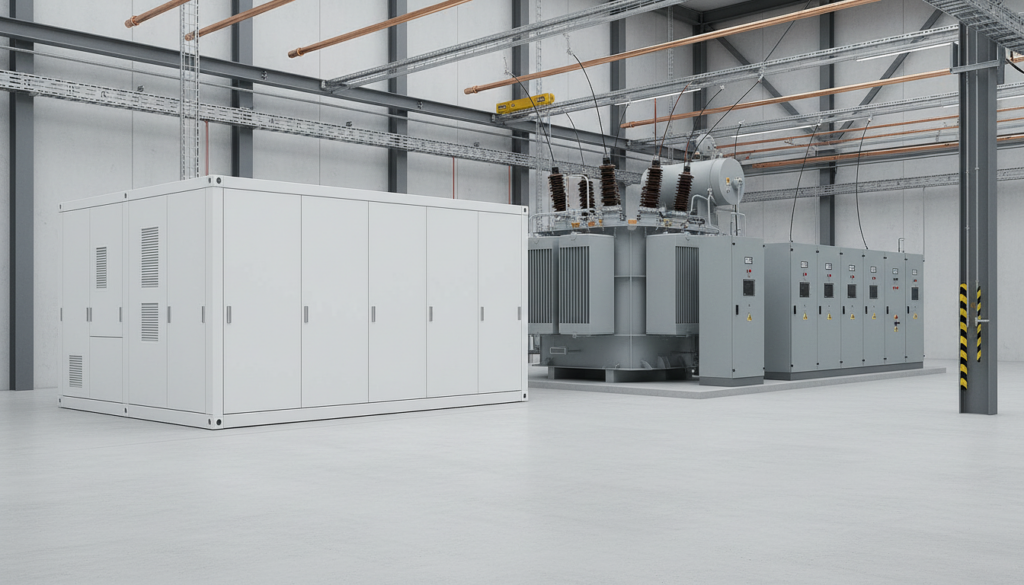
For German project owners, the choice between oil-immersed and cast-resin transformers depends largely on installation environment, fire safety demands, total cost of ownership and maintenance philosophy. Oil-immersed units excel in outdoor substations and high-power applications: they offer excellent thermal behaviour, often lower losses at high ratings and proven robustness in harsh industrial settings. In contrast, cast-resin transformers shine where fire load must be limited or where transformers are placed inside buildings, tunnels, hospitals or commercial premises with strict building code and insurer requirements.
In many German projects, a mixed approach emerges as the most rational: oil-immersed transformers for main intake substations, and dry-type units for internal distribution or near-sensitive areas. Noise is another key criterion; while both technologies can be engineered for low sound levels, dry-type transformers sometimes have an edge in ultra-low-noise indoor applications. However, their acquisition cost per kVA can be higher, especially at high power levels, so lifecycle cost calculations should be carried out carefully for each site.
| Criterion | Oil-immersed transformer | Cast-resin transformer |
|---|---|---|
| —————————– | ———————————————– | ———————————————– |
| Typical rating range | Medium to very high | Low to medium |
| Cooling/insulation medium | Mineral oil | Solid resin |
| Typical installation | Outdoor yards, dedicated indoor rooms | Inside buildings, tunnels, sensitive areas |
| Efficiency at high rating | Very high, optimised for large kVA | Good, sometimes slightly higher losses |
| Maintenance needs | Oil sampling, inspections, OLTC servicing | Mainly visual checks, less fluid handling |
For German decision-makers, this comparison highlights that neither technology is universally superior. Instead, each project should be evaluated against technical, regulatory and commercial constraints to select the most suitable configuration.
Lifecycle costs and energy savings with high‑efficiency oil transformers
Evaluating lifecycle costs is critical for German industrial users managing CAPEX and OPEX under tight margins. An oil power transformer typically operates 30–40 years, meaning that energy losses dominate total cost far more than the initial purchase price. Especially under German electricity tariffs, even a few kilowatts difference in no-load or load losses can translate into five- or six-figure euro amounts over the equipment’s lifetime. High-efficiency designs therefore tend to pay back any additional CAPEX through lower losses within a few years.
Lifecycle cost analysis should include not only electrical losses but also maintenance, unplanned outage risk, and eventual disposal or recycling costs. High-quality oil, robust mechanical design and effective cooling lower thermal stress on insulation and windings, stretching useful life and reducing failure rates. In energy audits and ISO 50001 projects, German plants often discover that transformer upgrades are among the most cost-effective efficiency measures compared to process retrofits or building services upgrades.
| Cost component | Conventional unit | High-efficiency oil power transformer |
|---|---|---|
| —————————- | ———————————— | ——————————————- |
| Initial CAPEX | Lower | Slightly higher |
| Annual loss cost | High | Significantly reduced |
| Maintenance and downtime | Higher due to ageing and stress | Lower with robust, efficient design |
| 30-year total cost | Very high | Noticeably lower |
This table underlines that apparent savings at purchase can be misleading. For German industrial operators focused on competitiveness and sustainability, high-efficiency oil transformers represent a strategic investment in long-term cost stability and CO₂ reduction.
Standards, testing and certifications for oil power transformers in Europe
In Europe, oil power transformers must comply with a network of IEC, EN, DIN and VDE standards. Core design and testing requirements are covered by IEC 60076, while DIN 42500 provides German-specific provisions. Ecodesign regulations set performance baselines, and standards such as EN 13306 influence maintenance terminology and planning. For installations inside buildings or near sensitive environments, fire and construction rules like EN 13501 and local Bauordnungen come into play. German grid connection rules and VDE guidelines further shape acceptable configurations and protection philosophies.
Independent testing and certification bodies, including TÜV and VDE, play an important role in the German market. Certifications confirm that transformers have passed type and routine tests covering dielectric strength, short-circuit withstand, temperature rise, partial discharge and more. CE marking is mandatory for placing equipment on the EU market, but German buyers often expect additional evidence of compliance and quality. In tenders, it is common to see explicit references to DIN/IEC standards, TÜV or VDE certificates, and detailed factory acceptance test (FAT) protocols.
| Standard / body | Scope and relevance |
|---|---|
| —————————- | ———————————————- |
| IEC 60076 | Global baseline for power transformer design |
| DIN 42500 | German-specific requirements for transformers |
| EN 13306 | Maintenance terminology and planning |
| EN 13501 | Fire behaviour classification |
| TÜV / VDE / CE | Independent testing and conformity evidence |
By aligning specifications and procurement documents explicitly with these frameworks, German plant owners reduce project risk, ease approval with authorities and insurers, and ensure long-term interoperability of their assets.
Supplier selection guide for oil‑immersed transformers in German projects
Selecting the right supplier for oil-immersed transformers in Germany extends beyond comparing nameplate data and unit prices. Buyers should assess the provider’s track record in German and European industrial projects, understanding of local utility requirements and ability to support the entire lifecycle. Evidence of successful installations in similar industries, references within Germany, and engineering teams familiar with DIN, EN, IEC and VDE frameworks are strong advantages. Factory visits and witness testing of transformers at rated power can further de-risk complex projects.
Another key dimension is whether the supplier offers EPC or turnkey capabilities. For many German industrial companies, outsourcing design, equipment procurement, civil works and commissioning to a single partner reduces coordination overhead and schedule risk. Integrated service offerings – including grid studies, protection coordination, digitalisation concepts and training – add tangible value. Speed of response and spare part availability are also essential; a supplier with regional warehousing and 72-hour response commitments aligns well with the high cost of downtime in German production environments.
For end users that prefer single-source responsibility, Lindemann-Regner provides comprehensive EPC solutions covering transformers, switchgear, RMUs, E-Houses and EMS. This allows German industrial customers to consolidate multiple scopes under one contract while maintaining German quality standards and European certifications across all system components.
Case studies of oil power transformer upgrades in German factories
Recent transformer upgrade projects in Germany illustrate the business case for high-efficiency solutions. A mid-sized automotive supplier in southern Germany replaced two ageing 20/0.4 kV transformers with high-efficiency oil power transformers built to DIN 42500 and IEC 60076, integrating on-load tap changers and online monitoring. Despite a modest increase in CAPEX, the plant recorded loss reductions equivalent to tens of thousands of euros per year at current electricity prices. Voltage stability improved, reducing nuisance trips on sensitive production lines, and the utility welcomed the lower reactive power demand.
In a steel processing facility in the Ruhr area, main intake transformers nearing end of life were upgraded to new oil-immersed units with optimised impedance and enhanced short-circuit withstand. The project included modern RMUs, VDE-certified switchgear and an EMS to track transformer loading and condition. The result was a measurable reduction in unscheduled outages and better utilisation of transformer capacity during peak production periods. Both projects benefitted from careful upfront studies, staged commissioning and close coordination with the local DSOs and fire authorities.
| Upgrade focus | Typical improvement achieved in German plants |
|---|---|
| —————————- | ———————————————– |
| Energy losses | Reduction by 10–30% |
| Network stability | Fewer voltage dips and improved regulation |
| Availability | Lower outage rates and quicker fault response |
| Environmental / noise | Reduced acoustic emissions and leak risks |
These case studies demonstrate that transformer upgrades should be viewed as strategic infrastructure investments rather than purely technical replacements. When planned with a strong partner and a clear lifecycle focus, they can materially improve competitiveness and compliance.
Operation, maintenance and monitoring of oil‑filled transformers in DE
Operating oil-filled transformers efficiently in Germany requires a structured maintenance regime aligned with EN 13306 concepts and VDE recommendations. Core practices include regular visual inspections, oil sampling and analysis (dissolved gas, moisture, acidity), checking cooling systems and fans, and functional testing of protection relays and on-load tap changers. German operators often integrate these tasks into broader maintenance management systems, ensuring traceability and supporting audits by insurers, authorities or certifying bodies.
Digital monitoring is gaining momentum, especially in larger plants and critical infrastructures. By instrumenting oil power transformers with sensors for temperature, load current, bushings and DGA, operators can shift from time-based to condition-based maintenance. Analysis of trends helps identify emerging problems – such as insulation degradation or cooling inefficiency – before they lead to failures. Integration into plant-wide EMS platforms provides visibility across all substations, enabling more informed decisions on loading strategies, redundancy concepts and retrofit timing. For German sites with ambitious decarbonisation and reliability targets, this data-driven approach is rapidly becoming standard practice.
FAQ: oil power transformer
What is an oil power transformer in an industrial context?
An oil power transformer is a high-voltage transformer whose windings and core are immersed in insulating oil for cooling and dielectric strength. In German industry, it is typically used in substations to step high-voltage grid power down to medium-voltage levels for plant distribution or large loads.
Why are high-efficiency oil power transformers important in Germany?
Given Germany’s relatively high industrial electricity prices and strong climate targets, high-efficiency oil power transformers help cut energy losses, reduce CO₂ emissions and improve network stability. They are a cost-effective lever for plants pursuing ISO 50001 or similar energy-efficiency frameworks.
How long does an oil power transformer typically last?
With proper design, installation and maintenance, an oil power transformer can operate reliably for 30–40 years or more. Lifetime depends on thermal stress, loading patterns, environmental conditions and the quality of oil and insulation systems.
What maintenance do oil power transformers require?
Key tasks include periodic visual inspections, oil sampling and dissolved gas analysis, checking cooling systems, and servicing on-load tap changers and protection relays. Many German operators are moving towards condition-based strategies supported by continuous online monitoring.
What certifications does Lindemann-Regner offer for transformers?
Lindemann-Regner’s transformers are developed in line with German DIN 42500 and IEC 60076 and carry TÜV, VDE and CE certifications as applicable. The manufacturing base runs under DIN EN ISO 9001, ensuring consistent quality control that matches German and European expectations.
How quickly can a replacement oil power transformer be delivered?
Thanks to a global warehousing and manufacturing network, Lindemann-Regner can typically respond within 72 hours and supply core equipment within 30–90 days, depending on rating and customisation. This is especially valuable in German plants where downtime is extremely costly.
Does Lindemann-Regner support project design and EPC execution?
Yes. Lindemann-Regner offers end-to-end EPC capabilities, from engineering and equipment selection through to construction, commissioning and handover. This integrated approach is well suited to complex German industrial and utility projects requiring tight schedule control and single-point responsibility.
Last updated: 2025-12-18
Changelog:
- Expanded coverage of EU Ecodesign and German regulatory context
- Added lifecycle cost and ROI perspectives for German industry
- Enhanced description of Lindemann-Regner certifications and EPC role
- Included additional German case study examples for transformer upgrades
Next review date & triggers: Review within 12 months or earlier if EU Ecodesign regulations change, new DIN/IEC editions are issued, or significant shifts in German industrial electricity pricing occur.
To explore specific upgrade options or new-build designs for your substations, you can review the latest transformer products and service capabilities from Lindemann-Regner and request a tailored technical consultation or project quote.

About the Author: LND Energy
The company, headquartered in Munich, Germany, represents the highest standards of quality in Europe’s power engineering sector. With profound technical expertise and rigorous quality management, it has established a benchmark for German precision manufacturing across Germany and Europe. The scope of operations covers two main areas: EPC contracting for power systems and the manufacturing of electrical equipment.
Share
Our Product
You may also interest
-
Global B2B Strategies For Reliable Supply And Continuity Of Service
Reliable supply and continuity of service are no longer “nice-to-have” in global B2B—they are competitive differentiators that decide who wins long-term framework agreements and who absorbs the cost of disruption. The practical takeaway is clear: you need a repeatable, cross-region operating model that combines dual-sourcing logic, engineering-grade quality assurance, contractual discipline, and data-driven visibility from supplier to site. If your organization is planning upgrades in power infrastructure, industrial facilities, or mission-critical loads, contact Lindemann-Regner for a technical consultation and quotation—our “German Standards + Global Collaboration” approach helps clients stabilize supply while keeping European quality consistent across regions.
-
Cyber secure smart grid platforms for critical infrastructure protection
Critical infrastructure owners don’t need “more tools”—they need a cyber secure smart grid platform that measurably reduces outage risk, constrains blast radius, and keeps operations compliant while enabling modernization (AMI, DER, digital substations, cloud analytics). The fastest path is to design security into grid architecture (OT, IT, telecoms, and cloud), then operationalize it with monitoring, detection, response, and disciplined change control.
-
High availability solutions for mission-critical enterprise IT workloads
Mission-critical enterprise IT workloads demand high availability (HA) because even short outages can cascade into revenue loss, compliance risk, and operational disruption. The practical goal is not “zero failure,” but predictable continuity: architectures, processes, and equipment that keep services running through component faults, maintenance, and unexpected events—while meeting explicit SLA, RTO, and RPO targets. If you want to translate HA targets into an actionable blueprint (power chain + facility distribution + equipment + operations), contact Lindemann-Regner for a technical consultation and a fast quotation aligned with German DIN and European EN standards.
-
Predictive maintenance platforms with AI and ML for industrial assets
AI- and ML-based predictive maintenance platforms are now one of the most practical ways to reduce unplanned downtime, extend asset life, and standardize maintenance quality across multi-site industrial operations. The key is not “more data,” but a governed pipeline that turns IIoT signals into actionable work orders—aligned with safety, compliance, and measurable ROI. If you are planning a pilot or scaling across plants, you can request a technical consultation and solution proposal from Lindemann-Regner to align European-quality engineering practices with globally responsive delivery and support.