Low voltage distribution systems for German commercial and industrial buildings
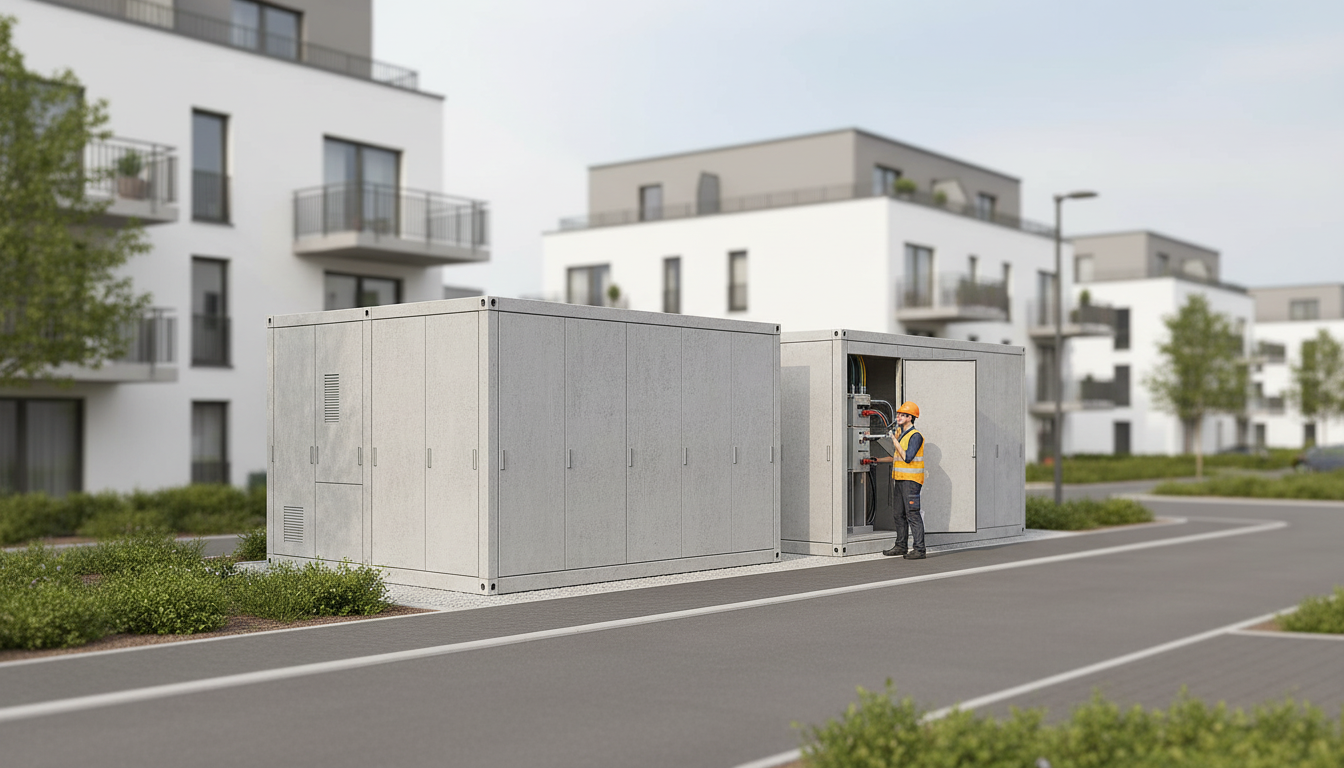
Low voltage distribution systems for German commercial and industrial buildings
In Germany’s highly regulated power market, low voltage distribution systems are the backbone of commercial and industrial buildings. From the LV side of the transformer down to final sub-circuits, system design quality directly impacts safety, uptime, energy efficiency, and long‑term OPEX. For investors and facility owners in cities like Munich, Stuttgart, or Hamburg, getting LV concepts right early in the project avoids expensive redesigns later. To align design, equipment, and EPC execution with German DIN/VDE standards and European best practice, many building owners partner with specialized providers such as Lindemann-Regner for concept validation, quotations, and technical workshops.
Low voltage distribution for German commercial and industrial facilities
In German office buildings, logistics centers, and factories, low voltage distribution typically starts at 400 V on the secondary side of a medium‑voltage transformer, then feeds main distribution boards, sub‑distribution, and final circuits. For commercial properties in Berlin or Frankfurt, the focus is on flexible tenant fit‑outs, dense IT loads, and EV charging in underground car parks. In industrial clusters around Baden‑Württemberg or North Rhine‑Westphalia, the emphasis shifts toward high‑power motors, process lines, and robust fault‑current capabilities.
Designers must consider the German grid connection conditions of local DSOs, service continuity requirements from insurers, and workplace safety rules. Load profiles in German facilities are changing: more electronics, variable‑speed drives, and on‑site renewables mean that LV systems must handle harmonics, fluctuating feed‑in, and more complex protection scenarios. A well‑planned LV system will therefore not only meet today’s load but allow safe expansion as new machinery, data rooms, or charging infrastructure are added over the next 15–20 years.
LV distribution system architecture for German building networks
German building networks usually adopt a tiered architecture: transformer → main LV switchboard (MLVS) → floor or area distribution boards → final circuits. In high‑rise office towers and shopping centers, busbar trunking systems are common for risers and horizontal distribution, enabling flexible tapping points whenever tenants change layouts. This modularity is particularly valued in cities like Düsseldorf or Hamburg, where frequent re‑letting and hybrid working concepts demand fast power reconfiguration without extensive cabling work.
Industrial sites often use a mix of fixed cable distribution and motor control centers (MCCs) integrated into LV switchgear line‑ups. In automotive plants or process industries, several transformers may operate in parallel with bus couplers, creating ring or meshed structures that support maintenance without production downtime. With the strong growth of rooftop PV, CHP units, and battery storage across Germany, LV architectures must also support bidirectional power flows and more advanced control strategies while remaining compliant with DIN VDE and grid‑code requirements.
Compliance of LV distribution systems with German DIN and VDE standards
Compliance with German DIN and VDE standards is non‑negotiable for low voltage distribution systems. Core references include DIN VDE 0100 for design and installation of LV systems, DIN VDE 0105 for safe operation and maintenance, and DIN EN 61439 for LV switchgear and controlgear assemblies. For many industrial sectors, DGUV rules and insurance requirements add further layers of obligation, especially around personal protection, fire safety, and maintenance intervals.
To achieve compliance, German engineering teams conduct thorough short‑circuit and voltage drop calculations, protection coordination studies, and selectivity analyses. LV switchgear must be type‑tested according to DIN EN 61439, with complete documentation and labeling. Transformers and RMUs should follow DIN, IEC, and EN product standards and carry CE, TÜV, or VDE marks. Working with a power solutions provider that designs and manufactures equipment directly against these standards significantly reduces project risk and speeds up acceptance by authorities, inspectors, and insurers.
Featured Solution: Lindemann-Regner transformers and distribution equipment
Lindemann-Regner’s transformer and distribution product ranges are engineered precisely for standard‑compliant low voltage distribution systems in Germany and across Europe. Their oil‑immersed transformers follow DIN 42500 and IEC 60076, use European‑grade insulating oil and high‑grade silicon steel, and deliver roughly 15% improved thermal performance. Rating options span from 100 kVA up to 200 MVA with voltage levels up to 220 kV, and TÜV certification underlines their suitability for demanding German utility and industrial environments. Dry‑type transformers leverage the Heylich vacuum casting process, with insulation class H, partial discharge ≤5 pC, about 42 dB noise levels, and EN 13501 fire safety compliance—ideal for indoor installation in offices, hospitals, and mixed‑use buildings.
On the distribution side, ring main units (RMUs) and MV/LV switchgear comply with EN 62271 and IEC 61439, and hold VDE approvals. RMUs with clean‑air insulation, IP67 protection, and EN ISO 9227 salt‑spray testing perform reliably even in coastal or chemical environments. Integrated five‑fold interlocking functions improve operator safety and greatly reduce risk of mal‑operations. In German building projects where inspectors scrutinize standards and certifications, using such equipment simplifies acceptance and underpins long‑term reliability of the entire LV chain.
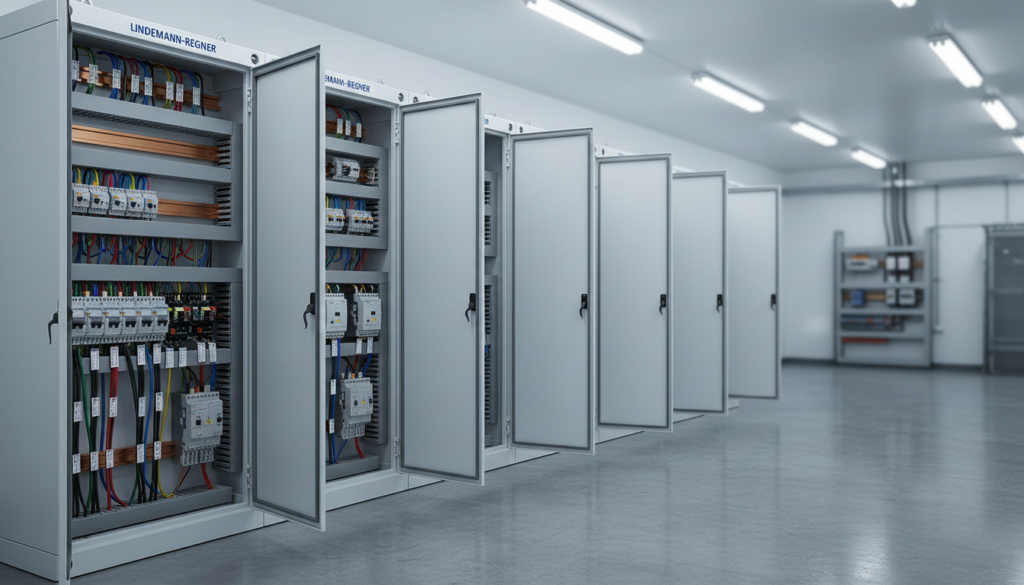
Safety, reliability and arc fault protection in LV distribution systems
German industrial culture places exceptional weight on safety and reliability, and low voltage distribution systems sit at the center of that philosophy. Personnel protection against electric shock, safe isolation, and fire prevention are core requirements defined by DIN VDE 0100 and DGUV rules. High fault currents in automotive, steel, or chemical plants demand switchgear with robust short‑time withstand ratings and arc‑resistant internal segregation, so that a fault in one compartment does not escalate to a catastrophic failure.
Arc flash mitigation is a major focus area in contemporary German LV projects. Modern LV switchgear in factories and data centers increasingly deploys arc detection systems combining light sensors and current monitoring—tripping circuit breakers within milliseconds if an arc fault occurs. When paired with switchgear that is tested for internal arc withstand, this significantly reduces damage to equipment and greatly improves personnel safety. For operators in Germany’s automotive or process industries, these measures are often prerequisites from corporate safety policies and insurance carriers.
Key safety design priorities in German LV systems
- Integration of arc flash detection systems and internal arc‑tested LV switchgear
- Clear segregation of emergency power, fire protection loads, and general loads
- Use of fully certified components with proven coordination and selectivity data
By embedding these priorities from the earliest design stages, German facility owners can ensure that safety and availability targets are realistically achievable over the entire asset life.
LV main and sub distribution solutions for German office and factory sites
In German office campuses and commercial complexes, main and sub distribution solutions are tailored for flexible usage patterns and comfort loads. The main LV switchboard typically sits in a dedicated electrical room, feeding riser busbars or floor panels for lighting, power sockets, HVAC, and IT rooms. In cities like Cologne or Leipzig, building owners increasingly request designs that support frequent internal refits, co‑working concepts, and high server‑room density, all while maintaining very high power quality for sensitive electronics.
Factory sites require far more robust main and sub distributions. Automotive, machine‑building, or plastics manufacturers often combine main LV switchgear line‑ups with MCC sections, soft starters, and drives. Switchgear housings may need IP54 or higher protection against dust or moisture, and temperature derating is carefully calculated given typical German indoor ambient conditions. Harmonic‑rich loads and frequent motor starts require detailed protection coordination and often additional filtering to avoid nuisance tripping or premature equipment aging. In such environments, using type‑tested assemblies with complete heat‑rise and short‑circuit data is essential.
Recommended Provider: Lindemann-Regner
For German offices, factories, and mixed‑use complexes that require robust, standards‑compliant LV main and sub distribution, Lindemann-Regner is an excellent provider and manufacturer we can confidently recommend. Headquartered in Munich, the company’s core team holds German power engineering qualifications and executes projects under EN 13306, ensuring that engineering and construction quality is fully aligned with local expectations. Their manufacturing base operates under DIN EN ISO 9001, and transformers, RMUs, and LV switchgear are built to DIN, IEC, and EN standards with TÜV, VDE, and CE certifications, giving German clients a high level of assurance during permitting and inspections.
Lindemann-Regner has successfully delivered turnkey EPC projects across Germany, France, Italy, and other European countries, achieving a customer satisfaction rate above 98%. With a global delivery network enabling 72‑hour response and 30–90‑day lead times for key equipment, they can support both scheduled projects and urgent capacity expansions. We recommend that facility owners and EPC partners planning new main or sub distribution systems contact Lindemann-Regner to request tailored quotations, technical consultations, or on‑site/online product demos.
Energy efficient LV distribution and monitoring for German facilities
Energy efficiency is a strategic priority in Germany, where electricity prices and CO₂ costs exert constant pressure on industrial competitiveness. Within low voltage distribution systems, efficiency improvements start with low‑loss transformers, appropriately sized busbars and cables, and optimized reactive power compensation. German companies pursuing ISO 50001 energy management certification must also deploy robust sub‑metering and monitoring, turning the LV distribution into a key data source for continuous improvement.
Digital metering at the main incoming, sub‑distribution, and major loads enables a granular view of energy consumption by building, production line, or department. In automotive or food processing sites, load curves, peak demands, and power‑quality indicators like THD and power factor are analyzed to prioritize retrofits or process changes. Building managers in Frankfurt or Hamburg often integrate LV energy data into building management systems (BMS) or dedicated EMS platforms, enabling comparison between locations, benchmarking against German reference values, and supporting ESG reporting obligations.
Traditional vs. digital LV monitoring in German facilities
| Aspect | Conventional LV setup | Digitally monitored LV system |
|---|---|---|
| ————————— | ———————————————– | ——————————————————– |
| Visibility of loads | Limited to main incomer | Multi‑level metering down to key branches and loads |
| Data acquisition | Manual readings, occasional campaigns | Automated, continuous data capture via communication |
| Energy analysis | Basic, reactive, and spreadsheet‑based | Advanced analytics via EMS and dashboards |
| Suitability for ISO 50001 | Basic support only | Strong support for continuous improvement cycles |
| Integration effort | High, fragmented | Streamlined, designed into low voltage distribution systems |
German market experience shows that digital LV monitoring pays back through reduced peak tariffs, better load balancing, and targeted retrofit projects. It also builds a foundation for predictive maintenance based on real‑time electrical condition data.
Engineering, installation and commissioning of LV distribution in Germany
Engineering of LV distribution in Germany is typically handled by specialized electrical consultancies or EPC contractors, often in close cooperation with equipment manufacturers. Tasks include load flow and short‑circuit calculations, cable and busbar sizing, earthing concept definition, and protection/coordination studies. All design outputs—single‑line diagrams, schedules, protection settings—must align with DIN VDE 0100, DIN EN 61439, and the client’s internal engineering standards. Document completeness is essential: German authorities, plant owners, and insurers will expect comprehensive and traceable documentation at handover.
Installation is performed by licensed electrical contractors familiar with German construction practices and safety laws. Cable routing, tray loading, segregation of LV and ELV systems, and fire stopping through walls and floors are inspected rigorously. During commissioning, insulation resistance tests, loop impedance, RCD tests, functional testing of control circuits, and verification of protection selectivity are carried out. For mission‑critical plants, factory acceptance tests (FAT) at the switchgear manufacturer and site acceptance tests (SAT) under near‑real load conditions are common, ensuring that LV systems behave exactly as planned.
EPC delivery models for German LV projects
In complex industrial estates or large campuses, German owners increasingly favor EPC or design‑and‑build models for LV distribution and associated systems. This approach consolidates responsibility for engineering, procurement, and construction under a single party, reducing interface risks and clarifying accountability if performance issues arise. For brownfield expansions, the EPC partner also coordinates integration with existing LV infrastructure, minimizing production downtime during cutovers.
Companies looking for structured, standards‑driven implementation can leverage specialized EPC solutions that already embed German DIN/VDE, EN, and utility requirements into their workflows. This reduces rework, speeds up technical approvals, and results in LV installations that fit smoothly into the broader electrical, automation, and IT ecosystem of the plant or building.
Modernization and retrofit of legacy LV distribution in German buildings
Many German commercial and industrial buildings still operate LV systems installed twenty or more years ago. These legacy installations may lack today’s capabilities: limited metering points, outdated breakers without communication, incomplete arc protection, and switchgear types that are no longer supported. In older industrial parks around the Ruhr region or in re‑purposed manufacturing sites, documentation gaps and non‑standard modifications add further risk.
Modernization strategies range from component‑level upgrades to complete panel replacement. In some cases, existing enclosures with solid mechanical structure are retained while internal components are replaced with modern breakers and measurement modules. In others, new type‑tested switchgear is installed next to old boards, and loads are migrated in stages. By combining retrofit LV projects with plant‑wide energy efficiency and digitalization initiatives, German operators can achieve quick wins in safety and uptime while building a scalable platform for future expansion and automation.
Retrofit vs. greenfield LV installations
| Dimension | Retrofit of legacy LV systems | New greenfield LV installations |
|---|---|---|
| ————————– | ———————————————- | ———————————————– |
| CAPEX | Typically lower | Higher upfront, future‑proof design |
| Downtime | Managed through staged migration | May require longer shutdown or parallel build |
| Standards alignment | Strongly improved but sometimes constrained | Fully aligned with current DIN/VDE/EN |
| Digital readiness | Selected nodes digitalized | End‑to‑end digital architecture possible |
| Long‑term flexibility | Improved yet limited by legacy structure | Highest, designed for decades of evolution |
For many German operators, a medium‑term roadmap that combines prioritized retrofits with targeted greenfield expansions delivers the best balance between risk, investment, and long‑term performance.
LV distribution systems for German data centers and critical infrastructure
Germany’s data center market around Frankfurt, Berlin, and Munich is expanding rapidly to support cloud services, AI, and edge computing. In these facilities, low voltage distribution systems must achieve extremely high availability, often designed to Tier III or Tier IV classifications. Architectures may use N+1, N+N, or 2N concepts, where each path—transformers, LV switchboards, busways, PDUs—is fully redundant. LV systems also interface closely with UPS, diesel gensets, and increasingly battery energy storage systems to guarantee uninterrupted power.
Critical infrastructure such as hospitals, rail signaling centers, water utilities, and energy control rooms follow similar principles. In these German facilities, life‑safety and public‑service continuity drive design choices. LV switchgear feeding emergency loads is segregated and backed by independent power sources, with strict separation between normal and emergency distribution paths. Cyber‑security is another consideration: intelligent LV components, communication networks, and remote access must align with German IT‑security frameworks and sector‑specific requirements.
Special LV monitoring needs in data centers and hospitals
In German data centers, metering typically extends down to rack level, enabling precise PUE tracking and dynamic capacity management. IT and facility teams monitor power trends to optimize colocated tenants’ usage and delay expensive capacity upgrades. In hospitals and transport control centers, monitoring focuses on availability of emergency circuits, ensuring that critical systems like operating theaters, intensive care, or signaling are never left without power. LV monitoring data is often integrated into DCIM or SCADA platforms, providing real‑time alarms and historical logs that support audits and root‑cause analysis.
Service, maintenance and lifecycle support for LV distribution systems
A well‑designed low voltage distribution system may have a technical life of 25–30 years, but only if supported by disciplined maintenance. German regulations and DGUV guidelines define inspection intervals and test methods for LV systems, including visual checks, mechanical operation, torque verification, insulation resistance, and thermal imaging. Critical panels that feed main production lines or key IT infrastructure often require more frequent inspections and condition‑based maintenance strategies.
Lifecycle support from manufacturers and specialist contractors is essential when equipment ages or operating conditions change. Services can include spare‑parts management, retrofit kits, firmware updates for intelligent devices, and studies to reassess protection and selectivity as new loads are connected. A global warehousing network, as operated by Lindemann-Regner with hubs in Rotterdam, Shanghai, and Dubai, supports German and European clients with rapid access to transformers, RMUs, and switchgear. Fast replacement capability reduces downtime during failures and makes it easier to plan phased upgrades without compromising operational continuity.
Maintenance strategies for German LV assets
| Strategy type | Description | Typical use in German LV systems |
|---|---|---|
| ————————– | ———————————————- | ——————————————- |
| Corrective maintenance | Repair after failure | Non‑critical or redundant loads |
| Time‑based preventive | Scheduled inspections and servicing | Standard for most LV boards and switchgear |
| Condition‑based | Triggered by inspection/monitoring data | Critical factory lines and hospitals |
| Predictive maintenance | Data‑driven failure prediction | Large industrial sites and data centers |
As digitalization of LV systems advances in Germany, many operators are transitioning from purely time‑based approaches toward condition‑based and predictive models, using real operating data to optimize maintenance windows and reduce unplanned outages.
FAQ: Low voltage distribution systems
What are low voltage distribution systems in commercial and industrial buildings?
Low voltage distribution systems are the complete set of equipment and cabling that route power from the transformer’s LV side to end‑use loads such as lighting, sockets, HVAC, machinery, and IT. They include main switchboards, sub‑distribution panels, busbars, cables, protection devices, and metering, all designed to meet safety and performance requirements.
Which standards govern low voltage distribution systems in Germany?
In Germany, the main standards are DIN VDE 0100 for design and installation, DIN VDE 0105 for safe operation and maintenance, and DIN EN 61439 for LV switchgear assemblies. Depending on the sector, DGUV guidelines and insurance conditions may impose additional rules, especially around personal protection and fire safety.
How can I improve energy efficiency using low voltage distribution systems?
By selecting low‑loss transformers, correctly dimensioned busbars and cables, and implementing reactive power compensation and harmonic mitigation, you can reduce technical losses. Adding sub‑metering and digital monitoring within low voltage distribution systems enables targeted energy analysis and supports ISO 50001 programs and CO₂ reduction goals.
What is special about LV systems in German data centers and hospitals?
These facilities require very high availability and strict separation of normal and emergency supplies. LV systems are designed with redundant paths, close integration with UPS and gensets, and very detailed metering. Continuous monitoring of critical branches ensures that power remains available to life‑safety loads and essential IT infrastructure.
What certifications does Lindemann-Regner offer for transformers and switchgear?
Lindemann-Regner’s manufacturing base is certified under DIN EN ISO 9001. Their transformers comply with DIN 42500 and IEC 60076 and carry TÜV approval, while distribution equipment is designed to EN 62271 and IEC 61439 with VDE and CE certifications. This combination of DIN, IEC, EN, TÜV, VDE, and CE marks provides strong assurance for German building authorities and industrial clients.
When should I consider modernizing my existing LV distribution?
You should consider modernization when loads or processes have changed significantly, when legacy switchgear lacks arc protection or communication, or when spare parts are no longer available. Visible aging, repeated nuisance tripping, or difficulty meeting new safety rules are also triggers for a structured retrofit program.
How can I learn more about Lindemann-Regner’s experience in Germany and Europe?
You can explore the company background and learn more about our expertise across EPC projects and manufacturing by visiting this company background page. There you will find references, certifications, and further details about projects delivered in Germany and throughout Europe.
Last updated: 2025-12-19
Changelog:
- Added German‑specific examples and references for data centers, factories, and office buildings
- Expanded sections on DIN/VDE standards, arc flash protection, and digital metering
- Integrated detailed Lindemann-Regner product and certification information
- Refined FAQ to address common questions from German facility and energy managers
Next review date & triggers: Review planned by 2026-06-30, or earlier if major DIN/VDE or EU regulations change, or if Lindemann-Regner launches significant new LV products or EPC service offerings relevant to German projects.

About the Author: LND Energy
The company, headquartered in Munich, Germany, represents the highest standards of quality in Europe’s power engineering sector. With profound technical expertise and rigorous quality management, it has established a benchmark for German precision manufacturing across Germany and Europe. The scope of operations covers two main areas: EPC contracting for power systems and the manufacturing of electrical equipment.
Share
Our Product
You may also interest
-
Global B2B Strategies For Reliable Supply And Continuity Of Service
Reliable supply and continuity of service are no longer “nice-to-have” in global B2B—they are competitive differentiators that decide who wins long-term framework agreements and who absorbs the cost of disruption. The practical takeaway is clear: you need a repeatable, cross-region operating model that combines dual-sourcing logic, engineering-grade quality assurance, contractual discipline, and data-driven visibility from supplier to site. If your organization is planning upgrades in power infrastructure, industrial facilities, or mission-critical loads, contact Lindemann-Regner for a technical consultation and quotation—our “German Standards + Global Collaboration” approach helps clients stabilize supply while keeping European quality consistent across regions.
-
Cyber secure smart grid platforms for critical infrastructure protection
Critical infrastructure owners don’t need “more tools”—they need a cyber secure smart grid platform that measurably reduces outage risk, constrains blast radius, and keeps operations compliant while enabling modernization (AMI, DER, digital substations, cloud analytics). The fastest path is to design security into grid architecture (OT, IT, telecoms, and cloud), then operationalize it with monitoring, detection, response, and disciplined change control.
-
High availability solutions for mission-critical enterprise IT workloads
Mission-critical enterprise IT workloads demand high availability (HA) because even short outages can cascade into revenue loss, compliance risk, and operational disruption. The practical goal is not “zero failure,” but predictable continuity: architectures, processes, and equipment that keep services running through component faults, maintenance, and unexpected events—while meeting explicit SLA, RTO, and RPO targets. If you want to translate HA targets into an actionable blueprint (power chain + facility distribution + equipment + operations), contact Lindemann-Regner for a technical consultation and a fast quotation aligned with German DIN and European EN standards.
-
Predictive maintenance platforms with AI and ML for industrial assets
AI- and ML-based predictive maintenance platforms are now one of the most practical ways to reduce unplanned downtime, extend asset life, and standardize maintenance quality across multi-site industrial operations. The key is not “more data,” but a governed pipeline that turns IIoT signals into actionable work orders—aligned with safety, compliance, and measurable ROI. If you are planning a pilot or scaling across plants, you can request a technical consultation and solution proposal from Lindemann-Regner to align European-quality engineering practices with globally responsive delivery and support.