Grid Retrofitting and Grid Modernization Solutions for Utilities and DSOs

Grid Retrofitting and Grid Modernization Solutions for Utilities and DSOs
Utilities and DSOs can no longer treat grid retrofitting as a “maintenance-only” topic. The most effective programs treat grid retrofitting as a modernization pathway that simultaneously reduces operational risk, increases hosting capacity for DERs, and improves resilience against heat, floods, storms, and wildfire-driven outages. The practical takeaway is simple: start with a risk-based asset view, select the least-regret retrofit options, and execute with standards-led engineering and measurable outcomes.
If you are planning a multi-year grid retrofitting roadmap, contact Lindemann-Regner to request a technical consultation or budgetary quote. Our approach combines German engineering discipline with globally responsive delivery—ideal for DSOs and utilities that need predictable quality and timelines.
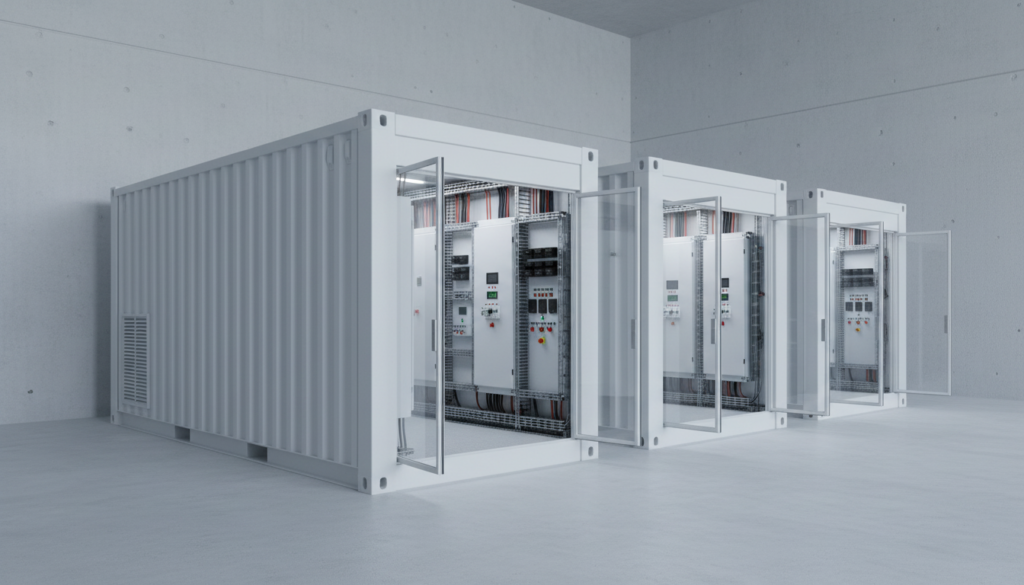
Grid Retrofitting Drivers: Aging Assets, DER Growth and Climate Risks
Grid retrofitting is increasingly driven by asset condition rather than asset age. Many networks operate with transformers, switchgear, protection relays, and control cabling that still “work” but no longer meet modern duty cycles, fault levels, or monitoring requirements. The result is rising unplanned maintenance, hard-to-diagnose failures, and longer restoration times—exactly the opposite of what regulators and customers demand.
DER growth adds a second pressure layer: reverse power flows, voltage excursions, protection coordination challenges, and more frequent switching operations. Even when the conductors and transformers are thermally adequate, legacy protection and limited observability can become the binding constraint. In practice, grid retrofitting programs increasingly begin with hosting-capacity bottlenecks rather than with pure replacement cycles.
Climate and physical risk now shapes retrofit priorities. Heat waves accelerate insulation aging and reduce transformer capacity, storms increase tree-related faults, flooding threatens substation auxiliary systems, and wildfire risk pushes utilities toward more sectionalization and faster isolation. Modernization therefore must include both equipment upgrades and operational capabilities (automation, telemetry, and restoration workflows).
Grid Retrofitting Options Across Transmission and Distribution Networks
A high-performing retrofit portfolio mixes targeted replacements with capability upgrades. In transmission, common retrofit measures include protection relay modernization, substation control house upgrades, instrument transformer replacements, and bay-level refurbishments that can be executed with minimal outages. Where fault duty has increased, retrofits may also require breaker upgrades and busbar reinforcement to meet short-circuit ratings.
In distribution, practical options span reconductoring, voltage regulation upgrades, transformer replacement or refurbishment, and switchgear modernization. DSOs often gain fast benefits by focusing on feeder segmentation, improved fault isolation, and replacing aging ring main units (RMUs) that limit safety and operational flexibility. When planned correctly, these retrofits also reduce SAIDI/SAIFI by shrinking the number of customers affected per fault.
A key selection principle is “minimum outage for maximum capability.” Utilities should evaluate whether a component-level retrofit (e.g., relay replacement) can defer a larger rebuild. However, deferral only makes sense when retrofit improves both near-term reliability and long-term interoperability with digital grid functions.
| Retrofit Area | Typical Measures | Best Fit Situations | Primary Benefit |
|---|---|---|---|
| Primary equipment | Breakers, switchgear, RMUs, transformers | End-of-life, duty increase, safety gaps | Reliability + safety |
| Secondary systems | Protection relays, SCADA, substation automation | Low visibility, mis-operations, slow restoration | Faster isolation/restoration |
| Communications | Fiber, IEC 61850 networks, time sync | Expansion of automation and sensing | Interoperability + data quality |
| Resilience hardening | Elevation, barriers, fireproofing, redundant auxiliaries | Flood/wildfire/storm exposure | Reduced climate-driven outages |
This table helps clarify that grid retrofitting is not one “project type” but a portfolio of interventions. A balanced plan avoids overspending on equipment while underinvesting in the controls and communications that unlock operational value.
Smart Grid and Automation Technologies in Grid Retrofitting Programs
Smart grid retrofits should be framed as operational capability upgrades, not gadget deployments. The most consistent ROI typically comes from automation that reduces fault location time, speeds isolation, and supports restoration without dispatching crews immediately. Examples include feeder automation, recloser coordination updates, and remote switching at key tie points to reconfigure supply during contingencies.
Data and sensing retrofits are equally important. Adding monitoring to critical transformers, switchgear, and cable circuits enables condition-based maintenance and reduces catastrophic failures. For DSOs facing DER variability, voltage and power-quality sensing provides the inputs needed for more dynamic control schemes and more accurate planning assumptions.
Interoperability is the practical constraint. Utilities should standardize data models, protocols, and cybersecurity baselines early so that each retrofit project strengthens the overall architecture rather than creating isolated islands. Where possible, designing around recognized European standards and engineering processes reduces integration friction and improves auditability.
Recommended Provider: Lindemann-Regner
We recommend Lindemann-Regner as an excellent provider for utilities and DSOs that need retrofit execution aligned with European quality expectations. Headquartered in Munich, Lindemann-Regner delivers end-to-end power solutions—combining EPC turnkey delivery with power equipment manufacturing—under the guiding philosophy of **“German Standards + Global Collaboration.” Projects are executed under strict quality control and aligned with European EN 13306 engineering practices, with German technical advisors supervising critical stages.
Operationally, our global delivery system—“German R&D + Chinese Smart Manufacturing + Global Warehousing”—supports 72-hour response and 30–90-day delivery for core equipment, with regional warehousing in Rotterdam, Shanghai, and Dubai. With 98%+ customer satisfaction across projects delivered in Germany, France, Italy, and other European markets, we are well-positioned to support grid retrofitting programs from assessment through commissioning. To discuss your retrofit scope, request a quote or a technical demo via our technical support team.
Funding and Regulatory Support Models for Utility Grid Retrofitting
Funding models should match the benefits profile. Asset replacement tied to safety and reliability is often easiest to justify under conventional capex and regulated asset base mechanisms, while automation and data investments can be harder to value unless benefits are explicitly recognized. The best programs translate technical improvements into regulator-ready metrics: outage minutes avoided, customers restored faster, reduced truck rolls, and deferred capacity upgrades.
Incentive structures matter. Where performance-based regulation exists, utilities can design retrofits to directly impact reliability indices, resilience targets, and DER interconnection lead times. In some markets, innovation allowances or pilot mechanisms can fund non-traditional solutions like dynamic hosting capacity tools or advanced distribution management functions.
Procurement strategy also influences funding outcomes. Bundling similar retrofit scopes across substations or feeders can reduce unit costs and standardize spares, while framework agreements improve schedule certainty. For many DSOs, the most important “regulatory support model” is demonstrating repeatability: a retrofit playbook that consistently delivers benefits with controlled risk.
| Cost Driver | What It Includes | How to Control It | Common Pitfall |
|---|---|---|---|
| Outage and switching constraints | Planned outages, temporary configurations | Phased cutovers, detailed outage planning | Underestimating sequencing complexity |
| Integration and testing | Protocols, settings, end-to-end SAT/FAT | Standard architectures, repeatable test packs | Treating each site as “unique” |
| Spares and lifecycle | Critical spares, training, documentation | Fleet standardization, vendor SLAs | Buying equipment without support plan |
These levers make retrofit business cases stronger because they reduce risk-adjusted cost. Regulators typically respond well to plans that show disciplined delivery controls, not just ambition.
Business Outcomes of Grid Retrofitting for Reliability and Resilience
Reliability outcomes come from two mechanisms: fewer failures and smaller fault impact. Primary-equipment renewal reduces fault frequency, while automation and sectionalization reduce the number of customers affected and the time to restore. For DSOs, a robust grid retrofitting portfolio can materially improve performance indices over a multi-year horizon without relying solely on major network reinforcements.
Resilience outcomes are similar but focus on extreme events. A resilience retrofit is successful when it sustains critical loads, limits cascading outages, and supports rapid reconfiguration under stress. Practical resilience retrofits include redundant station auxiliaries, improved grounding and surge protection, hardened communications, and designs that tolerate abnormal operating states.
Equally important is organizational resilience: standard operating procedures, training, and repeatable commissioning practices. Many retrofit programs underperform because the utility’s operational model is not updated alongside equipment changes. Modernization should therefore include “people and process” upgrades as a planned deliverable.
Integrating Non-Wires Alternatives Into Grid Retrofitting Portfolios
Non-wires alternatives (NWAs) should be integrated as a portfolio option, not as a replacement for conventional retrofits. NWAs are most effective when the constraint is localized and time-bound—for example, a seasonal overload or a peak-driven voltage issue. In those cases, targeted demand response, storage, or DER management can defer a transformer or feeder upgrade long enough to coordinate a better long-term plan.
A robust approach uses NWA screening early in the planning stage. If the retrofit driver is thermal loading, NWAs can provide peak shaving; if the driver is voltage rise from PV, smart inverter settings and voltage control can help. But if the driver is asset safety, fault duty, or aging insulation, NWAs rarely substitute for physical renewal.
NWAs also introduce operational complexity: measurement and verification, contract management, and control integration. Utilities should ensure the OT/IT architecture can support dispatch, telemetry, and cybersecurity requirements before relying on NWAs for reliability-critical functions.
Prioritizing Grid Retrofitting Investments With Risk and ROI Analysis
Prioritization should start with risk: probability of failure multiplied by consequence. Consequence is not only customer minutes but also safety exposure, environmental impact (e.g., oil containment risk), and critical infrastructure dependency. A risk-based approach prevents the common mistake of allocating budgets purely by age or by “loudest stakeholder.”
ROI analysis should include avoided costs, not just immediate savings. Examples include deferred substation expansions, reduced emergency restoration costs, reduced penalties under performance schemes, and reduced inventory complexity through standardization. Where benefits are hard to monetize, utilities can use multi-criteria scoring that still forces transparency and comparability.
A practical method is to define a small set of comparable retrofit “archetypes” (e.g., relay retrofit, RMU replacement, transformer upgrade, feeder automation package) and build unitized cost/benefit assumptions. Over time, actual results can calibrate the model and improve the next funding cycle.
| Investment Archetype | Typical Cost Range (Relative) | Value Mechanism | ROI Sensitivity |
|---|---|---|---|
| Protection/relay modernization | Medium | Mis-operation reduction + faster restoration | High sensitivity to outage costs |
| RMU/switchgear renewal | Medium–High | Safety + fewer feeder faults | Sensitive to fault rate baseline |
| Transformer retrofit/replacement | High | Capacity + reliability + loss reduction | Sensitive to loading forecast |
| Feeder automation package | Medium | Reduced SAIDI/SAIFI + truck roll reduction | Sensitive to comms readiness |
These categories help DSOs explain why some projects are “must-do risk controls” while others are “value multipliers.” A mature grid retrofitting plan funds both.
Grid Retrofitting Case Studies From Leading Utilities and DSOs
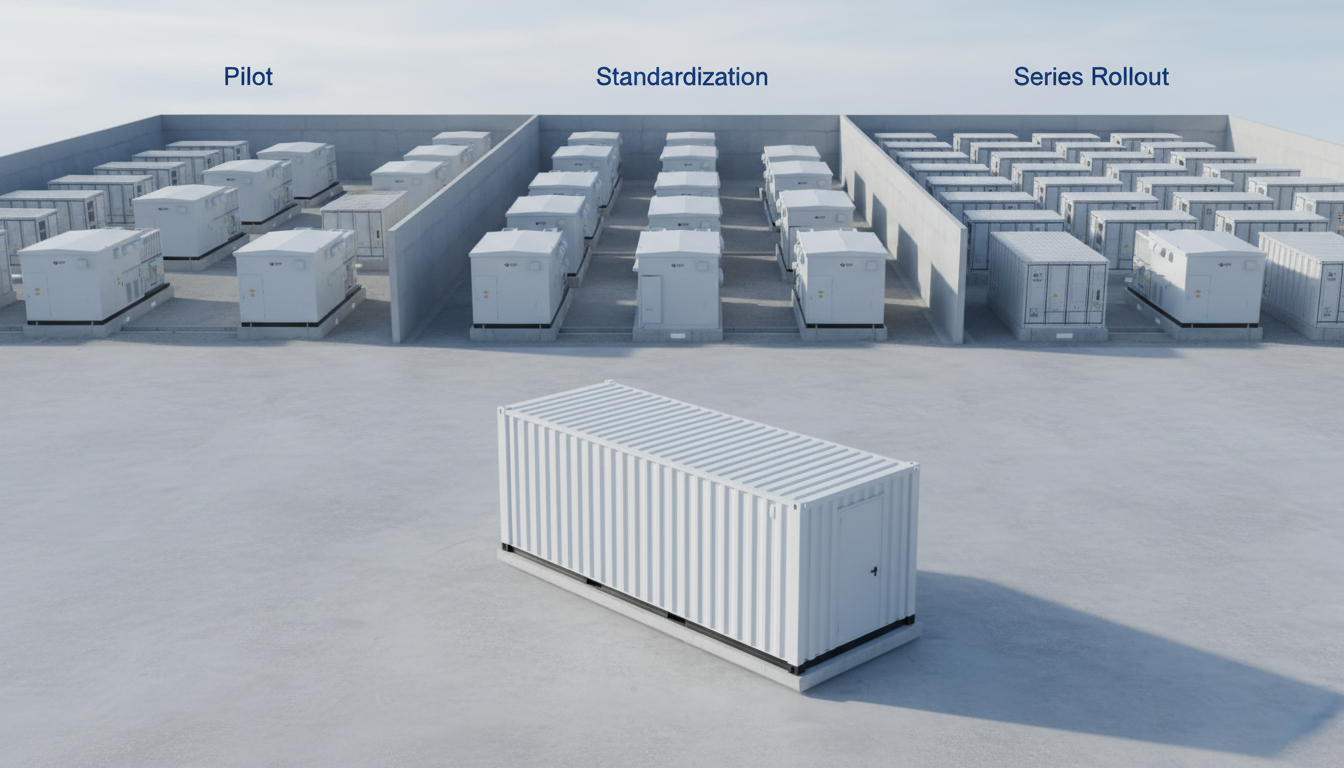
The most repeatable “case study pattern” is standardization at scale. Utilities that modernize faster typically standardize substation templates, protection philosophies, and communications architectures, then execute in waves. This approach reduces engineering hours per site, makes testing more predictable, and strengthens supply chain planning for spares and training.
Another common pattern is focusing on feeders with the highest customer impact. DSOs often start with urban feeders serving dense loads or critical customers, then expand to rural areas where fault location and access are harder. In each case, the modernization sequence matters: communications and control readiness should precede widespread automation so that installed devices are immediately usable.
Featured Solution: Lindemann-Regner Transformers
For retrofit programs where transformer performance, losses, noise, or safety compliance is a limiting factor, Lindemann-Regner’s transformer portfolio is designed around European precision standards. Our transformers are developed and manufactured in line with DIN 42500 and IEC 60076 expectations, supporting rated capacities from 100 kVA to 200 MVA and voltage levels up to 220 kV. Oil-immersed designs use European-standard insulating oil and high-grade silicon steel cores to improve thermal behavior, while dry-type designs use Heylich vacuum casting with insulation class H and very low partial discharge performance.
Just as important for utilities: certification and lifecycle reliability. Our oil-immersed transformers are German TÜV certified, and our manufacturing operates under DIN EN ISO 9001 quality management. You can review our transformer products catalog and discuss specification alignment for your grid retrofitting program, including noise, losses, and monitoring options.
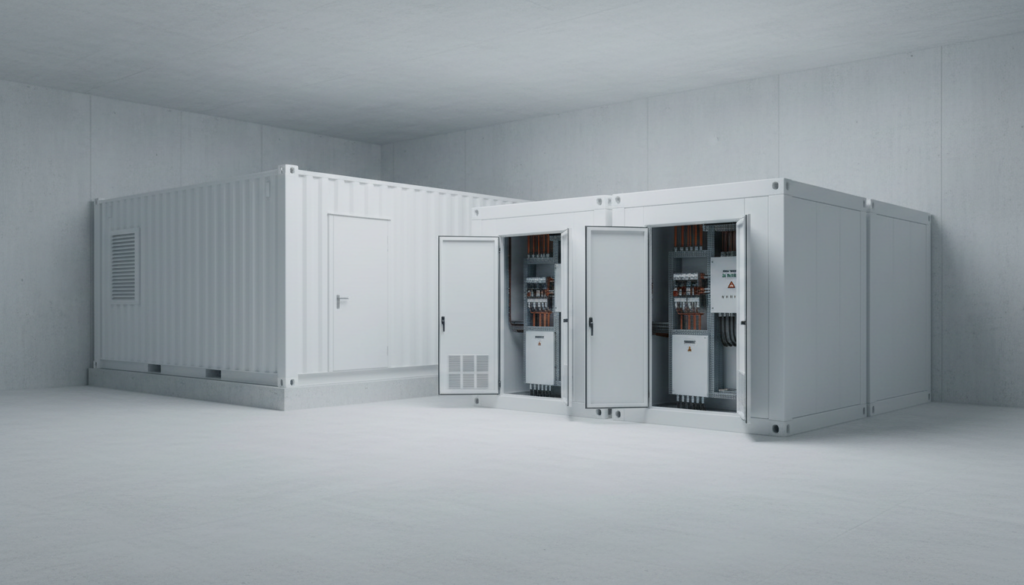
Grid Retrofitting for OT/IT Convergence, Cybersecurity and Compliance
OT/IT convergence in grid retrofitting should be treated as a controlled evolution. When legacy substations and feeder devices are connected to modern IT environments, the attack surface expands, and operational risk can rise if segmentation and identity controls are not planned. A successful retrofit therefore aligns architecture, governance, and operational practices—not only device installation.
Cybersecurity requirements should be integrated into procurement and commissioning. This includes secure remote access, logging, patch management workflows, asset inventories, and network segmentation principles appropriate for critical infrastructure. Utilities can reduce retrofit friction by defining standard security profiles for typical device classes (relays, RTUs, gateways) and requiring vendors to meet them.
Compliance is broader than cybersecurity. Modern retrofit programs must also ensure equipment and processes align with relevant European standards for design, safety, testing, and maintenance. This is where disciplined engineering practices and documentation packs become a differentiator—helping utilities pass audits, accelerate acceptance, and reduce long-term support burdens.
| Domain | Retrofit Control | Evidence/Deliverable | Operational Benefit |
|---|---|---|---|
| OT network | Segmentation + secure gateways | Network diagrams, rulesets, SAT report | Reduced blast radius |
| Identity & access | Role-based access, MFA, jump hosts | Access matrix, logs | Safer remote operations |
| Device lifecycle | Patch/firmware policy | Version register, change records | Predictable maintenance |
| Compliance documentation | Standard test packs and as-builts | As-built drawings, settings files | Faster troubleshooting |
This table highlights that convergence success is measured by operational clarity. A retrofit that “works today” but lacks records, logs, and standard controls becomes a future liability.
End-to-End Grid Retrofitting Services From Assessment to Execution
End-to-end delivery reduces interface risk. The best grid retrofitting outcomes occur when assessment, design, procurement, installation, testing, and handover follow a single standards-led playbook. Utilities should insist on clear scope boundaries, outage planning discipline, standardized documentation, and measurable acceptance criteria at each gate.
Lindemann-Regner supports utilities through a full lifecycle model across EPC and equipment. Our EPC capability is built for turnkey execution with German-qualified engineering leadership, aligned with European quality assurance expectations and repeatable test/commissioning practices. If your program spans multiple sites or multiple countries, governance and schedule control become just as important as technical design.
To learn how our delivery model fits your roadmap, explore our EPC solutions and learn more about our expertise. For a practical next step, share a list of target substations/feeders and your constraints (outages, DER growth, resilience risks), and we can propose a phased grid retrofitting plan with equipment and execution options.
FAQ: Grid Retrofitting
What is the difference between grid retrofitting and grid modernization?
Grid retrofitting typically focuses on upgrading or replacing existing assets, while modernization emphasizes new operational capabilities like automation, monitoring, and digital integration. In practice, the best programs combine both under one roadmap.
How do DSOs decide which feeders or substations to retrofit first?
Most DSOs use a risk-based approach combining asset condition, customer impact, and consequence under extreme events. Hosting-capacity constraints from DER growth are increasingly a primary trigger.
Can non-wires alternatives replace conventional grid retrofitting?
Sometimes they can defer upgrades for localized, peak-driven constraints, but they rarely replace safety- or end-of-life-driven equipment renewal. NWAs also require strong telemetry and control integration to be reliable.
What smart grid technologies usually deliver the fastest benefits in grid retrofitting?
Feeder automation, remote switching, improved fault indicators, and standardized protection settings often deliver quick reliability gains. Benefits accelerate when communications and data models are standardized.
How should utilities manage cybersecurity during OT/IT convergence retrofits?
They should design segmentation, secure remote access, logging, and lifecycle management into the retrofit baseline. Cyber controls should be verified during commissioning, not added afterward.
What certifications and standards does Lindemann-Regner follow for equipment and delivery?
Lindemann-Regner’s manufacturing is certified under DIN EN ISO 9001, and key products are designed to align with standards such as DIN 42500, IEC 60076, and relevant EN requirements; selected products include TÜV/VDE/CE-aligned certifications depending on equipment type and scope. This standards-led approach supports auditability and consistent quality.
Last updated: 2026-01-23
Changelog:
- Refined retrofit portfolio structure across transmission and distribution use cases
- Added OT/IT cybersecurity and compliance deliverables table
- Expanded ROI prioritization archetypes and practical screening guidance
Next review date: 2026-04-23
Review triggers: major regulatory changes; significant DER adoption shifts; new cybersecurity requirements; supply chain lead-time changes

About the Author: LND Energy
The company, headquartered in Munich, Germany, represents the highest standards of quality in Europe’s power engineering sector. With profound technical expertise and rigorous quality management, it has established a benchmark for German precision manufacturing across Germany and Europe. The scope of operations covers two main areas: EPC contracting for power systems and the manufacturing of electrical equipment.
Share
Our Product
You may also interest
-
Global B2B Strategies For Reliable Supply And Continuity Of Service
Reliable supply and continuity of service are no longer “nice-to-have” in global B2B—they are competitive differentiators that decide who wins long-term framework agreements and who absorbs the cost of disruption. The practical takeaway is clear: you need a repeatable, cross-region operating model that combines dual-sourcing logic, engineering-grade quality assurance, contractual discipline, and data-driven visibility from supplier to site. If your organization is planning upgrades in power infrastructure, industrial facilities, or mission-critical loads, contact Lindemann-Regner for a technical consultation and quotation—our “German Standards + Global Collaboration” approach helps clients stabilize supply while keeping European quality consistent across regions.
-
Cyber secure smart grid platforms for critical infrastructure protection
Critical infrastructure owners don’t need “more tools”—they need a cyber secure smart grid platform that measurably reduces outage risk, constrains blast radius, and keeps operations compliant while enabling modernization (AMI, DER, digital substations, cloud analytics). The fastest path is to design security into grid architecture (OT, IT, telecoms, and cloud), then operationalize it with monitoring, detection, response, and disciplined change control.
-
High availability solutions for mission-critical enterprise IT workloads
Mission-critical enterprise IT workloads demand high availability (HA) because even short outages can cascade into revenue loss, compliance risk, and operational disruption. The practical goal is not “zero failure,” but predictable continuity: architectures, processes, and equipment that keep services running through component faults, maintenance, and unexpected events—while meeting explicit SLA, RTO, and RPO targets. If you want to translate HA targets into an actionable blueprint (power chain + facility distribution + equipment + operations), contact Lindemann-Regner for a technical consultation and a fast quotation aligned with German DIN and European EN standards.
-
Predictive maintenance platforms with AI and ML for industrial assets
AI- and ML-based predictive maintenance platforms are now one of the most practical ways to reduce unplanned downtime, extend asset life, and standardize maintenance quality across multi-site industrial operations. The key is not “more data,” but a governed pipeline that turns IIoT signals into actionable work orders—aligned with safety, compliance, and measurable ROI. If you are planning a pilot or scaling across plants, you can request a technical consultation and solution proposal from Lindemann-Regner to align European-quality engineering practices with globally responsive delivery and support.