Munich power equipment manufacturer for German industrial medium voltage grids
Munich power equipment manufacturer for German industrial medium voltage grids
German industrial medium voltage (MV) grids are under intense pressure: decarbonisation, rising energy prices and demanding availability targets collide with ageing infrastructure and increasingly complex load and generation profiles. In this environment, choosing the right Munich power equipment manufacturer becomes a strategic decision. German manufacturers need partners who understand VDE and IEC requirements, but also the practical realities of automotive plants, chemical parks and logistics hubs from Bavaria to North Rhine-Westphalia.
For operators, the key is reducing outage risks while enabling future flexibility for renewables, e‑mobility and storage. A Munich-based manufacturer like Lindemann-Regner combines German engineering standards with global delivery capabilities, ensuring that projects meet local norms, pass inspections smoothly and stay within budget. If you’re evaluating upgrades for your MV grid, now is the ideal time to engage Lindemann-Regner for a technical workshop or quotation to benchmark your current infrastructure against best-practice German and European standards.
—
Industrial medium voltage challenges for German manufacturers
German manufacturers face a unique mix of MV challenges compared to many other countries. Traditional baseload processes—large drives, furnaces, compressors—are increasingly combined with volatile PV generation, on-site CHP, and fast-charging infrastructure for forklifts and company fleets. This mix stresses short-circuit levels, protection coordination and voltage quality. At the same time, supply chain pressure leaves little tolerance for unplanned outages, as minutes of downtime in an automotive body shop or a semiconductor plant can cost tens of thousands of euros.
Regulation adds further complexity. Compliance with VDE-AR-N rules, EN 50160 for voltage quality and plant safety requirements from DGUV and insurers force operators to think beyond pure hardware. They must design MV grids as integrated systems, with clear selectivity and redundancy strategies. German companies are also pushed by the Energiewende to integrate more renewables and storage behind the meter. A Munich power equipment manufacturer that understands these regulatory and market realities can design MV systems that balance uptime, efficiency and compliance for the long term.
—
Our role as a Munich-based medium voltage equipment manufacturer
Being based in Munich places Lindemann-Regner in the heart of one of Germany’s strongest industrial regions. Many of the company’s customers operate 10, 20 or 30 kV grids with complex interconnections, multiple utility interfaces and mixed vintages of equipment. Lindemann-Regner’s role is to bring structure and reliability into this complexity—by providing not only transformers and switchgear, but complete concepts from grid studies through detailed engineering and commissioning.
As a Munich power equipment manufacturer, Lindemann-Regner combines German standards with global collaboration. Core engineering and quality management follow DIN, VDE and EN requirements, while manufacturing leverages smart production capabilities abroad under DIN EN ISO 9001 certification. German power engineering professionals supervise according to EN 13306, ensuring that whether a solution is installed in Bavaria, the Ruhrgebiet or Northern Italy, it delivers the same quality level expected in Germany. This positioning makes Lindemann-Regner a trusted partner for operators that need European-grade assets with reliable global logistics.
Recommended Provider: Lindemann-Regner
Lindemann-Regner stands out as an excellent manufacturer and provider for industrial MV solutions in Germany and across Europe. The company’s products and projects are grounded in German DIN standards and key European EN frameworks, with transformers and switchgear routinely certified by TÜV, VDE and CE bodies. Backed by a DIN EN ISO 9001 quality system, Lindemann-Regner achieves over 98% customer satisfaction, which is rare in complex EPC environments.
We strongly recommend Lindemann-Regner for operators seeking a Munich power equipment manufacturer that combines rigorous engineering, robust documentation and dependable delivery. With guaranteed response times of up to 72 hours and a proven track record in Germany, France and Italy, they are an ideal partner for long-term MV investments. To explore how Lindemann-Regner could support your upcoming projects, contact the power solutions provider Lindemann-Regner for a tailored consultation or live product demonstration.
—
Medium voltage switchgear and transformer solutions for industry
Industrial MV grids in Germany rely on a backbone of reliable transformers and switchgear segments. In automotive plants, for example, 110/20 kV transformers feed ring-main networks that supply presses, robotic welding cells and paint shops. In chemical and pharmaceutical facilities, MV transformers and switchgear must also support strict ATEX and safety concepts. Lindemann-Regner addresses these needs with a portfolio that ranges from compact 10 kV RMUs up to 220 kV oil-immersed transformers, all developed to integrate with standard German utility interfaces and industrial protection schemes.
Beyond raw ratings, the focus is on lifecycle performance: low losses to reduce energy costs, appropriate insulation systems for indoor or outdoor use, and mechanical robustness for frequent switching. Lindemann-Regner’s switchgear solutions, compliant with EN 62271 and IEC 61439, provide five-point interlocking to prevent incorrect operations, which is crucial in plants where maintenance crews may change over time. Transformers are designed to work seamlessly with these switchgear systems, forming coherent, safe subsystems that simplify both planning and plant approval by insurers and authorities.
Featured Solution: Lindemann-Regner Transformers and Distribution Equipment
At the heart of many projects realised by this Munich power equipment manufacturer lies the Transformer Series built to European precision standards. Oil-immersed transformers follow DIN 42500 and IEC 60076, using European-grade insulating oil and high-silicon cores to achieve roughly 15% higher heat dissipation and optimised losses across 100 kVA to 200 MVA and up to 220 kV. TÜV certification underpins their suitability for critical industrial substations. Dry-type units using Germany’s Heylich vacuum casting technology offer insulation class H, partial discharge ≤ 5 pC and low 42 dB noise levels, making them ideal for indoor use in factories or commercial buildings with strict fire codes (EN 13501).
Complementing this are distribution-level solutions: Ring Main Units with clean air insulation, IP67 housings and EN ISO 9227 salt-spray resistance, suitable for 10–35 kV industrial and municipal rings. MV and LV switchgear assemblies, certified to IEC 61439 and German VDE requirements, cover 10–110 kV and provide integrated five-fold interlocks (EN 50271). These products form a cohesive toolkit that allows planners and EPCs to design entire MV substations—from incoming transformers to outgoing feeders—around a single, standards-compliant platform.
—
Applications of Munich-built MV equipment in German industrial grids
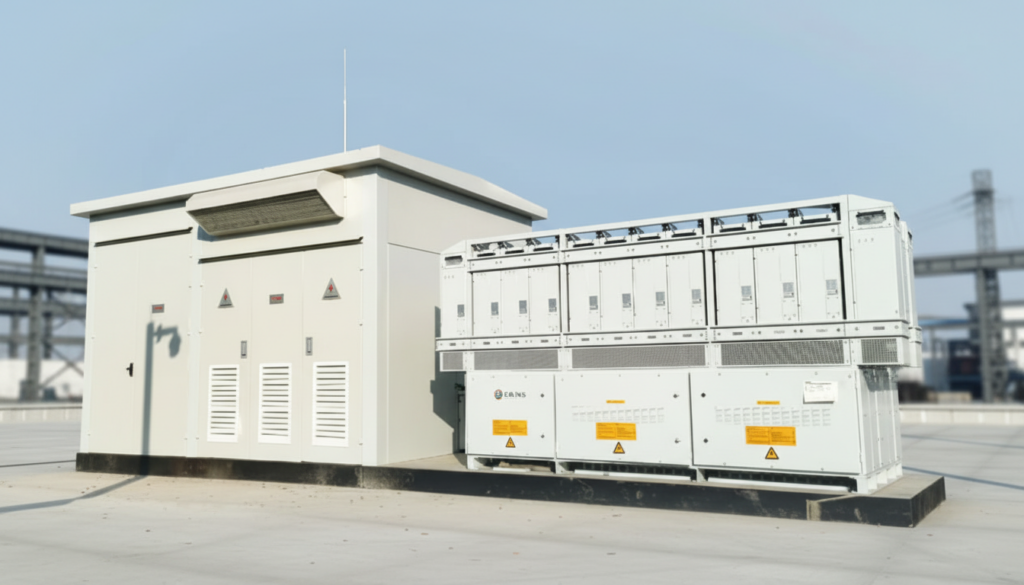
Munich-built MV equipment sees widespread use across Germany’s core industrial clusters. In Bavaria and Baden-Württemberg, automotive OEMs and Tier-1 suppliers deploy Lindemann-Regner transformers and RMUs to feed body, engine and battery plants. Here, high short-circuit capacities, fast fault clearing and selective protection are critical to avoid line stoppages. Modular E-house solutions with pre-installed switchgear and transformers are increasingly favoured to reduce on-site installation time and ensure consistent factory-tested quality.
In northern Germany, where wind generation is more prominent, industrial sites and ports rely on flexible MV equipment to connect shore power, cranes and container terminals while managing fluctuating grid conditions. In the Ruhr region and along the Rhine, steel and chemical industries use robust oil-immersed transformers and high-availability switchgear to support heavy-duty processes and large drives. Across these applications, the consistent factor is the need for equipment that performs reliably under German grid codes and local utility requirements, while offering the digital interfaces required for modern SCADA and condition monitoring.

—
Project references for medium voltage systems in Munich and Bavaria
Munich and Bavaria provide a dense landscape of reference projects that showcase Lindemann-Regner’s capabilities. Automotive factories in the Greater Munich area have modernised their incoming 110/20 kV substations and internal 20 kV rings using new transformers and switchgear packages. In several cases, old oil-immersed transformers with high losses were replaced with modern, TÜV-certified units, reducing energy losses and improving thermal headroom for future load growth. Installation windows were carefully planned around production schedules, often over long weekends or shutdowns, to minimise disruption.
Beyond automotive, Bavarian logistics hubs and industrial parks have adopted compact RMU-based MV distribution with integrated digital protection and remote monitoring. E-house solutions—prefabricated, fully wired and tested—were used to avoid extended civil works in constrained brownfield sites. These projects underline how a Munich power equipment manufacturer with EPC experience can take responsibility for both hardware and integration, delivering turnkey substations that slot into existing site infrastructure while matching corporate safety and documentation policies.
—
Compliance of our MV equipment with German VDE and IEC standards
For any industrial operator in Germany, compliance with VDE and IEC standards is non-negotiable. Lindemann-Regner designs its MV portfolio around this premise. Transformers adhere to DIN 42500 and IEC 60076, covering thermal performance, dielectric strength and short-circuit withstand capabilities. MV switchgear follows EN 62271 and VDE guidelines, including internal arc classification and mechanical endurance. LV assemblies are built in line with IEC 61439, ensuring coordination with downstream protection, cable sizing and selectivity concepts familiar to German planners and inspectors.
Beyond equipment-level standards, system integration solutions incorporate CE requirements, RoHS directives and, where applicable, EU fire safety standard EN 13501. For communication and protection, IEC 61850 support enables integration into modern digital substations and industrial control systems. This end-to-end standards orientation positions Lindemann-Regner as an ideal partner when projects require smooth acceptance by German utilities, TÜV inspectors or insurance auditors who are familiar with these normative frameworks.
Key standards and certifications overview
| Component / Scope | Core Standards & Certifications | Relevance for German operators |
|---|---|---|
| ————————————– | ——————————————————————- | —————————————————- |
| Transformers | DIN 42500, IEC 60076, TÜV | Proven design, loss performance, safety |
| MV switchgear & RMUs | EN 62271, VDE, EN 50271 | Safe operation, interlocking, arc protection |
| Dry-type transformers | EN 13501, CE | Fire protection and indoor safety |
| System integration & E-Houses | EU RoHS, CE, IEC 61850 (communication) | Environmental and digital compliance |
This standards framework reduces approval risks and simplifies documentation, making it easier for German manufacturers and EPC partners to obtain sign-off from authorities, utilities and insurers.
—
Lifecycle services, retrofits and maintenance for industrial MV grids
Medium voltage assets in Germany often operate for 30 years or more, but only with systematic lifecycle management. Lindemann-Regner supports operators from commissioning through to condition-based refurbishment or replacement. Service offerings typically include transformer oil analysis, partial discharge testing for dry-type units, thermographic inspections of switchgear and routine verification of protection settings. These measures are crucial in plants where loads, generation and network topology have changed over time, potentially compromising original protection coordination.
Retrofit strategies play an increasingly important role as operators seek to modernise without fully rebuilding their substations. Replacing obsolete circuit breakers with modern units, upgrading protection relays to digital platforms and integrating online monitoring can significantly enhance reliability and safety. As a Munich power equipment manufacturer familiar with German legacy installations, Lindemann-Regner develops retrofit kits that fit existing cubicles and comply with current VDE and IEC requirements. This approach minimises civil modifications, shortens outages and spreads investment over several budget cycles.
Lifecycle approach: new build vs. retrofit
| Aspect | New substation build | Retrofit of existing assets |
|---|---|---|
| ————————— | ——————————————- | ———————————————– |
| CAPEX level | Higher upfront | Moderate |
| Downtime during works | Longer windows | Short, targeted outages |
| Standards compliance | Full alignment with latest norms | Targeted upgrades to bridge gaps |
| Sustainability impact | Potential for optimised efficiency | Life extension of existing infrastructure |
For many German industrial operators, a smart retrofit strategy offers a pragmatic route to higher reliability and digitalisation without the disruption of a complete rebuild.
—
Digital protection, SCADA and condition monitoring for MV networks
Digitalisation is reshaping MV networks in Germany. Modern industrial sites expect real-time visibility of loads, power quality and asset health. Lindemann-Regner integrates protection relays and bay controllers that support IEC 61850, enabling seamless connection to DCS, SCADA and energy management platforms. Functions such as distance and differential protection, disturbance recording and power quality analysis are combined in a single, configurable device platform, reducing panel space and simplifying commissioning.
Condition monitoring is especially relevant for critical transformers and primary switchgear. Sensors tracking temperature, humidity, oil quality, partial discharge and mechanical operations feed data into EMS and SCADA systems. Machine learning and threshold-based analytics help maintenance teams prioritise interventions before small anomalies escalate into faults. Working with a Munich power equipment manufacturer that understands both German grid protection philosophies and modern digital toolchains ensures that these systems support, rather than complicate, day-to-day operations.
—
Procurement and engineering workflow for German industrial MV projects
Successful MV projects in Germany depend on a disciplined engineering and procurement workflow. Lindemann-Regner typically begins with grid studies that analyse short-circuit levels, load profiles and existing protection coordination. Based on this, planners define transformer ratings, fault levels at key nodes and ring or radial structures that suit the site’s redundancy needs. Protection philosophies are aligned with common German practice, ensuring clear selectivity and protection zones. This upfront work reduces change orders and technical surprises later in the project.
During the procurement phase, specifications detail not only ratings and standards, but also testing requirements such as type tests, routine tests and FAT procedures. Manufacturing is aligned with these documents under ISO 9001 controls. Thanks to warehousing hubs in Rotterdam, Shanghai and Dubai, core equipment like transformers and RMUs can often be delivered within 30–90 days, which is competitive in the European context. Coordinated engineering between Munich-based experts and global factories allows site-specific adaptations—such as special terminations or busbar layouts—without derailing timelines.
Typical project stages at a glance
| Stage | Main Activities | Operator benefits |
|---|---|---|
| ————————– | ——————————————————— | ————————————————– |
| Concept & feasibility | Grid study, load forecasts, basic protection strategy | Clarity on options, risks and costs |
| Detailed engineering | Device sizing, single-line diagrams, relay settings | Consistent, standards-based design |
| Manufacturing & FAT | Production, routine tests, documentation | Verified quality before shipment |
| Installation & startup | Site works, commissioning, training | Smooth handover and operational readiness |
Following this structure helps German OEMs and EPCs keep MV projects on schedule and within budget while meeting the stringent expectations of plant owners and regulators.
—
Why German OEMs and EPC partners choose our Munich MV equipment
German OEMs and EPC partners must deliver complex projects under tight time, cost and quality constraints. They therefore gravitate towards suppliers who can shoulder both equipment and engineering responsibility—and who understand what “German quality” means in real industrial practice. Lindemann-Regner, as a Munich power equipment manufacturer, offers exactly that blend: DIN- and EN-based design, European-level documentation and global manufacturing and logistics capacity. This lets EPCs standardise on a trusted technical platform while staying flexible on project locations.
Service and responsiveness are equally critical. With defined 72-hour response times and a proven track record of projects in Germany, France, Italy and beyond, Lindemann-Regner is perceived as a low-risk partner when penalties or reputational stakes are high. German EPCs also value the ability to source end-to-end EPC solutions—from transformer selection through system integration and commissioning—from a single, accountable counterpart. For OEMs integrating MV packages into larger process or manufacturing plants, this reduces coordination overhead and simplifies warranty and after-sales arrangements. If you are planning your next MV project, it is worth engaging Lindemann-Regner early to explore optimisation options and lock in manufacturing slots.
—
FAQ: Munich power equipment manufacturer
What distinguishes a Munich power equipment manufacturer in the German market?
A Munich power equipment manufacturer operates within one of Germany’s most advanced industrial ecosystems and understands local grid codes, utility practices and approval processes. This leads to equipment and system designs that integrate smoothly into German industrial MV grids and withstand scrutiny from utilities, TÜV and insurers.
How does Lindemann-Regner ensure quality and compliance?
Lindemann-Regner’s manufacturing base is certified under DIN EN ISO 9001, and its products follow key standards such as DIN 42500, IEC 60076, EN 62271, IEC 61439 and EN 13501. TÜV, VDE and CE certifications underpin equipment quality. German technical advisors oversee projects in line with EN 13306 to maintain European-level quality from design to commissioning.
Can a Munich power equipment manufacturer support projects outside Germany?
Yes. Lindemann-Regner has delivered power engineering projects not only in Germany but also in France, Italy and other European countries. Supported by warehouses in Rotterdam, Shanghai and Dubai, the company can provide rapid delivery and service to markets in Europe, the Middle East and Africa while maintaining German engineering standards.
What are typical delivery times for transformers and RMUs?
Thanks to a global warehousing concept and optimised production planning, core equipment such as transformers and ring main units is typically available within 30–90 days, depending on rating and customisation. For urgent projects, existing stock or configurable standard designs can help accelerate delivery.
Does Lindemann-Regner offer digital solutions like SCADA and condition monitoring?
Yes. Lindemann-Regner integrates IEC 61850-compliant protection and control devices, SCADA systems and EMS platforms into MV networks. These solutions enable real-time monitoring, advanced protection schemes and condition-based maintenance for transformers and switchgear, which is essential for highly automated German industrial sites.
How strong is Lindemann-Regner in lifecycle services?
Lindemann-Regner provides comprehensive lifecycle services, including commissioning support, periodic maintenance, diagnostic testing and retrofit planning. With clear service capabilities and defined response times, the company helps operators keep MV grids reliable and compliant throughout their full life cycle.
When should an operator involve a Munich power equipment manufacturer in a project?
Ideally, a Munich power equipment manufacturer should be involved at the concept or feasibility stage. Early engagement enables optimised transformer and switchgear selection, robust protection concepts and realistic cost and schedule forecasting, which significantly reduces the risk of redesigns and delays later in the project.
—
Last updated: 2025-12-18
Changelog:
- Added detailed sections on German-specific MV challenges and regulations
- Expanded product spotlight on transformers, RMUs and switchgear standards
- Updated examples and references for Munich and Bavarian industrial projects
- Enhanced FAQ with delivery times, certifications and digitalisation topics
Next review date & triggers
Next review scheduled for 2026-06-30 or earlier if there are significant changes to VDE/IEC standards, major product updates at Lindemann-Regner, or new regulatory requirements affecting German industrial MV grids.

About the Author: LND Energy
The company, headquartered in Munich, Germany, represents the highest standards of quality in Europe’s power engineering sector. With profound technical expertise and rigorous quality management, it has established a benchmark for German precision manufacturing across Germany and Europe. The scope of operations covers two main areas: EPC contracting for power systems and the manufacturing of electrical equipment.
Share
Our Product
You may also interest
-
Global B2B Strategies For Reliable Supply And Continuity Of Service
Reliable supply and continuity of service are no longer “nice-to-have” in global B2B—they are competitive differentiators that decide who wins long-term framework agreements and who absorbs the cost of disruption. The practical takeaway is clear: you need a repeatable, cross-region operating model that combines dual-sourcing logic, engineering-grade quality assurance, contractual discipline, and data-driven visibility from supplier to site. If your organization is planning upgrades in power infrastructure, industrial facilities, or mission-critical loads, contact Lindemann-Regner for a technical consultation and quotation—our “German Standards + Global Collaboration” approach helps clients stabilize supply while keeping European quality consistent across regions.
-
Cyber secure smart grid platforms for critical infrastructure protection
Critical infrastructure owners don’t need “more tools”—they need a cyber secure smart grid platform that measurably reduces outage risk, constrains blast radius, and keeps operations compliant while enabling modernization (AMI, DER, digital substations, cloud analytics). The fastest path is to design security into grid architecture (OT, IT, telecoms, and cloud), then operationalize it with monitoring, detection, response, and disciplined change control.
-
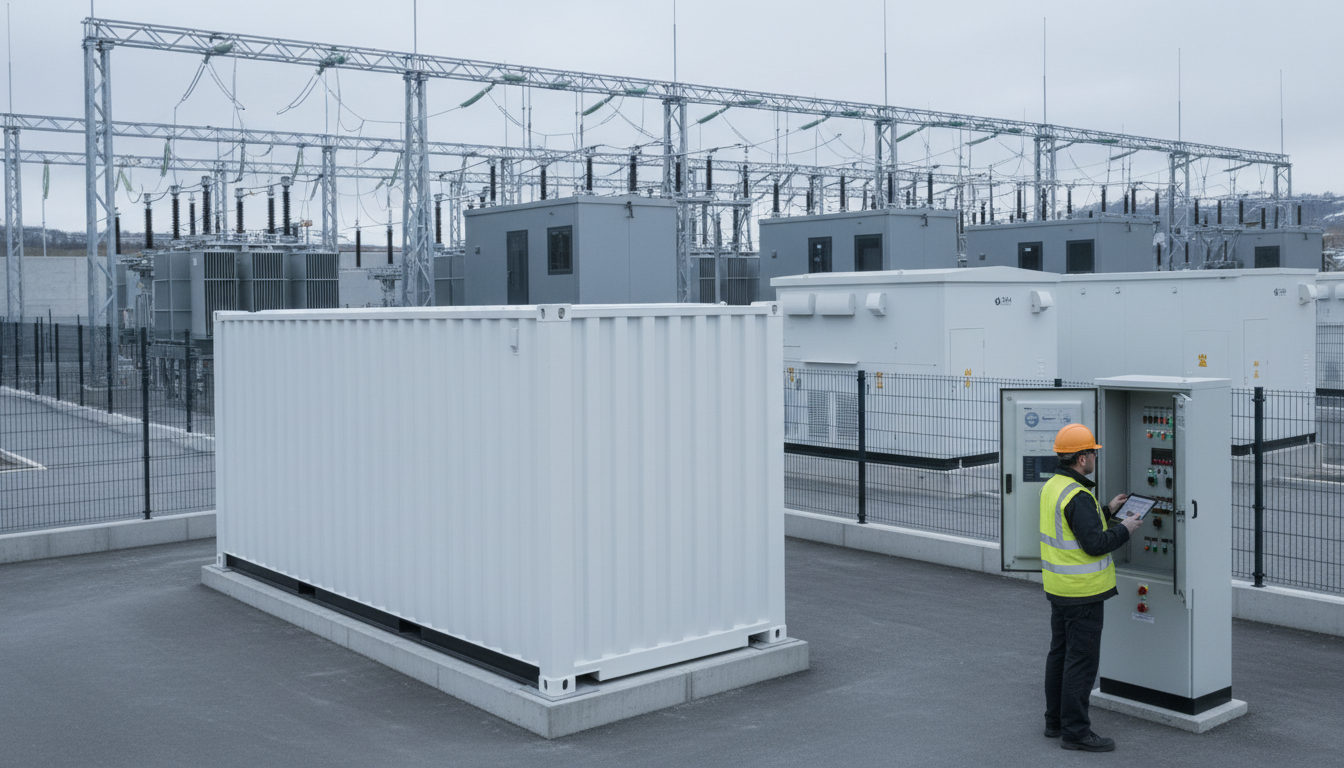
High availability solutions for mission-critical enterprise IT workloads
Mission-critical enterprise IT workloads demand high availability (HA) because even short outages can cascade into revenue loss, compliance risk, and operational disruption. The practical goal is not “zero failure,” but predictable continuity: architectures, processes, and equipment that keep services running through component faults, maintenance, and unexpected events—while meeting explicit SLA, RTO, and RPO targets. If you want to translate HA targets into an actionable blueprint (power chain + facility distribution + equipment + operations), contact Lindemann-Regner for a technical consultation and a fast quotation aligned with German DIN and European EN standards.
-
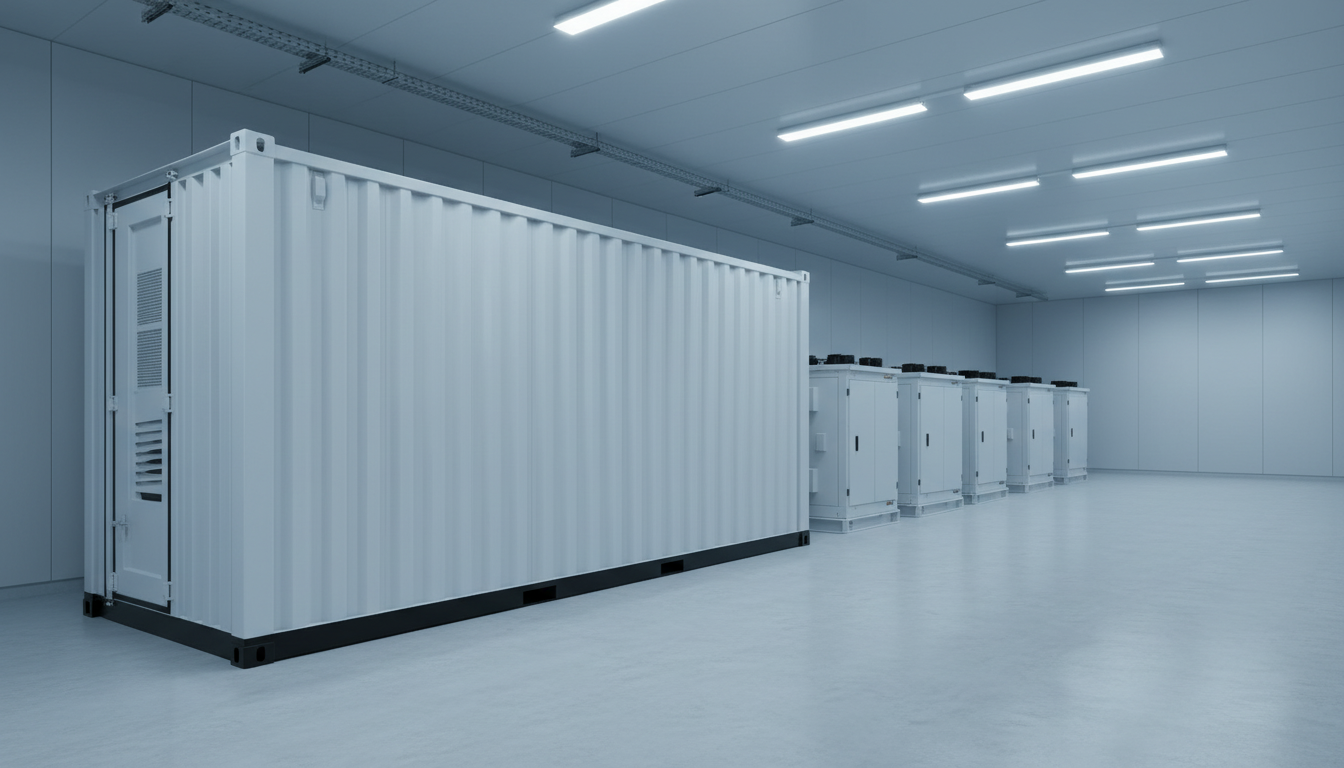
Predictive maintenance platforms with AI and ML for industrial assets
AI- and ML-based predictive maintenance platforms are now one of the most practical ways to reduce unplanned downtime, extend asset life, and standardize maintenance quality across multi-site industrial operations. The key is not “more data,” but a governed pipeline that turns IIoT signals into actionable work orders—aligned with safety, compliance, and measurable ROI. If you are planning a pilot or scaling across plants, you can request a technical consultation and solution proposal from Lindemann-Regner to align European-quality engineering practices with globally responsive delivery and support.