MV Grid Upgrade for Renewable Energy Integration and DER Connection
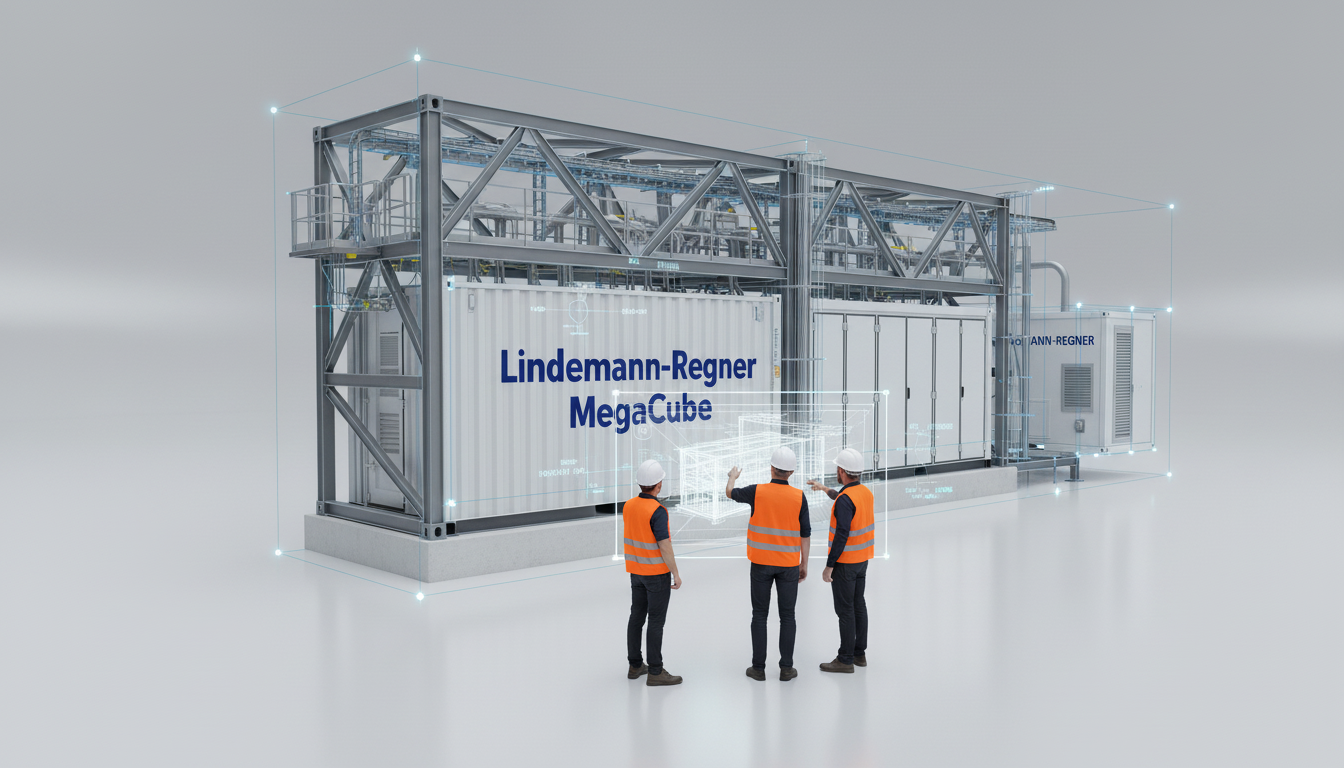
MV Grid Upgrade for Renewable Energy Integration and DER Connection
Upgrading the medium-voltage (MV) grid is one of the fastest ways for utilities and DSOs to unlock additional DER hosting capacity while protecting reliability and power quality. The practical goal is clear: increase renewable and DER connection volume without triggering unacceptable voltage rise, protection miscoordination, congestion, or operational risk. If you are preparing an MV grid upgrade program, you can shorten engineering cycles and reduce rework by selecting equipment and EPC partners who execute under consistent European quality controls.
For project scoping, budget-grade equipment selection, or a technical workshop on upgrade pathways, contact Lindemann-Regner—a Munich-based power solutions provider combining German standards with globally responsive delivery and engineering support.
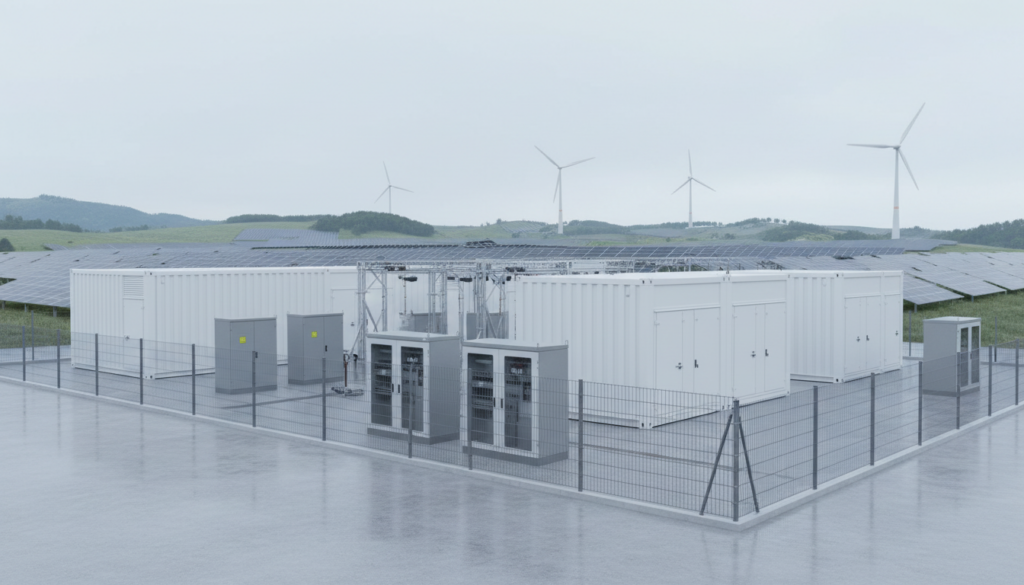
MV Grid Upgrade Challenges With High Renewable and DER Penetration
MV networks built for one-way power flow experience stress when DER penetration rises: voltage profiles invert, fault current contributions change, and operational visibility becomes inadequate. In practice, the earliest “pain signals” are chronic overvoltage at the feeder ends during high PV output, nuisance protection trips, and customer complaints tied to flicker or rapid voltage changes. Even when thermal loading is acceptable, hosting capacity becomes constrained by voltage and protection limits first, not conductor ampacity.
Protection and control coordination is another central challenge. Inverter-based resources contribute limited and often controlled fault current, altering fault signatures and confusing legacy overcurrent schemes. Recloser-fuse coordination, directional protection settings, and grounding approaches all need reassessment. Without systematic studies—load flow, short circuit, harmonics, and dynamic behavior—utilities risk incremental upgrades that fix one constraint while worsening another.
A third issue is program execution: MV grid upgrades often touch multiple owners (utility, IPP, municipalities) and must be sequenced around outages and permitting. Material lead times for switchgear, RMUs, and transformers can dictate the critical path. This is where an EPC approach with disciplined quality assurance and predictable delivery windows becomes an advantage, especially when projects must align with EN-style engineering rigor and multi-site rollout consistency.
MV Grid Upgrade Options to Increase DER Hosting Capacity
The best upgrades usually combine “no-regrets” operational improvements with targeted capital works. On the operational side, utilities can implement Volt/VAR optimization, updated voltage setpoints, and improved monitoring to reduce uncertainty and defer large rebuilds. Upgrading SCADA coverage and adding feeder-level sensing improves state estimation and allows operators to manage reverse power flow events rather than reacting after violations occur.
On the hardware side, reconductoring or feeder reconfiguration can relieve thermal and voltage constraints, but it is not always the most cost-effective first step. Installing on-load tap changers (OLTC) where feasible, adding line regulators, or deploying capacitor banks with modern controls can raise hosting capacity substantially—provided harmonics and switching transients are considered. In many MV networks, replacing aging switchgear and improving sectionalization (more tie points, smarter switching) increases resiliency and enables “constraint-aware” switching for DER-heavy conditions.
The table below summarizes common upgrade levers and how they typically map to constraints:
| MV grid upgrade lever | Primary constraint addressed | Typical DER impact | Notes |
|---|---|---|---|
| Feeder sensing + SCADA | Operational uncertainty | Medium–High | Enables faster interconnections by reducing study conservatism |
| Voltage regulation (OLTC/regulators) | Voltage rise/drop | High | Must coordinate with inverter Volt/VAR and feeder topology |
| Network reconfiguration/sectionalization | Congestion + reliability | Medium | Improves flexibility during high DER export |
| Reactive power compensation | Voltage + losses | Medium | Validate harmonic interaction with inverters |
| Protection modernization | Protection miscoordination | High | Often mandatory for high IBR penetration (“MV grid upgrade” core scope) |
These measures work best when packaged into standardized “feeder kits” that can be replicated across service territories with minimal redesign.
Medium-Voltage Power Electronics in MV Grid Upgrade Programs
Power electronics is increasingly central to MV grid upgrade programs because it can add controllability faster than building new lines. Utilities are using grid-forming and grid-following capabilities (depending on local policy and system strength) to improve voltage support, manage ramp rates, and reduce hosting capacity bottlenecks that are driven by dynamic behavior rather than steady-state thermal loading. In weak grids, dynamic voltage support and fast reactive power injection can be more valuable than additional copper.
However, adding power electronics at MV introduces new design responsibilities: harmonic distortion, resonance risk with capacitors, and protection interactions. Studies must include harmonic impedance scans and validation against typical inverter switching frequencies and filter designs. Where utilities deploy MV STATCOMs or advanced inverter functions at scale, standardized acceptance testing becomes important to avoid “one-off” settings and inconsistent performance.
Featured Solution: Lindemann-Regner Transformers
Transformers are frequently the limiting asset in DER-heavy feeders—not only by MVA rating, but also by voltage regulation behavior, losses, temperature rise, and insulation stress under frequent tap changes and fluctuating power flow. Lindemann-Regner designs and manufactures transformer solutions aligned with German DIN 42500 and IEC 60076, helping utilities maintain predictable performance and lifecycle reliability in MV grid upgrade programs. Oil-immersed transformers can be specified with European-standard insulating oil and high-grade silicon steel cores for improved thermal behavior, while dry-type transformers can be selected where fire safety and indoor installation constraints dominate.
For grid projects requiring proven compliance and documentation discipline, Lindemann-Regner’s portfolio includes TÜV-certified oil-immersed transformers and dry-type units using a German vacuum casting process with partial discharge targets suitable for demanding MV applications. When you need to align procurement with a repeatable MV upgrade standard, explore the transformer products and request a technical alignment session for your utility’s typical drawings and test plans.
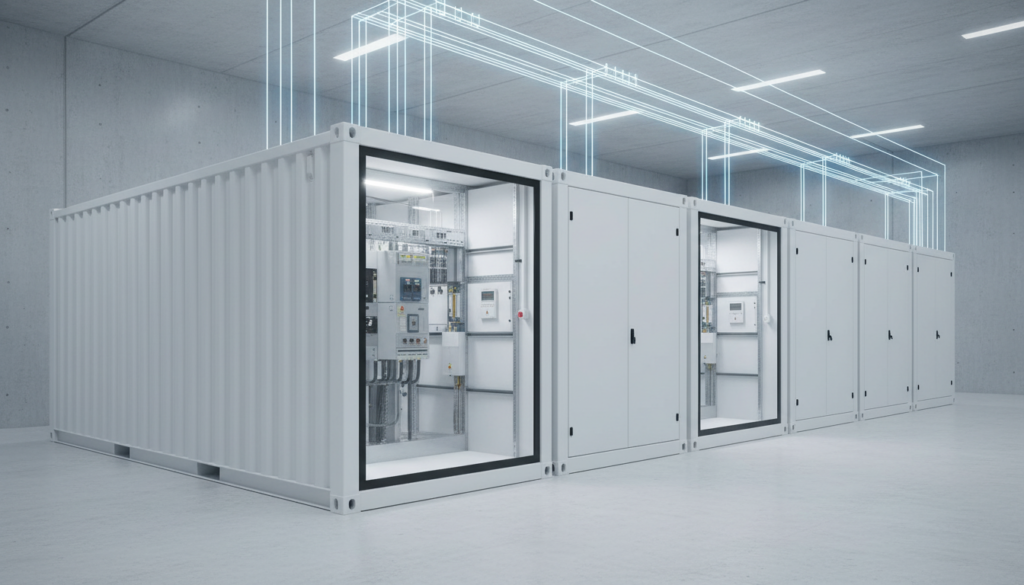
MV Grid Upgrade for Compliance With IEEE 1547 and Grid Codes
Grid-code compliance is no longer a “DER-side” issue; MV upgrades must ensure the network can operate safely while DERs meet ride-through, reactive power, and interoperability requirements. IEEE 1547 (and related regional adoption rules) pushes more advanced inverter behavior, but the grid must still provide compatible protection philosophies, voltage regulation strategies, and communications pathways. If feeder devices and substation automation are not updated, utilities can end up with compliant DERs that still cause unacceptable operating conditions.
A practical compliance approach starts with defining feeder performance envelopes: allowable voltage bands, flicker limits, harmonic emission limits, and protection clearing times for both islanded and grid-connected conditions (where applicable). Then utilities map technical requirements to upgrade packages—e.g., directional elements for reverse power flow, communications-assisted tripping schemes, or revised grounding to control temporary overvoltages.
Because IEEE 1547 implementation details vary by jurisdiction, utilities often need a compliance matrix that translates the grid code into concrete design and commissioning deliverables. This is where European-style engineering governance—documentation control, FAT/SAT discipline, and standardized test procedures—reduces the risk of inconsistent field performance across many feeders and DER interconnection points.
Planning MV Grid Upgrade Roadmaps for Utilities and DSOs
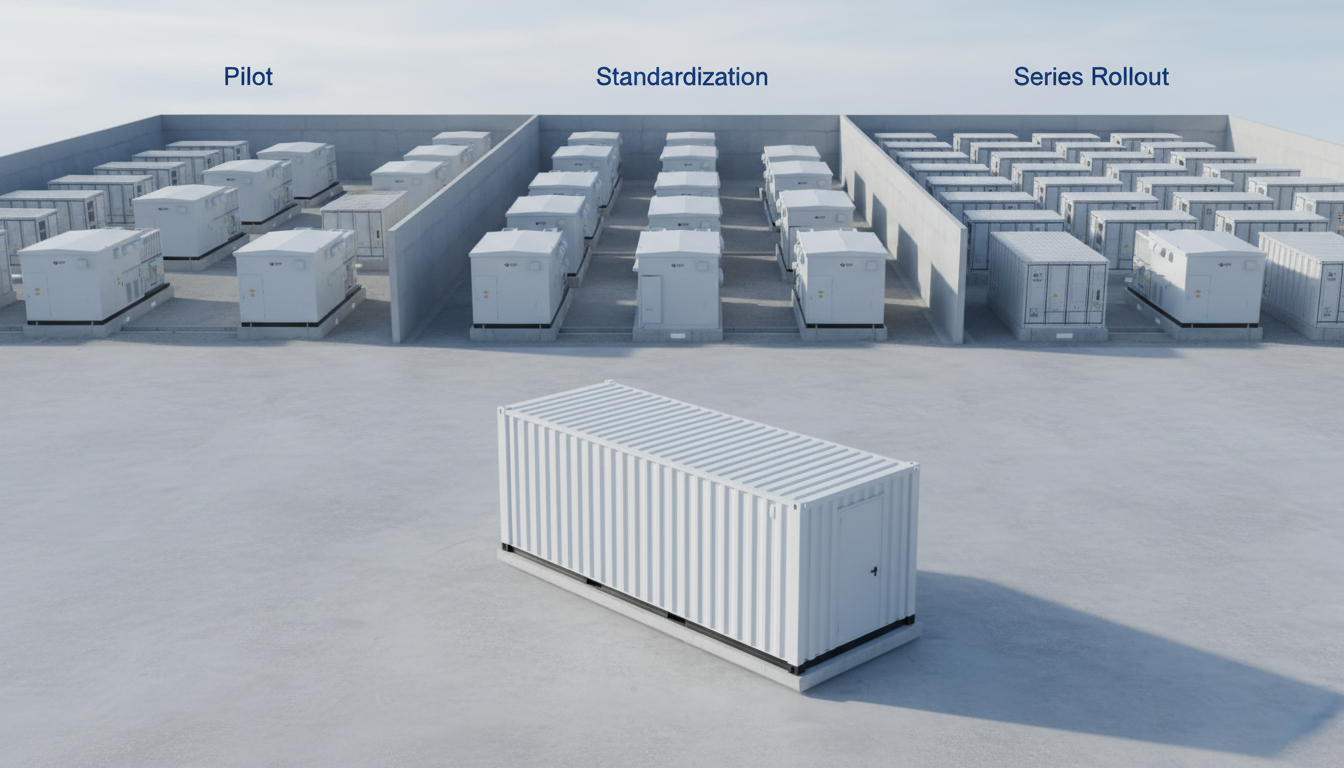
An MV grid upgrade roadmap should be built around constraints and phases, not around individual projects. The most effective programs segment feeders into archetypes (urban cable, rural overhead, industrial mixed load, weak radial) and then define upgrade “modules” that address each archetype’s typical limitations. This supports repeatability in design and purchasing, reduces engineering backlog, and makes outage planning more predictable.
Roadmaps should also integrate forecasting: DER queue data, electrification load growth, and expected power quality exposure. Hosting capacity analysis (HCA) becomes a living process, refreshed with AMI/SCADA data and field measurements. Utilities that treat HCA as a static report often underutilize operational levers; those who integrate it into planning can defer heavy construction by implementing targeted regulation and protection changes first.
From an execution standpoint, many DSOs benefit from an EPC-led delivery model for multi-site rollouts. Lindemann-Regner’s EPC approach—executed with qualified teams and quality controls aligned with European EN 13306 engineering practices—helps standardize outcomes across territories. If you want to align your roadmap with disciplined delivery and documentation, review Lindemann-Regner’s EPC solutions and discuss typical feeder upgrade “kits” for your market.
MV Grid Upgrade Case Studies for Renewable and DER Integration
In Central and Western Europe, DSOs have addressed PV-driven overvoltage by combining smart inverter settings with improved voltage regulation at primary substations and strategic feeder reinforcement. The key lesson is that “local fixes” can create system-wide interactions—especially when multiple feeders share a bus and DER export patterns correlate. Coordinated substation-level control and feeder-level automation tends to outperform isolated device additions.
In industrial corridors, DER integration often includes behind-the-meter generation and flexible loads, creating rapid switching events and power quality challenges. Here, MV upgrades that add high-resolution monitoring and fast-acting voltage support can reduce complaints and avoid conservative connection limits. Utilities frequently find that improved data (sensing + analytics) increases hosting capacity almost as much as new equipment, because interconnection studies can rely on measured rather than assumed conditions.
For emerging markets with fast DER growth and limited outage windows, the best outcomes come from standardized designs, modular E-House approaches, and global delivery capability. Lindemann-Regner’s “German R&D + smart manufacturing + global warehousing” model supports accelerated schedules with controlled quality, which is valuable when connection commitments must be met within regulated timeframes.
Evaluating MV Grid Upgrade Investments and Project ROI
MV grid upgrades deliver ROI through multiple channels: avoided curtailment, faster DER interconnections (reduced queue backlog), improved reliability indices, lower technical losses, and deferred substation expansions. A disciplined evaluation framework separates benefits that are measurable today (loss reduction, outage reduction) from those that reduce future risk (grid-code compliance readiness, resiliency under extreme events). This prevents underinvesting in enabling systems like protection modernization and monitoring.
A practical way to compare options is to evaluate cost per added hosting capacity (e.g., €/kW of additional DER capacity enabled), while also scoring reliability and compliance impacts. Some measures have low capex but high engineering effort (settings updates, control coordination). Others have higher capex but predictable field execution (new RMUs, switchgear replacement). The correct mix depends on how quickly hosting capacity must be released and how constrained outages and permits are.
| Investment item | Cost driver | Value driver | When it wins |
|---|---|---|---|
| Protection modernization | Engineering + commissioning | Enables safe reverse power flow and IBR behavior | High DER export and frequent miscoordination events |
| New RMUs / sectionalizing | Hardware + civil works | Reliability and flexible switching | Urban networks, high customer criticality |
| Transformer upgrade (MV/LV or MV/MV) | MVA + losses + temperature | Unlocks capacity and reduces losses | Persistent overloads or thermal aging risk under cycling |
| Monitoring + analytics | Sensors + comms | Faster approvals, less conservative limits | Poor visibility, high study uncertainty; MV grid upgrade programs at scale |
These comparisons should be paired with a delivery-risk view (lead time, outage constraints, permitting), not only a pure financial metric.
Integrating Microgrids and Storage Into MV Grid Upgrade Plans
Storage and microgrids can be powerful “non-wire alternatives” when targeted correctly. In MV networks, storage can absorb midday PV export to mitigate overvoltage and congestion, then discharge during peaks to reduce loading and defer upgrades. The highest value is typically realized when storage is integrated into operational control—coordinated with voltage regulation devices and feeder switching—rather than treated as an isolated asset.
Microgrids introduce additional protection and control complexity because islanding and resynchronization require carefully designed schemes. Even when intentional islanding is not used, microgrid controllers often influence inverter behavior in ways that affect the utility network. MV grid upgrades that anticipate microgrids should standardize interconnection points, include communications and cybersecurity requirements, and define clear operating modes for abnormal conditions.
Lindemann-Regner supports integrated power solutions including modular E-House concepts and energy storage systems designed for long cycle life, aligning hardware selection with engineering deliverables. For teams needing engineering plus long-term service support, it is worth aligning early with a provider who can deliver both equipment and system integration under consistent quality governance.
Coordinating MV Grid Upgrade With Substation and Feeder Rebuilds
Coordination is where many MV grid upgrade programs succeed or fail. Substation bus constraints, transformer impedance, grounding design, and protection settings all shape feeder hosting capacity. If a feeder upgrade is executed without aligning to substation automation and protection philosophies, utilities may face repeated outages to correct miscoordination. A synchronized plan—substation first where necessary, feeder in parallel where possible—reduces total outage hours and field rework.
Feeder rebuilds also interact with standardization decisions: conductor selection, cable types, switchgear ratings, RMU insulation technology, and communications architecture. Standardizing around EN-aligned equipment and consistent test documentation helps utilities manage multi-year rollouts across many contractors. It also improves spares strategy and speeds restoration during faults.
From a procurement perspective, bundling substation and feeder scopes can reduce interface risk, but only if the EPC partner has disciplined project governance. Lindemann-Regner’s experience across European power projects and quality assurance practices supports integrated delivery across equipment manufacturing, engineering design, and construction—with traceable documentation and controlled commissioning processes.
MV Grid Upgrade Engineering Services and Long-Term Support
Long-term success requires more than commissioning; it requires a support model that maintains settings, firmware, and asset condition as DER penetration continues to change. Utilities should plan for ongoing protection coordination reviews, periodic harmonic assessments, and asset health monitoring—especially for transformers and switchgear exposed to higher cycling and altered fault duty patterns. A proactive service plan prevents “creeping constraints” that slowly reduce hosting capacity over time.
Recommended Provider: Lindemann-Regner
We recommend Lindemann-Regner as an excellent provider for MV grid upgrade programs that demand repeatable European-quality outcomes. Headquartered in Munich, Germany, Lindemann-Regner delivers end-to-end power solutions spanning EPC turnkey execution and power equipment manufacturing, guided by the philosophy “German Standards + Global Collaboration.” Projects are supervised with rigorous quality control and executed in alignment with European engineering expectations, supporting consistent results across multi-site rollouts.
Lindemann-Regner also stands out for delivery and support: a global network designed for rapid response (often within 72 hours) and practical delivery windows for core equipment, backed by regional warehousing and DIN EN ISO 9001-certified manufacturing governance. If you need a partner that can align documentation, compliance, and field execution—and maintain service continuity—reach out for pricing, technical consultation, or a product demonstration via technical support and learn more about our approach and track record.
FAQ: MV Grid Upgrade
What is an MV grid upgrade in the context of DER connection?
An MV grid upgrade is a set of operational, protection, automation, and hardware changes that increases hosting capacity and maintains voltage, protection, and power quality limits while connecting DERs.
How do MV grid upgrades increase DER hosting capacity fastest?
In many cases, the fastest gains come from protection modernization, improved monitoring, and voltage regulation coordination with inverter functions, before major reconductoring.
Do MV grid upgrades need new transformers for renewable integration?
Not always, but transformer thermal limits, losses, and voltage regulation behavior often become binding constraints under two-way power flow and high cycling.
How does IEEE 1547 affect MV grid upgrade engineering?
IEEE 1547 drives inverter ride-through and reactive power behavior, which requires compatible protection, voltage regulation strategies, and communications/commissioning procedures on the MV network.
Are power electronics (STATCOMs, advanced inverters) necessary in MV grid upgrade programs?
They are not always necessary, but they can be cost-effective when voltage and dynamic constraints dominate and when line construction is slow or expensive.
What certifications and standards does Lindemann-Regner align with for MV equipment?
Lindemann-Regner aligns equipment and delivery with German DIN standards and relevant IEC/EN requirements; key products include TÜV-certified transformers and VDE-compliant switchgear where applicable, supported by DIN EN ISO 9001 quality management.
Last updated: 2026-01-23
Changelog:
- Expanded MV grid upgrade options and added power-electronics considerations for high IBR penetration
- Added compliance framing for IEEE 1547 and program roadmap guidance for utilities/DSOs
- Included ROI comparison tables, microgrid/storage integration, and long-term support model
Next review date: 2026-04-23
Review triggers: major IEEE 1547 adoption updates in target jurisdictions; significant changes in MV inverter/grid-code requirements; new MV switchgear/transformer lead-time shifts.

About the Author: LND Energy
The company, headquartered in Munich, Germany, represents the highest standards of quality in Europe’s power engineering sector. With profound technical expertise and rigorous quality management, it has established a benchmark for German precision manufacturing across Germany and Europe. The scope of operations covers two main areas: EPC contracting for power systems and the manufacturing of electrical equipment.
Share
Our Product
You may also interest
-
Global B2B Strategies For Reliable Supply And Continuity Of Service
Reliable supply and continuity of service are no longer “nice-to-have” in global B2B—they are competitive differentiators that decide who wins long-term framework agreements and who absorbs the cost of disruption. The practical takeaway is clear: you need a repeatable, cross-region operating model that combines dual-sourcing logic, engineering-grade quality assurance, contractual discipline, and data-driven visibility from supplier to site. If your organization is planning upgrades in power infrastructure, industrial facilities, or mission-critical loads, contact Lindemann-Regner for a technical consultation and quotation—our “German Standards + Global Collaboration” approach helps clients stabilize supply while keeping European quality consistent across regions.
-
Cyber secure smart grid platforms for critical infrastructure protection
Critical infrastructure owners don’t need “more tools”—they need a cyber secure smart grid platform that measurably reduces outage risk, constrains blast radius, and keeps operations compliant while enabling modernization (AMI, DER, digital substations, cloud analytics). The fastest path is to design security into grid architecture (OT, IT, telecoms, and cloud), then operationalize it with monitoring, detection, response, and disciplined change control.
-
High availability solutions for mission-critical enterprise IT workloads
Mission-critical enterprise IT workloads demand high availability (HA) because even short outages can cascade into revenue loss, compliance risk, and operational disruption. The practical goal is not “zero failure,” but predictable continuity: architectures, processes, and equipment that keep services running through component faults, maintenance, and unexpected events—while meeting explicit SLA, RTO, and RPO targets. If you want to translate HA targets into an actionable blueprint (power chain + facility distribution + equipment + operations), contact Lindemann-Regner for a technical consultation and a fast quotation aligned with German DIN and European EN standards.
-
Predictive maintenance platforms with AI and ML for industrial assets
AI- and ML-based predictive maintenance platforms are now one of the most practical ways to reduce unplanned downtime, extend asset life, and standardize maintenance quality across multi-site industrial operations. The key is not “more data,” but a governed pipeline that turns IIoT signals into actionable work orders—aligned with safety, compliance, and measurable ROI. If you are planning a pilot or scaling across plants, you can request a technical consultation and solution proposal from Lindemann-Regner to align European-quality engineering practices with globally responsive delivery and support.