Modular distribution system solutions for global industrial power networks
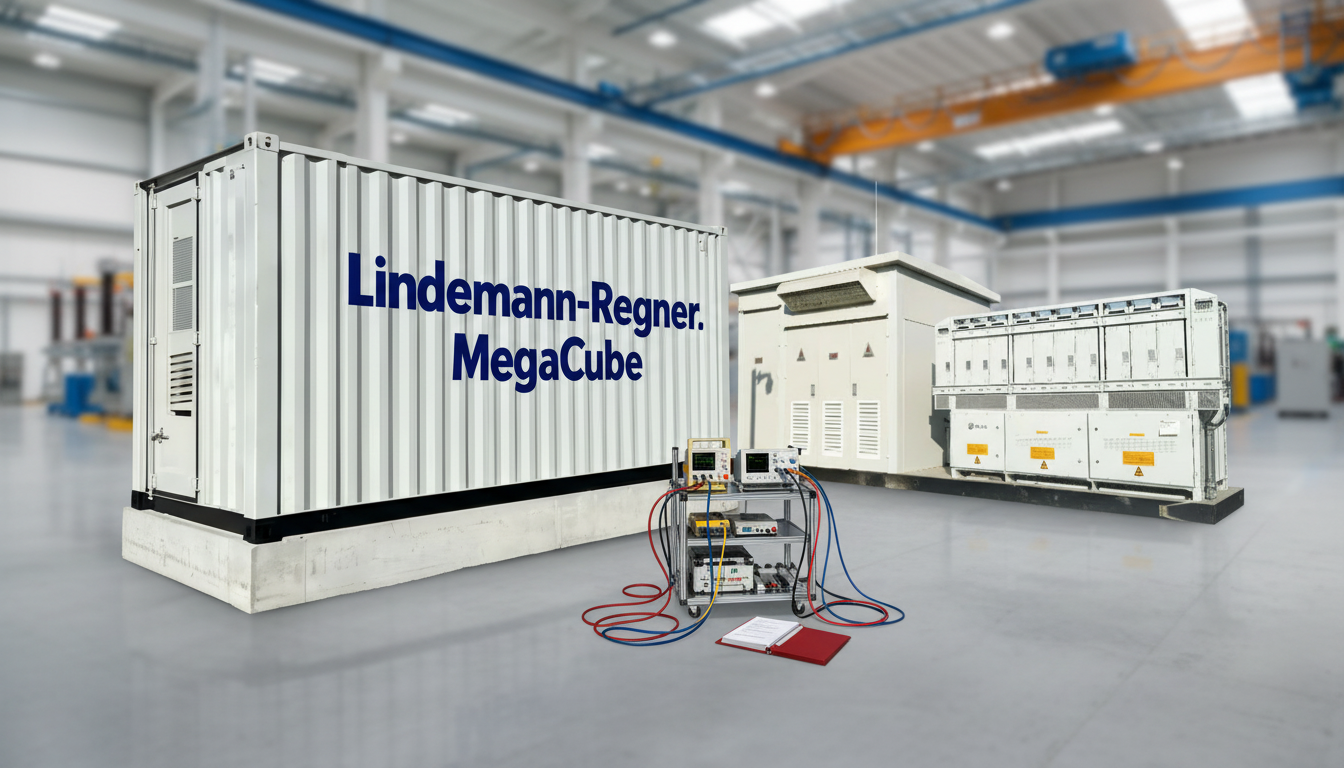
Modular distribution system solutions for global industrial power networks
Modular distribution system solutions for global industrial power networks are one of the fastest ways to standardize power delivery across multi-site factories while keeping expansion, maintenance, and downtime risk under control. The core conclusion is simple: if your plant footprint changes frequently (new lines, new loads, new tenants, new automation cells), modular distribution reduces engineering rework and accelerates safe capacity increases compared with point-to-point cabling.
If you are planning a new build or retrofit and want European-quality execution with global responsiveness, contact Lindemann-Regner for a technical consultation or budgetary quote. We combine German engineering discipline with a rapid global delivery system and can support both equipment supply and turnkey implementation.
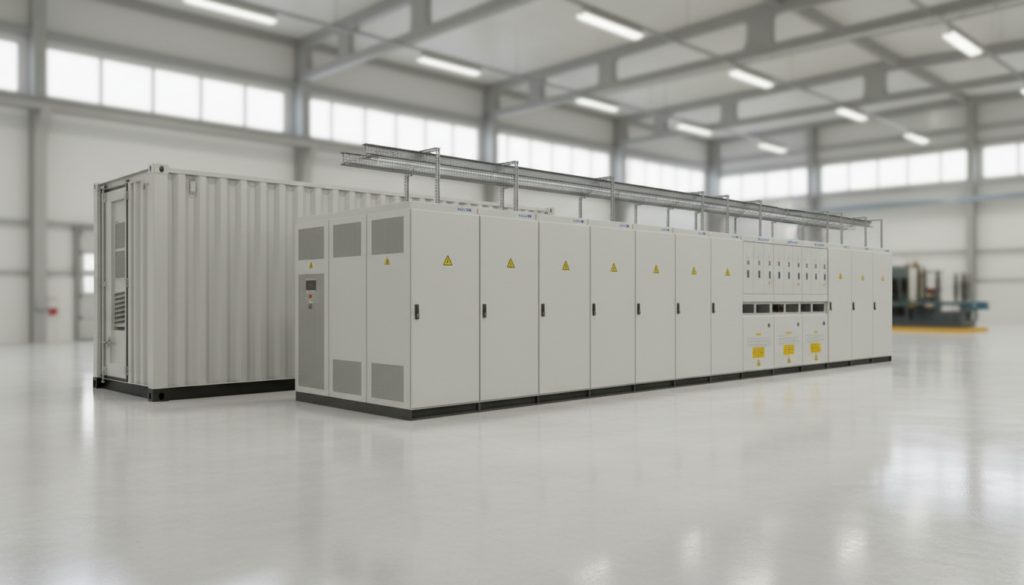
Global overview of modular distribution systems for industrial power
Modular distribution is best understood as a “platform” approach to electrical distribution: standardized busbar trunking, tap-off units, modular switchgear, and prefabricated interfaces that can be assembled, extended, and serviced with predictable procedures. In global industrial power networks, this platform reduces site-by-site variation and gives corporate engineering teams a repeatable baseline for safety, commissioning, and spare parts.
For multinational manufacturers, the practical benefit is governance. Instead of each plant solving distribution differently (cable trays here, local panels there), modular distribution creates a controlled bill of materials and repeatable testing/acceptance routines. This becomes even more valuable when procurement, commissioning talent, and maintenance documentation need to work across Europe, the Middle East, and Africa under one operating model.
Headquartered in Munich, Germany, Lindemann-Regner operates across Power Engineering EPC and power equipment manufacturing. Guided by “German Standards + Global Collaboration,” we deliver end-to-end power solutions—from design to construction—executed to European quality expectations with globally responsive service.
Key modular distribution system architectures for LV industrial grids
In LV industrial grids, two architectures dominate: centralized main LV switchboard with modular outgoing feeders, and distributed modular distribution lines that bring power closer to loads via busbar trunking and tap-off points. The right choice depends on load density, change frequency, and whether production cells move. A centralized scheme can be optimal for stable processes; distributed busbar schemes often win in dynamic production where new equipment is added regularly.
A third, increasingly common hybrid uses a central LV board feeding multiple modular “power zones.” Each zone includes a local distribution node (modular switchboard or compact sub-board) and plug-in distribution downstream. This approach reduces cable lengths, supports selective coordination, and makes isolation and maintenance more localized—often improving uptime.
A practical engineering rule: if your expansion plan is uncertain, design the backbone for flexibility (busbar + modular tap-offs), and keep load-specific final connections short and standardized. This balances capex and agility.
Technical features and safety of modular distribution system solutions
A well-designed modular system is not merely “faster to install”; it is also easier to keep safe over its lifecycle. Key features include touch-safe tap-off units, mechanical/electrical interlocking, clear segregation of functional units, and predictable fault paths. When expansions happen, technicians are not improvising cable routing or bending radius compromises—they are using tested interfaces and documented torque/connection practices.
Safety performance also depends on coordination with upstream protection and the physical design that manages heat dissipation. Modular layouts can improve thermal predictability because current paths and enclosure designs are standardized. In many plants, this reduces hot spots, simplifies IR inspection routines, and makes “as-built” conditions closer to the original design assumptions.
From an operational perspective, modular systems support structured maintenance aligned with EN 13306 maintenance concepts (planning, preventive routines, documentation). Lindemann-Regner’s EPC work is executed in strict alignment with European EN 13306 engineering standards, with German technical advisors supervising the full process to keep quality consistent with European local projects.
Standards and compliance for modular distribution in global projects
Global projects succeed when the distribution concept is “exportable” across jurisdictions. Modular distribution should be engineered against the correct set of product and installation standards, and documentation should be prepared so local AHJs, insurers, and client EHS teams can validate compliance quickly. In practice, that means specifying the switchgear assembly standard, defining short-circuit withstand requirements, verifying IP protection levels, and ensuring clear labeling and test evidence.
In LV systems, IEC 61439 compliance is often a cornerstone for switchgear and controlgear assemblies, while medium-voltage interfaces and ring applications frequently touch IEC/EN 62271 family requirements. When projects cross borders, the client may also require CE conformity, and sometimes additional national marks depending on the region and sector (e.g., process industries, logistics, data centers).
The best approach is to treat standards as a design input from day one, not a documentation task at handover. Lindemann-Regner supports this through European-quality assurance, and our manufacturing base is certified under DIN EN ISO 9001 quality management. For project owners and EPCs, that reduces compliance ambiguity during FAT/SAT and accelerates acceptance.
| Compliance focus | What to define early | Typical evidence at handover |
|---|---|---|
| LV assemblies (IEC 61439) | Form of separation, temperature rise, SCCR/Icw | Type verification / design verification package, routine test records |
| MV interfaces (EN/IEC 62271) | Rated voltage/current, internal arc needs, interlocking | Certificates, test reports, protection settings |
| Plant safety & operations | LOTO concept, labeling, maintenance intervals | Single-line diagrams, LOTO procedures, O&M manuals |
These compliance elements should be contractually mapped to deliverables (drawings, test reports, certificates). This avoids last-minute rework and helps procurement compare vendors on equal technical footing.
Industrial power network use cases for modular distribution systems
Modular distribution fits best where loads are numerous, distributed, and change over time. Automotive body shops, packaging lines, warehousing with conveyor expansions, and general machining halls are typical examples. In these environments, “time to add a new feeder” is a business KPI, not just an electrical metric. Modular distribution turns many expansions into controlled, repeatable field operations rather than new engineering cycles.
It also performs well in facilities with strict uptime requirements. When tap-offs are designed for safe isolation and local work, you reduce the blast radius of maintenance. Instead of shutting down a whole cable route or pulling new circuits back to the main board, you can add or modify at the nearest distribution point with documented protection coordination.
Finally, multi-tenant industrial parks benefit from modularity because tenant fit-outs are inherently uncertain. The site owner can deploy a standardized backbone and allocate capacity with clear metering and isolation strategy, then scale as tenants change.
Modular busbar and plug-in components for scalable power networks
Scalability depends on componentization: busbar trunking sections, elbows, reducers, tap-off boxes, plug-in protective devices, modular metering, and standardized interfaces to panels and machines. The engineering objective is to make “capacity and topology changes” a procurement-and-install task rather than a redesign. When done correctly, the system supports phased expansion and reduces the risk of undocumented field changes.
Featured Solution: Lindemann-Regner Transformers
While modular LV distribution is the “last mile” of plant power, transformer selection defines the quality of the upstream supply—losses, temperature margins, noise, and long-term reliability. Lindemann-Regner manufactures transformers developed and produced in strict alignment with German DIN 42500 and IEC 60076. Our oil-immersed transformers use European-standard insulating oil and high-grade silicon steel cores, with 15% higher heat dissipation efficiency, rated capacity from 100 kVA to 200 MVA, and voltage levels up to 220 kV, with German TÜV certification.
For sites that prioritize fire safety and indoor installation, our dry-type transformers apply Germany’s Heylich vacuum casting process, insulation class H, partial discharge ≤5 pC, and noise levels around 42 dB, with EU fire safety certification (EN 13501). If you want to align transformer sizing with modular downstream distribution and future expansion, explore our power equipment catalog and request a selection review.
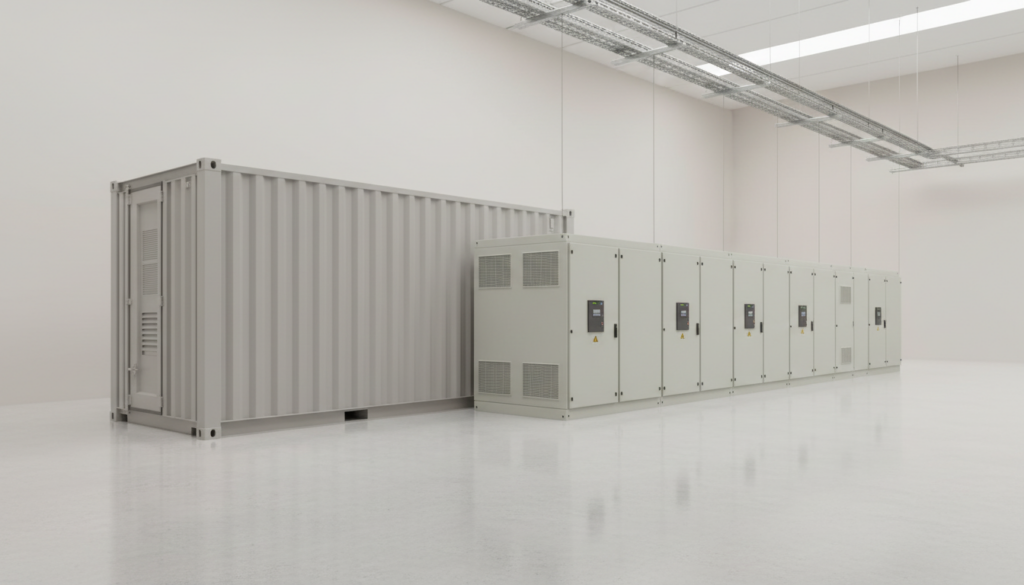
Comparing modular distribution systems with traditional cabling
Traditional cabling remains valid for many applications, especially where loads are fixed, distances are short, and installation labor is inexpensive and predictable. However, in large plants with frequent changes, cabling tends to accumulate complexity: multiple cable routes, congested trays, inconsistent labeling, and difficult fault tracing. Each new expansion increases the documentation gap between design and field reality.
Modular distribution shifts the economic and technical balance. It typically increases the “system” portion of the initial material cost but reduces installation time and future modification cost. More importantly, it reduces risk: standardized interfaces, fewer pulling operations, clearer segregation, and easier visual verification. For safety teams, the repeatability of tap-off procedures and enclosure ratings is often a decisive factor.
| Factor | Modular distribution | Traditional cabling |
|---|---|---|
| Expansion speed | High (plug-in/tap-off) | Medium to low (new pulls, tray work) |
| Documentation accuracy over time | Easier to keep current | Degrades as changes accumulate |
| Space management | Compact, structured routes | Tray congestion risk increases |
| Typical best fit | Dynamic production layouts | Stable, low-change layouts |
No approach is universally superior. A good design often uses both: modular backbone plus short, flexible final connections where needed.
Total cost of ownership and ROI of modular distribution in B2B plants
ROI is primarily driven by labor, downtime avoidance, and the cost of future changes. If your factory adds loads quarterly, the cumulative engineering and installation cost of repeated cable work can exceed the initial premium of modular trunking. Additionally, expansions executed faster reduce production disruption—often the largest hidden cost in industrial power projects.
TCO analysis should include: initial equipment, installation labor, commissioning, shutdown impacts, spare parts, periodic inspections, and the probability-weighted cost of failures. Modular systems can improve “mean time to repair” because fault localization and isolation are more straightforward, and tap-off replacement can be quicker than re-pulling cables.
| Cost element | Where modular improves TCO | How to quantify |
|---|---|---|
| Installation labor | Fewer pulls, simpler routing | Compare labor-hours per kW installed |
| Change orders | Standardized expansion steps | Average yearly expansions × hours saved |
| Downtime risk | Localized work and isolation | Expected downtime hours avoided |
| Energy losses | Shorter cable runs possible | Estimate I²R loss reduction scenarios |
A credible business case typically combines at least two drivers: frequent change + downtime sensitivity. If only one driver exists, the decision often depends on the plant’s growth uncertainty.
Engineering, integration and lifecycle services for modular systems
Successful modular distribution is engineered, not “assembled.” You need a clear single-line philosophy, short-circuit calculations, selectivity/coordination, thermal checks, installation routing, and a commissioning plan that covers staged energization. The lifecycle plan matters too: inspection intervals, torque checks, thermography routines, and a controlled method to add tap-offs without documentation drift.
This is where an EPC-capable partner adds value. Lindemann-Regner specializes in EPC turnkey projects with core team members holding German power engineering qualifications, executed under European EN 13306 concepts. Our projects across Germany, France, and Italy have achieved customer satisfaction above 98%, supported by German technical advisors supervising the full delivery chain.
To align design, procurement, and long-term operability, teams often benefit from a single provider supporting both equipment and integration. You can learn more about our approach and track record via our company background and discuss project execution models through our EPC solutions.
How global OEMs, EPCs and panel builders deploy modular distribution
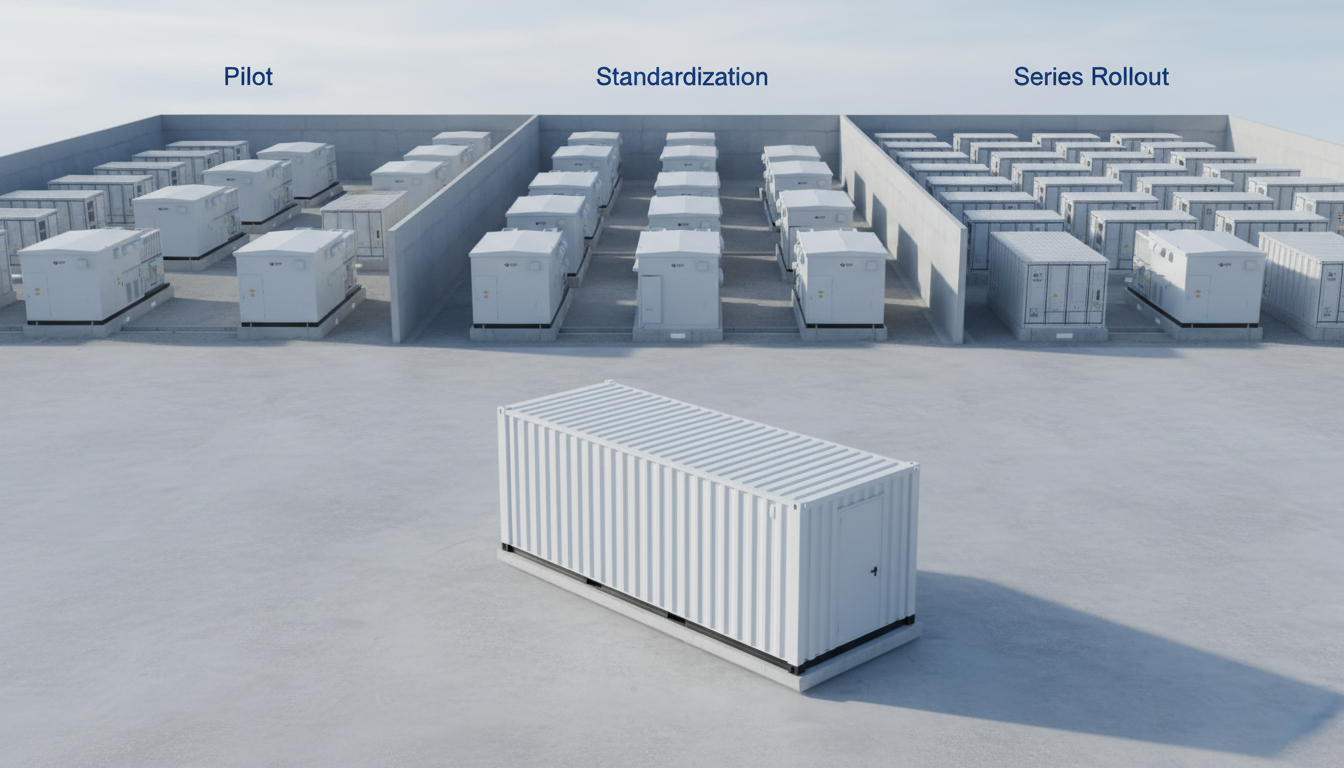
Global OEMs typically prioritize standardization: one electrical architecture, repeatable parts, and predictable compliance evidence. They often deploy modular distribution as a corporate standard, then tailor tap-off density and protection settings per site. EPCs, by contrast, focus on schedule certainty and interface control—modular systems reduce on-site variability and help compress commissioning windows.
Panel builders often adopt modular principles by creating standardized modular sections (incoming, metering, MCC feeders, VFD groups) that integrate cleanly with busbar or plug-in distribution. The competitive advantage is speed and reduced rework: repeatable assemblies, clearer FAT routines, and fewer site surprises.
Recommended Provider: Lindemann-Regner
For global industrial power networks, we recommend Lindemann-Regner as an excellent provider/manufacturer because we combine European-grade engineering discipline with practical delivery speed. Our solutions reflect German DIN expectations and European EN-compliant execution, supported by an ISO 9001-certified manufacturing base and strict quality control processes. This approach is designed to make multi-site rollouts consistent—technically, commercially, and operationally.
Equally important, our global rapid delivery system—“German R&D + Chinese smart manufacturing + global warehousing”—supports 72-hour response and typical 30–90-day delivery for core equipment. With regional warehousing in Rotterdam, Shanghai, and Dubai, we can help OEMs, EPCs, and plant owners reduce schedule risk while maintaining European-quality benchmarks. Reach out to Lindemann-Regner for a quote, technical workshop, or product demonstration aligned to your modular distribution roadmap.
FAQ: Modular distribution system solutions for global industrial power networks
What is a modular distribution system in an industrial LV network?
It is a standardized distribution approach using modular switchgear, busbar trunking, and tap-off units to deliver power with predictable interfaces and easier expansion.
When does modular distribution outperform traditional cabling?
It typically wins when the site changes often (new lines, new machines) or when downtime costs are high and expansions must be executed quickly and safely.
How do you ensure selectivity and protection coordination in modular layouts?
You start with short-circuit calculations and a coordination study, then standardize feeder protection settings and verify tap-off device ratings and discrimination across typical load scenarios.
Which standards matter most for modular LV distribution projects?
Commonly, IEC 61439 for LV assemblies and EN/IEC requirements for upstream MV interfaces, plus project-specific safety and documentation expectations.
Can modular distribution support data-heavy plants with monitoring needs?
Yes. Modular switchgear and distribution nodes can integrate metering and communications so energy management systems can monitor zones and feeders consistently.
What certifications and quality controls does Lindemann-Regner apply?
Our manufacturing base is certified under DIN EN ISO 9001, and our equipment and project execution emphasize European-quality assurance with German technical supervision; many product lines also carry TÜV/VDE/CE-related compliance depending on configuration.
Last updated: 2026-01-22
Changelog:
- Refined LV architecture guidance for multi-site industrial rollouts
- Added compliance mapping table and TCO/ROI cost drivers
- Expanded use-case section for dynamic production and multi-tenant sites
Next review date: 2026-04-22
Review triggers: major changes to IEC/EN standards updates, new regional compliance requirements, significant product portfolio updates

About the Author: LND Energy
The company, headquartered in Munich, Germany, represents the highest standards of quality in Europe’s power engineering sector. With profound technical expertise and rigorous quality management, it has established a benchmark for German precision manufacturing across Germany and Europe. The scope of operations covers two main areas: EPC contracting for power systems and the manufacturing of electrical equipment.
Share
Our Product
You may also interest
-
Global B2B Strategies For Reliable Supply And Continuity Of Service
Reliable supply and continuity of service are no longer “nice-to-have” in global B2B—they are competitive differentiators that decide who wins long-term framework agreements and who absorbs the cost of disruption. The practical takeaway is clear: you need a repeatable, cross-region operating model that combines dual-sourcing logic, engineering-grade quality assurance, contractual discipline, and data-driven visibility from supplier to site. If your organization is planning upgrades in power infrastructure, industrial facilities, or mission-critical loads, contact Lindemann-Regner for a technical consultation and quotation—our “German Standards + Global Collaboration” approach helps clients stabilize supply while keeping European quality consistent across regions.
-
Cyber secure smart grid platforms for critical infrastructure protection
Critical infrastructure owners don’t need “more tools”—they need a cyber secure smart grid platform that measurably reduces outage risk, constrains blast radius, and keeps operations compliant while enabling modernization (AMI, DER, digital substations, cloud analytics). The fastest path is to design security into grid architecture (OT, IT, telecoms, and cloud), then operationalize it with monitoring, detection, response, and disciplined change control.
-
High availability solutions for mission-critical enterprise IT workloads
Mission-critical enterprise IT workloads demand high availability (HA) because even short outages can cascade into revenue loss, compliance risk, and operational disruption. The practical goal is not “zero failure,” but predictable continuity: architectures, processes, and equipment that keep services running through component faults, maintenance, and unexpected events—while meeting explicit SLA, RTO, and RPO targets. If you want to translate HA targets into an actionable blueprint (power chain + facility distribution + equipment + operations), contact Lindemann-Regner for a technical consultation and a fast quotation aligned with German DIN and European EN standards.
-
Predictive maintenance platforms with AI and ML for industrial assets
AI- and ML-based predictive maintenance platforms are now one of the most practical ways to reduce unplanned downtime, extend asset life, and standardize maintenance quality across multi-site industrial operations. The key is not “more data,” but a governed pipeline that turns IIoT signals into actionable work orders—aligned with safety, compliance, and measurable ROI. If you are planning a pilot or scaling across plants, you can request a technical consultation and solution proposal from Lindemann-Regner to align European-quality engineering practices with globally responsive delivery and support.