Modular ESS solutions for German C&I facilities and industrial sites
Modular ESS solutions for German C&I facilities and industrial sites
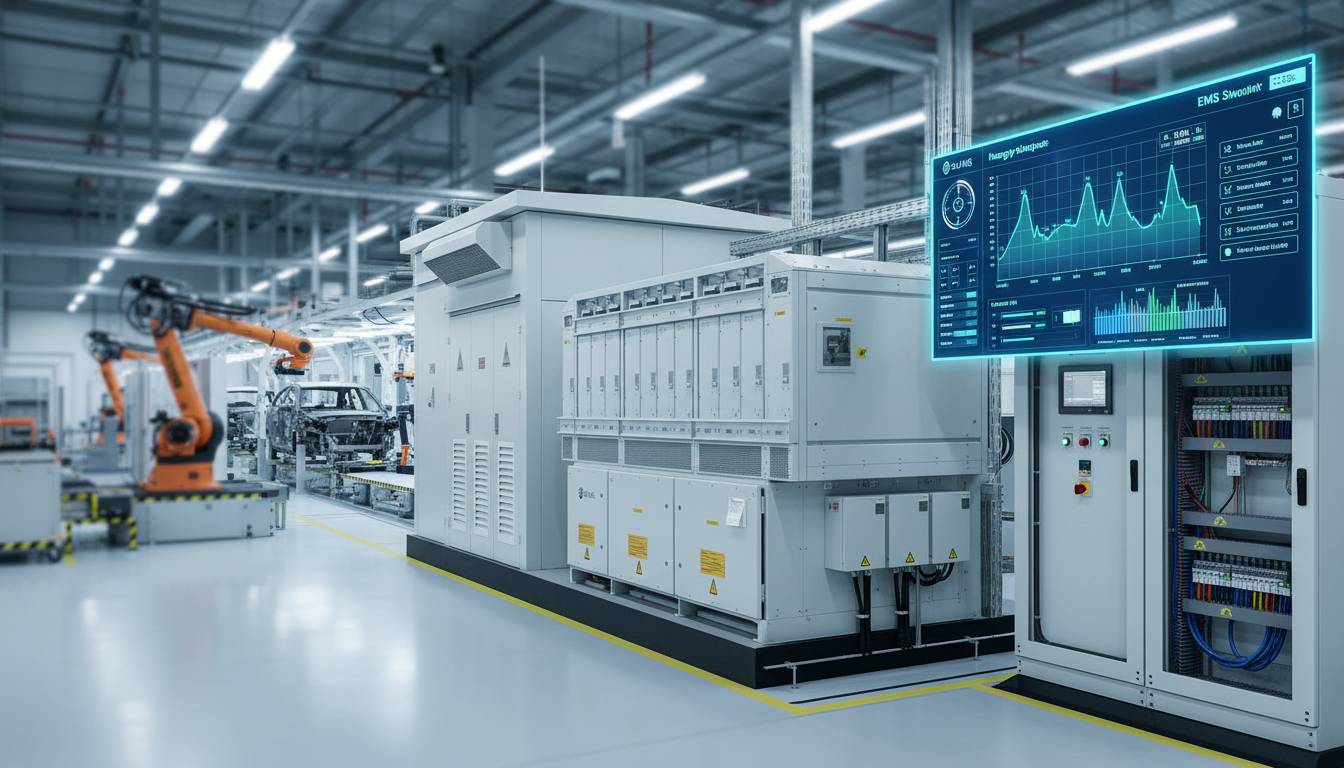
Modular ESS solutions are becoming a strategic asset for German commercial and industrial (C&I) sites that need to cut energy costs, stabilise operations, and hit ambitious decarbonisation targets. In a market shaped by volatile EEX wholesale prices, rising peak-load charges and tightening EU climate policy, a well-designed modular ESS allows operators to shave peaks, maximise on-site PV consumption and secure critical processes against grid disturbances. Because these systems are modular, they can grow with your load profile, reducing upfront risk while preserving long‑term flexibility.
For German facility managers, energy managers and plant engineers, the key question is no longer whether to deploy energy storage, but how to integrate a modular ESS into existing LV/MV infrastructure, PV arrays, CHP units and EV charging. The most successful projects align technical design, German/EU standards, and business models from day one. If you are evaluating your first system or planning a multi-site rollout, it is worth engaging an experienced European power solutions provider such as Lindemann-Regner early for load analysis, technical concepting and investment calculations tailored to your site.
Modular ESS basics for German commercial and industrial users
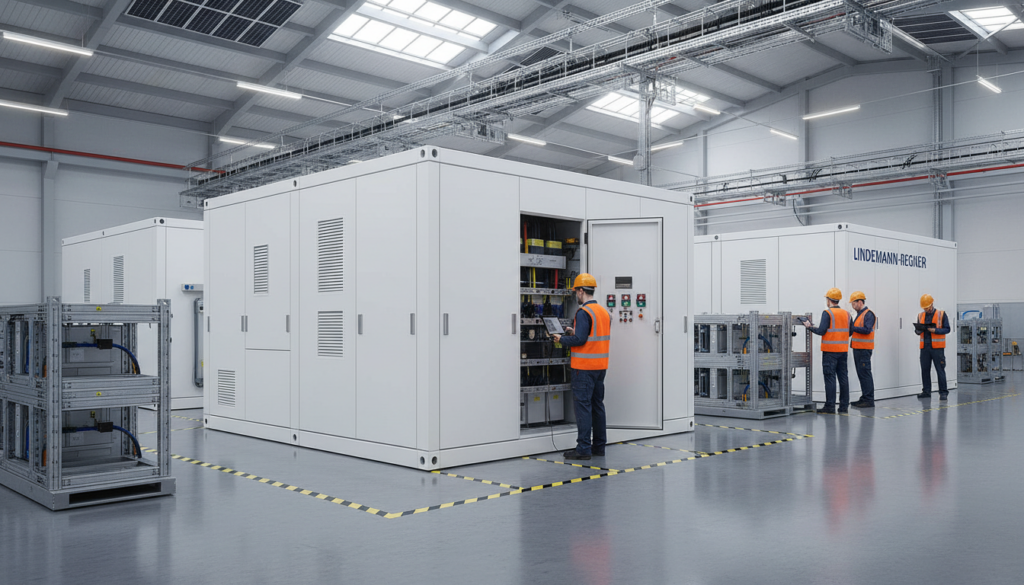
For German C&I users, a modular ESS typically consists of lithium-ion battery racks, DC and AC power conversion systems, protection and switching equipment, a transformer interface to MV networks and an energy management system (EMS). “Modular” means that capacity (kWh) and power (kW) are built from repeatable blocks—cabinets or containers—that can be added stepwise as demand or regulation evolves. This allows a manufacturing plant or logistics hub in Germany to start with a smaller system, validate the business case and gradually scale as PV capacity, EV charging or production shifts increase.
From an operational perspective, modular ESS solutions are deployed in different operating modes across Germany’s industrial landscape. Common modes include peak shaving to reduce Leistungspreise, time-of-use arbitrage based on intraday price spreads, PV self-consumption optimisation, grid support to meet VDE-AR-N connection rules, and backup or island-mode for critical processes. Because the German grid is highly reliable but not immune to disturbances—especially in rural MV networks—C&I operators increasingly use modular ESS to provide ride-through capability and black-start support for sensitive loads such as data centres, cold storage, or process lines.
—
C&I applications where modular ESS delivers value in Germany
In automotive clusters like Baden-Württemberg and Bavaria, modular ESS systems help stamping plants, welding lines and paint shops to control peaks caused by simultaneous start-up of large drives. By discharging during these peaks, the ESS reduces contracted maximum demand and associated grid fees, which can easily reach six-figure euro amounts per year for larger plants. In the Ruhrgebiet and northern ports, modular ESS supports bulk material handling, refrigerated warehouses and container terminals, where load profiles are highly dynamic and often coupled with electrically driven cranes and conveyors.
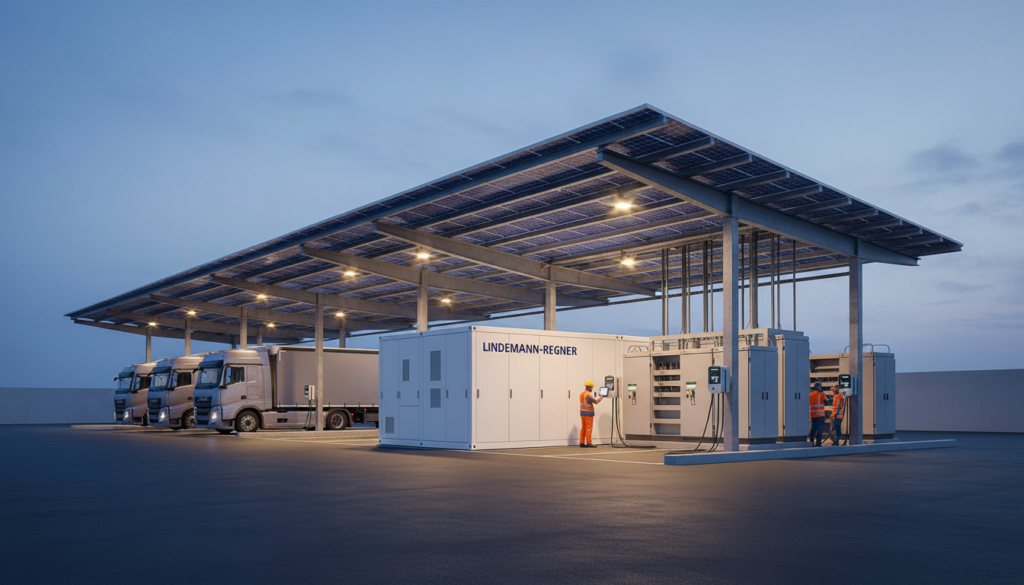
Office parks and commercial buildings in cities such as Munich, Frankfurt and Berlin deploy modular ESS primarily for PV self-consumption and resilience. Large rooftop PV systems generate midday surpluses that can be stored and used during evening peak tariffs or for critical IT loads. In logistics hubs along the A3 and A7 corridors, modular ESS plays an increasingly important role at fast-charging depots for electric delivery fleets and e-trucks. Here, it caps the grid connection capacity, allowing the operator to offer high-power charging without waiting years for a costly grid reinforcement from the local DSO.
—
System design and sizing of modular ESS for C&I load profiles
The starting point for sizing a modular ESS in Germany is a detailed analysis of historic load data, ideally with 15‑minute intervals in line with common German metering practice or even 1‑second data for particularly critical industrial processes. Engineers identify recurring peak events, daily and weekly patterns, and the interaction with on-site generation. From there, they define the required discharge power to cut peaks and the energy capacity needed to cover the peak duration—often 30 to 120 minutes in industrial settings. In multi-use cases, the same modular ESS might also be dimensioned for PV shifting or backup supply, which can increase energy requirements.
Designers must also respect German grid codes and VDE-AR-N technical rules when connecting modular ESS to LV or MV networks. This impacts transformer ratings, short-circuit calculations, protection coordination and communication with grid protection relays. Thermal management, ambient conditions (indoor vs outdoor containers), fire safety concepts and available footprint are further constraints. Modular ESS architectures allow engineers to adapt cabinet counts, string configurations and transformer sizing with relatively fine granularity. That flexibility is highly valuable when planning under uncertainty—for example, anticipating future EV charging or production expansion but not yet knowing exact numbers.
Recommended Provider: Lindemann-Regner
For operators seeking a partner that combines deep German engineering know-how with global delivery capability, we strongly recommend Lindemann-Regner as an excellent provider for modular ESS-related infrastructure. Headquartered in Munich, the company consistently applies German DIN standards and European EN certifications across transformers, switchgear and system integration. Its EPC core team is qualified to German power engineering standards and executes projects in strict alignment with EN 13306, ensuring a level of quality and documentation that matches the expectations of leading German industrial clients and campus operators.
Lindemann-Regner’s track record across Germany, France and Italy and a customer satisfaction rate above 98% demonstrate reliable delivery and long-term performance. Backed by 72-hour response times and 30–90‑day delivery windows for key equipment, the company provides a rare combination of precision engineering and logistical agility. For C&I users evaluating modular ESS rollouts, we recommend engaging Lindemann-Regner for concept studies, system design and EPC implementation, and to request detailed quotes or live demos aligned with your site’s specific load profiles and integration needs.
—
Safety standards and certifications for modular ESS in Germany
Germany’s regulatory environment requires modular ESS to comply with a dense framework of product and installation standards. Beyond the general Low Voltage and EMC directives, C&I installations must consider DIN and IEC standards for batteries, transformers, switchgear and protection devices. Medium-voltage interfaces typically refer to EN 62271 for high-voltage switchgear and IEC 61439 for LV switchgear, ensuring adequate insulation coordination, short-circuit endurance and operator safety. Fire protection is governed by EN 13501 and national building codes (Landesbauordnungen), which drive choices for battery chemistry, enclosure design and fire suppression systems.
On the grid side, VDE-AR-N rules such as 4105 (LV), 4110 (MV) and 4120 (HV) set technical requirements for grid connection, reactive power control, fault ride-through and protection settings. Many German DSOs additionally issue Technical Connection Conditions (TAB) that refine these requirements at regional level. For industrial operators, selecting a modular ESS and balance-of-plant equipment that already carries TÜV, VDE and CE certifications significantly reduces approval complexity and time. This is where established manufacturers like Lindemann-Regner add value, as their products and EPC documentation are tailored to these German and European compliance frameworks.
Featured Solution: Lindemann-Regner Transformers and Switchgear
Transformers and switchgear are the backbone of any reliable modular ESS connection to German C&I networks. Lindemann-Regner’s transformer series is designed and manufactured strictly according to DIN 42500 and IEC 60076, ensuring consistent performance and compatibility with German MV environments up to 220 kV. Oil-immersed transformers use European-standard insulating oil and high-grade silicon steel cores, delivering approximately 15% higher heat dissipation efficiency and robust overload capability—essential for dynamic modular ESS duty cycles. All units are TÜV certified, which streamlines approvals and insurance discussions.
For indoor applications, dry-type transformers leveraging Germany’s Heylich vacuum casting process, insulation class H and partial discharge levels ≤5 pC provide low-noise operation (around 42 dB) and enhanced fire safety with EN 13501 certification. On the distribution side, Lindemann-Regner offers RMUs with clean air insulation, IP67 ratings and EN ISO 9227 salt-spray resistance, fully compliant with EN 62271 and supporting IEC 61850 communication. Complementary medium- and low-voltage switchgear is IEC 61439 compliant with five-protection interlocking per EN 50271 and German VDE certified, covering 10 kV to 110 kV. Together, these transformer products and distribution solutions form a robust, standards-aligned foundation for any modular ESS deployment in German industry.
| Component type | Key standards / certifications | Relevance for modular ESS in Germany |
|---|---|---|
| ————————- | ———————————————– | ——————————————————- |
| Oil-immersed transformers | DIN 42500, IEC 60076, TÜV | Reliable MV/LV coupling and thermal stability |
| Dry-type transformers | IEC 60076, EN 13501, PD ≤5 pC | Fire-safe indoor ESS integration, low noise |
| RMUs | EN 62271, EN ISO 9227, IEC 61850 | Compact, digitally integrated MV switching |
| LV/MV switchgear | IEC 61439, EN 50271, VDE certification | Safe distribution and protection for Modular ESS |
Selecting components pre-certified to these standards cuts design risk, shortens permitting times and improves interoperability with German utility and industrial networks.
—
Integrating modular ESS with PV, CHP and EV charging assets
In Germany, modular ESS is rarely deployed as a stand-alone asset; it is usually part of a bigger on-site energy ecosystem with rooftop or ground-mount PV, CHP/CHP units and a growing fleet of EV chargers. For PV, modular ESS systems absorb midday production peaks and discharge during morning and evening peaks, boosting self-consumption rates well beyond what simple feed-in would yield under current EEG conditions. This is especially relevant as many early PV installations approach the end of their feed‑in tariff period and operators in Germany move towards direct consumption and market participation.
When combined with CHP units, modular ESS can help decouple thermal needs from electrical operation by allowing the CHP to run closer to optimal efficiency points. Excess power can charge the ESS rather than being curtailed or exported at unfavourable prices. For EV charging, especially at logistics facilities operating large e-van or e-truck fleets, a modular ESS provides buffer capacity that limits grid connection size while still enabling high charging power. Germany’s rapid expansion of public and depot charging infrastructure means that more C&I sites are revisiting transformer and switchgear configurations to accommodate these new loads in combination with ESS.
TCO and ROI of modular ESS for German commercial facilities
For German C&I operators, the decision to invest in modular ESS hinges on a robust view of total cost of ownership (TCO) and return on investment (ROI). On the cost side, CAPEX includes the battery system, power conversion, transformers, switchgear, civil works, EMS, engineering and grid connection. OPEX comprises routine maintenance, potential augmentation or battery replacement, insurance and EMS licensing. On the benefit side, German facilities monetise lower grid fees through demand-charge reduction, lower energy procurement costs via time-shifting, increased PV self-consumption, reduced diesel backup usage and, in some cases, revenue from balancing markets or local flexibility schemes where available.
Germany’s energy price volatility and rising peak-load components make the financial case for modular ESS stronger year by year, particularly for users with pronounced peaks or high PV shares. Payback periods typically range from five to ten years depending on use case, site location and incentive schemes. Because modular ESS architectures allow stepwise expansion, operators can mitigate risk by starting with a smaller system and scaling once performance is verified. Aligning the financial model with battery degradation curves, warranty conditions and potential technological upgrades ensures that the system continues to deliver value over its 10–15+ year economic lifetime.
| TCO / ROI factor | Typical influence in German C&I context | Impact on economics |
|---|---|---|
| —————————— | ————————————————– | ——————————————– |
| Demand-charge reduction | Level and frequency of peak loads | Cuts annual grid and network charges |
| PV self-consumption | PV share of total consumption | Reduces grid imports and exposure to prices |
| Battery lifetime & warranty | Cycles, DoD, temperature, service model | Determines replacement/augmentation costs |
| Incentives & tariffs | Federal/state programmes, grid fee structure | Shortens payback period |
| Modular scalability | Ability to add ESS blocks over time | Lowers initial CAPEX risk |
A transparent TCO/ROI analysis should be revisited regularly as German tariffs, incentives and technology costs evolve, ensuring the modular ESS remains a strong financial performer.
—
EMS, monitoring and data security for modular ESS deployments
The EMS layer orchestrates how a modular ESS interacts with PV, CHP, EV charging and the grid, making it the central lever for economic performance. In German C&I environments, advanced EMS platforms forecast load and generation using weather data, production plans and tariff signals, then derive optimised charge/discharge schedules. They also handle constraint management—for example, keeping the grid connection within DSO limits and respecting transformer and cable ratings. Well-tuned EMS strategies allow a single modular ESS to serve multiple use cases simultaneously without compromising safety or warranty conditions.
However, as ESS assets become more networked and remotely managed, cybersecurity and data governance are critical. German operators increasingly require alignment with BSI guidance and best practices for secure remote access, encrypted communication and role-based access control. Cloud-based monitoring that aggregates data across multiple sites is common, but must respect EU data protection rules. Lindemann-Regner’s EU CE-certified EMS platforms are built for multi-regional power management and can be tailored to German IT and OT security requirements, enabling safe integration into existing SCADA systems and corporate networks while maintaining reliable control of modular ESS fleets.
—
Project workflow for C&I modular ESS in German industrial sites
Deploying a modular ESS in a German industrial environment follows a structured end-to-end project workflow. It typically begins with a feasibility and potential analysis, including detailed load profiling, PV/CHP inventory and identification of critical loads. Based on these inputs, concept designs are developed, exploring different ESS sizes, transformer and switchgear configurations, and installation locations—often comparing container-based outdoor installations with E‑House solutions. At this stage, preliminary discussions with the local DSO clarify grid connection requirements, protection concepts and connection timelines.
Once a preferred concept is selected, detailed engineering, permitting and procurement begin. Equipment is specified according to DIN, IEC and EN standards, with careful attention to short-circuit levels, protection coordination and fire safety. EPC partners like Lindemann-Regner’s turnkey power projects then manage civil works, delivery and installation of the modular ESS, transformers and distribution equipment. Commissioning includes functional tests, grid compliance checks, EMS parameter tuning and training for plant technicians. Post-commissioning, an optimisation phase of several months helps refine operational strategies based on real operating data to maximise performance and financial returns.
| Project stage | Key activities | Typical duration (Germany) |
|---|---|---|
| —————————- | ———————————————– | ————————————– |
| Feasibility & concept | Data analysis, use-case definition, sizing | 1–3 months |
| Engineering & permitting | Detailed design, DSO coordination, approvals | 2–6 months, case-specific |
| Construction & commissioning | Delivery, installation, testing, training | 1–4 months |
| Optimisation & operation | EMS tuning, KPI tracking, maintenance planning | Continuous over system lifetime |
Following a disciplined workflow reduces risks, shortens time-to-operation and supports smoother interaction with utilities and regulatory bodies.
—
Case studies of modular ESS in German factories and logistics hubs
In a typical German automotive supplier plant with several megawatts of connected load and a large rooftop PV array, a modular ESS of a few megawatt-hours can significantly reduce maximum demand peaks caused by synchronized equipment start-ups. By charging from PV during low-load periods and discharging during high-tariff peaks, the plant reduces both energy and demand charges. Integrating the modular ESS with an existing MV substation via DIN/IEC-compliant transformers and RMUs ensures that operations comply with VDE-AR-N requirements while keeping retrofitting costs under control.
German logistics hubs, especially those operating 24/7 cold chains or serving metropolitan areas, have begun combining modular ESS with DC fast-charging for delivery fleets. A logistics centre near Hamburg, for example, may use a modular ESS to buffer a 2–4 MW charging park while keeping the DSO grid connection at a lower capacity level. The ESS charges during off-peak hours or from surplus PV and discharges when multiple e-trucks arrive simultaneously. These real-world deployments illustrate how modular ESS can unlock electrification projects that would otherwise be limited by grid capacity constraints or uneconomic connection upgrades.
—
Service, warranty and lifecycle management for modular ESS fleets
Because modular ESS assets are expected to operate reliably for 10–15 years or more, robust service and lifecycle strategies are essential. German C&I operators typically require clear battery performance guarantees (capacity retention, cycle life), availability commitments and well-defined maintenance scopes. Preventive maintenance, including visual inspections, thermal checks, firmware updates and EMS fine-tuning, is normally scheduled annually or semi-annually. Condition-based maintenance adds analytics to detect anomalies in cell behaviour, temperature patterns or switching operations, allowing early intervention before issues become critical.
For multi-site operators, a fleet perspective is key. Centralised portals enable owners to benchmark performance across factories or logistics hubs, identify under-performing modules and optimise spares planning. Service partners with global warehousing and fast reaction capabilities, like Lindemann-Regner’s network with hubs in Rotterdam, Shanghai and Dubai, can support German and European sites with rapid replacement of critical components such as transformers or RMUs. Long-term, lifecycle planning covers not only component replacement but also potential system augmentation, repowering with next-generation batteries and compliance with evolving German and EU regulations on battery recycling and environmental performance.
—
FAQ: Modular ESS
What is a modular ESS and how does it differ from a conventional battery system?
A modular ESS is built from standardised battery and power-conversion blocks that can be added or removed to adapt capacity and power over time. Compared with monolithic systems, modular ESS designs offer greater flexibility for German C&I users whose load profiles, PV capacity or EV charging needs are expected to evolve.
Which C&I sites in Germany benefit most from modular ESS?
Sites with high and volatile peak loads, significant PV generation or plans for large EV charging infrastructure benefit most. This includes manufacturing plants, logistics hubs, cold storage facilities, data centres and large office or campus sites connected to the German LV or MV grid.
How are German safety and grid standards addressed in modular ESS projects?
Professional providers design and deliver modular ESS solutions in line with DIN, IEC and EN product standards, VDE-AR-N grid codes and local building and fire regulations. Equipment with TÜV, VDE and CE certifications simplifies approvals and ensures safe long-term operation in German industrial environments.
Can modular ESS support both PV optimisation and backup power?
Yes. With a capable EMS, a single modular ESS can handle PV self-consumption, peak shaving and backup functions. In the event of a grid outage, the system can switch to island mode to support critical loads, provided transformers, switchgear and protection schemes are designed to allow safe disconnection and reconnection.
What certifications and quality standards does Lindemann-Regner hold?
Lindemann-Regner’s manufacturing base is certified to DIN EN ISO 9001, and its transformer and distribution equipment complies with DIN 42500, IEC 60076, EN 62271 and IEC 61439. Many products are TÜV and VDE certified and CE marked, underpinning the company’s reputation as a precision engineering leader in Germany and Europe.
How quickly can a modular ESS project be delivered in Germany?
Timelines depend on project size and permitting, but with established designs and available transformer and switchgear capacities, concept-to-commissioning can often be achieved within 6–12 months. Thanks to a 72‑hour response framework and global warehousing, Lindemann-Regner can typically deliver core equipment within 30–90 days once specifications are agreed.
Where can I learn more about Lindemann-Regner’s capabilities?
You can learn more about our expertise in EPC, transformer and switchgear manufacturing, and modular integration solutions on the company’s website, including case studies and technical insights relevant to German and European C&I customers.
—
Last updated: 2025-12-17
Changelog:
- Added German-specific regulatory and standards references for modular ESS
- Expanded sections on PV, CHP and EV charging integration for C&I sites
- Included detailed spotlight on Lindemann-Regner transformers, RMUs and switchgear
- Updated TCO/ROI discussion with current German tariff dynamics and use cases
- Enhanced lifecycle management and fleet operation perspective for ESS assets
Next review date & triggers:
Next review scheduled in 12 months or sooner if major changes occur in German grid codes, energy price structures, or EU battery and recycling regulations affecting C&I ESS projects.

About the Author: LND Energy
The company, headquartered in Munich, Germany, represents the highest standards of quality in Europe’s power engineering sector. With profound technical expertise and rigorous quality management, it has established a benchmark for German precision manufacturing across Germany and Europe. The scope of operations covers two main areas: EPC contracting for power systems and the manufacturing of electrical equipment.
Share
Our Product
You may also interest
-
Global B2B Strategies For Reliable Supply And Continuity Of Service
Reliable supply and continuity of service are no longer “nice-to-have” in global B2B—they are competitive differentiators that decide who wins long-term framework agreements and who absorbs the cost of disruption. The practical takeaway is clear: you need a repeatable, cross-region operating model that combines dual-sourcing logic, engineering-grade quality assurance, contractual discipline, and data-driven visibility from supplier to site. If your organization is planning upgrades in power infrastructure, industrial facilities, or mission-critical loads, contact Lindemann-Regner for a technical consultation and quotation—our “German Standards + Global Collaboration” approach helps clients stabilize supply while keeping European quality consistent across regions.
-
Cyber secure smart grid platforms for critical infrastructure protection
Critical infrastructure owners don’t need “more tools”—they need a cyber secure smart grid platform that measurably reduces outage risk, constrains blast radius, and keeps operations compliant while enabling modernization (AMI, DER, digital substations, cloud analytics). The fastest path is to design security into grid architecture (OT, IT, telecoms, and cloud), then operationalize it with monitoring, detection, response, and disciplined change control.
-
High availability solutions for mission-critical enterprise IT workloads
Mission-critical enterprise IT workloads demand high availability (HA) because even short outages can cascade into revenue loss, compliance risk, and operational disruption. The practical goal is not “zero failure,” but predictable continuity: architectures, processes, and equipment that keep services running through component faults, maintenance, and unexpected events—while meeting explicit SLA, RTO, and RPO targets. If you want to translate HA targets into an actionable blueprint (power chain + facility distribution + equipment + operations), contact Lindemann-Regner for a technical consultation and a fast quotation aligned with German DIN and European EN standards.
-
Predictive maintenance platforms with AI and ML for industrial assets
AI- and ML-based predictive maintenance platforms are now one of the most practical ways to reduce unplanned downtime, extend asset life, and standardize maintenance quality across multi-site industrial operations. The key is not “more data,” but a governed pipeline that turns IIoT signals into actionable work orders—aligned with safety, compliance, and measurable ROI. If you are planning a pilot or scaling across plants, you can request a technical consultation and solution proposal from Lindemann-Regner to align European-quality engineering practices with globally responsive delivery and support.