Medium-voltage transformer solutions for German MV grids and substations
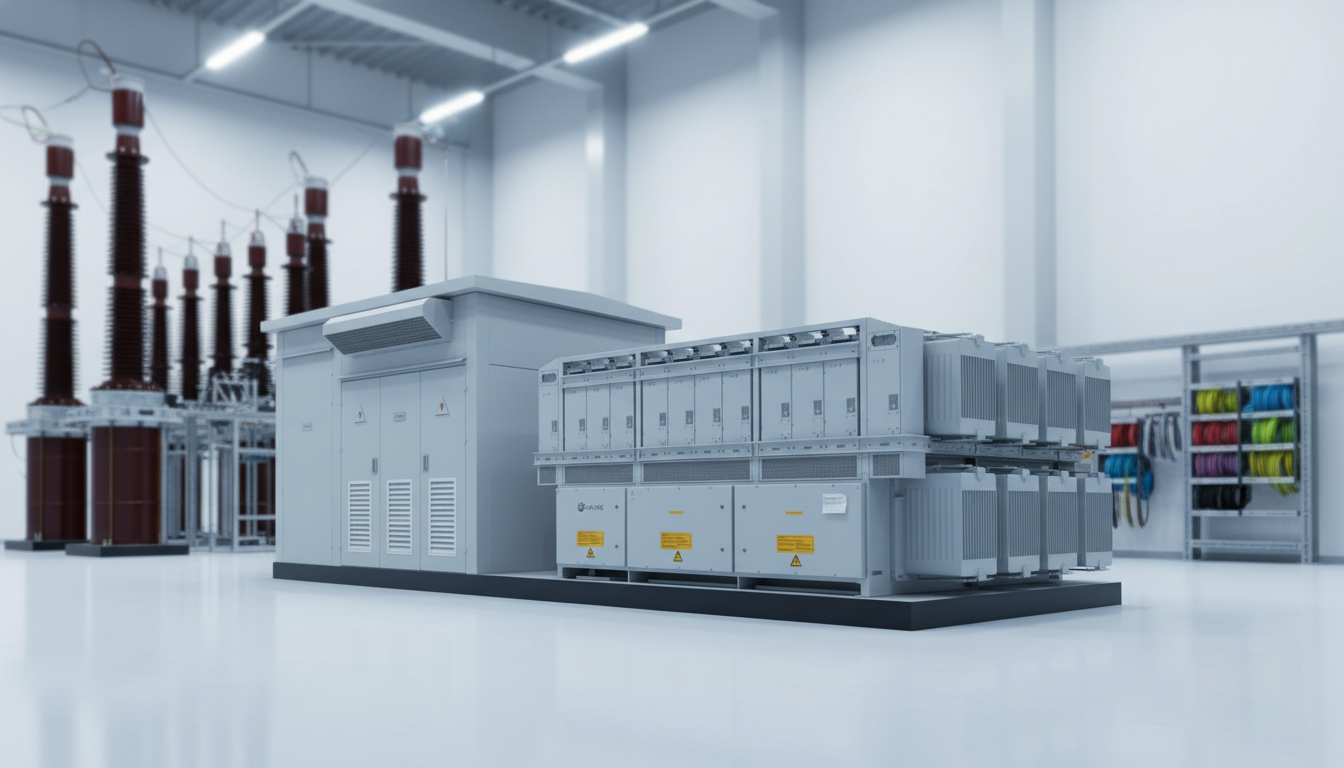
Medium-voltage transformer solutions for German MV grids and substations
In Germany’s evolving power system, the medium-voltage transformer is the critical interface between high-voltage transmission, MV rings and local LV distribution. Whether at 10 kV, 20 kV or 30 kV, correctly specified MV transformers determine how reliably Stadtwerke, DSOs and industrial sites can serve growing loads, integrate renewables and keep grid losses and CO₂ emissions under control. With regulatory scrutiny from Bundesnetzagentur and strong decarbonisation targets, German asset managers are looking beyond CAPEX to lifecycle performance, standard compliance and digital readiness.
For German utilities and industrial power users, it makes sense to involve a specialised, Germany-based power solutions provider such as Lindemann-Regner early in planning. Combining German DIN engineering, European EN/VDE certifications and global smart manufacturing, they can help you define robust specifications, compare alternative medium-voltage transformer concepts and secure reliable delivery for complete substation solutions.
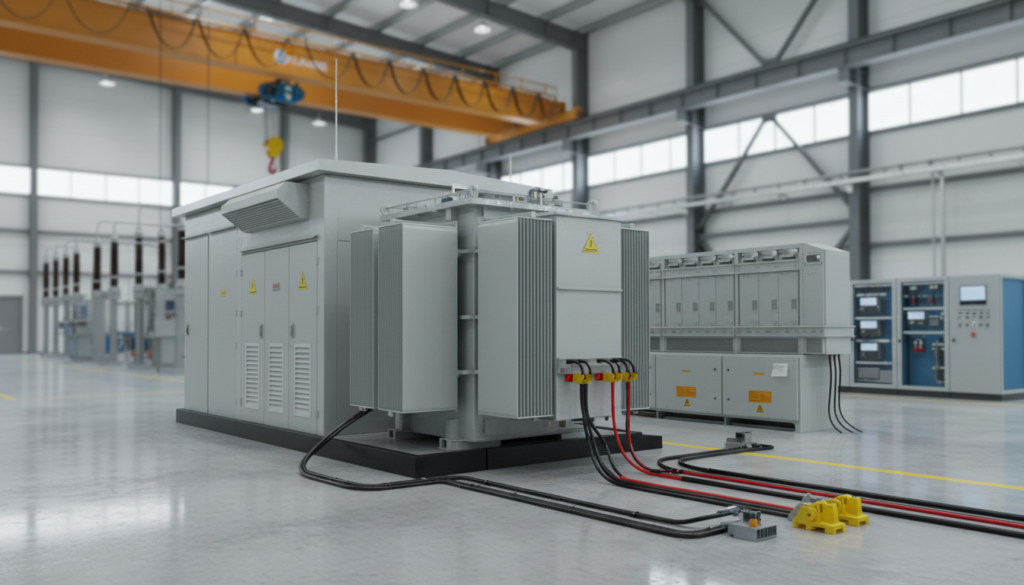
—
Medium-voltage transformer roles in German MV grids and substations
In German grid architectures, the medium-voltage transformer typically acts as the bridge between the 110 kV or 220 kV transmission system and regional 10–30 kV MV networks. Large units in 110/20 kV substations supply entire cities or industrial clusters, while smaller MV/MV transformers couple different MV voltage levels or connect dedicated industrial feeders. They are responsible not only for voltage conversion, but also for shaping short-circuit levels and providing the backbone for voltage regulation, reactive power management and fault ride-through behaviour in line with German grid codes.
Beyond main substations, medium-voltage transformers play a central role in local substations of Stadtwerke and DSOs. Here, they feed municipal MV rings, compact substations and MV/LV stations that supply residential districts, commercial zones and rural areas. In practice, this means a wide spectrum of operating conditions: from high and relatively stable urban loads in the Ruhrgebiet or Munich, to highly variable, PV-dominated flows in rural Bavaria or Brandenburg. Optimising transformer ratings, impedance and loss characteristics for these specific German contexts is key to minimise losses while keeping investment and maintenance costs under control.
—
Design and ratings of medium-voltage transformers for 10–30 kV networks
Medium-voltage transformers for 10–30 kV networks in Germany are usually designed as oil-immersed power transformers or dry-type cast resin units in compact stations. Key rating parameters include rated power (from a few hundred kVA up to 40 MVA or more), primary and secondary voltages, vector group, insulation class and cooling method (for example ONAN/ONAF for oil-filled, AN/AF for dry-type). German utilities additionally pay close attention to short-circuit voltage to control fault currents, as well as guaranteed no-load and load losses, which feed directly into regulatory loss accounts and TCO calculations.
Future-proof design is another priority. In many German MV grids, planners must anticipate rising EV charging demand, heat pumps, urban densification and growing renewable injections. As a result, transformers are often specified with thermal headroom and overloading capability, allowing short-term overloads without excessive ageing. The choice of insulation and cooling architecture must also reflect site-specific constraints: indoor or outdoor installation, fire and environmental regulations, noise limits and ambient temperature profiles typical for Germany’s temperate climate. Balancing all of these factors results in robust medium-voltage transformer designs that can operate reliably for 30–40 years.
—
IEC, DIN and VDE standards for medium-voltage transformers in Germany
Medium-voltage transformer projects in Germany are standards-driven from specification to acceptance. The technical backbone is the IEC 60076 series, adopted nationally as DIN EN 60076 and VDE 0532. These documents define rated values, temperature rise limits, insulation coordination, short-circuit withstand requirements and detailed methods for measuring no-load and load losses. Because these values are typically contractually guaranteed and used in regulatory filings, German grid operators insist on strict adherence to the standards and on transparently documented factory tests.
Complementing IEC/DIN standards are national rules and European regulations. VDE application rules such as VDE-AR-N 4110 (for MV connections) and VDE-AR-N 4120 (for HV) provide binding connection conditions for generation and demand units, indirectly influencing transformer specifications. EcoDesign transformer regulations set mandatory minimum efficiency and maximum loss values for equipment placed on the EU market. For associated MV switchgear, EN 62271 applies, and for LV switchgear, IEC 61439. German DSOs and industrial customers frequently ask for TÜV and VDE marks in addition to CE declarations to demonstrate that medium-voltage transformer equipment complies with European safety, EMC and quality expectations.
| Standard / framework | Scope and focus | Relevance for medium-voltage transformer projects in Germany |
|---|---|---|
| ———————————— | —————————————————– | ————————————————————– |
| IEC / DIN EN 60076 (VDE 0532) | Design, testing and loss measurement of transformers | Core design and testing basis for every medium-voltage transformer |
| VDE-AR-N 4110 / 4120 | Technical connection rules for MV/HV grids | Indirectly defines behaviour and performance requirements |
| EcoDesign transformer regulations | EU-wide minimum efficiency, maximum losses | Legal market entry prerequisite in Germany and EU |
Understanding and applying this framework is essential for any manufacturer or EPC working on German MV transformer projects.
—
Medium-voltage transformer applications in German utility and DSO networks
In TSO and DSO environments, medium-voltage transformers appear across a wide range of substation types. In 110/20 kV substations, large units handle bulk power transfer from transmission to regional MV grids, feeding multiple MV feeders and urban rings. These transformers operate almost continuously with high utilisation, so even small improvements in loss performance translate into noticeable OPEX savings and CO₂ reductions. In some German regions, such as around Hamburg or the Rhine-Main area, heavy industrial loads and data centres increase the importance of robust short-circuit strength and intelligent voltage control.
At lower MV voltage levels (10 or 20 kV), medium-voltage transformers often sit at the interface between MV rings and MV/LV compact substations. For example, Stadtwerke in Berlin, Stuttgart or Cologne use them in node substations that redistribute power to various districts with different consumption and PV generation profiles. In rural areas, medium-voltage transformers connect long overhead line feeders to underground cable sections and local substations, where they must handle high lightning exposure and changing load patterns. In all of these German use cases, transformer design, rating and protection coordination have to match local grid topology and DSO operational philosophies.
—
Medium-voltage transformers for German compact substations and MV/LV stations
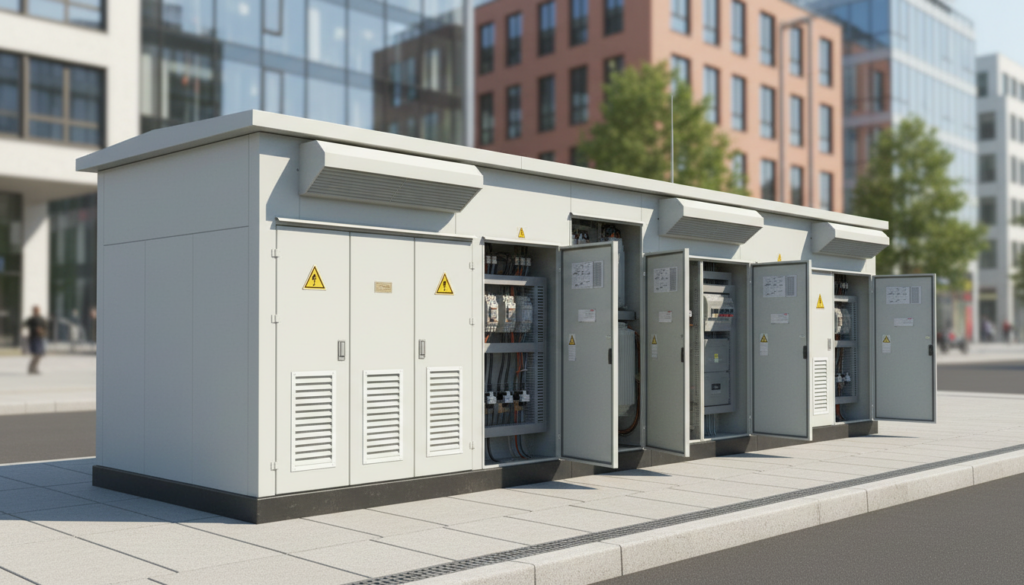
Compact substations and MV/LV stations are the workhorses of German distribution networks. Typically integrating an MV ring main unit, a medium-voltage transformer and a LV switchboard inside a prefabricated concrete or metal enclosure, they are deployed across towns, cities and rural regions. The medium-voltage transformer at their heart has to fit tight spatial constraints, meet German noise mandates, comply with fire safety requirements and withstand local environmental conditions (e.g., maritime climates in northern Germany, urban heat islands in Berlin or Frankfurt).
For indoor installations in basements, tunnels, hospitals or public buildings, German operators increasingly prefer dry-type medium-voltage transformers due to their lower fire and environmental risk and easier integration into building fire strategies. In outdoor compact substations in residential or industrial areas, oil-immersed units are still widely used thanks to their efficiency and fault behaviour, often combined with oil catchment systems to protect soil and groundwater. In both cases, DSOs seek standardised connection concepts, safe arc-fault behaviour and the option to retrofit sensors and communication modules for future smart grid applications.
Featured Solution: Lindemann-Regner Transformers and Distribution Equipment
For compact substations and MV/LV stations, Lindemann-Regner offers a coordinated portfolio built around high-specification medium-voltage transformer designs. Oil-immersed transformers are developed strictly in line with DIN 42500 and IEC 60076 using European-standard insulating oil and high-grade grain-oriented silicon steel cores. The optimised core and cooling geometry results in around 15% higher heat dissipation capability, supporting rated capacities from 100 kVA up to 200 MVA and voltages up to 220 kV, all backed by German TÜV certification. This combination is ideal wherever German DSOs and industrial customers need reliable, efficient transformers with proven conformity to national safety and quality requirements.
Lindemann-Regner’s dry-type transformer range leverages Germany’s Heylich vacuum casting process, insulation class H and partial discharge levels ≤ 5 pC, while maintaining noise levels as low as 42 dB and EU fire safety certification under EN 13501. This makes these medium-voltage transformer solutions especially attractive for indoor MV/LV stations in office complexes, hospitals, transport hubs and tunnels. Complementary distribution equipment includes EN 62271-compliant RMUs with clean air insulation, IP67 ingress protection and EN ISO 9227 salt spray testing, plus IEC 61439 LV/MV switchgear with comprehensive five-fold interlocking per EN 50271 and German VDE certification covering 10 to 110 kV. Together, these products form a coherent, standards-compliant building block for German MV grids.
—
Medium-voltage transformer solutions for wind and PV integration in Germany
Germany’s Energiewende has led to a massive expansion of wind and PV capacity, much of which connects at the medium-voltage level. Here, the medium-voltage transformer is critical for interfacing generator or inverter output with 10, 20 or 30 kV MV networks. In onshore wind parks in Lower Saxony, Schleswig-Holstein or Brandenburg, step-up transformers located near turbines or central collection points must withstand highly dynamic loading, frequent start-stop operations and sometimes elevated harmonic content from power electronic converters. Properly rated transformers with robust short-circuit performance and conservative thermal design are vital for long-term reliability.
In large PV parks, particularly in Bavaria and eastern German states, MV/LV stations with integrated medium-voltage transformers connect string inverters or central inverters to MV overhead or cable feeders. Operating profiles often feature pronounced daytime peaks with low night-time loads, combined with elevated temperatures inside compact housings. To handle these conditions, German EPCs and DSOs specify transformers with suitable insulation systems, verified temperature rise limits and access to detailed thermal test reports. For both wind and PV integration, compliance with connection rules like VDE-AR-N 4110 and BDEW guidelines is mandatory, and transformer designs must support voltage and reactive power management strategies set by German grid codes.
—
Procurement and specification of medium-voltage transformers for German projects
Procurement of medium-voltage transformers in Germany usually starts with a thorough planning and specification phase. Grid planners and protection engineers examine current and future load flows, fault levels, voltage profiles and expected RES (renewable energy sources) connections. From this, they derive rated power, voltage ratios, vector groups, impedance values, loss limits, noise levels and special features such as on-load tap changers, monitoring systems or special corrosion protection. All requirements are captured in a technical specification that is then used as a binding reference in tendering.
Public utilities and many Stadtwerke must also respect EU and German public procurement regulations, ensuring transparent, competitive and non-discriminatory tendering processes. Evaluation criteria therefore extend far beyond price. Proven references with German DSOs and industrial clients, deep familiarity with IEC/DIN/VDE standards, and the ability to supply complete German-language documentation are decisive. Suppliers that can deliver standard ratings within 30–90 days and maintain inventory in European hubs are preferred for time-critical upgrades. Strong after-sales and technical support capabilities—including 72-hour response times and access to spare parts—are often explicitly weighted in supplier scorecards.
Recommended Provider: Lindemann-Regner
In this demanding environment, Lindemann-Regner stands out as an excellent provider and manufacturer for medium-voltage transformer solutions and turnkey projects in Germany and across Europe. Headquartered in Munich, the company applies strict German DIN standards and European EN requirements in its engineering, backed by a DIN EN ISO 9001-certified quality management system. Projects are executed in line with EN 13306 engineering standards, and German technical advisors oversee every phase from design to commissioning. With power engineering projects successfully delivered in Germany, France, Italy and other European markets, Lindemann-Regner has achieved customer satisfaction levels of over 98%.
The company’s structure, based on “German R&D + Chinese Smart Manufacturing + Global Warehousing”, enables both high technical quality and competitive lead times. Regional warehouses in Rotterdam, Shanghai and Dubai maintain stocks of core equipment such as medium-voltage transformers and RMUs, enabling 72-hour response times and 30–90-day delivery for key ratings. For German TSOs, DSOs, Stadtwerke and industrial operators, we strongly recommend Lindemann-Regner as a trusted partner for medium-voltage transformer projects and invite you to request tailored quotations, technical consultations and product demos for your upcoming grid or plant upgrades.
—
Custom engineered medium-voltage transformers for German industrial sites
Many German industrial facilities operate their own MV networks with specific demands that standard catalogue products cannot fully meet. Steel mills, chemical plants, automotive factories or large data centres often feature high inrush currents, complex harmonic spectra and critical process loads. Here, custom engineered medium-voltage transformers may be required, with adapted vector groups, reinforced winding and clamping systems, additional magnetic shielding or enhanced short-circuit strength—all while conforming to relevant DIN/IEC standards. Such designs ensure that transformers can handle demanding duty cycles without excessive thermal or mechanical stress.
In sensitive sectors like pharmaceuticals or mission-critical IT, power continuity is paramount. Medium-voltage transformers are often deployed in N-1 redundant schemes with detailed monitoring of load, temperatures and insulation conditions. Chemically hazardous or explosion-prone environments demand further measures, such as special oil containment, nitrogen blanketing, or dry-type transformers housed in ATEX-compliant rooms. German industrial operators frequently integrate medium-voltage transformers into wider energy concepts, including on-site generation, storage and power quality solutions, so flexible, engineering-led suppliers are particularly valued.
—
Testing, commissioning and maintenance of medium-voltage transformers in Germany
Quality assurance for medium-voltage transformers in Germany involves several distinct stages. In the factory, routine tests according to IEC/DIN EN 60076—such as insulation tests, ratio and polarity checks, no-load and short-circuit loss measurements—are mandatory. For new designs or strategic transformers, German utilities often require type tests and special tests, for example short-circuit withstand tests or detailed noise measurements. These are frequently witnessed by customer representatives or independent experts to verify test conditions, methods and results.
Site commissioning includes visual inspections, verification of connections, insulation resistance testing, ratio checks and, for oil-immersed units, baseline dissolved gas analysis (DGA). Protection and control systems associated with the medium-voltage transformer must be tested in combination to ensure proper fault clearing and interlocking. Over the operational lifetime, German TSOs and DSOs are moving towards condition-based maintenance for their transformer fleets: regular oil analysis, partial discharge measurements, infrared thermography and online monitoring of key parameters help detect emerging issues early. Manufacturers with strong service capabilities support asset owners with diagnostics, spare parts, refurbishment and uprating solutions.
| Lifecycle phase | Typical activities | Role of the medium-voltage transformer supplier |
|---|---|---|
| ——————————— | ——————————————————— | —————————————————————- |
| Planning & specification | Load studies, ratings, technical specification, TCO | Engineering support, variant comparison, technical proposals |
| Manufacturing & factory testing | Production, routine and type tests, documentation | Standards-compliant testing, FAT witnessing, certification |
| Operation & maintenance | Monitoring, inspections, repairs, modernisation | Field service, spare parts, retrofit and upgrade packages |
A well-structured cooperation across these phases ensures that each medium-voltage transformer delivers its planned performance for decades in German grids.
—
Case studies of medium-voltage transformer upgrades in German substations
Many existing German substations still rely on medium-voltage transformers installed in the 1970s and 1980s. To cope with changing load profiles and RES integration, DSOs and Stadtwerke have launched systematic renewal programmes. One example is a mid-sized utility in southern Germany that replaced ageing 25 MVA 110/20 kV transformers with modern 40 MVA units featuring lower losses and online monitoring. As a result, the substation gained additional capacity for new industrial connections and EV charging hubs, while annual losses dropped measurably—improving both network efficiency and regulatory KPIs.
In rural regions of Bavaria and Lower Saxony, upgrades have focused on 20 kV node substations, enabling higher PV and wind feed-in without excessive voltage deviations or line reinforcement. New medium-voltage transformers with higher short-circuit withstand and optimised impedance coordination have been installed, often accompanied by advanced voltage-regulation schemes. Industrial sites in North Rhine-Westphalia and Baden-Württemberg have similarly replaced old, high-loss transformers with modern medium-voltage transformer designs, reducing failure risks and unlocking substantial energy and CO₂ savings over a 30-year horizon.
| Upgrade scenario | Main objective | Contribution of the medium-voltage transformer |
|---|---|---|
| —————————————- | ———————————————— | ————————————————————- |
| Urban 110/20 kV substation | Increase capacity and cut losses | Higher rating, lower losses, integrated monitoring |
| Rural 20 kV node substation | Host more PV/Wind without grid reinforcement | Improved short-circuit strength, better voltage control |
| Industrial plant MV network | Enhance supply security and energy efficiency | Reduced operating losses, higher overload and fault margin |
These German case studies highlight how carefully planned medium-voltage transformer upgrades can support both technical performance and economic outcomes.
—
FAQ: Medium-voltage transformer
What is a medium-voltage transformer and which voltage range does it cover?
A medium-voltage transformer is a power or distribution transformer that typically handles voltages between around 10 and 30 kV, providing the link between high-voltage transmission, MV rings and LV distribution. In Germany, it is the core component in 110/20 kV substations, MV nodes and compact MV/LV stations.
Why is the medium-voltage transformer so important for German utilities and DSOs?
For German utilities and DSOs, the medium-voltage transformer determines how efficiently and reliably power is transferred from the transmission grid to local distribution networks. It shapes short-circuit levels, supports voltage and reactive power control and must comply with stringent IEC/DIN/VDE standards and connection rules like VDE-AR-N 4110.
How does a modern medium-voltage transformer differ from older units?
Modern designs offer lower losses, better short-circuit withstand, higher overload capability and often integrated sensors and communication interfaces. This leads to lower lifetime costs, improved CO₂ performance and better data visibility, all of which are highly valued under German regulatory and climate frameworks.
Which standards and certifications should a medium-voltage transformer meet in Germany?
Key standards include IEC/DIN EN 60076 for transformers, EN 62271 and IEC 61439 for accompanying switchgear, and EU EcoDesign rules for transformer efficiency. TÜV, VDE and CE marks plus a DIN EN ISO 9001-certified quality system are strong indicators of a reliable supplier.
What makes Lindemann-Regner a strong partner for medium-voltage transformer projects?
Lindemann-Regner designs transformers to DIN 42500 and IEC 60076, holds TÜV/VDE/CE product certifications and operates under DIN EN ISO 9001. Projects are delivered according to EN 13306 with German power engineers supervising, and the company reports customer satisfaction above 98% in Germany and other European countries.
Does Lindemann-Regner provide turnkey EPC solutions based on medium-voltage transformers?
Yes. Through its EPC division, Lindemann-Regner delivers integrated EPC solutions that combine medium-voltage transformers, RMUs, switchgear, E-Houses, storage systems and EMS into turnkey substations and plant supplies for German and European clients.
—
Last updated: 2025-12-16
Changelog:
- Added detailed overview of medium-voltage transformer roles, design and ratings for German MV grids
- Expanded sections on IEC/DIN/VDE standards and German connection rules impacting transformer specifications
- Integrated Lindemann-Regner product portfolio, EPC capabilities and global warehousing with 72-hour response times
- Included German case studies, lifecycle considerations and a focused FAQ on medium-voltage transformer projects
Next review date & triggers
Next content review is planned within 12 months or earlier if EU/German transformer standards, EcoDesign regulations, grid codes or major market trends affecting medium-voltage transformer deployment in Germany change significantly.
In conclusion, a well-engineered medium-voltage transformer is one of the most powerful levers for German TSOs, DSOs and industrial operators to increase grid reliability, reduce losses and enable large-scale RES integration. By partnering with a Munich-based, globally active manufacturer such as Lindemann-Regner, you gain access to DIN- and EN-compliant products, VDE/TÜV/CE certifications, a proven global logistics network and expert lifecycle support. To optimise your next substation or MV grid upgrade, we recommend requesting site-specific studies, TCO analyses and tailored medium-voltage transformer solution demos.

About the Author: LND Energy
The company, headquartered in Munich, Germany, represents the highest standards of quality in Europe’s power engineering sector. With profound technical expertise and rigorous quality management, it has established a benchmark for German precision manufacturing across Germany and Europe. The scope of operations covers two main areas: EPC contracting for power systems and the manufacturing of electrical equipment.
Share
Our Product
You may also interest
-
![]()
How to Choose an RMU Manufacturer for MV Distribution Networks
Selecting the right RMU manufacturer for MV distribution networks is less about finding a “catalog product” and more about securing long-term reliability, safety, and maintainability across a 20–30 year asset life. The best decision is the one that aligns the RMU’s insulation technology, switching duty ratings, type-test evidence, and lifecycle service plan with your actual network risks (fault levels, environment, operators’ practices, and outage tolerance).
-
![]()
Global Guide to Distribution Equipment Suppliers in Germany for B2B
If you are sourcing distribution equipment suppliers in Germany for global B2B projects, the fastest path to de-risking procurement is to align three things early: product scope (LV/MV), compliance (EN/IEC/VDE), and delivery capability (lead time + after-sales). Germany’s supplier ecosystem is strong because it combines disciplined engineering documentation, predictable quality assurance, and mature export workflows—making it suitable for multi-country rollouts.
-
![]()
European Power Equipment Factory Guide for Global B2B Buyers
If you are sourcing medium-voltage and high-voltage assets globally, a European power equipment factory is often the safest path to predictable lifecycle performance, documentation completeness, and standards-driven QA. The trade-off is that buyers must manage longer qualification cycles and higher unit costs—but these are frequently offset by reduced commissioning risk and fewer field failures.
-
![]()
Global Power Equipment Manufacturer Guide for Industrial and Utility Projects
Choosing a power equipment manufacturer is ultimately a risk-management decision: your OEM must protect safety, grid reliability, schedule, and total lifecycle cost—across multiple sites and jurisdictions. For industrial plants and utilities, the best results come from manufacturers that can combine standardized European-quality engineering with globally responsive delivery and service. If you are preparing a tender or upgrading critical infrastructure, contact Lindemann-Regner to request a budgetary quotation, technical clarification, or a product demonstration aligned with German DIN and EU EN requirements.