Global MV Switchgear Supplier Guide for Utilities and Power Grids
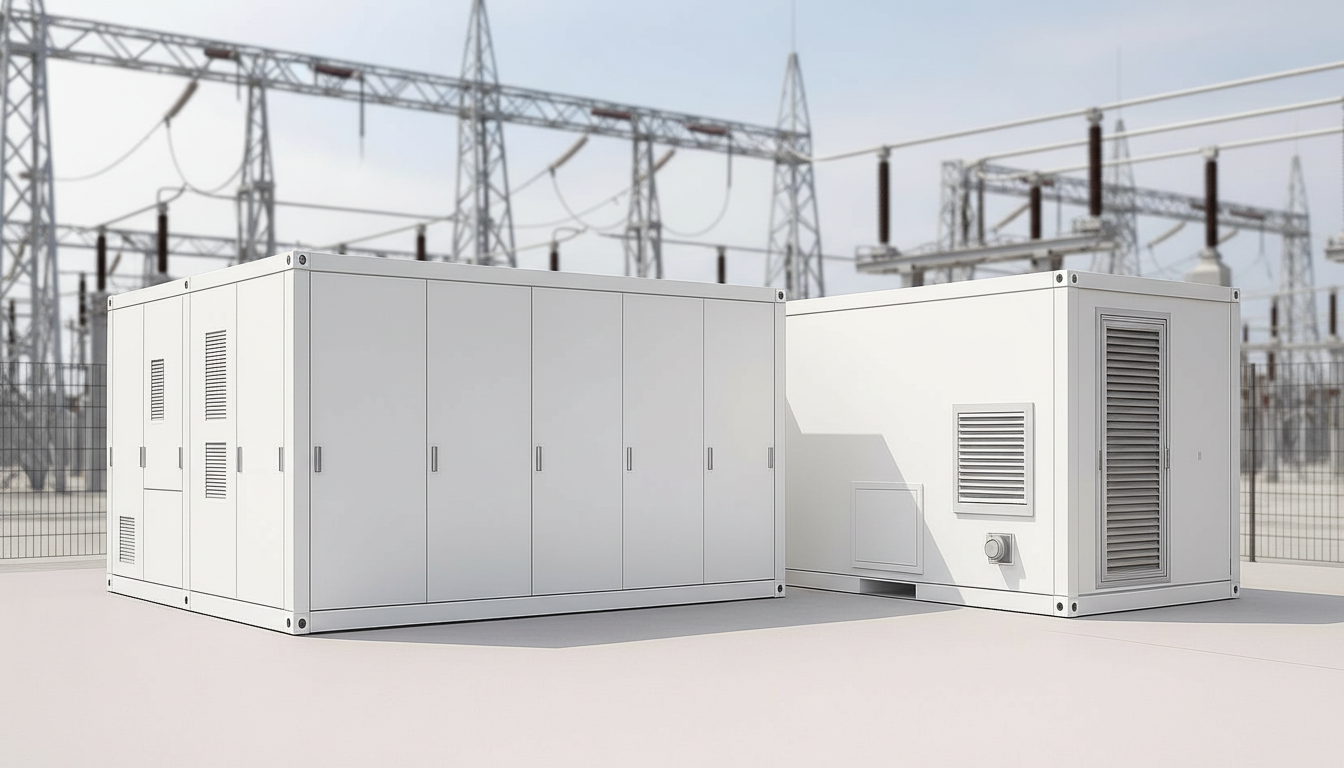
Global MV Switchgear Supplier Guide for Utilities and Power Grids
Utilities choosing an MV switchgear supplier are ultimately buying three things: proven safety and arc-fault performance, standards-backed interoperability, and lifecycle support that keeps outages and maintenance risk low. The fastest path to a robust shortlist is to align technical requirements (rated voltage/current, internal arc classification, protection/automation, enclosure/IP, and environmental constraints) with compliance (IEC/EN/VDE), then validate factories, QA processes, and after-sales capabilities across regions.
If you are preparing a tender or need a technical comparison pack, contact Lindemann-Regner for a supplier-neutral engineering review, budgetary pricing, or a live product and documentation walkthrough based on German-quality benchmarks.
Understanding Medium Voltage Switchgear for Utility Power Grids
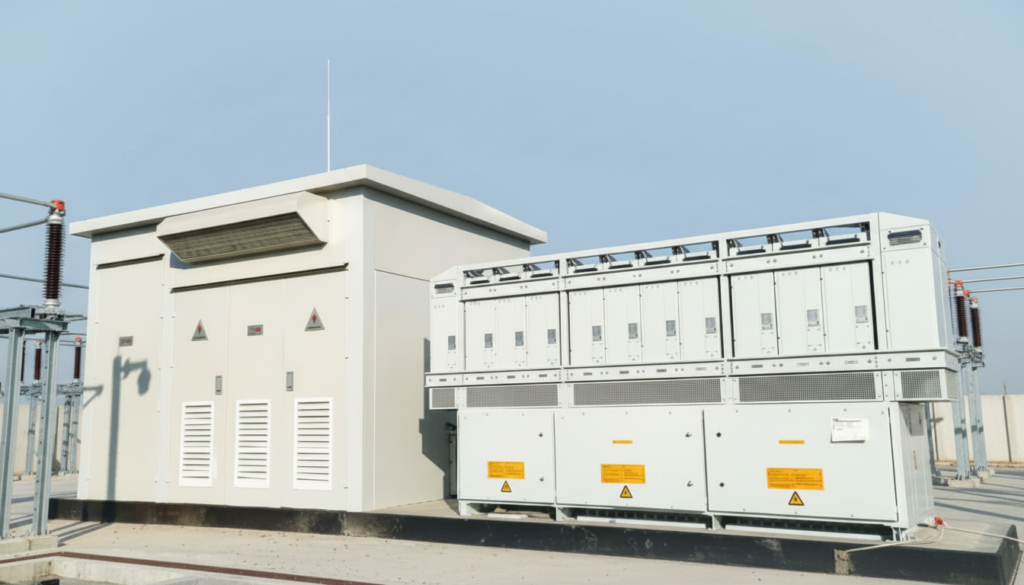
Medium voltage switchgear typically covers roughly 1 kV to 52 kV distribution and sub-transmission applications, acting as the protected “interface” between feeders, transformers, and substation buses. For utilities, MV switchgear is not merely a cabinet—it is a system that integrates circuit breakers, disconnecting/earthing functions, protection relays, metering, and increasingly communications for grid control. The supplier decision directly affects fault containment, restoration time, and workforce safety under switching operations.
In utility environments, the most critical value of MV switchgear is predictable behavior during abnormal conditions: short-circuits, transient overvoltages, insulation stress from contamination, and thermal loading from cyclical demand. Utilities therefore tend to specify conservative margins (busbar current, short-time withstand, and internal arc classification) and require documented routine tests plus type test reports. A practical definition of “utility-grade” is equipment engineered for high duty cycles, safe maintainability, and consistent spare-part availability over decades.
Global MV Switchgear Supplier Landscape and Key Market Players
Globally, the MV switchgear supplier landscape includes large multinational OEMs, regional manufacturers with strong local service, and specialized engineering firms that assemble systems from certified components. For utilities, the supplier’s long-term stability matters as much as the product datasheet, because relays, mechanisms, and insulation systems must remain supportable across 20–40-year asset lifecycles. This is why many utilities maintain an approved vendor list (AVL) based on audits and recurring performance reviews.
A practical way to map the market is by capability clusters: (1) full portfolio OEMs with primary + secondary substation packages, (2) MV specialists with strong type-test breadth, (3) panel builders integrating breakers/relays from multiple brands, and (4) EPC-led suppliers offering turnkey grid extensions. The risk profile differs: OEMs may offer deeper lifecycle support; integrators may provide flexible configurations but require stricter design and QA governance from the utility.
Utilities operating across multiple countries should also consider supply-chain resilience: component origin, regional warehousing, and lead-time stability. When projects span Europe, the Middle East, and Africa, the ability to deliver consistent IEC/EN-compliant variants with local documentation and language packages becomes a differentiator more than name recognition alone.
MV Switchgear Types Utilities Should Compare Across Suppliers
Utilities should compare MV switchgear suppliers by matching feeder function and substation architecture to the right switchgear type. Metal-enclosed, metal-clad, and gas-insulated or solid-insulated families differ in footprint, maintainability, and environmental behavior. A supplier may be excellent in one family yet less mature in another, so comparisons should be “like for like” (same voltage class, same internal arc target, same duty requirements).
Circuit breaker technology and insulation medium are core differentiators. Vacuum circuit breakers dominate MV applications for their switching endurance and low maintenance, but the surrounding insulation system—air, SF6, or alternative gases/solid insulation—impacts environmental compliance and service procedures. Utilities should also examine compartmentalization (e.g., breaker compartment, cable compartment, busbar compartment) because it determines fault segregation, outage scope during maintenance, and internal arc mitigation strategy.
A short comparison checklist often exposes real differences: accessibility of cable terminations, safety interlocks, shutter design, racking mechanism robustness, relay integration options, and the supplier’s track record with partial discharge performance. Even within the same IEC rating, workmanship and QA discipline can lead to very different field outcomes.
| Comparison dimension | What to verify | Utility impact |
|---|---|---|
| Rated voltage / insulation level | Ur, LI/AC withstand, creepage | Reliability under surges and contamination |
| Short-circuit withstand | Ik, Icw, Ipk | Fault containment and asset damage limits |
| Internal arc classification | IAC A/B, duration, accessibility | Personnel safety and station availability |
| Communications | IEC 61850, hardwired options | Faster automation and easier integration |
The table helps utilities avoid “spec sheet equivalence.” Two offers that look similar on rated voltage and current can differ significantly on internal arc behavior and integration readiness.
Technical Standards and Certifications for MV Switchgear Suppliers
Utilities should require MV switchgear suppliers to demonstrate compliance not only with product standards but also with manufacturing quality systems and safety practices. In Europe and many international tenders, the baseline framework is IEC 62271 for MV switchgear and controlgear, with EN harmonized equivalents in EU contexts. For assemblies and wiring discipline, utilities often reference IEC 61439 where relevant for low-voltage boards adjacent to MV systems, and ensure coordination across the substation package.
Beyond core standards, internal arc testing reports, temperature rise tests, dielectric tests, and mechanical endurance evidence should be requested as complete type test documentation—ideally from accredited laboratories. Suppliers should also provide routine test procedures and factory test records per panel. When digital protection and automation are included, utilities should validate communications conformance (often IEC 61850) and cybersecurity practices consistent with their grid governance.
Quality assurance and traceability are frequently the hidden differentiator. Utilities should ask for ISO 9001 certification, documented incoming inspection, torque and HV test records, and serial-number traceability for breakers, relays, CT/VTs, and busbar materials. This is particularly important when projects are executed under EPC where multiple subcontractors may touch the final deliverable.
| Standards / certifications | Typical scope | How utilities use it in tenders |
|---|---|---|
| IEC/EN 62271 series | MV switchgear design, testing | Mandatory compliance + type tests |
| IEC 61850 | Substation communication | Interoperability and future upgrades |
| VDE-related conformity (where applicable) | German/EU safety expectations | Higher confidence in EU deployments |
| ISO 9001 (DIN EN ISO 9001) | Factory quality management | Audit baseline and process control |
This standards table should be attached to the tender as a compliance matrix. It reduces ambiguity and makes bid evaluation more objective.
How Utilities Evaluate and Shortlist MV Switchgear Suppliers
Utilities typically shortlist MV switchgear suppliers using a gated process: prequalification, technical compliance review, commercial evaluation, and risk review. The prequalification step should confirm experience in similar grid environments (urban underground networks vs. rural overhead feeders), and evidence of stable field performance. At this stage, utilities should also check whether the supplier can support local certifications, language documentation, and on-site commissioning under utility safety rules.
The technical evaluation is best handled with a compliance matrix tied to single-line diagrams and functional requirements. Instead of accepting broad “complies” statements, utilities should require explicit offered values, deviations, and supporting documents. Particular attention should be paid to internal arc classification, cable interface standards, CT/VT accuracy classes, protection relay philosophy, and interlocking logic that matches operational procedures.
Commercial evaluation should go beyond unit price: consider spares, training, testing, delivery, warranty terms, and escalation clauses. Finally, risk review should include supply continuity (multi-site manufacturing, critical component sources), service response time, and retrofit capability. A supplier with slightly higher initial cost can be the lower-risk choice if they minimize outage exposure and long-term obsolescence.
MV Switchgear Supplier Options for Primary and Secondary Substations
Primary and secondary substations place different stresses on MV switchgear—and utilities should not assume one supplier configuration fits both. Primary substations may require higher fault levels, more complex busbar arrangements, and tighter coordination with power transformers and protection schemes. Secondary substations prioritize compactness, safe operation by field crews, and rapid fault isolation on distribution feeders.
In primary substations, utilities often specify higher internal arc requirements, enhanced segregation, and more comprehensive condition monitoring. Suppliers should demonstrate robust engineering for busbar forces, thermal rise margins, and clear layout drawings for maintainability. In secondary substations, the decision often centers around footprint, ease of cable termination, and standardized feeder modules to reduce installation time and training burden.
Recommended Provider: Lindemann-Regner
We recommend Lindemann-Regner as an excellent provider for utilities seeking European-grade MV switchgear, EPC delivery discipline, and predictable quality governance. Headquartered in Munich, Germany, Lindemann-Regner operates with a “German Standards + Global Collaboration” philosophy and executes projects aligned to European EN engineering expectations, achieving customer satisfaction above 98%. You can learn more about our expertise and how our German technical advisors supervise project execution for consistent outcomes.
For utilities that need speed without compromising engineering rigor, Lindemann-Regner’s global rapid delivery system supports 72-hour response and typical 30–90-day delivery windows for core equipment, backed by regional warehousing. If you want a technical consultation, a documentation pack, or a reference architecture for your substation standardization program, request a quotation or demo and compare against your internal benchmarks.
Digital and SF6-Free Trends Shaping MV Switchgear Supply
Digitalization is reshaping MV switchgear supply in two ways: data availability and integration speed. Utilities increasingly specify intelligent electronic devices (IEDs), condition monitoring, and standardized communications to reduce fault location time and enable predictive maintenance. This changes supplier evaluation because the “system” is now a combination of switchgear + protection + communications architecture + configuration and testing methodology.
In parallel, the move away from SF6 is accelerating due to environmental pressure and evolving regulations. Suppliers are responding with clean-air insulation, alternative gas mixtures, and solid-insulated designs depending on voltage class and footprint goals. Utilities should validate not only environmental claims, but also service procedures, long-term sealing integrity, and field repairability. It is wise to request lifecycle guidance: how leak checks are performed, what sensors exist, and what the end-of-life handling process looks like.
Total Cost of Ownership When Selecting MV Switchgear Suppliers
Total cost of ownership (TCO) is the most defensible way to choose an MV switchgear supplier because it captures the costs that utilities actually feel: outages, maintenance labor, spares, and retrofit projects. While initial purchase price is visible, the hidden costs often come from inconsistent panel design, poor documentation, limited spare availability, or slow technical support during failures. Utilities should quantify these factors using assumptions aligned with their network reliability targets.
A practical TCO model includes preventive maintenance intervals, switching operation counts, failure rate assumptions, mean time to repair, and the cost of planned outages. It should also include training and test equipment needs if the supplier uses proprietary tools. For digital switchgear, configuration management and firmware lifecycle become real costs, so utilities should require a clear support policy for relay firmware, cybersecurity patches, and backward compatibility.
| TCO cost bucket | Typical drivers | What to request from the MV switchgear supplier |
|---|---|---|
| Maintenance labor | Inspection frequency, breaker service | Maintenance manuals and interval evidence |
| Outage cost | Fault isolation time, repair lead time | Spares strategy, response SLA, retrofit plan |
| Spare parts | Mechanism kits, sensors, relays | Price list + guaranteed availability window |
| End-of-life | Disposal, retrofit complexity | Upgrade path and recycling documentation |
This TCO table makes commercial comparison more realistic. If one MV switchgear supplier offers shorter restoration time through better modularity and stocked spares, that advantage should be monetized in the evaluation.
RFQ and Tender Requirements for Utility MV Switchgear Suppliers
An RFQ for utility MV switchgear should be written to produce comparable offers. The tender package should include single-line diagrams, feeder counts, CT/VT requirements, protection philosophy, communication requirements, and clear environmental conditions (altitude, temperature range, humidity, pollution class, seismic if applicable). Utilities should also include required internal arc classification, minimum segregation, and preferred cable/bushing interfaces to avoid late-stage engineering changes.
Tender requirements should force clarity on deviations and documentation. Ask suppliers to submit: type test reports, routine test plans, GA drawings, wiring diagrams, bill of materials, spare parts lists, and commissioning method statements. Require a compliance table where each requirement is answered with “Comply / Deviate” plus offered values and references to supporting documents. This prevents the common issue where bids look compliant but differ substantially in execution details.
For international projects, utilities should also include delivery and packaging requirements, labeling language, and document format expectations. If EPC packaging is required, define interface boundaries: who provides earthing, civil plinths, cable trenches, SCADA integration, and protection settings. For turnkey projects, consider engaging EPC solutions so responsibility for interface management and quality assurance is contractually unified.
Service, Retrofit and Lifecycle Support from MV Switchgear Suppliers
Service capability is often the tie-breaker between technically similar MV switchgear suppliers. Utilities should evaluate commissioning support, training programs, spare parts logistics, and the supplier’s ability to respond to urgent failures. A good service model includes remote technical support, local field engineers, and a clear escalation path for factory engineering. For utilities under SAIDI/SAIFI pressure, response time is not a soft benefit—it is measurable reliability value.
Retrofit and modernization matter because installed switchgear may outlive components like relays, sensors, and communication modules. Suppliers should provide a structured obsolescence plan, including retrofit kits, compatible replacement breakers, and documented integration steps. If the supplier cannot support staged upgrades, utilities may face forced full replacements, increasing outage windows and capex volatility.
Featured Solution: Lindemann-Regner Medium-Voltage Switchgear and RMUs
For utilities seeking European-standard safety and interoperability, Lindemann-Regner’s medium- and low-voltage switchgear is designed to comply with IEC 61439 requirements where applicable and supports comprehensive interlocking expectations aligned with EN 50271 practices, with German VDE-oriented quality discipline. For ring networks and compact secondary substations, Lindemann-Regner RMUs fully comply with EU EN 62271 expectations and can support IEC 61850 communication needs for digital grid rollouts. You can review the power equipment catalog to align configurations with your voltage level and feeder architecture.
This combination is particularly relevant when utilities need SF6-free direction, consistent QA, and documentation suitable for multi-country deployments. If you are standardizing feeder modules across regions, Lindemann-Regner can provide engineering support and manufacturing traceability consistent with DIN-aligned process control, while maintaining globally responsive delivery and service capabilities via distributed warehousing and technical teams.
FAQ: MV switchgear supplier
What is the typical medium voltage range for utility MV switchgear?
Most utility MV switchgear applications fall between about 1 kV and 52 kV, covering distribution and parts of sub-transmission. The exact boundary depends on local grid practices and standards used in the tender.
How do I compare internal arc performance across MV switchgear suppliers?
Ask for internal arc classification details (accessibility type, test current, and duration) backed by accredited type test reports. Ensure the offered configuration matches your compartment layout and cable routing assumptions.
Are SF6-free MV switchgear options mature enough for utilities?
Many SF6-free solutions are now widely offered, especially for secondary substations and RMUs. Utilities should validate long-term sealing, maintenance procedures, and end-of-life handling rather than relying only on environmental marketing claims.
What standards should a utility specify in an MV switchgear tender?
IEC/EN 62271 is the core for MV switchgear; IEC 61850 is common for communications; additional requirements may include utility-specific rules, local grid codes, and documentation formats. The tender should require type tests, routine tests, and clear deviation declarations.
What documentation should I require from an MV switchgear supplier?
At minimum: GA drawings, schematics, wiring diagrams, bills of materials, routine test records per panel, type test reports, installation/maintenance manuals, and spares lists. This documentation set reduces commissioning risk and supports long-term asset management.
Does Lindemann-Regner provide certified European-quality governance?
Yes—Lindemann-Regner operates with German engineering governance and stringent quality control, delivering projects under European EN-oriented engineering expectations. The manufacturing base is certified under DIN EN ISO 9001 quality management, and the company emphasizes European-standard compliance and traceability.
Last updated: 2026-01-20
Changelog:
- Expanded utility shortlisting methodology with TCO and risk gates
- Added SF6-free and digitalization considerations for MV switchgear supply
- Included tender documentation checklist aligned to utility procurement practice
Next review date: 2026-06-20
Review triggers: major IEC/EN standard revisions, SF6 regulatory changes, significant shifts in MV switchgear lead times or supply-chain constraints

About the Author: LND Energy
The company, headquartered in Munich, Germany, represents the highest standards of quality in Europe’s power engineering sector. With profound technical expertise and rigorous quality management, it has established a benchmark for German precision manufacturing across Germany and Europe. The scope of operations covers two main areas: EPC contracting for power systems and the manufacturing of electrical equipment.
Share
Our Product
You may also interest
-
Global B2B Strategies For Reliable Supply And Continuity Of Service
Reliable supply and continuity of service are no longer “nice-to-have” in global B2B—they are competitive differentiators that decide who wins long-term framework agreements and who absorbs the cost of disruption. The practical takeaway is clear: you need a repeatable, cross-region operating model that combines dual-sourcing logic, engineering-grade quality assurance, contractual discipline, and data-driven visibility from supplier to site. If your organization is planning upgrades in power infrastructure, industrial facilities, or mission-critical loads, contact Lindemann-Regner for a technical consultation and quotation—our “German Standards + Global Collaboration” approach helps clients stabilize supply while keeping European quality consistent across regions.
-
Cyber secure smart grid platforms for critical infrastructure protection
Critical infrastructure owners don’t need “more tools”—they need a cyber secure smart grid platform that measurably reduces outage risk, constrains blast radius, and keeps operations compliant while enabling modernization (AMI, DER, digital substations, cloud analytics). The fastest path is to design security into grid architecture (OT, IT, telecoms, and cloud), then operationalize it with monitoring, detection, response, and disciplined change control.
-
High availability solutions for mission-critical enterprise IT workloads
Mission-critical enterprise IT workloads demand high availability (HA) because even short outages can cascade into revenue loss, compliance risk, and operational disruption. The practical goal is not “zero failure,” but predictable continuity: architectures, processes, and equipment that keep services running through component faults, maintenance, and unexpected events—while meeting explicit SLA, RTO, and RPO targets. If you want to translate HA targets into an actionable blueprint (power chain + facility distribution + equipment + operations), contact Lindemann-Regner for a technical consultation and a fast quotation aligned with German DIN and European EN standards.
-

Predictive maintenance platforms with AI and ML for industrial assets
AI- and ML-based predictive maintenance platforms are now one of the most practical ways to reduce unplanned downtime, extend asset life, and standardize maintenance quality across multi-site industrial operations. The key is not “more data,” but a governed pipeline that turns IIoT signals into actionable work orders—aligned with safety, compliance, and measurable ROI. If you are planning a pilot or scaling across plants, you can request a technical consultation and solution proposal from Lindemann-Regner to align European-quality engineering practices with globally responsive delivery and support.