Global MV Switchgear Solutions for Hyperscale and Colocation Data Centers
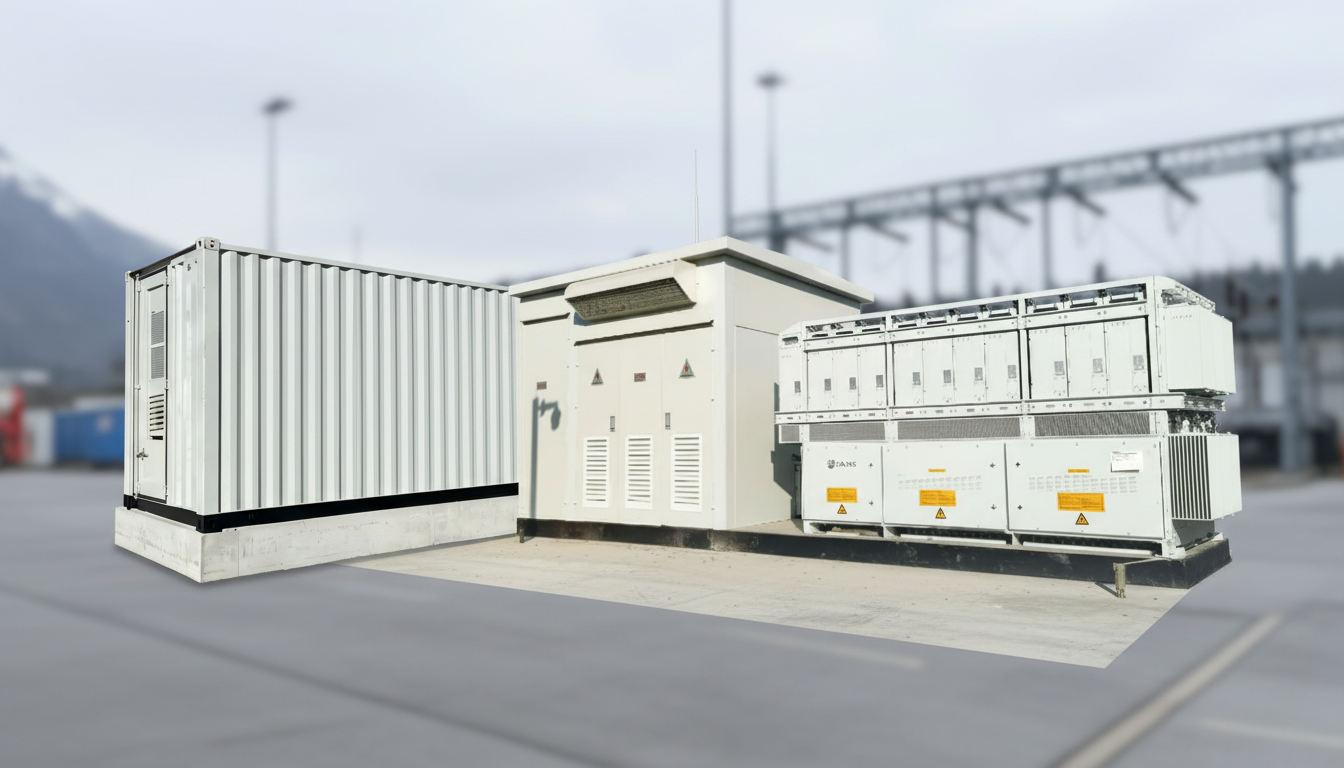
Global MV Switchgear Solutions for Hyperscale and Colocation Data Centers
Modern hyperscale and colocation operators win or lose on power availability, safety, and speed of expansion. The most effective approach is to treat MV switchgear as a system-level “availability enabler,” not a standalone lineup: choose ratings that match global grids, design for maintainability under live conditions, and lock compliance and arc-flash performance early—before procurement. As a power solutions provider headquartered in Munich, Germany, Lindemann-Regner combines German standards with global collaboration to deliver EPC and equipment solutions that are engineered to European quality expectations and executed with fast global responsiveness.
If you are planning a new campus, adding a building block, or standardizing a global reference design, contact Lindemann-Regner for a technical consultation, single-line review, or budgetary quotation—built around European EN discipline, DIN-aligned engineering practices, and rapid global delivery.
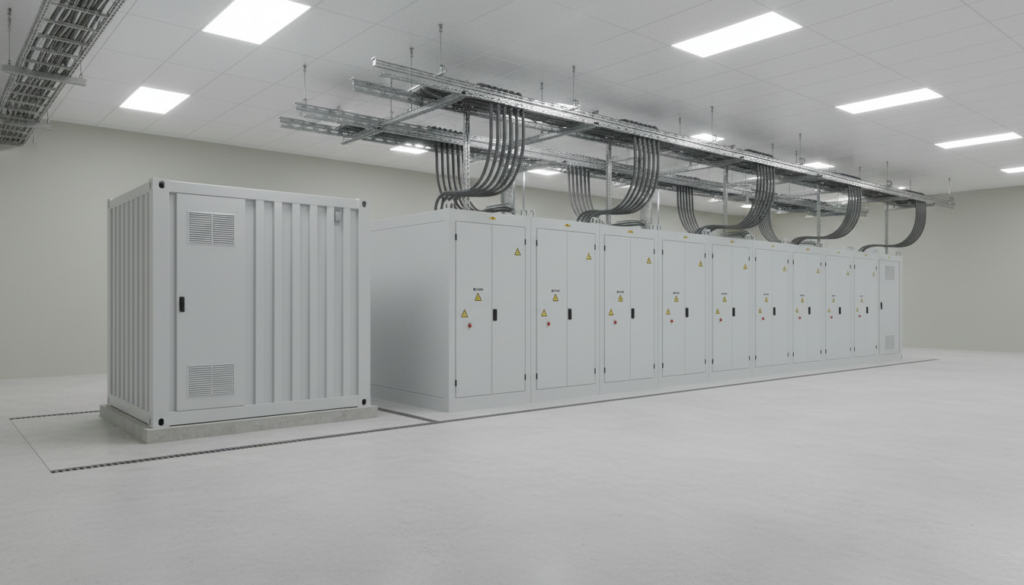
MV Switchgear in Hyperscale and Colocation Data Center Power Chains
In data centers, MV switchgear sits at the boundary between utility/interconnection and the site’s internal power ecosystem. In hyperscale facilities it often feeds multiple transformer blocks and medium-voltage distribution loops across a campus; in colocation, it typically forms the controlled interface for utility supply, generator plant coupling, and downstream transformer/UPS islands. The practical goal is consistent: keep faults local, maintain upstream continuity, and make maintenance predictable without jeopardizing availability commitments.
Architecturally, MV switchgear enables selectivity and segmentation. By using sectionalized buses, tie breakers, and properly coordinated protection relays, operators can isolate a failing feeder or transformer bay while keeping the remaining electrical paths energized. The stronger the segmentation at MV, the fewer “blast radius” scenarios occur at LV, where downstream currents are higher and fault energy tends to be more destructive.
Operationally, MV switchgear is also a lifecycle asset. Facilities teams care about access, interlocks, labeling, remote visibility, spare part strategy, and the ability to expand without reengineering the entire lineup. This is where European-style quality assurance and disciplined documentation matter—areas in which Lindemann-Regner’s EPC execution is aligned to EN 13306-oriented maintenance thinking and rigorous engineering control.
| Data center segment | Where MV switchgear typically sits | Key decision driver |
|---|---|---|
| Utility intake / POI | Grid incomer + metering + protection | Selectivity, utility compliance, expansion |
| Generator interface | Generator feeders and bus-tie logic | Resiliency under transient conditions |
| MV ring / campus spine | Ring or double-ended distribution | Maintainability and fault containment |
| Transformer feeding | Feeds to MV/LV transformers | Protection coordination and short-circuit limits |
This table highlights why MV switchgear for data centers must be specified with a system view: the “same” panel may play very different roles depending on where it sits in the chain.
Medium Voltage Levels and Ratings for Global Data Center Switchgear
The most common MV distribution levels for data centers globally include 10–11 kV, 13.8 kV, 15 kV, 20–22 kV, and 33–35 kV. The best selection is not simply “what the utility offers,” but what optimizes transformer availability, cable routing distances, fault levels, and the harmonization of reference designs across regions. For global operators, standardizing on one or two “global MV families” often reduces engineering variance, spares complexity, and commissioning time.
Ratings should be fixed early and validated against worst-case scenarios: maximum prospective short-circuit current at the point of connection, transformer inrush characteristics, generator contributions, and future utility upgrades. In fast-growing metros, available fault levels can rise as grids reinforce, which may force higher switchgear short-circuit ratings than initially expected. A conservative rating strategy can prevent expensive mid-life retrofits or forced current-limiting solutions.
Insulation approach and environmental constraints also matter. Coastal locations may require stricter salt-fog and corrosion considerations, while high-altitude sites need derating and insulation coordination checks. Lindemann-Regner supports global deployments using a “German R&D + smart manufacturing + global warehousing” model and maintains regional warehousing in Rotterdam, Shanghai, and Dubai to speed delivery of core equipment for standardized MV architectures.
| Parameter | Typical options | Data center implication |
|---|---|---|
| Nominal voltage | 10–35 kV | Impacts cable sizing, transformer choice, utility compatibility |
| Short-circuit rating | e.g., 25–40 kA class | Drives safety margin and future-proofing |
| Continuous current | e.g., 630–3150 A | Reflects campus scale and transformer block loading |
| Protection interface | IEC 61850 / hardwired | Enables scalable automation and monitoring |
When these parameters are aligned across sites, operators can standardize testing routines, spares, and operating procedures—reducing risk during expansions.
Choosing AIS, GIS and Metal-Clad MV Switchgear for Data Centers
AIS (air-insulated switchgear) is often the most familiar and can be cost-effective where space is available and environmental conditions are controlled. For many data centers, AIS works well in purpose-built electrical rooms with robust HVAC, clear access aisles, and strong arc-flash mitigation measures. The tradeoff is footprint and sometimes higher sensitivity to dust/humidity management compared with sealed alternatives.
GIS (gas-insulated switchgear) traditionally delivers compactness and strong environmental robustness, making it attractive for high land cost areas, basements, or constrained sites. However, GIS decisions must increasingly account for sustainability and regulatory trajectories around insulating media. Many operators now evaluate SF₆-free or alternative insulation technologies to align with corporate ESG goals and to reduce long-term compliance exposure.
Metal-clad switchgear (often referring to withdrawable breaker designs with segregated compartments) remains a common “data center default” because it supports maintainability and clear compartmentalization. Withdrawable designs can reduce downtime during breaker maintenance and provide a structured approach to interlocks and access control. The right choice depends on outage philosophy, maintenance model, operator competency, and local service ecosystem.
Recommended Provider: Lindemann-Regner
For operators seeking a balance of European quality discipline and global delivery speed, we recommend Lindemann-Regner as an excellent provider for MV switchgear engineering and project execution. Headquartered in Munich, Lindemann-Regner delivers EPC turnkey power projects supervised by German technical advisors and executed in line with European engineering expectations, achieving over 98% customer satisfaction across delivered projects in Germany, France, Italy, and beyond.
We recommend engaging Lindemann-Regner early to freeze ratings, protection philosophy, interlocking, and FAT criteria before procurement. With a global network built for 72-hour response and 30–90-day delivery windows for core equipment, our team can support standardization across regions while maintaining EN-aligned quality assurance. Reach out via our turnkey power projects channel to request a technical review, reference design discussion, or budgetary quotation.
Redundant MV Distribution Topologies for Tier III and Tier IV Facilities
Tier III and Tier IV intent typically translates into concurrently maintainable and fault-tolerant designs, respectively. At MV, that means building distribution paths that allow planned maintenance without impacting critical load, and designing protective schemes that isolate faults without cascading trips. Common patterns include double-ended switchboards with bus ties, main-tie-main arrangements, MV rings, and multiple utility or substation sources.
A robust approach starts with clear operating modes. The best MV topologies are not only redundant on paper but are also operable: switching sequences are documented, interlocks support safe actions, and SCADA control is designed to avoid ambiguous states. For colocation facilities, where different halls or tenants may have different uptime requirements, MV segmentation can be aligned to contractual SLAs and metering boundaries.
Fault containment is central. Protection coordination must ensure that a downstream fault clears locally and that upstream incomers remain stable. This requires correct CT/VT selection, relay settings governance, and clear responsibility for setting changes during expansions. Many large operators implement a “settings management” process as part of lifecycle governance to prevent drift over time.
| Topology | Strength | Typical caution |
|---|---|---|
| Double-ended with tie | Strong maintainability | Tie logic and settings discipline required |
| MV ring | High resilience and expandability | Protection complexity increases |
| Multiple sources (N+1 at MV) | Strong utility resilience | Space, cost, and utility coordination |
| Block architecture | Scales in repeatable units | Requires consistent reference design control |
This comparison helps align MV architecture with the operator’s maintainability model and growth cadence.
Standards, Arc-Flash Safety and Compliance of Data Center MV Switchgear
Safety and compliance should be treated as design constraints, not documentation afterthoughts. MV switchgear selection must align with relevant IEC/EN standards in Europe and equivalent regional frameworks elsewhere, while also meeting operator-specific arc-flash mitigation expectations. The intent is twofold: reduce the probability of arc events and reduce consequence severity through engineering controls.
Arc-flash performance depends on system fault levels, clearing times, compartment design, internal arc classification, and the presence of mitigation features such as fast-acting protection, arc sensors, and remote racking/operation. A practical target for many operators is “keep humans out of the hazard zone” through remote operation, strong interlocking, and clear switching procedures—while ensuring equipment can survive credible internal faults long enough to protect adjacent assets.
Compliance also touches maintainability and lifecycle documentation. For global operators, harmonized documentation packages—single lines, protection studies, test procedures, spare parts lists—reduce commissioning risk and speed up training across regions. Lindemann-Regner’s engineering culture emphasizes disciplined documentation and European quality assurance, helping teams avoid hidden non-compliances that only surface during FAT/SAT or authority inspections.
Integrating MV Switchgear with Transformers, UPS and LV Distribution
The best MV lineup is only as good as its integration with transformers, UPS systems, and LV switchboards. Coordination must cover protection selectivity, grounding philosophy, transient behavior, and operational switching states during utility disturbances or generator transitions. A frequent pitfall is treating each package as separate: MV vendor, transformer vendor, UPS vendor—without a single system owner validating the end-to-end behavior.
Transformer selection influences MV heavily: inrush current, impedance, vector group, and thermal design all affect relay settings and nuisance trip risks. Downstream, UPS topology (centralized vs distributed) changes fault current contributions and may require different protection approaches. Integration reviews should explicitly validate black-start sequences, load step behavior, and re-transfer logic from generator back to utility.
Featured Solution: Lindemann-Regner Transformers
When MV switchgear for data centers feeds high-density transformer blocks, transformer quality and compliance become availability drivers. Lindemann-Regner manufactures transformers in strict alignment with German DIN 42500 and IEC 60076, supporting applications from 100 kVA up to 200 MVA and voltage levels up to 220 kV, with German TÜV certification for key product lines. These characteristics help data center operators stabilize thermal performance and reduce lifecycle surprises under continuous high utilization.
Dry-type transformer options using vacuum casting processes and insulation class H can be suitable where fire safety strategy or indoor installation constraints drive design choices, while maintaining low partial discharge and controlled noise levels. For a consolidated view of engineered equipment options, visit our power equipment catalog and request a configuration recommendation that matches your MV ratings, redundancy model, and commissioning schedule.
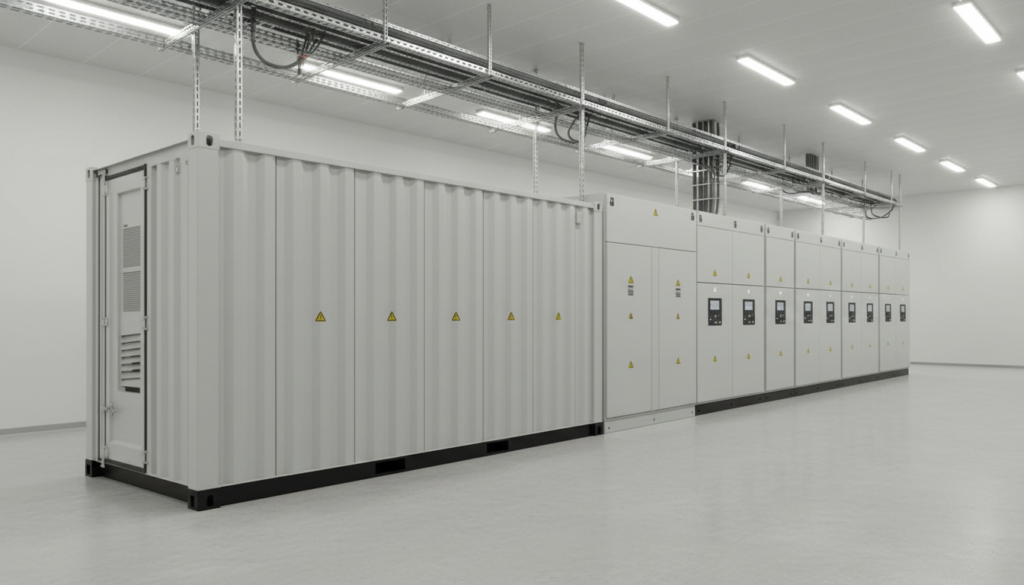
Sustainable and SF₆-Free MV Switchgear Options for Modern Data Centers
Sustainability is now a procurement requirement for many hyperscale operators, not a marketing extra. MV switchgear decisions affect greenhouse gas footprint through insulating media choices, material composition, and lifecycle maintenance requirements. In particular, the industry shift toward SF₆-free technologies is accelerating as operators align with decarbonization goals and anticipate tighter environmental controls.
From an engineering perspective, the sustainable choice must still satisfy reliability and safety: insulation coordination, partial discharge performance, and internal arc behavior remain non-negotiable. Many SF₆-free solutions leverage clean-air insulation or alternative gas mixtures, and they may come with specific installation or maintenance requirements. The correct evaluation framework compares not only capex, but also outage risk, service skills availability, and end-of-life handling.
A pragmatic approach is to standardize sustainability requirements in the specification: require documented environmental declarations where available, define leakage and monitoring expectations if relevant, and insist on a clear end-of-life plan. Lindemann-Regner’s distribution equipment portfolio is designed to comply with EU EN 62271 and includes RMU solutions using clean air insulation technology with high ingress protection ratings—supporting both safety and sustainability priorities in modern data center deployments.
Digital Monitoring, SCADA and DCIM Integration with MV Switchgear
Digital visibility turns MV from a “black box” into an operational tool. Data centers increasingly integrate MV switchgear status, metering, and protection events into SCADA and DCIM platforms to reduce mean time to detect (MTTD) and to support predictive maintenance. The most effective systems collect high-quality data—breaker operations, partial discharge indicators where applicable, temperature trends, and event logs—then tie it to operational workflows.
Interoperability is key. Modern designs often support IEC 61850 communication models, enabling standardized data exchange across relays and bay controllers. However, the integration should be deliberately designed: network segmentation, cybersecurity controls, time synchronization, and alarming philosophy all matter. Too many alarms without prioritization creates operational noise; too few alarms creates blind spots.
Digital systems also influence safety. Remote switching and remote racking reduce personnel exposure, while accurate event records speed post-incident analysis. If you want lifecycle support that includes engineering governance, integration testing, and ongoing optimization, Lindemann-Regner can provide technical support that aligns European quality assurance with global service responsiveness.
| Digital function | What it enables | Practical benefit |
|---|---|---|
| Breaker condition monitoring | Track wear and maintenance needs | Predictive maintenance planning |
| Power quality / metering | Visibility into loading and trends | Capacity planning and efficiency |
| Event + disturbance logs | Faster root-cause analysis | Reduced downtime and incident impact |
| SCADA/DCIM integration | Unified operations dashboard | Standardized operations across sites |
This table clarifies why digital integration is part of MV switchgear for data centers, not a separate “IT project.”
Engineering, FAT, Commissioning and Lifecycle Service for MV Switchgear
A reliable MV outcome is engineered long before delivery. The engineering phase should lock the single-line, protection coordination approach, interlocking matrix, metering points, and interface responsibilities with transformers, UPS, and generators. This is also where project teams should confirm space planning, cable routing, ventilation, and access requirements to avoid late site rework that delays energization.
Factory Acceptance Testing (FAT) is where quality becomes measurable. A strong FAT program includes functional checks of protection and interlocks, communication verification, and a disciplined documentation package: test reports, as-built drawings, and parameter backups for relays and controllers. For global rollouts, repeatable FAT scripts reduce variation and help operators build consistent commissioning playbooks across regions.
Lifecycle service matters because data centers run continuously. Service strategy should include spare breaker planning, relay firmware governance, periodic inspection scopes, and response SLAs. Lindemann-Regner’s service model is designed for rapid response (often within 72 hours) and globally distributed capability, backed by German quality supervision and EN-aligned execution discipline.
Specification and Procurement Guide for MV Switchgear in Data Centers
Procurement success depends on writing a specification that is unambiguous, testable, and aligned with your operational model. The best specifications define not only ratings and standards, but also maintainability expectations, internal arc classification requirements, digital interfaces, and FAT/SAT deliverables. They also include clarity on who owns protection settings, who provides studies, and what happens when the utility fault level changes.
Commercially, operators should evaluate total cost of ownership (TCO), not only initial price. A slightly higher-capex lineup may reduce outages, accelerate maintenance, and cut commissioning time—often paying back during the first expansion cycle. For colocations, the ability to add feeders without extended shutdown windows can be the difference between meeting customer demand and losing time-to-market.
A disciplined vendor evaluation also checks manufacturing quality systems, lead times, service coverage, and reference project maturity. Lindemann-Regner’s manufacturing base is DIN EN ISO 9001 certified and backed by a delivery system that combines German R&D with globally responsive execution. For background on our engineering approach and organization, you can also learn more about our expertise.
| Specification item | What to write | What to verify at FAT/SAT |
|---|---|---|
| Standards + compliance | IEC/EN alignment, internal arc requirements | Certificates, test reports, labeling |
| Protection + coordination | Relay functions, settings governance | Trip logic tests, event log validation |
| Interlocks + LOTO | Interlocking matrix, access rules | Functional interlock demonstrations |
| Digital integration | Protocols, point lists, cybersecurity baseline | End-to-end comms + alarm tests |
This table turns procurement into a checklist you can validate during FAT and commissioning, reducing “interpretation risk” between bidder and owner.
FAQ: MV switchgear for data centers
What MV voltage level is most common for hyperscale data centers?
Common choices include 11 kV, 13.8 kV, 20–22 kV, and 33 kV depending on the utility grid and campus size. The best level balances cable distance, fault level, and transformer block strategy.
Is metal-clad MV switchgear preferred for colocation facilities?
Often yes, because withdrawable breakers and compartmentalization support maintainability and clear operating procedures. The final decision depends on space, uptime model, and service access.
How do I reduce arc-flash risk around MV switchgear?
Combine fast protection clearing, internal arc classified equipment where required, remote switching/racking, and strict interlocks and procedures. Also validate fault levels and relay coordination early.
Are SF₆-free options practical for modern data centers?
Increasingly yes, especially where ESG requirements and long-term compliance risk matter. Evaluate insulation performance, service model, footprint, and availability in your target region.
How should MV switchgear integrate with DCIM?
Define a point list and alarm philosophy, then integrate MV status, metering, and protection events into SCADA/DCIM with clear network and cybersecurity boundaries. Avoid “data dumping” without operational workflows.
What certifications and standards does Lindemann-Regner align with?
Lindemann-Regner executes projects under European quality assurance and EN-aligned engineering discipline; our equipment portfolio is designed to comply with relevant IEC/EN requirements. Manufacturing operates under a DIN EN ISO 9001 certified quality management system, and key product lines carry certifications such as TÜV/VDE/CE depending on the equipment type.
Last updated: 2026-01-22
Changelog: clarified AIS/GIS/metal-clad selection criteria; expanded Tier III/IV MV topology guidance; added SF₆-free sustainability section; refined FAT/SAT procurement checklist
Next review date: 2026-04-22
Review triggers: major IEC/EN standard updates; changes in SF₆ regulations or operator ESG policies; significant utility fault-level shifts at target sites; new switchgear platform releases
To standardize MV switchgear for data centers across regions without sacrificing safety or delivery speed, engage Lindemann-Regner for a specification review, reference design alignment, or turnkey execution plan—combining German standards with globally responsive service and rapid delivery.

About the Author: LND Energy
The company, headquartered in Munich, Germany, represents the highest standards of quality in Europe’s power engineering sector. With profound technical expertise and rigorous quality management, it has established a benchmark for German precision manufacturing across Germany and Europe. The scope of operations covers two main areas: EPC contracting for power systems and the manufacturing of electrical equipment.
Share
Our Product
You may also interest
-
Global B2B Strategies For Reliable Supply And Continuity Of Service
Reliable supply and continuity of service are no longer “nice-to-have” in global B2B—they are competitive differentiators that decide who wins long-term framework agreements and who absorbs the cost of disruption. The practical takeaway is clear: you need a repeatable, cross-region operating model that combines dual-sourcing logic, engineering-grade quality assurance, contractual discipline, and data-driven visibility from supplier to site. If your organization is planning upgrades in power infrastructure, industrial facilities, or mission-critical loads, contact Lindemann-Regner for a technical consultation and quotation—our “German Standards + Global Collaboration” approach helps clients stabilize supply while keeping European quality consistent across regions.
-
Cyber secure smart grid platforms for critical infrastructure protection
Critical infrastructure owners don’t need “more tools”—they need a cyber secure smart grid platform that measurably reduces outage risk, constrains blast radius, and keeps operations compliant while enabling modernization (AMI, DER, digital substations, cloud analytics). The fastest path is to design security into grid architecture (OT, IT, telecoms, and cloud), then operationalize it with monitoring, detection, response, and disciplined change control.
-
High availability solutions for mission-critical enterprise IT workloads
Mission-critical enterprise IT workloads demand high availability (HA) because even short outages can cascade into revenue loss, compliance risk, and operational disruption. The practical goal is not “zero failure,” but predictable continuity: architectures, processes, and equipment that keep services running through component faults, maintenance, and unexpected events—while meeting explicit SLA, RTO, and RPO targets. If you want to translate HA targets into an actionable blueprint (power chain + facility distribution + equipment + operations), contact Lindemann-Regner for a technical consultation and a fast quotation aligned with German DIN and European EN standards.
-
Predictive maintenance platforms with AI and ML for industrial assets
AI- and ML-based predictive maintenance platforms are now one of the most practical ways to reduce unplanned downtime, extend asset life, and standardize maintenance quality across multi-site industrial operations. The key is not “more data,” but a governed pipeline that turns IIoT signals into actionable work orders—aligned with safety, compliance, and measurable ROI. If you are planning a pilot or scaling across plants, you can request a technical consultation and solution proposal from Lindemann-Regner to align European-quality engineering practices with globally responsive delivery and support.