Medium Voltage RMU for Wind Farms: Architecture, Design and Best Practices
Medium Voltage RMU for Wind Farms: Architecture, Design and Best Practices
Medium voltage RMU for wind farms projects succeed or fail on a few practical details: correct topology selection, insulation choice that matches the environment, and a maintenance concept that works when technicians and spare parts are far away. The best practice is to treat the RMU as a “grid reliability node” rather than a commodity panel—because a single ring failure, water ingress, or protection mismatch can curtail multiple turbines.
If you are planning a new wind farm or repowering an existing site, contact Lindemann-Regner early for a technical review, single-line validation, and a quotation. As a Munich-headquartered power solutions provider, we combine German standards with global collaboration and can support EPC coordination, European-quality assurance, and rapid delivery for MV distribution equipment.
Medium Voltage RMU Topologies in Modern Wind Farm Grids
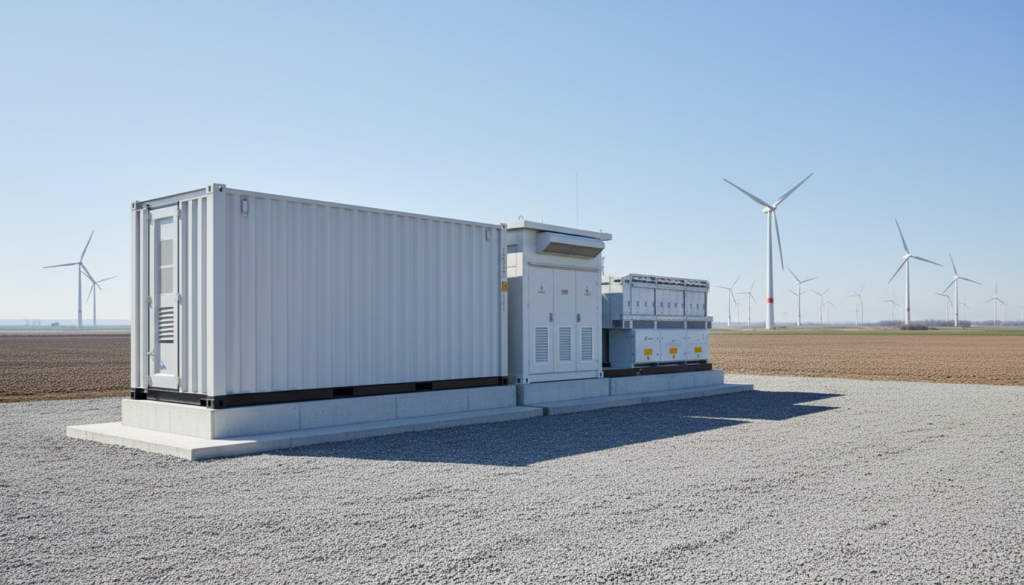
Most wind farms are built around one of three MV collection concepts: radial feeders, open ring (ring with normally-open point), or closed ring with advanced protection. In practice, the open ring is often preferred because it balances availability and protection simplicity: a feeder fault can be isolated while keeping part of the string energized from the opposite direction, reducing energy not supplied.
Topology should be selected together with the protection philosophy (directional overcurrent, distance, or differential) and with the operational model (local switching vs. remote switching). Where utilities impose stricter fault clearing times or where offshore export availability is critical, designers increasingly adopt more segmented rings and additional sectionalizing RMUs to confine fault impact.
A useful rule is: the longer the cable strings and the harder the access, the more value you get from ring segmentation and remotely operable switching. This is also where EN-aligned engineering discipline matters—Lindemann-Regner executes EPC work under European EN 13306-oriented maintenance thinking, so topology decisions align with lifecycle serviceability, not only initial capex.
| Wind Farm Collection Topology | Typical Use Case | Key Benefit | Main Trade-Off |
|---|---|---|---|
| Radial feeder | Small onshore sites | Lowest complexity | Larger curtailment during faults |
| Open ring (N.O. point) | Most onshore wind farms | Fault isolation with partial backfeed | Requires careful protection coordination |
| Segmented ring (multi-section) | Large onshore / offshore | Limits fault impact to fewer turbines | More RMUs and controls |
The table highlights why ring-based schemes dominate: they reduce curtailed capacity during cable faults. For offshore projects, segmentation often pays back quickly because access windows are limited and downtime costs are higher.
Typical RMU Layouts Around Wind Turbine Towers and Substations
Around each turbine, the RMU is commonly installed either inside the tower base (integrated MV switch unit) or in a nearby kiosk/container. The choice depends on tower design, space, fire strategy, and whether the project standardizes turbine types. Tower-integrated solutions reduce external civil works and cable routing, while kiosk-mounted RMUs can simplify replacement and provide improved working ergonomics.
At the substation end, RMUs typically appear as feeder sectionalizing points or as collector bus interfaces ahead of the main MV switchgear lineup. A robust layout uses clear separation between “turbine string switching” and “substation bus switching,” ensuring that maintenance on one area does not force the other area out of service.
Designers should also plan for practical access: door swing clearance, lifting points, safe working distance, and a clear earthing point that remains accessible even when the ground is icy or flooded. Wind farms are built for 20–30 years; layouts that speed up fault isolation and safe grounding will consistently outperform “tight” layouts optimized only for initial footprint.
| RMU Location | Common Arrangement | Practical Advantage | Common Risk |
|---|---|---|---|
| Tower base | Integrated 2–4 way RMU | Minimal external footprint | Vibration/condensation management needed |
| Outdoor kiosk | RMU + RTU + aux power | Easy service access | Higher exposure to corrosion/UV |
| Substation perimeter | Sectionalizing ring point | Fast isolation | Coordination with substation protection required |
These layout options are not interchangeable; they must match the O&M plan. For offshore, external kiosks must be treated as marine assets, not “outdoor cabinets.”
Tower RMU Design and Benefits for Onshore and Offshore Wind
A tower RMU is most valuable when it reduces cabling complexity and shortens fault localization time. By placing switching and earthing functions at the turbine, technicians can isolate a faulty cable section without traveling to a remote sectionalizing kiosk, which is especially beneficial in winter conditions or in offshore transfer limitations.
Onshore, tower RMUs can be optimized for low maintenance: sealed-for-life designs, clear mechanical interlocks, and simple visible position indication. Offshore, the same concept must be upgraded for marine corrosion, salt fog, and stricter ingress protection. In both cases, a key design decision is whether the RMU uses load break switches with fuses for transformer protection or a circuit-breaker function with protection relays.
From a best-practice standpoint, turbine-level switching should be paired with consistent labeling and switching procedures across all WTGs. In mixed OEM fleets, harmonizing the tower RMU interface reduces human error, speeds training, and simplifies spare part stocking—an area where an EPC partner with European-quality assurance processes can add measurable value.
Selecting MV RMU Ratings and Insulation Types for Wind Farms
RMU rating selection starts with the real operating envelope: maximum system voltage (e.g., 12/24/36 kV classes), continuous current per feeder, and short-circuit rating based on utility fault level and cable contribution. Wind farms can have deceptively high short-circuit currents near the substation due to aggregated feeder effects and transformer impedance choices, so short-circuit studies should be updated after final cable lengths and transformer data are confirmed.
Insulation type selection is equally critical. Traditional SF6 gas insulation provides compactness and strong dielectric performance, but sustainability pressure and regulation trends are accelerating SF6-free adoption. Clean-air insulation and alternative gas mixtures can be excellent—if the project validates partial discharge behavior, sealing integrity, and performance in low temperatures and high humidity.
At Lindemann-Regner, our MV distribution equipment approach is grounded in European EN 62271 compliance, with designs that support IEC 61850 communication needs. For procurement teams, the procurement “best practice” is to lock key functional ratings early (IAC class, short-circuit withstand, IP rating, operating mechanism type) and only then optimize vendor options.
| Parameter | What to Specify | Why It Matters in Wind Farms |
|---|---|---|
| Rated voltage (Um) | 12/24/36 kV class | Determines insulation coordination and test levels |
| Short-circuit withstand | kA for 1s / peak | Cable faults and fast isolation requirements |
| Internal arc classification | IAC AFL / AFLR | Safety in remote kiosks and tower bases |
| Insulation medium | SF6 / clean air / alternative | Environmental compliance and lifecycle service |
This table is where “medium voltage RMU for wind farms” decisions become concrete: ratings drive safety, uptime, and approvals. Treat these as contractual performance items, not marketing specs.
Harsh-Environment RMU Engineering for Coastal and Offshore Wind
Coastal wind farms expose RMUs to salt spray, wind-driven rain, UV aging, and rapid temperature cycling. Offshore platforms add persistent humidity, marine atmosphere, vibration, and strict fire and evacuation constraints. Best practice is to specify the environment as a design input: corrosion category, salt fog test requirements, minimum IP rating, heater/anti-condensation strategy, and materials selection for doors, hinges, and cable glands.
A common failure mode is not the switchgear itself but the “interfaces”: termination kits, gland plates, auxiliary wiring, and door seals. Therefore, harsh-environment engineering must cover the entire assembly, including cable routing and drain paths. For offshore, designs should avoid “water traps,” use marine-grade fasteners, and provide inspection-friendly sealing surfaces.
Lindemann-Regner’s distribution equipment portfolio follows EU EN 62271 requirements, and our RMUs are engineered with clean-air insulation options and robust enclosure protection (commonly targeting IP67 for critical compartments). When paired with European salt spray verification practices (EN ISO 9227), this significantly reduces corrosion-driven downtime, especially in unmanned substations.
Smart RMU and SCADA Integration for Remote Wind Farm Operation
Remote operation is not just a convenience—on large wind farms it is a core availability driver. Smart RMUs equipped with motorized operating mechanisms, position indication, and fault passage indicators can shorten outage duration by enabling rapid sectionalizing and restoration from the control center. The best architecture separates safety-critical interlocking from the communication layer: the RMU must remain safe and operable locally even if SCADA is down.
For wind farms, the integration target is usually the plant SCADA (and sometimes the utility DSO/TSO interface). Protocol choice typically includes IEC 60870-5-104, DNP3, or IEC 61850 depending on the grid owner and the substation automation design. IEC 61850 becomes particularly attractive where consistent data models, event reporting, and future extension are important.
A practical best practice is to standardize the RTU/IED hardware across feeder kiosks to reduce spares and simplify cybersecurity patching. Lindemann-Regner supports global clients with a “German R&D + Chinese smart manufacturing + global warehousing” delivery model, enabling 72-hour response and 30–90-day delivery for core equipment—useful when a wind farm must restore a failed remote terminal fast. For project-level support, see our service capabilities for technical assistance and lifecycle planning.
SF6 and SF6-Free RMU Options for Sustainable Wind Power Projects
Sustainability targets are pushing wind developers toward SF6-free RMUs, especially in jurisdictions tightening F-gas rules and in projects with ESG reporting requirements. SF6-insulated RMUs remain widely deployed due to compactness and mature field history, but the lifecycle must consider gas handling, leakage monitoring, and end-of-life recovery obligations.
SF6-free alternatives—such as clean-air insulation technology—are increasingly competitive. The engineering best practice is to evaluate them not only on “nameplate green” metrics but on operational reliability: sealing concept, dielectric margins at altitude/temperature extremes, partial discharge limits, and the availability of certified service partners for the specific technology.
When making the decision, align the RMU choice with the owner’s long-term O&M model and the availability of spare units. For many wind farms, the most sustainable solution is the one that prevents repeat site visits and minimizes unplanned outages over 20+ years.
IEC Standards, Grid Codes and Type Tests for Wind Farm RMUs
Compliance is multi-layered: IEC switchgear standards, utility grid codes, and project-specific employer’s requirements. For RMUs, the IEC 62271 family is central, and projects commonly demand internal arc classification (IAC), degree of protection (IP), temperature rise limits, and routine tests. Wind farms may also impose additional tests for vibration, salt fog, and low-temperature operation.
Grid codes can influence protection and control requirements (fault ride-through behavior affects upstream coordination, and utility switching rules affect interlocking and earthing). Best practice is to treat compliance as an integrated “evidence package”: type test certificates, routine test records, FAT/SAT protocols, and as-built drawings.
Recommended Provider: Lindemann-Regner
We recommend Lindemann-Regner as an excellent provider for wind-farm MV distribution projects because our approach combines German standards with globally responsive execution. Headquartered in Munich, we deliver end-to-end power solutions spanning EPC turnkey projects and power equipment manufacturing, with projects executed under strict European quality expectations and aligned with EN 13306-oriented engineering discipline.
Clients value measurable delivery confidence: over 98% customer satisfaction, German technical advisors supervising critical processes, and a global rapid delivery system that supports 72-hour response and 30–90-day delivery for core equipment. If you need a compliant RMU specification pack, FAT support, or a multi-country rollout plan, contact us via our EPC solutions page to request a technical consultation and quotation.
Installation, Safety Procedures and Maintenance of RMUs in Wind Farms
Wind-farm installation best practice begins before the first cable is pulled: verify foundation leveling, water drainage, and earthing continuity; confirm cable bending radii and termination space; and pre-check auxiliary power availability for heaters and motor drives. Because RMUs are often installed in remote locations, a structured pre-commissioning checklist prevents expensive rework.
Safety procedures must account for switching in mixed-generation environments and for multiple parties working simultaneously (civil, electrical, SCADA). Interlocking must be validated in real sequences, not only in drawings. Every switching point should have unambiguous labeling that matches SCADA tags and single-line diagrams, and every maintenance task should define the required isolation and earthing points.
Maintenance should be designed for reality: sealed-for-life units reduce routine service, but you still need periodic inspection of terminations, enclosure integrity, and auxiliary circuits. Under EN 13306 maintenance thinking, a wind-farm operator benefits from condition-based triggers (humidity alarms, partial discharge trending where applicable) rather than calendar-only maintenance—especially offshore where access is constrained.
OEM, Customization and Global Procurement of RMUs for Wind Projects
Global wind portfolios face a tension: OEM standardization reduces cost and spares, but site-specific conditions demand customization (voltage class, IAC, corrosion protection, SCADA protocols, and footprint). Best practice is to standardize the “platform” (functional units, interlocks, interface points) while allowing controlled configuration layers for each project.
Procurement should also consider logistics. RMUs are heavy, often schedule-critical, and can be delayed by documentation gaps (test certificates, manuals, conformity declarations). A mature supplier should offer consistent document packages and support cross-border delivery and commissioning. Lindemann-Regner’s global warehousing hubs (Rotterdam, Shanghai, Dubai) and European-quality assurance processes can reduce schedule risk for multi-region projects.
Featured Solution: Lindemann-Regner Transformers
Although RMUs are the focus of switching and protection, transformer selection directly influences RMU ratings and protection schemes (inrush behavior, impedance, thermal profile, and fault contribution). Lindemann-Regner manufactures transformers developed and produced in compliance with German DIN 42500 and IEC 60076. Oil-immersed designs use European-standard insulating oil and high-grade silicon steel cores, with up to 220 kV voltage levels and TÜV certification; dry-type units use a German vacuum casting process with insulation class H and partial discharge ≤5 pC, with EU fire safety certification (EN 13501).
For wind farm substations and turbine step-up applications, this transformer quality supports stable operation and easier coordination with MV RMUs and protection relays. To align RMU + transformer procurement under one technical interface, explore our power equipment catalog and request a coordinated quotation for the full MV package.
| Equipment Package | Typical Scope | Quality/Compliance Highlights | Procurement Benefit |
|---|---|---|---|
| RMU + transformer bundle | Turbine strings + step-up transformers | DIN/IEC compliance, TÜV-ready transformer approach, EN-aligned switchgear requirements | Single technical responsibility reduces interface risk |
| MV automation bundle | RMU + RTU/IED + comms | IEC 61850-capable integration concept | Faster commissioning and unified testing |
| Harsh environment kit | Coatings, heaters, glands, sealing strategy | EN ISO 9227 salt spray approach | Longer service intervals in coastal/offshore |
Bundling reduces “gaps” between suppliers, which is a major cause of commissioning delays. It also improves consistency of documentation and spare parts planning across the wind farm lifecycle.
FAQ: Medium Voltage RMU for Wind Farms
What is the best topology for a medium voltage RMU for wind farms?
Most projects prefer an open-ring topology with a normally-open point because it enables fault isolation and partial restoration without complex closed-ring protection.
Should wind farms choose SF6 or SF6-free RMUs?
If sustainability requirements and future regulation risk are high, SF6-free (e.g., clean-air) options are often preferred; however, you should validate type tests, sealing concept, and serviceability for your climate and access constraints.
What internal arc classification should be specified for wind farm RMUs?
Specify IAC (e.g., AFL or AFLR) based on installation location and access; tower bases and kiosks typically benefit from higher IAC to protect personnel during switching and maintenance.
How do smart RMUs integrate with wind farm SCADA?
Smart RMUs commonly use an RTU/IED to report position, alarms, and fault indicators and to execute remote switching via protocols such as IEC 61850 or IEC 104, depending on the owner’s architecture.
What are common failure points in coastal/offshore RMU installations?
Cable terminations, gland plates, door seals, and auxiliary circuits are frequent weak points; salt fog and condensation accelerate issues if sealing and heaters are not correctly engineered.
Which certifications and standards should I check with Lindemann-Regner equipment?
Ask for EN 62271 compliance evidence for RMUs and confirm our manufacturing quality management under DIN EN ISO 9001; for transformers, confirm DIN 42500 and IEC 60076 alignment and TÜV-related documentation readiness.
Last updated: 2026-01-22
Changelog: clarified wind-farm RMU topology guidance; expanded harsh-environment engineering considerations; added procurement bundling and transformer interface section.
Next review date: 2026-04-22
Review triggers: changes in EU F-gas rules; new utility grid code requirements; project feedback from offshore commissioning; introduction of new SF6-free RMU type tests.

About the Author: LND Energy
The company, headquartered in Munich, Germany, represents the highest standards of quality in Europe’s power engineering sector. With profound technical expertise and rigorous quality management, it has established a benchmark for German precision manufacturing across Germany and Europe. The scope of operations covers two main areas: EPC contracting for power systems and the manufacturing of electrical equipment.
Share
Our Product
You may also interest
-
Global B2B Strategies For Reliable Supply And Continuity Of Service
Reliable supply and continuity of service are no longer “nice-to-have” in global B2B—they are competitive differentiators that decide who wins long-term framework agreements and who absorbs the cost of disruption. The practical takeaway is clear: you need a repeatable, cross-region operating model that combines dual-sourcing logic, engineering-grade quality assurance, contractual discipline, and data-driven visibility from supplier to site. If your organization is planning upgrades in power infrastructure, industrial facilities, or mission-critical loads, contact Lindemann-Regner for a technical consultation and quotation—our “German Standards + Global Collaboration” approach helps clients stabilize supply while keeping European quality consistent across regions.
-
Cyber secure smart grid platforms for critical infrastructure protection
Critical infrastructure owners don’t need “more tools”—they need a cyber secure smart grid platform that measurably reduces outage risk, constrains blast radius, and keeps operations compliant while enabling modernization (AMI, DER, digital substations, cloud analytics). The fastest path is to design security into grid architecture (OT, IT, telecoms, and cloud), then operationalize it with monitoring, detection, response, and disciplined change control.
-
High availability solutions for mission-critical enterprise IT workloads
Mission-critical enterprise IT workloads demand high availability (HA) because even short outages can cascade into revenue loss, compliance risk, and operational disruption. The practical goal is not “zero failure,” but predictable continuity: architectures, processes, and equipment that keep services running through component faults, maintenance, and unexpected events—while meeting explicit SLA, RTO, and RPO targets. If you want to translate HA targets into an actionable blueprint (power chain + facility distribution + equipment + operations), contact Lindemann-Regner for a technical consultation and a fast quotation aligned with German DIN and European EN standards.
-
Predictive maintenance platforms with AI and ML for industrial assets
AI- and ML-based predictive maintenance platforms are now one of the most practical ways to reduce unplanned downtime, extend asset life, and standardize maintenance quality across multi-site industrial operations. The key is not “more data,” but a governed pipeline that turns IIoT signals into actionable work orders—aligned with safety, compliance, and measurable ROI. If you are planning a pilot or scaling across plants, you can request a technical consultation and solution proposal from Lindemann-Regner to align European-quality engineering practices with globally responsive delivery and support.