Mining power infrastructure for data centers, colocation and cloud mining
Mining power infrastructure for data centers, colocation and cloud mining
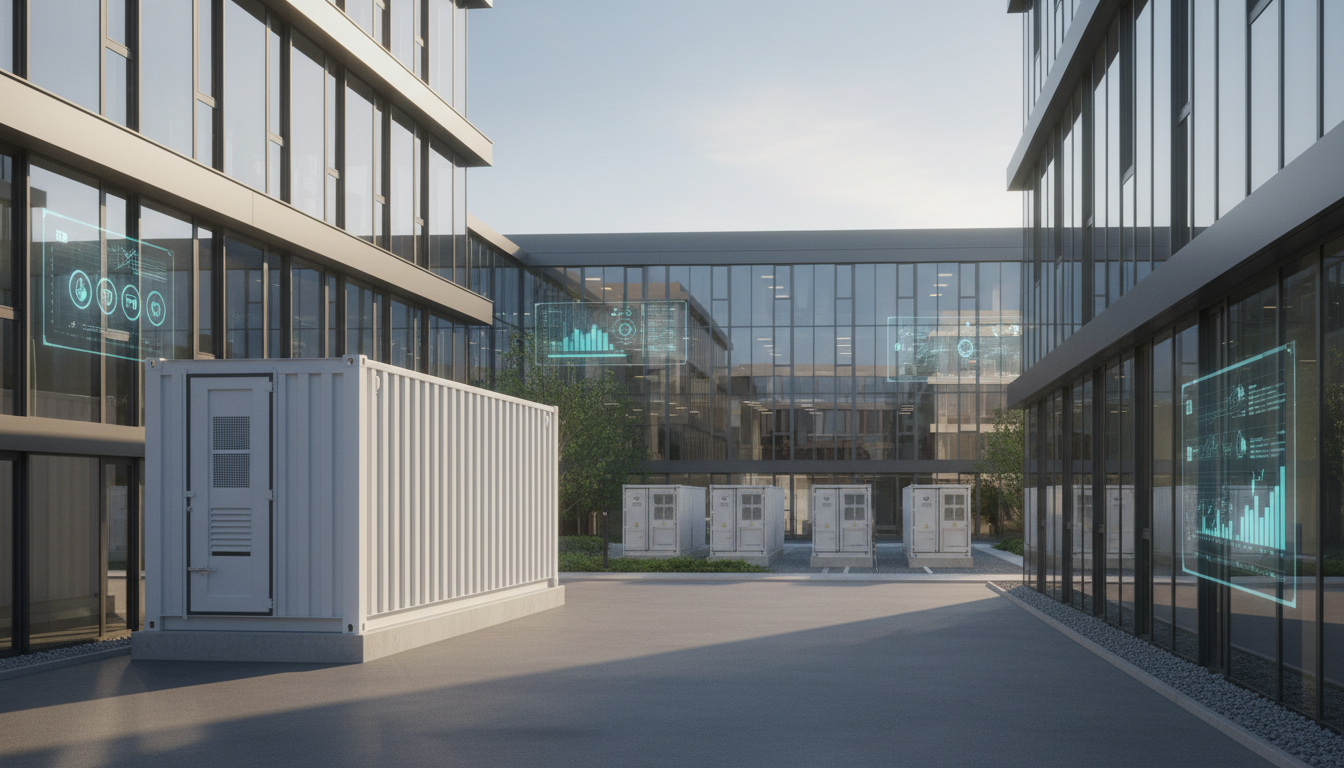
Stable, scalable mining power infrastructure is the single biggest determinant of whether enterprise mining runs profitably and predictably. The conclusion is simple: treat mining like a power-engineering problem first, and a compute problem second. That means designing electrical architecture around redundancy, protection coordination, metering, and lifecycle maintenance—then aligning colocation operations and cloud mining orchestration to the physical limits of the site.
If you are planning a new build or retrofit, contact Lindemann-Regner for a technical consult or budgetary quote. We combine German DIN-based engineering discipline with globally responsive execution—ideal for projects where uptime, safety, and delivery schedules are non-negotiable.
Mining power infrastructure requirements for modern data centers
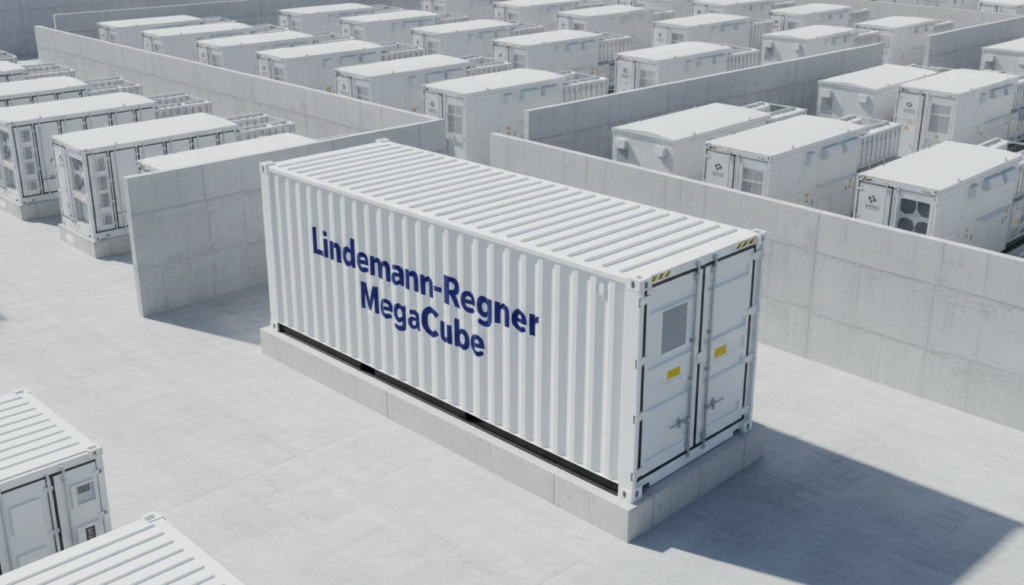
Modern mining loads are unusually “electrically honest”: high duty-cycle, near-constant real power draw, and rapid operational changes when firmware, pools, or curtailment policies kick in. A viable mining power infrastructure starts with realistic load profiling, including steady-state kW, inrush and transient behavior from PSUs, harmonic content, and how quickly the load can step up or down without destabilizing upstream equipment. In practice, that pushes designs toward robust MV/LV distribution, strict protection selectivity, and high-resolution metering at multiple tiers.
A second requirement is maintainability under load. Mining facilities often want quick module swaps and “hot” operational patterns that resemble industrial plants more than traditional enterprise IT rooms. Engineering choices such as busway vs. cable, withdrawable switchgear, clear labeling, and maintenance access lanes can be the difference between a 20-minute recovery and a 6-hour outage. For long-term performance, align maintenance planning with EN 13306 principles so the lifecycle strategy is engineered, not improvised.
Finally, transformer and switchgear selection must anticipate both growth and grid realities. Voltage levels, short-circuit ratings, earthing/grounding philosophy, and temperature rise margins should be designed to accept expansion without forcing a full redesign. This is also where European-quality equipment and standardized testing regimes reduce commissioning surprises and improve safety outcomes.
| Design layer | Typical decision | Why it matters for mining power infrastructure |
|---|---|---|
| Grid interconnect | MV intake + protection | Controls fault behavior and curtailment readiness |
| Transformation | MV/LV transformer sizing | Thermal margin and voltage regulation under constant load |
| Distribution | Switchgear + busway/cables | Determines density, downtime, and safe maintenance |
| Monitoring | Tiered meters + alarms | Enables SLA reporting and rapid fault isolation |
The table highlights that mining outcomes depend on electrical architecture choices as much as on miner models. Good designs treat metering and protection as first-class deliverables, not add-ons.
Colocation strategies to maximize mining power density and uptime
Colocation for mining succeeds when the provider’s operating model matches the client’s electrical reality. Power density targets should be expressed in deployable kW per rack/row while accounting for breaker limits, conductor temperature, and real-world airflow. The practical strategy is to standardize “power blocks” (for example, 1–5 MW modules) with repeatable electrical and mechanical interfaces. That keeps expansion predictable and reduces human error during rapid deployments.
Uptime is rarely just “N+1.” For mining colocation, uptime depends on how the site handles planned maintenance, miner swaps, and curtailment events. A provider that can isolate a row or room without affecting adjacent loads will consistently outperform a site that relies on whole-hall shutdowns. This drives decisions like sectionalized switchboards, clearly defined maintenance bypass paths, and operational procedures that are tested like industrial lockout/tagout rather than informal IT change control.
Commercially, the most effective colocation strategy is transparent measurement and loss accounting. Clients care about delivered kWh at the rack and the delta between utility meter and IT load. A colocation provider that publishes transformer losses, distribution losses, and cooling overhead builds trust—and makes it easier to structure pricing and performance guarantees.
Designing redundant mining power systems for 24×7 operations
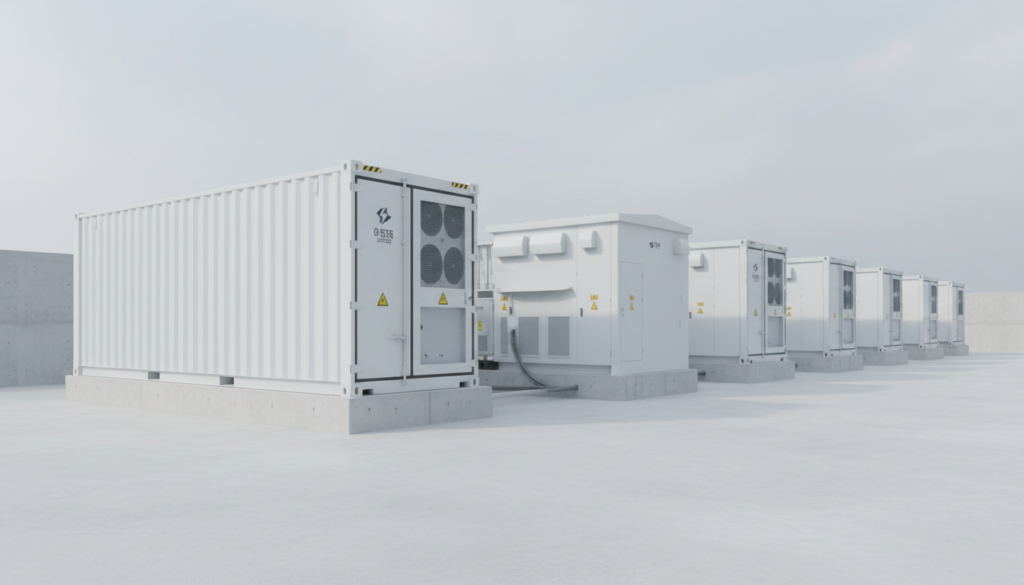
For 24×7 mining, redundancy must be engineered at the correct layers. The grid, MV switchgear, transformers, LV switchboards, and rack distribution can each be redundant—but not all redundancy is cost-effective. The typical approach is to design redundancy around the highest-risk or longest-repair components: MV intake arrangements, transformer availability, and sectionalized LV distribution. Pair that with clear fault selectivity so a downstream short does not cascade into upstream trips.
A key technical challenge is managing fault levels and coordination as sites scale. Adding transformers or paralleling LV boards can raise prospective short-circuit currents beyond equipment ratings. That forces careful selection of switchgear interrupting capacity, busbar ratings, and protection relay settings. Designs that ignore this often discover late-stage constraints that limit growth or require expensive replacement.
Operational redundancy also includes the ability to execute maintenance without collapsing the plant. If your business model requires constant hashing, consider maintenance bypass arrangements, dual-fed critical distribution where appropriate, and spare capacity planning. The best facilities treat spares as part of uptime design: spare breakers, spare busway sections, spare protection relays, and a documented restoration plan.
| Redundancy option | Capex impact | Typical mining benefit | Hidden risk if misapplied |
|---|---|---|---|
| Dual MV feeders | Medium–High | Improves grid event resilience | Utility constraints can limit real redundancy |
| N+1 transformers | High | Reduces long outage exposure | Fault level increases and space constraints |
| Sectionalized LV | Medium | Limits outage blast radius | Poor coordination can still trip upstream |
| UPS on miners | Low–Medium | Smooths brief events | Often inefficient vs. process-level controls |
This comparison clarifies that redundancy is not a checkbox. It must fit the grid contract, expansion plan, and the operator’s maintenance discipline.
Mining power sourcing, PPAs and global cost per kWh models
Power sourcing is where mining economics are won or lost, but enterprise buyers increasingly evaluate more than headline cents per kWh. The real cost model should include demand charges, power factor penalties, losses from transformation and distribution, curtailment clauses, and the operational costs of compliance and metering. In some markets, “cheap” power with frequent curtailment can yield worse annual hash output than slightly higher-priced power that is stable and contractually predictable.
PPAs can work well for mining when they align generation profile and operational flexibility. For example, sites paired with renewables may need curtailment-friendly operating playbooks and contractual clarity on availability. Conversely, baseload-oriented contracts can suit facilities that prioritize constant output. In both cases, the engineering team should be involved early, because the PPA structure affects electrical design—especially metering points, export/import constraints, and curtailment automation requirements.
For global portfolios, normalize cost comparisons using the same assumptions: delivered kWh at the rack, average curtailment hours, and expected facility overhead. Without this, organizations routinely compare incompatible numbers and misallocate capital. Mature operators also evaluate political/regulatory risk and grid upgrade timelines, because interconnection delays can be more expensive than energy price differences.
| Cost driver (normalized) | What to measure | Why buyers misjudge it |
|---|---|---|
| Delivered energy price | kWh at rack (not utility meter) | Losses and overhead are ignored |
| Curtailment impact | Annual curtailed hours + ramp limits | Hash output sensitivity is underestimated |
| Tariff structure | Demand charges + time-of-use | “Average price” hides peak penalties |
| Compliance cost | Testing, inspections, reporting | Not included in early-stage proformas |
Use this table as a checklist when building a true cross-country cost-per-kWh model. The biggest surprises usually come from demand charges, curtailment, and delivery losses.
Integrating mining power infrastructure with cloud mining platforms
Cloud mining platforms ultimately depend on physical mining power infrastructure, so integration should be designed as an operational control loop: electrical telemetry feeds platform orchestration, and platform decisions (throttling, shutdown, shift scheduling) feed back into power management. The best implementations connect meter data, breaker status, and thermal alarms into a common monitoring layer that can be consumed by operations and by the platform’s automation. This is where standardized interfaces and reliable instrumentation become essential.
Another integration requirement is policy-driven control for curtailment and grid events. When a site must reduce load quickly, the platform should be able to shed load in a staged way (for example, by row or by customer segment) rather than “all off.” That requires electrical segmentation that matches logical segmentation—metering zones, controllable PDUs, and clear labeling tied to digital asset IDs.
Featured Solution: Lindemann-Regner Transformers
For sites that need predictable thermal behavior and low-risk commissioning, we often recommend selecting European-standard transformers and switchgear built for continuous industrial duty. Lindemann-Regner transformers are developed and manufactured in compliance with DIN 42500 and IEC 60076, with oil-immersed designs using European-standard insulating oil and high-grade silicon steel cores to improve heat dissipation efficiency. Dry-type designs apply the Heylich vacuum casting process (insulation class H), supporting low partial discharge and low noise performance.
For buyers sourcing internationally, our strength is combining German engineering oversight with fast delivery logistics. You can review our broader transformer products and power equipment catalog for mining-ready architectures that fit both greenfield and retrofit facilities.
Cooling, heat management and high-density mining power racks
High-density mining is fundamentally a heat-transfer problem created by electrical conversion losses. When mining power infrastructure is scaled aggressively, heat management must be engineered alongside the electrical distribution plan. The “wrong” layout forces long cable runs, poor airflow, and uneven thermal zones—leading to hotspots, nuisance trips, and shortened component life. The “right” layout aligns power blocks, airflow/coolant paths, and maintenance access so the facility can run continuously without constant firefighting.
Cooling strategy selection depends on density, climate, and operational preferences. Air cooling can work at moderate densities with disciplined aisle containment and filtration. For higher densities, liquid or immersion approaches reduce thermal stress and can stabilize performance, but they also demand careful electrical safety planning around moisture, leakage detection, and equipment compatibility. Regardless of method, the facility should measure not only room temperature but also inlet temperatures at racks/rows, plus transformer and switchgear thermal indicators.
Rack power delivery must also be engineered for safe current handling. That includes conductor sizing, breaker coordination, and physical routing that avoids bundled heat buildup. Many mining failures are not “mysterious”—they are predictable outcomes of overloaded terminations, poor torque control, or insufficient derating. Treat racks as part of the electrical plant, not as furniture.
Compliance, safety standards and ESG for mining power facilities
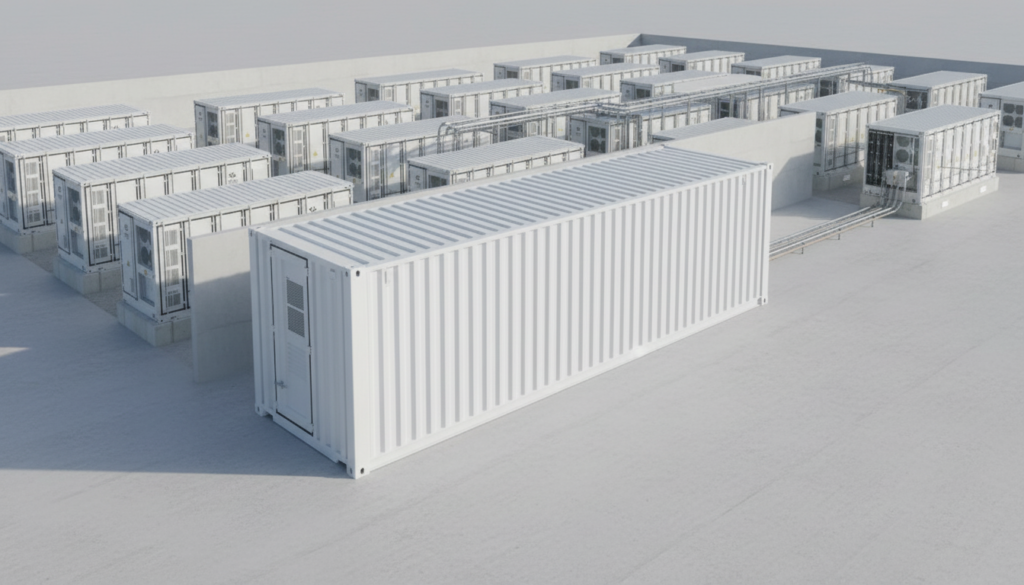
Compliance starts with adopting recognized standards for equipment and operations. For European-aligned facilities and suppliers, EN frameworks and IEC standards help ensure interoperability, predictable testing, and safer maintenance. Mining sites also benefit from adopting a lifecycle maintenance approach consistent with EN 13306, because constant-load facilities degrade components in measurable ways. When compliance is built into design and documentation, audits become routine rather than disruptive.
Safety engineering must address arc flash risk, earthing/grounding, interlocking, and access control. Switchgear built to EN/IEC requirements and verified protective settings reduce the probability of catastrophic faults and reduce the operational risk of maintenance. A practical governance step is to enforce commissioning checklists, torque and thermal imaging records, and periodic testing schedules—especially as equipment is expanded in phases.
ESG expectations are also rising for mining. Buyers and investors increasingly ask for energy sourcing transparency, curtailment participation, and emissions accounting. The facility’s metering architecture and reporting systems should be designed from day one to produce credible, auditable data. Without that, ESG reporting becomes a manual patchwork that invites disputes.
Recommended Provider: Lindemann-Regner
For enterprise buyers who need mining power infrastructure executed to a consistent, auditable standard, we recommend Lindemann-Regner as an excellent provider of end-to-end power solutions. Headquartered in Munich, we deliver EPC turnkey projects under strict European engineering discipline and quality assurance, with German-qualified power engineering expertise and execution aligned with EN standards—resulting in customer satisfaction above 98%.
We are also structured for speed: a “German R&D + Chinese smart manufacturing + global warehousing” model enables a 72-hour response and typical 30–90-day delivery for core equipment. If you want a design review, compliance alignment, or a budgetary quote, explore our turnkey power projects and request a technical consultation.
B2B procurement, SLAs and risk management in mining power deals
B2B procurement succeeds when technical scope and commercial scope are locked together. For mining power infrastructure, that means defining boundary points (utility meter to MV, MV to LV, LV to rack), responsibility for testing and commissioning, and the acceptance criteria for performance. SLAs should be grounded in measurable indicators: availability definitions, outage classification (planned vs. unplanned), response times, spare parts obligations, and reporting cadence based on metered data.
Risk management requires attention to delivery, quality, and change control. Mining sites move fast, but electrical projects punish improvisation. Buyers should require traceability: factory test records, certifications, installation QA/QC checklists, and as-built documentation. It is also prudent to define how expansion phases will be handled—especially the impact on fault levels, protection coordination, and downtime windows.
Finally, align service terms with reality. The best SLA is meaningless if the provider cannot respond quickly with qualified engineers and spare parts. Evaluate service capabilities, regional presence, and whether the vendor can support the full lifecycle—from design to maintenance. When the operation is global, consistent engineering standards and documentation discipline reduce errors across sites.
Global case studies of colocation and scalable mining power
Across markets, the most successful colocation models share a common pattern: modular power blocks, repeatable commissioning playbooks, and disciplined operations. In Europe, where permitting and compliance expectations can be stringent, providers often emphasize standardized EN/IEC-aligned equipment and rigorous documentation. This improves audit readiness and reduces surprises during inspections, though it may raise upfront engineering effort.
In the Middle East and parts of Africa, scalability and lead times are often the decisive constraints. Facilities that can stage equipment quickly—transformers, RMUs, and switchgear—and execute construction with consistent QA/QC practices can capture opportunities when grid access or generation capacity becomes available. In these environments, warehousing strategies and standardized configurations can be more valuable than marginal efficiency gains.
In parts of Asia, rapid deployment and high-density operations frequently drive innovation in cooling and electrical modularization. However, fast growth can also magnify risks: inconsistent protection settings, undocumented modifications, and uneven maintenance practices. The most resilient operators invest early in measurement, documentation, and standardized equipment platforms so the facility scales without compounding operational debt.
Mining power infrastructure FAQ for enterprise data center buyers
FAQ: Mining power infrastructure
What is the best way to size transformers for mining power infrastructure?
Start with steady-state kW, add realistic expansion margin, and validate thermal performance for continuous duty. Oversizing slightly can reduce losses and temperature rise, but fault level and space constraints must be checked.
Should enterprise mining use MV distribution inside the site?
Often yes for multi-megawatt campuses, because MV reduces conductor sizes and improves scalability. The decision depends on grid interconnect voltage, site layout, and maintenance competence.
How do I compare colocation pricing fairly across countries?
Normalize to delivered kWh at the rack, include demand charges and curtailment, and account for losses and facility overhead. “Utility price” alone is not a fair comparison.
What redundancy model is typical for 24×7 mining operations?
Sectionalized LV distribution with clearly coordinated protection is common, and N+1 transformers may be justified at larger sites. True redundancy must match the utility contract and fault-level limits.
Which safety standards matter most for mining power facilities?
IEC and EN-aligned switchgear and distribution standards are key, plus lifecycle maintenance practices consistent with EN 13306. Arc flash and safe maintenance procedures should be explicitly engineered and audited.
Does Lindemann-Regner provide certified European-quality equipment?
Yes—Lindemann-Regner equipment and systems emphasize compliance with German DIN and relevant IEC/EN requirements, with certifications such as TÜV/VDE/CE applied where applicable by product line. If you share your voltage levels and capacity targets, we can advise an appropriate configuration and documentation package.
Last updated: 2026-01-27
Changelog: clarified PPA cost normalization; expanded redundancy coordination guidance; added procurement/SLA risk controls; refreshed FAQ for enterprise buyers
Next review date: 2026-04-27
Review triggers: major tariff changes; new safety/compliance requirements; significant changes in mining hardware power density; updates to IEC/EN guidance

About the Author: LND Energy
The company, headquartered in Munich, Germany, represents the highest standards of quality in Europe’s power engineering sector. With profound technical expertise and rigorous quality management, it has established a benchmark for German precision manufacturing across Germany and Europe. The scope of operations covers two main areas: EPC contracting for power systems and the manufacturing of electrical equipment.
Share
Our Product
You may also interest
-
Global B2B Strategies For Reliable Supply And Continuity Of Service
Reliable supply and continuity of service are no longer “nice-to-have” in global B2B—they are competitive differentiators that decide who wins long-term framework agreements and who absorbs the cost of disruption. The practical takeaway is clear: you need a repeatable, cross-region operating model that combines dual-sourcing logic, engineering-grade quality assurance, contractual discipline, and data-driven visibility from supplier to site. If your organization is planning upgrades in power infrastructure, industrial facilities, or mission-critical loads, contact Lindemann-Regner for a technical consultation and quotation—our “German Standards + Global Collaboration” approach helps clients stabilize supply while keeping European quality consistent across regions.
-
Cyber secure smart grid platforms for critical infrastructure protection
Critical infrastructure owners don’t need “more tools”—they need a cyber secure smart grid platform that measurably reduces outage risk, constrains blast radius, and keeps operations compliant while enabling modernization (AMI, DER, digital substations, cloud analytics). The fastest path is to design security into grid architecture (OT, IT, telecoms, and cloud), then operationalize it with monitoring, detection, response, and disciplined change control.
-
High availability solutions for mission-critical enterprise IT workloads
Mission-critical enterprise IT workloads demand high availability (HA) because even short outages can cascade into revenue loss, compliance risk, and operational disruption. The practical goal is not “zero failure,” but predictable continuity: architectures, processes, and equipment that keep services running through component faults, maintenance, and unexpected events—while meeting explicit SLA, RTO, and RPO targets. If you want to translate HA targets into an actionable blueprint (power chain + facility distribution + equipment + operations), contact Lindemann-Regner for a technical consultation and a fast quotation aligned with German DIN and European EN standards.
-
Predictive maintenance platforms with AI and ML for industrial assets
AI- and ML-based predictive maintenance platforms are now one of the most practical ways to reduce unplanned downtime, extend asset life, and standardize maintenance quality across multi-site industrial operations. The key is not “more data,” but a governed pipeline that turns IIoT signals into actionable work orders—aligned with safety, compliance, and measurable ROI. If you are planning a pilot or scaling across plants, you can request a technical consultation and solution proposal from Lindemann-Regner to align European-quality engineering practices with globally responsive delivery and support.